
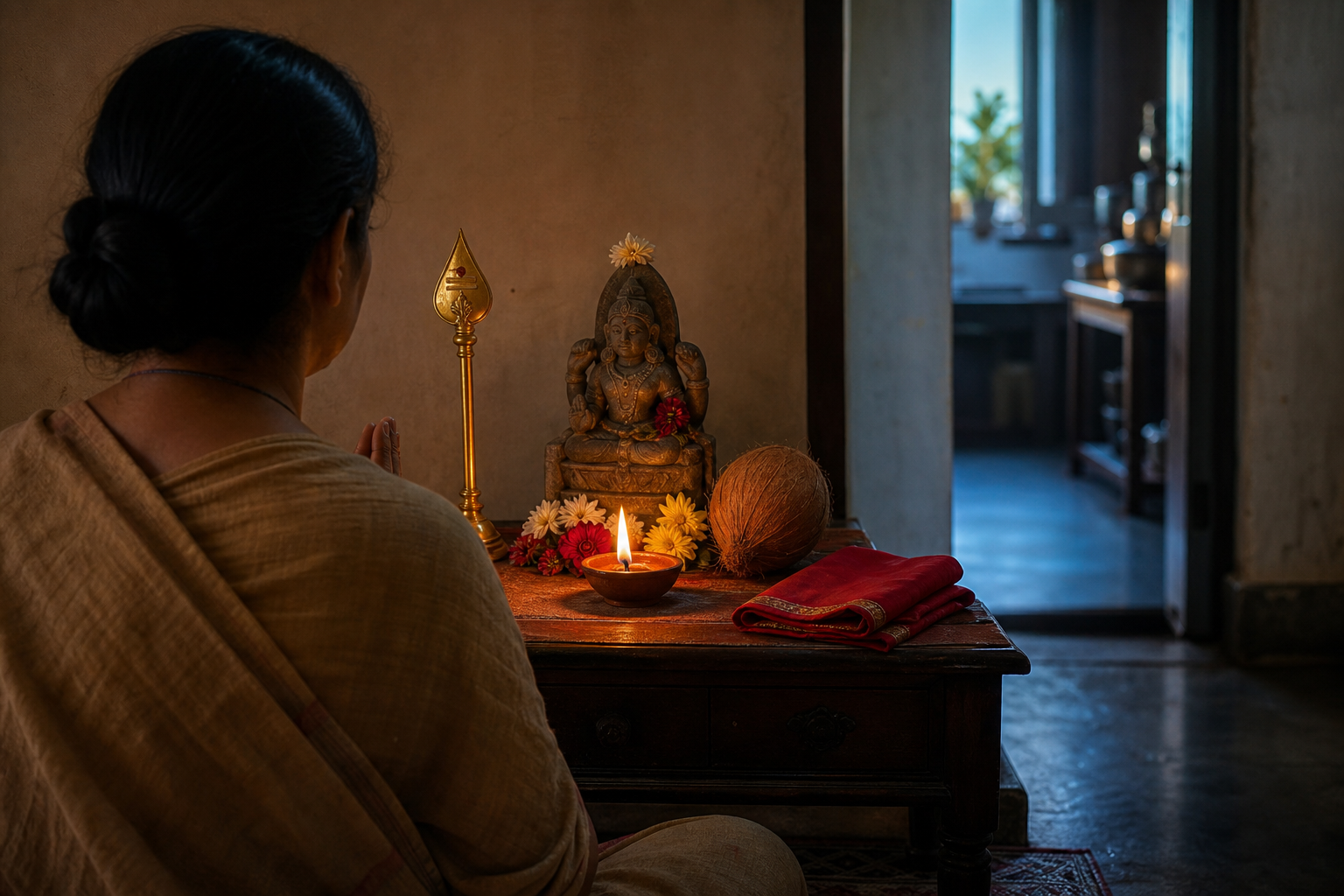
Perhaps a Vel, murti, chunri, coconut, lamp, or other sacred form already has a place in your worship. You approach it with respect, yet on a difficult day you may still wonder what looking at it is meant to change. Acquiring another object will not close that gap. The useful question is simpler: what discipline does this form ask you to practise after you leave the shrine?
A sacred object becomes an instrument of inner transformation when reverence is joined to attention, offering, and conduct. You approach the sacred presence, notice what the form teaches, surrender a particular obstruction, and carry the teaching into an ordinary decision. That movement from shrine to life is what turns symbolism into sadhana.
The object must connect presence, attention, and duty
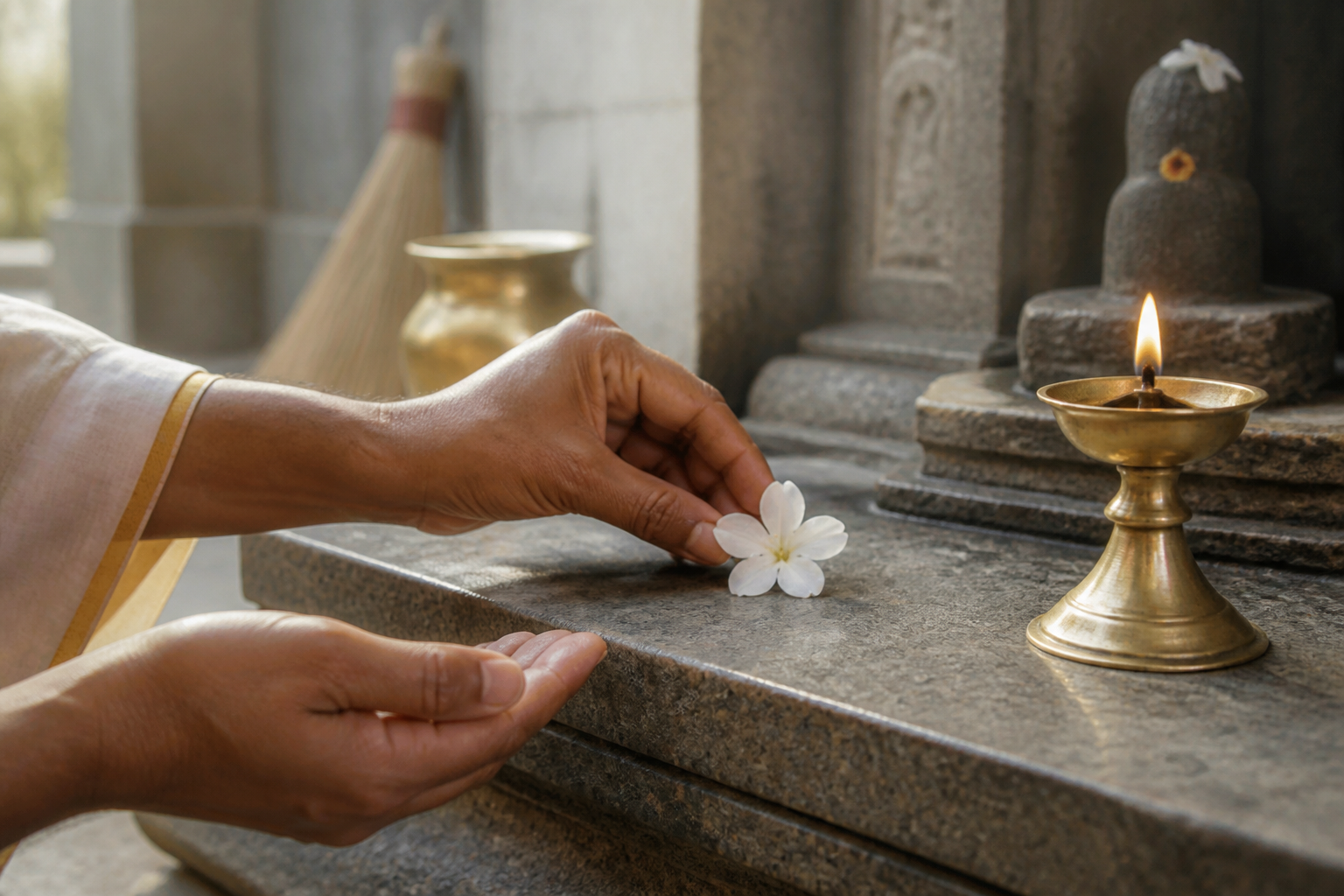
Calling a sacred object an instrument does not reduce the deity to a psychological aid. In living worship, the object belongs to a relationship with the divine. When a chunri is placed upon Devi, for example, the act welcomes and adorns the Goddess as a living presence. Its inner significance grows from that devotional relationship; it does not replace it.
Three connections need to remain intact:
- Presence: Whom or what are you honoring? This keeps the practice from becoming self-absorbed.
- Attention: Which feature of the object gathers your wandering mind? This gives contemplation a precise center.
- Duty: What must change in your conduct because you worshipped? This prevents devotion from ending at the altar.
Without presence, the object can become a motivational prop. Without attention, ritual may continue while the mind runs elsewhere. Without duty, worship risks becoming a transaction in which an offering is made but the worshipper remains unwilling to change.
Before your next puja, ask three direct questions: What am I honoring? What in me needs training? Who should benefit from that training? If you cannot answer the third question, the practice has not yet completed its movement into dharma.
Read form, gesture, virtue, and conduct together
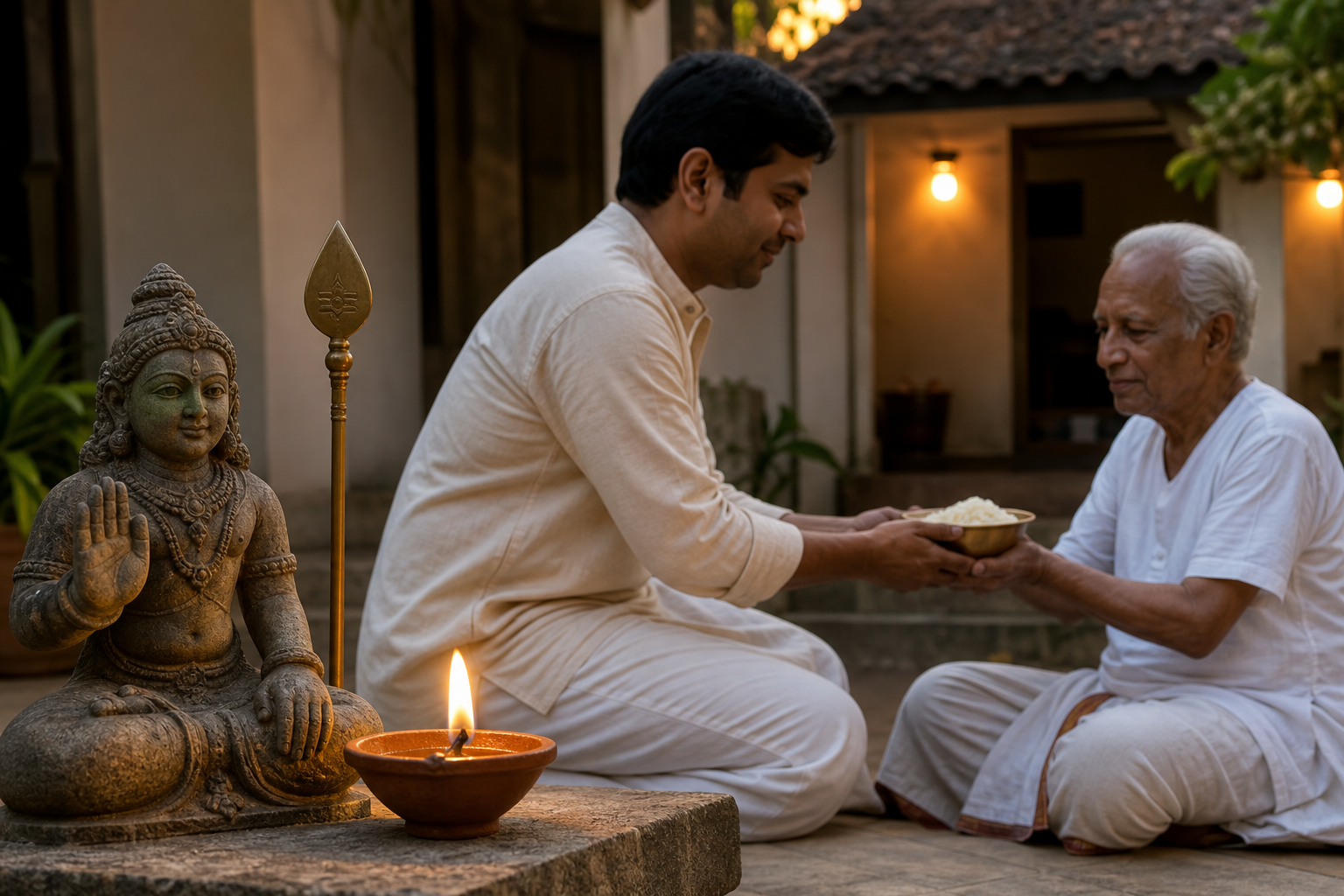
Sacred symbolism becomes practical when you read its whole grammar rather than isolating an attractive meaning. Use four questions:
<!– wp:list {