

You may still speak to someone who has died. You may remember their advice before a difficult decision, see them in a dream, or feel their absence most sharply during a family ritual. The practical question is not whether you should stop loving them. It is how to carry that love without turning remembrance into fear, guilt, or an attempt to hold them back.
Hindu dharma gives you a disciplined middle path. Honor the departed, perform the rites your family tradition entrusts to you, and let their virtues continue through your conduct. At the same time, accept that the relationship has changed. Love remains; physical possession and daily access do not.
Keep the bond, but release the claim
The Hindu understanding of death begins with a distinction: the body is impermanent, while the ātman is not extinguished with the body. Karma, saṁsāra, dharma, and the possibility of moksha place death within a continuing spiritual journey rather than treating it as simple annihilation.
This does not mean you can know the departed person’s present condition, location, or next birth. Nor does it mean every vivid memory is a message. Hindu confidence in the continuity of the ātman should produce humility, not speculation. You can pray for the departed and honor the relationship without claiming knowledge that has not been given to you.
A useful distinction is the difference between attachment and fidelity. Attachment says, in effect, that the relationship must continue on your terms. Fidelity preserves what was true and worthy in the relationship while allowing the departed to continue on their path. Vairāgya, or measured non-attachment, is not indifference. It is love freed from the demand to possess.
You can test the quality of your remembrance by its effects. Does it make you more truthful, compassionate, responsible, and able to fulfill your present duties? Or does it draw you into panic, compulsive interpretation, neglect of family, or dependence on people who claim secret access to the dead? The first direction turns memory toward dharma. The second calls for firmer boundaries and support.
Know what each remembrance practice is meant to do
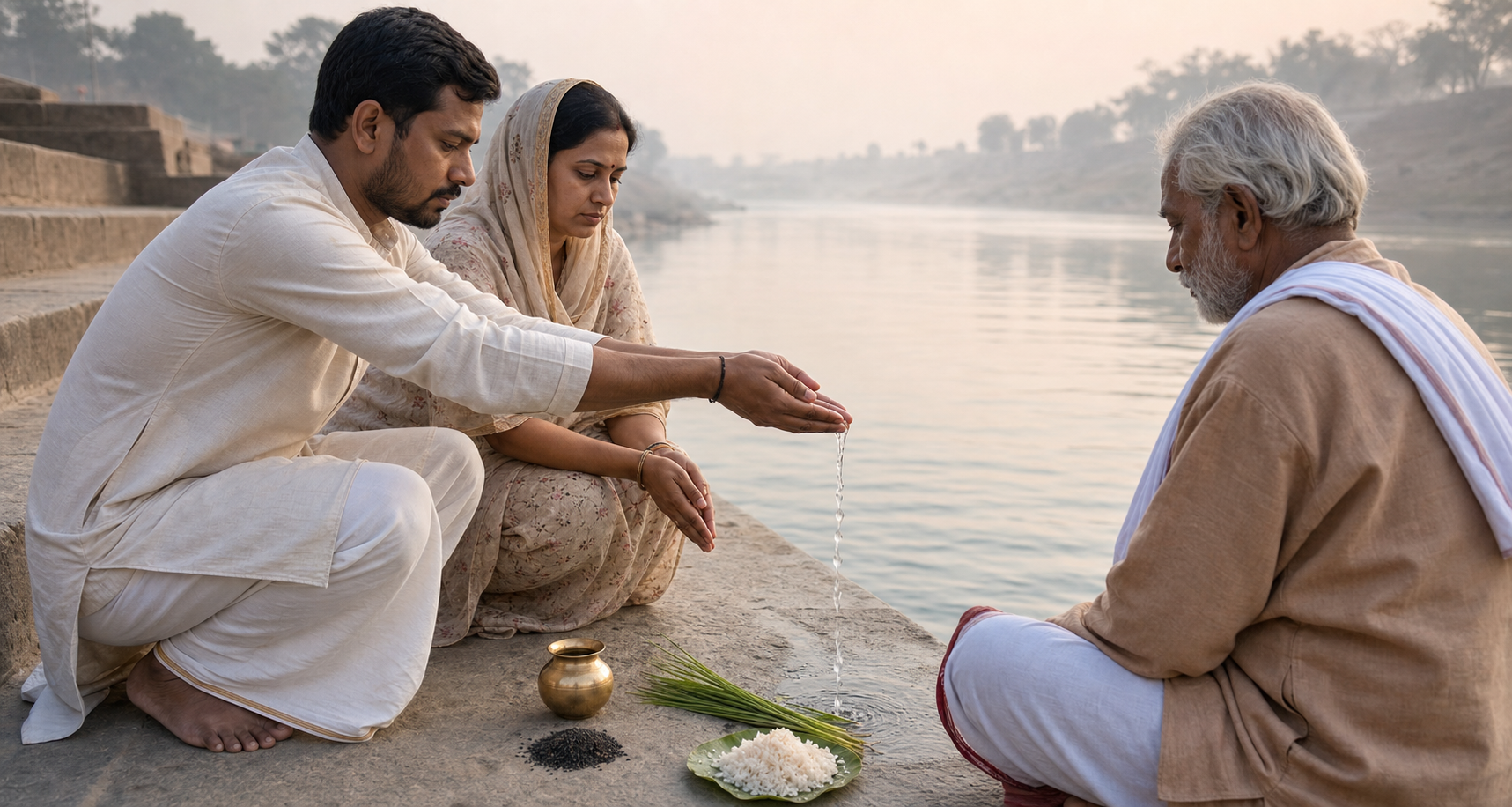
Hindu rites give grief a form. They prevent the bereaved from having to invent a response at the very moment when thought and emotion are unsettled. The details vary across region, lineage, community, and family custom, so the safest practical approach is to preserve the form you have received and ask a trusted priest or knowledgeable elder when you do not know it.
- Antyeṣṭi attends to the immediate passage. The final rites affirm the dignity of the deceased and direct the family’s care toward the onward journey of the departed. If a death has just occurred, this is the time to seek competent guidance from someone who understands your family’s sampradāya and local custom.
- Piṇḍa Dāna and Tarpana express continuing gratitude. Food and water offerings give ritual form to remembrance and obligation toward the pitṛs, the ancestors. Their meaning is not reducible to a transaction in which an offering purchases a result. They train the living in gratitude and responsible continuity.
- Śrāddha sustains ancestral duty. Through offerings, prayer, feeding, and charity, the family remembers the deceased with sincerity. The rite makes remembrance active: you do something worthy in the name of the person rather than merely revisiting the pain of absence.
- Pitṛ Paksha creates a shared season of remembrance. Water, sesame, food, and charitable acts may become part of the observance according to family practice. If your household has lost the procedure over time, recover it through a trustworthy elder or priest instead of assembling a dramatic ritual from disconnected material.
Ritual exactness matters, but sincerity and dharmic intention also matter. Do not use uncertainty about pronunciation or procedure as a reason to do nothing. Ask for help, learn the form, and begin with what your tradition permits. Conversely, sincere emotion is not a license to improvise practices that your family does not understand, especially attempts to compel contact with the departed.
If relatives disagree about procedure, separate the essential purpose from the disputed detail. The purpose is reverence, gratitude, prayer, and the fulfillment of duty. Let the person responsible for the rite follow qualified guidance. Avoid turning a memorial observance into a contest over whose grief is more authentic.
Build a home observance that steadies the mind
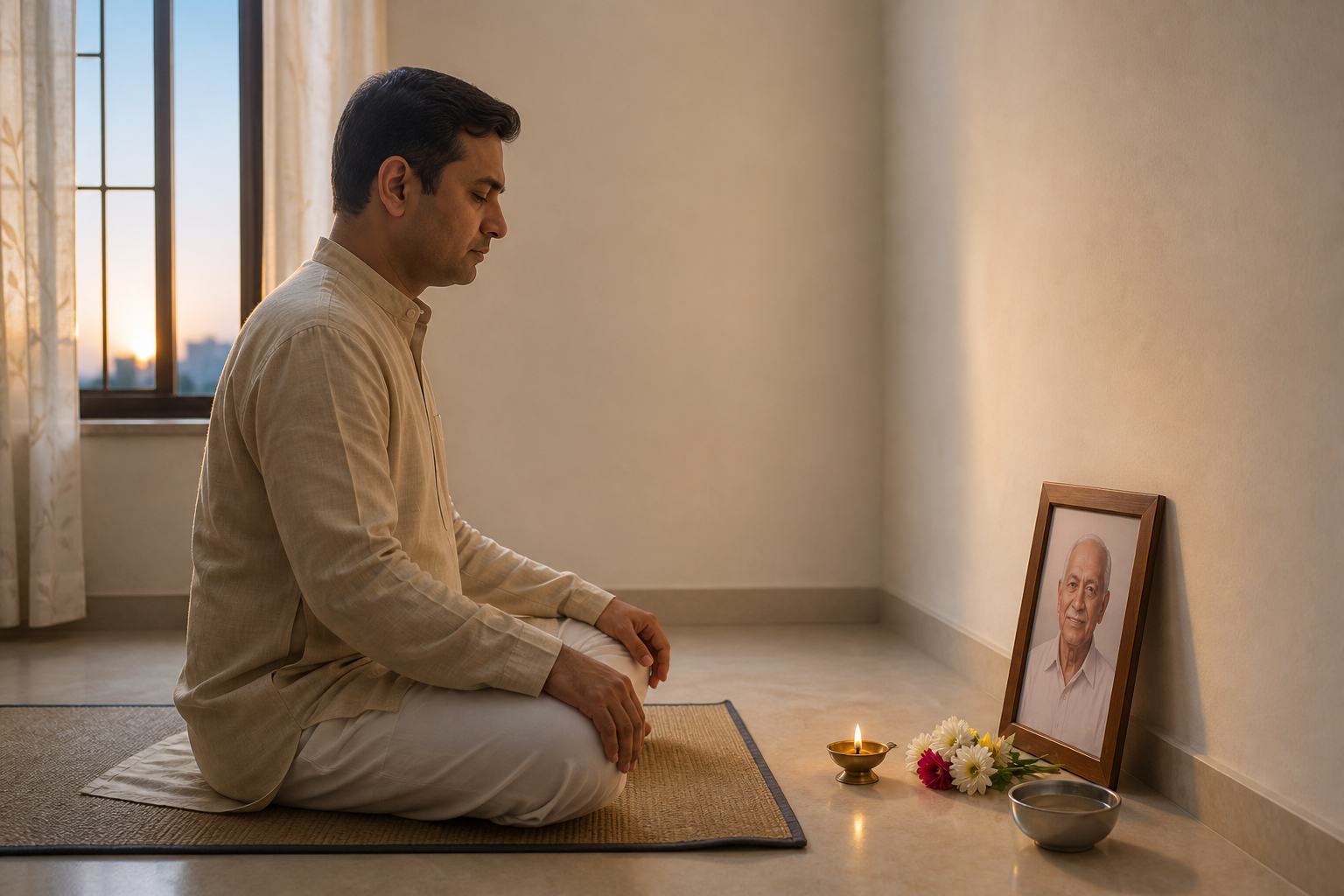
Formal rites mark important obligations, but grief also appears on ordinary mornings, anniversaries, festival days, and family milestones. A modest home practice can give those moments a dharmic direction. It need not be elaborate, and it should not become a daily test of whether the departed is responding.
- Choose a clean, quiet place. If your family keeps photographs of the deceased, follow its custom about whether the remembrance space is separate from the household shrine.
- Light a diya only when it can be tended safely. Let the flame mark attention and reverence, not an attempt to attract a presence.
- Settle the mind with a known practice. You might recite verses from the Bhagavad Gita, chant the Vishnu Sahasranama, repeat your regular japa, or offer a simple prayer consistent with your lineage.
- Name your gratitude concretely. Recall a virtue, teaching, sacrifice, or kindness that deserves to be carried forward. Specific gratitude is more formative than idealizing the person’s entire life.
- End with a dharmic resolve. Decide how the remembrance will enter conduct: speak truth in a difficult matter, help a relative, feed someone in need, support education, plant a tree, or perform another suitable act of seva or dāna.
- Return to present duty. Close the observance and resume the responsibilities before you. This final movement matters because remembrance should strengthen life, not suspend it.
On some days the practice may bring peace; on others it may bring tears. Neither reaction proves spiritual success or failure. The observance gives emotion a safe container, but it is not a technique for forcing a particular feeling.
You also do not have to preserve every object the person owned. Keep what carries real meaning, pass useful things to those who need them, and release objects whose only effect is to make ordinary life unmanageable. The bond lies in love, saṁskāras, duty, and values. It is not measured by the volume of possessions you retain.
Receive dreams and signs without surrendering discernment

Dreams of the departed can feel unusually vivid. A familiar phrase may come to mind at a decisive moment. A place, song, ritual, or family event may awaken a powerful sense of presence. Hindu thought leaves room for meaningful experience, but it also gives you the concept of saṁskāras: deep impressions through which love, memory, and habit continue to shape the mind.
You do not have to force every experience into one explanation. A dream can matter because it reveals grief, gratitude, fear, unfinished responsibility, or a deeply formed bond. Its value need not depend on proving that it was literal communication.
- If an experience leaves humility and peace, receive it gratefully, offer a prayer, and continue with your duties.
- If it highlights an ethical obligation, test that obligation against dharma. An impulse toward truth, reconciliation, charity, or responsible care may be acted upon when it is otherwise sound.
- If it produces fear or a demand for harmful action, do not obey it merely because it felt vivid. Return to prayer, japa, study, sleep, ordinary routine, and trusted human counsel.
- If you become preoccupied with decoding every coincidence, stop collecting signs. Record the experience briefly if that helps, then let it rest rather than building a private system of omens.
- If fear, perceived messages, or compulsive rituals disrupt daily life, speak with a trusted elder or priest and a qualified mental-health professional. Spiritual practice can support you, but it should not be used to avoid appropriate care.
Be especially cautious with anyone who promises guaranteed contact, claims that the departed is trapped unless you pay for repeated interventions, or encourages secrecy and dependence. Grief makes certainty attractive. That is precisely why sensational spirit-summoning and the commercialization of bereavement require clear refusal.
A sound practice should leave you freer to live by dharma. It should not make another person the gatekeeper of your relationship with the departed.
Let the departed become visible in the way you live
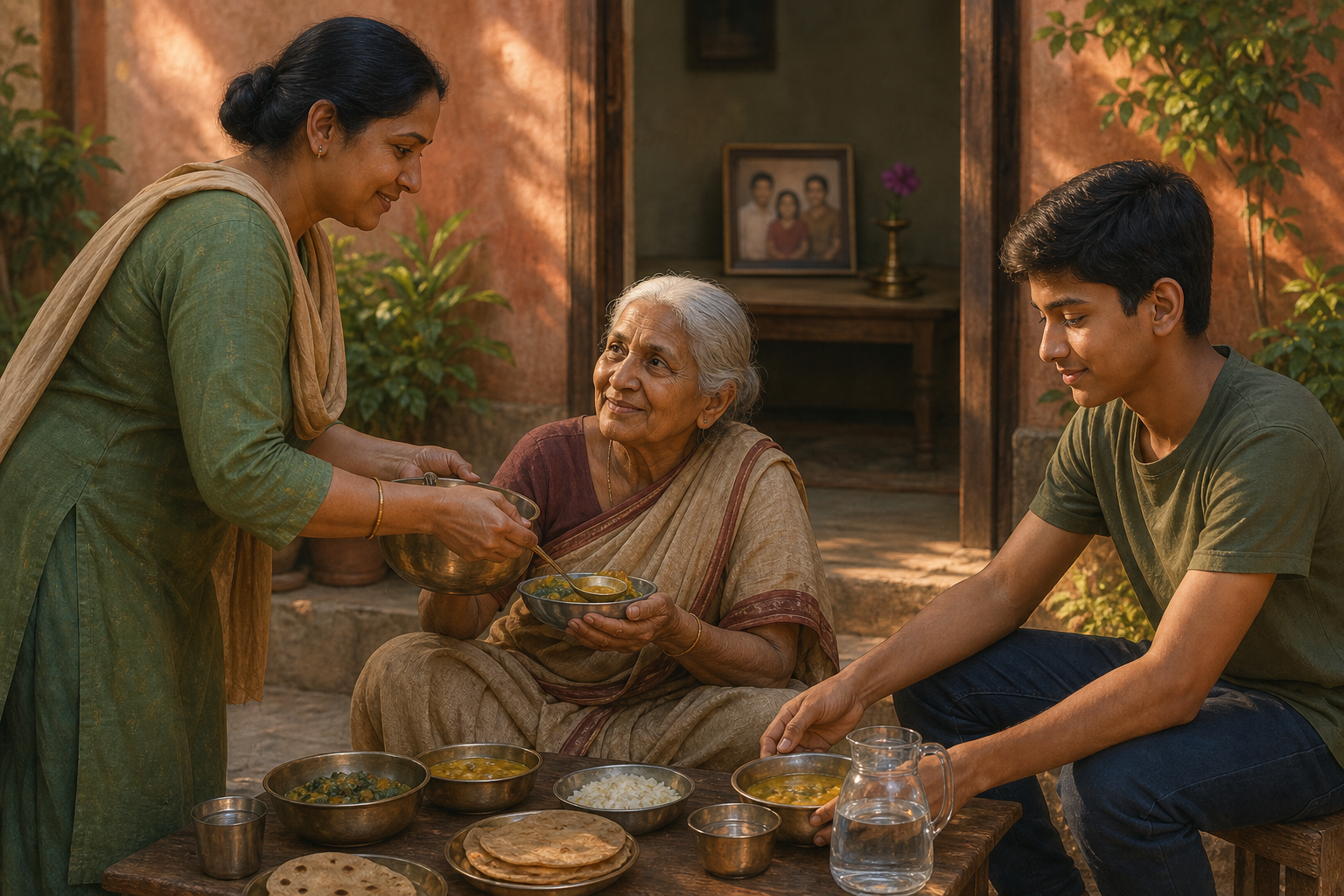
The most durable memorial is ethical continuity. Dāna, seva, ahimsa, and satya allow love to become useful in the world. You can dedicate the merit of a wholesome act to the departed while also addressing a real need among the living.
Choose an act that reflects the person’s best values or repairs something their life taught you to notice. Feed people if hospitality defined the household. Support education if learning mattered to them. Plant and care for a tree if stewardship fits the memory. Help relatives quietly if family duty was their strength. The important movement is from sentiment to sustained conduct.
Do not confuse honor with falsehood. A deceased person may have had virtues and faults, as all embodied people do. Satya does not require you to invent a flawless ancestor. If the relationship included harm, you may pray for the person’s onward good without denying what occurred or abandoning necessary boundaries. Remembrance can be respectful and truthful at the same time.
Family storytelling also needs this balance. Preserve letters, recipes, prayers, photographs, and accounts of meaningful choices, but tell children what those memories are meant to teach. A story about sacrifice should transmit responsibility. A story about generosity should lead to generosity. A name survives most fruitfully when it becomes attached to a virtue the next generation can practice.
In families that include several Dharmic paths, shared remembrance can rest on genuine common ground without pretending every tradition is identical. Buddhist dedication of merit, Jain commitment to ahimsa and restraint, and Sikh Ardas, Naam Simran, seva, and acceptance of hukam all place moral and spiritual transformation above sensational claims. Each person can retain the integrity of their own practice while joining in service, gratitude, and care for the family.
Key takeaways
- The Hindu bond with the departed is sustained through prayer, duty, memory, and virtue, not through possession or forced contact.
- Follow your family or sampradāya’s guidance for Antyeṣṭi, Piṇḍa Dāna, Tarpana, Śrāddha, and Pitṛ Paksha; ask a trusted priest or elder when the form has been lost.
- Use a simple home observance to move from grief toward gratitude and a concrete dharmic action.
- Treat dreams and perceived signs with openness and restraint. Meaning does not require certainty about supernatural communication.
- Reject paid guarantees of spirit contact, fear-based claims, and any practice that creates dependence.
- Carry one virtue of the departed into service, charity, truthfulness, or compassionate restraint.
Before your next remembrance day, choose one prayer you can offer, one worthy deed you can dedicate, and one truthful story you want the next generation to know. That is enough to begin. The bond is not preserved by refusing change; it is preserved by allowing love to mature into dharma.
References
