
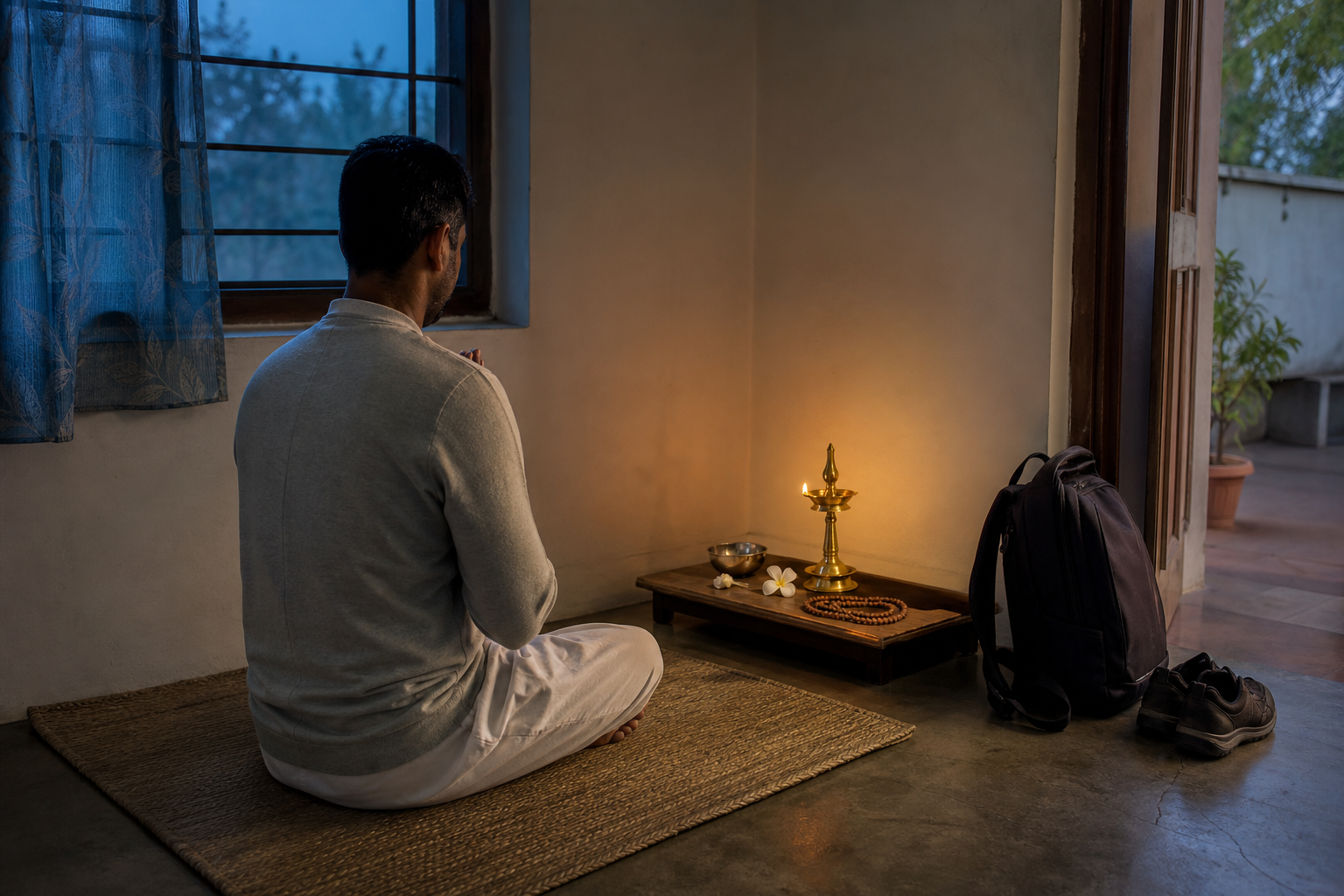
You may want a sacred morning but wake to an alarm, a crowded home, an irregular shift, or a phone already full of demands. You do not need to imitate an elaborate routine that collapses after a few days. You need a small, coherent order of practice that can survive ordinary life.
The aim is not merely to feel peaceful before breakfast. It is to give dharma the first claim on your attention, then carry that orientation into speech, duty, conflict, and service. A useful morning practice changes how you enter the day, not just what you do beside your meditation seat.
Let dawn change your first decision, not just your wake-up time
Within Dharmic life, dawn represents renewal, ethical clarity, and another opportunity to begin well. That meaning matters more than winning a contest over who wakes earliest. Brahma Muhurta can provide a quiet pre-dawn setting when it fits your health and responsibilities, but early rising is a support for practice, not a badge of spiritual seriousness.
If forcing an ideal wake-up time leaves you exhausted and resentful, the form is defeating the purpose. Practise soon after waking instead. A parent, caregiver, night-shift worker, student, and retiree will not have the same morning. The common discipline is to protect the first available quiet threshold from immediate distraction.
Begin with a sankalpa, a clear intention connected to conduct. Avoid a vague promise to be more spiritual. Choose something you will be able to recognise later in the day. For ahimsa, decide that irritation will not become contemptuous speech. For seva, identify a necessary task you will complete without waiting for praise. For gratitude, remember one gift you have received and the responsibility it places upon you. For equanimity, decide to pause before answering the situation most likely to provoke you.
This is disciplined optimism. It does not predict that the day will be easy. It trains you to meet difficulty without surrendering your judgement at the first setback. Do not judge the morning only by whether meditation felt serene. Notice whether you remember your intention under pressure, recover from agitation, and perform your duties with greater care.
Use one repeatable sequence from waking to action
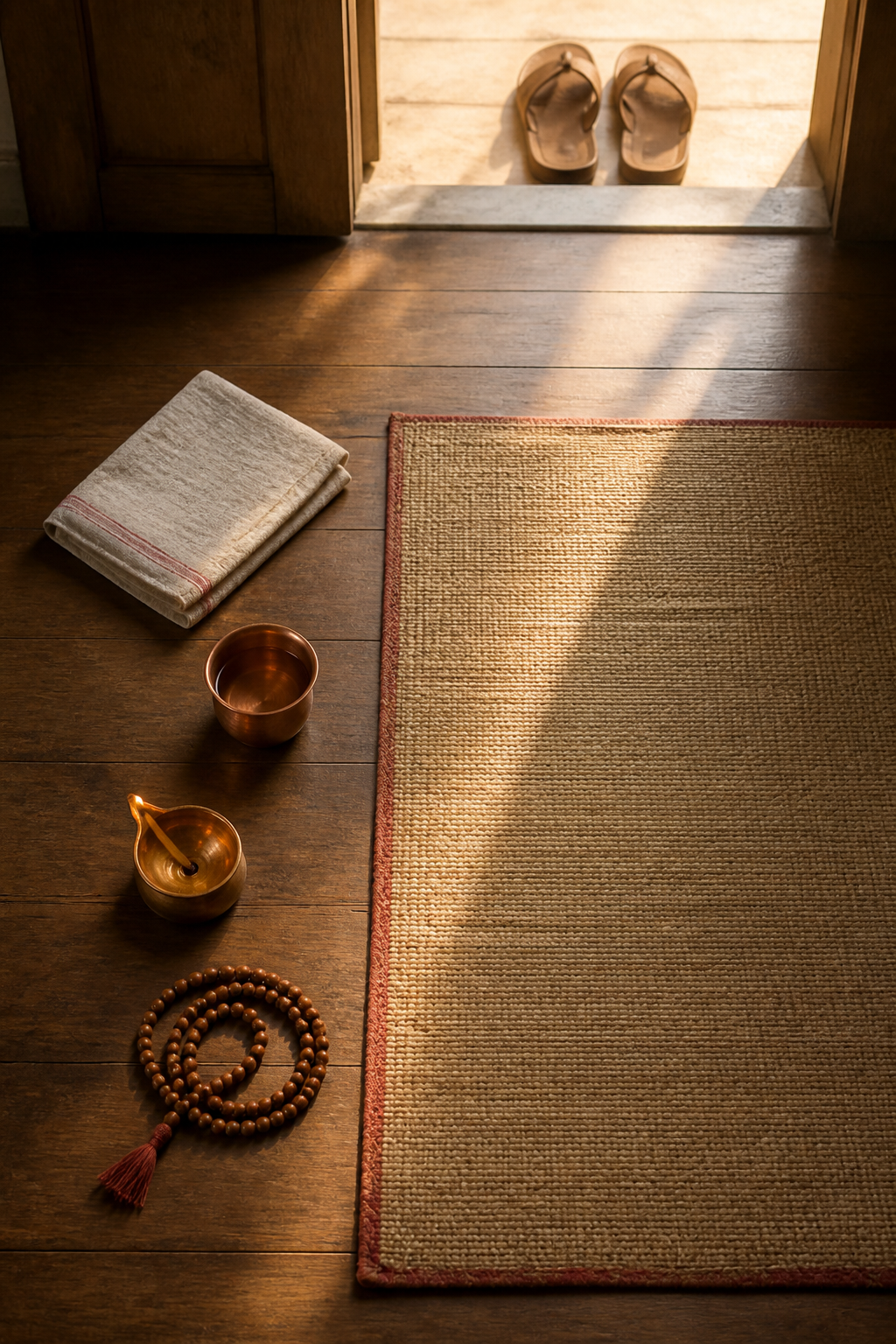
A routine becomes easier to sustain when every practice has a stable place. You should not have to negotiate with yourself each morning about what comes next. Use the following sequence as a framework, then adapt its length without changing its basic order.
- Prepare the threshold. Before sleeping, place your mat, mala, prayer book, or selected passage where you will see it. Decide where your phone will remain until the practice is complete. This removes the first avoidable choice of the morning.
- Wake and acknowledge the day. Before opening messages, sit or stand with awareness. Offer gratitude, bow, remember the Divine, or simply recognise that another day of action has been given to you. The gesture can be brief; its purpose is to interrupt automatic reactivity.
- Wash, drink, and meet natural light. Complete the cleansing appropriate to your household and tradition. Warm water can be included if it suits you. Look toward the morning sky, step into fresh air where possible, or stand quietly near daylight. Treat the contact with light, air, and the wider world as remembrance of interdependence rather than as background scenery.
- Steady the breath before directing the mind. Begin with natural breath awareness, then use gentle pranayama if it is already part of your practice. Do not strain or turn breathwork into a test of endurance. If breathing exercises or movement produce pain, dizziness, or distress, stop and seek guidance from an appropriately qualified teacher or health professional.
- Move with attention. Practise Surya Namaskara, mindful stretches, or another gentle form suitable for your body. Let movement awaken attention rather than become hurried exercise. If a physical limitation makes a posture unsuitable, adapt it instead of forcing the body to satisfy an image of the practice.
- Become still and remember what governs you. Sit for meditation, mantra japa, prayer, or the contemplative discipline of your path. Read a short passage from the Bhagavad Gita, an Upanishadic aphorism, a subhashita, or another text integral to your tradition. Stay with one teaching long enough to ask how it should affect the day in front of you.
- Convert remembrance into duty. State your sankalpa in plain language. Connect it to one likely circumstance: a difficult conversation, household responsibility, decision at work, act of service, or moment when impatience normally takes control. Then begin the day without treating the sacred portion as finished and unrelated to everything that follows.
The order matters. Breath and movement settle scattered attention; stillness and sacred remembrance give that attention a direction; sankalpa carries the direction into karma. If time is limited, shorten each element instead of repeatedly abandoning the whole sequence.
These practices may support composure, focus, and emotional steadiness, but spiritual discipline is not a substitute for medical or mental-health care. Persistent anxiety, severe sleep difficulty, pain, or other concerning symptoms deserve appropriate professional attention rather than a more punishing routine.
Keep one tradition at the centre of the practice
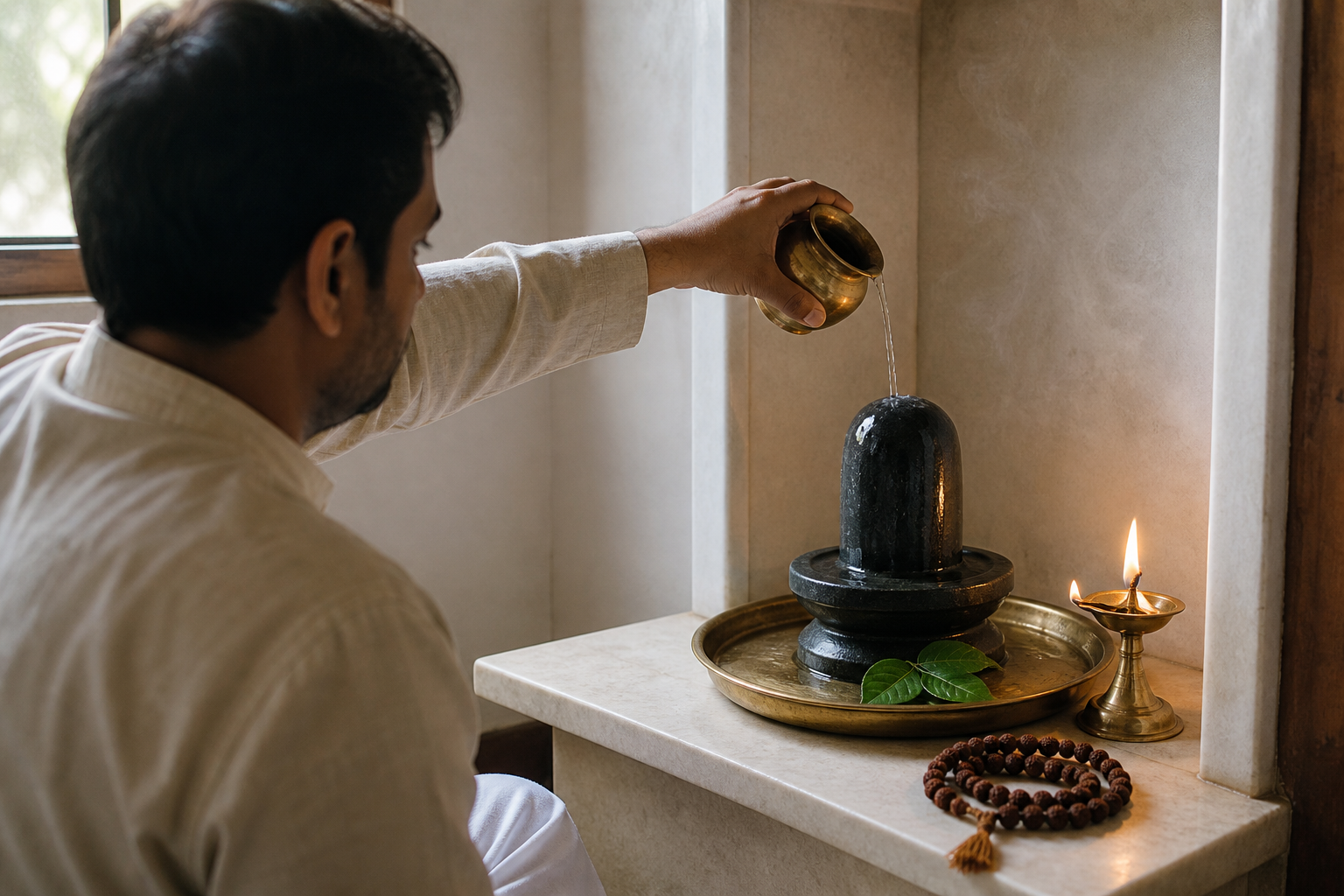
Hinduism, Buddhism, Jainism, and Sikhism share a recognisable morning architecture: wakefulness, disciplined attention, ethical recollection, and movement toward compassionate action. Their liturgies and philosophical purposes are not therefore interchangeable. Shared values make respectful understanding possible; they do not erase the integrity of distinct paths.
A Hindu routine may place Brahma Muhurta, Surya Namaskara, pranayama, meditation, mantra japa, and scriptural contemplation in one connected flow. A Buddhist morning may centre mindfulness and metta, using collected attention to cultivate compassion. Jain practice may use Samayik and Pratikraman to strengthen equanimity and ethical vigilance. Sikh discipline may be organised around Amrit Vela and Nitnem, joining devotion to courage and service. Across these forms, ahimsa, seva, gratitude, and inner discipline provide genuine points of kinship.
If you belong to a sampradaya, sangha, Jain tradition, or Sikh community, let its living discipline establish the core of your morning. Learn pronunciation, sequence, meaning, and appropriate adaptations from trustworthy teachers within that tradition. A generic wellness routine should not quietly displace the practice you are trying to inhabit.
If you are still exploring, choose one core method and remain with it consistently. You can learn from neighbouring Dharmic traditions without assembling a different spiritual sampler every morning. Constantly changing the mantra, text, meditation, and purpose makes it difficult to develop abhyasa or to notice what the practice is doing to your conduct.
Keep the test simple: does your chosen discipline make you more truthful, less needlessly harmful, steadier in duty, and more willing to serve? An impressive ritual that increases pride or becomes an excuse to neglect responsibilities requires correction. The morning is preparation for dharmic action, not an escape from it.
Protect continuity when the ideal morning disappears
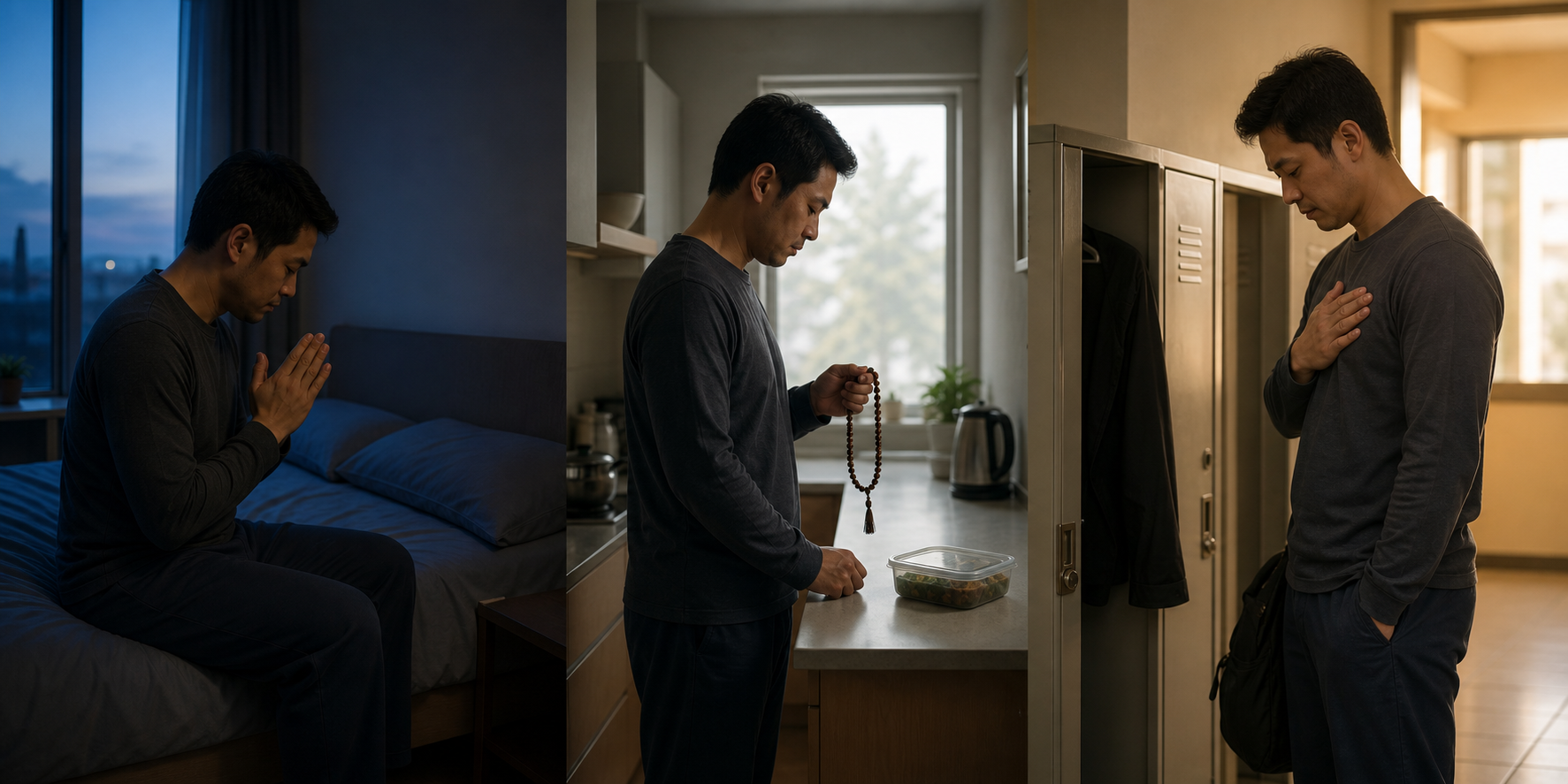
The routine will eventually meet travel, illness, caregiving, examinations, guests, late work, or simple human resistance. Decide on a compressed form before that happens. Otherwise, a disrupted morning easily becomes permission to do nothing.
Your compressed form can preserve the same architecture: acknowledge the day, follow the natural breath with attention, recite one familiar mantra or prayer, remember one teaching, and name the conduct it requires. If movement is possible, add a mindful stretch or a gentle round of your established practice. The point is continuity of orientation, not pretending that the shortened form is identical to an unhurried observance.
When privacy is unavailable, use ordinary actions as containers for attention. Wash without rushing, remember the mantra while preparing the household, notice the breath before opening the first message, or let an act of caregiving become conscious seva. This does not mean every activity automatically becomes spiritual. Intention, presence, and ethical direction are what transform the activity.
If your work reverses the usual day and night pattern, anchor the practice to your first quiet waking period rather than forcing a conventional schedule that undermines sleep and duty. If you miss the morning completely, resume at the next honest opportunity and return to the sequence after the next waking. Do not invent a punishment, double the routine, or allow guilt to become another form of self-absorption.
When resistance persists, reduce complexity before abandoning the practice. Keep the same place, the same opening gesture, and the same core recitation or contemplation. Add more only after the smaller form has become dependable. Abhyasa grows through return.
Key takeaways for your next morning
- Protect the first quiet threshold after waking instead of measuring devotion only by the clock.
- Follow a stable order: acknowledge, cleanse, breathe, move, become still, remember dharma, and set an intention.
- Make sankalpa observable by tying it to speech, duty, restraint, gratitude, or service.
- Keep one living tradition at the centre; honour shared Dharmic values without treating distinct practices as interchangeable.
- Prepare a compressed routine for disrupted days so that reduced practice does not become abandoned practice.
- Judge the fruit by conduct under pressure, not only by calm sensations during meditation.
Before you sleep tonight, choose the place, the core practice, and the one dharmic quality you intend to carry into tomorrow. On waking, keep the phone aside until that sequence is complete. Begin small enough to return without drama, and let consistency earn every later addition.
References
