
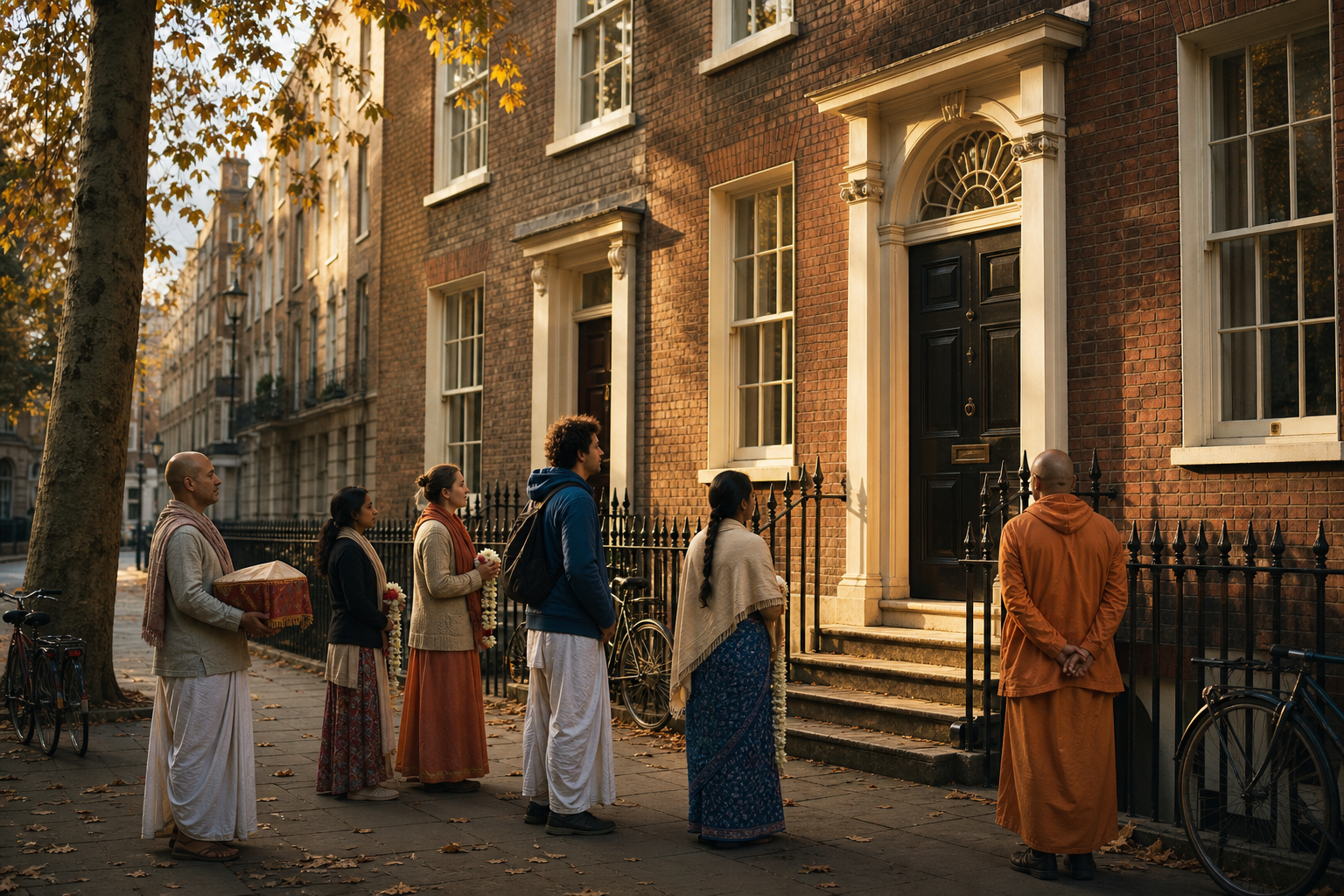
If you heard that ISKCON has “returned” to Bury Place, you may be wondering whether London’s original Radha Krishna temple has already reopened. The clearest answer is narrower: ISKCON UK has acquired the historic property. Restoration, regular worship, public access and programming are separate stages that still require their own details.
That distinction does not make the acquisition less important. It makes the achievement easier to understand accurately. A formative place in British Hindu history is once again under the stewardship of the community whose devotional life gave the address its significance.
What has returned to ISKCON—and what has not
On 25 November 2025, ISKCON UK acquired 7 Bury Place in Bloomsbury, near the British Museum—the address widely remembered as London’s first Radha Krishna Temple. The confirmed milestone is ownership of the historic site.
The word “return” can blur several different milestones. Keeping them separate will help you avoid passing along claims that have not yet been established:
- Acquisition: ISKCON UK has secured the property.
- Restoration: the building’s proposed works, retained historic features and timetable require separate information.
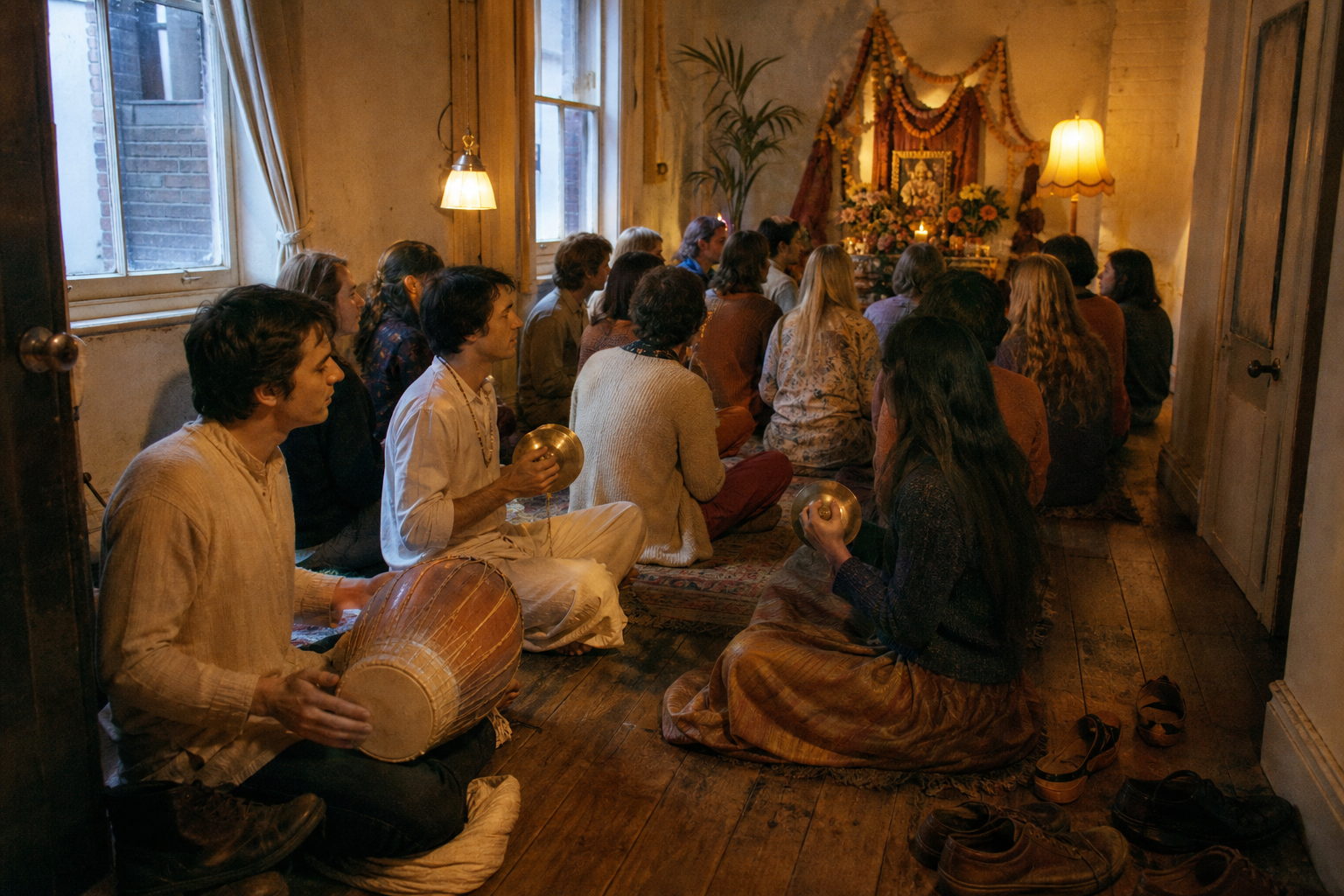
- Devotional use: the form and frequency of worship, kirtan and meditation require a programme.
- Public access: opening dates, visiting hours, booking arrangements and accessibility cannot be inferred from ownership alone.
If you hope to visit, do not treat the acquisition date as a reopening date. Check current access directly before arranging travel. If you discuss the development publicly, “ISKCON UK has acquired the original temple site” is more precise than “the temple is now open again.”
Why this particular address matters
A historic temple is not significant merely because an organisation once occupied it. Its importance comes from the relationship between place, practice and people. Bury Place became associated with Radha Krishna worship, kirtan, study, reflection and community engagement in central London. Recovering the address therefore restores a physical link to the period when these practices were becoming visible to a wider public in the capital.
Its Bloomsbury setting adds another layer. The British Museum represents the collection and interpretation of cultures through objects. A living temple nearby offers something different: a tradition encountered through worship, music, teaching, hospitality and disciplined practice. One preserves and presents artefacts; the other allows a spiritual inheritance to be lived. Bury Place can connect those modes of understanding without confusing them.
You can judge the strength of the revival by looking for three kinds of continuity:
- Continuity of place: the history of 7 Bury Place remains visible and intelligible rather than becoming a name attached to an unrelated project.
- Continuity of practice: worship, kirtan, meditation and learning retain a central role rather than serving as decorative references to the past.
- Continuity of service: the site welcomes both an established devotional community and people encountering dharmic traditions for the first time.
This is also why personal memories matter. Former visitors may remember a chant, a class, a shared meal or a moment of quiet more vividly than architectural details. Those memories do not replace a documented institutional history, but they reveal how the temple was actually experienced. Preserving them carefully can prevent the restored building from telling only the story of property ownership.
A dharmic space should build understanding without erasing difference
Radha Krishna worship belongs to a distinct Vaishnava devotional tradition. That identity should remain clear. At the same time, a renewed Bury Place could host thoughtful encounters with Buddhism, Jainism and Sikhism around concerns such as compassion, disciplined living, service and the search for truth.
The useful model is neither isolation nor a vague “all paths are the same” message. Shared dharmic ground does not make doctrines, histories or forms of practice interchangeable. A Buddhist account of liberation, a Jain understanding of ahimsa, a Sikh commitment to seva and a Vaishnava practice of bhakti should be allowed to speak in their own terms.
If exhibitions or dialogues are developed, ask one practical question: can a participant recognise both the genuine connection and the genuine distinction between the traditions? A programme that can do both will teach more than one that reduces Dharma to generic spirituality.
The practical test of a responsible renewal
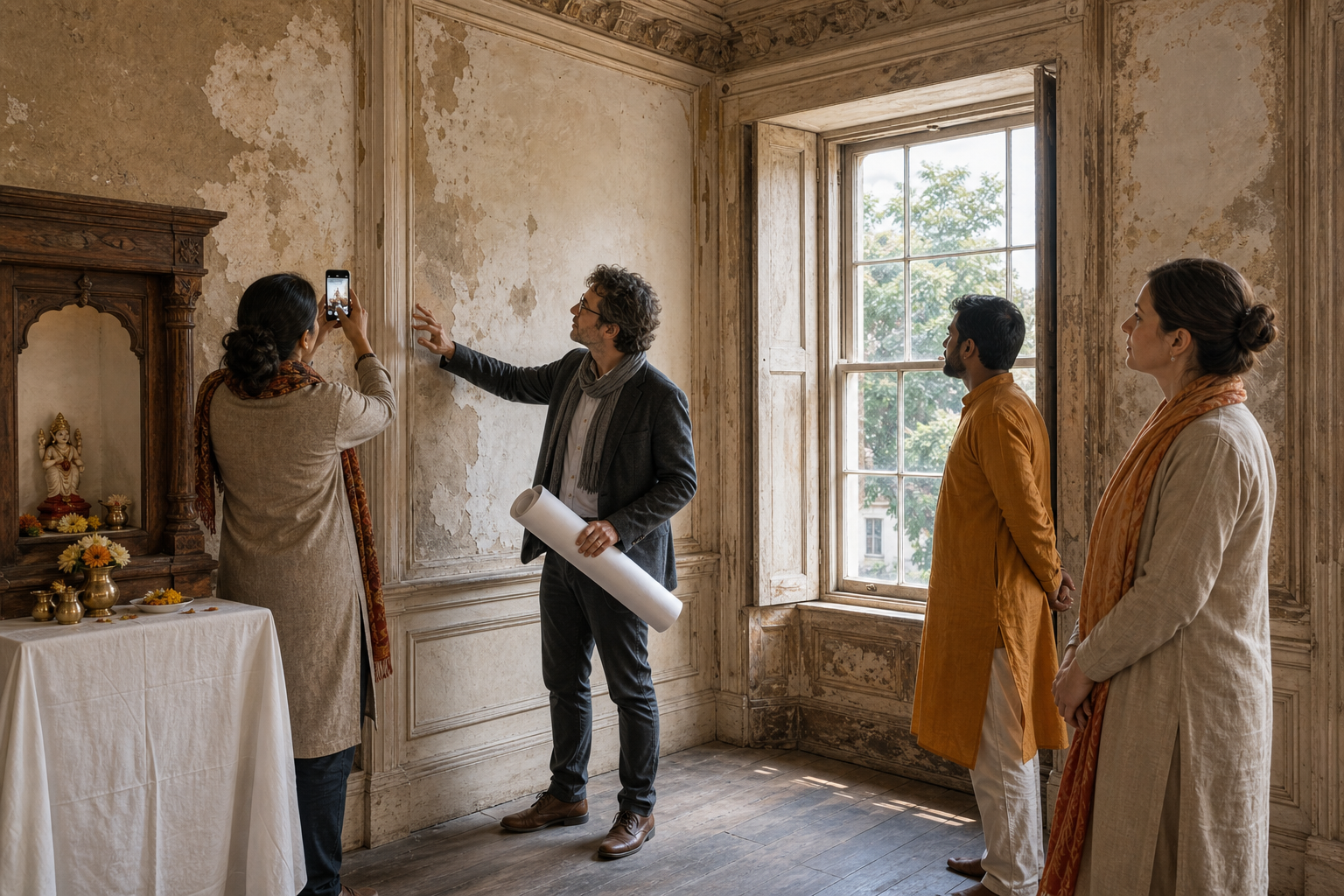
Restoration and adaptive use have to work together. Preservation should not freeze Bury Place into a museum of former devotion. Adaptation should not strip away the history that makes the building worth recovering. The goal is a place that can carry memory while serving present-day needs.
As plans become public, look for concrete answers in five areas:
- Historic character: which features and stories will be preserved, interpreted or restored?
- Devotional purpose: how will Radha Krishna worship, kirtan, meditation and study shape the ordinary life of the site?
- Visitor access: who can enter, when can they visit, and what guidance will help a newcomer participate respectfully?
- Education: will exhibitions, youth activities and cultural programmes explain the site’s history rather than merely using its prestige?
- Community relationship: how will former participants, younger generations, neighbours and visitors contribute without obscuring the temple’s spiritual purpose?
These questions turn “heritage” from a ceremonial label into an accountable programme. They also make it possible to assess progress without demanding that every function begin at once. Careful conservation, devotional preparation and safe public access may proceed on different timelines.
Key takeaways
- ISKCON UK has acquired 7 Bury Place, the historic site associated with London’s first Radha Krishna Temple.
- The acquisition is a return of stewardship; it does not by itself establish a reopening date or visitor schedule.
- The site matters because it joins a physical address to living memories of worship, kirtan, study and community life.
- A strong renewal will preserve history while making room for contemporary devotional, educational and cultural use.
- Dialogue with other dharmic traditions should identify shared values without flattening their important differences.
What you can do as the next chapter develops
If you are planning a visit, wait for explicit information about public access and confirm it before travelling. If you are sharing the news, describe the acquisition precisely and keep proposed future uses in the future tense.
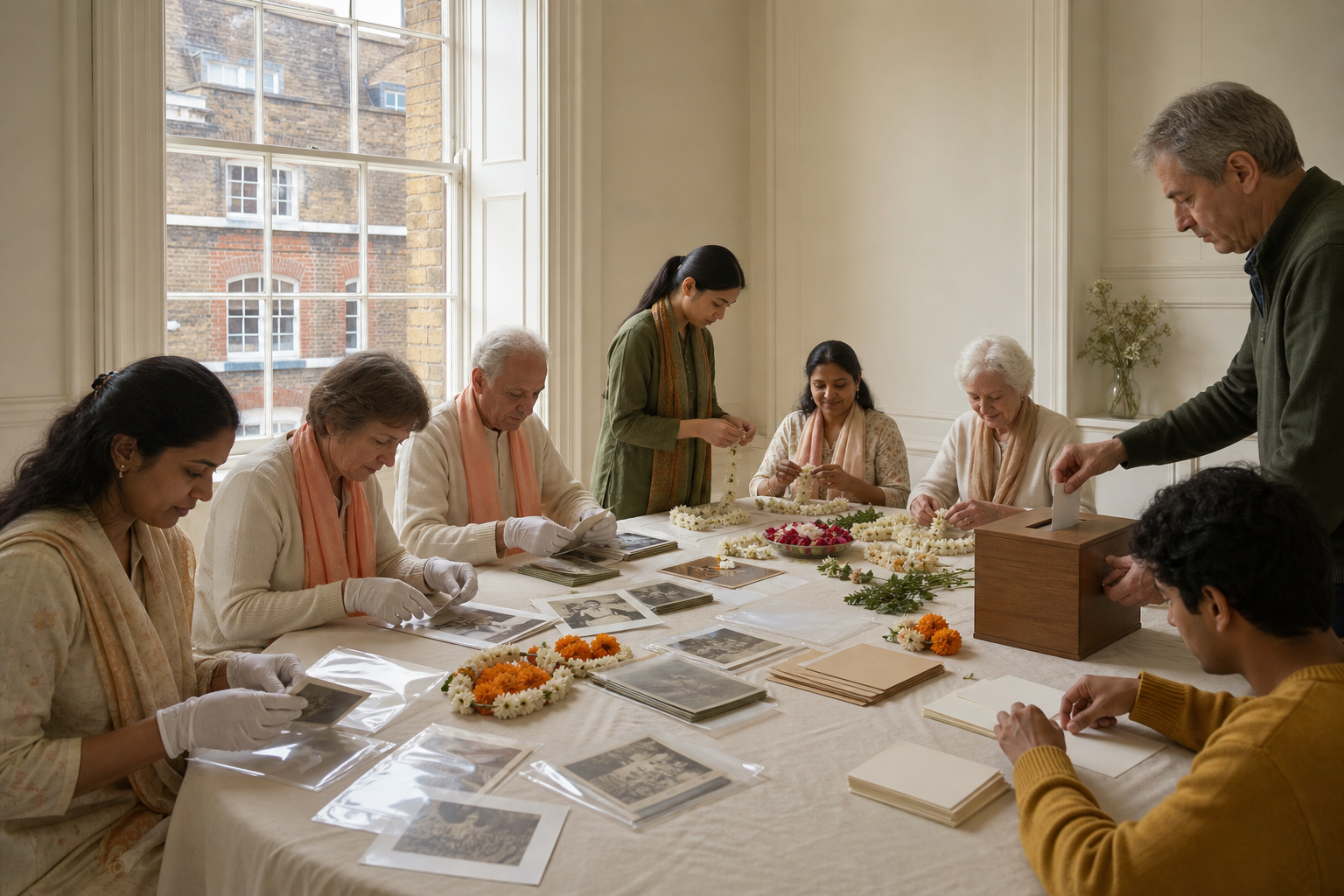
If you knew the earlier temple, record what you can substantiate: approximate dates, the activities you attended, the people you personally knew and the meaning the place held for you. Label copied photographs and documents clearly, retain the originals, and obtain consent before publishing identifiable personal stories. A usable archive depends as much on context and permission as it does on the material itself.
If you belong to a dharmic, educational or local community, prepare one concrete contribution rather than a broad offer of support. That might be a carefully documented memory, a youth-learning proposal, a dialogue with a defined question, or help making devotional activities intelligible to first-time visitors. The best contribution will strengthen the site’s identity instead of competing with it.
For now, mark the achievement accurately: a foundational address has been recovered. Then watch what follows. The lasting measure of the return will be whether 7 Bury Place again unites historic memory, serious devotion, thoughtful teaching and welcome under one roof.
References
