
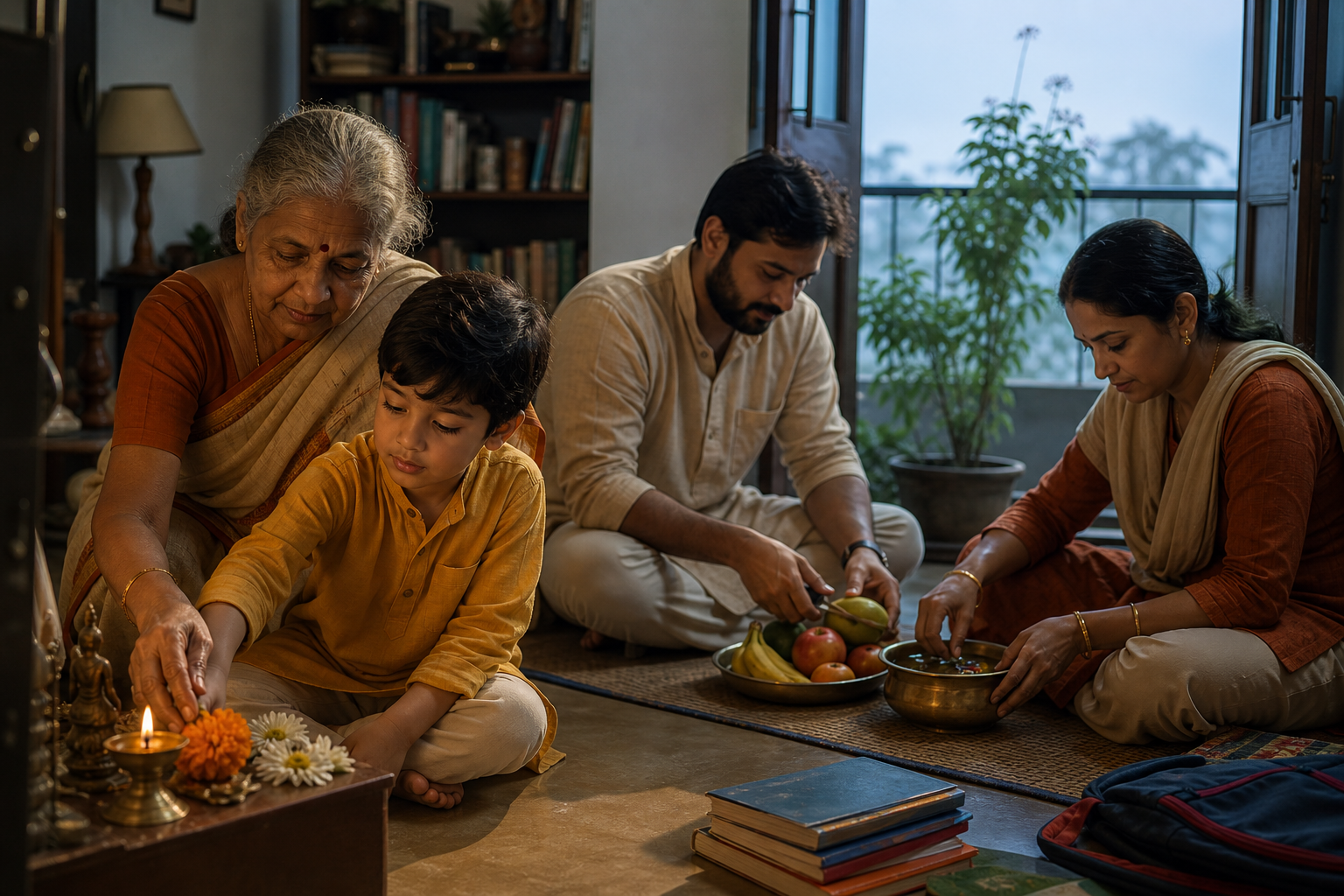
If you are worried that Hindu culture is becoming an occasional festival, an online argument, or an inherited label in your family, ask a more useful question: can the next person practise, explain, and carry what you hand them?
Cultural renewal begins when continuity becomes visible in ordinary life. You do not need to reconstruct an imagined past or make every Hindu household look alike. You need to identify what deserves transmission, make it teachable, and adapt its form without emptying its meaning.
Resilience is a chain of transmission, not a mood
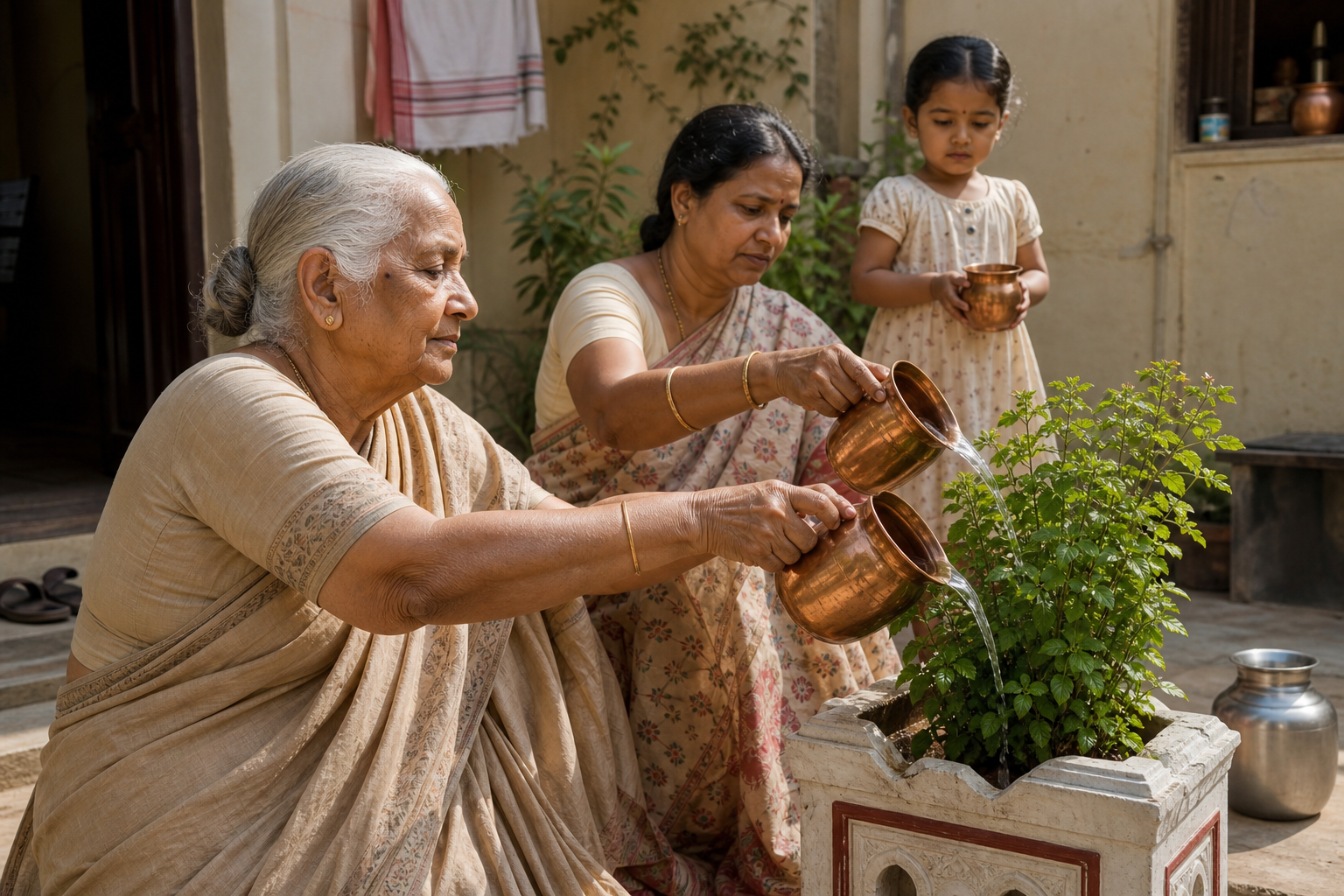
Hindu civilization has carried itself through invasions, colonial rule, and internal debate, but endurance has never been a passive condition. Continuity depended on people who kept worshipping, teaching, interpreting, celebrating, and rebuilding. A tradition survives because someone receives it in a usable form and accepts responsibility for passing it onward.
That distinction matters. Pride can strengthen commitment, but pride alone cannot teach a prayer, explain a festival, preserve a family custom, or prepare someone to lead an observance. If a practice disappears whenever the most knowledgeable elder is absent, the family has participation but not transmission.
Use four questions to examine any practice you want to preserve:
- Can someone perform it? Identify the actions, words, materials, sequence, and appropriate setting. Do not rely on “we always do it this way” as the only instruction.
- Can someone explain it? Ask what the practice expresses: devotion, gratitude, remembrance, ethical discipline, hospitality, purification, study, service, or another purpose.
- Can someone locate trustworthy guidance? Name the elder, teacher, temple, matha, community, or text that can answer questions when memory is incomplete.
- Can someone carry it forward? Give a younger or less experienced participant a real role. Watching indefinitely is not apprenticeship.
This audit will reveal where the chain is weak. You may have a well-attended celebration with no explanation, a collection of books that nobody opens, or a moving household ritual that only one person knows how to conduct. The remedy should match the weakness. Add instruction where knowledge is missing, participation where practice is passive, and institutional support where a household is isolated.
Historical memory also needs this discipline. Remembering destruction and discrimination is legitimate, but injury cannot become the whole curriculum. Whenever you teach what was attacked or lost, also teach what people preserved, how they preserved it, and what responsibility now falls to you. Memory then produces agency rather than permanent grievance.
Preserve the purpose while allowing the form to breathe
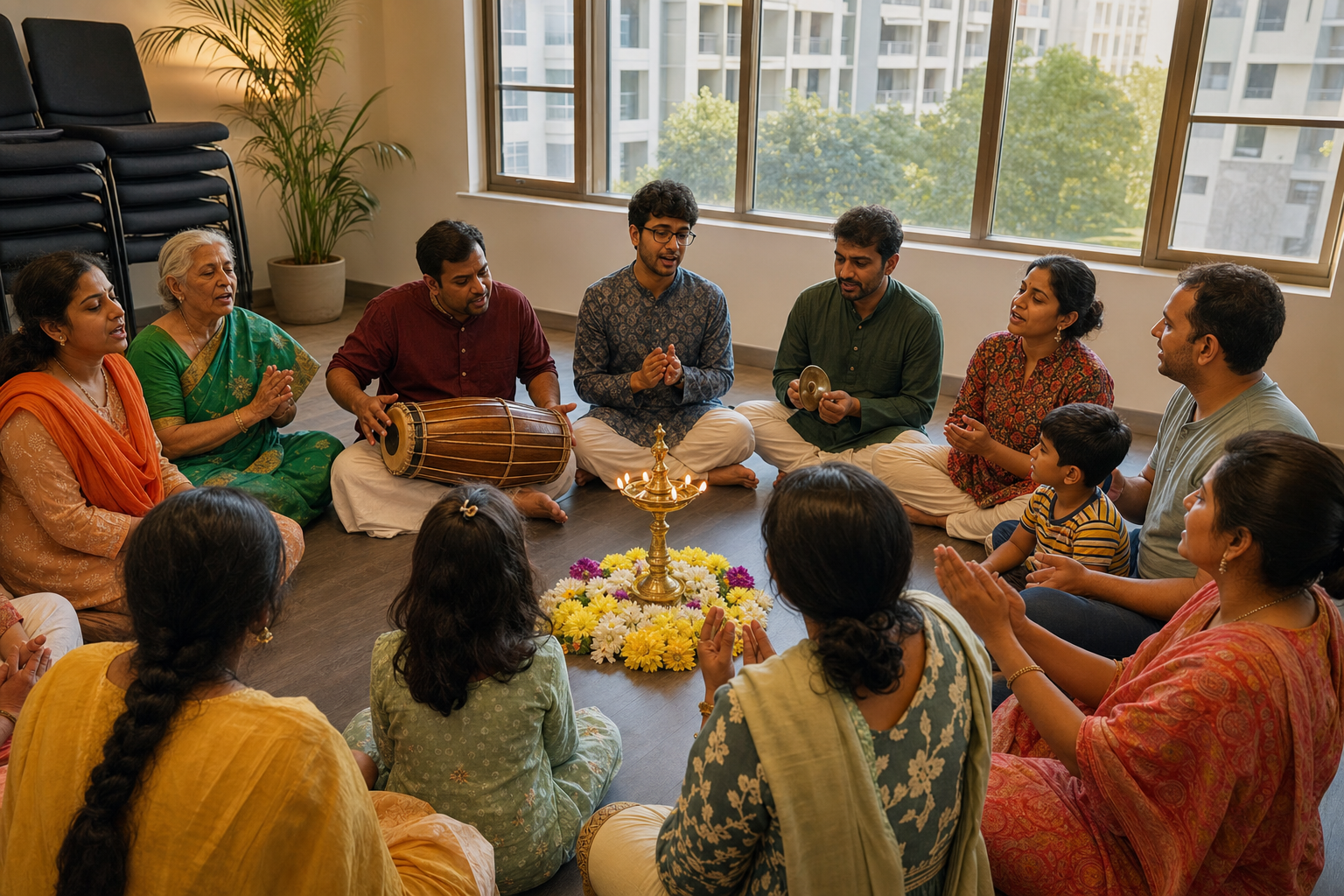
Renewal fails in two opposite ways. One treats every inherited form as untouchable, even when nobody understands or can sustain it. The other changes practices so freely that only the cultural appearance remains. A living tradition needs continuity and adaptation at the same time.
Sanatana Dharma is equipped for that work because its philosophical life accommodates different deities, disciplines, interpretations, and paths. The idea of an Ishta, a chosen or cherished form of the Divine, makes room for personal devotion without requiring everyone to worship identically. Dharma supplies orientation and obligation without pretending that every person occupies the same circumstances. This latitude within a plural framework is not an absence of standards. It is a way of sustaining fidelity without demanding uniformity.
When you are deciding whether to modify an observance, separate three layers:
- Purpose: the spiritual, ethical, or communal work the practice is meant to do.
- Form: the prayer, gesture, story, offering, gathering, artistic expression, or discipline through which that purpose is embodied.
- Delivery: the language, timing, teaching method, location, and division of roles that make participation possible in your circumstances.
The purpose deserves the strongest protection. The form should be understood before it is altered. Delivery is usually where careful adaptation can begin. A household may place a translation beside an inherited prayer, distribute preparation among family members, or teach the sequence before expecting confident participation. These changes reduce avoidable barriers while keeping the practice recognizable.
Before approving a change, apply this test:
<!– wp:list {