
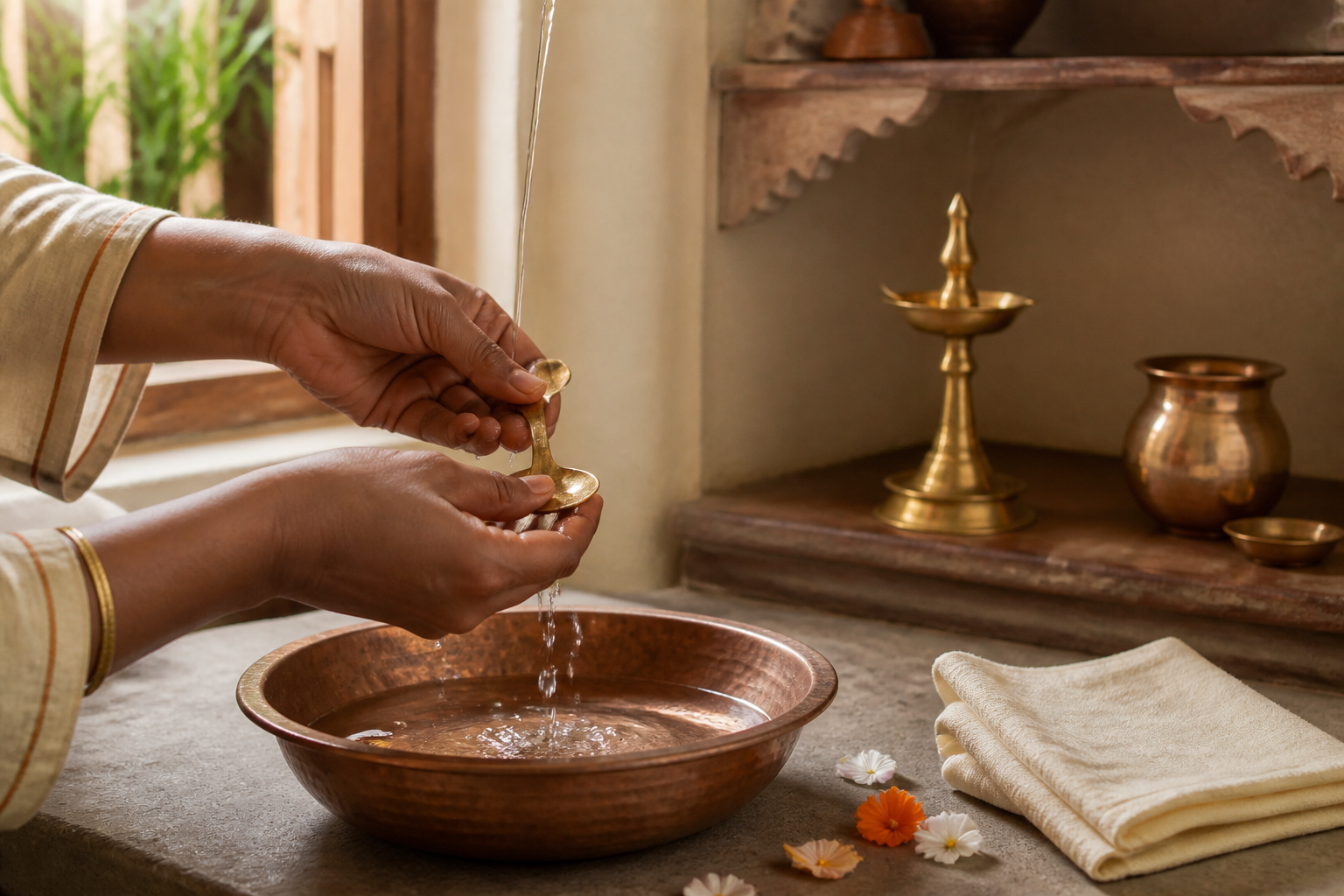
You notice a food remnant on a worship spoon, a flower has brushed an unclean surface, or a cloth used near the altar no longer feels ready for sacred use. The immediate question is practical: should you sprinkle it, rinse it, wash it thoroughly, or set it aside?
You can answer without turning household purity into an elaborate system. First distinguish sanitation from ritual fitness. Then judge whether the contact was slight or extensive, identify the material, and use the least intensive method that restores the article properly.
First separate sanitation from ritual purity
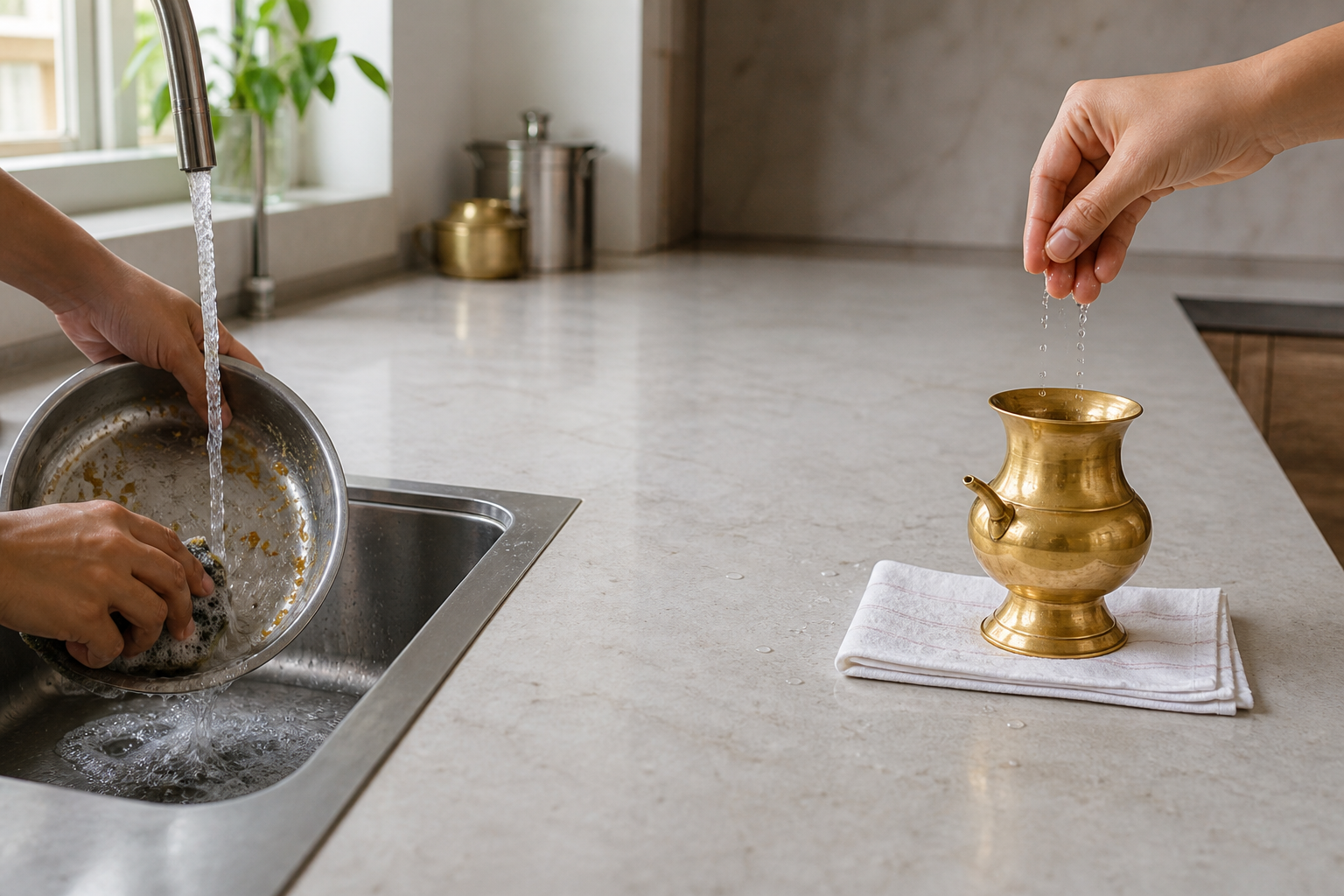
An article can look clean yet require purification before sacred use. It can also be ritually sprinkled yet remain physically dirty. These are different conditions, and confusing them produces either needless anxiety or inadequate cleaning.
Deal with ordinary hygiene first. Remove visible food, dirt, spoiled matter, or other residue using a method appropriate to the material. Sprinkling is not a substitute for removing grime, making spoiled food edible, or sanitising something that presents a genuine health concern. Ritual purification begins after any necessary physical cleaning has been addressed.
The reverse mistake is excessive treatment. A brief, superficial contact does not automatically call for soaking, abrasive scrubbing, harsh chemicals, or disposal. Traditional household guidance distinguishes slight contamination from extensive contamination precisely because the response should fit the condition. Restraint protects sacred articles, reduces waste, and keeps purification from becoming an exercise in fear.
The detailed rules for conch shells, yajna ladles, kusha grass, flowers, and similar articles arise from a Hindu setting of Deity worship and sacrifice. They should not be presented as a single mandatory code for every Hindu, Buddhist, Jain, or Sikh household. Dharmic homes share values such as cleanliness, reverence, order, and non-harm, but each family should apply its own lineage, community, or place-of-worship discipline where that discipline is more specific.
Make the decision in five observable steps
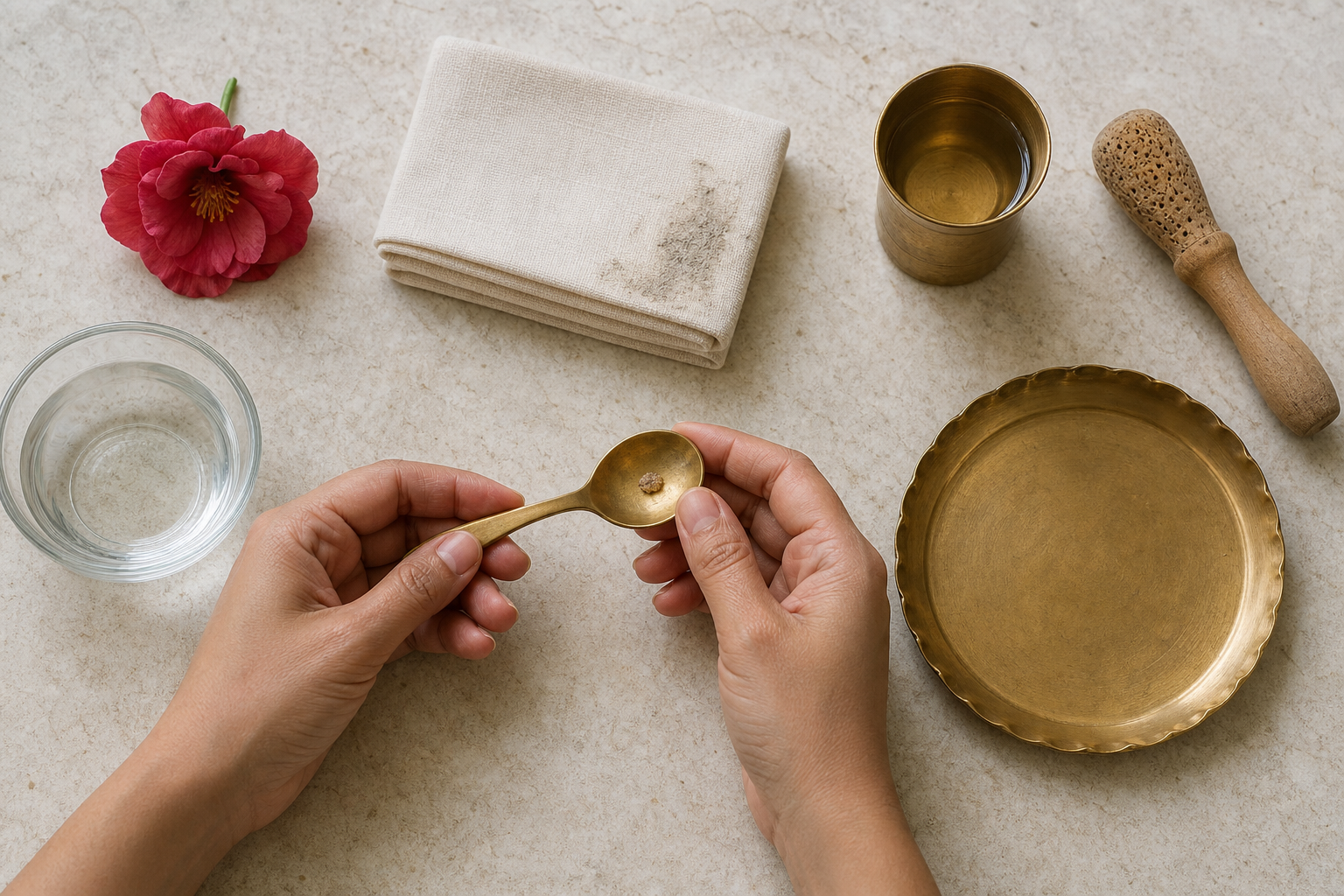
- Pause and separate the article. Put it in a designated rinsing place or on a tray for items awaiting attention. This prevents accidental return to the altar, kitchen, or storage area before you have decided what to do.
- Look for residue and spread. A brief touch with no visible remnant is different from food adhering to the surface, liquid soaking into cloth, or contamination covering a substantial area. Traditional rules do not supply a numerical threshold, so use what you can actually observe.
- Decide whether the contact was slight or extensive. For washable grains, textiles, fruits, flowers, grasses, and leaves, slight contact permits sprinkling, while extensive contact calls for washing. A useful household rule is simple: if residue remains, moisture has penetrated, or you cannot confidently call the contact superficial, treat it as extensive.
- Identify the material before choosing the method. Metal, stone, conch, wood, fabric, plant matter, and padded furnishings should not all be treated alike. The purifying medium may be water, but the way you apply it must respect the object.
- Dry, inspect, and return it deliberately. After purification, let the article dry as needed, check that no residue remains, and place it back in its clean location. Completion matters; a damp ladle abandoned beside the sink has not restored order to the household.
If you remain uncertain, wash a safely washable article rather than repeatedly sprinkling it and continuing to doubt. That does not mean stronger chemicals or harder scrubbing. It means moving one level up in thoroughness while staying within the material’s limits.
Match the method to the article
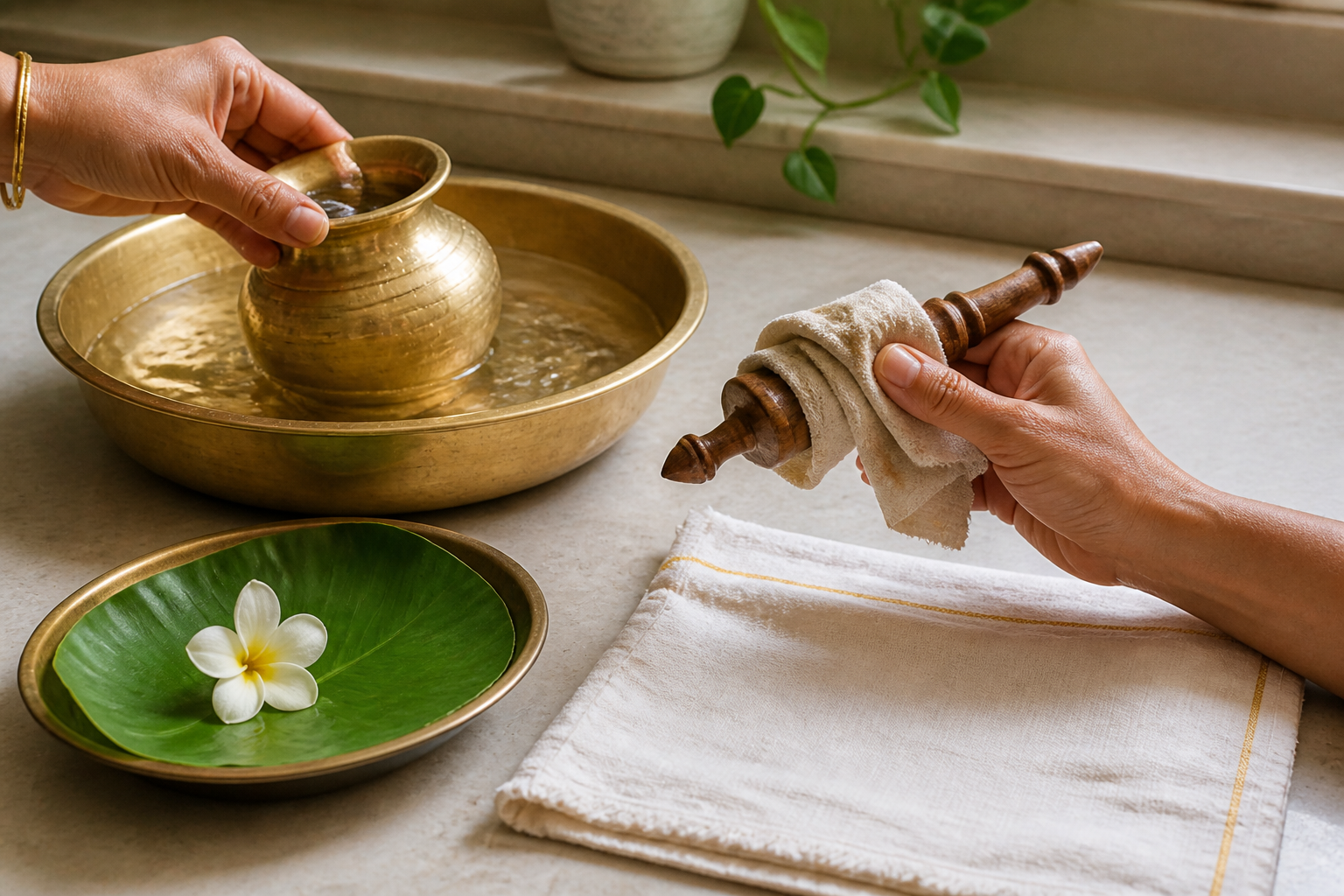
For the traditional categories used in household and worship settings, water is the default purifying medium for most listed articles. Warm water has a narrower role for wooden sacrificial ladles, while kusha grass provides gentle mechanical cleaning for other yajna utensils.
| Article or material | Purification method | How to apply it sensibly |
|---|---|---|
| Gold, silver, conch shells, jewels, stone articles, and spoons | Water | Rinse away the contact or remnant. Avoid adding abrasive treatment when water is sufficient. |
| Sruk and sruva, the wooden ladles used in yajna | Warm water | Use a brief, purposeful rinse. Do not interpret warm water as boiling water or prolonged soaking. |
| Other yajna utensils | Kusha grass and water | Scrub gently with clean kusha reserved for sacred use, then rinse as appropriate. |
| Asana, bed, and vehicle | Water | Apply water in a controlled way suited to the object. Purification does not require saturating padding, damaging finishes, or wetting mechanical or electrical parts. |
| Grains, traditional deerskin articles, cloth, thread, linen, fruits, flowers, grass, and leaves | Sprinkling for slight contamination; washing for extensive contamination | Let the degree of contact decide the method. Judge food safety and material care separately from ritual fitness. |
Water-first does not mean water-without-judgement. Modern articles may contain adhesives, dyes, coatings, wiring, padding, or delicate settings not represented by the material’s traditional name. If water would damage an object, do not immerse it merely because it contains metal, wood, or stone. Use controlled application, follow the established practice of your household, and seek guidance from the person responsible for the sacred space when necessary.
The slight-versus-extensive distinction is especially important for cloth and plant materials. A few drops sprinkled over an otherwise clean cloth are suitable only when the original contact was minor. If food has soaked into it or visible matter remains, wash it. If washing would spoil a flower, fruit, or grain that is also meant to be offered or eaten, do not assume ritual washing resolves the practical problem; replace or dispose of it when ordinary hygiene requires that choice.
Build a clean path, not a complicated ritual
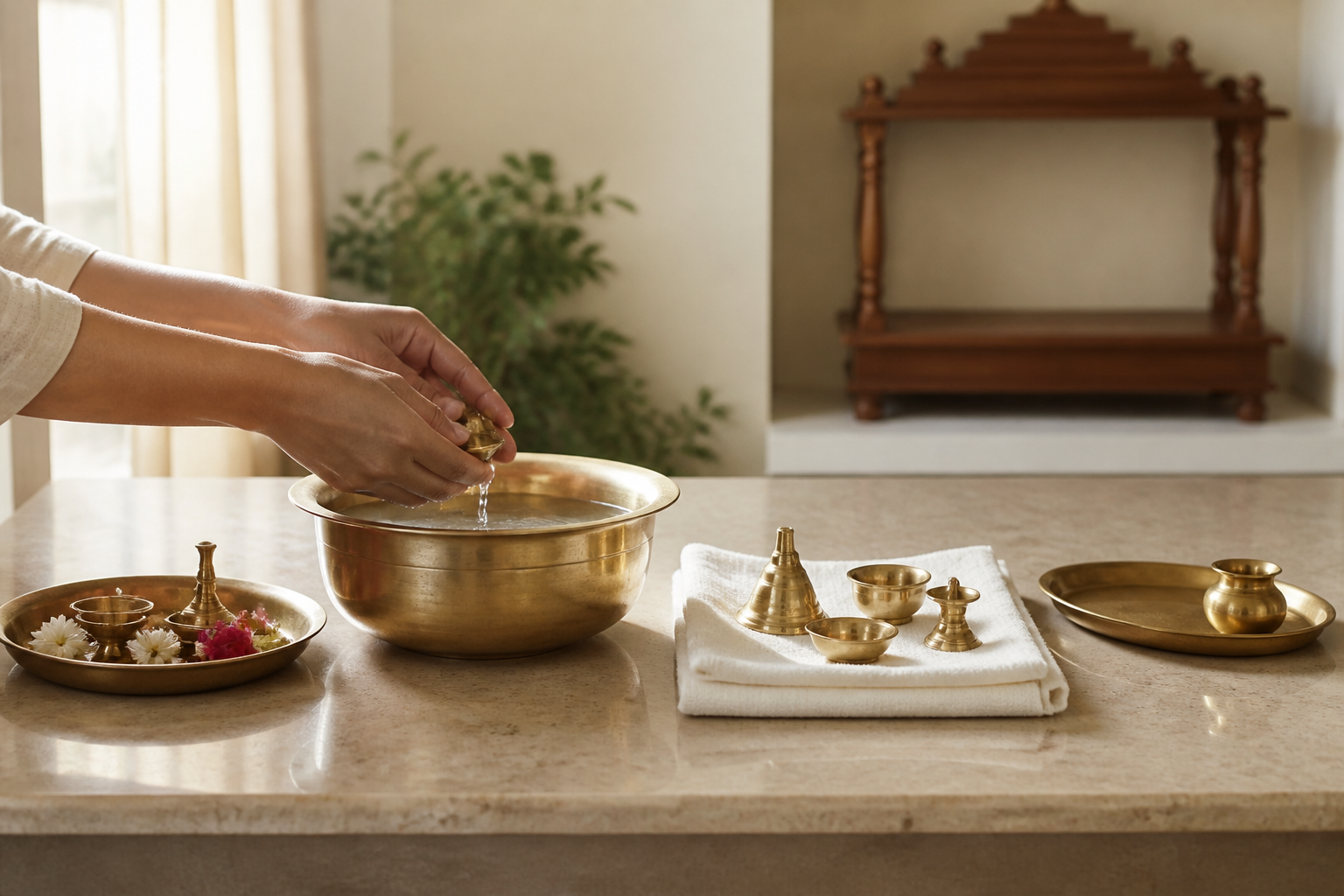
The easiest purification routine is one in which every article has a clear path from contact to restoration. A household becomes confused when objects awaiting purification are mixed with clean ones, the sprinkling vessel is used for unrelated work, or nobody knows whether the altar has been reset.
- Choose one rinsing area. It can be modest, but everyone should know that articles placed there are awaiting attention.
- Reserve a clean water vessel for sprinkling. Keep it clean and use it consistently for that purpose rather than searching for a container each time.
- Store kusha separately. Kusha used for sacred cleaning should remain clean, dry, and distinct from ordinary brushes or household scrubbers.
- Use two clear states. A tray, shelf, or cloth can mark “awaiting purification,” while another location holds articles ready for worship. This small distinction prevents guesswork.
- Reset after each use. Remove remnants, inspect the implements, purify what needs attention, allow it to dry, and return it to its assigned place.
This arrangement also makes the practice easier to teach. Give a child or other family member an observable task: place used spoons on the rinsing tray, refill the reserved water vessel, or return dry cloths to their clean shelf. Explain the reason in terms of care and readiness, not dread. Purification should correct the condition of an article; it should never be used to describe another person’s dignity or worth.
In a household that includes more than one Dharmic tradition, agree on shared housekeeping without pretending every ritual rule is universal. Common surfaces can follow one ordinary cleaning standard. Sacred articles can then be handled according to the practice of the family member or community that uses them. This preserves cooperation while respecting real differences among Hindu, Buddhist, Jain, and Sikh forms of observance.
A water-first routine is also materially restrained. Sprinkling when contact is slight avoids needless washing. Gentle water or kusha replaces abrasive treatment where that treatment is unnecessary. Careful handling keeps usable metal, wood, cloth, fruit, flowers, and grains from being discarded merely because the household lacked a clear rule.
Key takeaways
- Resolve physical dirt or a genuine sanitation concern before treating ritual purification as complete.
- Use sprinkling only for slight contact on articles for which sprinkling is appropriate; wash when contamination is extensive.
- Rinse gold, silver, conch, jewels, stone, and spoons with water.
- Give wooden sruk and sruva ladles a brief warm-water rinse; clean other yajna utensils gently with kusha and water.
- Apply water according to the actual construction of an asana, bed, vehicle, textile, or modern object rather than damaging it through literal-minded soaking.
- Keep one rinsing area, one reserved sprinkling vessel, and a clear separation between articles awaiting purification and those ready for sacred use.
Start with the place where your household currently hesitates. Set out a reserved water vessel and designate one spot for articles awaiting purification. Once that path is clear, the right response becomes calmer and more consistent: inspect, classify, apply the fitting method, dry, and return.
References
