
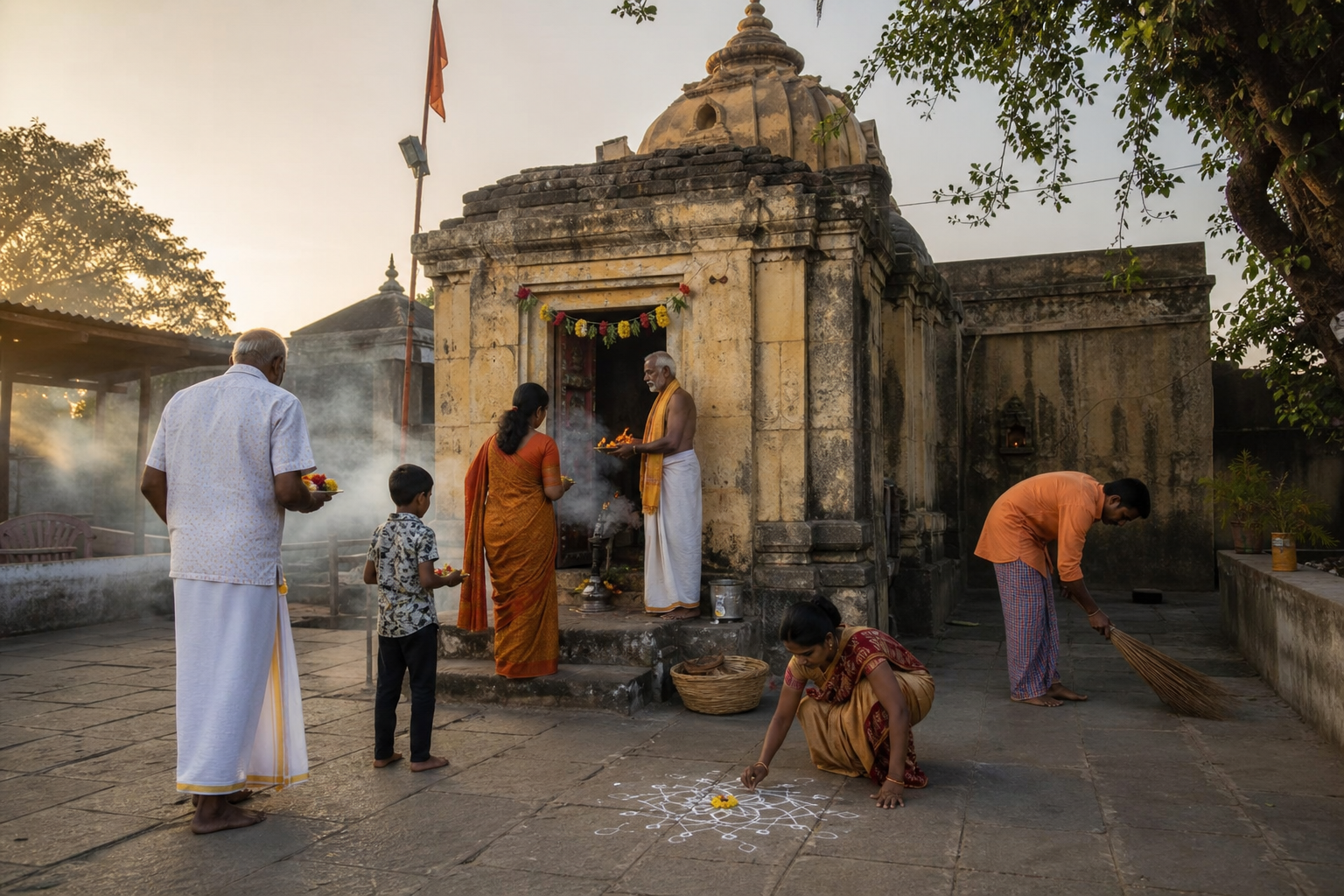
You may be planning a pilgrimage, tracing your family’s sacred geography, or deciding where to offer seva. The difficult question is not whether a regional temple is famous or ancient enough to deserve attention. It is whether your visit will strengthen a worshipping community or turn its sacred home into scenery.
Use one practical rule: a temple is living heritage when sacred presence, ritual practice, inherited memory, physical place, and community responsibility continue together. Once you learn to see those relationships, you can visit, support, and document a temple without reducing it to stonework or spectacle.
How to recognize heritage that is still alive
Age alone does not make heritage living. A damaged village shrine may remain central to a community’s sacred life, while an immaculately restored structure can become detached from the practices that once gave it meaning. Fame is no better test. Many regional temples matter precisely because worship has continued without national publicity.
Look first for rhythm. Daily puja, weekly observances, annual festivals, preparations for special ceremonies, and the quiet work between them show that the temple is keeping sacred time. At Kalluru Mahalakshmi Temple, for example, regular worship, heightened Friday devotion, and festival gatherings sustain the shrine’s place in the life of the Raichur region.
Then look for transmission. Who knows the order of worship? Who explains local observances to children and visitors? Who prepares the space, preserves names and stories, coordinates a festival, or corrects a mistake without creating a scene? These ordinary acts are not peripheral to heritage. They are how heritage crosses from one generation to another.
- Sacred continuity: The deity is approached as a living presence, not merely displayed as an art object.
- Ritual continuity: Worship follows a recognizable calendar and inherited discipline.
- Memory continuity: names, narratives, lineages, vows, songs, and local associations are still remembered.
- Community continuity: people accept responsibility for worship, hospitality, maintenance, and renewal.
- Material continuity: the sanctum, icons, mandapas, inscriptions, ritual objects, and surrounding setting are cared for in ways compatible with sacred use.
If you have limited time, attend an ordinary puja rather than judging the temple only at its busiest festival. Remain quietly before and after worship, where permitted. You will notice the relationships that a quick darshan or photograph can conceal. One respectful question can also reveal much: Which observance is most important here, and what kind of help is actually welcome?
Read a regional temple in four connected layers
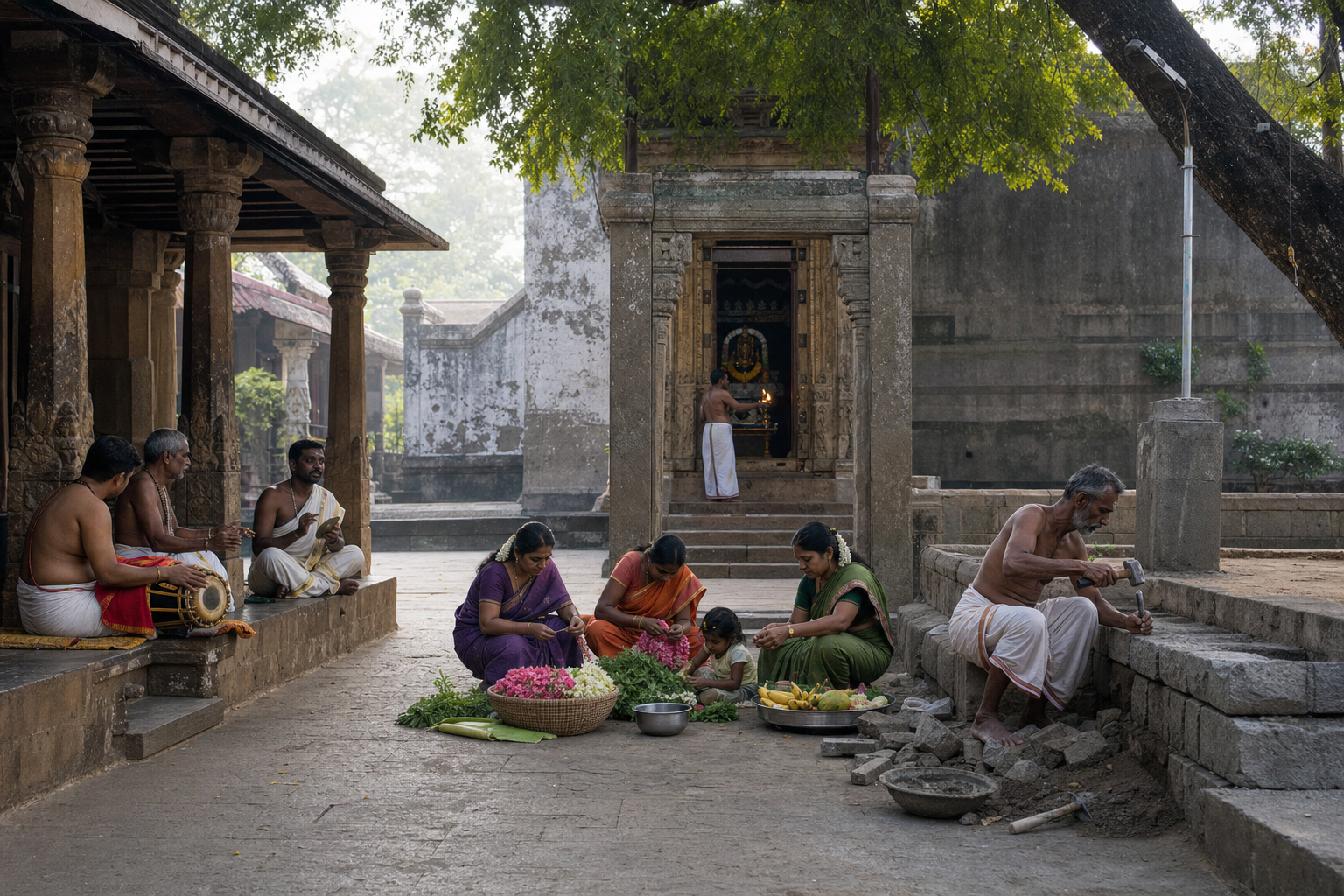
A temple cannot be understood through architecture alone. Before describing or supporting one, read it in four layers. The framework is not a universal formula; it is a way to avoid overlooking what the local community already understands.
- Begin with the deity and form of worship. Learn who is enshrined, how the deity is addressed locally, and whether several shrines form a theological relationship. Kalluru brings Mahalakshmi and Lord Venkateshwara into the same devotional setting. That pairing is not decorative information. It shapes why families and pilgrims approach the temple and how they understand its blessings.
- Identify the sampradaya or inherited discipline. A regional shrine may be welcoming to many kinds of visitors while retaining a precise theological character. Kalluru’s establishment is traditionally associated with Sri Lakshmikanta Acharya and the Madhwa lineage. Naming that association accurately respects the temple more than a vague label such as “Indian spirituality.” Watch the ritual order before joining it, and do not improvise practices from another temple.
- Ask how the community carries the shrine. Patronage is not confined to kings and imperial capitals. Local householders, landholders, religious lineages, volunteers, and devotees have also enabled temples to endure. The Shri Aai Mata Ji Temple in the Jodhpur region preserves a tradition of community-led patronage around a Shakti shrine. Its significance lies in this continuing bond among devotion, regional identity, and stewardship.
- Read the building as part of ritual life. A gopuram, mandapa, icon, inscription, or bronze is not isolated from worship. At Adi Kumbeswarar Temple, Dravidian planning, Chola and later Nayak patronage, inscriptions, bronzes, and stone reliefs form a layered archive. The movement from busy approaches toward quieter sacred zones is itself part of the pilgrim’s experience.
These layers tell you what kind of place you have entered. They also prevent a common error: celebrating a temple as evidence of civilizational continuity while ignoring the living community responsible for that continuity.
Make your visit an act of conservation, not consumption
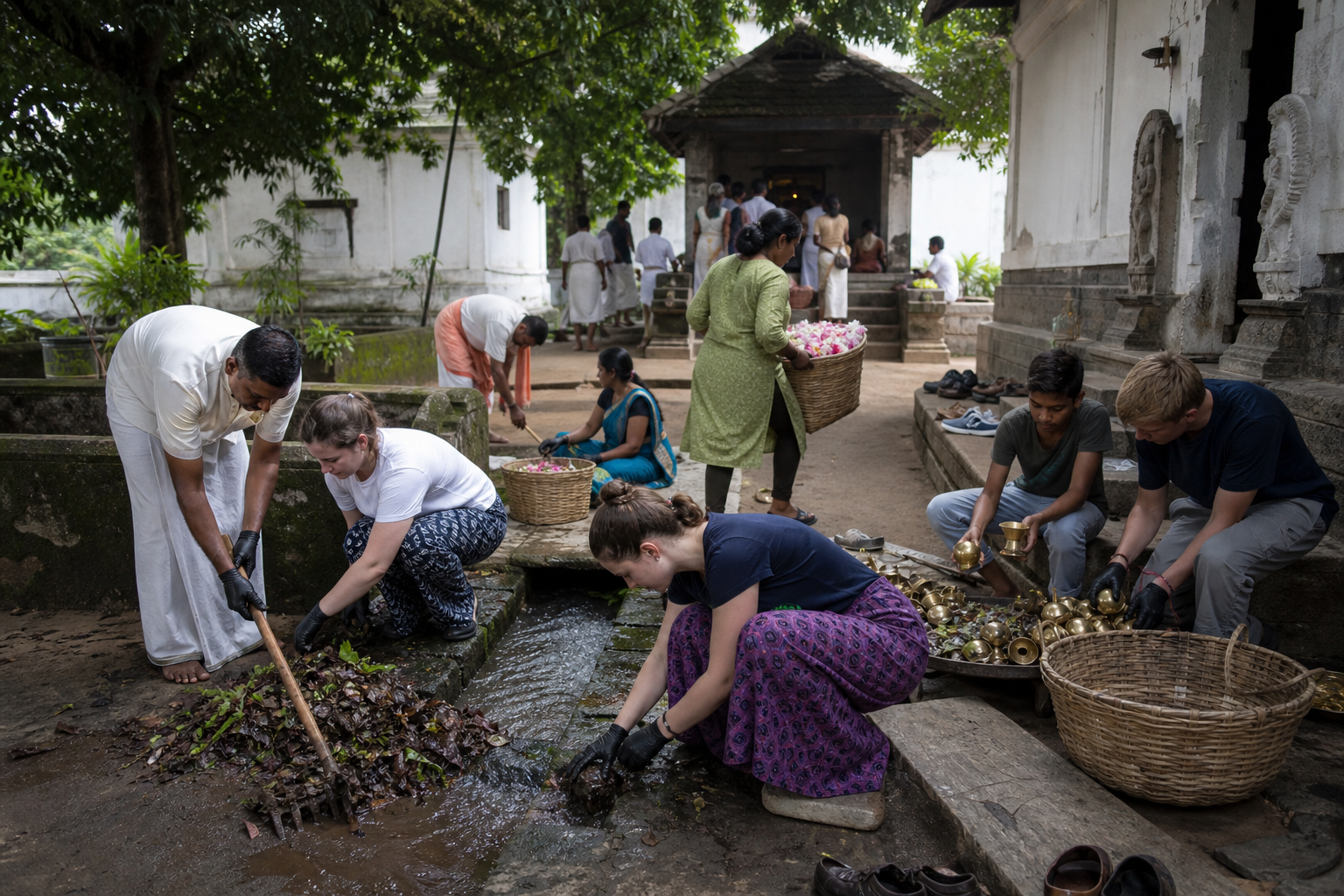
Your conduct affects the temple even when you make no donation. Noise changes the atmosphere of worship. Uninvited photography turns devotees into background material. An unsuitable offering creates work for those maintaining the premises. A confident but inaccurate social-media caption can travel farther than a careful local explanation.
- Verify current practice locally. Timings, access, festival arrangements, and photography rules can change. Use an authorized temple contact when one is available, and confirm again on arrival rather than treating an old travel entry as an instruction.
- Dress and move for worship. Wear modest clothing, silence your phone, lower your voice, and allow the established queue or circumambulation pattern to guide you. Do not assume that behavior permitted in an outer courtyard is acceptable near the sanctum.
- Observe before participating. Watch how local devotees receive tirtha, prasada, kumkum, or other blessings. If you are uncertain, ask a priest or designated volunteer quietly. Sincerity does not remove the need to follow the temple’s discipline.
- Ask before photographing or recording. Permission to photograph architecture does not automatically include the deity, a ritual, a priest, or other devotees. If the answer is unclear, keep the camera away.
- Bring only accepted offerings. Follow local guidance about flowers, food, lamps, packaging, and disposal. Eco-conscious conduct matters because an offering should not leave the temple community with avoidable waste.
- Use authorized channels for financial seva. Do not hand money to an unofficial intermediary or assume that the most visible repair is the community’s highest priority. Ask whether a formal counter, receipt, or designated fund is available.
- Support recurring life as well as visible restoration. Ask what helps ordinary worship continue: ritual materials, festival coordination, maintenance, documentation, or volunteer service. Let the temple identify its needs instead of arriving with a project already chosen.
Kumbabhishekam shows why sacred conservation cannot be reduced to masonry. At Adi Kumbeswarar Temple, renewal includes yaga-shala homas, Vedic recitation, kumbha-sthapana, and the culminating abhisheka over deities and vimanas. These rites reaffirm prana-pratishtha and restore the shared cadence among sacred space, priests, devotees, and worship.
That distinction should shape your seva. Physical repair may be essential, but a temple is not preserved merely when its walls look new. Conservation must also protect ritual fitness, sacred iconography, inherited procedure, and the community’s ability to keep the calendar. Before contributing to a large intervention, ask who has ritual authority, who is responsible for the structure, and whether the proposed work follows their guidance.
Document memory without turning tradition into false certainty
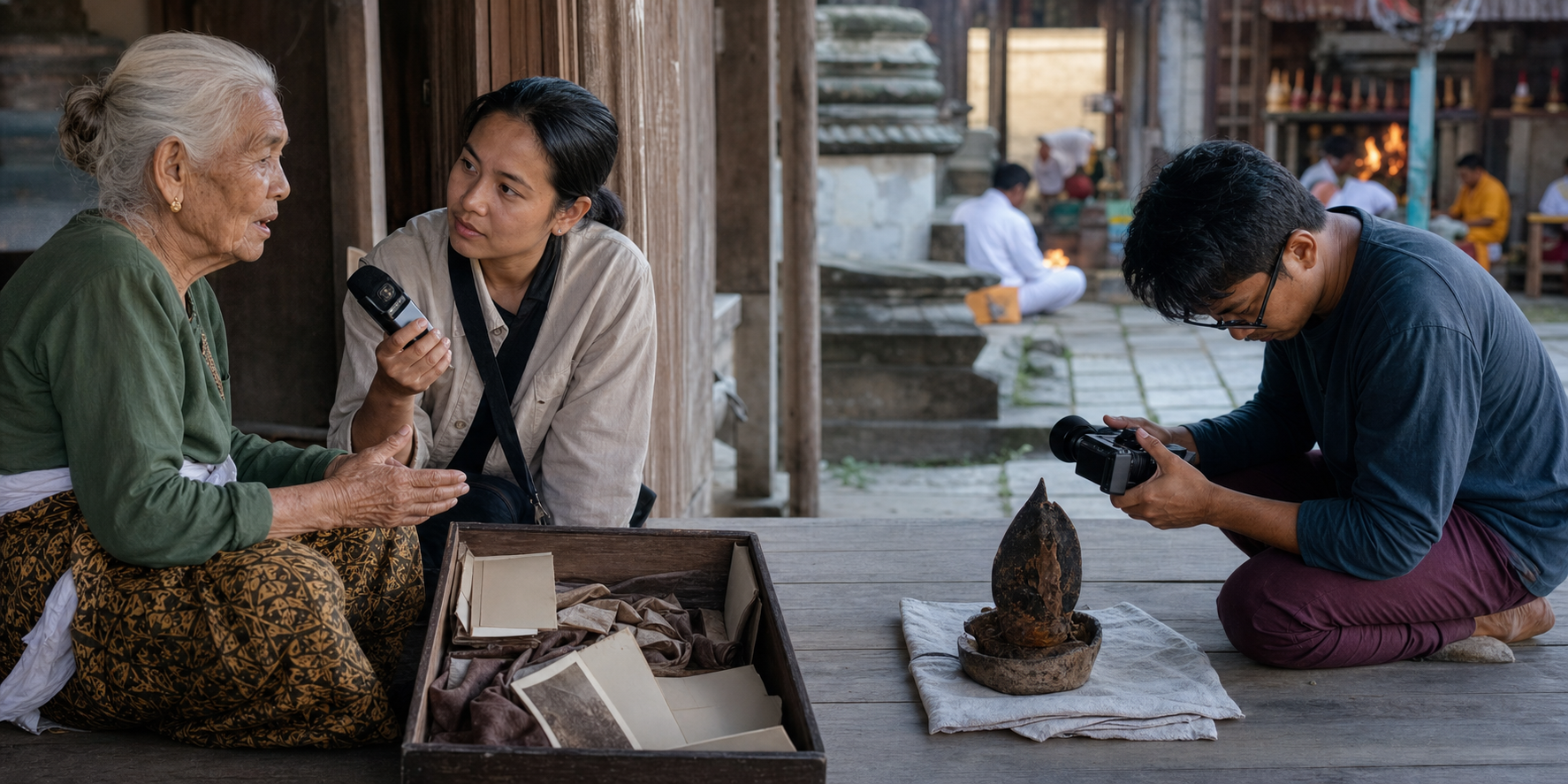
Regional temples can lose heritage through silence, but they can also lose it through confident misinformation. A story repeated without attribution soon becomes a supposed historical fact. An undocumented date is copied from one page to another. A local name is replaced by a more familiar one. Eventually, outsiders can no longer tell inherited memory from modern guesswork.
Use a simple claim ladder whenever you write, film, archive, or post about a temple:
- Observed: State what you personally saw, and note when you saw it if timing matters.
- Attributed tradition: Write “local tradition holds” or name the person or temple authority who shared the account. Do not silently convert remembrance into documented chronology.
- Documented history: Reserve firm dates and patronage claims for inscriptions, records, or other identifiable evidence available to you.
- Uncertain: Say plainly when a date, founder, architectural phase, or interpretation has not been established.
Kalluru offers a useful example of this discipline. The shrine is traditionally linked to Sri Lakshmikanta Acharya, while its detailed architectural chronology is not widely documented. Both statements can be honored. Tradition should not be dismissed merely because every detail has not been fixed by an inscription, but it should not be presented as an archaeological conclusion either.
Precision also matters when speaking of Dharmic unity. Compassion, self-restraint, seva, and ahimsa resonate across Hindu, Buddhist, Jain, and Sikh traditions, but respect does not require flattening their differences. Describe a Shakti shrine as a Shakti shrine. Name a Madhwa association where it is relevant. Explain a Shaiva consecration through its actual ritual language. Civilizational kinship becomes more credible when each tradition is allowed to speak in its own form.
Before publishing anything, check the deity’s name and local spelling, separate what you observed from what you were told, request consent for identifiable people, and include a current authorized route for visitors or supporters only if you have verified it. If a fact remains uncertain, leave the uncertainty visible. That is not a weakness in your account; it is responsible preservation.
Key takeaways
- A regional temple is living heritage when worship, memory, place, and community responsibility continue together.
- Judge significance by sacred and social continuity, not only by age, scale, architectural grandeur, or fame.
- Learn the deity, sampradaya, local stewardship, and ritual use of the building before describing the temple.
- Follow local rules for conduct, offerings, photography, and seva; the temple community should define what support is useful.
- Separate observation, attributed tradition, documented history, and uncertainty whenever you share temple information.
On your next journey, choose one regional temple that usually falls outside the celebrated circuit. Learn its sacred identity, attend an ordinary worship period, ask one careful question about its calendar, and follow one authorized form of seva. A temple remains living heritage through repeated acts of fidelity. Your visit can become one of them.
References
- DharmaRenaissance Blog — Kalluru Mahalakshmi Temple, Raichur: Sacred Splendor and Living Heritage in Karnataka
- DharmaRenaissance Blog — Shri Aai Mata Ji Temple, Jodhpur: A Serene Shakti Shrine and Living Heritage of Rajasthan
- DharmaRenaissance Blog — Adi Kumbeswarar Temple Kumbabhishekam in Kumbakonam: Timeless Rituals, History & Spiritual Renewal
