
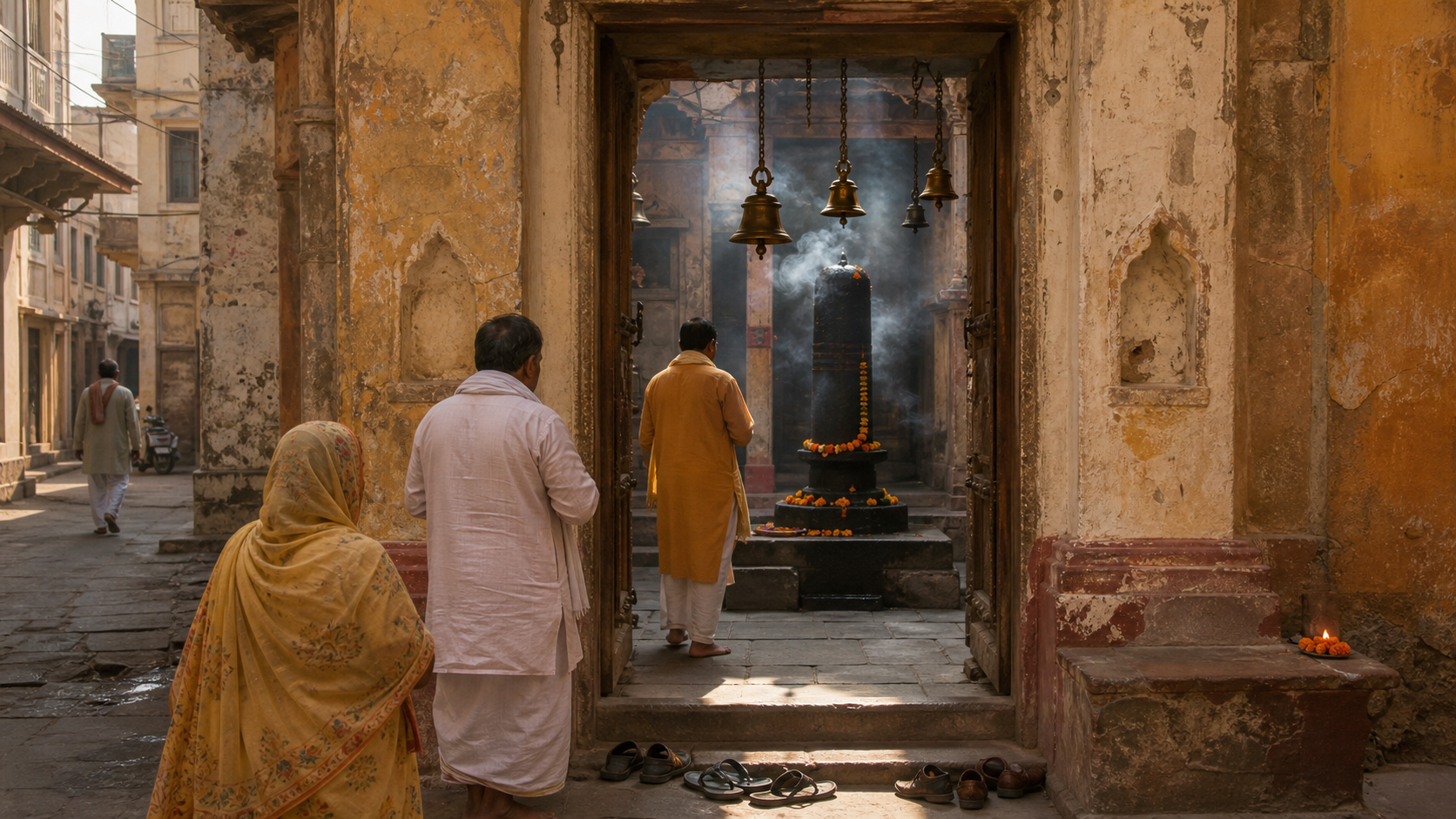
If Laat Bhairav is on your Kashi pilgrimage list, settle one distinction before you go: this is the Alaipur shrine revered as Kapal Bhairav. It belongs to Varanasi’s wider Bhairava tradition, but it should not be treated as another name for the better-known Kaal Bhairav temple.
Approach it as a place for focused darshan rather than another stop to collect. A simple prayer, a lamp where local practice permits, and a few quiet minutes are more fitting here than a hurried visit built around photographs or a crowded itinerary.
Know which Bhairava you are visiting
Laat Bhairav is identified with Kapal Bhairava, a fierce and protective manifestation of Shiva. In the same sacred geography, Kaal Bhairav is known as the guardian of Varanasi. The two identities are related through Bhairava worship, but they are not interchangeable in this context.
This distinction changes what you should notice. The word kapal means skull. Here, the skull is not merely a fearsome ornament; it points toward the stripping away of ahankara, the constructed ego that makes us cling to status, control, and false security. Kapal Bhairava confronts fear by exposing what fear is defending.
Before entering, name one fear or ego-driven reaction that has been governing your conduct. You do not need to announce it or turn it into a public ritual. Hold it clearly during darshan and ask for the steadiness to act according to dharma rather than impulse. That gives the temple’s symbolism a practical place in your life.
Laat Bhairav is widely regarded as one of Varanasi’s ancient sacred sites. Treat “ancient” here as a statement about received sanctity, continuity, and community memory unless you have a reliable archaeological chronology in hand. There is no need to attach an unsupported construction date to appreciate the shrine’s place in living Kashi.
Let Kapal Bhairava’s meaning shape your worship
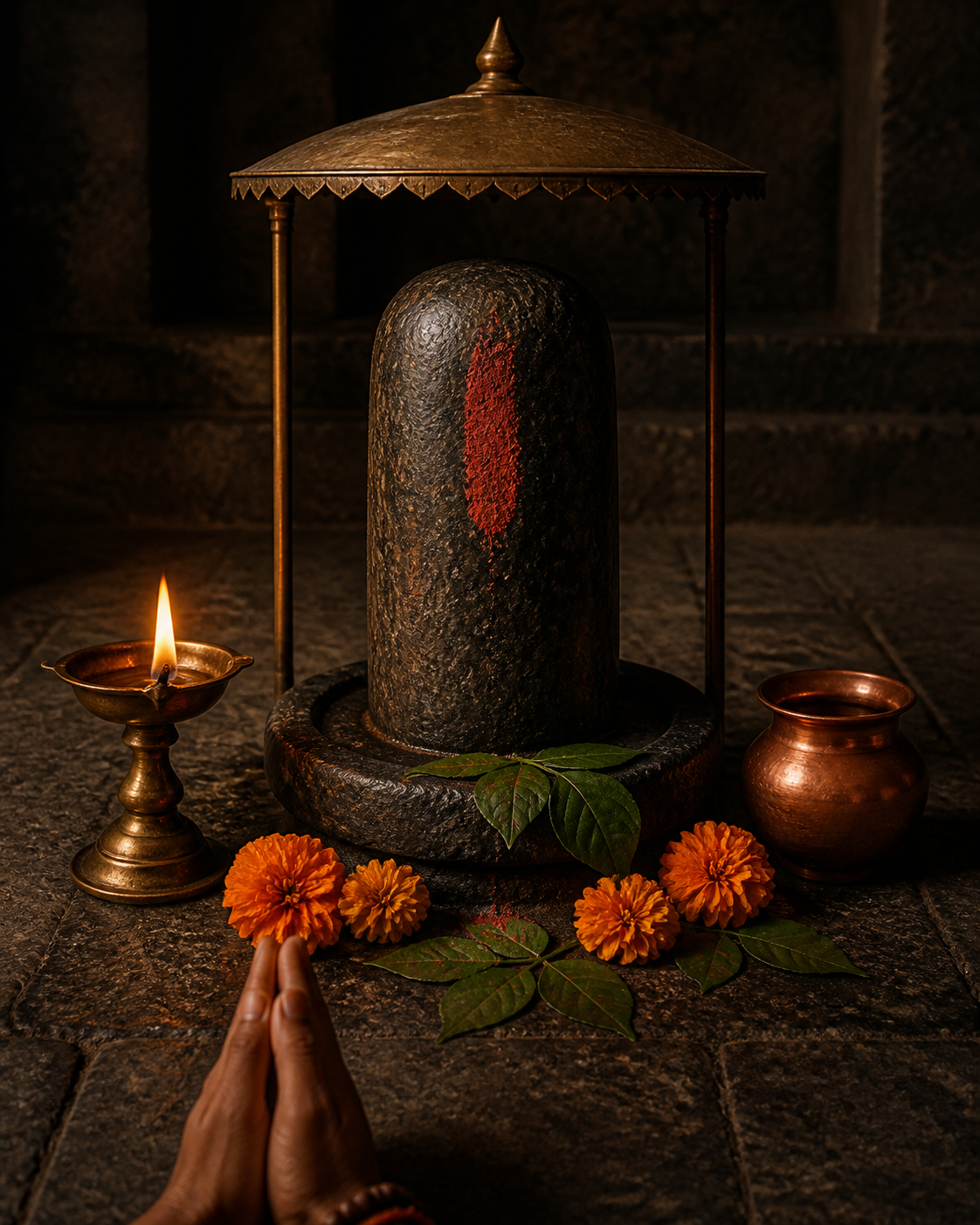
Bhairava’s fierce form is sometimes misread as divine anger alone. At Laat Bhairav, fierceness is better understood through protection, vigilance, courage, and disciplined awareness. The form asks whether you can face disorder without becoming disorderly yourself.
Devotees commonly come seeking protection, clarity, and steadiness of mind. Their observances include simple prayer, lighting lamps, and mantra recitation. You do not need to manufacture a dramatic spiritual experience. The shrine’s austere character places sincerity above spectacle.
- Enter quietly and allow regular worshippers to complete their observances without interruption.
- If you wish to light a lamp or make an offering, follow the practice already in use at the shrine. Ask locally when you are unsure.
- Recite only a mantra you already know and understand, or offer a plain prayer in your own words. Do not imitate an unfamiliar rite merely because you see someone else performing it.
- Keep one intention for the visit: protection, clarity, courage, or self-restraint. A single honest sankalpa is more useful than a long list of demands.
- After darshan, remain still long enough to decide what disciplined action you will take when you leave.
The final point matters. Bhairava worship loses its ethical force if courage remains an emotion felt inside the temple. Translate the visit into one observable act: tell the truth you have been avoiding, restrain a harmful reaction, complete a neglected duty, or set a needed boundary without cruelty.
Plan for Alaipur rather than central Varanasi
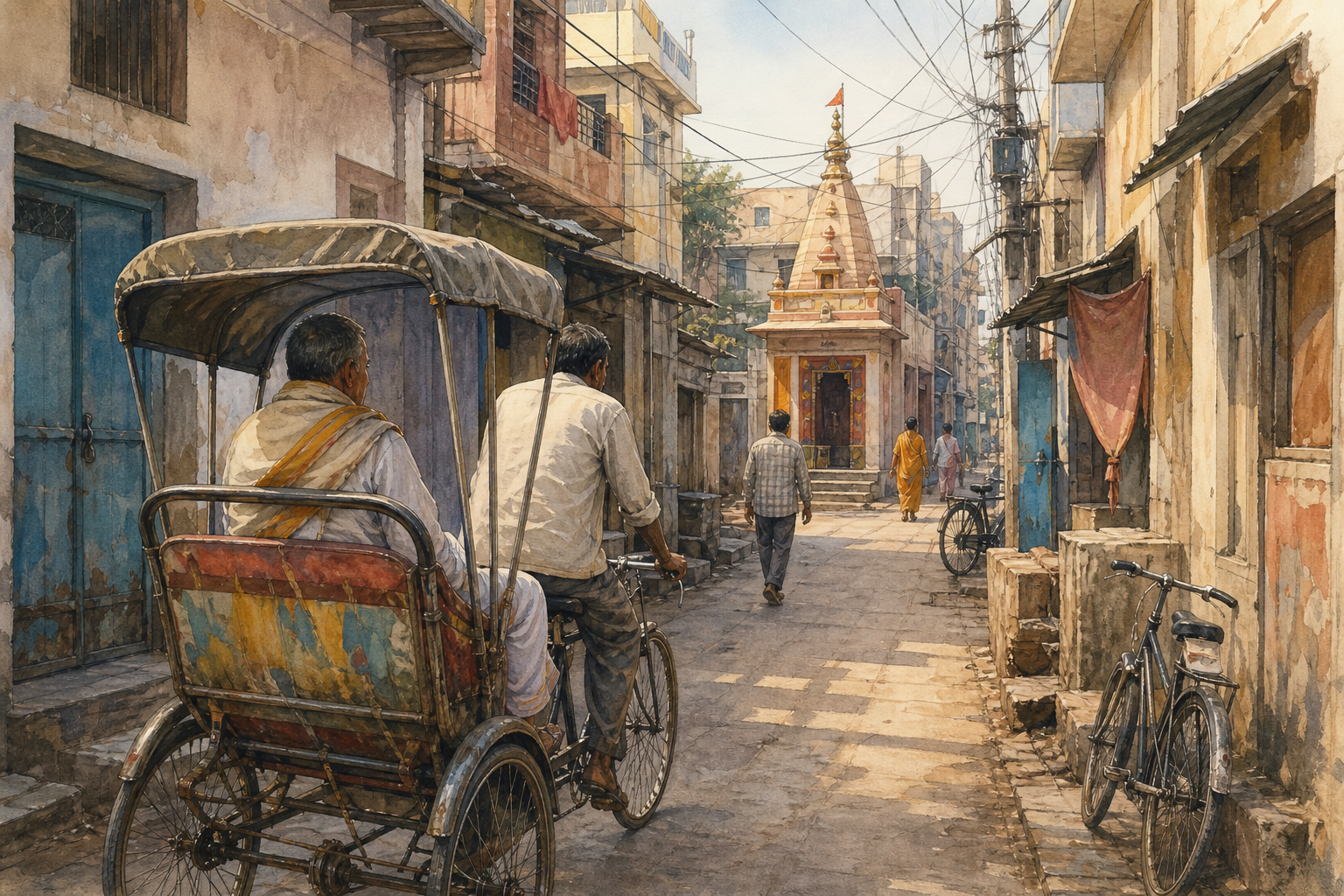
The temple stands in Alaipur on the outskirts of Kashi. Its setting is part of the experience. You leave the heavily visited ghats and central pilgrimage circuit for modest neighbourhood lanes and a quieter sacred space rooted in local life.
Do not build your visit around an assumed opening time. Confirm the day’s access and approach locally before setting out, especially if Laat Bhairav is only one part of a tightly timed itinerary. Early morning or evening is generally conducive to unhurried worship, but that is a devotional planning preference, not a guaranteed schedule.
- Choose an early-morning or evening window and leave enough margin to reach the shrine without rushing through the lanes.
- Confirm current access and the most suitable local approach before departure rather than relying on an unverified timetable.
- Wear modest, practical clothing suitable for a Hindu temple and for walking through a neighbourhood setting.
- Keep your voice low and your phone put away during worship. Ask before taking any photograph rather than assuming that photography is welcome.
- Observe how lamps, offerings, and movement through the shrine are handled before joining in.
- Allow a quiet pause after darshan instead of leaving the instant the visible ritual is complete.
Alaipur is not merely the space between your vehicle and the sanctum. Residents, lanes, customary practices, and generations of worship form the shrine’s living setting. Move through it as a guest. Avoid blocking entrances, turning residents into scenery, or making the neighbourhood absorb the disruption of your pilgrimage.
Give Laat Bhairav a distinct place in your Kashi pilgrimage
Varanasi’s sacred geography is not a list of interchangeable temples. Each form and location gives the pilgrim a different lens. Kaal Bhairav’s guardianship of Kashi and Kapal Bhairava’s confrontation with ego and fear can complement one another without being collapsed into a single identity.
If you are visiting several major temples, place Laat Bhairav where you can give it an unhurried window. It works poorly as a last-minute addition squeezed between famous sites. Its quieter Alaipur setting offers a deliberate counterpoint to the density and movement of central Varanasi.
You also do not need to invent a compulsory order of worship. Unless you are following a specific lineage or locally communicated pilgrimage sequence, let the purpose of the visit determine its place in your day. Go when you are ready to pause, examine fear honestly, and return to your duties with greater vigilance.
The temple is also a repository of community memory and ritual knowledge. Heritage here is carried not only by architecture or iconography, but by repeated acts of devotion and standards of conduct learned across generations. You help preserve that heritage when your presence supports the dignity of worship instead of treating the shrine as a backdrop.
Key questions before you go
Where is Laat Bhairav Temple?
Laat Bhairav Temple is in Alaipur, on the outskirts of Kashi or Varanasi. Plan it as a journey beyond the central ghats and heavily visited temple circuit, and confirm the current local approach before leaving.
Is Laat Bhairav the same as Kaal Bhairav?
No. Laat Bhairav is revered here as Kapal Bhairav, while Kaal Bhairav is known as Varanasi’s guardian. Both belong to the wider sacred world of Bhairava, but their names and theological emphases should not be casually substituted for one another.
What can you do during the visit?
You can offer a simple prayer, light a lamp where local custom permits, or recite a mantra you know. Keep the visit centred on protection, clarity, courage, vigilance, or steadiness of mind. Follow the shrine’s established practice rather than improvising a ritual.
When should you visit?
Early morning and evening are conducive to quieter worship. Confirm current access locally because a suitable devotional window is not the same thing as a published or guaranteed opening schedule.
When you go, carry one clear intention rather than a crowded checklist. Leave Alaipur only after choosing the action through which protection becomes responsibility, courage becomes restraint, and darshan becomes dharmic conduct.
References
