
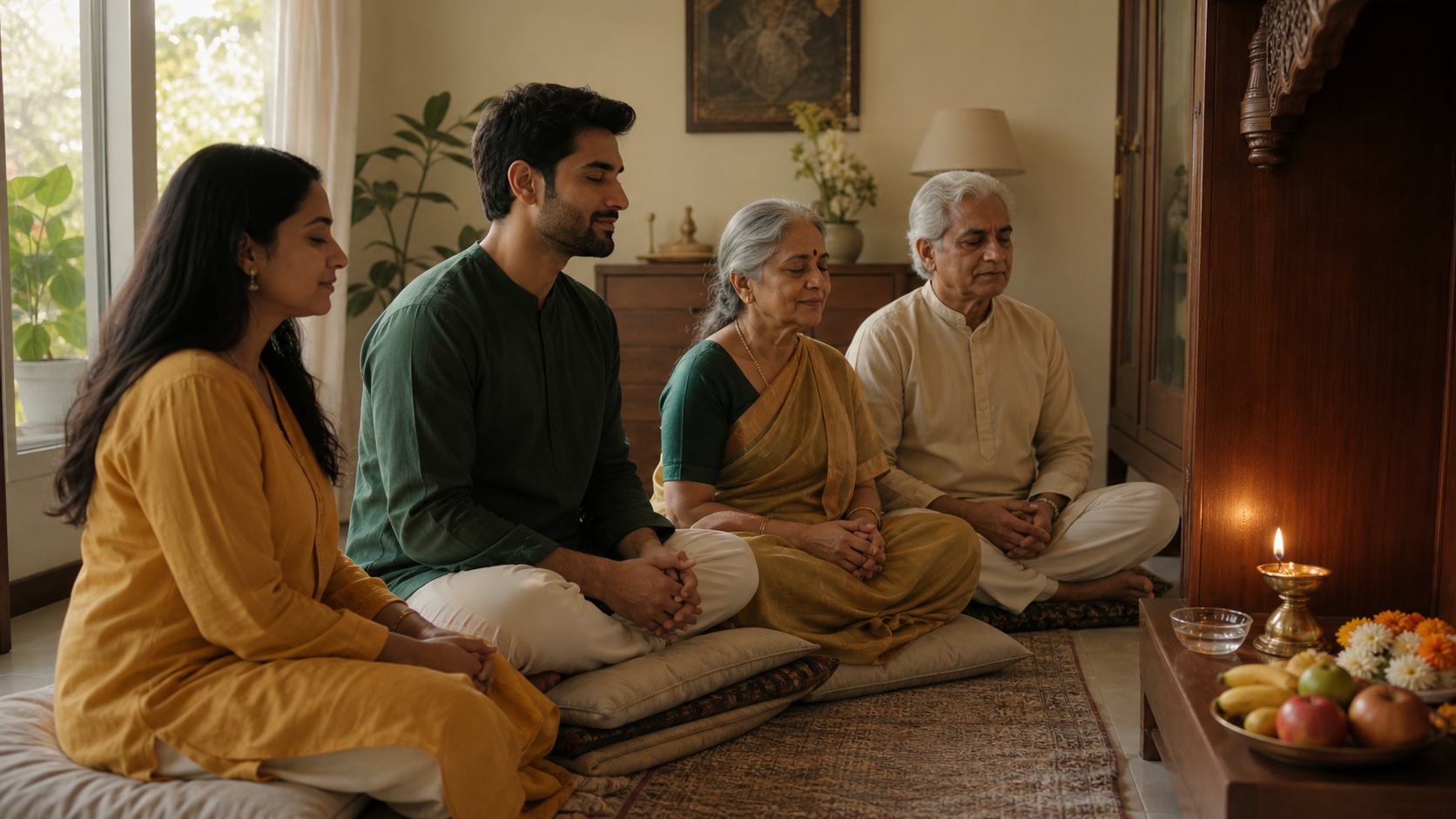
Your home does not need an elaborate remedy for every difficult week. If what you want is a steadier mind, kinder speech, family harmony, or a more dharmic relationship with prosperity, begin with one practice that everyone can understand and that you can continue on an ordinary day.
The most useful household ritual is not the longest one. It is the one that joins sacred sound to disciplined conduct: a clear intention, a trusted mantra, a modest offering, a few quiet moments, and one practical act that carries the prayer into the rest of the day.
Choose one trusted mantra before adding more rituals
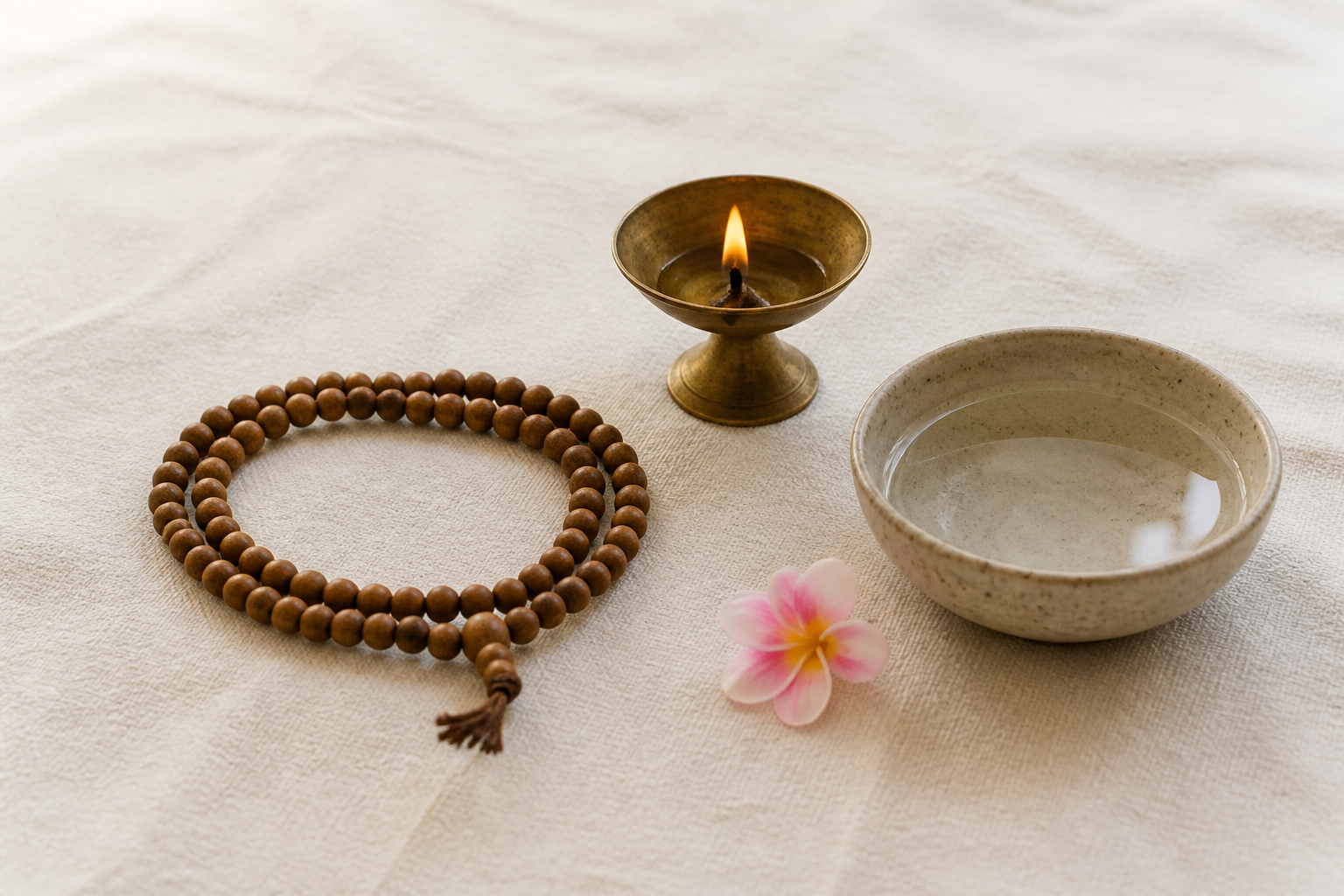
Mantra-japa becomes difficult to sustain when it is treated as a collection of remedies. One mantra is recommended for prosperity, another for a planetary concern, and another for a family problem; soon the household has many instructions but no settled practice. Start with the reason you are chanting and the tradition you already trust.
- For a general daily practice: use a mantra associated with your Ishta, or chosen form of the Divine, as received through your family, sampradaya, a trusted scripture, or a competent teacher. Familiarity helps the mantra become part of household life rather than another spiritual task to manage.
- For an astrology-based practice: do not select a rashi mantra from a label alone. This approach commonly considers the Chandra Rashi, or Moon sign, and is best grounded in reliable lineage guidance rather than fear or fatalism.
- For prosperity: a Lakshmi-oriented invocation can direct attention toward gratitude, honest work, generosity, and wise stewardship. It should accompany effort, not become a promise that chanting will produce a particular financial result.
- For family courage and harmony: households devoted to Devi may use a Katyayani or Durga prayer. The associated discipline traditionally joins worship to self-restraint, compassionate conduct, and seva.
- For hopes concerning parenthood: Santana Gopala worship or Shiva-Parvati prayer may provide devotional support. Keep the sankalpa focused on healthy progeny, maternal well-being, and equal dignity for daughters and sons. These observances must accompany, never replace, timely care from qualified medical professionals.
A multi-tradition family does not have to blend distinct paths into a single improvised ceremony. Hindu japa, Buddhist metta-bhavana, Jain pratikraman, and Sikh Ardas retain their own forms while meeting in compassion, self-discipline, reflection, and concern for the good of all. Family members can respect each practice, share a period of silence, and undertake seva together without pretending that every form is interchangeable.
Use a household sequence simple enough for a busy day
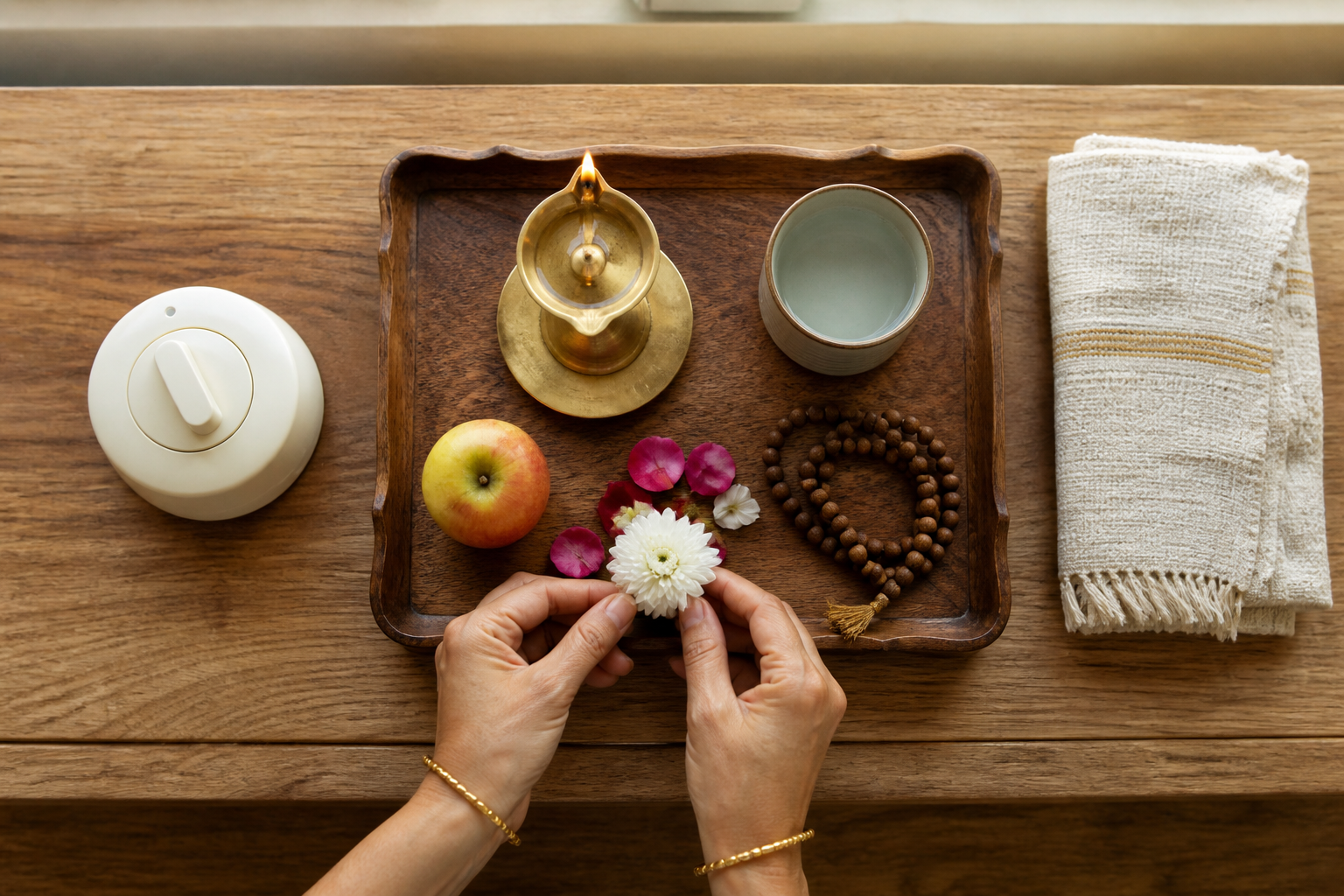
Choose a dependable anchor in the day. Early morning and twilight are traditionally favored for japa, but continuity matters more than an ideal hour you rarely keep. Linking the ritual to something that already happens, such as bathing in the morning or washing up after the evening meal, reduces the number of decisions required.
- Prepare one clean place. Use a shelf or small altar rather than waiting for a dedicated room. Place the image, murti, or sacred text appropriate to your tradition there. Remove unrelated clutter before adding devotional objects.
- Make a plain sankalpa. Name the quality you intend to cultivate rather than demanding a guaranteed event. You might say, “May this practice steady our minds, make our speech gentler, and guide us toward right action.” A specific, ethical intention gives the recitation direction.
- Offer only what you can maintain respectfully. A lamp, water, and fresh flower are enough for a simple Hindu home puja. Turmeric, kumkum, and sattvic naivedya may be included where they belong to your custom; these are among the ordinary offerings used in household Devi worship. If you light a flame, keep it on a stable surface and supervise it continuously. Omit the flame when that cannot be done safely.
- Settle the body before chanting. Sit in a posture you can keep without strain. Let the breath become soft and even. This short pause separates the practice from the hurry immediately before it.
- Recite the chosen mantra at a fixed count. Use a mala or another simple counting method. Choose a count you can finish without resentment or haste, then keep it steady. Soft vocal recitation or silent japa can be used according to your setting and comfort.
- Leave a brief space after the final repetition. Do not reach immediately for a phone or begin discussing the day’s problems. Sit quietly and notice the quality of mind from which your next action will arise.
- Close according to your custom. You may perform aarti, bow, offer a short prayer for the welfare of others, and share prasada. The close should gather the household, not become a test of who remembers the most ritual details.
If you undertake a calendar-based vrata rather than a daily practice, consult the regional Panchang and your local custom. Tithi, sunrise, and the reckoning used for a sacred month can vary by place and tradition, so a date copied from another region may not settle the observance for your home.
Carry the mantra into one observable action
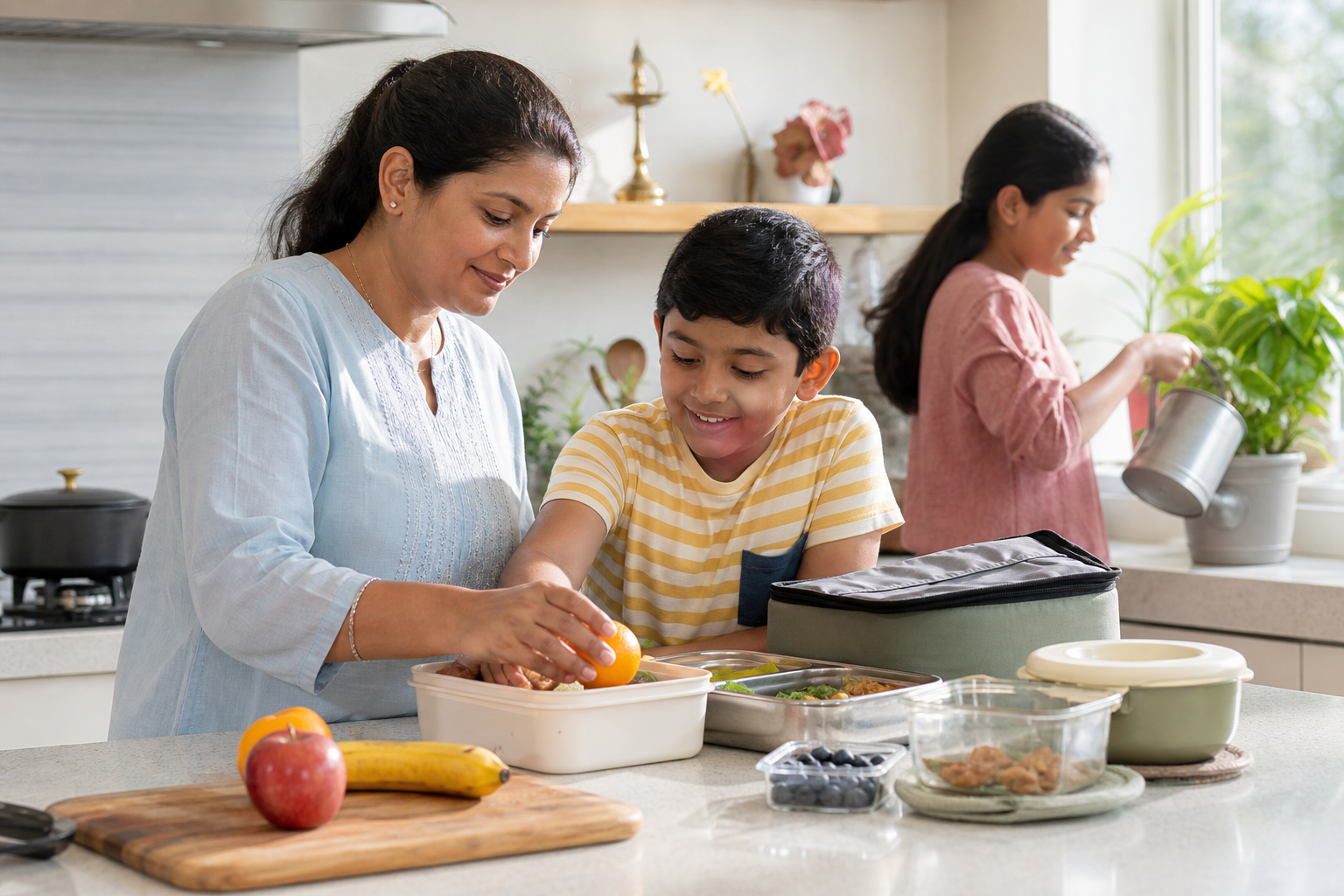
A ritual for well-being is incomplete if its effects are confined to the altar. The practical question is not whether you felt unusually peaceful during every round. Ask whether the practice altered the next decision.
- If your sankalpa concerns family harmony, complete the practice and then make one repair: apologize without defending yourself, listen without interrupting, or finish a responsibility another family member has been carrying alone.
- If it concerns prosperity, pair Lakshmi-oriented devotion with honest work, restraint in consumption, gratitude for what is already present, and dana. Prosperity pursued without responsibility easily becomes anxiety in devotional language.
- If it concerns clarity, identify the next duty before opening messages or news. Mantra can steady attention, but the unfinished duty still requires purushartha, or deliberate human effort.
- If it concerns the welfare of children, make the offering concrete through support for nutrition, education, or maternal care. Seva widens a private wish into concern for families beyond your own.
- If it concerns conflict in the household, agree that the altar will not be used to compel participation, settle doctrinal arguments, or shame someone for missing a day. A practice dedicated to harmony cannot be imposed through humiliation.
You can keep a very small record with four questions: Did we sit? Did we complete the chosen count without rushing? Did our speech become more disciplined afterward? What act of service or repair followed? This keeps attention on abhyasa, repeated practice, and conduct instead of chasing omens.
Key takeaways for a sustainable home practice
- Choose one mantra from a lineage, scripture, teacher, or family tradition you trust.
- Use one clear sankalpa centered on a dharmic quality such as steadiness, compassion, truthful effort, gratitude, or family harmony.
- Attach the ritual to a dependable point in the day; do not abandon it because an ideal dawn or twilight period is unavailable.
- Keep the altar clean and the offerings simple enough to maintain without strain.
- Use a fixed, sustainable recitation count rather than changing the count with every worry.
- Close with one practical action: seva, dana, an apology, a fulfilled duty, or a more disciplined decision.
- Treat spiritual practice as support for well-being, not as a guaranteed cure, prediction, or substitute for professional care.
Know when devotion is becoming fear-driven

A useful ritual makes duty clearer. A fear-driven one makes you dependent on constant interpretation: a missed repetition feels dangerous, an ordinary setback is treated as punishment, or another paid remedy is presented as urgently necessary. When that pattern appears, return to the simplest form of the practice and seek guidance from a trustworthy teacher who does not use fear to secure obedience.
Do not treat rashi, graha, vrata, or a lapse in ritual as a verdict on your worth or future. Responsible spiritual counsel joins prayer to discernment, effort, compassion, and service. It does not promise that a particular chant will control another person, guarantee wealth, determine the sex of a child, or remove the need for healthcare.
If persistent physical symptoms, psychological distress, fertility concerns, pregnancy-related concerns, or severe family conflict are driving the search for a remedy, use the ritual only as spiritual support while consulting the appropriate qualified professional. Increasing the length or intensity of japa is not a safe substitute for medical or mental-health care.
Begin with what your household can do faithfully. Write one sentence of sankalpa, choose the mantra your tradition already trusts, prepare one clean place, and complete the first unhurried round. Tomorrow, return to the same place and let the practice become visible in how you speak and serve.
References
- DharmaRenaissance Blog – Rashi Anusar Mantra: Powerful Zodiac Mantras to Remove Obstacles and Invite Prosperity
- DharmaRenaissance Blog – Putra Prapti Pujan Explained: Dharma-aligned rituals and gentle remedies for healthy progeny
- DharmaRenaissance Blog – Katyayani Vratam 2025-2026: Auspicious Dhanurmasa Dates, Rituals, and a Sacred Path to Unity
