
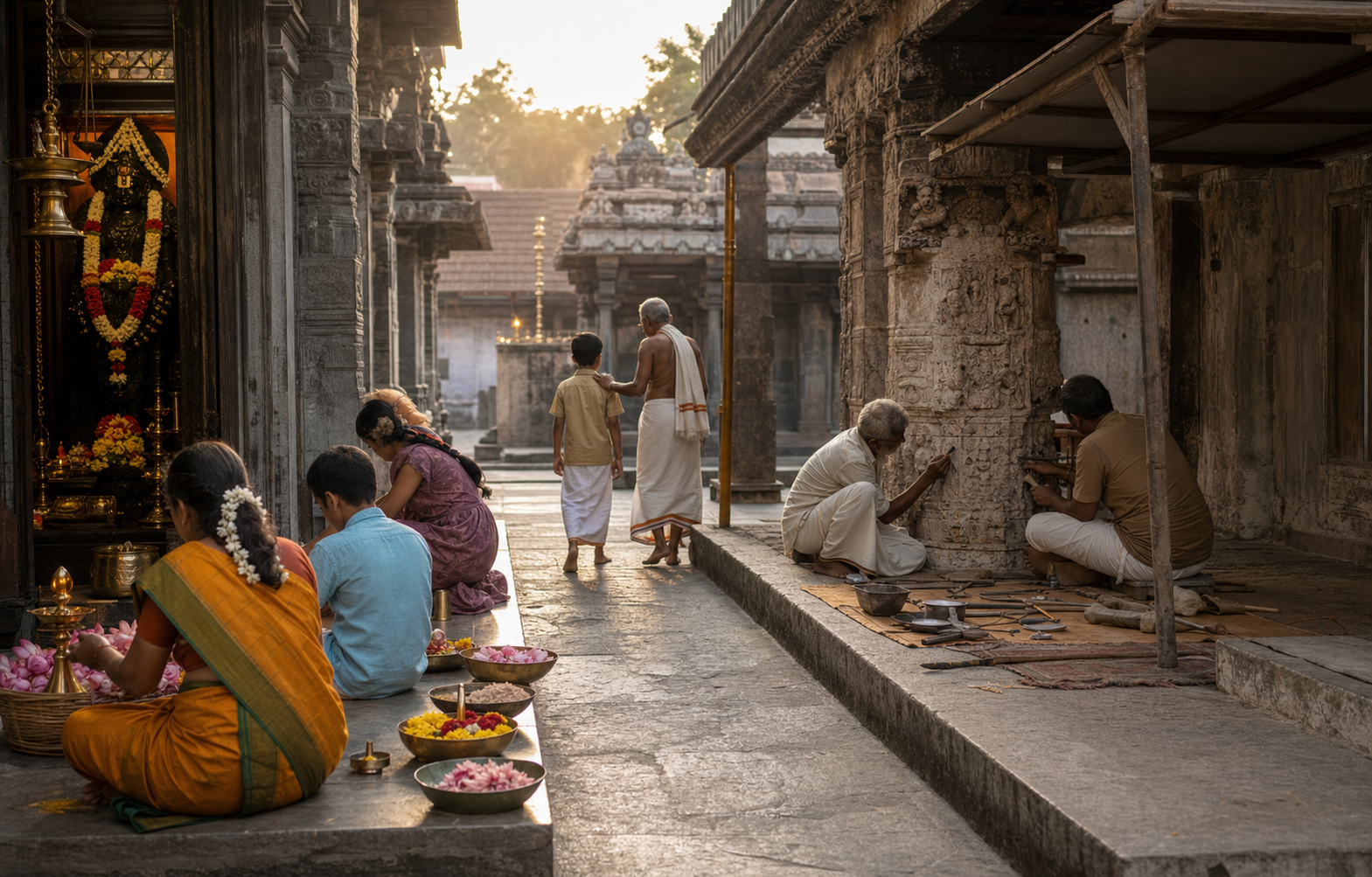
You have been asked to help a temple committee decide what to preserve. The building needs attention, elders hold memories that have never been recorded, younger devotees want a meaningful role, and every proposal competes with daily worship and seva.
The choice is not between conserving the past and serving the present. A sound heritage plan protects the conditions under which sacred life can continue: authorized worship, a cared-for place, trustworthy memory, capable successors, and a community able to welcome people without losing its own religious identity.
Key takeaways for a living temple
- Define the temple’s sacred non-negotiables with its priests, lineage authorities, and regular practitioners before approving renovations or publicity.
- Keep connected records of the physical site, ritual practices, seva activities, and community memories. A building inventory alone is not a heritage plan.
- Label historical claims by the kind of evidence behind them. Documented events, oral memory, devotional tradition, and unresolved questions should not be presented as interchangeable.
- Test every major expense against continuity: what practice, object, skill, or relationship will this decision protect?
- Give younger members supervised responsibility that produces competence. Attendance without apprenticeship will not carry a tradition forward.
Treat worship, place, and memory as one inheritance
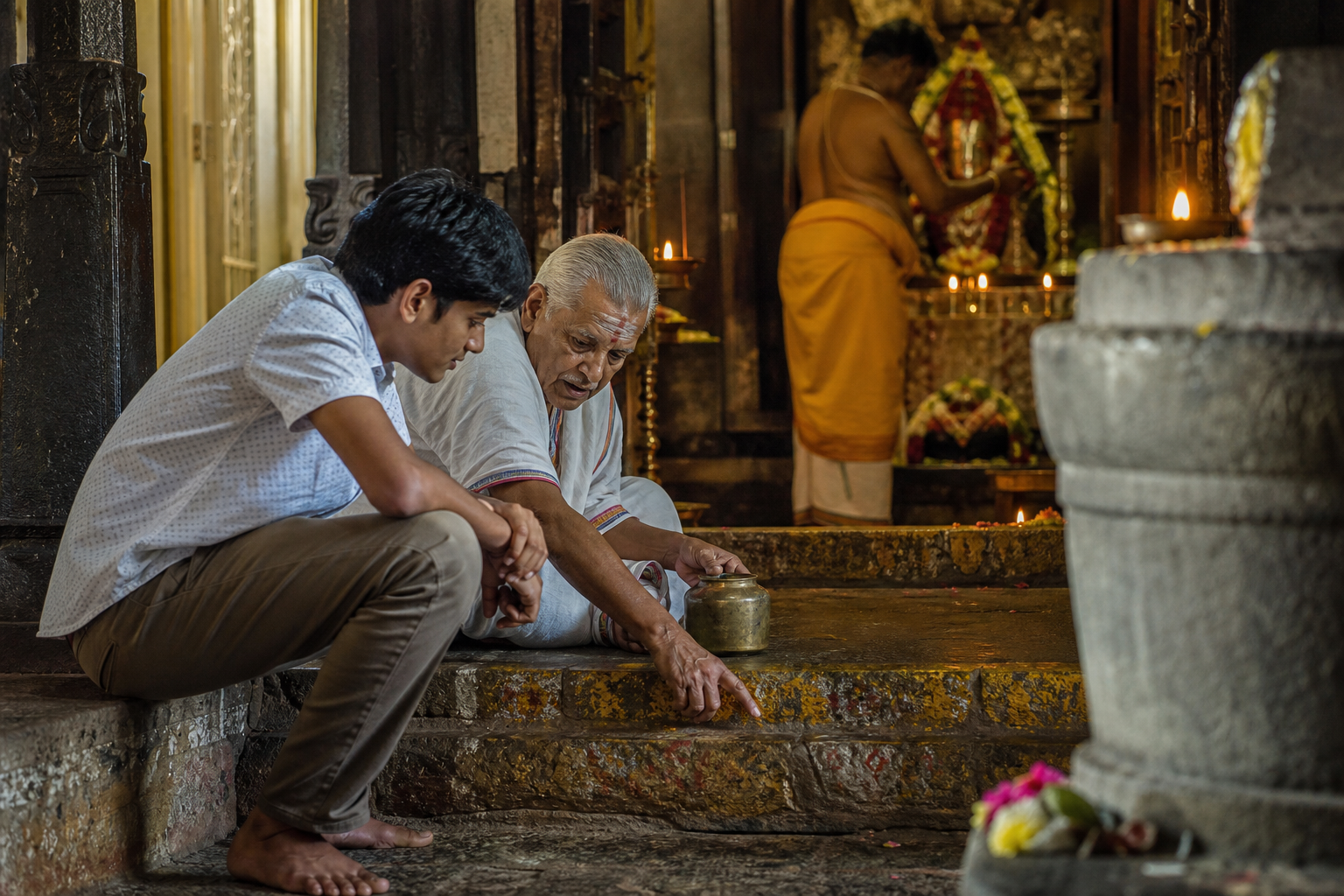
A temple can look beautifully restored and still become culturally fragile. This happens when the conservation plan protects walls and objects but overlooks who knows the rituals, who prepares offerings, who teaches sacred music, who receives visitors, and who can assume those duties when an elder steps back.
Begin with a working heritage register. Do not limit it to antiques or architecturally impressive features. Include anything whose loss would weaken the temple’s identity or interrupt its religious life.
Record sacred practices as carefully as physical objects
For each recurring practice, record its purpose, the authorized person or role responsible for it, the knowledge and materials it requires, the limits on who may perform or document it, and whether a trained successor exists. The aim is not to reduce worship to an instruction manual. It is to notice dependency before knowledge disappears.
Ask the practitioners themselves what must remain unchanged and what may adapt. Agamic requirements, sampradaya discipline, established maryada, and local custom may not have the same authority. Write down the distinction instead of allowing a renovation contractor, enthusiastic volunteer, or incoming committee to guess.
Give every significant feature a condition and authority record
For a murti, shrine element, manuscript, musical instrument, photograph, furnishing, or architectural feature, the register should identify what it is, why it matters, its present condition, its custodian, the evidence for its history, any ritual restrictions, and the next permitted action. Add photographs where photography is allowed, and note the date and circumstances of inspection.
Do not clean, repaint, drill into, relocate, or replace a significant feature merely because the work appears simple. An irreversible intervention can damage both historic material and ritual integrity. Obtain the necessary religious authorization first, then use a qualified conservator, engineer, electrician, or other appropriate professional when the work involves material, structural, or safety risks.
Map the people who make continuity possible
List knowledge holders by function rather than prestige. The person who remembers how a festival space is prepared, how prasadam service is organized, how a particular melody is led, or where old records came from may hold knowledge that is absent from formal minutes. Ask whether that person is willing to teach, be interviewed, or review a written record. Consent matters, especially when a memory concerns private religious practice, family history, or internal community conflict.
This wider view is visible in the London lineage that began when Srila Prabhupada established ISKCON London and installed Sri Sri Radha-Londonisvara at 7 Bury Place in 1969. The date and address matter, but they are only part of the inheritance. The worship, kirtan, study, service, hospitality, and relationships formed around the temple are also carriers of continuity.
Document history honestly before promoting a neat story
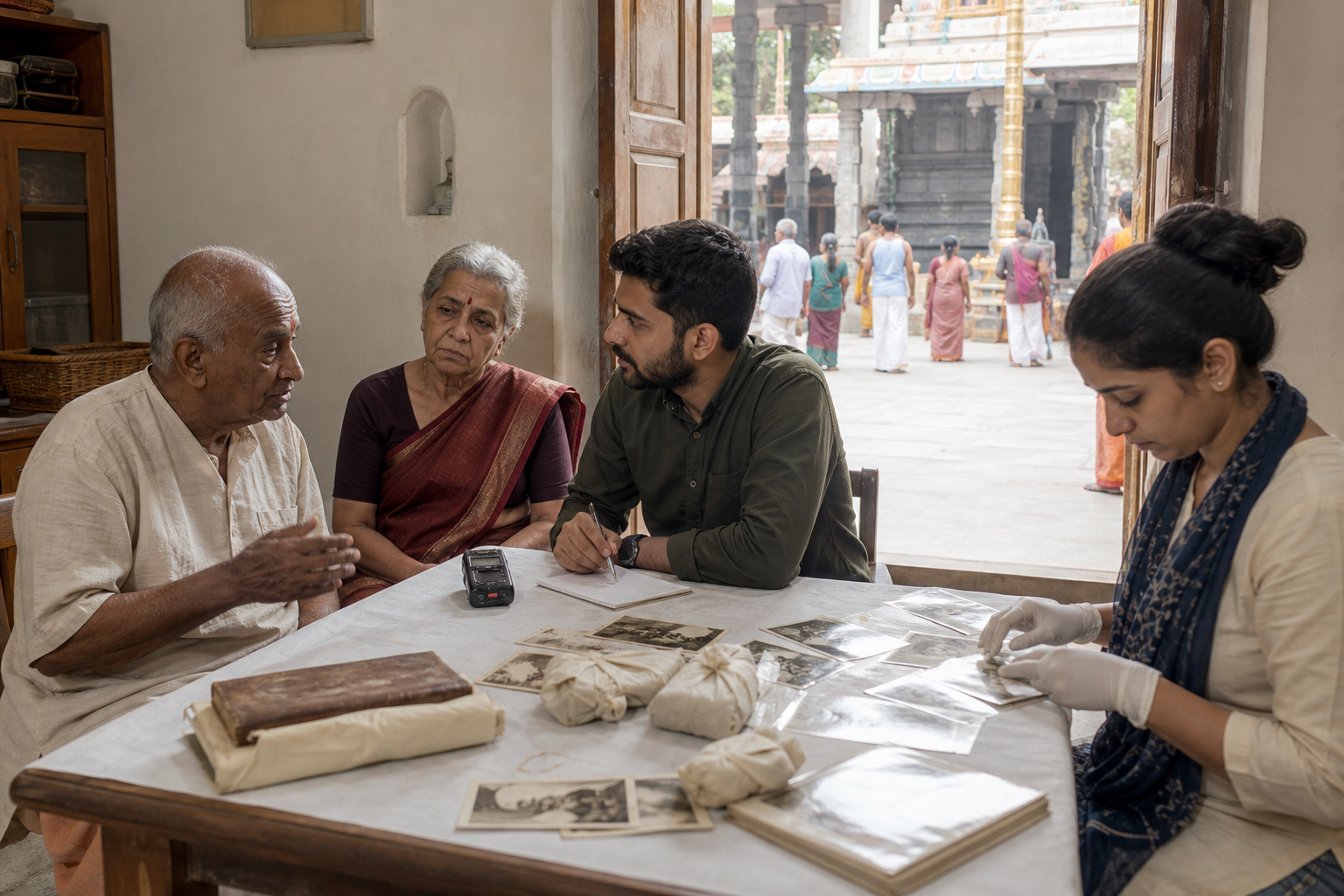
Temple communities often possess several kinds of truth at once: an event preserved in records, a memory carried by elders, a sacred account received through tradition, and a historical question that remains open. Problems begin when a brochure turns all of them into equally proven chronology.
You do not have to diminish devotional meaning in order to be historically careful. You only have to tell the reader what kind of claim is being made.
| Kind of claim | How to present it | What to retain |
|---|---|---|
| Documented event | State the event precisely and cite the record that supports it. | Copies, catalogue details, provenance, dates, and custodial information. |
| Community memory | Identify it as a recollection and record who shared it, with permission. | Interview date, language, consent terms, transcript, and related material. |
| Devotional tradition | Use language such as “devotees revere” or “the tradition holds” without pretending that faith depends on modern historical proof. | The account, its ritual context, its transmitters, and any restrictions on circulation. |
| Unresolved historical claim | Say what is believed, what evidence is available, and what investigation is still needed. | Photographs, inscriptions, earlier references, oral accounts, and unanswered questions. |
Isannapally offers a practical example of the distinction. The shrine in Telangana houses an eight-foot Digambara Kalabhairava Swamy icon accompanied by the dog vahana. That is a concrete description of the sacred feature and its iconography. The historical wording needs more care: local tradition places the current idol in the sixteenth century, while the precise account still requires epigraphic study. A responsible label preserves both statements. It should not silently upgrade local tradition into an epigraphically established date.
Use the same discipline when preparing a website, exhibition, fundraising appeal, anniversary programme, or visitor sign. If evidence is incomplete, write “not yet documented” and create a research task. That is more credible than filling a gap with confident language. It also tells a future archivist exactly where to begin.
Keep citations and working files where the institution can retrieve them. A history stored only in a volunteer’s personal inbox or phone remains at risk even after it has been written down. Record where the original is held, who may access it, and whether the temple has permission to publish it.
Put seva at the centre of conservation decisions
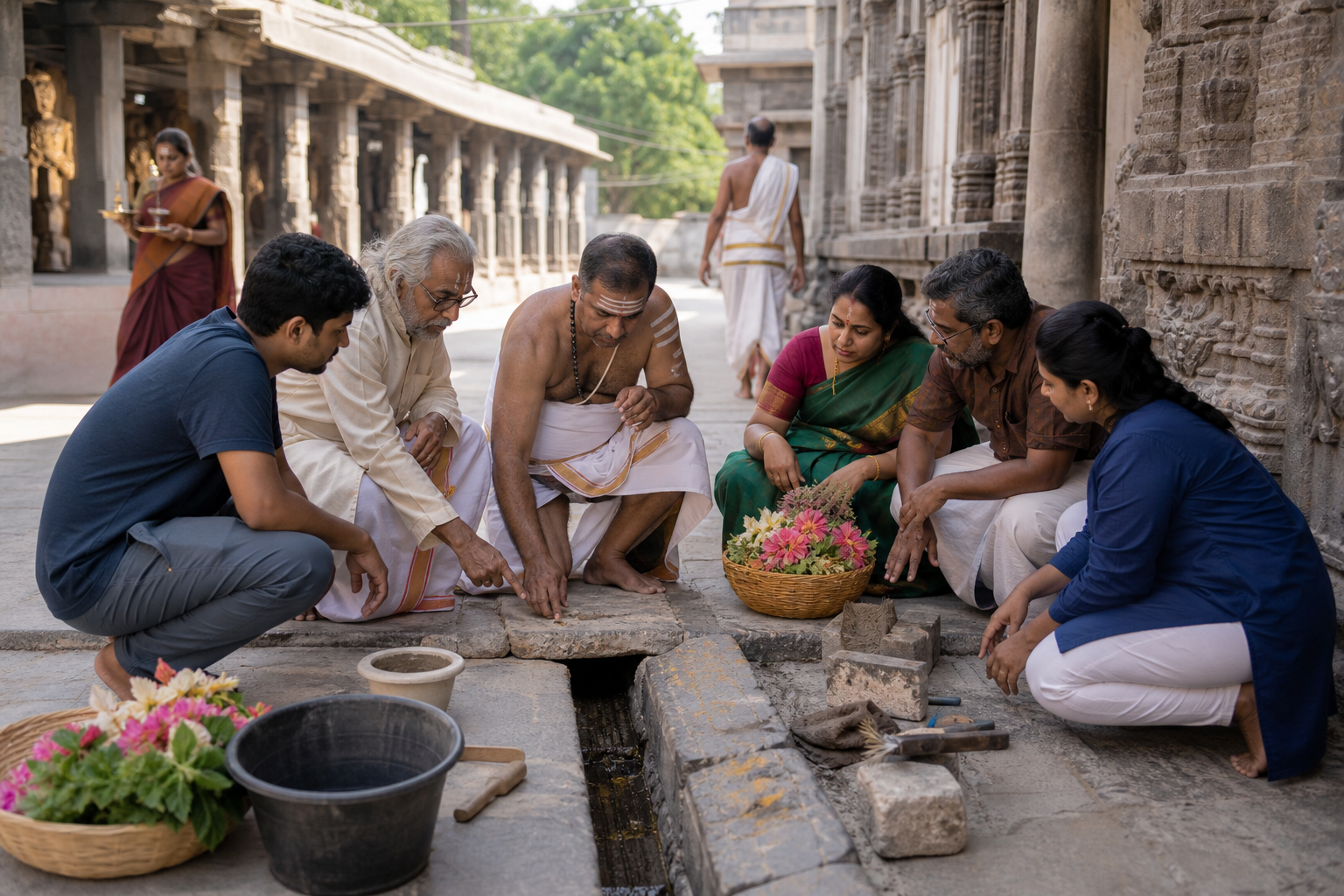
Physical deterioration is visible. The thinning of a living practice is easier to miss. A committee may notice damaged plaster immediately while failing to notice that only one person can lead a particular service, organize prasadam distribution, explain the temple’s tradition to visitors, or teach younger members.
The Bury Place legacy is sustained through sacred music, study, prasadam distribution, cultural education, reflective dialogue, and other forms of seva. These are not optional activities placed around the heritage asset. They are among the means by which the heritage remains intelligible, trusted, and socially rooted.
Before approving a project, put the proposal through a continuity test:
- Sacred purpose: Which act of worship, discipline, or service will this protect or enable?
- Religious authority: Have the people responsible for ritual integrity approved the relevant changes?
- Community capacity: Who will operate, maintain, teach, or finance the result after the launch?
- Knowledge transfer: Will the project leave more people capable of carrying the tradition, or make the community more dependent on a single specialist?
- Reversibility: If the decision proves mistaken, can it be changed without harming sacred fabric, historic material, or community trust?
- Access and dignity: Does it help regular worshippers, elders, families, volunteers, and respectful visitors participate appropriately?
This test changes how you read a budget. Training a successor, cataloguing records, supporting a recurring teaching programme, or improving the safe storage of ritual objects can be conservation work even when no new structure is unveiled. Conversely, an expensive visual improvement can weaken heritage if it interrupts worship, removes historic material without documentation, or creates maintenance demands the community cannot sustain.
Welcome visitors without flattening religious identity
Hospitality works best when it is both warm and precise. The London community remains grounded in Gaudiya Vaishnava bhakti while also cultivating kinship among Hindu, Buddhist, Jain, and Sikh communities through shared commitments such as compassion, self-discipline, and respect. Shared dharmic values can support fellowship without requiring anyone to claim that distinct doctrines or disciplines are identical.
Give a first-time visitor a short orientation that answers practical questions: Which tradition does this temple follow? What is happening in the shrine? What may a guest join? Where should shoes, food, bags, or phones be placed? Are there photography or access restrictions? Who can answer a religious question accurately? Clear guidance prevents accidental disrespect and relieves regular worshippers from having to correct the same misunderstandings repeatedly.
Do not make an interfaith programme carry the entire burden of community inclusion. Ordinary hospitality is built through reliable opening information, respectful explanations, accessible teaching, prasadam where appropriate, and named volunteers who know how to receive newcomers. Measure such work by whether guests understand the space and whether practitioners can maintain their discipline, not merely by attendance.
Build a handover younger members can actually enter
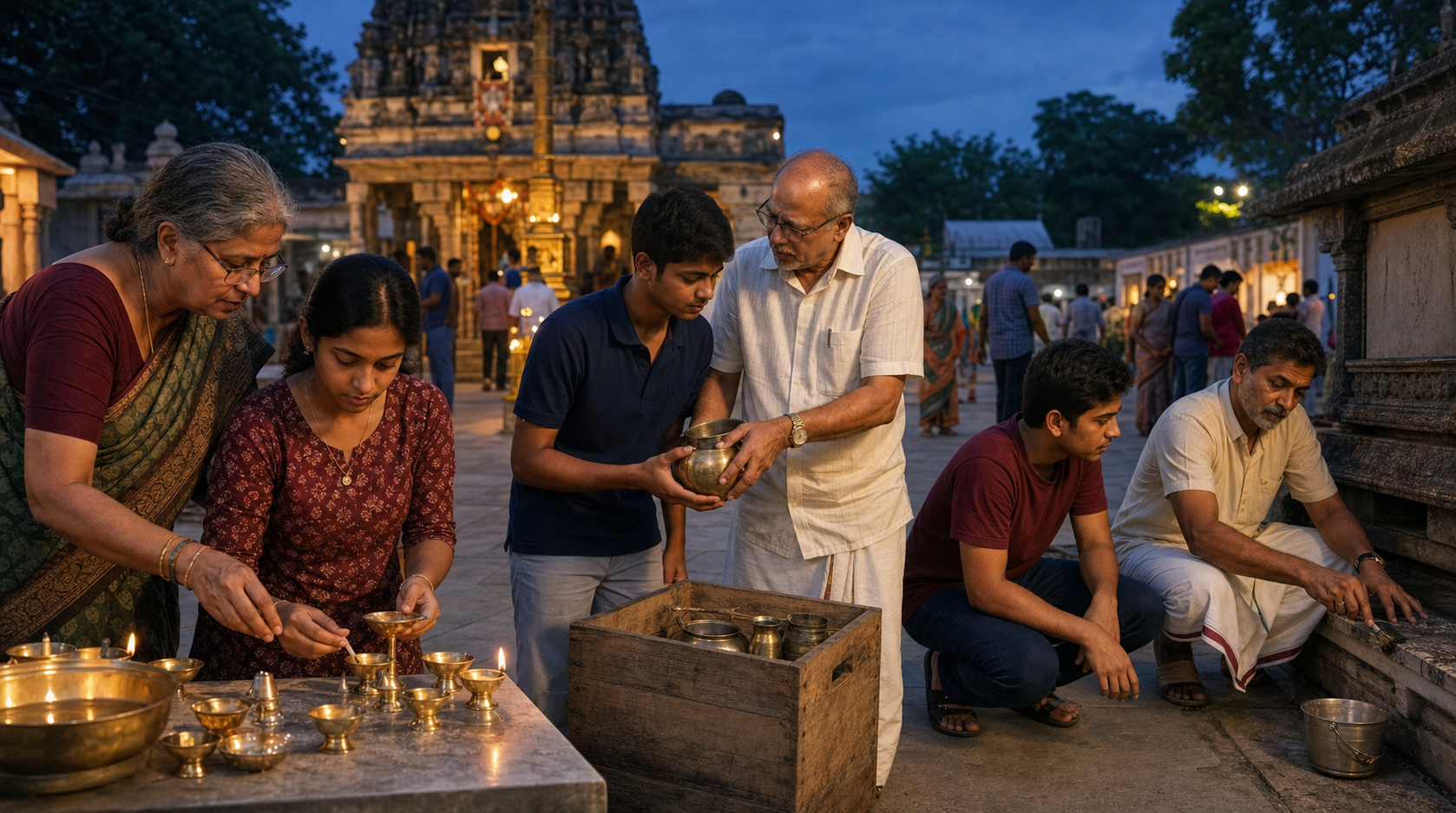
Telling younger devotees to value their heritage is not a succession plan. They need a defined responsibility, a teacher, permission to practise, and a way to receive correction. Otherwise, the community gives them ceremonial visibility while keeping all consequential knowledge elsewhere.
For each vulnerable practice or service, pair a willing knowledge holder with an apprentice. Let them produce a restricted or public record as appropriate. It should explain the purpose of the practice, the order of preparation, required materials, important vocabulary or pronunciation, authorization boundaries, common failure points, storage arrangements, and the person who can resolve uncertainty. Test the record during the next real occurrence rather than assuming that notes written from memory are complete.
Some knowledge should not be recorded or circulated freely. Private mantras, restricted rites, personal details, security information, and material shared in confidence require the consent and rules of the relevant tradition. The goal is responsible transmission, not indiscriminate publication.
You can tell whether the handover is becoming real by looking for observable results:
- Important practices have an authorized practitioner and a developing successor.
- Historic claims are attached to evidence labels rather than repeated as unattributed certainty.
- Significant objects and spaces have named custodians and current condition records.
- Oral histories are recorded with consent, context, and access terms.
- Younger members hold responsibilities that require learning, judgement, and service.
- Visitors receive clear guidance without displacing worshippers or weakening temple discipline.
- Committee decisions identify what continuity they protect and who will maintain the result.
At your next temple meeting, bring a simple register and choose a vulnerable practice, a significant physical feature, and an unrecorded community memory. Name the appropriate custodian for each, record the evidence and restrictions, and assign the next permitted action. That modest piece of accountability is how a temple begins handing forward more than a building.
References
- DharmaRenaissance Blog — Bury Place Legacy: ISKCON London’s Historic Journey and a Vision of Dharmic Unity
- DharmaRenaissance Blog — Discover Isannapally Kalabhairava Temple: Kamareddy’s 8-Foot Idol and 16th-Century Legacy
