
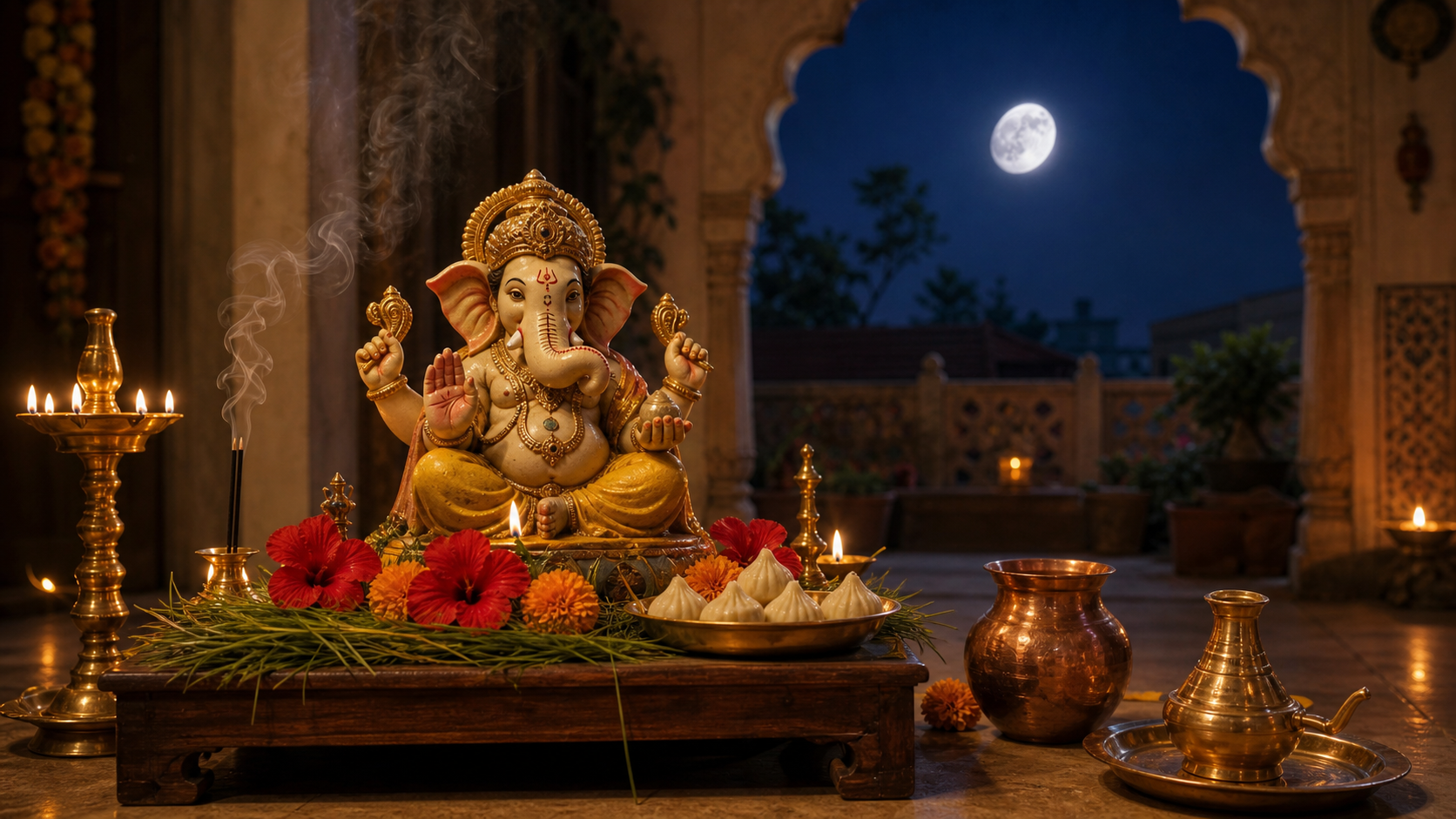
If you marked only Sunday, 7 December, or only Monday, 8 December, for Sankashti Chaturthi, pause before deciding when to fast. The two dates do not represent two separate observances. They reflect one lunar tithi extending across the midnight boundary of the civil calendar.
Your practical task is to identify which date and moonrise apply where you will actually perform the vrata. Once that is settled, the observance itself can remain simple: fasting within your capacity, worship of Shri Ganesha, Chandra Darshan, arghya, and a deliberate return to daily duties.
Why the December observance carries two dates
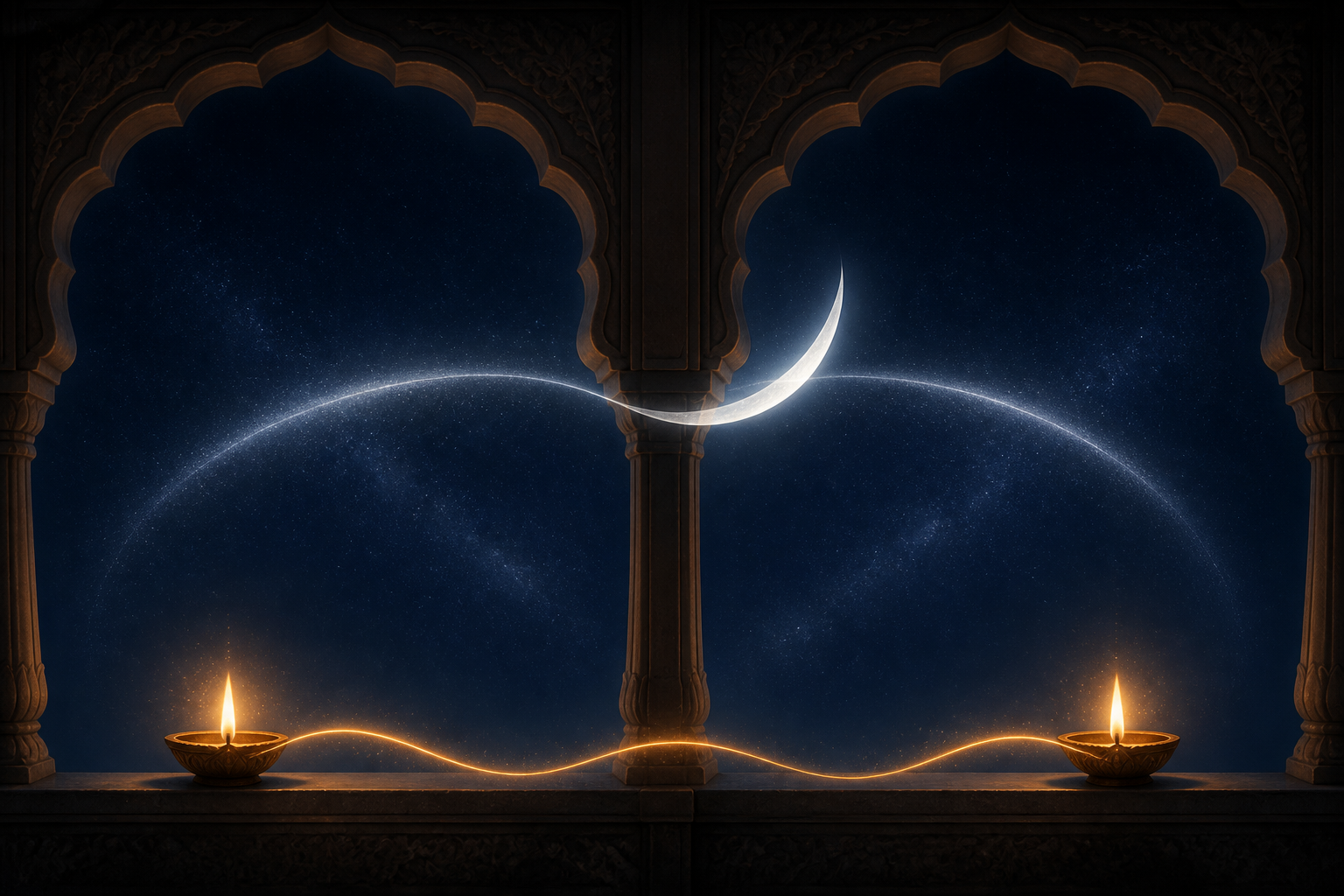
Sankashti Chaturthi is observed each month on Krishna Paksha Chaturthi, the fourth lunar day of the waning fortnight. A tithi is not tied to the midnight-to-midnight structure of a civil date. It can begin during one date and continue into the next.
In December 2025, the Chaturthi tithi extended across 7 and 8 December, Sunday and Monday. In the North Indian Purnimanta calendar, the observance fell in the month of Poush. Neither the weekday nor the month name, by itself, determines the correct local schedule.
This distinction prevents the most common planning error: choosing a date from a generic festival list without checking whether its tithi and moonrise data were calculated for your location. Moonrise changes with place, and Sankashti traditionally concludes in relation to Chandra Darshan. A time copied from another city may therefore be unsuitable even when the civil date looks correct.
Use the following three checks before fixing your observance:
- Set the correct location. Consult a Panchang calculated for the city or locality where you will observe the vrata, not merely your birthplace, family hometown, or a distant metropolitan centre.
- Check both tithi and moonrise. Confirm that the entry refers to Krishna Paksha Chaturthi or Sankashti Chaturthi, then note the local Chandra Darshan or moonrise time.
- Reconcile regional practice. If a household calendar, temple notice, and digital Panchang appear to disagree, first check their location and calendar convention. Follow the established family or temple tradition when it is based on the appropriate local Panchang.
Do not assume that listing two dates means you should fast for two days. It means you should keep both dates in view until the local calculation identifies the applicable observance and moonrise.
Prepare the vrata without turning it into a test of severity
A vrata is a disciplined religious undertaking. Its seriousness comes from intention, restraint, worship, and consistency, not from competing over who can follow the harshest food restriction. Decide the form of your fast according to your health, duties, family tradition, and temple guidance.
If fasting could endanger your health or interfere with necessary medication, do not treat physical risk as proof of devotion. Seek appropriate medical guidance and ask a trusted priest or elder how the vrata may be adapted. You can preserve reverence through prayer, restraint, simplicity, and focused worship without making an unsafe choice.
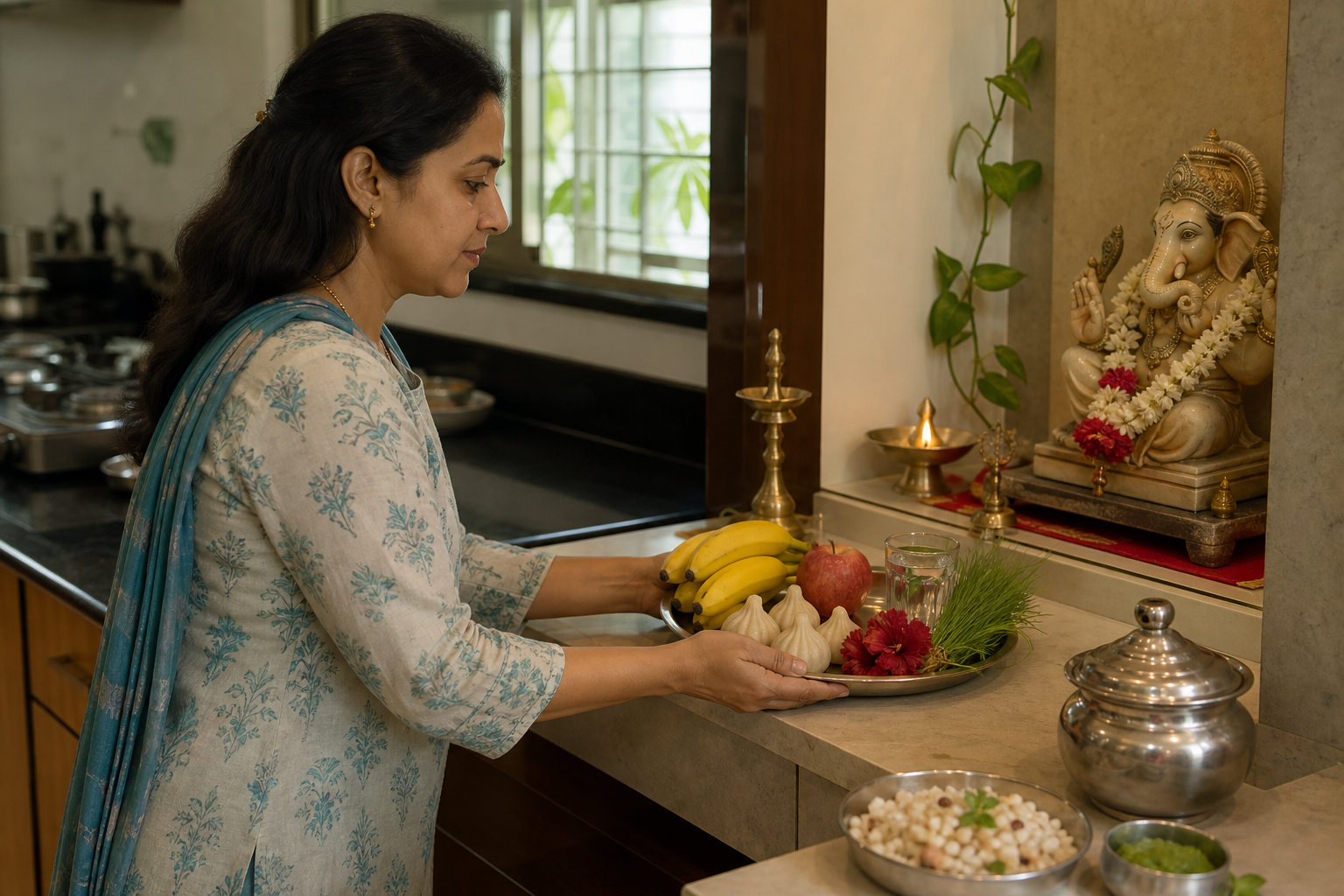
Prepare the puja materials before the evening so that moonrise does not find you searching for missing items. A concise arrangement may include:
- An image or murti of Shri Ganesha.
- Durva grass and flowers for offering.
- Modaka or another suitable naivedya.
- Clean water and an appropriate vessel for arghya to Chandra.
- The text of a Ganesha prayer you already know, or the Ganesha Atharvashirsha if it forms part of your practice.
- Your location-specific moonrise time, written down rather than left in an open browser tab or an unverified message.
There is no need to add unsupported ritual details simply to make the puja feel elaborate. If your sampradaya, family, or temple prescribes a fuller procedure, follow it. Otherwise, a modest puja performed attentively is better than a complicated sequence assembled from conflicting instructions.
A clear sequence for the evening puja and Chandra Darshan
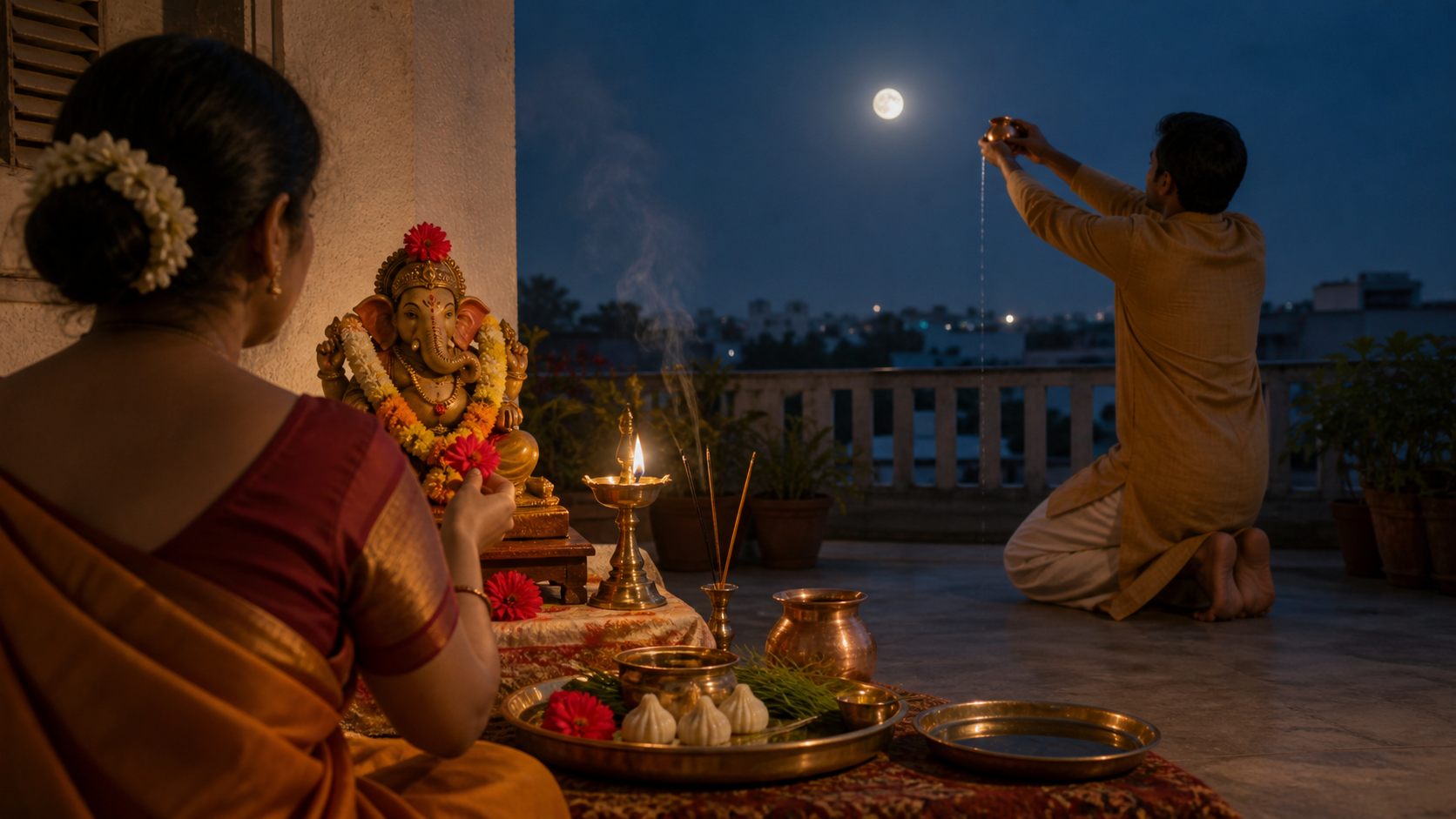
The traditional movement of Sankashti is from vrata to Ganesha worship, then to moonrise and completion. Keeping that order clear is more important than crowding the evening with many optional additions.
- Enter the observance deliberately. Maintain the form of fasting or restraint you have chosen, and reduce avoidable distraction during the day. Let the vrata shape your conduct, not only your menu.
- Prepare for worship before moonrise. Arrange the Ganesha image or murti, durva, flowers, naivedya, and water for arghya. Keep the verified local moonrise time at hand.
- Offer worship to Shri Ganesha. Present durva, flowers, and naivedya with attention. Pray for wisdom, steadiness of mind, and the removal of the obstacles that prevent right action.
- Recite a familiar prayer. The Ganesha Atharvashirsha may be recited where that is part of your practice. If it is not, use the Ganesha prayer taught in your household or tradition rather than rushing through an unfamiliar text.
- Observe Chandra Darshan at the local time. At moonrise, offer arghya to Chandra and complete the associated prayers. The traditional conclusion follows moonrise and the offering to Chandra.
- Break the fast respectfully. Conclude the vrata after the moon observance according to your family or temple custom. Receive the food as the completion of discipline, not merely as relief from hunger.
If clouds or local conditions prevent a visible sighting, avoid inventing a universal fallback rule. Use the locally calculated moonrise and follow the convention of your household or temple. This is one of the points on which inherited practice can determine how the general rule is applied.
What it means to ask Ganesha to remove an obstacle
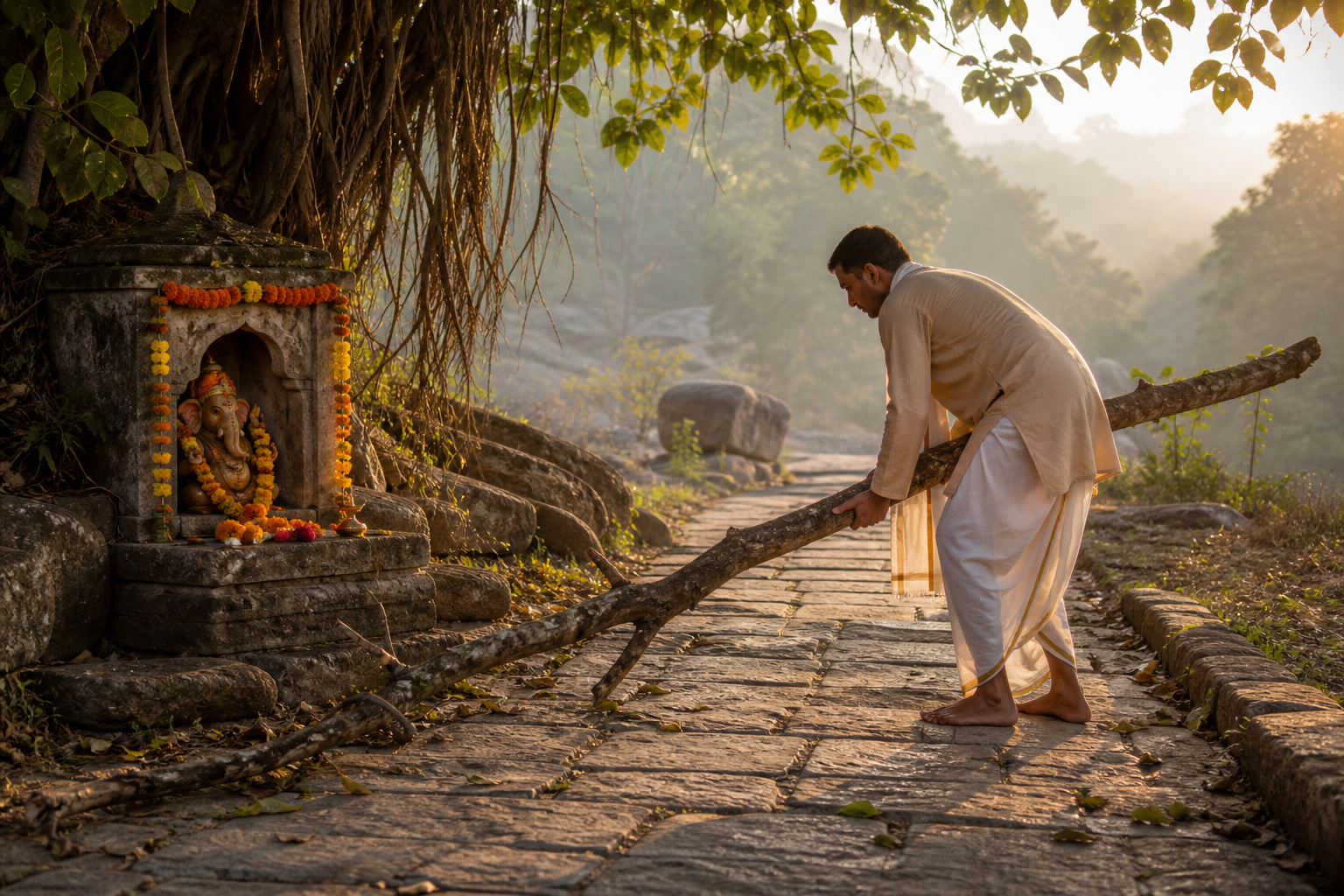
Sankashti is often approached during a period of worry, delay, conflict, or uncertainty. It is natural to bring a concrete difficulty before Shri Ganesha. Yet the vrata should not be reduced to a bargain in which physical hunger is expected to purchase a guaranteed result.
Ganesha is invoked not only for the disappearance of external barriers but also for the wisdom and mental steadiness needed to meet them correctly. Sometimes the obstacle is a circumstance. Sometimes it is confusion, impatience, fear, pride, or inconsistency within us. The discipline of the vrata creates a recurring occasion to distinguish between the two.
You can make that inward work concrete without presenting it as an additional ritual requirement. Before the evening puja, name one obstacle in a single sentence. Then name one dharmic response within your control: a truthful conversation, a duty no longer postponed, an apology, a period of study, or a refusal to act from anger. After completing the vrata, take that step. Prayer for the removal of obstacles and responsible action belong together.
The monthly rhythm matters here. A single observance may bring calm or a felt sense of relief, but repeated vrata develops steadiness because it returns you to discipline before every difficulty becomes a crisis. That is why Sankashti can remain spiritually useful even when the external problem has no immediate resolution.
Dharmic unity without erasing distinct traditions
Sankashti Chaturthi is a Hindu vrata dedicated to Shri Ganesha. Respecting that identity is essential. Its wider Dharmic resonance does not mean that Buddhists, Jains, and Sikhs share the same ritual calendar or are expected to perform the same worship.
The connection lies at the level of ethical cultivation. Self-restraint, compassion, service, and inner transformation appear across Hindu, Buddhist, Jain, and Sikh paths, though each tradition understands and practises them in its own way. Sankashti expresses those values through Ganesha bhakti, fasting, prayer, and the discipline of completing a vrata in harmony with the lunar calendar.
This gives you a careful way to explain the observance in a diverse family or community. Describe what is specifically Hindu: Krishna Paksha Chaturthi, worship of Shri Ganesha, durva, naivedya, Chandra Darshan, and arghya. Then speak of the broader values without claiming that all Dharmic religions are interchangeable. Unity becomes stronger when it preserves difference rather than concealing it.
Key takeaways for the December 2025 observance
- December 2025 Sankashti Chaturthi crossed the civil dates of Sunday, 7 December, and Monday, 8 December; those dates refer to one lunar observance, not two separate vratas.
- Use a Panchang for the place where the vrata is being performed. Confirm Krishna Paksha Chaturthi and the local moonrise rather than selecting a date from the weekday alone.
- In the North Indian Purnimanta system, this Sankashti fell in Poush, but regional calendar language does not replace a local timing check.
- Prepare durva, flowers, modaka or another naivedya, and water for arghya before the evening puja.
- Worship Shri Ganesha, recite a prayer such as the Ganesha Atharvashirsha where appropriate, observe Chandra Darshan, offer arghya, and then conclude the fast according to your tradition.
- Adapt the fast if health requires it. The purpose is disciplined devotion and inner steadiness, not physical severity.
For any future Sankashti, keep the same habit: enter both the lunar observance and your location into the calendar before making plans. Then carry one practical act of clarity from the puja into the following day. That is how a monthly vrata becomes a living discipline rather than a date remembered and forgotten.
References
