
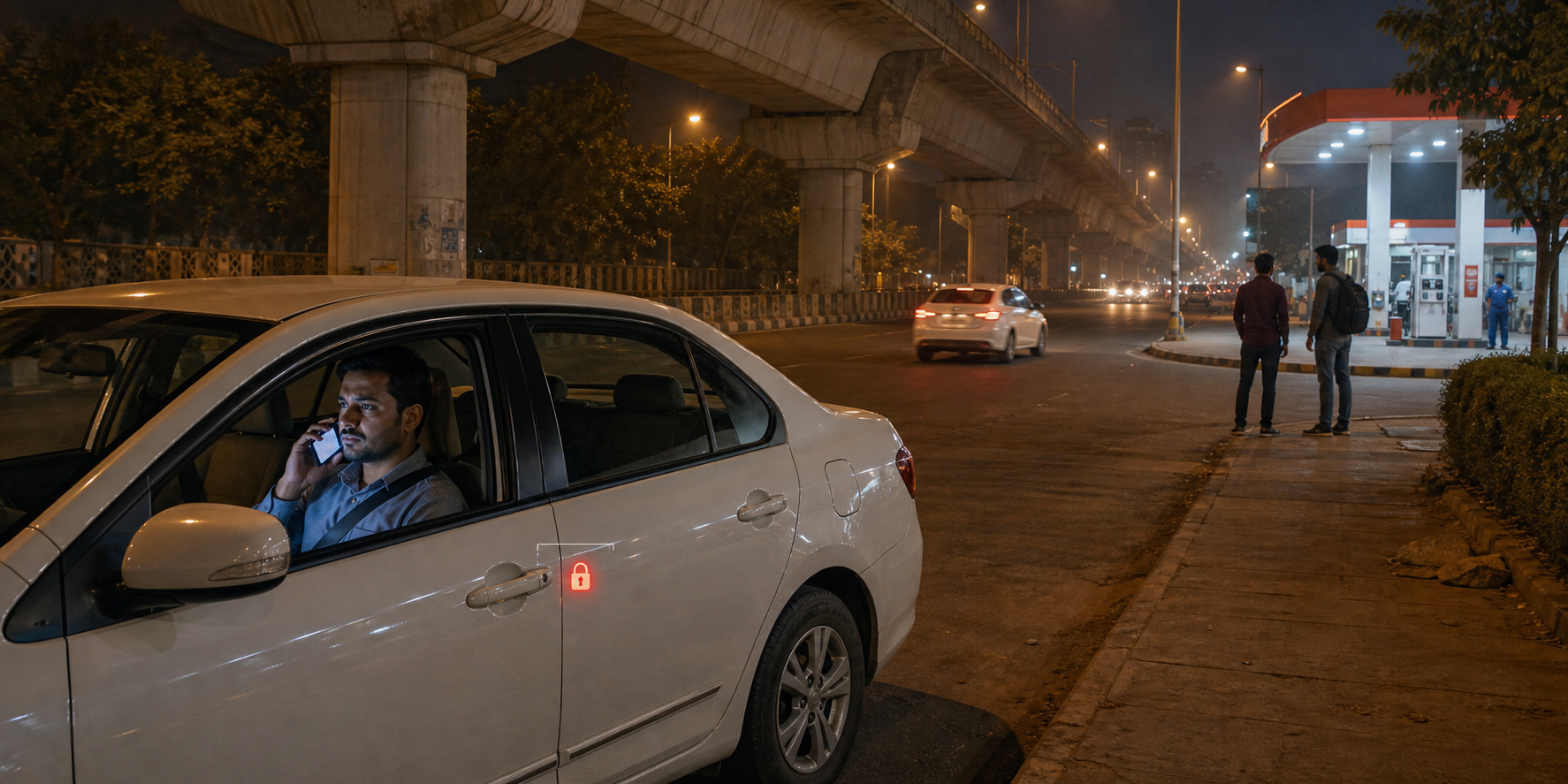
If someone in your family drives a cab after dark, the fear is not abstract. A routine refusal can become a confrontation before the driver has time to call for help. Passengers waiting alone at night face their own version of the same problem: the street offers little margin when a booking fails or tempers rise.
You cannot remove every danger from night travel. You can, however, decide in advance how a ride will be refused, when a driver will leave, who will receive an alert and what everyone should do after an incident. Those decisions are much harder to make once a group is at the door or someone is issuing threats.
What the Delhi killing establishes — and what it does not
In the Delhi case, a cab driver was reportedly fatally stabbed after declining a late-night joyride. Delhi Police confirmed the arrest of Mohammad Imran as the prime accused, while three minors were under investigation in connection with the killing. The facts available for this analysis stop at arrest and investigation; they do not include a court judgment.
That distinction matters. An arrest permits an investigation and legal proceedings; it is not a conviction. The accused must answer as individuals through due process, and responsibility should be fixed by evidence rather than anger, rumours or religious identity. The victim and the victim’s family deserve justice without their grief being converted into indiscriminate hostility toward an entire community.
Another distinction is equally important: refusing an unsafe, unsuitable or unbooked ride is a boundary, not a provocation. A customer may be inconvenienced, and a platform may later examine whether its rules were followed. Neither inconvenience nor disagreement gives anyone permission to threaten, surround or assault a driver.
A Dharmic response holds ahimsa and accountability together. Ahimsa does not require passivity toward violence. It asks us to prevent harm where possible, protect life during danger and pursue justice without adding fresh hatred. Compassion for a bereaved family, restraint in public speech and exact legal accountability belong in the same response.
Build the refusal protocol before the night shift starts
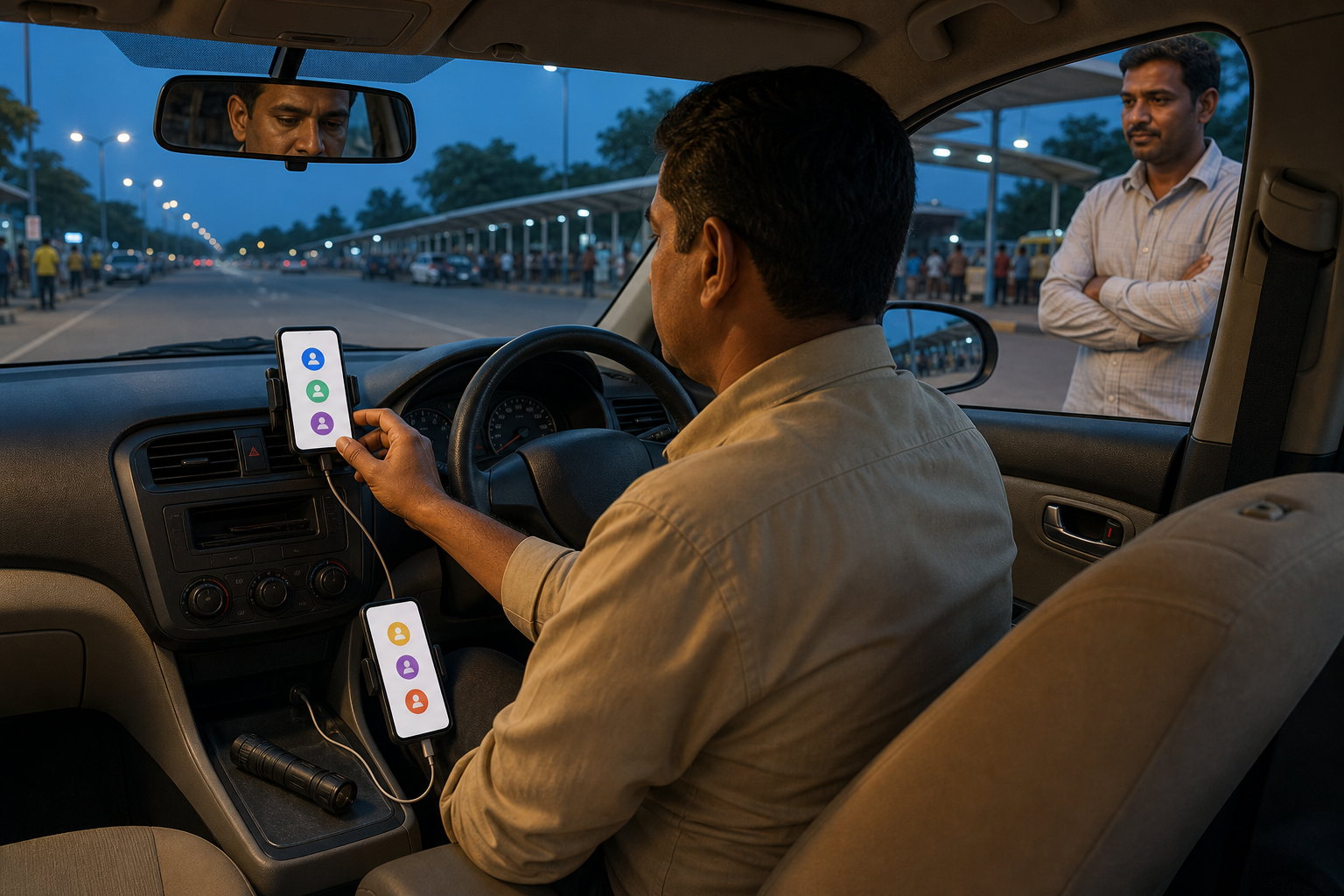
The most useful safety plan begins before anyone asks for a ride. A driver who has to search for the SOS menu, choose a trusted contact and invent a refusal while people are crowding the vehicle has already lost valuable time.
- Open the platform’s safety menu while parked and learn where its SOS, panic and location-sharing controls are. Review the procedure without placing a false emergency call.
- Share the shift or trip location with a trusted person. Agree on a check-in pattern and a clear end-of-shift message, so silence has an understood meaning rather than being noticed hours later.
- Create a simple family duress phrase. It should sound ordinary but tell the recipient to seek emergency help and check the live location instead of calling repeatedly and possibly alerting an aggressor.
- Keep the phone charged, securely mounted and reachable. Searching through a bag or typing while moving creates another hazard.
- If the vehicle has a dashcam, confirm that it is recording, has available storage and shows the correct time. A device that silently stopped recording offers false reassurance.
- Identify several well-lit, staffed places along the working area where the driver can withdraw after a dispute. A staffed fuel station, transport facility or police facility may be more useful than stopping on an isolated shoulder.
- Decide which requests will be declined: for example, an untracked joyride, an attempt to replace the booked passenger with a group, or pressure to take an off-platform trip. A rule decided in advance is easier to apply calmly.
The refusal itself should be short: I cannot take this ride. Please book another cab. Give a practical instruction if one is available, then stop arguing. Long explanations create more points to dispute, while sarcasm and personal remarks turn a transport decision into a contest over pride.
When an unsolicited group approaches, the driver should not unlock the vehicle merely to explain the decision. Keep enough distance to leave lawfully, avoid becoming boxed in and do not step out to continue the argument. If the people outside begin closing that distance, the time to withdraw has arrived; waiting for an explicit threat sacrifices the safest part of the escape window.
When a refusal becomes dangerous, protect life before evidence
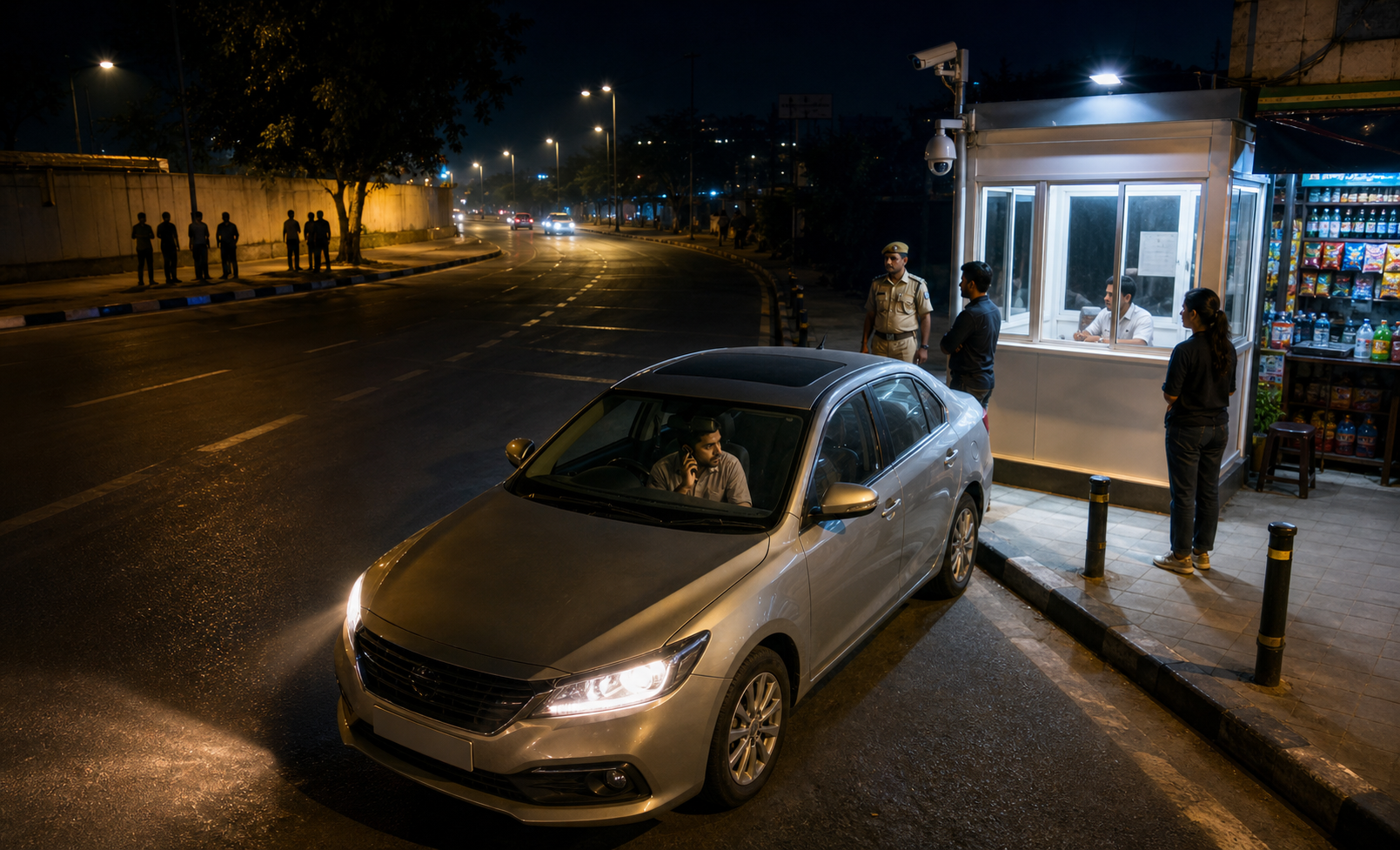
A raised voice is not automatically an assault, but several behaviours should end any attempt at negotiation: people surrounding the vehicle, pulling its handles, blocking its path, trying to force entry, displaying a weapon or making a specific threat. You do not need to win the argument before leaving.
- Create distance early. Move toward a visible, staffed place if there is a clear and lawful route. Do not accelerate into a person, drive blindly into traffic or turn an escape attempt into a collision.
- Activate the available SOS or panic function. Use hands-free calling where possible; an urgent alert does not make distracted driving safe.
- Give emergency responders the location first. Add the direction of travel, a nearby landmark, the number of people involved, whether anyone appears armed and whether someone is injured. A perfect narrative can wait.
- Do not remain solely to protect replaceable property. If abandoning a phone, cash or the vehicle creates a safe way out, preserving life takes priority. Do not chase anyone who flees with property.
- Seek emergency medical help immediately if anyone has been stabbed, struck or otherwise injured. Do not delay care in order to finish a complaint, collect a recording or post an update.
- Preserve evidence only after reaching safety. Save platform records, messages, call logs, location history and original dashcam files. Note the time, place and sequence while memory is fresh, but do not edit the original files.
- Report the incident through both the appropriate public authority and the platform. A platform complaint may protect an account or preserve trip data, but it is not a substitute for an emergency or criminal report.
Never trade an open escape route for better video. A witness who stands close to film may become another victim, obstruct emergency access or provoke the assailants. From a safe position, call for help and remember observable details such as location, direction of movement, clothing and vehicle description. Do not guess at a person’s religion, motive or identity.
Afterward, retain the original evidence and share it with investigators or an authorised legal representative. Posting unverified names, faces or allegations on social media can contaminate public understanding, expose innocent people and become especially harmful where minors are under investigation. The public’s role is not to conduct a digital manhunt.
Passengers, platforms and police can remove predictable risks
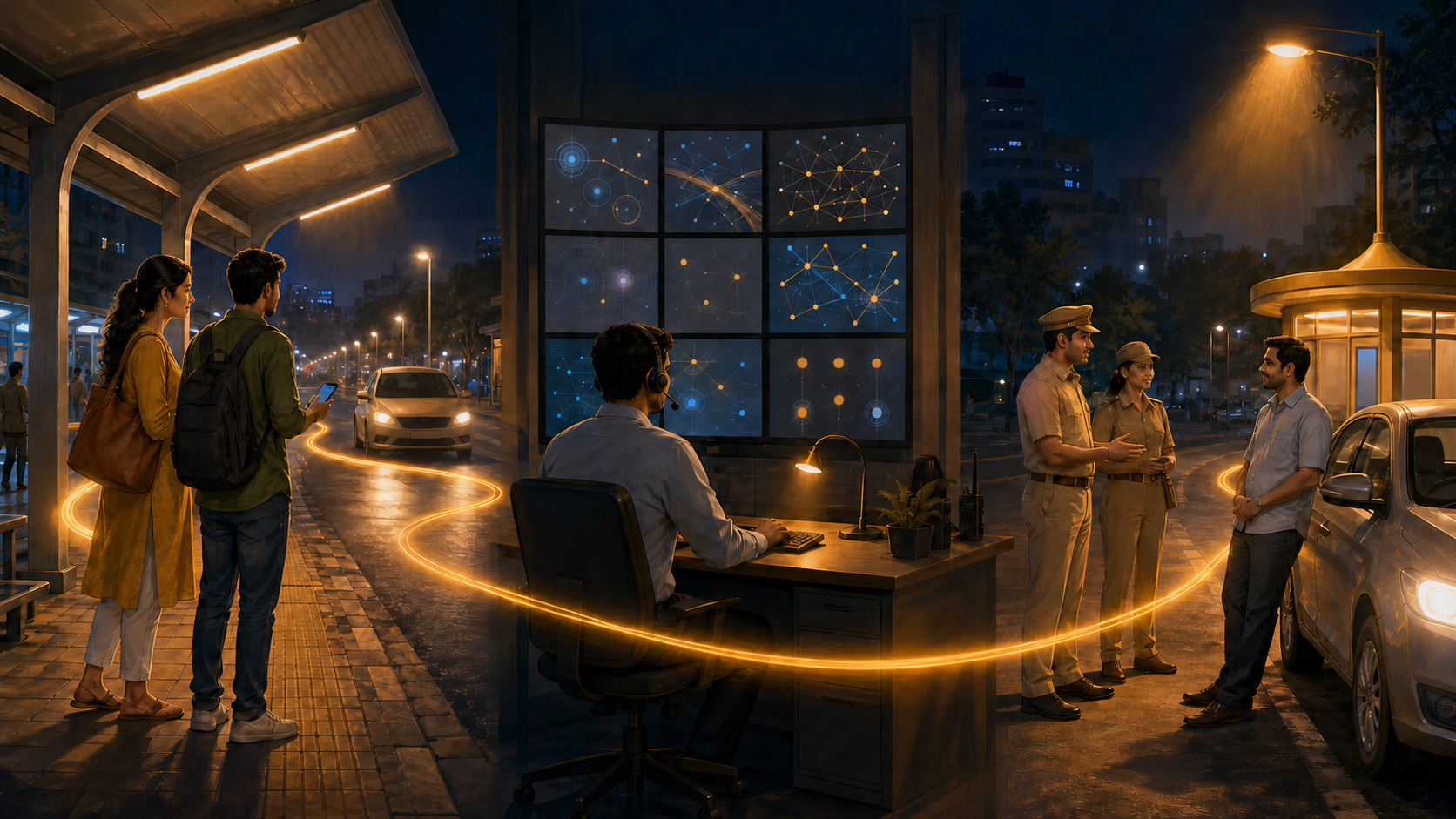
Street safety is not a burden that drivers can carry alone. Passengers shape the encounter, platforms design the tools and incentives, and public authorities determine whether a driver has somewhere safe to go.
If you are the passenger
- Treat a refusal as a transport decision, not a personal insult. Step back from the vehicle and arrange another ride rather than surrounding the driver or demanding a prolonged explanation.
- Keep the journey attached to the recognised booking. An off-platform ride removes information that may later help the driver, passenger, platform or investigators reconstruct what happened.
- If a cancellation leaves you exposed, move to a well-lit, staffed place before disputing it in the app. Resolve fares, ratings and cancellation complaints after you are safe.
- Do not touch the driver, steering controls, keys or door handles during a disagreement. A verbal dispute becomes an immediate physical threat when someone interferes with the vehicle.
- If you witness violence, contact emergency services and offer a factual witness statement. Do not pursue the assailants or circulate an unverified identification.
If you manage drivers or operate a platform
A panic button is useful only if drivers understand what happens after pressing it. Every operator should be able to answer four questions plainly: who receives the alert, whether the driver’s live location is transmitted, what confirmation the driver sees and what happens if the data connection fails.
- Provide a clearly labelled safety-cancellation option and route it for human review. Drivers should not feel forced to choose between entering a threatening situation and accepting an unexplained automated penalty.
- Keep SOS access visible during the trip instead of burying it behind several menus. Include real-time location sharing and a defined human escalation path.
- Train drivers to recognise the point at which de-escalation should end and withdrawal should begin. Training should include short refusal language, emergency location reporting and evidence preservation.
- Review repeated reports by pickup area and time of operation. Use that information to warn drivers, adjust support coverage and raise recurring hot spots with local authorities.
- After a serious incident, preserve account, trip and location records promptly. Do not make a bereaved family or injured driver navigate routine customer-support loops to request preservation.
What public authorities and communities should demand
Targeted night patrols, functioning streetlights in known hot spots, responsive helplines and clear coordination with transport platforms address the conditions in which a minor dispute can become lethal. Transparent updates also matter: authorities should distinguish arrest, allegation, charge and conviction so that public communication neither understates the crime nor prejudges the case.
Driver associations and neighbourhood groups can add a practical layer by maintaining trusted check-in networks, sharing verified hazard locations and helping families navigate support after an attack. They should also stop rumours rather than amplify them. Support for the victim’s family and insistence on due process are not opposing positions.
Key takeaways
- A driver’s safety refusal should be brief, neutral and followed by withdrawal if people begin closing distance.
- Drivers should locate safety controls, enable trusted-contact sharing and decide refusal criteria before starting a night shift.
- Surrounding a vehicle, pulling handles, blocking its path or attempting forced entry are signals to stop negotiating and seek help.
- Escape and emergency medical care come before filming, collecting evidence or protecting replaceable property.
- Passengers should respect refusals, keep trips attached to recognised bookings and take fare or cancellation disputes to formal channels.
- Accountability belongs to identified individuals through evidence and due process; an accused person’s community does not inherit guilt.
Before your next night shift or late ride, make one concrete change: locate the safety control you would actually use, turn on location sharing with someone you trust and agree on what they should do if you send the duress phrase. A safety feature you have never found or explained is not yet a safety plan.
References
