
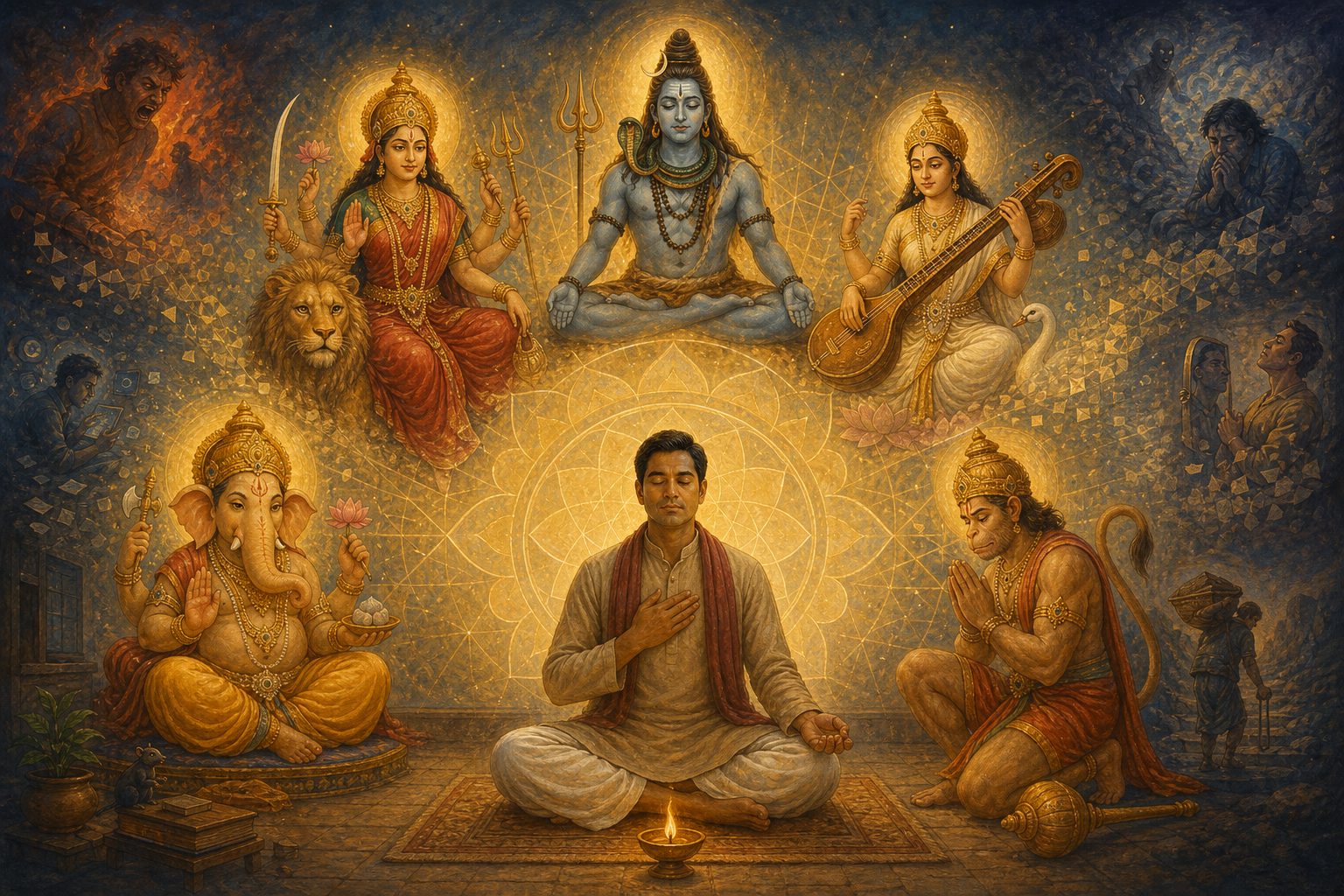
You may already know what a difficult moment requires, yet find that knowledge unavailable when it matters. An insult pulls you into anger. Too much noise scatters your attention. A duty feels clear until comfort, fear, or pride begins negotiating with it.
Hindu divine forms can help close that gap. The useful question is not, “Which deity matches my personality?” It is, “Which dharmic capacity is missing from my response right now?” When contemplation leads to a specific change in speech, restraint, courage, or service, an archetype becomes a method of inner transformation rather than an attractive idea.
A deity is not a personality type
Calling Shiva, Vishnu, Narasimha, Rama, Krishna, or Indra an archetype does not mean that the deity is merely a projection of the human mind. Hindu traditions approach divine forms through distinct theologies, lineages, rituals, and relationships of devotion. An archetypal reading is one practical layer within that larger sacred reality. It asks what a form reveals about consciousness and conduct without pretending that the form has no meaning beyond psychology.
This distinction protects the practice from two mistakes. The first is reduction: Narasimha becomes anger, Krishna becomes charm, and Shiva becomes detachment. The second is self-flattery: you select the grandest image for the quality you already want to claim. A genuine encounter works in the opposite direction. The form exposes what is undisciplined in you and calls forth a virtue that your present habits resist.
Shiva offers a particularly important model. His meditative stillness points toward silence, one-pointed attention, and orientation to the Supreme, while the tradition of Shiva contemplating Vishnu embodies reverence across devotional lineages. Your chosen Ishta-devata can focus the heart without requiring contempt for another person’s path. Depth of commitment and breadth of respect belong together.
Key takeaways
- Begin with the obstruction you are actually facing, not the divine image that most appeals to your self-image.
- Receive the deity as sacred presence first and use the archetype as a mirror for conduct.
- Choose one missing capacity for the situation: remembrance, restraint, courage, humility, fidelity, compassion, or decisive renewal.
- Give contemplation an observable expression in your next conversation, decision, habit, or act of seva.
- Judge a fierce practice by whether it protects without cruelty and a devotional practice by whether it makes you more truthful, dependable, and respectful.
Choose the capacity that answers the obstruction
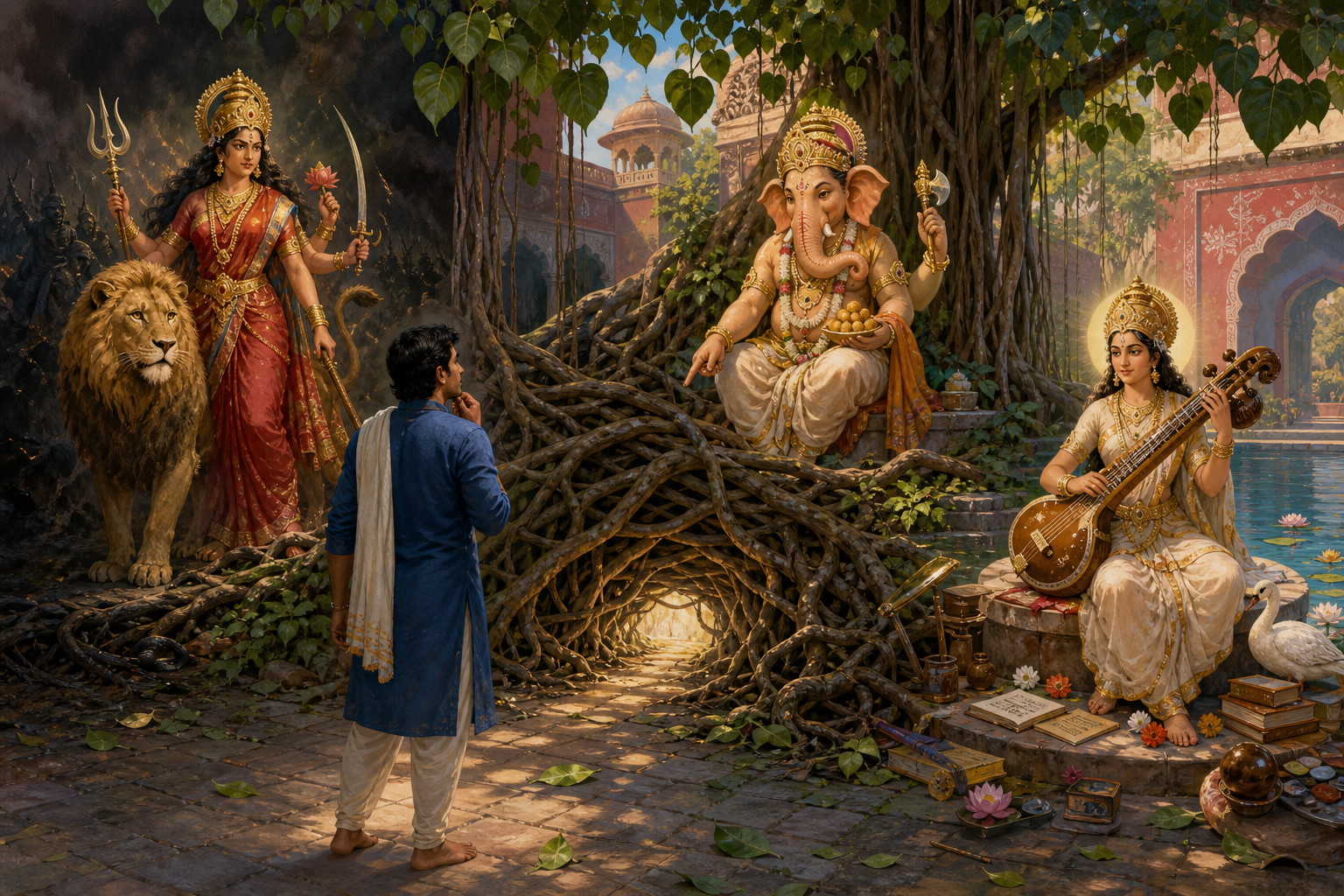
The Dashavatara provides a remarkably precise vocabulary for this work. Its forms can be contemplated as complementary faculties in an inner ecology: Matsya remembers, Kurma withdraws, Varaha raises, Narasimha protects, Vamana proceeds humbly, Parashurama prunes, Rama remains faithful, Krishna integrates, Buddha brings mindful compassion, and Kalki renews. These are not interchangeable moods. Each addresses a different failure of attention or conduct.
| What you notice | Archetypal capacity | What to do next |
|---|---|---|
| You are busy but have forgotten what the work is for. | Matsya: recovery of what must not be lost in chaos. | Stop before the next task, return to the breath or your chosen sacred name, and write the dharmic intention the task is meant to serve. |
| Noise, screens, or provocation are controlling your attention. | Kurma: dignified withdrawal of the senses. | Step away from the stimulus, lengthen the spine, settle the breath, and delay your response until you can choose it. |
| Lethargy or discouragement has buried your sense of dignity. | Varaha: raising what is precious from the depths. | Ground yourself through a deliberate walk, complete a neglected act of self-respect, or perform useful seva that reconnects effort with purpose. |
| You must stop mistreatment but anger wants revenge. | Narasimha: protective courage governed by dharma. | State the boundary plainly. Protect the vulnerable fact, person, or principle without humiliation, threats, or cruelty. |
| A worthy change feels too large to begin. | Vamana: humility, proportion, and measured vows. | Adopt a small promise you can actually keep, such as two minutes of daily meditation or one deliberate act of kindness. |
| You keep defending a habit that contradicts your values. | Parashurama: disciplined pruning of inner adharma. | Name the contradiction without euphemism, remove a cue that sustains it, and release the habit in a way consistent with ahimsa. |
| Convenience is tempting you to neglect a promise or duty. | Rama: fidelity, truth, and noble conduct. | Identify the promise at stake and take the next action that makes your word trustworthy. |
| You are involved in a complex duty and fear either attachment or indifference. | Krishna: the integration of wisdom, devotion, and action. | Use Gita contemplation or japa to clarify your motive, then act fully without making personal control of the outcome your condition for service. |
| Reactivity has narrowed your view of another person. | Buddha: mindful presence and compassion. | Pause with the breath, recognize suffering without excusing harmful conduct, and choose words that do not multiply injury. |
| A stale routine, media habit, or civic pattern keeps reproducing confusion. | Kalki: decisive ethical renewal. | End the participation that feeds the cycle and replace it with a truth-centered routine you are prepared to maintain. |
| Fear, pride, apathy, or discord is blocking necessary action. | Indra and the vajra: clarity strong enough to break an obstruction. | Name your present Vritra, identify the truth you have avoided, and take a direct action guided by compassion and service rather than aggression. |
Start with the row that most honestly describes the present moment. Do not select Narasimha merely because strength feels impressive or Kurma because withdrawal feels comfortable. If avoidance is the problem, more withdrawal will reinforce it. If impulsiveness is the problem, dramatic action will do the same. The right archetype supplies what the moment lacks; it does not give sacred language to the habit already in control.
The Indra-Vritrasura pattern makes this diagnostic principle especially clear. Vritra is not every inconvenience, and the vajra is not permission to attack whatever frustrates you. The defeat of obstruction and release of life-giving waters points to courageous clarity in the service of restored order. Before acting, ask what your proposed thunderbolt will release. If the likely result is only injured pride, fear, or greater disorder, you have not yet found the vajra.
Contemplative practice can organize attention and conduct, but it is not a substitute for qualified care when despair or another form of distress is severe, persistent, disrupts ordinary functioning, or raises concern for safety. In that situation, seek appropriate professional help while keeping spiritual practice as support rather than replacement.
Turn the image into a repeatable sadhana
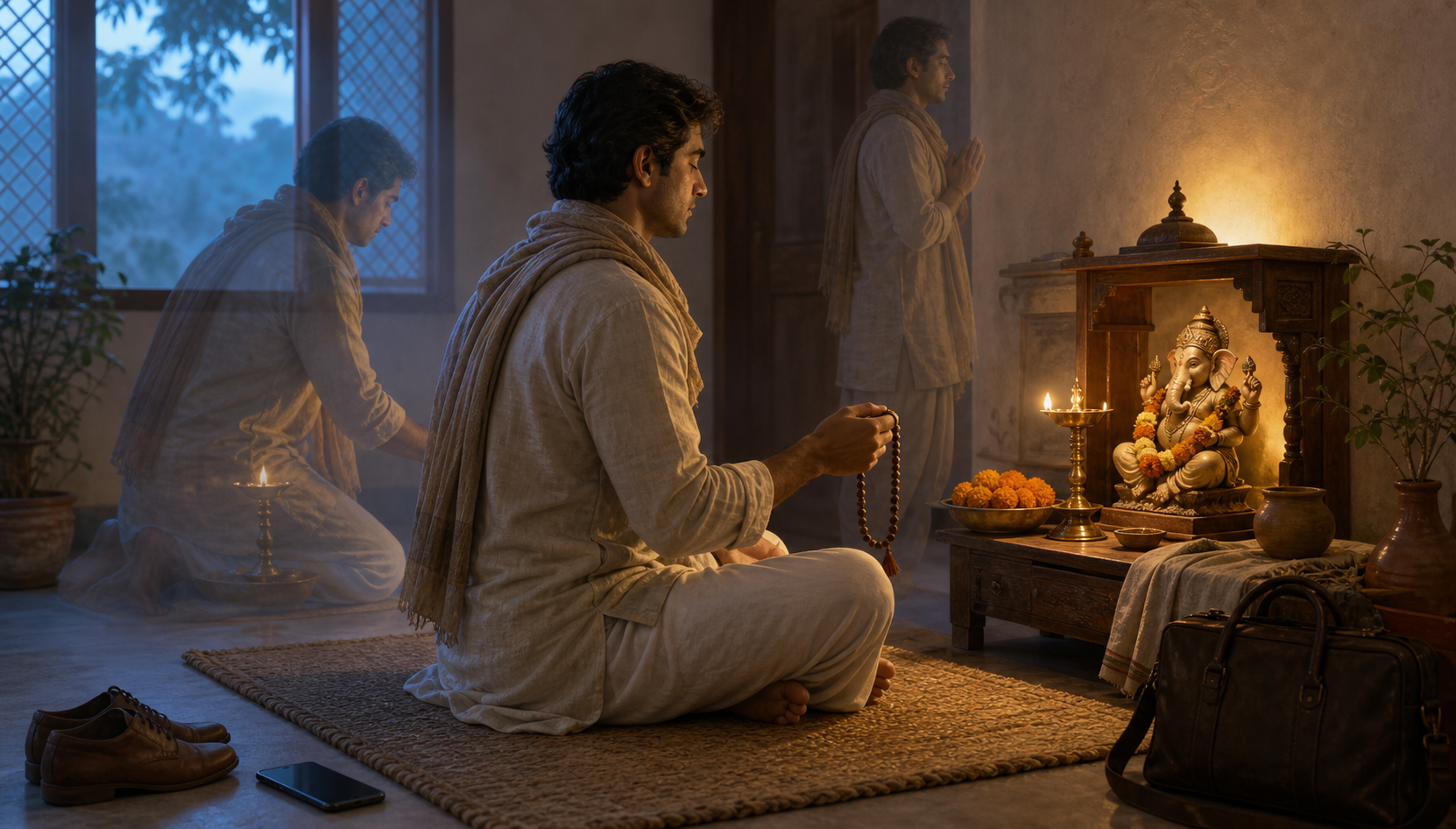
An archetype changes you only when it crosses the distance from shrine or imagination to behavior. Use the following sequence when a real decision, conflict, or habit exposes an inner obstruction.
- Name the disturbance without mythic language. Say exactly what is happening: “I am preparing a humiliating reply,” “I am avoiding a promise,” or “I cannot keep my attention on the duty in front of me.” Precision prevents spiritual language from hiding the problem.
- Name the dharma at stake. Is the moment asking for truth, protection, fidelity, restraint, compassion, service, or restoration? This keeps the practice oriented toward a value rather than a desired feeling.
- Select one primary form. Choose the deity whose action answers the deficiency. Stay with that form long enough to receive its correction. Constantly switching forms can become another way of avoiding discipline.
- Create an interval. Sit or stand upright. Enter a short period of mauna, let the breath settle, and repeat a sacred name already at home in your practice. The purpose is not to manufacture an altered state. It is to interrupt the automatic reaction so discernment can return.
- Contemplate the decisive gesture. Kurma withdraws. Varaha lifts. Narasimha protects. Vamana measures. Parashurama cuts away. Rama keeps faith. Krishna acts with wisdom and devotion. Indra breaks the obstruction so that what sustains life can move again. Hold the action as a question: “What would this gesture mean here?”
- Make a bridge vow. Translate contemplation into conduct that can be recognized when it happens: send the honest message, stop the insult, keep the promise, remove the harmful cue, close the distracting feed, or complete the act of seva.
- Review without self-dramatization. At the end of the day, ask whether you performed the bridge action, where resistance appeared, and what repair is now due. If you failed, return through Vamana’s humility rather than covering the failure with grander ritual.
Keep the mantra and form consistent with your sampradaya, family practice, or guidance from a trusted teacher. Not every sacred formula is a generic concentration device. When you do not have a formal mantra practice, a familiar divine name, a simple prayer, silence, or attentive breathing can provide the pause without pretending to an initiation you have not received.
Use sequences when one capacity is not enough
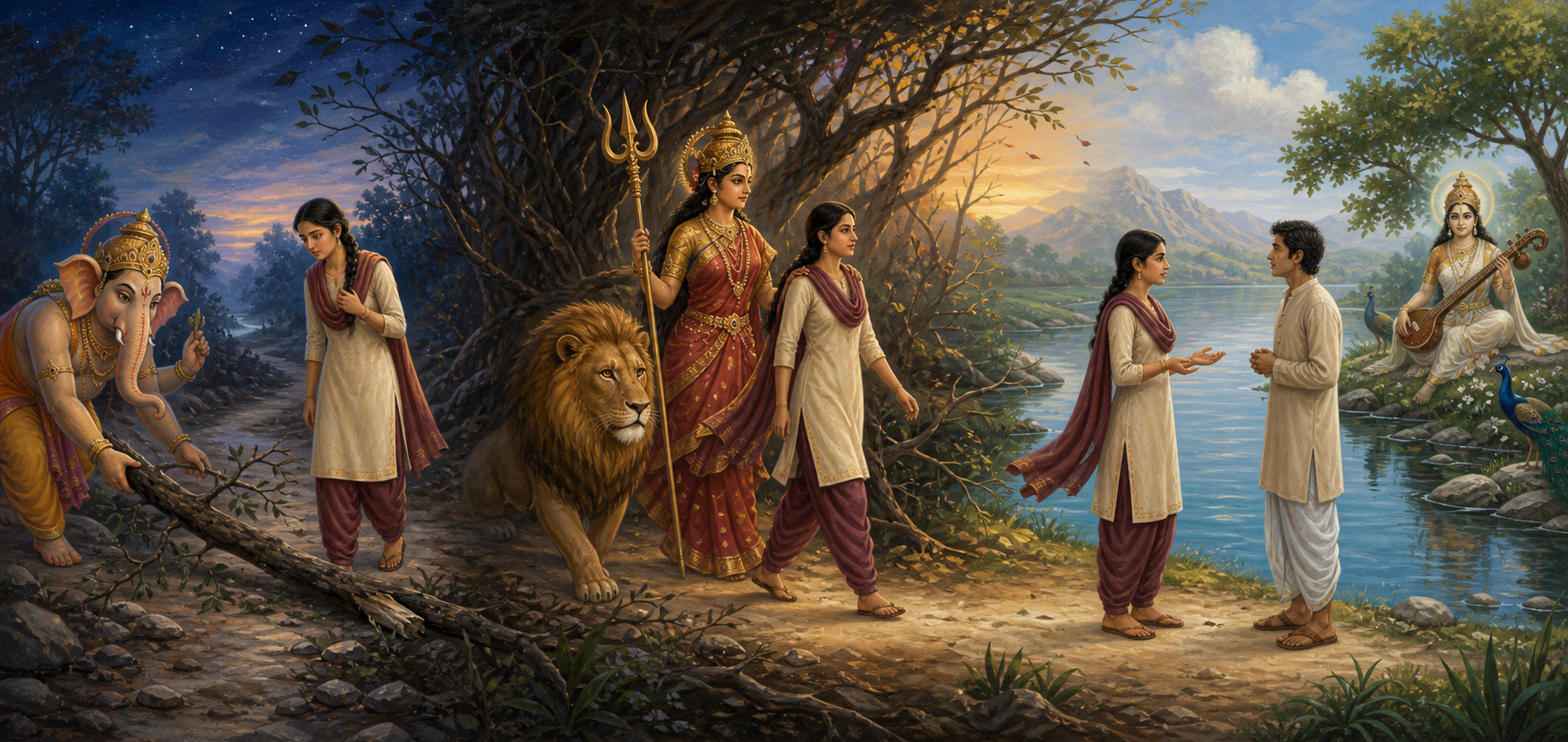
A difficult situation often has stages. One archetype may prepare the mind while another governs the eventual action. The order matters. Kurma before Narasimha, for example, means restraint before confrontation. Reversing that order can turn an undigested reaction into supposedly righteous force.
When a conversation becomes insulting
Begin with Kurma. Withdraw attention from the bait, settle your breath, and refuse the demand for an instant reply. Move next to Narasimha: protect dignity with a clear boundary, such as, “I will discuss the issue, but not while we are insulting each other.” Finish with Rama by honoring whatever legitimate duty remains after the heat has passed. The aim is neither passive endurance nor retaliation. It is firm conduct that truth and relationship can survive.
When digital noise has displaced your purpose
Begin with Matsya by recovering the essential duty that has been swept out of awareness. Enter Shiva’s stillness through silence, breath, and a chosen sacred name. Then invoke Kalki as ethical renewal: end the recurring media behavior that keeps recreating the confusion and establish a deliberate rule for your attention. A calm interval without a changed digital habit will fade; a strict rule without recovered purpose will feel arbitrary. The sequence supplies both meaning and resolve.
When a harmful habit survives every grand resolution
Begin with Vamana. Replace the heroic promise with a small vow you can keep. Bring in Parashurama to remove the cue, excuse, or contradiction that protects the habit. Then use Krishna’s synthesis to stay engaged with ordinary duties without making perfection a condition for continuing. Smallness is not weakness here. It prevents pride from designing a practice that daily life cannot carry.
When discouragement has become isolation
Begin with Varaha by lifting one neglected element of dignity into action: bodily care, an orderly space, a grounded walk, or useful work. Let Indra identify the obstruction that must be faced plainly. Complete the movement through seva, so renewed energy does not close around the self. The inner earth is raised so life can be supported on it, not so the ego can admire its recovery.
Test transformation by its effects on conduct

Powerful imagery can generate powerful feeling. Feeling may support practice, but it does not prove transformation. The test is what becomes more reliable after the emotion has passed.
- Shiva’s stillness is becoming real if you can pause before speech that would deepen conflict.
- Matsya’s remembrance is becoming real if your stated purpose survives distraction and governs the next task.
- Kurma’s restraint is becoming real if withdrawal restores discernment rather than serving avoidance.
- Narasimha’s courage is becoming real if vulnerable people and principles are safer without your opponent being dehumanized.
- Vamana’s humility is becoming real if modest vows are kept when nobody is watching.
- Parashurama’s pruning is becoming real if excuses lose their authority and harmful patterns lose practical support.
- Rama’s fidelity is becoming real if other people can place greater trust in your word.
- Krishna’s integration is becoming real if you can participate wholeheartedly without using the outcome to measure your worth.
- Buddha’s compassion is becoming real if clear perception reduces cruelty in thought, speech, and action.
- Kalki’s renewal is becoming real if you end an adharma-producing cycle and sustain a better order after the initial resolve fades.
- Indra’s vajra is becoming real if your clarity releases energy for truthful action, social harmony, or service rather than merely winning a contest of egos.
Apply the same standard to intertradition respect. Hindu archetypal practice can resonate with Buddhist mindfulness and compassion, Jain ahimsa and disciplined vows, and Sikh simran and seva. Resonance does not erase difference or turn these traditions into interchangeable versions of one technique. Let each path keep its own language and integrity. The dharmic family is strengthened when shared ethical concerns lead to mutual regard and service, not when distinctions are flattened for convenience.
Before your next difficult decision, do not ask which divine form describes you. Ask which dharmic faculty the moment requires. Choose the form that reveals it, enter silence or sacred remembrance, and make the required action concrete. Then carry that action into the next hour. That is where contemplation begins to become character.
References
- DharmaRenaissance Blog – Lord Shiva’s Meditative Focus on Vishnu: Timeless Guidance for Unity and Inner Clarity
- DharmaRenaissance Blog – Awaken the Dashavatara Within: Transformative Practices to Embody Vishnu’s Ten Archetypes
- DharmaRenaissance Blog – Indra’s Triumph over Vritrasura: Awe-Inspiring Symbolism, Dharma, and Unity Across Traditions
