
You know what ought to be done, yet something keeps the necessary movement from happening. A decision remains suspended. A duty is repeatedly postponed. Fear narrows your choices, conflict prevents cooperation, or a habit consumes the energy needed for better work.
Indra’s encounter with Vritrasura gives you a practical way to examine that condition. Its central question is not simply how to defeat an opponent. It is how to identify what has obstructed a life-giving flow, remove it without becoming ruled by anger or ego, and restore an order worth preserving.
Vritra is the blockage, not merely the opponent

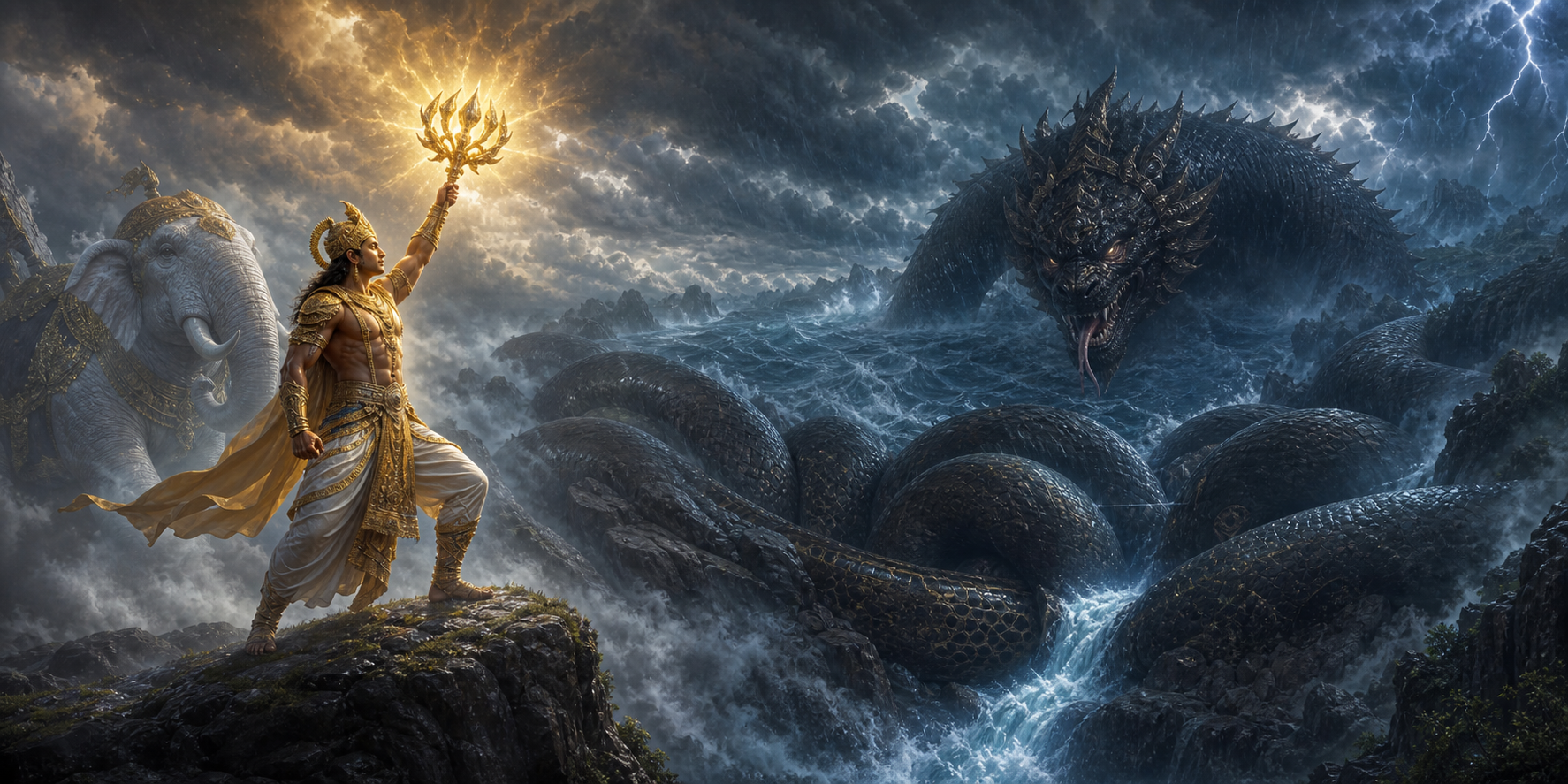
In the classical narrative, Vritrasura grows powerful, harasses the Devas, and disrupts the rhythms of life. Indra, leader of the Devas, confronts him with the Vajrayudha and prevails. The victory is remembered across Vedic and Puranic tradition as a restoration of rita, the order aligned with dharma. The honorific Vritrasura Samhara Murthy commemorates Indra as the form associated with this decisive removal of obstruction.
The symbolism makes the encounter more than a battle story. Vritrasura represents constriction, drought, and the damming of life-giving flows. This is the essential clue for applying the narrative: define an obstruction by what it prevents from moving.
Your Vritra is therefore not automatically the person who frustrates you. A person may participate in an obstructive pattern, but turning that person into a demon usually makes your judgment less precise. The real blockage may be dishonesty in a relationship, a rule that prevents responsible work, fear that keeps a necessary conversation from happening, or inertia that survives because nobody has accepted ownership.
Before choosing a response, ask:
- What should be moving but is not: truthful speech, attention, water, resources, cooperation, service, learning, or the performance of a duty?
- Where does the movement stop? Identify the decision, habit, conflict, assumption, or arrangement at the narrowest point.
- Is the obstruction mainly internal, relational, or structural? More than one level may be involved, but one is usually the immediate point of action.
- What would restored flow look like for everyone affected, not merely for you?
This changes the problem. Instead of asking whom you must overpower, you ask what must be released and what condition is holding it back. That is a more demanding question because it prevents resentment from disguising itself as righteousness.
Forge the Vajra before taking action
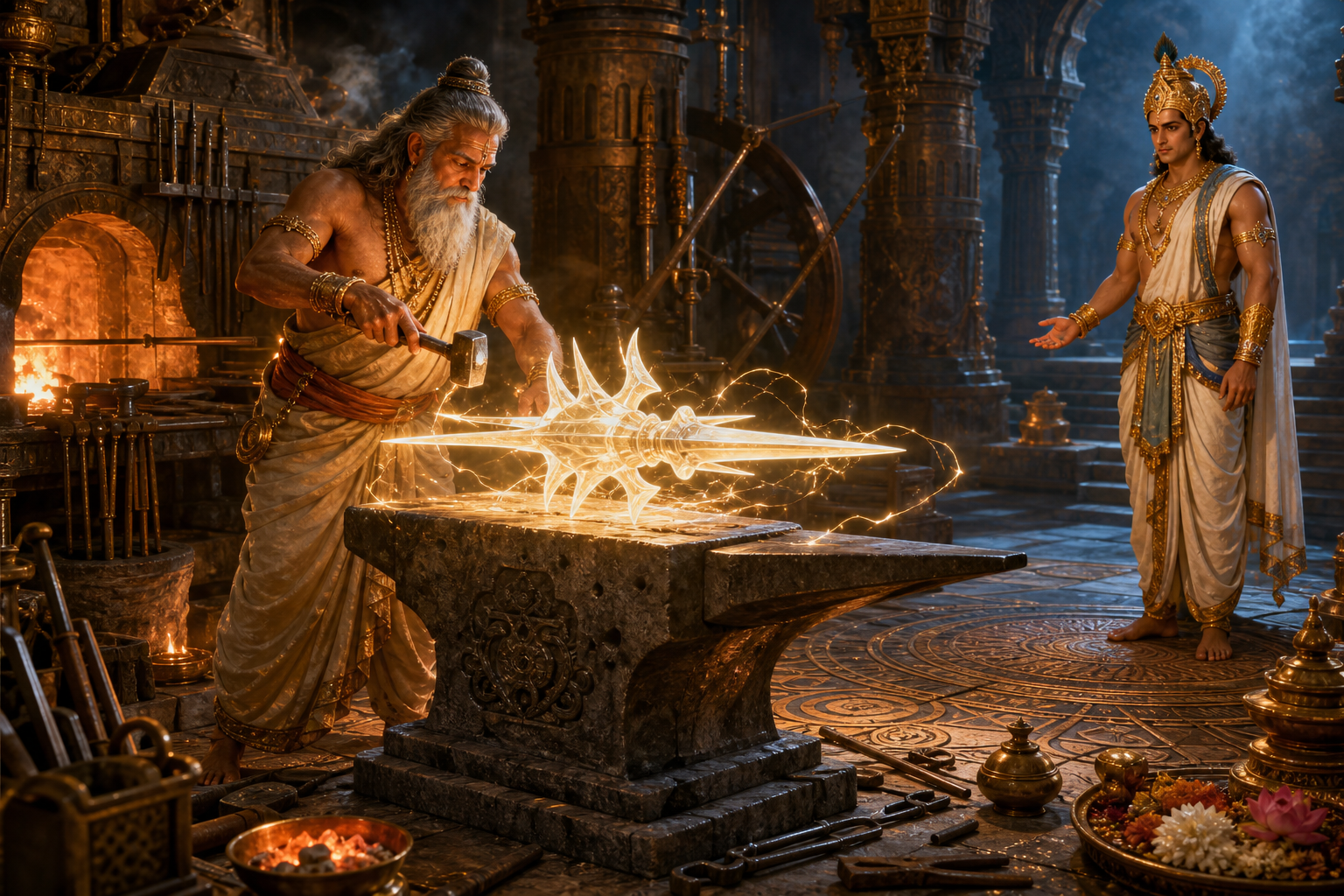
The Vajrayudha represents more than force. In a reflective reading, it signifies clear judgment, disciplined strength, courage, and enlightened resolve. These qualities belong together. Resolve without clarity becomes impulsiveness. Clarity without courage becomes endless analysis. Courage without discipline can create a second obstruction while attacking the first.
A dharmic response should pass four tests before you act:
- The clarity test: Can you describe the blockage without exaggerating another person’s motives? Replace labels with observable conditions. Instead of saying that someone ruins everything, identify the withheld information, broken commitment, unresolved dispute, or repeated behaviour that stops movement.
- The duty test: What responsibility actually belongs to you? Dharma does not require you to control every outcome. It does require you to perform your part truthfully and competently.
- The restraint test: Which methods would reproduce adharma even if they appeared to secure a quick victory? Deceit, humiliation, needless harm, and vengeance do not become dharmic merely because the goal sounds noble.
- The effectiveness test: What is the smallest decisive action that can reach the blockage? A precise conversation, a firm boundary, a completed decision, a request for assistance, or a disciplined return to practice may accomplish more than a dramatic confrontation.
This is where the image of the Vajra is especially useful. A blunt object hits everything around the target. A well-formed instrument concentrates force at the point of obstruction. Your action should be equally precise.
You can also distinguish patience from inertia by looking at what happens during the delay. Patience uses time to improve judgment, prepare the right action, or prevent needless damage. Inertia uses time to avoid discomfort while the blockage hardens. If nothing is being clarified, prepared, protected, or repaired, the delay probably is not patience.
Judge victory by the order it restores

Indra’s victory matters because blocked vitality can move again. That makes restoration, rather than domination, the moral measure of success. Removing an obstacle is incomplete if the result leaves greater disorder behind.
After any decisive action, examine its consequences:
- Can the neglected duty now be performed?
- Has truthful communication become easier, or has fear simply changed sides?
- Did the response protect dignity while setting a necessary boundary?
- Has cooperation returned, or has one form of conflict been replaced by another?
- Did the action restore shared well-being, or mainly feed the satisfaction of winning?
- Where land, water, or communal resources are involved, has ecological balance been restored or further damaged?
These questions prevent samhara from being reduced to destruction for its own sake. The enduring dharmic emphasis is on restoring balance through truthfulness, restraint, generosity, mutual respect, and responsibility toward the larger order. A breakthrough that enlarges arrogance may remove an external obstacle while strengthening an internal one.
Related insights across the dharmic family
Hindu, Buddhist, Jain, and Sikh teachings should not be collapsed into a single doctrine. Their vocabularies, disciplines, and theological settings remain distinct. Yet each recognizes that suffering and disorder are sustained not only by outward conditions but also by forces within the person.
| Dharmic framing | Form of obstruction | Direction of practice |
|---|---|---|
| Indra and Vritrasura | Constriction that blocks life-giving flow | Remove the blockage and restore rita in alignment with dharma |
| Buddhist teachings on kleshas | Afflictions that sustain suffering | Transform the conditions through which affliction governs conduct |
| Jain teachings on kashayas | Passions that bind and distort action | Subdue them through disciplined practice |
| Sikh teachings on haumai | Ego that makes the self the centre of action | Transcend ego rather than allowing it to command conduct |
This comparison gives you a useful double check. If an external victory leaves you obsessed with superiority, look for the inner obstruction that survived. If inward calm becomes an excuse to tolerate a continuing injustice or neglect a duty, look again at the outer condition that still needs action. Dharma asks for neither passive inwardness nor uncontrolled outward force. It asks for right action joined to inner discipline.
Apply the story to the obstruction in front of you
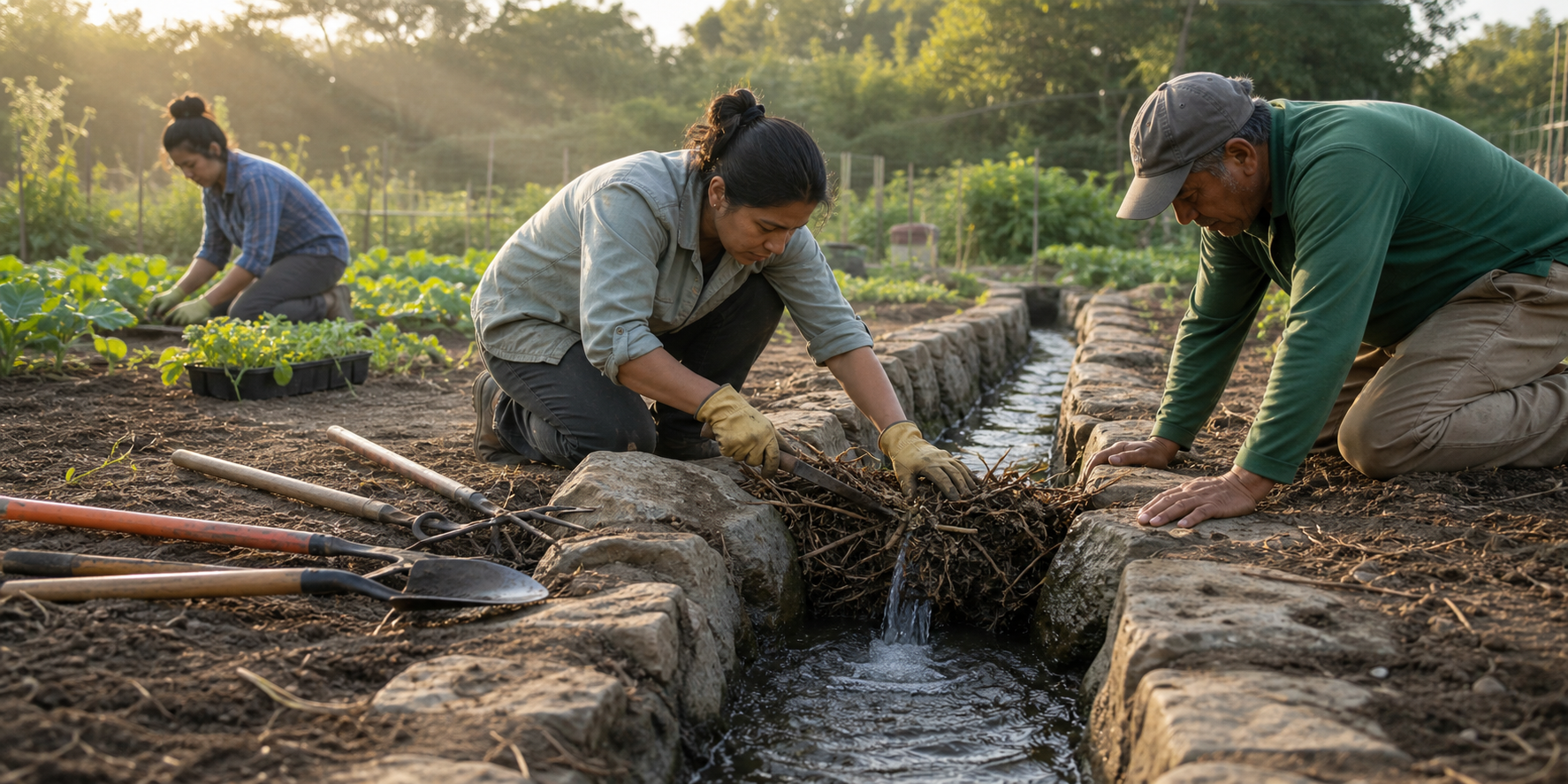
Choose one real blockage rather than trying to reform your whole life at once. Work through the following sequence on paper. Writing matters because a vague obstruction can absorb unlimited worry, while a precise one can be tested and acted upon.
- Name the blocked flow. Complete this sentence: “The obstruction is ___, and it prevents ___ from moving.” The second blank is crucial. If you cannot name what should be released, you may be reacting to irritation rather than addressing an actual obstruction.
- Remove identity labels. If your description contains only a person’s name, rewrite it as a behaviour, condition, pattern, or decision. This does not erase responsibility. It makes responsibility specific enough to address.
- State the dharmic obligation. Write what you owe to the situation: honesty, protection, competent work, restraint, repair, service, or a clear boundary. Then write what you will not do, even to obtain the result.
- Select the Vajra action. Choose the smallest action that directly reaches the narrow point. Make the deferred decision. Speak the necessary truth without humiliation. End the commitment that drains resources from a genuine duty. Ask for help where pride has made help inaccessible. Resume the practice that fear or lethargy displaced.
- Support resolve with discipline. A single burst of intensity does not necessarily remove the conditions that created the blockage. Decide what must be repeated, observed, or maintained so that the old constriction does not quietly return.
- Review the released flow. At the next natural checkpoint, ask whether attention, trust, resources, cooperation, or duty can move again. If the blockage has merely shifted onto someone else, revise the action. If movement has returned without unnecessary disorder, continue the practice that supports it.
The hardest step is often the distinction between decisive action and emotional discharge. Emotional discharge aims at immediate relief for the actor. Decisive action changes the condition that prevents right movement. Before speaking or acting, ask which result your chosen method is actually designed to produce.
There is also a temptation to make every obstacle sacred by enduring it. That misreads restraint. Restraint governs the method; it does not require permanent submission to stagnation. Indra’s example places responsibility on the person capable of restoring order. When a duty is clear and the means are proportionate, refusal to act can itself preserve the obstruction.
Key takeaways
- Define your Vritra by the life-giving flow it blocks, not by the enemy you are tempted to imagine.
- Treat the Vajra as disciplined precision: clarity about the problem, courage to act, restraint in method, and resolve to continue.
- Judge success by restored duty, truth, cooperation, well-being, and balance rather than by the feeling of having won.
- Examine both levels of obstruction. Outer conditions may require firm action, while fear, passion, affliction, or ego may require inner practice.
- Choose the smallest decisive action that reaches the actual blockage, then check whether the flow returned or the burden merely moved elsewhere.
Before the day ends, write the sentence that names what is blocked and what should be moving. Then choose the precise action your duty permits. Your Vajra is not anger at resistance. It is the clarity and discipline that allow life, service, and right order to move again.
References
