
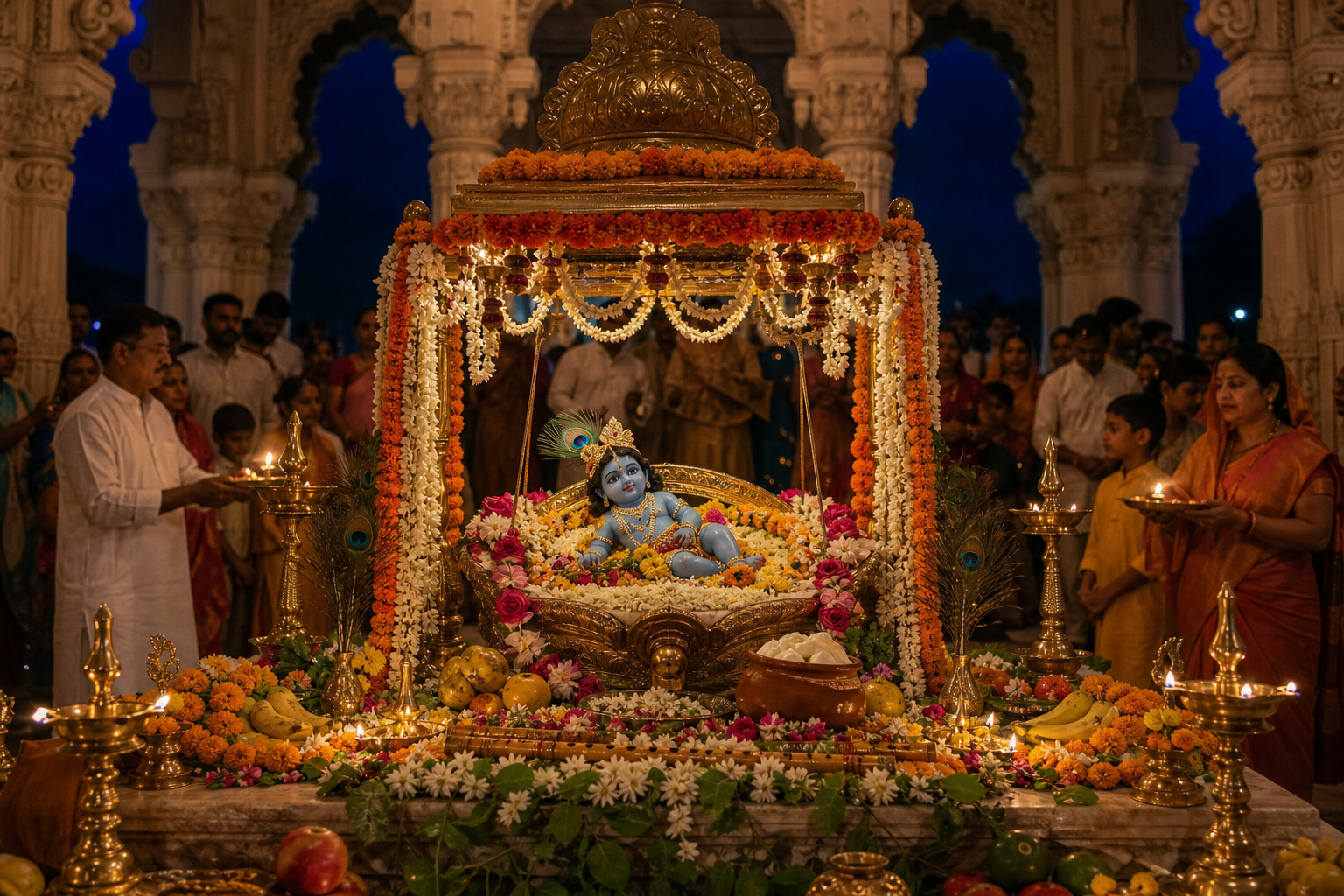
If you are arranging leave, temple darshan, a family puja, or travel for Janmashtami 2026, keep two dates free. The principal Krishna Janmashtami observance falls on September 4, while Gopalkala or Dahi Handi follows on September 5.
That simple answer still needs one qualification: temple practice is not completely uniform. The midnight birth observance, local panchanga calculations, sampradaya, and regional customs can produce different schedules. Use the dates below to plan, then confirm the exact worship and entry times with the temple you intend to visit.
Put September 4 and September 5 on your calendar
The night of September 4 is the main Janmashtami observance in 2026. The traditional ritual marker is Krishna’s birth around midnight during Ashtami tithi and Rohini Nakshatra in the month of Shravana. That is why the midnight puja matters more than merely marking the civil date.
| Date | Main observance | What you should plan |
|---|---|---|
| September 4, 2026 | Janmashtami, also called Gokulashtami, Krishnashtami, Sri Krishna Jayanti, or Ashtami Rohini | Home or temple worship, bhajan, aarti, and the midnight birth observance |
| September 5, 2026 | Gopalkala or Dahi Handi | Community celebrations, especially in Maharashtra and Gujarat |
If you can attend only one event, decide what you actually want from the festival. Choose September 4 for the vrata, puja, temple darshan, and midnight remembrance of Krishna’s appearance. Choose September 5 if your priority is the public energy of Dahi Handi. They belong to the same festival cycle, but they are not interchangeable experiences.
The different names are also useful search terms. A temple may advertise Ashtami Rohini or Sri Krishna Jayanti without placing the word Janmashtami prominently on its notice. Search the temple’s name together with all the names used in your region before concluding that no programme has been announced.
Plan the midnight puja around your temple’s actual timetable
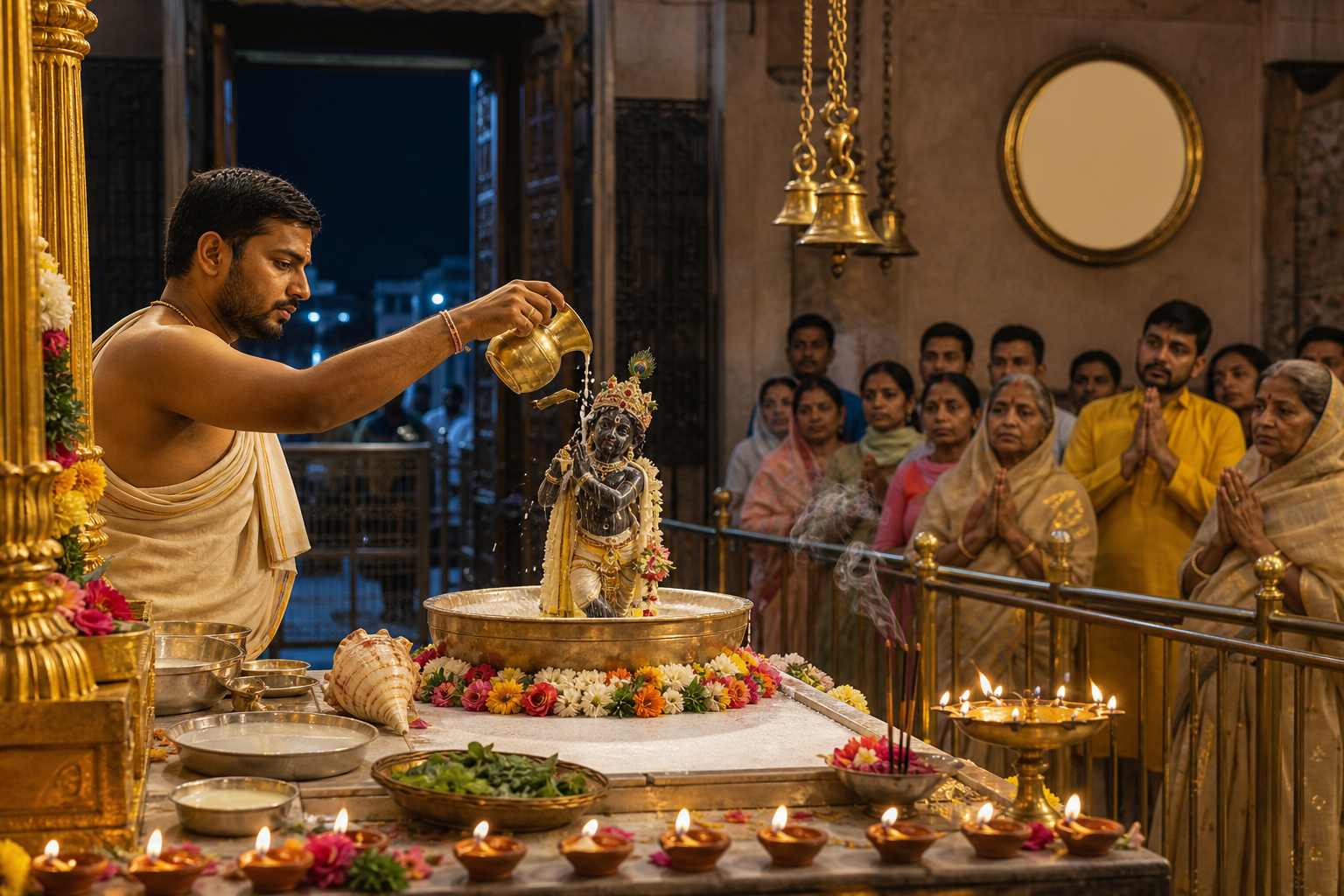
A printed calendar gives you the festival date; it does not tell you when a particular temple will close its entrance, begin abhishekam, hold aarti, or permit darshan. Those details determine whether your evening works. Check them before arranging transport or inviting family members.
- Choose the tradition you will follow. Use your family practice, sampradaya, local temple, or trusted panchanga instead of combining several incompatible online timetables.
- Ask the temple four direct questions: Which date are you observing? When does the main puja begin? Will entry remain open near midnight? When is the vrata concluded according to your practice?
- Build the home observance backwards from the locally advised midnight period. Finish altar preparation and gather the lamp, flowers, water, offerings, and prasad before bhajan or katha begins.
- Give each family member a definite role. Children can help decorate the altar or prepare offerings even if they cannot remain awake until midnight.
- If you are outside Bharat, confirm the date and tithi timing locally. Hindu calendrical timings are location-sensitive, so an India-based date graphic should not replace the guidance of your nearby temple.
If you observe a fast, follow the form received in your household or tradition. Janmashtami is not improved by turning fasting into a display of endurance. Anyone for whom fasting is unsafe should adapt it appropriately and seek relevant professional advice where needed; devotion is not measured by ignoring a genuine health constraint.
Give Guru Puja a deliberate place in the observance
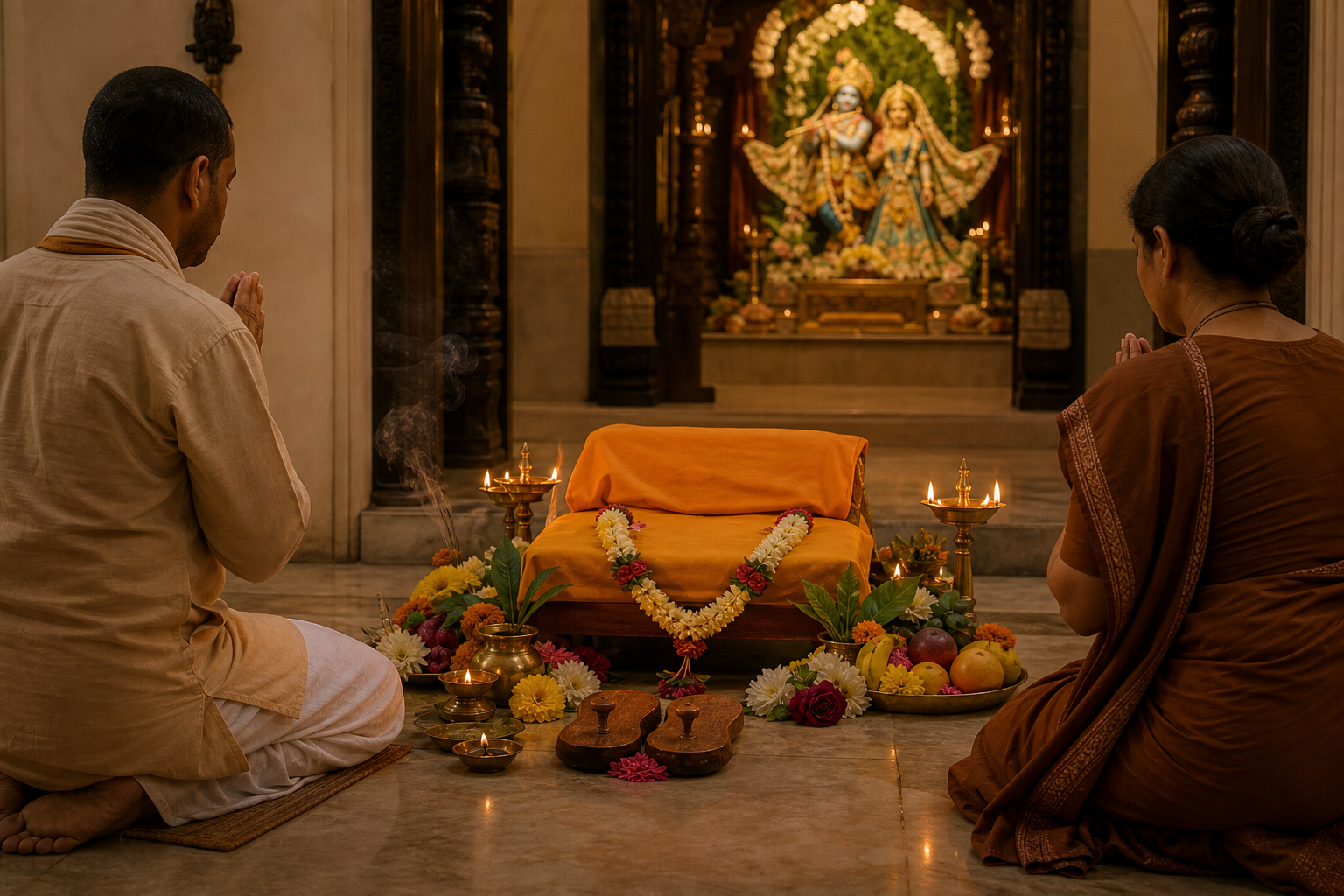
Janmashtami naturally centres on Krishna as Bhagavan, but it also offers a clear lesson about discipleship. Krishna is revered as Jagadguru, yet he honoured and obeyed his guru, Sandeepani Muni. Guru Puja therefore belongs meaningfully within Sri Krishna Jayanti worship rather than appearing as an unrelated addition.
You do not need to invent an elaborate ceremony. If Guru Puja is part of your tradition, keep it recognisable and sincere:
- Remember the guru-parampara or the teachers through whom you received dharmic instruction.
- Offer pranam, a flower, or a lamp according to your established household practice.
- Recite the guru prayer or mantra already used in your tradition. Do not adopt an unfamiliar initiation mantra merely because it appeared in a festival checklist.
- Carry the lesson into the main puja: honouring Krishna includes becoming teachable, disciplined, and grateful for transmitted knowledge.
This is also a practical way to involve younger family members. Ask them to name a teacher who helped them understand dharma, music, language, scripture, or good conduct. The answer turns Guru Puja from an abstract ritual category into something they can recognise in their own lives.
Regional celebrations require different kinds of preparation
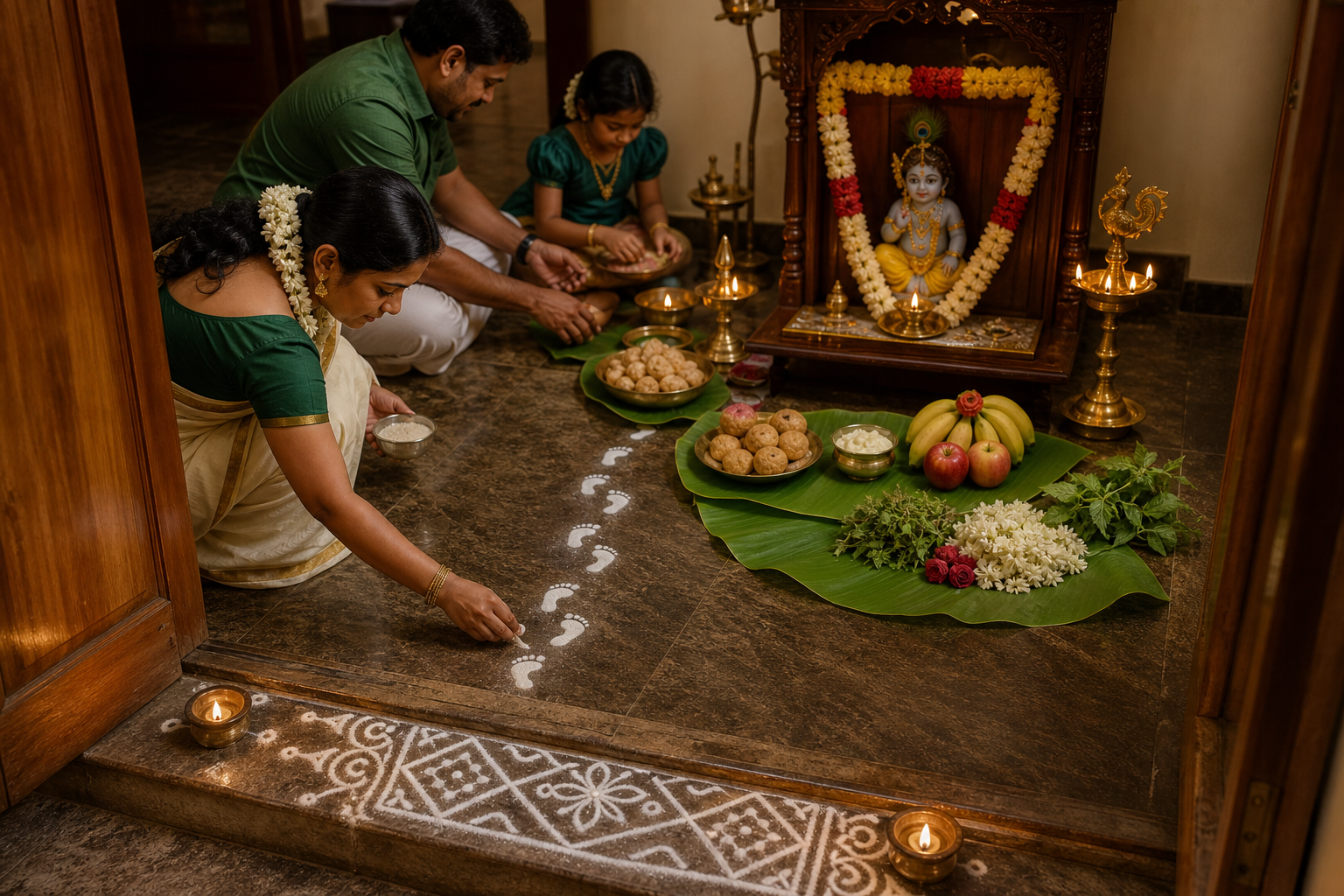
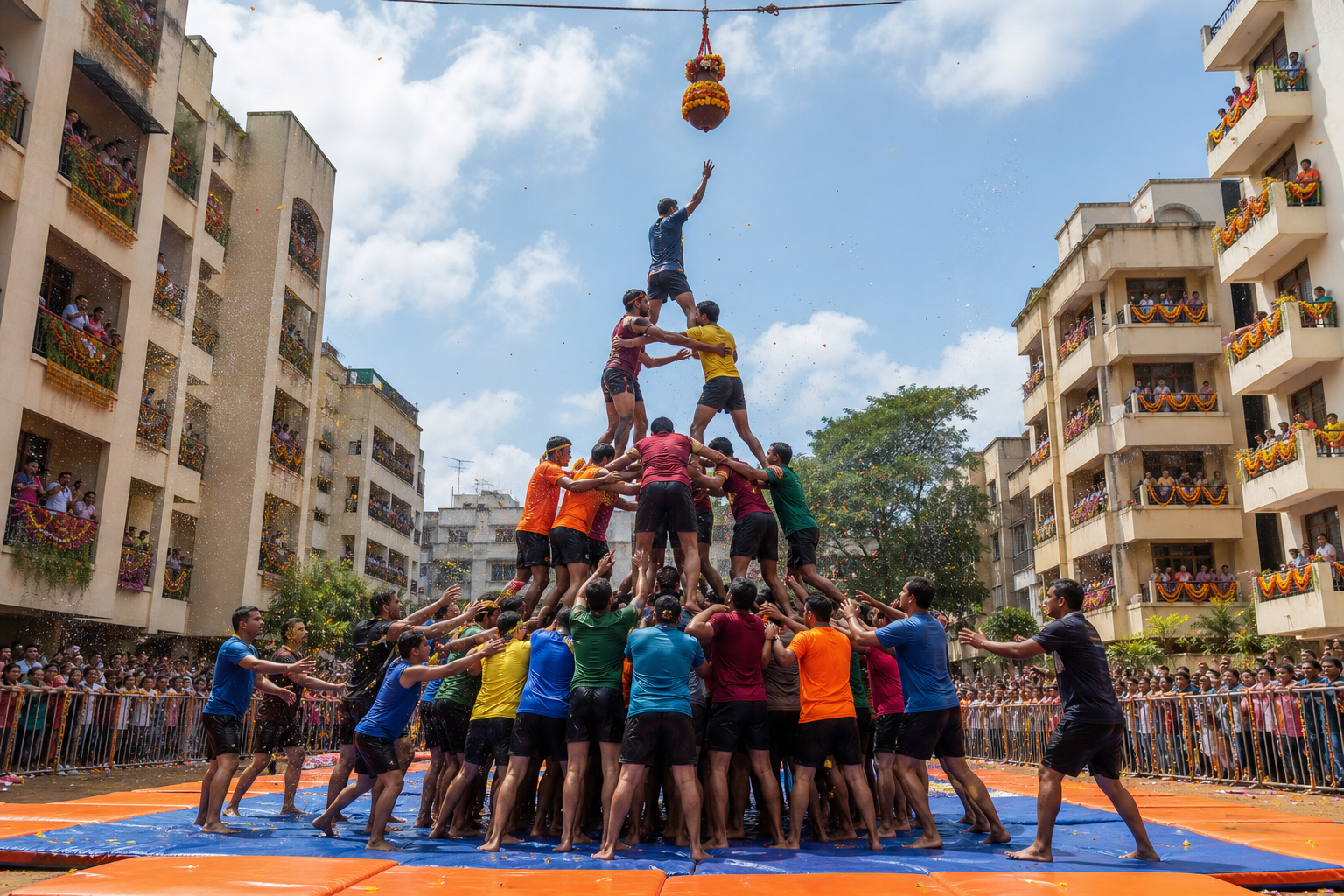
Janmashtami is one sacred occasion, but its public expression changes sharply by place. Your plan should change with it.
In Mathura, the birthplace of Krishna, the wider 2026 observance can involve two dates because of differing religious practices. The Dwarkadheesh Temple, along with temples in Vrindavan, Nandgaon, and Govardhan, is associated with the September 4 observance. Do not infer one shrine’s timetable from another shrine’s location. Verify the programme of the exact temple you plan to enter.
That distinction matters most when booking a pilgrimage. Write down the temple name, celebration date, entry arrangements, and main worship time as four separate details. A general statement that you are going to Mathura or Vrindavan for Janmashtami is not yet a workable itinerary.
In Maharashtra and Gujarat, the next day’s emphasis shifts toward Gopalkala or Dahi Handi on September 5. Mumbai and Pune host especially prominent celebrations that can draw large crowds. If you are attending with children or elders, decide your arrival route, viewing position, and reunion point before entering the busiest area. Follow barriers and organiser instructions rather than moving closer simply because the main action has begun.
If you want both dimensions of the festival, plan them separately: quiet or temple-centred worship on September 4, followed by the community celebration on September 5. Trying to treat the second day as an extension of a sleepless first night can make travel, crowd management, and family participation harder than necessary.
Key takeaways for Janmashtami 2026
- Keep September 4 for the principal Janmashtami and midnight birth observance.
- Keep September 5 for Gopalkala or Dahi Handi, particularly if you are in Maharashtra or Gujarat.
- Confirm the exact date, puja time, entry window, and vrata guidance with your chosen temple.
- Use regional names such as Gokulashtami, Sri Krishna Jayanti, and Ashtami Rohini when searching for local programmes.
- Include Guru Puja according to your tradition, remembering Krishna’s own respect for Sandeepani Muni.
- For Mathura-region travel, check each shrine individually; for Mumbai or Pune Dahi Handi, prepare for a large public gathering.
Your next step is simple: reserve both dates, choose the temple or home tradition you will follow, and obtain its precise timetable before making the rest of your plans. Once that foundation is settled, the festival can remain what it should be: an attentive remembrance of Krishna rather than a last-minute argument with the calendar.
References
- Hindu Pad – Lord Krishna’s 5138th Birthday (Janmashtami 2026)
- Hindu Pad – Guru Puja on Janmashtami
- Hindu Pad – Gopalkala 2026 or Dahi Handi celebrations during Sri Krishna Janmashtami
- Hindu Pad – Janmashtami 2026 in Mathura (Sri Krishna Janmasthan Seva Sansthan)
