

You may have begun with a simple question: Which Shakti Peethas lie beyond present-day India, and how could you approach them as a pilgrim? Then you encountered different totals, variant names and an itinerary divided by international borders.
The way through that confusion is not to force every tradition into one supposedly definitive directory. First identify the Peetha lineage or enumeration you intend to follow. Then distinguish sacred identity from current travel access, verify each shrine locally and let the quality of your conduct matter more than the number of places you collect.
Read the Peetha map on sacred and civilizational levels
The sacred map begins with Sati. Within the Devi Bhagavata Purana and other Puranic tellings, her presence becomes distributed across the land when parts of her body are believed to fall at different places. Those places become focal points of Shakti, the active divine power of the Mother, within a cosmic vision that also holds Shiva at its centre.
This matters when you visit a Peetha. The landscape is not merely the setting around a temple. Place itself carries sacred memory. Darshan, local worship, the journey to the shrine and the community that has sustained it all belong to the meaning of the pilgrimage.
The same map also records a civilizational geography older than the borders through which you now travel. Peethas associated with present-day Bangladesh, Pakistan, Nepal and Sri Lanka preserve a continuum of pilgrimage, regional culture and ritual life that cannot be understood through a modern political map alone. Yet contemporary borders remain legally real. A serious pilgrim can recognize the older sacred continuum without disregarding the sovereignty, entry laws or local conditions of any country.
That distinction protects the pilgrimage from two common errors. One reduces the Peethas to disconnected tourist attractions because they stand in different states. The other treats sacred unity as permission to ignore present realities. Dharma asks for a steadier position: remember the whole geography, obey the law where you stand and enter every local community as a guest.
The Peethas belong specifically to Hindu Shakta devotion. You do not honour the wider Dharmic family by pretending that Hinduism, Buddhism, Jainism and Sikhism have identical theology or ritual. Their meaningful meeting ground lies in values such as compassion, humility, devotion, truthful living and service. Preserve both truths: civilizational kinship is real, and each path retains its own discipline.
Begin with four established anchors beyond India

Hinglaj Mata, Guhyeshwari, Jessoreswari and Shankari Devi offer four widely venerated anchors for understanding the reach of the tradition beyond India. They do not constitute a complete circuit, and listing them here does not rank one above another.
| Shrine | Present-day country | What you should verify before planning |
|---|---|---|
| Hinglaj Mata | Pakistan | The current route, immigration requirements, public access and locally expected conduct |
| Guhyeshwari | Nepal | Current darshan arrangements, entry customs and conditions around the intended date |
| Jessoreswari | Bangladesh | Current opening arrangements, transport to the locality and local worship protocol |
| Shankari Devi | Sri Lanka | The exact local shrine identification used by your lineage, current access and worship arrangements |
The final column is deliberately practical. A shrine’s presence in a sacred enumeration does not establish today’s visa rules, transport options, opening hours or admission practices. A sacred map is not a live border advisory. Confirm travel requirements through current government channels and shrine arrangements through the temple, its recognized community or a responsible local organizer.
Build a small dossier for every Peetha before you spend money on the route:
- Lineage: Record the exact enumeration, primary text, teacher or regional tradition you are following. If you are not following one, say plainly that your route is a selected pilgrimage rather than a complete canonical circuit.
- Identity: Keep the name used in your enumeration beside the current local name and transliteration. Do not silently merge similar names or spellings.
- Access: Record who confirmed the location, public access and worship arrangements, along with when the confirmation was obtained. Recheck before departure.
- Ritual conduct: Ask about clothing, footwear, offerings, photography, queues and any areas where entry is restricted. Local instruction should outrank a traveler’s assumption.
- Stewardship: Identify an authorized way to support maintenance or conservation. Treat the shrine’s rituals, architecture and surroundings as inherited sacred assets, not consumable scenery.
Use the right kind of authority for the right question. A lineage can tell you why a place is sacred. A temple community can explain its worship protocol. A current government channel can tell you whether and how you may cross a border. Do not ask an old pilgrimage account to settle present access, or a travel forum to settle theology.
Handle the counts of 51, 52 and 108 without false certainty
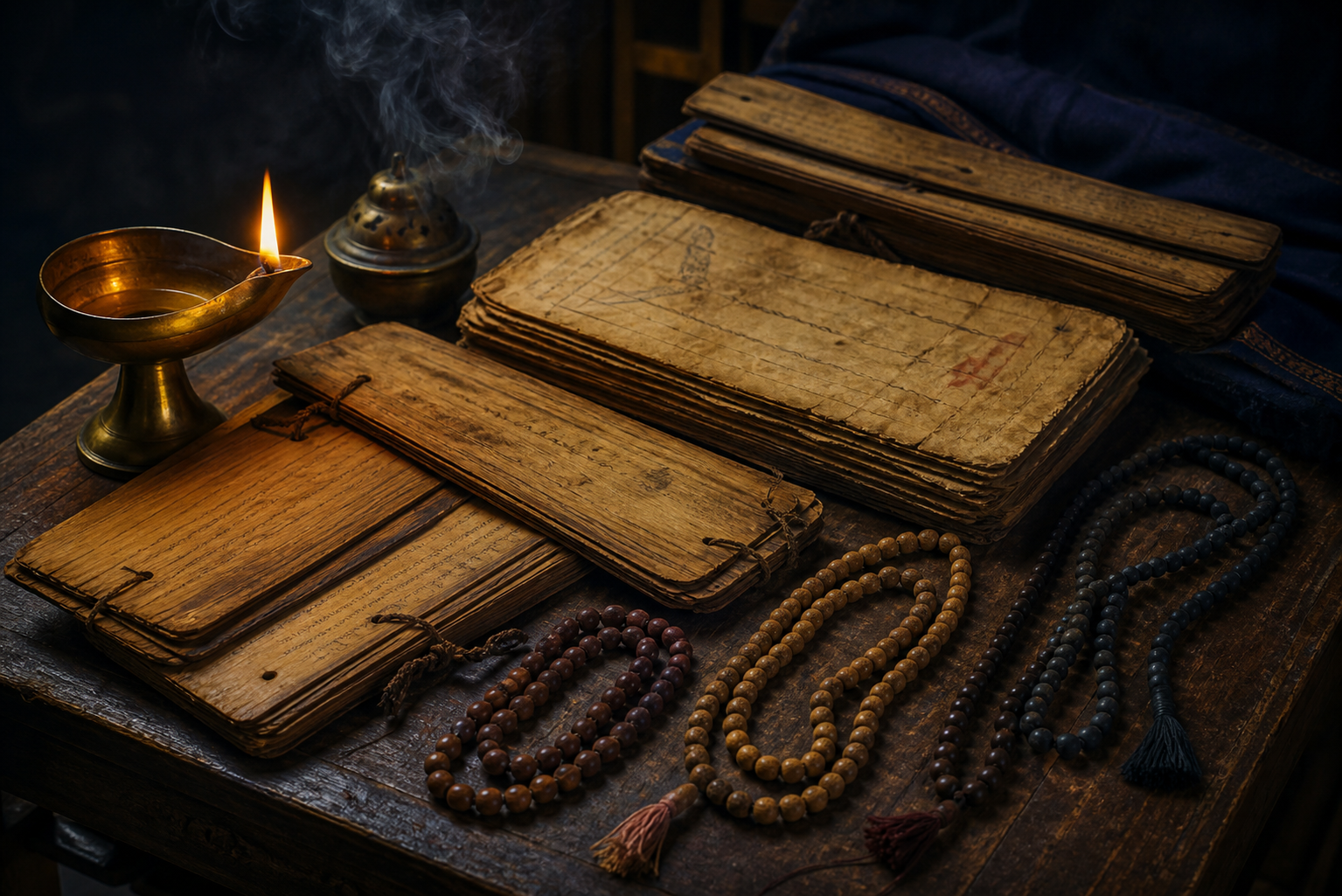
Traditional enumerations often identify 51, 52 or 108 Shakti Peethas. That variation is not solved by declaring the longest list the most authentic, nor by stitching entries from several lists into a new total and presenting it as ancient consensus.
Different kinds of evidence answer different questions. Puranic narratives supply the cosmic framework of Sati and Shakti. A sthala-purana connects that framework to a particular place and its local sacred memory. Regional chronicles and inscriptions can illuminate documented historical continuity. Oral tradition and continuing ritual practice show how a community has carried the shrine’s identity into living devotion.
These layers should be read together, but they are not interchangeable. An inscription may help establish that worship existed in a documented period without proving every claim about the shrine’s original identification. Oral memory may demonstrate a strong living tradition without supplying an exact date. A Puranic enumeration may establish sacred significance without answering a present-day question about the site’s opening arrangements.
If you are comparing Peetha lists for study or pilgrimage, use a disciplined method:
- Copy each enumeration separately and label the lineage, text or regional tradition attached to it.
- Preserve every shrine name as given before normalizing spellings. Add the local name in another field rather than overwriting the traditional form.
- Record the present-day country and locality only after checking the identification. A familiar-looking name is not enough.
- Record any claimed bodily correspondence or form of the Devi exactly as that particular tradition gives it. If your evidence does not supply the correspondence, leave the field unresolved instead of filling it from memory.
- Sort comparisons into shared identifications, lineage-specific identifications and unresolved identifications. This reveals agreement without erasing genuine variation.
This approach lets you be devotional without becoming careless and historically attentive without treating living worship as an inconvenience. The aim is not to remove every difference. It is to know which tradition makes each claim and to stop uncertainty from turning into misinformation.
Plan the cross-border yatra as a practice, not a collection
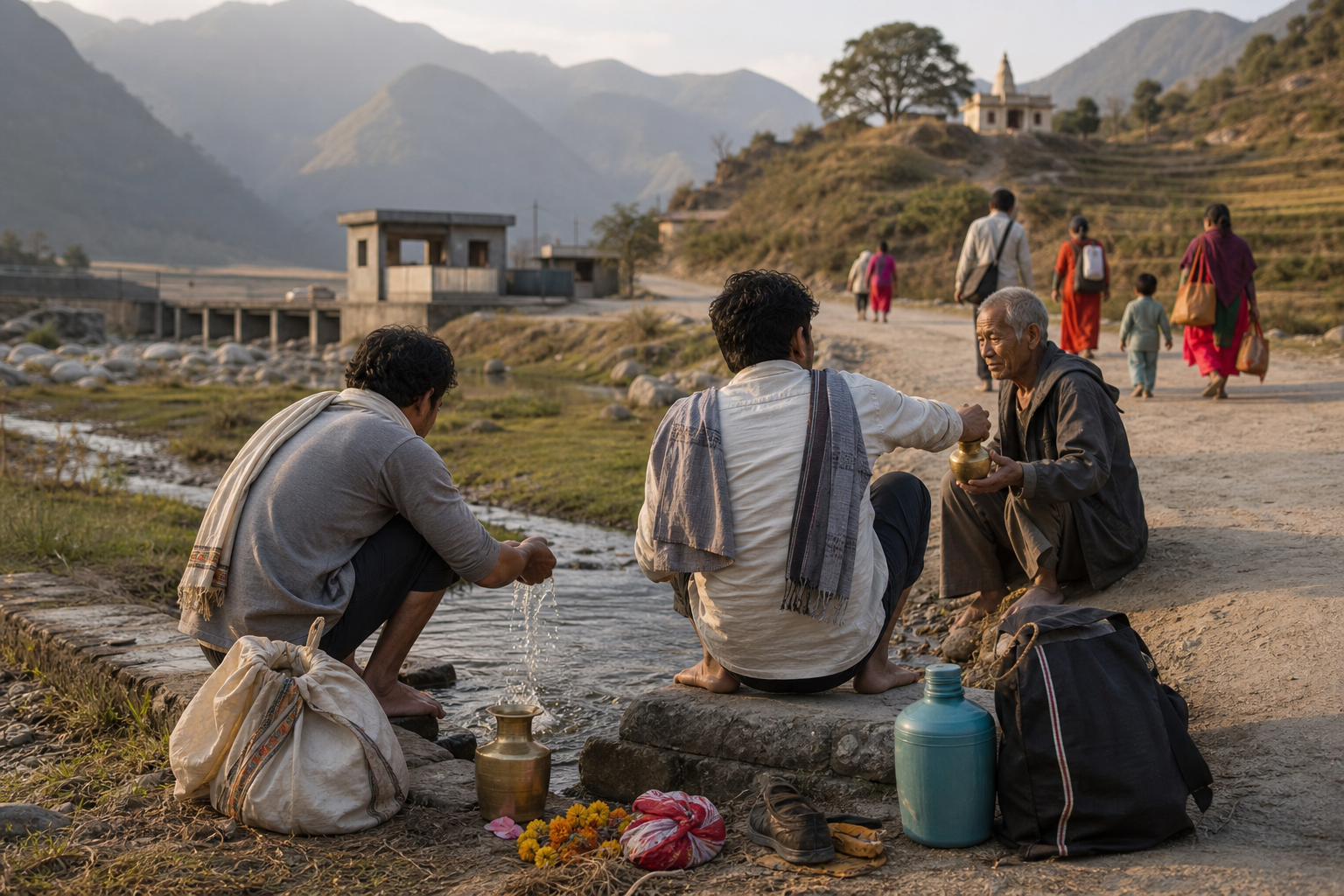
Before drawing a route, decide what kind of journey you are making. A vow-led yatra, a lineage-based circuit, a visit to ancestral sacred geography and a heritage study may overlap, but they do not automatically require the same sequence. If your purpose is devotional, let the discipline of your sampradaya or trusted teacher shape the worship. If you are studying the tradition, label your conclusions by their evidentiary strength.
Then plan in this order:
- Verify permission at separate levels. Permission to enter a country, permission to reach a locality and permission to enter or participate at a shrine are different questions. A favourable answer at one level does not guarantee the others.
- Check before committing funds and check again before leaving. Border requirements, security guidance, transport and temple arrangements can change. Use current channels rather than screenshots or undated itineraries.
- Keep ritual materials modest. An offering may be religiously appropriate yet restricted in cross-border transit. Confirm current customs rules or obtain the offering locally through an accepted channel.
- Arrive ready to ask. Wear modest clothing, follow footwear rules, and seek permission before photographing people, ceremonies or restricted spaces. Do not assume that a practice allowed at one Peetha applies at another.
- Protect what you came to honour. Use authorized donation routes, pay legitimate local fees, avoid touching fragile fabric or architecture unless invited, remove your waste and never take material from the site as a souvenir.
- Leave room for the local tradition. Learn the name devotees use, observe how darshan is approached and listen before trying to explain the shrine through a list assembled elsewhere.
The changes in language, cuisine and custom are not distractions from a cross-border yatra. They show how a shared sacred narrative has lived through distinct regional cultures. Recognition should grow through those differences, not by flattening them.
Keep devotional conviction and historical argument in their proper places. You may accept the Peetha as a living seat of the Mother without pretending that every enumeration is identical. You may recognize an ancient civilizational continuum without turning a temple visit into a provocation. You may value inter-Dharmic harmony without erasing the specifically Shakta character of the shrine.
Key takeaways
- The Shakti Peetha map is grounded in the sacred narrative of Sati and treats place itself as a bearer of divine presence.
- Lists of 51, 52 and 108 belong to different textual and regional lineages; always name the enumeration you are using.
- Hinglaj Mata, Guhyeshwari, Jessoreswari and Shankari Devi are useful anchors across Pakistan, Nepal, Bangladesh and Sri Lanka, but they are not a complete universal circuit.
- Sacred identity, historical evidence and current travel access are separate questions that require different forms of verification.
- A worthy yatra respects modern law, local ritual, community authority, heritage preservation and the differences within the wider Dharmic family.
If you are preparing a route now, choose the Peetha you can approach responsibly, write down the lineage you are following and complete its shrine dossier before booking. Begin with accuracy and humility. The journey will then become an act of attention to the Mother, rather than a race to accumulate sacred pins on a map.
References
