
If you landed here intending to book a trip, note the date before doing anything else: the 2026 observance has passed. The 179th Thyagaraja Aradhana in Thiruvaiyaru was scheduled for 3-7 January 2026, with the principal aradhana on Wednesday, 7 January. Do not reuse that date window for another year.
The 2026 calendar is still useful if you want to understand how a Thiruvaiyaru visit works. The central choice is whether you want the concentrated experience of the Pancharatna Kritis on the principal day or the slower rhythm of rituals, recitals and devotional gatherings across several days. That choice should determine your travel dates, accommodation and preparation.
Key takeaways
- The announced 2026 festival period was 3-7 January, and the principal homage fell on Wednesday, 7 January.
- The principal day traditionally draws the largest gathering for the collective rendition of the Pancharatna Kritis at Sri Tyagaraja Swamigal’s samadhi.
- The surrounding days matter if you want recitals by established vidwans and emerging artistes, morning observances and a less compressed encounter with the tradition.
- Exact recital times, artist lineups and movement arrangements are normally settled locally closer to the event. A date window is not a final programme.
- Thanjavur is the practical base for many visitors, with local road transport completing the journey to Thiruvaiyaru.
- You do not need to be a performing musician to attend meaningfully. Familiarity with the Pancharatna Kritis, quiet attention and respect for the samadhi are sufficient preparation for a rasika or devotee.
Separate the fixed dates from the flexible timetable
The most common planning error is to treat the festival dates as though they were an hour-by-hour schedule. They are not. For 2026, the five-day window and the Wednesday aradhana were established, while individual programme times were expected to be announced locally. Ceremonial needs and weather could also require adjustments.
| Period | What the traditional pattern indicated | What still required local confirmation |
|---|---|---|
| 3-6 January 2026 | Morning rituals, Carnatic recitals by established and emerging artistes, and devotional gatherings organised around the observance | Daily start times, individual performers, recital order and any changes to access |
| 7 January 2026 | Principal aradhana, with the collective Pancharatna rendition, puja and mangala harati as the customary focus | Exact timing, seating instructions, darshan queues and movement near the samadhi |
This distinction remains important for any future Aradhana. First confirm the year’s observance dates. Then wait for the local day-wise programme before tying a short transport connection to a particular recital. If your main purpose is the Pancharatna offering, avoid an itinerary that reaches Thiruvaiyaru only moments before an unconfirmed starting time.
The principal day is the spiritual and musical centre, but it is not the whole observance. The wider schedule places the famous group rendition inside a continuing discipline of worship and musical offering. That is why a five-day calendar should not be read as five interchangeable concert days.
Choose your visit according to what you want to receive
Choose the principal day for the defining collective homage
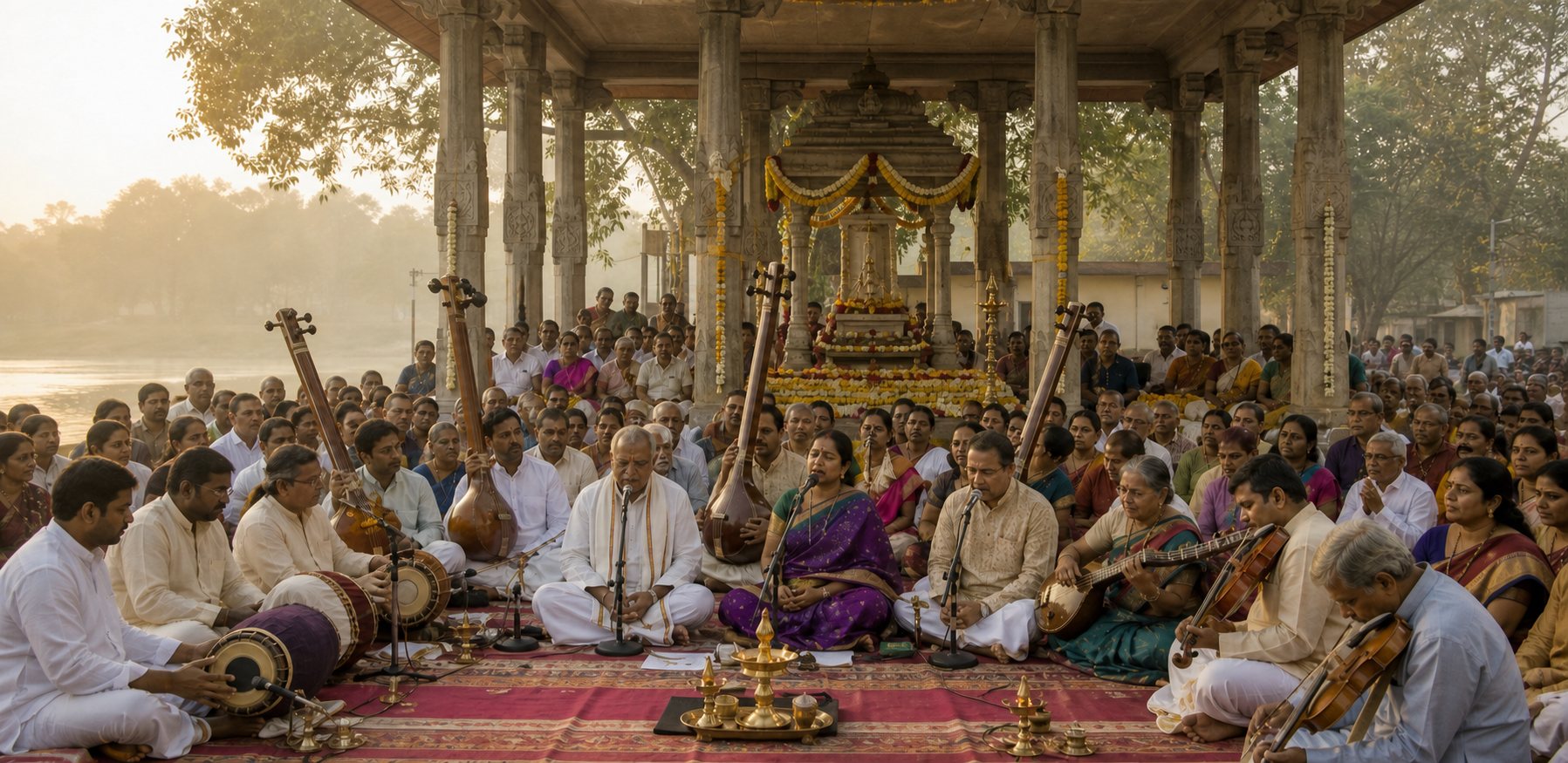
If you can attend only one day, the principal aradhana is the clear choice. On 7 January 2026, the planned focal event was the singing of the Pancharatna Kritis before the samadhi, accompanied by the devotional rites associated with the homage. It was also expected to draw the largest gathering of musicians, rasikas and devotees.
A one-day visit gives you the most concentrated expression of the tradition, but it leaves little margin. Build your plan around early arrival, not a tightly timed entrance. Follow local directions for seating and darshan rather than assuming that proximity to the samadhi can be secured in advance.
Choose several days for the musical and devotional context
If you want to understand why the Aradhana endures, give it more than its most photographed moment. The surrounding days traditionally include recitals, rituals and community gatherings. They allow you to hear different artistes and notice how the atmosphere changes when music is offered within a sacred observance rather than presented as a stand-alone entertainment programme.
For a first visit, one surrounding day can also remove pressure from the principal morning. You can learn the local layout, identify transport arrangements and understand how people are being directed through the venue. That preparation is more useful than trying to optimise every minute from a programme that may still change.
Choose listening if you are not prepared to sing
Collective singing does not mean casual singing. The Pancharatna rendition depends on shared melodic, rhythmic and textual discipline. If you are a trained musician, review the kritis beforehand and follow the coordination in place at the venue. If you are not prepared, listen. Quiet, attentive presence is not a lesser form of participation.
This is especially important at a samadhi. The purpose is homage to Sri Tyagaraja Swamigal, not the visibility of the individual participant. Let the act of collective offering remain larger than the desire to be heard, filmed or placed near the front.
Prepare for the Pancharatna moment without reducing it to a performance
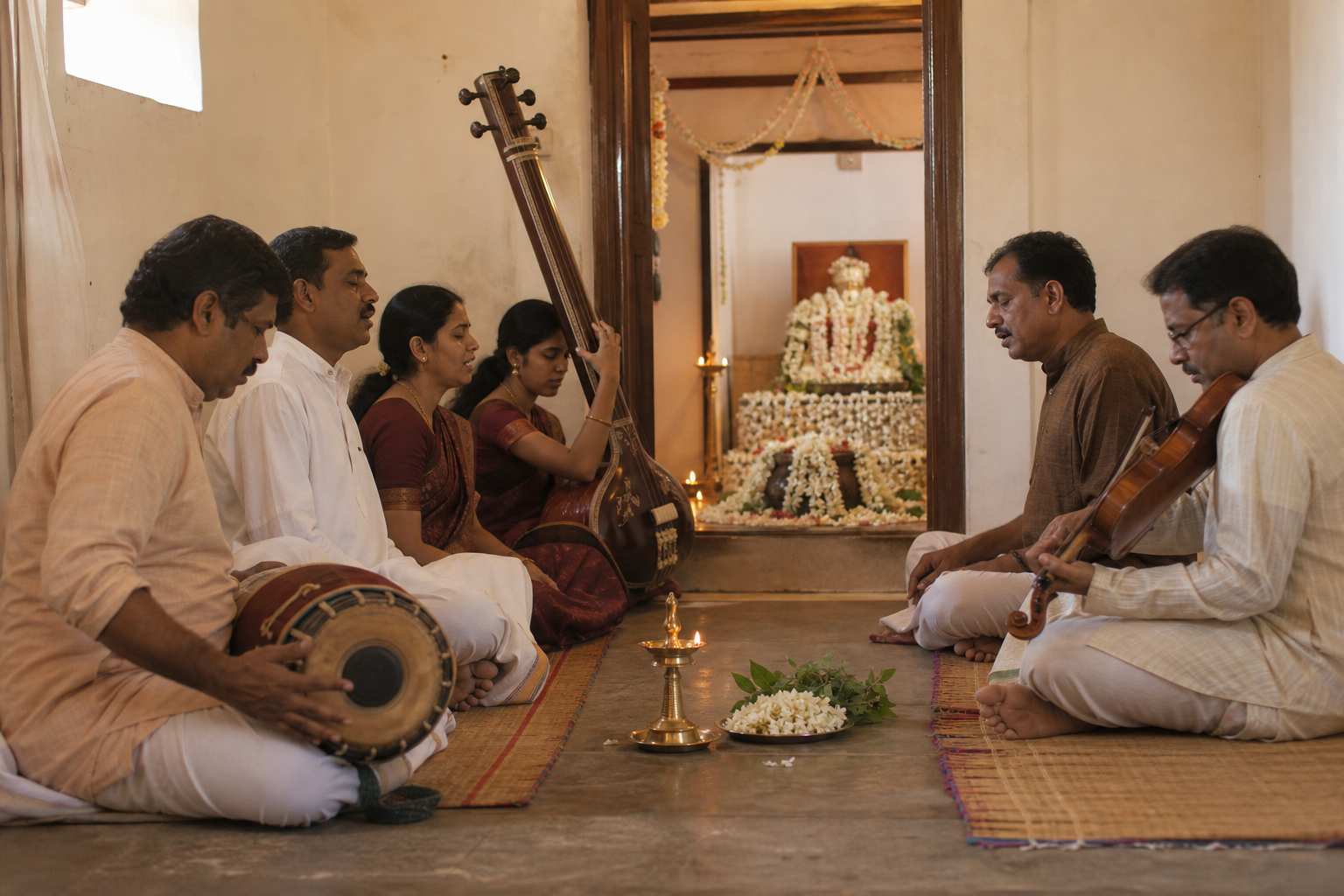
The collective Pancharatna rendition is widely treated as the apex of the Thiruvaiyaru observance. Voices join with instruments such as violin, veena and mridangam before the saint-composer’s samadhi. Yet its force comes from more than scale. Musicians trained through different teachers and lineages submit their individual artistry to a shared act of remembrance.
You will understand more if you listen to the Pancharatna Kritis before travelling. The goal is not to memorise enough material to imitate participation. Familiarity lets you recognise the musical movement, follow the ensemble with attention and appreciate why disciplined unison carries such devotional weight.
- If you intend to sing, revisit the complete kritis rather than relying on recognition of their best-known passages.
- If you intend to listen, become familiar with their musical contours so that the collective rendition does not arrive as an undifferentiated wall of sound.
- At the venue, let designated musicians and organisers set the pace. Do not begin independently or compete with the ensemble.
- Keep your phone silent and avoid blocking another person’s view or the paths used for ritual and crowd movement.
- Remain attentive through the puja and mangala harati. The music and ritual belong to one act of homage.
The Aradhana should also be approached on its own terms: it honours a Hindu saint-composer through the bhakti tradition of Carnatic music. Its welcome to rasikas and members of the wider Dharmic family does not require that specificity to be blurred. Sri Tyagaraja’s legacy reaches outward precisely because devotion, humility, gurubhakti and ethical reflection remain visible at its centre.
That offers a useful model of Dharmic plurality. Unity does not require every tradition to look or sound the same. A Buddhist, Jain or Sikh visitor can recognise the disciplines of reverence, self-restraint and truth-seeking while allowing this observance to remain rooted in its own Hindu and Carnatic form.
Build a Thiruvaiyaru plan that can absorb local changes
Use Thanjavur as the logistical base
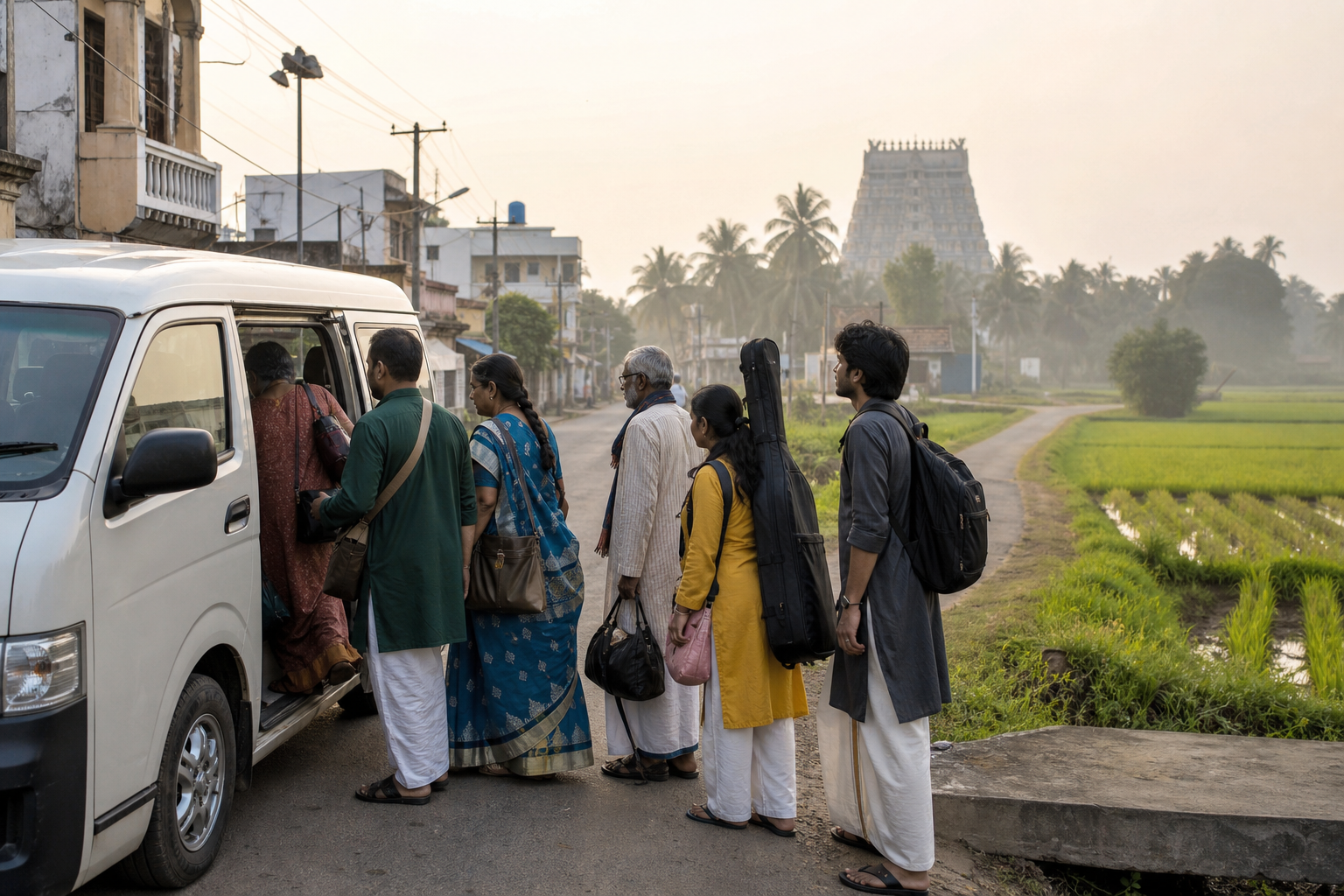
Thiruvaiyaru lies near Thanjavur, and many travellers use Thanjavur for accommodation and onward local transport. This separates the longer road or rail journey from the final trip to the venue. It also gives you more flexibility than assuming you will find a suitable room beside the celebration after arriving.
Accommodation tends to tighten as a major cultural gathering approaches, so reserve your stay once the date window is reliable. Confirm the final local transfer separately. Ask where you will be collected, how you will return after the proceedings and whether the arrangement still works if a programme runs later than expected.
- Confirm the dates for the specific year you plan to attend. The 3-7 January window applies only to 2026.
- Reserve accommodation in or around Thanjavur before the closest options fill.
- Arrange the Thanjavur-Thiruvaiyaru road transfer in both directions; do not plan only the outward journey.
- Recheck the local programme, artist lineup and access guidance closer to the event.
- On the principal day, arrive with enough margin to follow seating and darshan instructions without rushing through the sacred space.
Pack for a riverside observance, not a formal auditorium
The samadhi is on the banks of the Cauvery, and visitors should be ready for an outdoor setting. Check the immediate forecast before travelling and carry water, personal medication and only the weather protection you are likely to need. A light bag is easier to manage when seating and movement are being coordinated on site.
Traditional, modest clothing suits the devotional character of the occasion. Choose something you can remain comfortable in while waiting or sitting, rather than clothing selected only for photographs. Keep valuables and unnecessary baggage to a minimum.
Let local decorum govern your movement
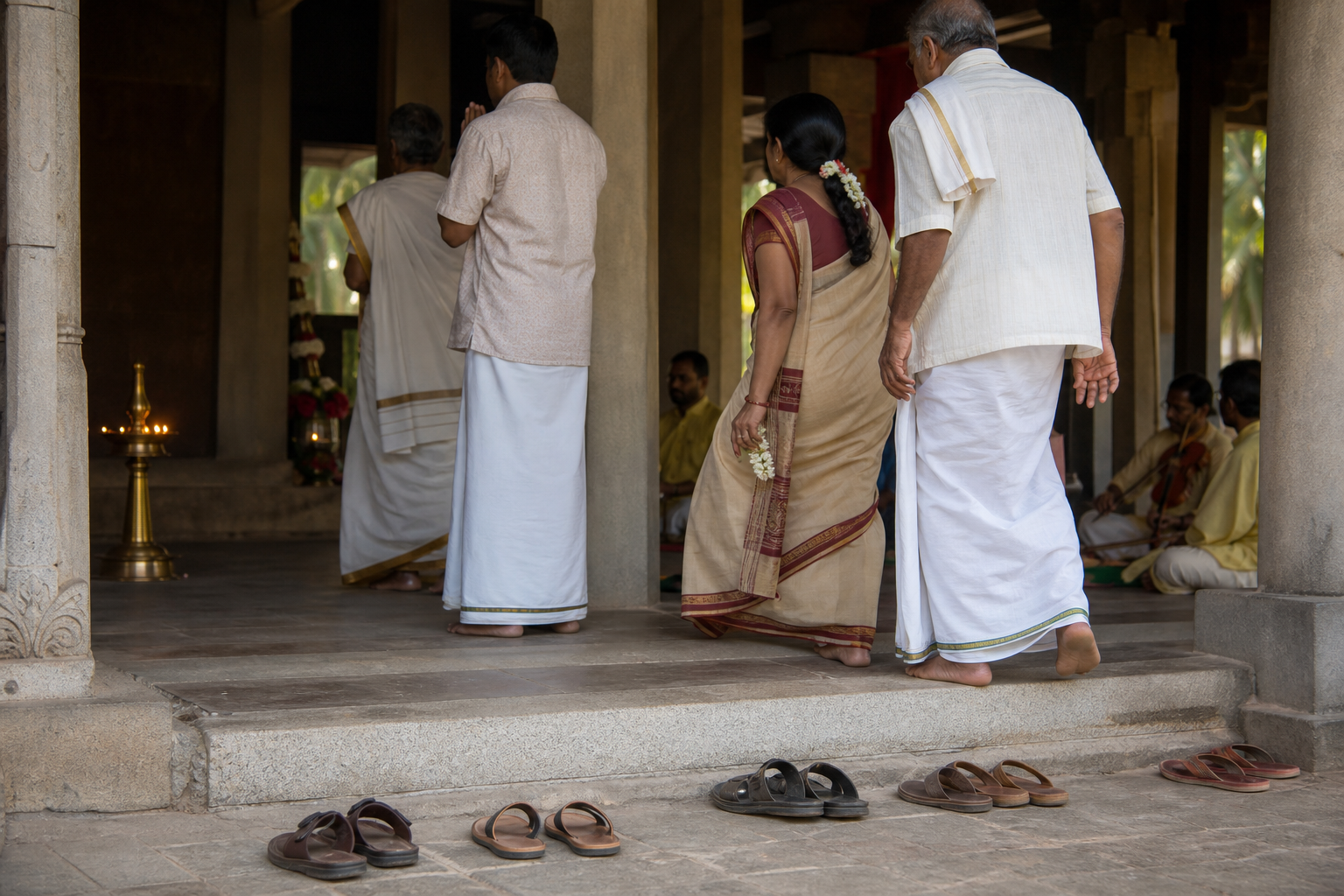
The practical rules at the samadhi are also spiritual disciplines. Follow the indicated seating, respect darshan queues, keep access routes clear and avoid unnecessary movement during the central rendition or ritual. Quiet attention protects the experience for musicians and other devotees as well as for you.
The Cauvery setting also calls for simple environmental care. Keep control of anything you carry in, dispose of waste only where directed and support community-led arrangements. A sacred landscape should not bear the cost of the gathering held to honour it.
Because the 2026 observance is now past, use these dates as a historical reference rather than a booking calendar. For your next journey, obtain that year’s dates first, reserve a Thanjavur base second and confirm the detailed local programme last. If the purpose is devotion rather than merely witnessing the largest gathering, make room for at least one surrounding day and let Thiruvaiyaru set the pace.
References
- DharmaRenaissance Blog – Experience the Soul-Stirring Thyagaraja Aradhana 2026: Dates, Schedule, and Travel Tips
- DharmaRenaissance Blog – Thyagaraja Aradhana 2026: Dates, Traditions, and the Soul-Stirring 179th Thiruvaiyaru Tribute
