
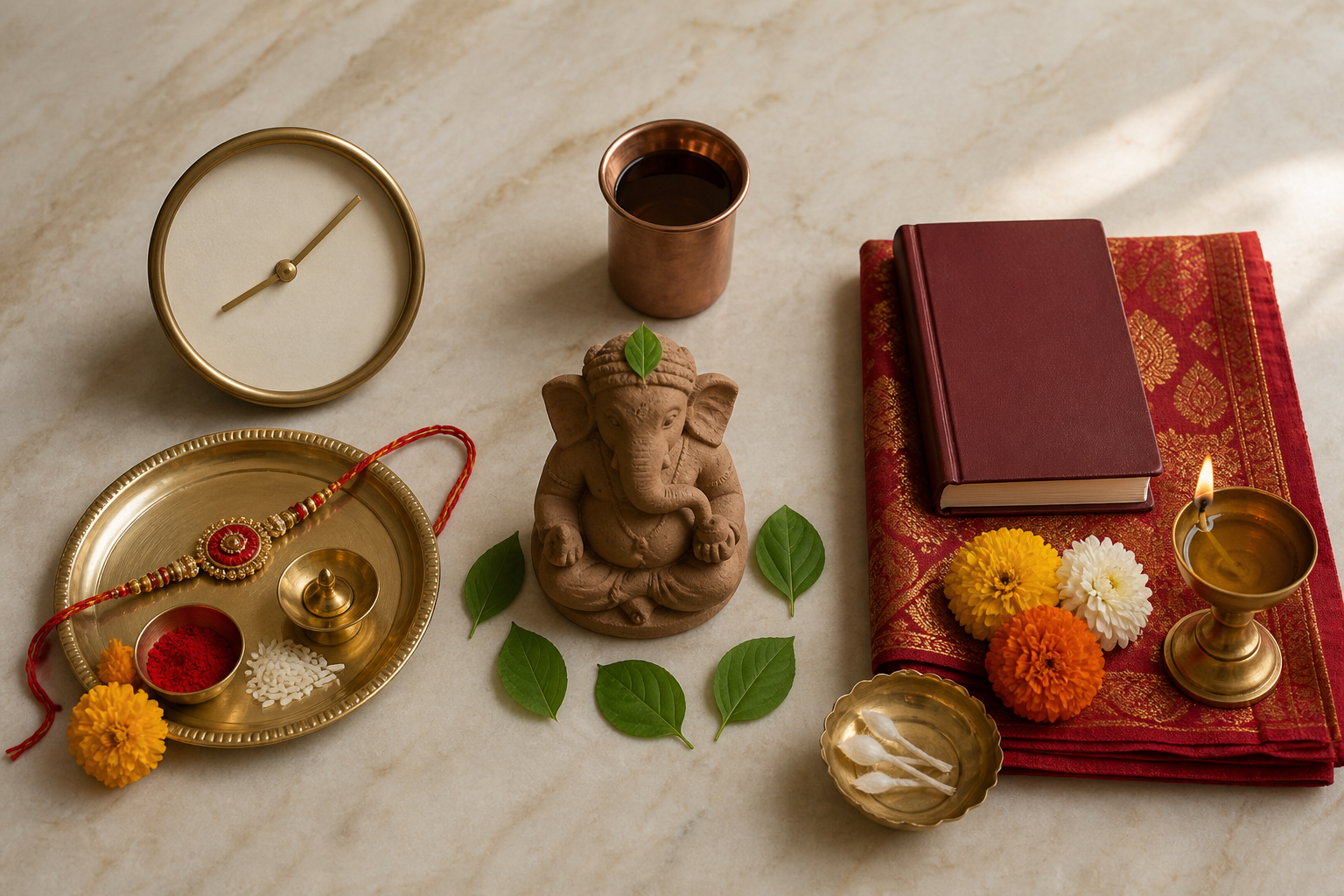
If you are organizing late-summer Hindu rites at home, especially away from Bharat, the hard part is often deciding what must be exact and what may be adapted. A calendar date, a bag of puja supplies and good intentions do not answer that question.
Raksha Bandhan, Ganesh Patra Puja and Mangala Gauri Vrata each place exactness somewhere different: in a lunar window, in a sequence of offerings, or in attentive engagement with a sacred narrative. Plan around that center, and a modest home observance can remain coherent without pretending that every household follows one universal liturgy.
Identify the non-negotiable before buying supplies
Do not begin with a generic festival shopping list. Begin by identifying the action that gives the particular observance its form. Regional, familial and sampradaya practices differ, so the purpose of a preparation checklist is to expose questions early. It is not a substitute for the instructions inherited in your family or received from a trusted temple or acharya.
- Write the exact name of the rite your household intends to perform. Do not assume that two similarly named observances use the same procedure.
- Confirm the calendar condition before inviting relatives or fixing a convenient hour. Record the city for which the timing was calculated.
- Mark the central action: tying the rakhi in the accepted Purnima window, offering the prescribed leaves with Ganesha’s names, or reading the Mangala Gauri vrata katha.
- Assign responsibility for the calendar check, materials, recitation and physical setup. An unassigned task is the one most likely to be discovered when the rite has already begun.
- Resolve missing materials and shortened forms beforehand. Ask what your tradition permits instead of improvising a substitution during the puja.
This distinction matters because completeness is not the same as accumulation. Extra flowers, decorations or dishes cannot repair a missed ritual window, an unidentified leaf presented under the wrong name, or a katha pushed aside until nobody is listening.
Raksha Bandhan: let the lunar window govern the clock
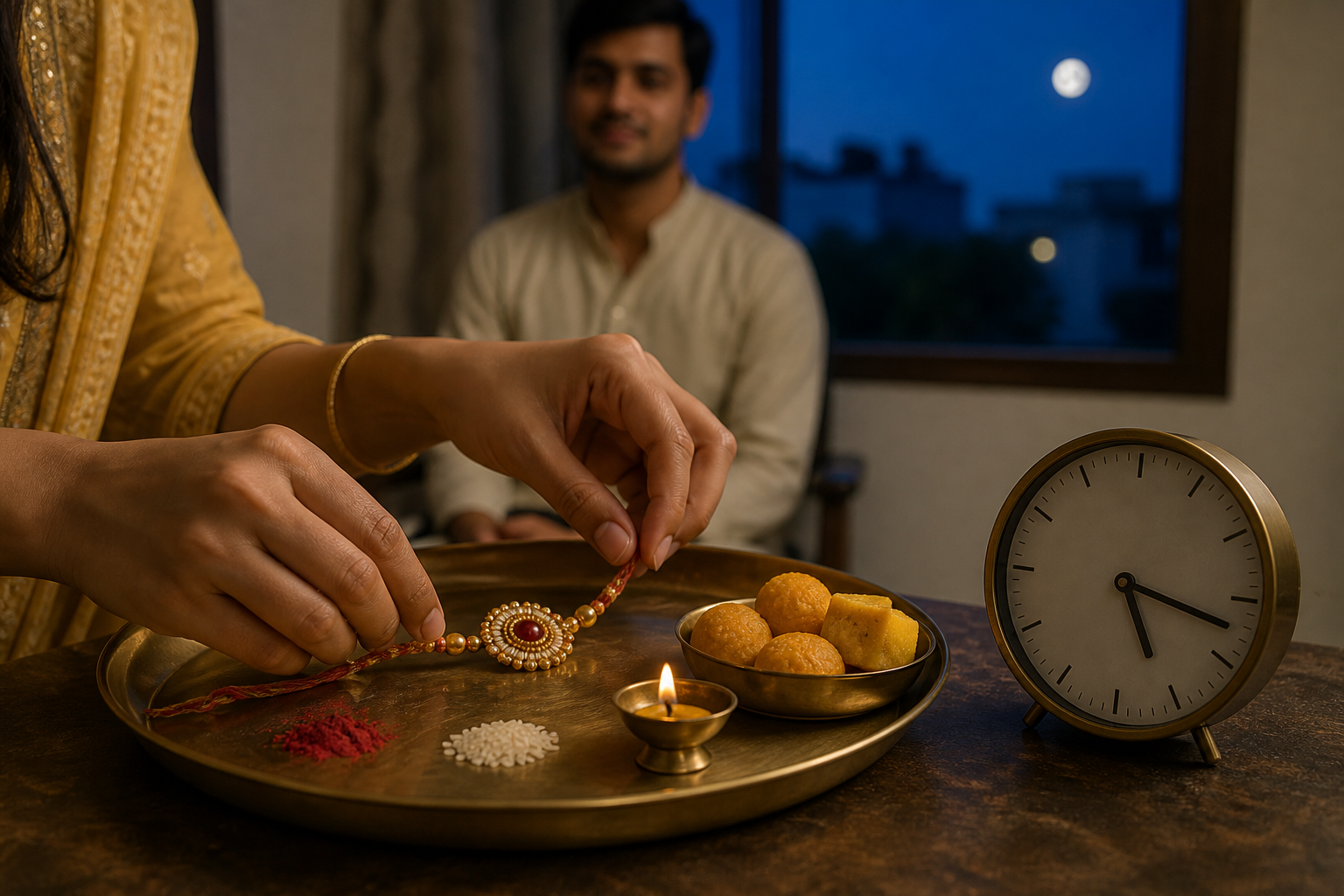
A civil date alone is not enough to plan Raksha Bandhan. Dharmasindhu and Purushartha Chintamani place the tying of the rakhi on Aparahna Vyapthi Purnima or Pradosha Vyapthi Purnima. These are technical calendar conditions, not loose labels for any afternoon or evening that happens to suit the household.
For 2026, Raksha Bandhan is dated 28 August. Treat that as the starting date for planning, then obtain the applicable clock time from a panchanga calculated for your location. A screenshot or forwarded message without a city is incomplete information. If your panchanga does not clearly show the relevant Purnima overlap, ask a local temple or a competent practitioner to interpret it.
Once the window is confirmed, work backward. Prepare the rakhi and the items customary in your family in advance. Tell participants when they must be ready, not merely when they should begin travelling. If relatives are joining from another time zone, do not automatically convert an Indian clock time and call the problem solved. Decide, with appropriate guidance, which participant’s local ritual conditions govern the shared observance.
If circumstances make the preferred period impossible, do not hide the conflict behind an arbitrary online time. State the difficulty plainly and ask what your tradition accepts. That preserves the difference between a knowingly adapted family observance and a claim that any convenient hour is equally prescribed.
Ganesh Chaturthi: prepare the 21 leaves as a sequence
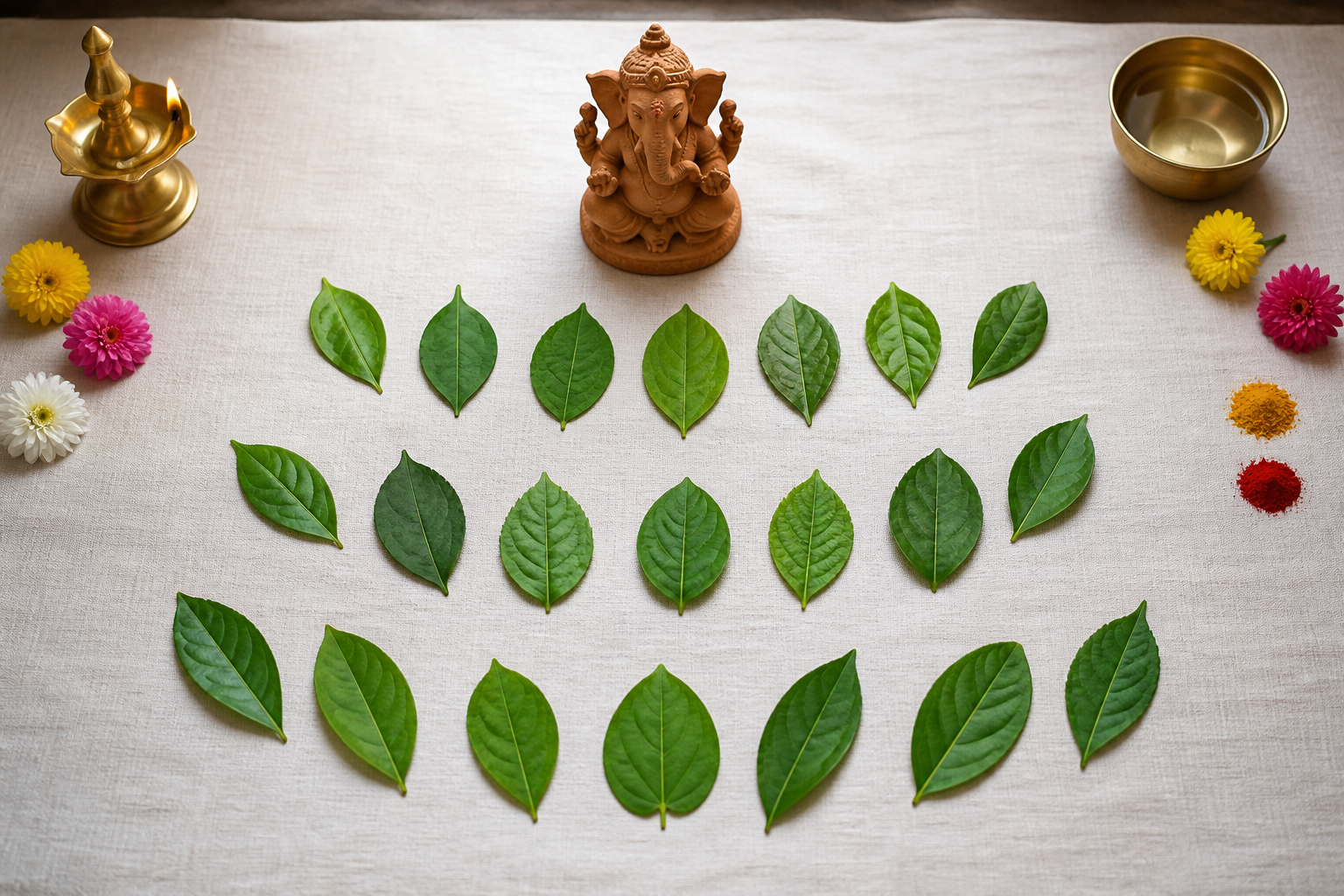
Ganesh Patra Puja is also known as Eka Vimshathi Patra Puja. Its defining structure is specific: Ganesha is worshipped with 21 types of leaves, and each leaf is offered while chanting a corresponding name of the deity. The practical challenge is therefore not gathering a large heap of greenery. It is preserving the identity, count and ritual order of the offerings.
Obtain the leaf list followed by your family or temple before visiting a market. Common plant names can change between languages and regions, and visually similar leaves are not automatically interchangeable. Ask a knowledgeable supplier or practitioner to confirm uncertain plants. Do not taste an unidentified leaf, and keep unknown plant material away from children and animals.
- Label every confirmed leaf by the name used in your ritual list.
- Arrange the leaves in the prescribed sequence before the puja begins.
- Place the corresponding list of Ganesha’s names beside the arrangement so the reciter does not have to search midway through an offering.
- Recount the complete set while there is still time to correct an omission.
- If a required species is unavailable locally, ask whether your practice permits a substitution or a shortened form. Do not assign a sacred identity to a random local plant for the sake of reaching 21.
This preparation changes the quality of the rite. The worshipper can attend to each name and offering instead of managing an unlabeled pile. The number 21 is then expressed through disciplined correspondence, not merely through quantity.
Mangala Gauri: give the vrata katha protected time
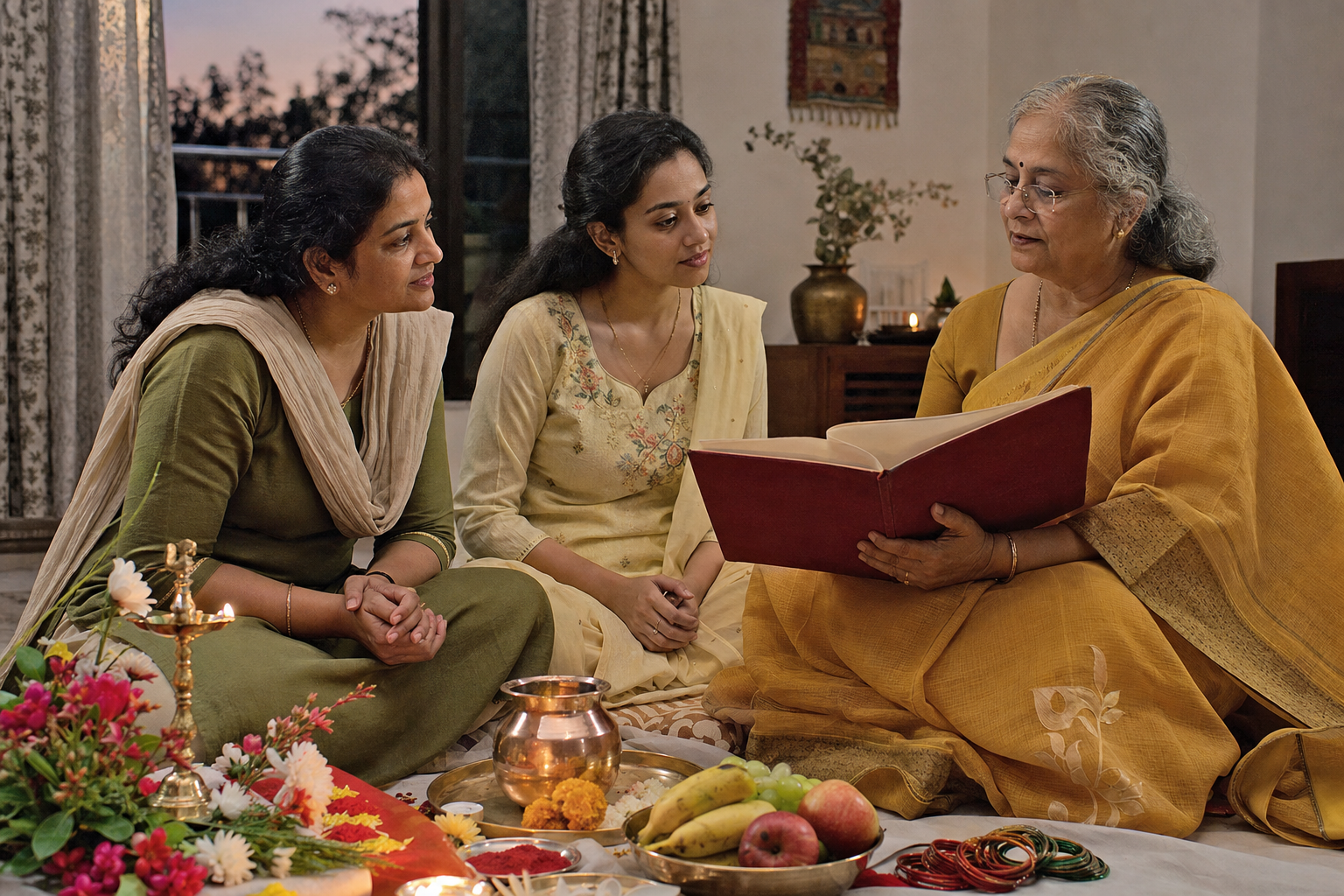
A vrata katha is not background entertainment to be squeezed between setup and refreshments. It carries the observance through narrative, giving participants conduct, relationships and consequences to contemplate. If the reading becomes an optional appendix, an essential mode of participation has been lost even when the altar looks complete.
The Mangala Gauri narrative opens with a boy studying under a guru and seeking alms from house to house. The guru and shishya take only what is needed for that day. Whatever fuller interpretation your lineage gives the katha, this opening already directs attention toward the guru-shishya relationship, restraint and dependence upon dharmic discipline.
Obtain the complete version accepted in your practice before the vrata. If participants do not understand its language, keep the traditional recitation where required and prepare an accurate explanation or translation as well. A hurried paraphrase assembled during the ceremony should not silently replace the katha.
- Choose the reader beforehand and allow time to check unfamiliar words and names.
- Place the reading inside the planned observance, not after guests have begun leaving.
- Tell listeners briefly what to notice in the opening situation so that attention does not depend on prior familiarity.
- After the reading, ask one concrete question about conduct: what does the narrative ask a householder, student or family member to examine?
- Keep local explanations identified as local explanations. Do not turn one family’s interpretation into a universal rule for every Mangala Gauri tradition.
This approach lets children, second-language listeners and relatives unfamiliar with the vrata participate without reducing the observance to decor. They may not remember every narrative turn, but they can leave knowing which relationship or discipline the katha asked them to consider.
Key takeaways for a calm festival calendar
- For Raksha Bandhan, confirm the locally applicable Purnima window before fixing the family schedule.
- For Ganesh Patra Puja, prepare 21 identified leaves together with the corresponding names and sequence.
- For Mangala Gauri Vrata, protect time for the complete katha and make its meaning accessible without casually replacing the accepted text.
- Ask a trusted tradition-holder about substitutions and shortened forms before the day of worship.
- Use one preparation sheet for timing, materials, recitation, responsibility and unresolved questions.
Make that preparation sheet before purchasing anything. If one line still says “check later,” let that unanswered question determine your next call. A rite becomes manageable when you know exactly where fidelity is required and where your living circumstances genuinely call for guidance.
References
- Hindu Pad – Rakshabandhan Muhurat 2026 | Auspicious Time to Tie Rakhi
- Hindu Pad – Ganesh Chaturthi Patra Puja, 21 leaves to worship Ganesh on Ganesh Chavithi
- Hindu Pad – Mangala Gauri Puja Vratha Katha, Story
