
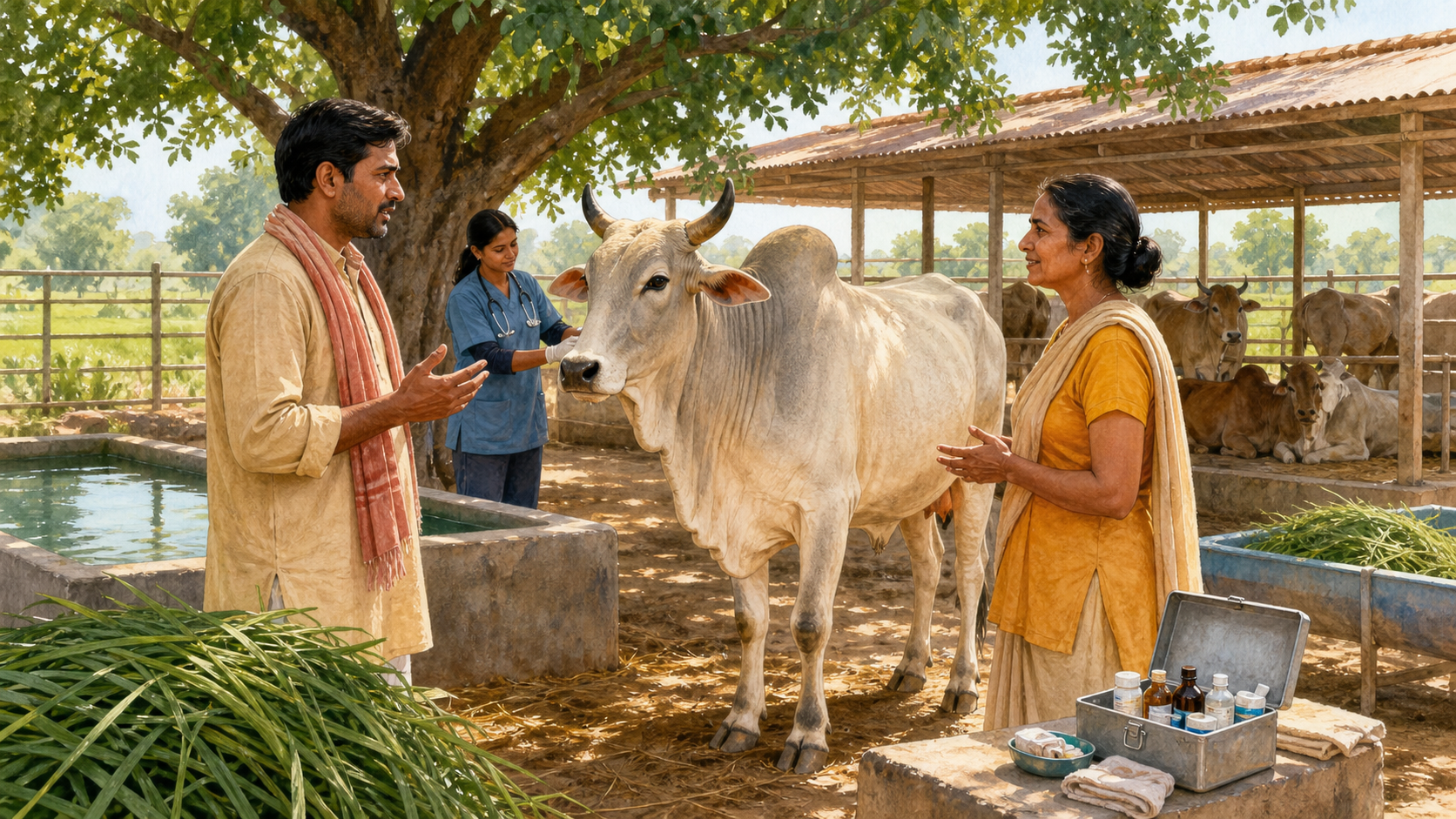
If you are considering Go-daana, the hardest question is not whether the practice is revered. It is whether your gift will actually protect a cow, strengthen the recipient, and loosen possessiveness in you. A sacred name cannot turn a poorly planned transfer into ethical giving.
The standard is demanding but clear: honor the traditional form when you can fulfill its responsibilities; pause when the literal act would burden the recipient or endanger the animal; and use a transparent alternative when it will produce more faithful care. In Go-daana, devotion must become durable responsibility.
A sacred gift creates four responsibilities
A cow was historically more than an object of value. By providing nourishment, agricultural support, and resilience to a household, the animal could give a family continuing capacity rather than momentary relief. That practical benefit helps explain why Go-daana joined ethical intention to communal wellbeing.
That history also exposes a common mistake. Go-daana is not complete merely because ownership changes or a ritual is performed. The gift establishes obligations toward four parties:
- The cow: Its welfare before, during, and after the transfer must remain central. Care cannot depend only on whether the animal is presently productive.
- The recipient: The person or institution must genuinely want the animal and possess the means to care for it. A gift that imposes an unaffordable duty is a concealed burden.
- The giver: Your intention must be truthful. Go-daana cannot become a way to discard responsibility, purchase prestige, or outsource concern while remaining indifferent to the outcome.
- The community: The arrangement must respect local law, animal-welfare obligations, and the practical conditions in which the animal will live.
Ahimsa is therefore not an ornamental idea added to the ceremony. It is the operational test of the ceremony. If the outward form predictably causes neglect, distress, or an impossible financial obligation, the sacredness of the intention does not erase the harm. It raises the standard by which you must respond.
Before a literal Go-daana, complete the care test
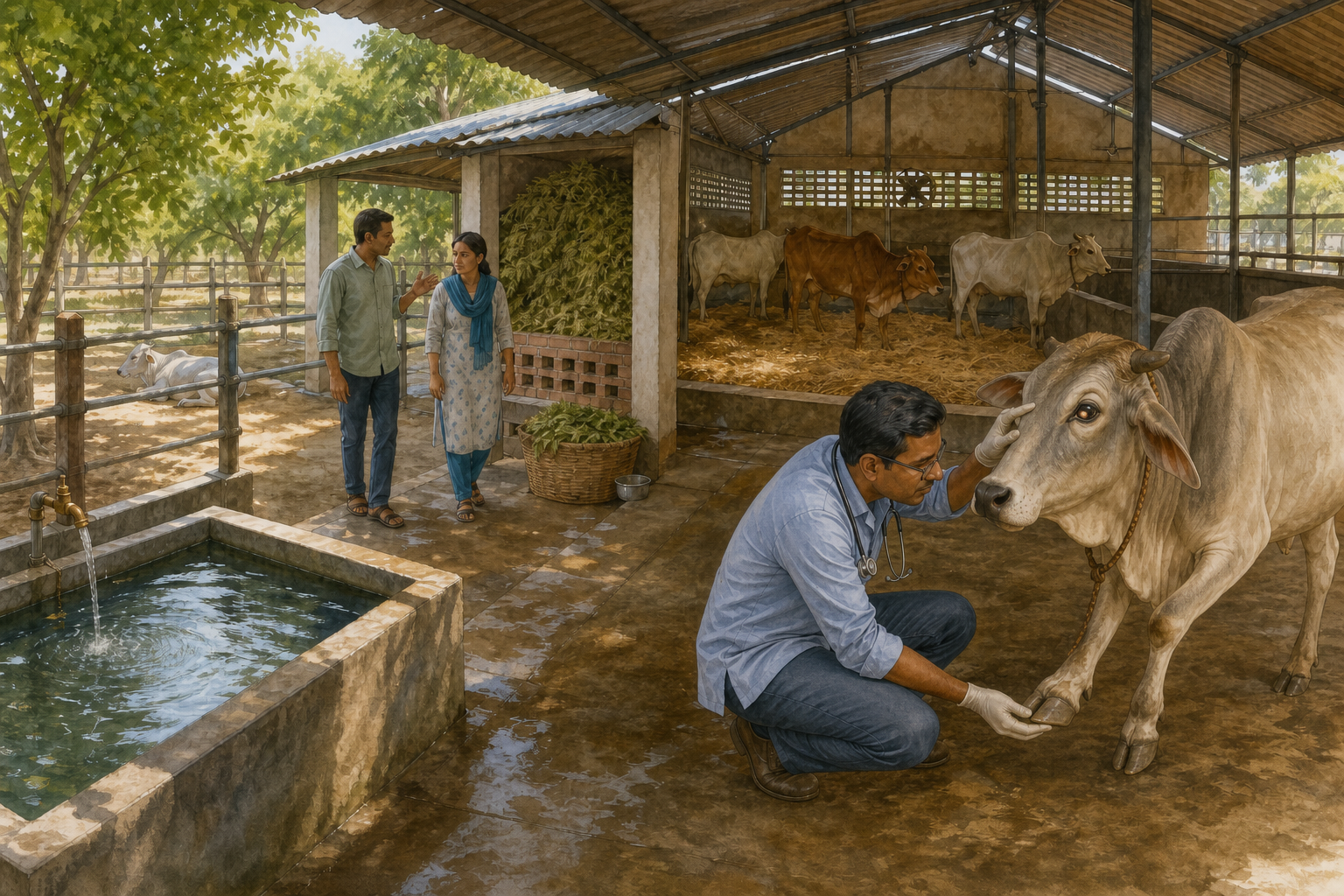
Do not donate a cow as a surprise. Recipient consent and genuine need belong at the beginning of the decision, while animal welfare and compliance with local norms are non-negotiable. Complete the following checks before fixing the ceremony or transferring money.
- Name the actual recipient. Identify the household, farmer, temple, gaushala, or other institution that will assume responsibility. A vague promise that someone will receive the animal is not enough.
- Obtain explicit consent. Ask whether the recipient wants this particular responsibility. Silence, social pressure, or ceremonial politeness should not be treated as agreement.
- Confirm daily capacity. Establish where the cow will live and who will provide food, water, shelter, supervision, and necessary care. If those costs depend on uncertain future donations, the plan is not yet secure.
- Plan beyond the animal’s productive years. Ask what will happen if the cow becomes old, ill, injured, or otherwise unable to provide an economic benefit. A lifetime obligation cannot be built around present usefulness alone.
- Clarify the form of the gift. Determine whether you are transferring ownership of a particular animal, sponsoring its care, or contributing to a pooled welfare fund. These may all support worthy work, but they are not the same act.
- Check the legal and practical record. Confirm that the transfer, transport if any, housing, and continuing care comply with the rules where the cow and recipient are located. Keep a written record of what each party has agreed to do.
- Define follow-through. Decide who will confirm the animal’s condition after the ceremony and how concerns will be addressed. A receipt proves that money changed hands; it does not by itself prove that care was delivered.
When the recipient is a household
Ask about the household’s needs before choosing the animal or arranging the rite. The morally important question is not whether a cow would be valuable in theory, but whether this household can convert the gift into nourishment, livelihood, and stability without accepting an unsustainable cost. Discuss ownership, routine care, future expenses, and responsibility for the animal in old age. If the household cannot answer those questions, offer a form of help it is equipped to use.
When giving through a gaushala
A payment described as cow donation may represent acquisition of an animal, sponsorship of one cow, or a contribution shared across many animals. Ask which arrangement you are funding. Then request the institution’s physical location, care policy, explanation of how donations are spent, and approach to aged or unproductive animals. When practical, visit or ask a trusted local person to verify the conditions. Photographs and devotional language can introduce the work, but they should not replace evidence of continuing care.
If any answer remains unclear, pausing is not a failure of faith. You can fund verified care while investigating, postpone the literal transfer, or consult a trusted acharya about an appropriate alternative. The unsafe choice is to complete the visible rite first and leave the living consequences unresolved.
Use the four meanings of Go as an ethical audit

One traditional interpretive lens associates Go with jnana, gaman, prapti, and Moksha: knowledge, movement toward one’s rightful destination, attainment, and liberation. These meanings can test what your giving is meant to accomplish. They should not be used as a loophole that turns any convenient donation into Go-daana.
| Meaning | Question for the giver | A possible contemporary expression |
|---|---|---|
| Jnana: knowledge | Will this gift expand access to serious learning and transmit wisdom responsibly? | Support education, scriptural learning, teachers, or clearly identified learning materials. |
| Gaman: movement toward a rightful destination | Will this gift help a person advance safely in a worthy direction? | Enable necessary travel, mentorship, or support through a significant life transition. |
| Prapti: rightful attainment | Will the recipient gain durable capacity, dignity, or stability rather than brief relief alone? | Support a livelihood initiative with a named recipient, purpose, and method of follow-through. |
| Moksha: liberation | Does giving weaken your possessiveness, or does it create a new claim to status and control? | Give without demanding praise, influence, or permanent recognition, and release attachment to the resource once it has been responsibly entrusted. |
This framework makes symbolic giving more disciplined. Supporting education is too vague until you know who will learn, what will be provided, and whether it reached them. Livelihood assistance is incomplete until the recipient has consented to the plan and can use the resource. Detachment is not indifference; you relinquish possessiveness while remaining accountable for whether the promised help was delivered.
Ethical similarity does not automatically establish ritual equivalence. If Go-daana has been prescribed within a particular rite, family observance, or sampradaya, ask a trusted priest or acharya whether a sponsorship or symbolic gift fulfills that requirement. A modern expression may carry the moral intention beautifully while still having a different ritual status. Being honest about that distinction protects both tradition and conscience.
Shared Dharmic ethics do not erase distinct traditions
Go-daana is rooted in Hindu practice, but its ethical center can be understood across the Dharmic family. Buddhism gives importance to dana and karuna, Jainism to Ahimsa and Aparigraha, and Sikhism to seva and shared welfare. These resonances in generosity, compassion, non-possessiveness, and service create grounds for mutual understanding.
Resonance is not sameness. You do not need to flatten distinct teachings or claim that every Dharmic tradition performs the same rite. When explaining Go-daana to a mixed family or community, three statements keep the balance:
- This is a Hindu practice with its own ritual and theological setting.
- Its execution should be judged by consent, non-harm, truthful intention, and real benefit.
- Other Dharmic traditions cultivate related virtues through their own teachings and forms of practice.
That balance is especially useful when children participate. Give them a concrete responsibility: help examine the care plan, accompany the family on a gaushala visit, or check how a supported program used the gift. Otherwise, they may remember the ceremonial moment without learning that sacred giving continues after the ritual ends.
Key takeaways for a responsible Go-daana
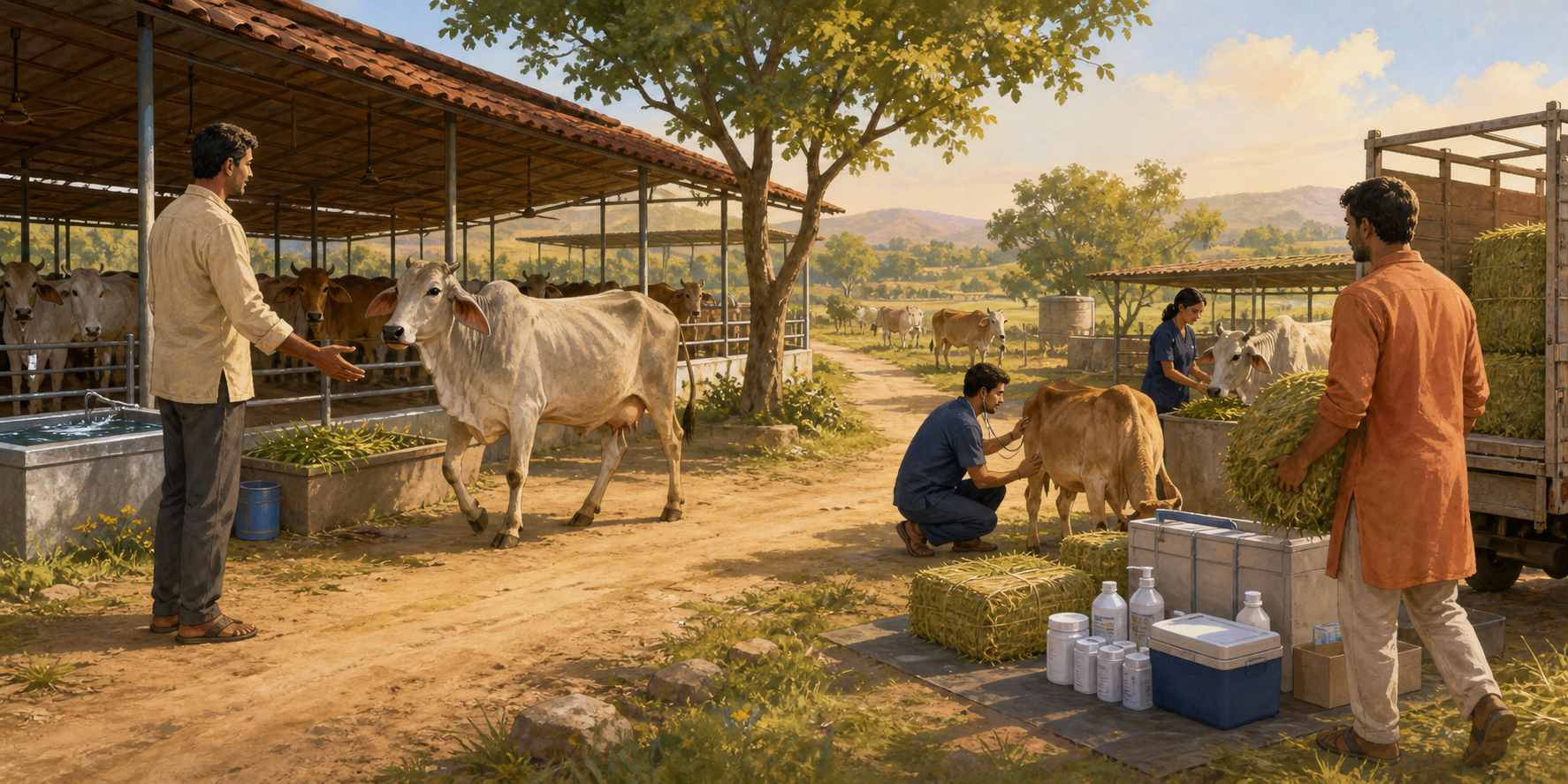
- Begin with the cow’s welfare and the recipient’s informed consent, not with the ceremony date.
- Treat a gift as a continuing responsibility when it creates continuing care needs.
- Distinguish a literal transfer, an individual sponsorship, and a pooled donation before describing what you have done.
- Plan for illness, old age, and loss of productivity before the animal changes hands.
- Use jnana, gaman, prapti, and Moksha to ask whether your giving creates knowledge, rightful progress, durable capacity, and freedom from possessiveness.
- Seek tradition-specific guidance before treating a symbolic expression as ritually equivalent to literal Go-daana.
- Regard transparency, verification, and follow-through as parts of the sacred act rather than administrative details outside it.
Your next step can fit on one page. Write down the recipient, the exact form of the gift, evidence of consent, the lifetime care plan, the use of funds, the method of follow-through, and the spiritual intention. Ask the recipient or institution to confirm the practical parts and your priest or acharya to confirm the ritual parts. If a line remains blank, the Go-daana is not ready.
Complete that page before arranging the public rite or sending the money. When care leads and ceremony follows, sacred giving can do what it promises: protect life, strengthen another person, serve the community, and train the giver in freedom from possession.
References
