
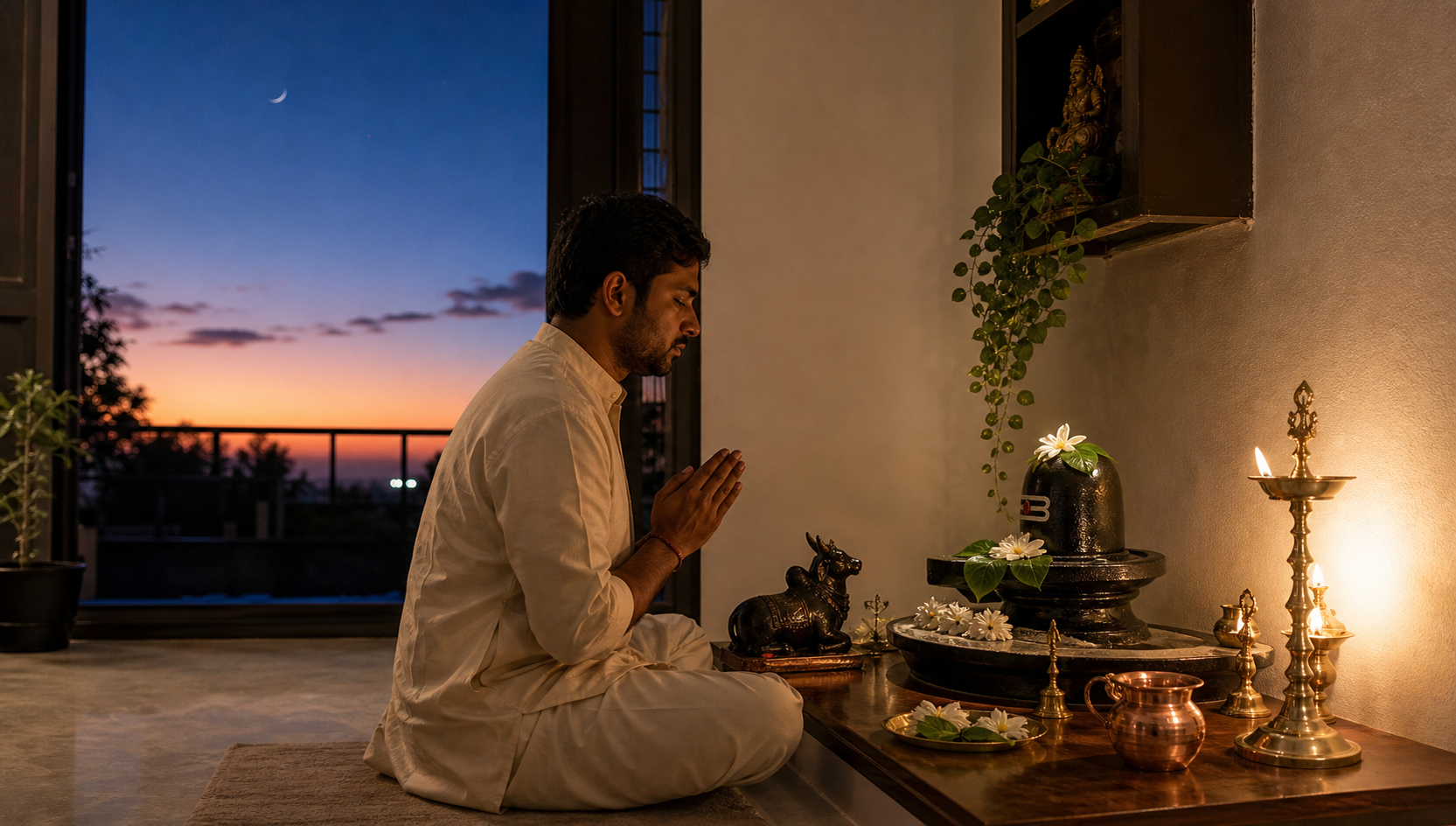
You may have a 2026 festival calendar in front of you and still be unsure which Pradosh time applies where you live. That uncertainty matters: the vrata is centred on a local twilight window, so a date without a location-specific time is not yet a usable observance plan.
Once you settle the timing, Pradosh can remain refreshingly simple. You need a dependable local calendar, a level of fasting suited to your health and responsibilities, and a short Shiva-puja sequence you can perform with attention.
Plan 2026 around local twilight, not a floating date

Pradosh, also called Pradosham or Pradosh vrat, is observed on Trayodashi, the thirteenth lunar day, in both Shukla Paksha and Krishna Paksha. That gives you two observances in each lunar month. A calendar containing only one Pradosh per lunar month is therefore incomplete for a devotee intending to keep both.
The puja belongs in Pradosha Kaala, the auspicious period around sunset. Sunrise and sunset vary with location and time zone, which means a clock time copied from another city may not be the right one for you. Even when a civil date appears familiar, confirm the local twilight window rather than inferring it.
Build your 2026 calendar this way:
- Choose one trusted panchang calculated for your city and time zone. A local Shiva temple calendar is also useful, especially when you intend to attend its worship.
- Record both Shukla Paksha Trayodashi and Krishna Paksha Trayodashi for every lunar month. Keep the paksha in the event title so the two observances do not become indistinguishable.
- Copy the stated beginning and ending of Pradosha Kaala into each calendar entry. Do not save only the date and assume that ordinary evening hours will be close enough.
- Note whether the observance falls on Monday, Tuesday or Saturday if you want to follow the traditional Soma, Bhaum or Shani emphasis.
- Recheck the panchang shortly before each vrata, and check again for your destination if you will be travelling across a time zone.
Avoid assembling one entry from several unrelated calendars. A date taken from one location and a worship window taken from another can create a mismatched schedule. If your family sampradaya or regional custom differs from a general calendar, ask a family elder or local temple how that lineage applies the vrata, then use the local panchang for the relevant timing.
Choose a fast you can keep without harming your health
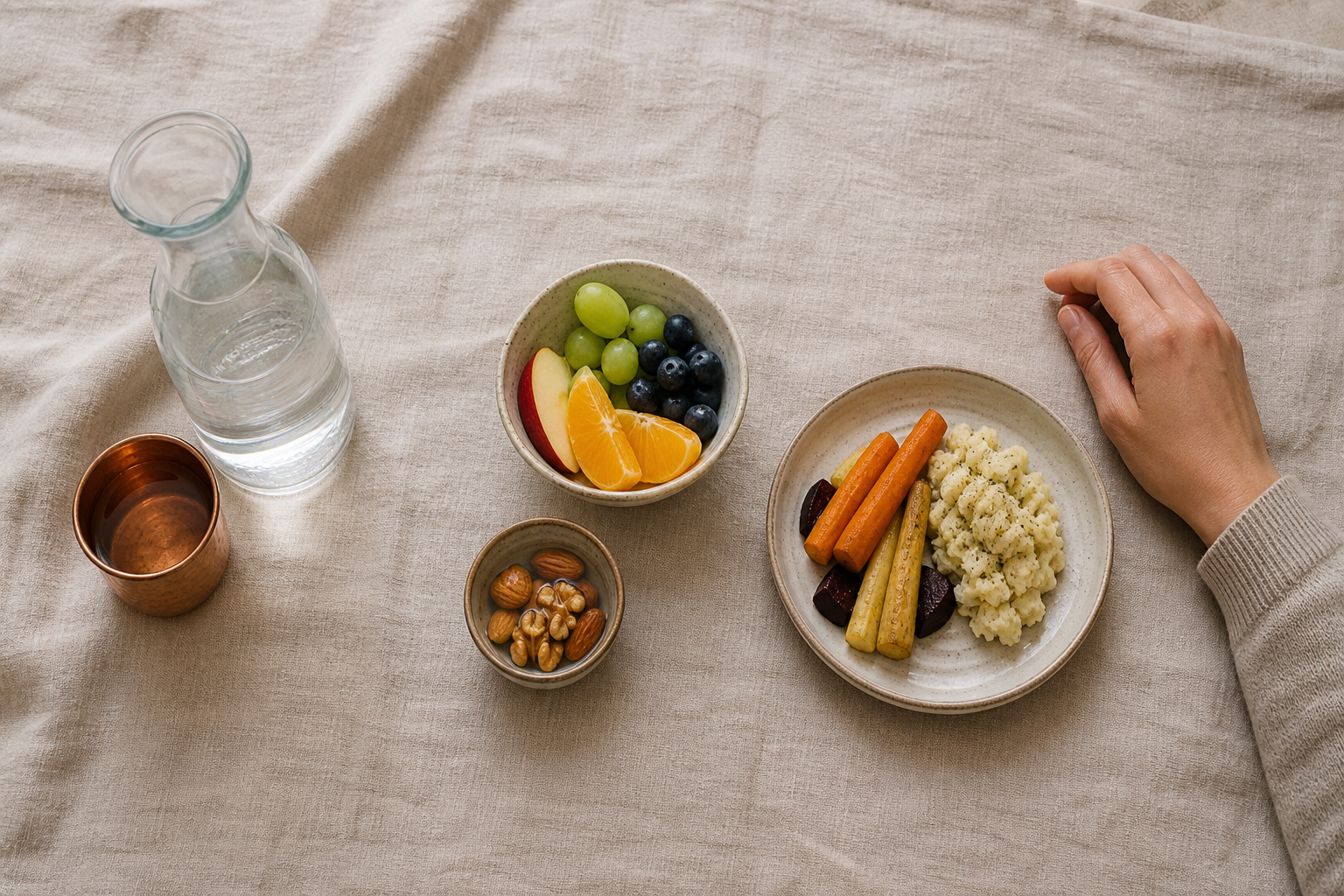
Upavasa is part of Pradosh discipline, but the most severe option is not automatically the most sincere. The established forms include a full fast, a partial fast and a sattvic-diet observance. Your health, age, duties and inherited practice should determine which one you choose.
Make that choice before the day begins:
- Full fast: Keep it only when it is appropriate for your health and consistent with your tradition.
- Partial fast: Use a gentler restriction when a complete fast would interfere with health or necessary responsibilities.
- Sattvic observance: Eat simply and mindfully while retaining the vrata’s disciplines of prayer, restraint and reflection.
Children, elders and people with medical needs can preserve the spiritual centre of Pradosh without undertaking an intense fast. Hydration, balanced nourishment and rest matter. If fasting would put your health at risk, choose the gentler form and give fuller attention to japa, meditation and puja; religious discipline should not be used as a reason to ignore a genuine medical need.
Also consider the conduct surrounding the meal. A modest diet paired with irritability, distraction or excess elsewhere misses the vrata’s purpose. Simplicity in food should support simplicity in speech, attention and action.
Use this simple home puja during Pradosha Kaala
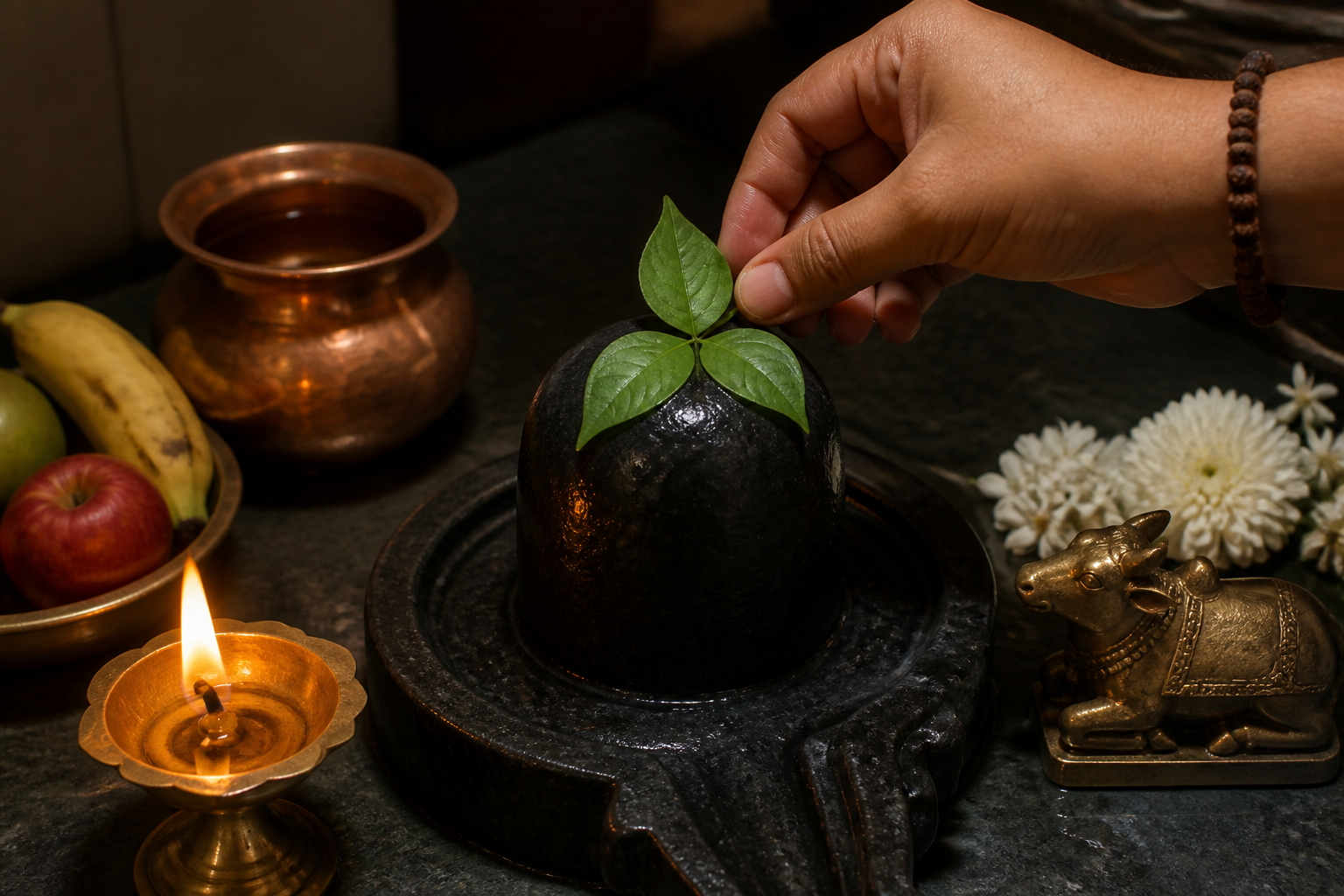
Prepare before the local twilight window begins. Clean the altar and place the necessary items within reach: a lamp, an offering for abhishekam, bilva leaves and any Shaiva stotra or sacred reading you intend to use. Water is sufficient for a simple abhishekam; milk or panchamrita may be used where that accords with your family practice.
Then follow a calm sequence:
- Set aside the phone and unfinished household tasks as Pradosha Kaala approaches. Light the lamp around sunset and let the household settle.
- Perform abhishekam to the Shivalinga with water, milk or panchamrita according to your custom.
- Offer bilva leaves with deliberate attention rather than rushing through a large number of offerings.
- Chant “Om Namah Shivaya” silently or aloud. Soft Shiva-bhajans or kirtan can be included when the family is worshipping together.
- Read a brief Shaiva stotra or sacred passage, then sit quietly in meditation.
- Close with gratitude and carry the vrata into conduct through patience, compassion and service.
If work or family responsibilities leave you little time, retain the essential shape: observe the correct local window, light the lamp, offer a simple water abhishekam and bilva leaf, chant “Om Namah Shivaya,” and sit in silence. A short practice performed attentively is more coherent than an elaborate list begun without enough time to complete it calmly.
Families can divide the preparation without turning the evening into a production. Children can help place simple offerings, while elders guide the sequence and explain why twilight matters. This makes Pradosh a living household rhythm rather than an event managed by only one person.
If you plan to worship at a temple, check its schedule instead of assuming that the public abhishekam begins at the same moment as your personal calendar entry. Temples may arrange special alankara, abhishekam, bells, lamps and Shiva-bhajans around Pradosha Kaala. When its published time differs from an app, ask which local panchang and custom the temple follows before deciding that either schedule is mistaken.
Let the weekday shape reflection, not expectations
Some 2026 Pradosh observances will carry a familiar weekday name. These associations can give your meditation a focus, but they should not be treated as promises of a particular worldly result.
- Soma Pradosh on Monday: Emphasise healing, compassion and serenity. Ask where your speech or habits could become gentler.
- Bhaum Pradosh on Tuesday: Emphasise courage, vitality and the balanced direction of energy. Identify one forceful impulse that needs discipline rather than suppression or indulgence.
- Shani Pradosh on Saturday: Emphasise steadiness, karmic reflection and responsibility. Look directly at an obligation you have delayed and decide on the next honest action.
The centre remains the same on every weekday: devotion to Lord Shiva during Pradosha Kaala, supported by restraint and contemplation. The weekday emphasis should deepen that centre, not replace it with a transaction in which a ritual is expected to compel a guaranteed outcome.
Pradosh is distinctly Shaiva, and that identity need not be blurred to make the observance welcoming. Its disciplines of self-restraint, meditation, compassion and service also speak to values cultivated across the wider Dharmic family. Someone joining from another Dharmic path can honour that common ethical ground while respecting the vrata’s Shiva-centred form.
Key takeaways
- Mark both Shukla Paksha and Krishna Paksha Trayodashi in every lunar month; one monthly entry is not a complete Pradosh calendar.
- Use a panchang or Shiva temple schedule calculated for your own location and time zone.
- Save the beginning and ending of Pradosha Kaala with each date, because the twilight window is central to the observance.
- Choose a full, partial or sattvic fast according to health, age, duties and tradition. Prayer and restraint remain meaningful when an intense fast is unsafe.
- For a simple home observance, prepare the altar, light a lamp, perform abhishekam, offer bilva, chant “Om Namah Shivaya,” read briefly and sit in silence.
- Use Soma, Bhaum and Shani associations as themes for reflection, not as guarantees of a desired result.
Open your local panchang now and create the 2026 entries before ordinary commitments fill those evenings. Put the paksha and exact Pradosha Kaala in every event, add a short altar checklist, and decide the appropriate fasting level the day before each vrata. That small amount of preparation protects the part of Pradosh that matters most: an unhurried twilight offered to Shiva.
References
