
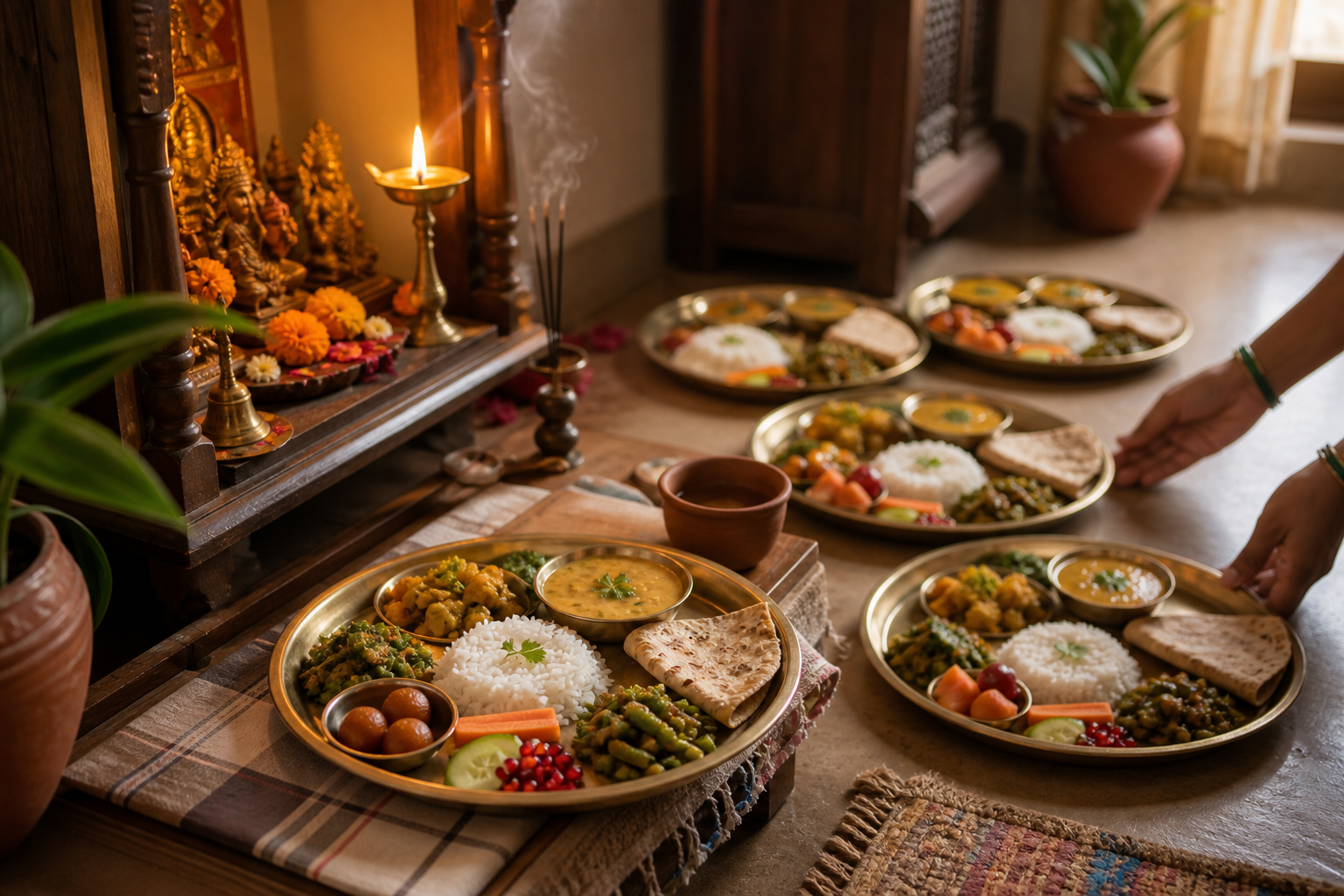
You may know how to place a dish before the deity, but still wonder what makes the entire meal sacred. Is the offering complete when the prayer ends, or only when the food is shared well?
A useful answer begins before the altar and continues after it. Food becomes an offering through attention, restraint, and gratitude. It becomes seva when that same food reaches another person with dignity. If either half is missing, the practice is incomplete.
The offering begins with how you receive food
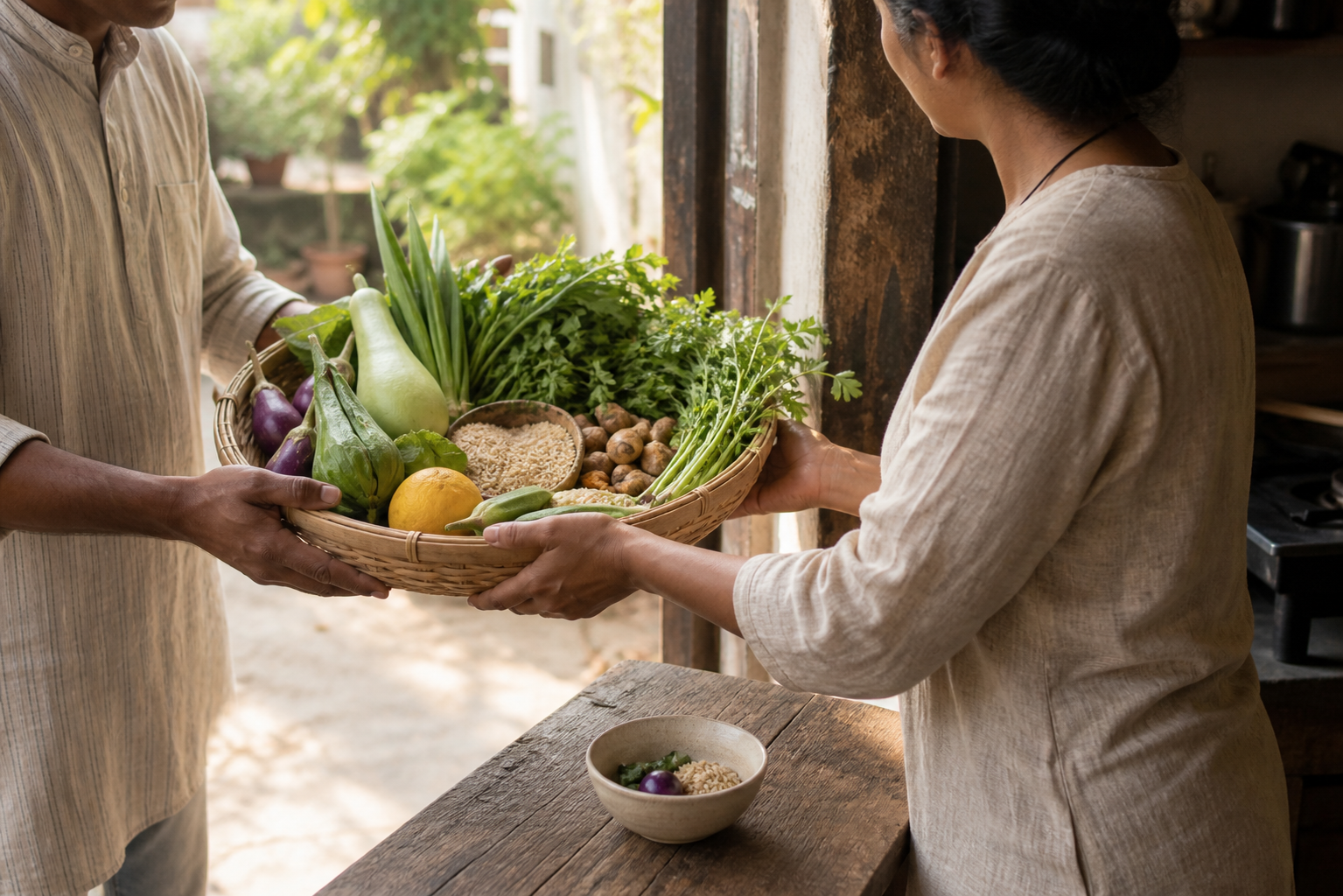
If sacredness begins only when a prepared plate enters the puja space, it begins too late. The ingredients have already passed through soil, water, weather, agricultural work, transport, purchase, storage, and cooking. The first devotional act is to notice that chain and stop treating food as an anonymous commodity.
Goddess Shakambari makes this relationship especially visible. Her nourishing form is honoured through greens, fruits, grains, lamps, prayer, sattvic meals, and anna-daan. The produce on the altar is not mere decoration. It represents dependence on prakriti, gratitude for annam and jala, and responsibility for how abundance is used.
You can bring that awareness into an ordinary shopping trip. Before buying food for an offering, ask three questions:
- Is this suitable for the discipline followed in my household or sampradaya?
- Will the people I intend to serve actually be able and willing to eat it?
- Can I use the full quantity without allowing part of it to spoil?
These questions prevent a familiar contradiction: displaying abundance before the divine while wasting it afterward. Seasonal produce is particularly appropriate when you want the offering to reflect the real harvest where you live. In a diaspora household, local greens and fruits can express gratitude more honestly than an extravagant search for imported ingredients chosen mainly for appearance.
Expense is not a measure of sanctity. A modest meal that is chosen carefully, prepared cleanly, and completely used carries a clearer devotional intention than a lavish spread whose surplus has no destination.
Move through four stages: receive, prepare, offer, share
A sacred meal becomes easier to practise consistently when you treat it as four connected movements rather than one ritual moment.
- Receive with gratitude. Bring the ingredients into the kitchen consciously. Check what you already have, use produce before it deteriorates, and acknowledge the natural and human labour behind the meal.
- Prepare with discipline. Clean the cooking space, gather the ingredients, and settle the menu before beginning. Measure what needs to be measured. Keep the atmosphere compatible with the offering rather than allowing irritation, haste, or display to become the dominant mood.
- Offer according to your tradition. Place a clean portion before the deity before general serving. Use the mantra, stotra, silence, lamp, or household prayer that genuinely belongs to your practice. Follow your lineage or family custom concerning tasting, utensils, ingredients, and the completion of the offering.
- Return the food to relationship. Serve it attentively to family, guests, neighbours, or people in need. Store any remainder safely and with respect. The food should not become neglected simply because the visible ritual has ended.
The order matters. If everyone eats first and an unwanted remainder is later placed before the deity, the gesture has lost its priority. If an elaborate offering is made but the food is then handled carelessly, devotion has been confined to the altar. Sacred food asks you to keep the same quality of attention throughout.
Ritual details are not identical across Hindu communities, much less across all Dharmic traditions. Do not manufacture a universal rule about which ingredients are sattvic, whether food may be tasted, how long an offering remains before the deity, or which prayer must be used. Follow the discipline you have actually received. Where you are unsure, ask a trusted elder, temple authority, or teacher within your tradition.
The wider ethical direction can still be shared. Hinduism, Buddhism, Jainism, and Sikhism give distinct forms to food practice, yet ahimsa, restraint, service, reverence for life, and community welfare provide meaningful points of kinship. Recognising that kinship does not require pretending that every ritual is the same.
Build a practice your kitchen can sustain
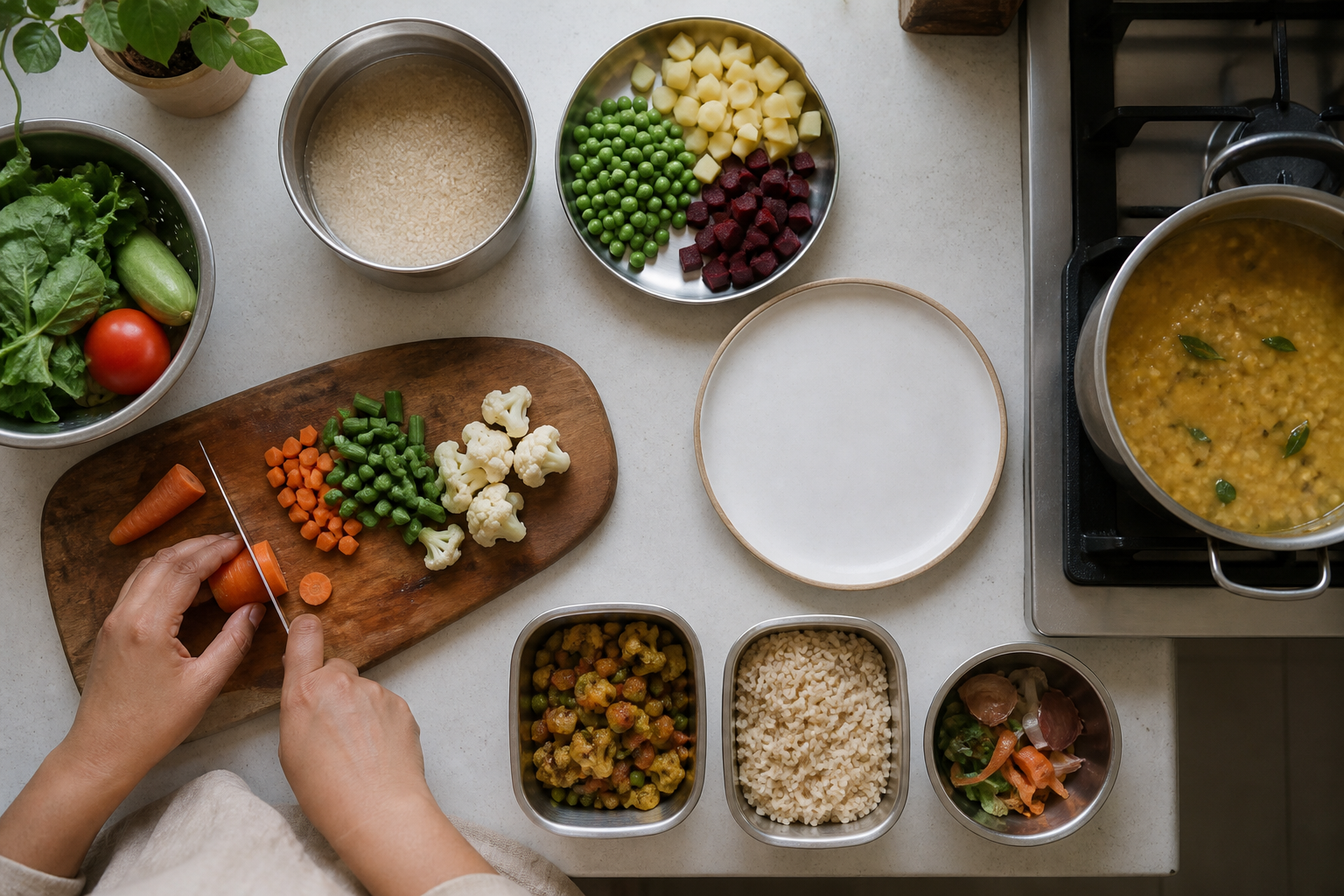
Devotional cooking does not have to mean complicated cooking. In fact, complexity can work against attention when it leaves you rushed, uncertain, or surrounded by unusable leftovers. A familiar dish prepared reliably is often a better offering than an ambitious menu attempted mainly to impress.
The practical foundation is simple: clear quantities, mindful preparation, vegetarian ingredients, and a reverent atmosphere allow festive food to be both reproducible and devotional. Technique is not separate from bhakti. Measuring properly, handling ingredients gently, and planning the sequence of work are ways of protecting the offering from avoidable carelessness.
Use this kitchen checklist:
- Choose recipients before choosing quantities. Decide whether you are feeding only the household, receiving guests, or distributing food. Scale the meal to that real group.
- Select one dependable centrepiece. Build the rest of the menu around a preparation you already know how to make. A festival is a poor time to rely entirely on untested recipes.
- Write down every ingredient. Devotional preparations may include milk products, almonds, pistachios, sesame, maida, suji, or other ingredients that a recipient may avoid. When food leaves your household, provide a complete ingredient list rather than asking people to guess.
- Reserve the offering portion cleanly. Prepare the plate and serving utensil before the rush of general serving. This protects the offering from becoming an afterthought.
- Keep the menu consistent with the vrata or observance. A dish can be vegetarian without meeting every household’s definition of sattvic or every vrata’s restrictions. Check the rule that applies to the actual occasion.
- Assign every remaining portion a destination. Know what will be eaten at the meal, shared promptly, refrigerated, or used later. Do this before cooking, not after surplus appears.
For a Shakambari observance, a household practice can remain direct: arrange fresh greens, fruits, and grains; light a lamp; recite a familiar Devi stotra; prepare a sattvic meal according to family custom; and share part of it through anna-daan or personal hospitality. Temple-scale abhisheka and alankara may beautifully express the Goddess’s nourishing aspect, but a home does not need to imitate that scale to be sincere.
Children can take on real responsibilities rather than being given only a symbolic role. Ask them to wash fruit, identify the grains, set the offering plate, write ingredient labels, serve water, or check what remains after the meal. This teaches that gratitude is a form of work. It also connects worship to agriculture, seasonality, hospitality, and waste reduction without turning the meal into a lecture.
Make seva dignified, not a route for unwanted food
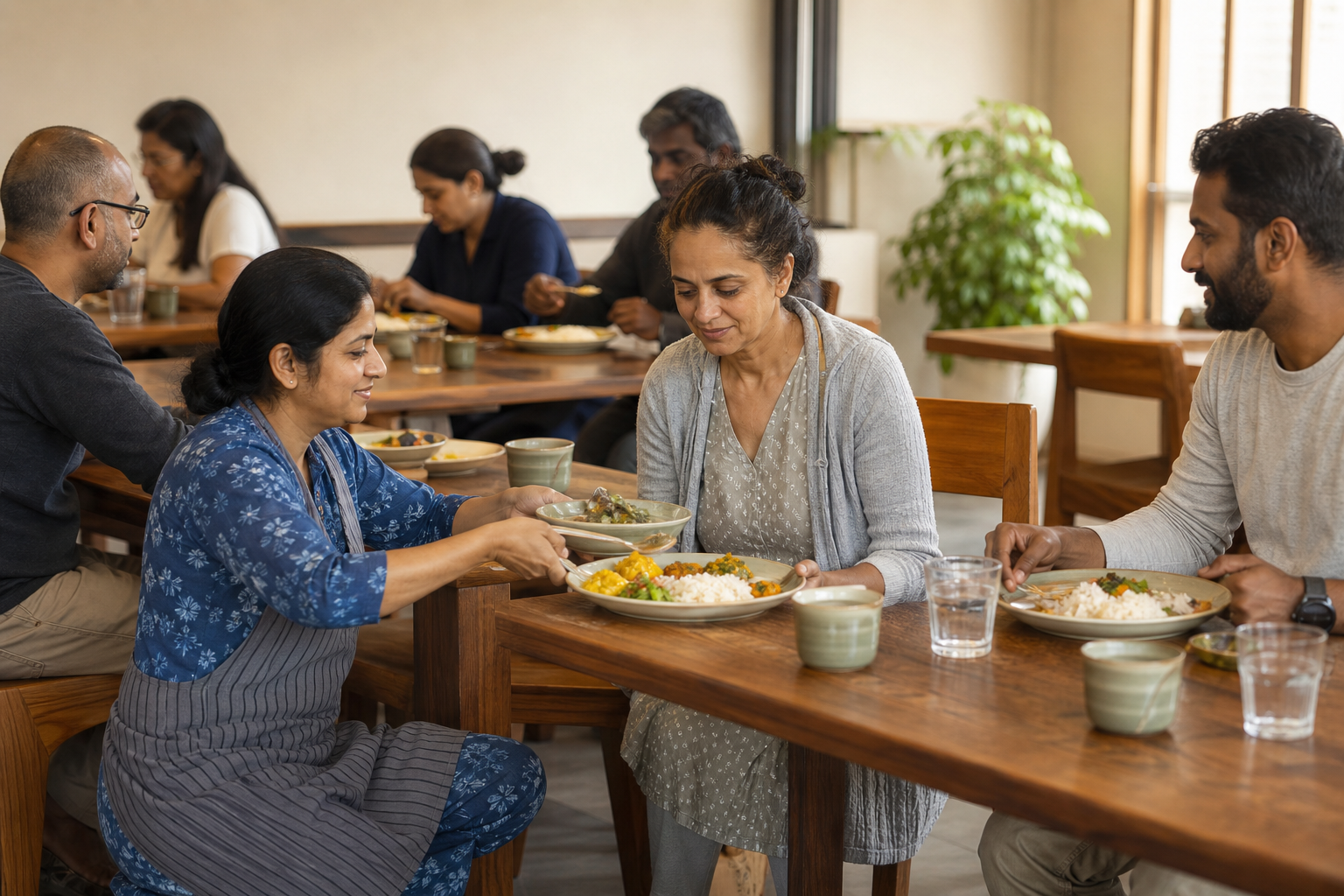
Offering and seva are related, but one does not automatically produce the other. An offering directs gratitude toward the divine. Seva directs care toward living beings. The bridge between them is the way you serve.
Food does not become compassionate merely because it is distributed. The recipient’s needs, freedom, and dignity still matter. Use these tests before calling distribution seva:
- Give the same quality you would serve an honoured guest. Do not reserve fresh food for the altar and household while passing off deteriorating or unwanted portions to someone else.
- Ask before assuming. Find out whether the recipient can use the dish, follows dietary restrictions, or would prefer whole produce. A gift that cannot be eaten transfers a disposal problem rather than offering nourishment.
- Disclose what the food is. Name the ingredients and, when relevant, explain respectfully that the food was first offered in worship. Let the recipient decide without pressure.
- Serve a manageable first portion. Offer more when wanted. Overfilling plates in the name of generosity often produces avoidable waste.
- Share while the food is still usable. Arrange collection, delivery, or community serving before cooking. If you cannot maintain safe storage or transport, change the menu or distribute suitable whole ingredients instead.
- Protect privacy. Seva does not require a recipient to perform gratitude, explain hardship, join a ritual, or become material for publicity.
Anna-daan can begin close to home. A neighbour recovering from difficulty, an elder who cannot cook easily, a student living away from family, volunteers at a community event, or guests at a shared meal may all be within reach. The important decision is not whether the act looks large. It is whether the food reaches someone in a form they can receive with ease.
This is also where ahimsa becomes more than an ingredient rule. Non-harm includes avoiding waste, respecting dietary boundaries, refusing humiliation, and not using generosity to establish social superiority. The manner of giving is part of what is given.
Key takeaways
- Sacred food begins with gratitude for soil, water, agricultural labour, and the life-sustaining gift of ingredients.
- Plan the meal as one sequence: receive, prepare, offer, share, and responsibly use what remains.
- Follow the actual ritual and dietary discipline of your household or sampradaya instead of inventing universal rules.
- Use measured quantities and familiar methods so that devotional intention is supported by competent cooking.
- When sharing food, identify the ingredients, respect consent, preserve dignity, and give the same quality you would welcome yourself.
- Judge the practice by what happens after the prayer: who is nourished, how they are treated, and how little is wasted.
At your next meal, begin with one change you can maintain: set aside the offering before serving, cook one portion for a named recipient, or plan the use of every remainder. Let that small discipline become regular. Sacred food is most convincing when gratitude leaves the altar and enters the way you feed the world around you.
References
- Hindu Pad — Shakambari Purnima 2026: Date, Meaning, and Heartfelt Rituals Celebrating Nature’s Bounty
- Dandavats — Srimati Radharani-Inspired Devotional Baking: H.G. Purnima Mataji’s Sattvic Masterclass
