
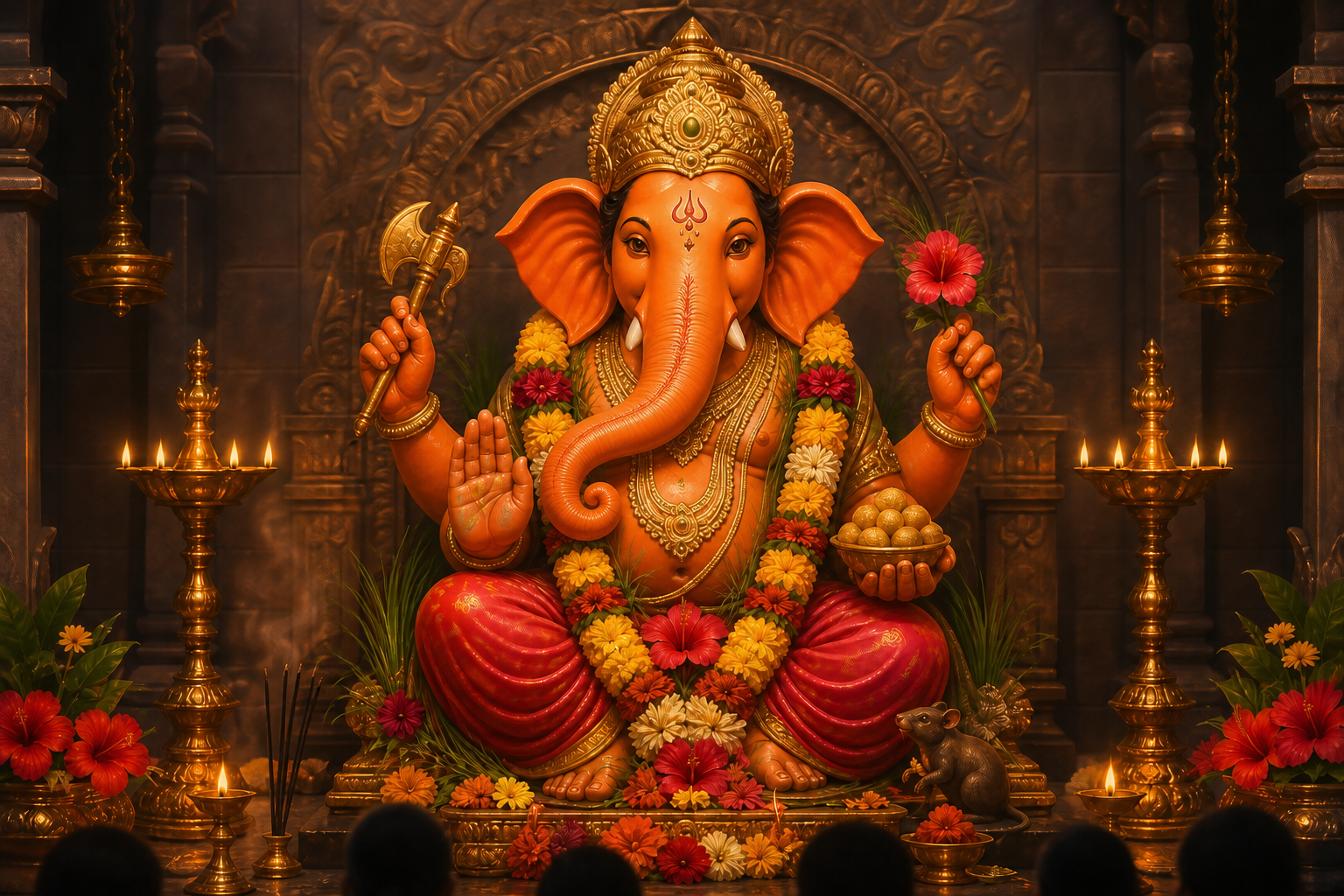
You may have heard that a right-trunk Ganesha is unusually powerful, demanding, or even dangerous if worshipped incorrectly. If you are preparing for darshan at Mumbai’s Siddhivinayak Temple, the useful answer is neither fear nor casualness. Approach Ganesha with reverence, but do not let alarming claims keep you away.
The right-coiled form asks you to join prayer with a clear intention, steady practice, and ethical conduct. Once you understand that principle, Siddhivinayak’s iconography becomes practical: it shows you how to prepare for darshan, how to frame a sankalpa, and what to do after you have prayed.
What the right-coiled trunk signifies
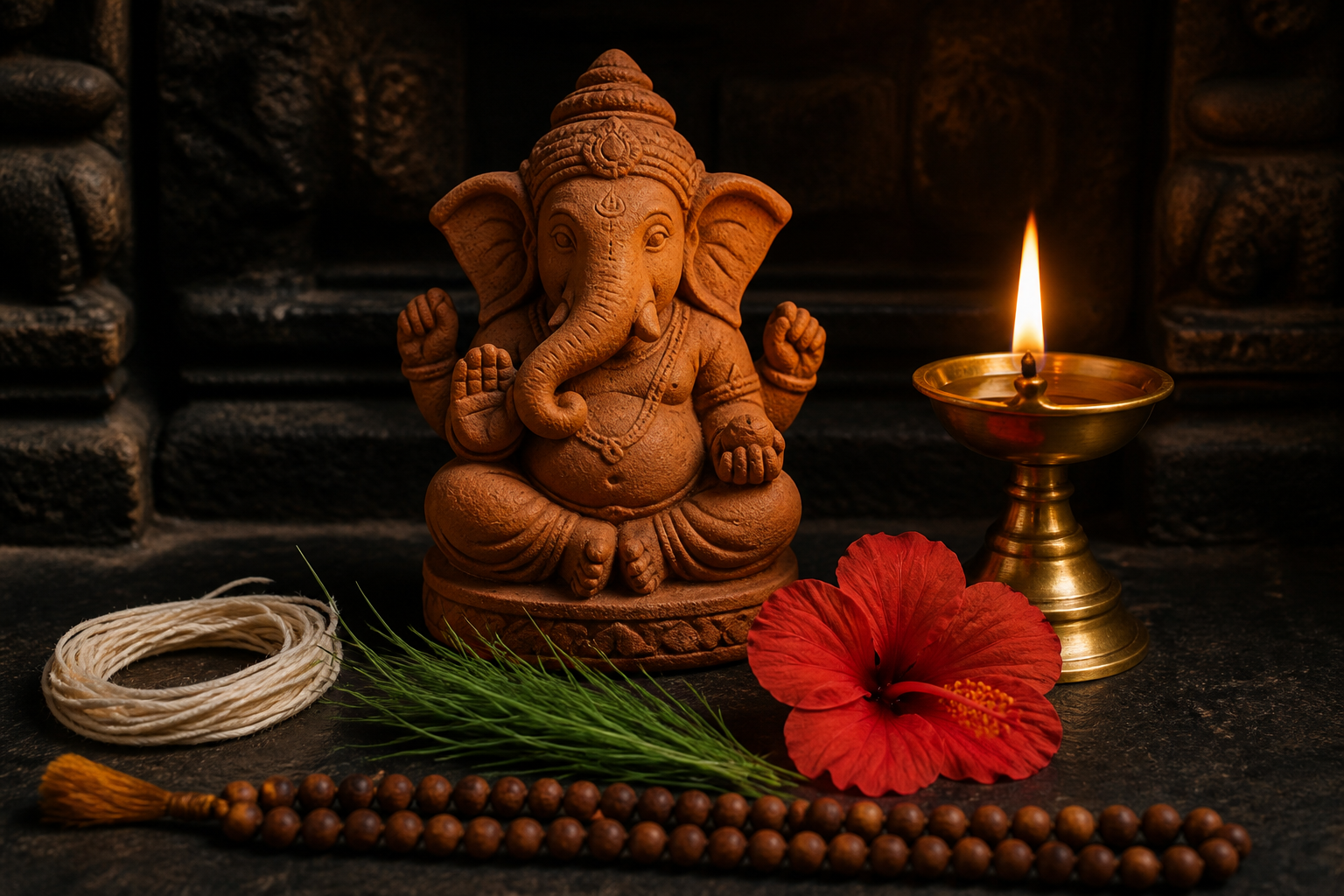
The celebrated idol in Prabhadevi is revered as a right-coiled, or Dakshinavarta, form of Ganesha. This does not make Siddhivinayak a different deity or an angry version of Ganesha. Wisdom, auspicious beginnings, discernment, and the removal of obstacles remain central to the form.
The distinctive direction of the trunk adds another layer of traditional symbolism. The right side is associated with Pingala nadi, the solar current, and with Agni tattva, the principle of purifying fire. These are spiritual and iconographic categories. They should not be turned into claims about measurable physical energy.
Agni offers the clearest way to apply the symbolism. Fire illuminates, concentrates, and removes what cannot remain before it. Before asking Siddhivinayak to clear an obstacle, therefore, ask what must be clarified in you. Is the obstacle a lack of opportunity, or reluctance to make a decision? Is another person truly blocking the way, or have you avoided a difficult duty? Is your goal worthy, or do you merely want approval, status, or an easy escape?
This is why the form is traditionally described as potent and responsive. Potency does not mean that one prayer forces reality to obey your preference. It means that prayer carries a corresponding responsibility: the clearer your sankalpa, the more honestly you must live by it.
Descriptions of trunk direction can also become confusing because the deity’s perspective and the viewer’s perspective are opposite. For Siddhivinayak, rely on the temple’s established identification of the form rather than trying to settle the matter from the angle of a photograph.
The spiritual benefits are disciplines, not prizes
Devotees approach Siddhivinayak for wisdom, accomplishment, success, courage, and relief from obstacles. These blessings are best understood as capacities you cultivate with divine grace, not goods obtained through a ritual transaction.
The idol is traditionally flanked by Riddhi and Siddhi. Riddhi signifies abundance or flourishing, while Siddhi signifies accomplishment and the fulfilment of disciplined effort. Their place beside Ganesha teaches an important order: wisdom governs both prosperity and attainment. Success detached from discernment is not the blessing represented here.
That distinction changes how you should pray. Instead of asking only for a promotion, ask for the judgement to accept responsibility without compromising dharma. Instead of asking only for a family conflict to disappear, ask for patience, truthful speech, and the courage to repair what is yours to repair. Instead of asking for every uncertainty to be removed, ask for enough clarity to take the next rightful step.
The commonly described benefits of this worship can then be read in a grounded way:
- Clarity means separating the real decision from fear, pride, and distraction.
- Resolve means continuing a rightful course after the emotion of prayer has passed.
- Obstacle removal may mean receiving timely help, but it may also mean recognizing the habit or attachment that created the obstruction.
- Riddhi means accepting abundance without allowing it to rule your judgement.
- Siddhi means bringing a worthy intention to completion through grace, competence, and perseverance.
Devotees have described inner quiet, renewed purpose, greater patience, and help at difficult turning points. Such experiences belong to devotional testimony, not to a guaranteed formula. Your prayer has not failed merely because the answer is slower, less dramatic, or different from the result you imagined.
A useful test is ethical rather than emotional. Ask whether your worship is making you more truthful, less injurious, more restrained, and more willing to serve. If practice intensifies desire but leaves conduct unchanged, the central lesson of the right-trunk form has been missed.
A simple Siddhivinayak practice you can sustain
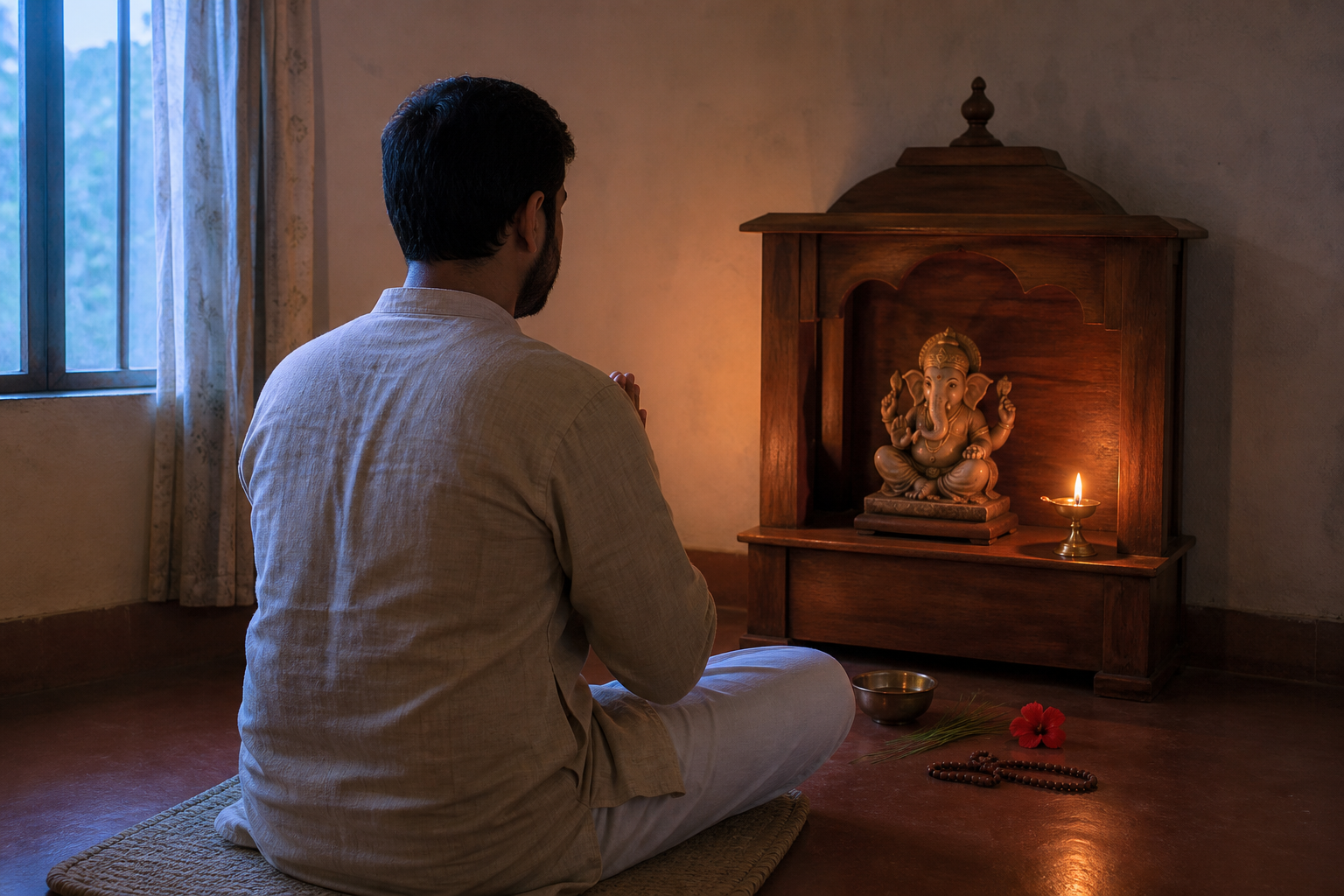
You do not need an elaborate collection of rituals to begin. Consistency matters more than constantly adding new observances. Use a clean, modest routine that you can maintain without anxiety.
- Form one clear sankalpa. State what you seek in a single honest sentence. Keep it specific enough to guide conduct and broad enough to leave room for divine wisdom. A sound sankalpa does not ask for another person’s harm, humiliation, or loss.
- Prepare a clean place and a settled mind. Wash, arrange the worship space, and put aside avoidable distractions. Cleanliness is not merely decorative; it marks the transition from scattered desire to deliberate attention.
- Make a simple offering. Durva grass and modak are respected offerings in Ganesha worship. Offer what is appropriate and available without treating quantity, expense, or display as a measure of devotion.
- Choose one recitation. You may recite the Ganesha Atharvashirsha if it belongs to your practice, or use a familiar prayer such as Vakratunda Mahakaya. Recite attentively. Rushing through many texts while the mind remains elsewhere defeats the purpose.
- Sit quietly after recitation. Bring the obstacle to mind, then identify the next dharmic action within your control. Prayer should leave you with a duty, not only a wish.
- Carry the sankalpa into conduct. Complete the call, apology, application, study session, act of restraint, or service that your situation requires. Return to the same practice regularly instead of changing methods whenever impatience appears.
Sankashti Chaturthi and Ganesh Chaturthi are especially meaningful occasions for vrata, japa, prayer, and reflection. Observe them according to the tradition you genuinely follow. Greater severity is not automatically greater devotion, and inventing burdensome rules out of fear is not the same as sacred discipline.
Darshan at a consecrated temple and installing an idol in a home shrine are different decisions. A temple visitor is not expected to reproduce the temple’s complete ritual discipline. Your responsibility is to respect temple norms, approach cleanly, pray sincerely, and behave in a manner consistent with the sankalpa you make. If you are considering a right-trunk form for formal home installation, follow the guidance of your family’s sampradaya, acharya, or trusted priest rather than assembling rules from contradictory internet warnings.
Turn Siddhivinayak darshan into a decision point
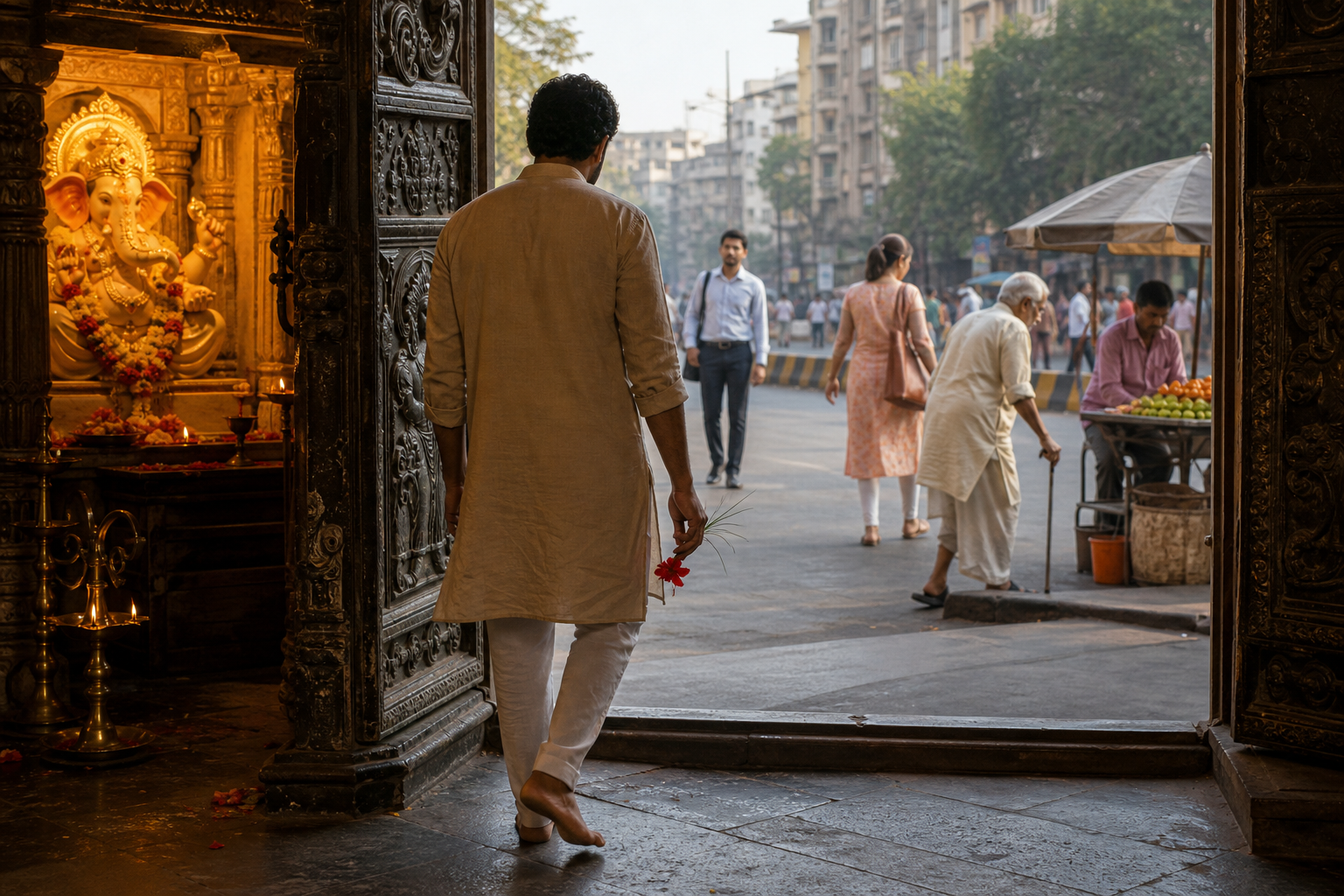
A temple visit can become a powerful memory and still change nothing. The difference lies in what you bring to darshan and what you carry away from it.
Before entering, reduce your request to one sentence. If you cannot name what you are asking for, the problem may still be tangled with competing desires. Separate the outcome you want from the quality you need. You may want a new opportunity, for example, while needing courage, patience, or discernment to respond properly when it appears.
During darshan, do not turn the moment into a hurried list of demands. Offer the sankalpa, receive the sight of the deity, and allow a period of inward quiet. Some pilgrims choose early-morning darshan to establish steadiness before worldly duties begin. The value of that choice is not the hour by itself; it is the deliberate placing of dharma before distraction.
After darshan, write down the action that follows from your prayer. Make it observable. Speak truthfully in the meeting. Finish the neglected task. Stop feeding a quarrel. Seek advice before making the decision. Offer practical help where you have previously offered only concern. This converts devotion from a single sacred event into a continuing discipline.
When the desired result arrives, remember Riddhi and Siddhi’s place beside wisdom. Ask how the opportunity can be used responsibly. Gratitude should become generosity, success should deepen humility, and relief from one obstacle should make you more willing to remove an obstacle for someone else through seva.
If the result does not arrive, do not respond by multiplying rituals in panic. Revisit the sankalpa. Check whether the goal remains ethical, whether your conduct supports it, and whether circumstances are asking for a different course. Persistence is valuable, but discernment includes the ability to release an unwise demand.
Key takeaways
- Siddhivinayak’s right-coiled trunk is associated in tradition with the solar Pingala current and the clarifying force of Agni.
- The form should inspire responsibility and attentiveness, not fear of Ganesha.
- Riddhi and Siddhi place abundance and accomplishment under the guidance of wisdom.
- A workable practice combines a clear sankalpa, cleanliness, a simple offering, attentive recitation, and consistent action.
- Durva, modak, japa, and vrata support devotion, but ritual intensity cannot replace truthfulness, non-injury, restraint, and seva.
- Judge the fruit of worship partly by your conduct: greater clarity, courage, patience, humility, and willingness to do the next rightful thing.
Begin with one honest sankalpa. Choose one prayer you can recite attentively, identify the duty that follows from it, and act. When you next stand before Siddhivinayak, bring that same integrity to darshan. The enduring sign of his grace will not be the intensity of a passing emotion, but the steadiness with which you meet the obstacle before you.
References
