

You call an MSRTC depot to confirm a bus, but the number is dead, disconnected, or simply never answered. If that journey determines whether you reach work, class, a pilgrimage, a connection, or an elderly relative on time, silence is not a minor inconvenience. It leaves you making a costly decision without dependable information.
Treat the failed call as two separate problems. First, protect the journey in front of you. Then document the failure clearly enough that MSRTC can verify and correct it. A vague complaint about a useless helpline is easy to close; a record tied to a depot, published number, time, and observable failure is much harder to ignore.
Protect your journey before pursuing the complaint

A silent helpline does not confirm that a bus is running, delayed, cancelled, or full. It confirms only that you could not obtain information through that number. Do not let an unanswered call quietly become an assumption about the service.
- Check every digit against the official place where you found the number. Preserve a screenshot, photograph, or page address showing that it was published as an MSRTC contact.
- Make one careful redial after checking the number. If the same failure repeats, stop treating repeated calls as a travel plan and move to another channel.
- Describe the actual result: out of service, invalid number, immediate disconnection, repeated ringing without an answer, or connection to an unrelated person. These are different faults and may require different repairs.
- Look for another official MSRTC touchpoint relevant to the journey, such as a current service notice, another published depot contact on the route, or an in-person enquiry point. Do not rely on an unverified number copied from an old directory or forwarded message.
- If the journey is time-sensitive, make the decision using the fact that the schedule remains unverified. Leaving additional time or choosing a workable alternative may cost less than discovering the problem at the depot.
If the matter involves an immediate threat to health or safety, do not wait for a depot helpline to respond. Contact the appropriate emergency service or seek help from responsible personnel at the nearest staffed location. A transport information line should never be your only emergency route.
Record the failure in terms officials can verify
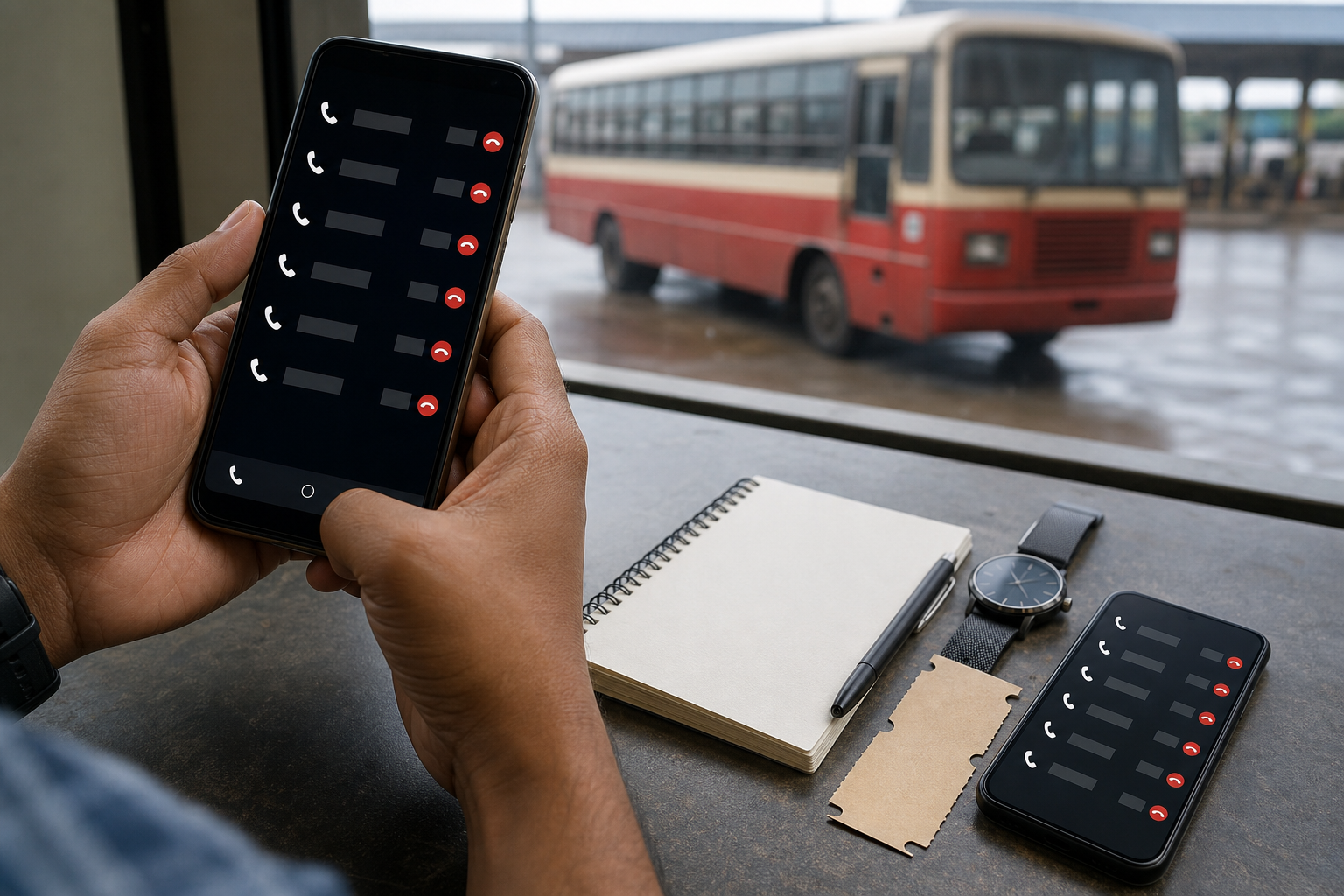
A complaint becomes useful when it identifies both the published promise and the observed failure. Before closing the call screen or browser page, capture the following details:
- The depot name and, if relevant, the route or journey you were asking about.
- The telephone number exactly as published, including any area code.
- Where the number appeared: an official webpage, notice, timetable, display board, or another MSRTC channel.
- The date and approximate time of each attempt.
- What happened during the call, using precise language rather than merely saying that it did not work.
- The information you needed, such as a departure time, cancellation update, route change, or assistance for an elderly passenger.
- The practical consequence, such as an avoidable trip to the depot, a missed connection, or inability to plan the journey confidently.
If the number reaches an unrelated private person, record only that it was wrongly assigned or wrongly published. Do not circulate that person’s identity or personal details. The actionable problem is MSRTC’s inaccurate listing.
| What happened | What to record | What likely needs checking |
|---|---|---|
| Invalid or out-of-service message | The wording or displayed call status | Whether the line exists and remains assigned |
| Rings without an answer | Attempt times and whether the result repeated | Staffing, call handling, and operating hours |
| Disconnects immediately | Whether disconnection occurred before any menu or answer | Line, exchange, or call-routing configuration |
| Reaches the wrong recipient | That the published number led to an unrelated party | The accuracy of the public directory |
| Connects but gives no usable information | Your question and the type of response received | Staff access to current service information |
You can use this compact complaint wording: The published contact number for [depot] was listed at [location]. On [date] at approximately [time], the call [state the exact result]. I needed information about [route or issue], and the failure caused [practical consequence]. Please verify the line, correct every place where the number is published, and confirm the working contact.
Send the complaint through an official MSRTC or state grievance channel available to you, and retain any acknowledgement or reference number. If you receive a reply stating that the matter is resolved, test the published contact again before treating the case as closed. Correcting an internal directory without correcting the number passengers can see does not solve the public-facing failure.
A dead number is a service-delivery failure, not just a phone fault
A reported inspection by Surajya Abhiyan found multiple official MSRTC depot numbers inactive or non-functional. The finding does not establish that every depot number in Maharashtra has failed, nor does it provide a statewide failure rate. It does establish a concrete problem that requires an official audit rather than scattered, complaint-by-complaint repair.
The distinction matters because a helpline is part of the transport service. A passenger needs information before deciding when to leave, where to change buses, whether a connection remains possible, or whether an elderly family member can travel without avoidable uncertainty. The bus may be operating, but information about it is effectively unavailable when the published doorway to that information does not work.
The burden then moves from the institution to the passenger. Students risk reaching class late. Daily-wage earners may lose paid time. Pilgrims and families may miss onward connections. Rural and peri-urban passengers can be hit especially hard because an unnecessary trip to a depot is not always easily replaced by another enquiry channel. These are different consequences of the same administrative defect: MSRTC published a point of contact that the passenger could not use.
This is also why counting only connected telephone lines would be misleading. A number that rings all day without an answer is technically alive but functionally unavailable. A line answered by staff who cannot access current route information also fails its purpose. The meaningful test is whether a passenger can reach the service and obtain a usable response within the period when that information still helps.
What a credible MSRTC repair should include
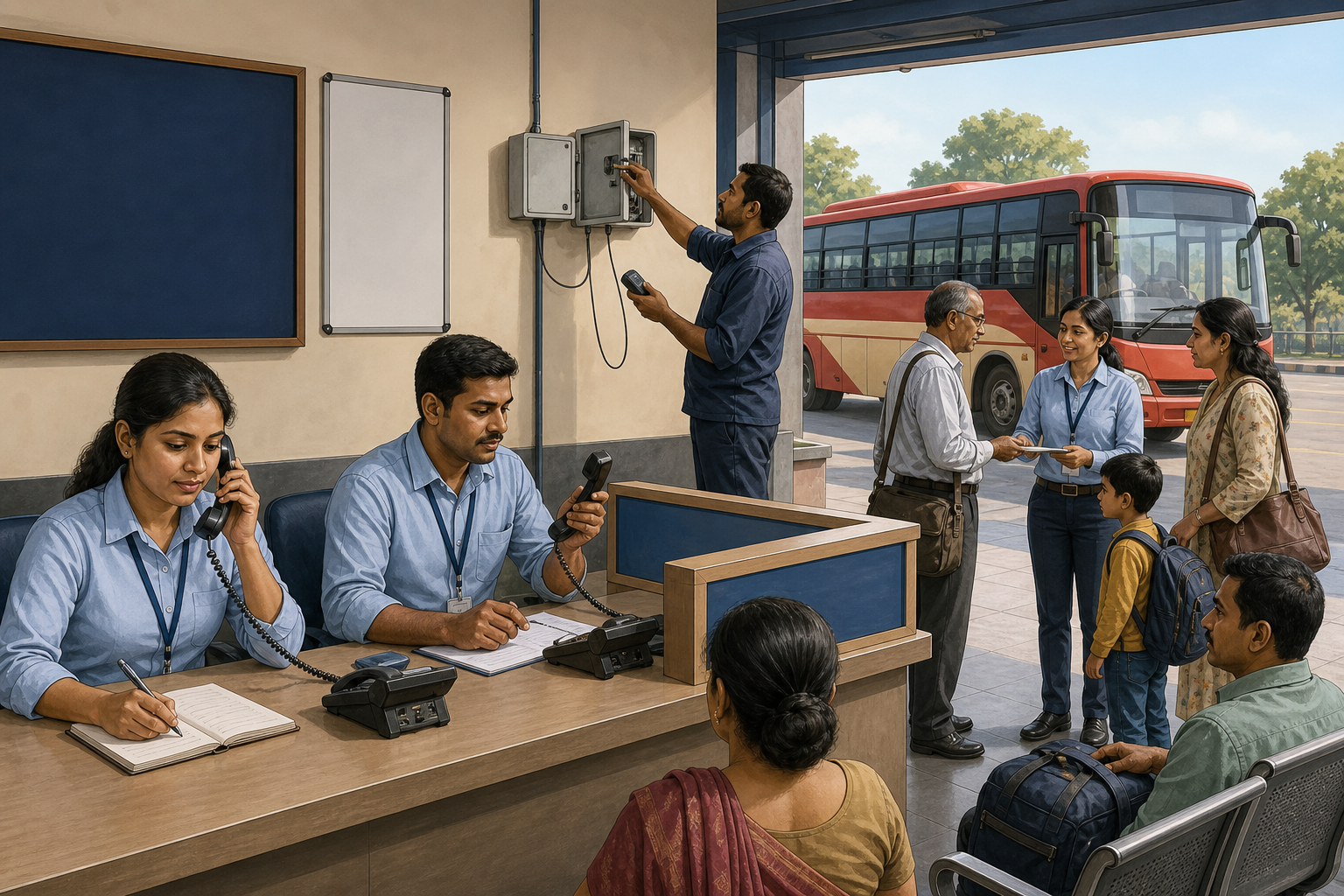
Replacing a few numbers after complaints would address individual symptoms. A durable repair needs to cover the entire chain: the telephone line, call handling, access to current information, publication of the correct number, and recurring verification.
- A statewide inventory of every depot number published by MSRTC, followed by an actual connection test rather than a directory check alone.
- Removal or correction of invalid numbers everywhere they appear, with one verified public listing treated as the authoritative directory.
- A visible verification date so passengers and staff can distinguish a maintained contact from an old listing.
- A unified, round-the-clock state-level helpline capable of routing enquiries to the relevant depot when local lines fail or become overloaded.
- Multilingual interactive voice support suited to the people who use Maharashtra’s public transport, without making the menu so long that urgent information becomes harder to reach.
- Official digital service alerts for delays, cancellations, route changes, and disruptions, reducing pressure on voice lines while giving passengers a written update they can check again.
- Quarterly compliance checks covering not only whether a number connects, but also whether calls are answered and enquiries are resolved.
- Public reporting of helpline availability, response times, unresolved complaints, and correction status.
A central helpline should support local depots, not become another layer that merely reads back the same obsolete number. Routing must end with someone or some system able to provide current local information. Likewise, a multilingual menu is useful only if callers can reach the needed option without being trapped in repetition or disconnection.
When MSRTC or the state announces corrective action, judge it with three questions. Can you reach the published number? Can you get an answer rather than indefinite ringing? Can the person or system provide the current information the helpline exists to supply? A repair that fails any of these tests is incomplete.
Key takeaways
- Do not interpret an unanswered depot number as confirmation that the scheduled service is unchanged.
- Protect the immediate journey first, then document the depot, published number, listing location, time, exact failure, and resulting impact.
- Ask for both the telephone line and every public listing to be corrected; fixing only one leaves passengers exposed to the same problem.
- Judge a promised repair by successful access to useful information, not by an announcement that numbers have been updated.
- The systemic answer is a verified statewide directory, central backup routing, multilingual support, digital alerts, recurring tests, and public performance reporting.
The next time a depot number fails, preserve the evidence before you change your travel plan. One precise complaint may fix one listing; a consistent trail of verifiable failures can help force the statewide audit that passengers need.
References
