
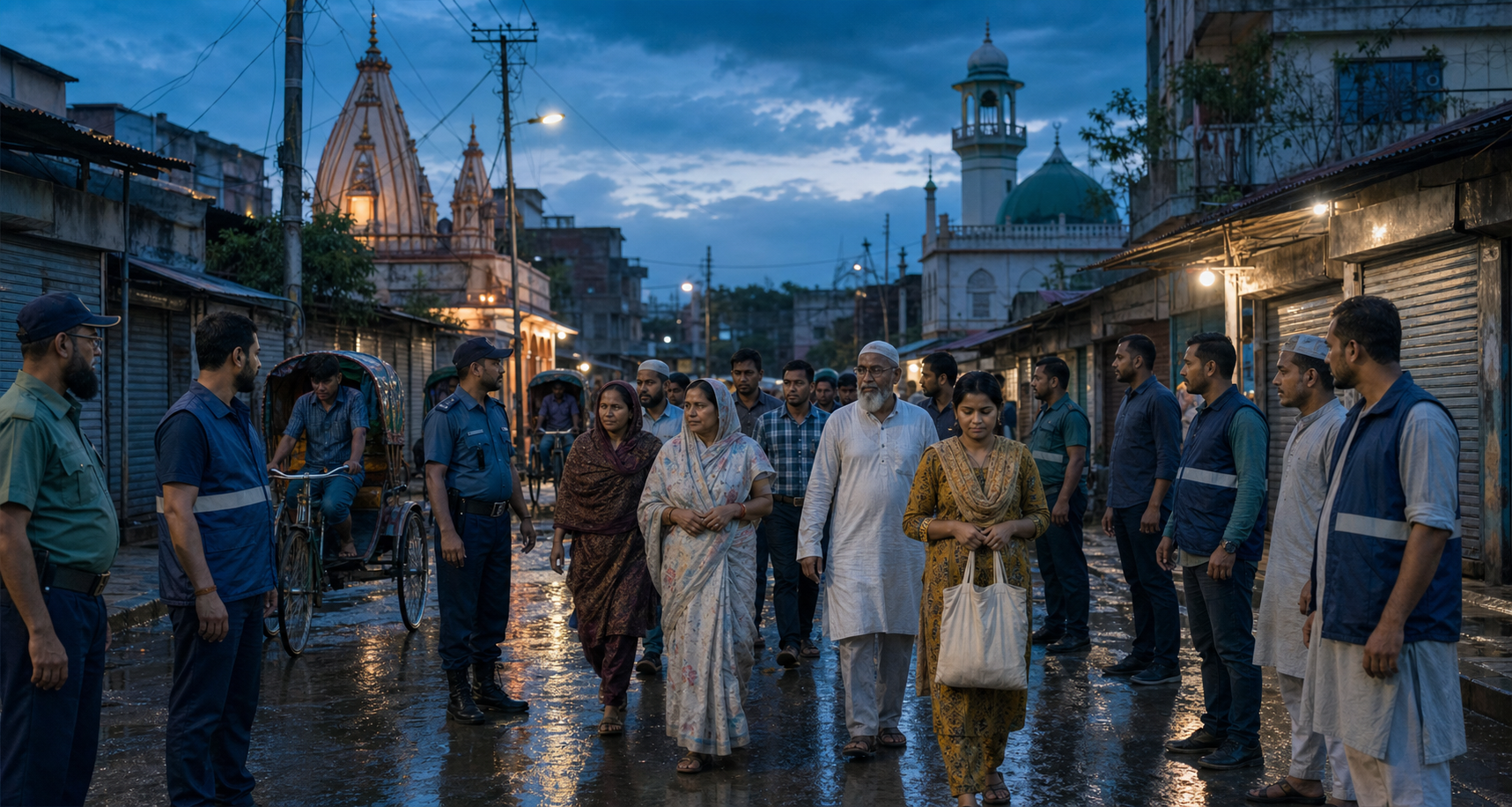
If you are trying to decide whether violence in Bangladesh is an isolated crime or a warning of wider communal breakdown, do not begin with slogans. Begin with a sequence of questions: Who is in danger now? What has actually been verified? Which institution is responsible for acting next?
Those questions matter because the reported killing of political figure Hadi, the unrest that followed, and the lynching of a Hindu garment worker after a blasphemy allegation show how political turmoil can expose a religious minority to a different kind of danger. The practical test of communal stability is not whether officials call for calm. It is whether threatened people are protected, accusations remain subject to law, and perpetrators face credible consequences.
The danger is a chain, not a single headline
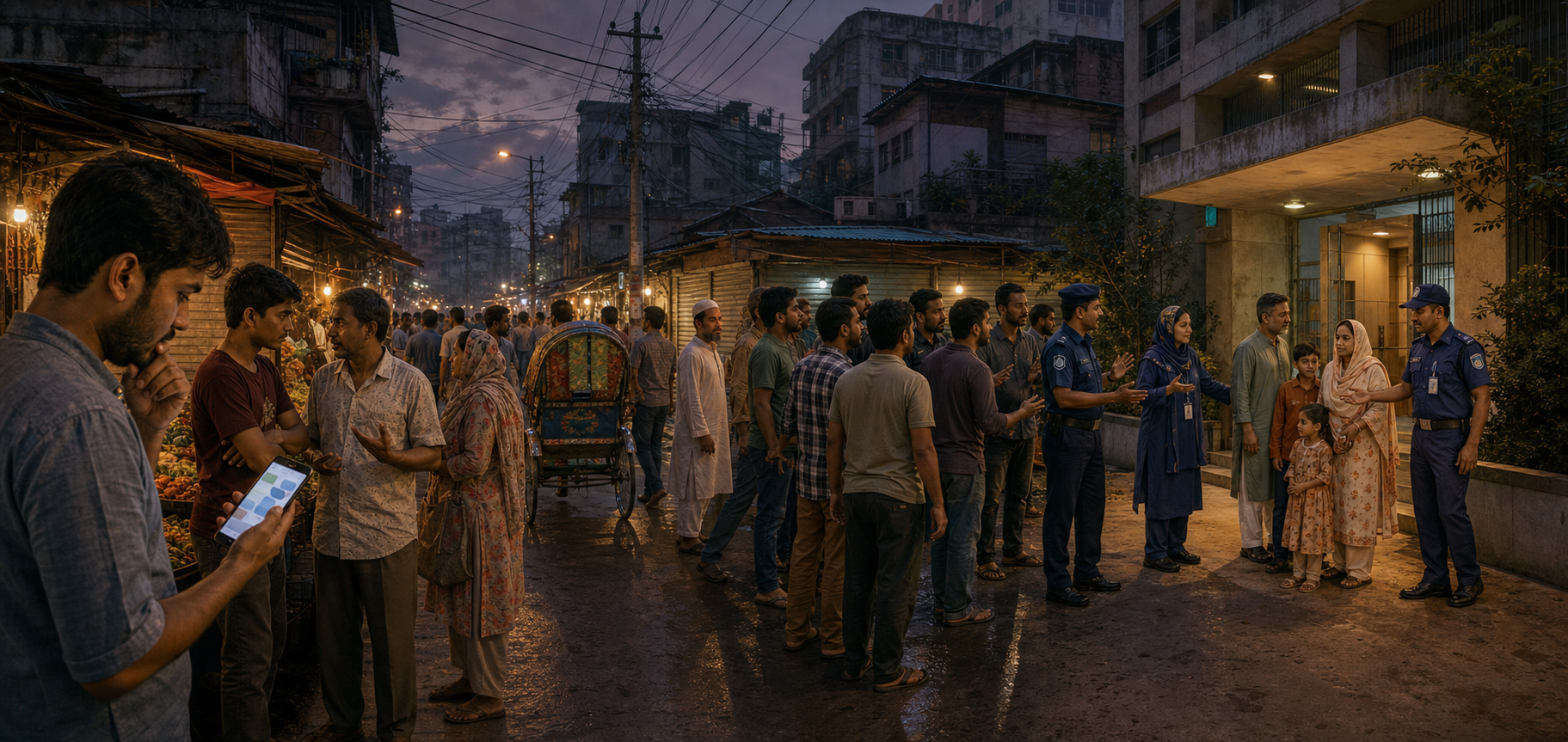
A political killing and a communal lynching are not interchangeable events. They may involve different motives, actors, victims, and evidence. Collapsing them into one story can obscure responsibility. Treating them as wholly unrelated can be just as misleading when the first event creates the disorder in which the second becomes possible.
The connection to watch is the mechanism of escalation:
- A political shock produces protests, counter-mobilization, fear, and pressure on policing.
- A claim about an individual begins circulating faster than anyone can verify it.
- The individual’s religious identity turns a personal allegation into a communal signal.
- A crowd substitutes punishment for investigation, evidence, and trial.
- Rumors about retaliation or further attacks then place other families, workers, businesses, and places of worship at risk.
A blasphemy allegation is still an allegation. It is not a verdict and cannot authorize a crowd to harm the accused. Once that distinction disappears, any person can be placed in mortal danger by a rumor, a personal grievance, a fabricated image, or a misunderstood statement. The state must therefore protect the accused while it establishes whether any legally relevant conduct occurred.
You should apply the same discipline when reading or sharing claims. Separate confirmed deaths and injuries from unverified totals. Distinguish a named witness from an unattributed social-media account. Check whether an image shows the stated place and event. Preserve uncertainty in your wording: use “reported,” “alleged,” or “unverified” when that is all the evidence supports. Do not publish a threatened person’s address, commute, hiding place, or family details in an attempt to help.
This standard is not a request to suppress anti-Hindu violence. It is how you name such violence credibly. If a Hindu is selected, threatened, or killed because of a communal allegation, that dimension should be stated plainly. Precision prevents denial while denying rumor-mongers the errors they use to discredit legitimate concern.
Use five tests to judge whether institutions are holding
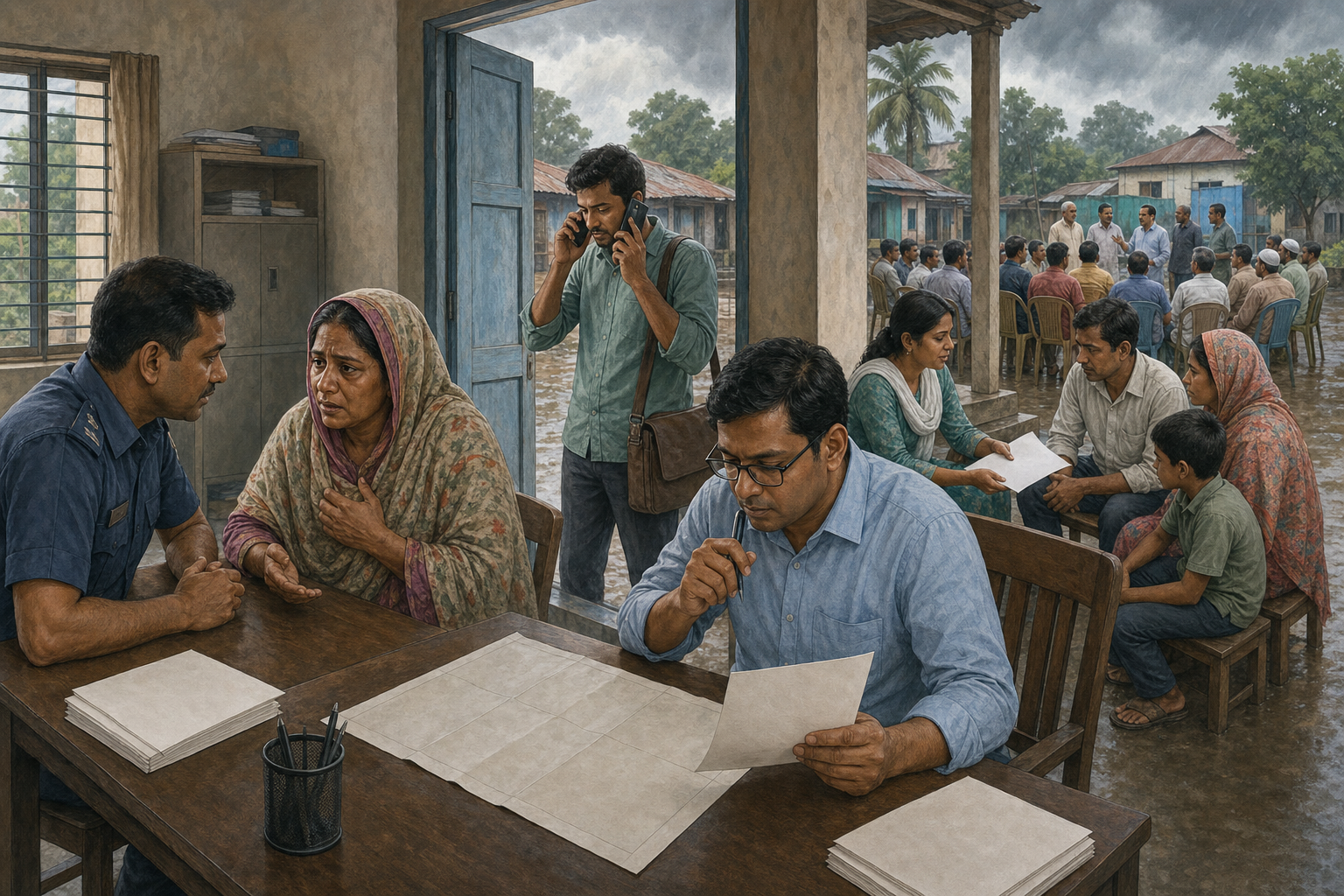
Communal stability is more than the absence of a large riot. A society can appear calm while minority families stay indoors, workers avoid their shifts, witnesses fear speaking, and accused persons remain exposed to mob punishment. Use the following tests to assess the substance of the response.
| Stability test | Question to ask | Action that matters |
|---|---|---|
| Immediate protection | Are threatened people, minority neighborhoods, workplaces, and travel routes being protected before another attack occurs? | Measured policing, safe movement, threat reporting, and confidential relocation where a targeted person chooses it. |
| Due process | Are allegations being treated as matters for investigation rather than invitations to punishment? | Secure the accused, preserve evidence, identify suspects lawfully, and prevent crowds from controlling the process. |
| Transparent investigation | Is a responsible authority investigating each killing separately and communicating what can be verified? | Set a time-bound process, preserve evidence, give progress updates, and explain delays without prejudging guilt. |
| Victim support | Can affected families, workers, and witnesses obtain help without navigating a maze of offices? | Provide a clear access point for legal aid, counseling, safe transport, and practical family assistance. |
| Accountability | Are identifiable perpetrators being brought into a lawful process, regardless of their political or religious affiliation? | Apply the same evidentiary and legal standards to organizers, instigators, and direct attackers. |
“Time-bound” should not mean a rushed verdict. It means that officials name the authority responsible for the inquiry, preserve evidence promptly, and tell the public when to expect the next procedural update. Silence creates a vacuum. In a communal crisis, that vacuum is filled by competing claims, inflammatory clips, and suspicions of political protection.
Worker safety deserves special attention. Minority households and garment-worker families can face both physical danger and disruption to their livelihoods. Employers, unions, police, and local associations should coordinate one verified transport contact, keep pickup details away from public channels, and avoid sending workers through known crowd routes. If a route cannot be confirmed as safe, movement should be delayed rather than left to individual workers to risk alone.
Build local capacity before a rumor becomes a crowd
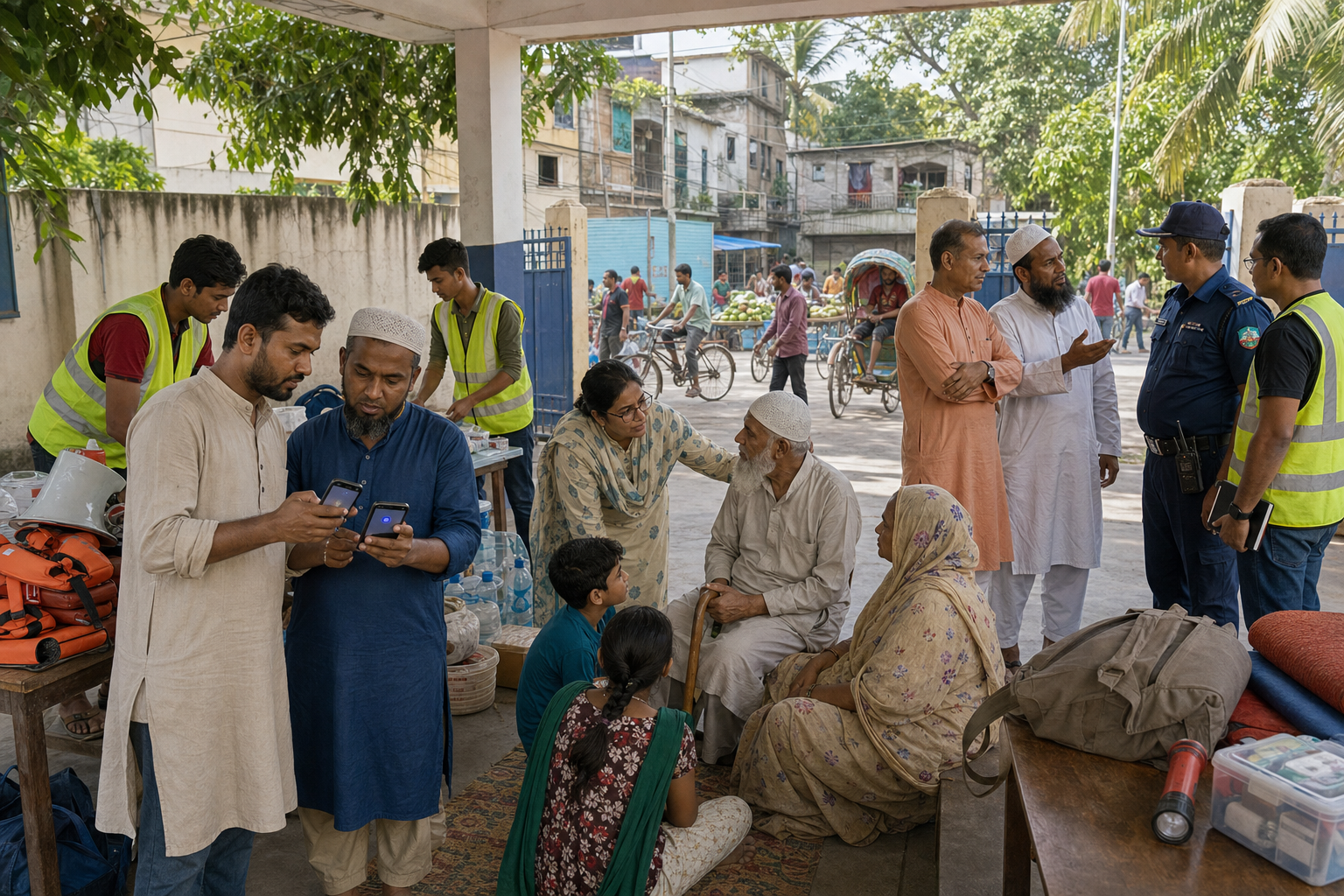
A peace committee is useful only when it can perform specific tasks under pressure. A photograph of religious leaders standing together may reassure the public, but it cannot replace a contact tree, a verification process, transport coordination, or access to legal help.
A practical local network should assign functions in advance:
- Verification: Confirm the place, time, person, and immediate risk behind a circulating claim. Mark what remains unverified.
- Safety coordination: Connect threatened households and workers with police, safe transport, temporary shelter, or trusted local assistance without revealing their location publicly.
- Legal and victim support: Help families preserve complaints, obtain counsel, find counseling, and understand which authority is handling the case.
- Institutional liaison: Maintain current contacts for police, hospitals, employers, unions, schools, local businesses, and faith communities.
- Public communication: Release brief, jointly verified updates that reject mob punishment, discourage retaliation, and direct people to a genuine reporting channel.
- Evidence preservation: Save original links, timestamps, messages, and other material for investigators or lawyers without confronting attackers or exposing witnesses.
A neighborhood watch-and-help network must never turn into another armed or partisan crowd. Its members should observe from safety, report threats, assist vulnerable residents, and withdraw when trained authorities take control. Livestreaming a rescue, confronting an aggressive gathering, or posting a family’s location can intensify the danger.
Interfaith solidarity also needs moral clarity. Hindu, Buddhist, Jain, Sikh, Muslim, and other civic leaders, wherever present, can jointly reject rumor-driven punishment and collective retaliation. Dharmic ahimsa is not indifference to a victim. It requires restraint toward the innocent and active protection of the vulnerable.
Solidarity must not erase asymmetry. When a Hindu worker is attacked following a religious allegation, naming the victim’s minority identity can be necessary to understand the danger and organize protection. The disciplined position is to identify anti-Hindu targeting where the evidence supports it while refusing to assign collective guilt to every member of another faith.
How readers in Bharat and the diaspora can respond responsibly

If you are outside Bangladesh, your first influence may be informational rather than physical. That still matters. A verified appeal can focus attention on a threatened family or stalled investigation. An exaggerated claim can expose people, trigger retaliation, and allow officials to dismiss legitimate criticism as disinformation.
Before you repost, publish, donate, or contact a representative, use this checklist:
- Open the original link rather than relying on a screenshot of somebody else’s caption.
- Identify what is verified, what is reported by a named party, and what remains allegation.
- Do not infer the scale of violence from a clip that supplies no reliable location or time.
- Remove personal details that could reveal a victim’s home, workplace route, shelter, or relatives.
- Ask for a concrete remedy: immediate protection, a transparent investigation, legal support, safe transport, or a scheduled public update.
- Avoid language that blames all Bangladeshi Muslims, all protesters, or an entire locality for the acts of identifiable perpetrators.
- Correct your own post visibly if later information changes a material fact.
A useful public message can follow a simple structure: “Verified” for established facts; “Unverified” for unresolved claims; “Immediate need” for the safety requirement; and “Accountability request” for the institution that must act. This format keeps a victim-centered appeal from becoming a vehicle for speculation.
Measured diplomacy does not mean muted diplomacy. Bharat and other concerned governments can press for minority protection, credible investigations, and responsible public communication while avoiding rhetoric that magnifies domestic unrest. Consular assistance where required, careful cross-border communication, and cooperation against disinformation are practical tools. The demand should be precise: protect people at risk, establish the facts, support victims, and apply the law.
The same standard applies to media outlets and social platforms. Speed is not verification, and engagement is not public benefit. The right question before amplification is whether the claim will improve safety, accuracy, or accountability. If it does none of those things, pause.
Key takeaways
- A political killing and a communal lynching require separate investigations, even when unrest connects the conditions around them.
- A blasphemy allegation must remain an allegation until handled through lawful process; it can never justify mob punishment.
- Judge stability through protection, due process, transparent investigation, victim support, and accountability, not through official appeals for calm alone.
- Peace committees need assigned operational roles, confidential communication, and trusted reporting channels.
- Name anti-Hindu targeting when the evidence supports it, but do not turn individual or organized culpability into collective blame.
- Share only what is verified and safe to disclose, then attach a concrete institutional demand to your appeal.
When the next alarming claim reaches you, pause before joining the surge. Label its evidentiary status, preserve the original material, protect the identity and location of anyone at risk, and ask which authority must do what next. Then use your voice to demand that action. That is how concern for Bangladesh’s Hindus becomes protection and accountability rather than another turn in the cycle of fear.
References
