

If you have seen the footage associated with Dipu Chandra Das, your immediate question may be simple: what can actually protect a Hindu when a religious accusation turns into a gathering crowd? Anger after a killing is understandable, but anger alone cannot interrupt the next attack.
Protection requires a chain of action: treat the threatened person as a potential victim, slow the rumor, disperse the mob, preserve evidence without spreading spectacle, protect witnesses, prosecute the killers, and keep vulnerable families and places of worship safe afterward. Each link matters. When one is missing, an accusation can become a death sentence imposed without evidence, hearing, or appeal.
Key takeaways
- A religious-insult allegation is a claim to be investigated, not evidence and never a licence for punishment by a crowd.
- Minority protection must begin as soon as a named person or location is threatened. Waiting to settle the underlying allegation can leave police responding only after the violence.
- Graphic footage should be preserved privately when it may have evidentiary value, but it should not be circulated as spectacle or stripped of context.
- Authorities should investigate the allegation and the mob attack separately. Uncertainty about the first does not create uncertainty about the criminality of lynching, desecration, intimidation, or arson.
- Useful advocacy asks for measurable action: protection for the family and witnesses, identification of perpetrators, case updates, security for vulnerable sites, and consequences that deter another mob.
- A Dharmic response combines ahimsa with moral courage. It stands unequivocally with persecuted Hindus while rejecting retaliation and collective blame.
The accusation must be separated from the crime

In Bhaluka Upazila in Mymensingh district, Hindu garment worker Dipu Chandra Das was reportedly killed by a mob after allegations that he had made derogatory remarks about Islam and the Prophet. Circulating videos appeared to show his body subsequently hung from a tree and burned. Full official findings were pending, so disputed details about the alleged remarks must remain allegations.
That uncertainty does not blur the central issue. No conclusion about speech can be lawfully reached by a crowd, and no alleged religious insult makes killing permissible. Even if an accusation were later supported by evidence, investigation and adjudication would still belong to lawful institutions. A mob has no jurisdiction.
This distinction is more than careful wording. It changes the response. When officials focus first on whether the threatened person said something offensive, they can lose the brief period in which violence may still be prevented. Protection and fact-finding must run in parallel: secure the person now, verify the allegation through impartial procedures, and investigate threats or assaults as separate conduct.
You should preserve the same distinction in conversation and online. Say that someone was accused, not that the person committed the alleged act. Say that a killing was reported, and identify which details remain unconfirmed. Do not reproduce the supposed insult merely to explain the controversy; repeating inflammatory wording can give a rumor a second life.
Mob violence operates on a faster clock than justice
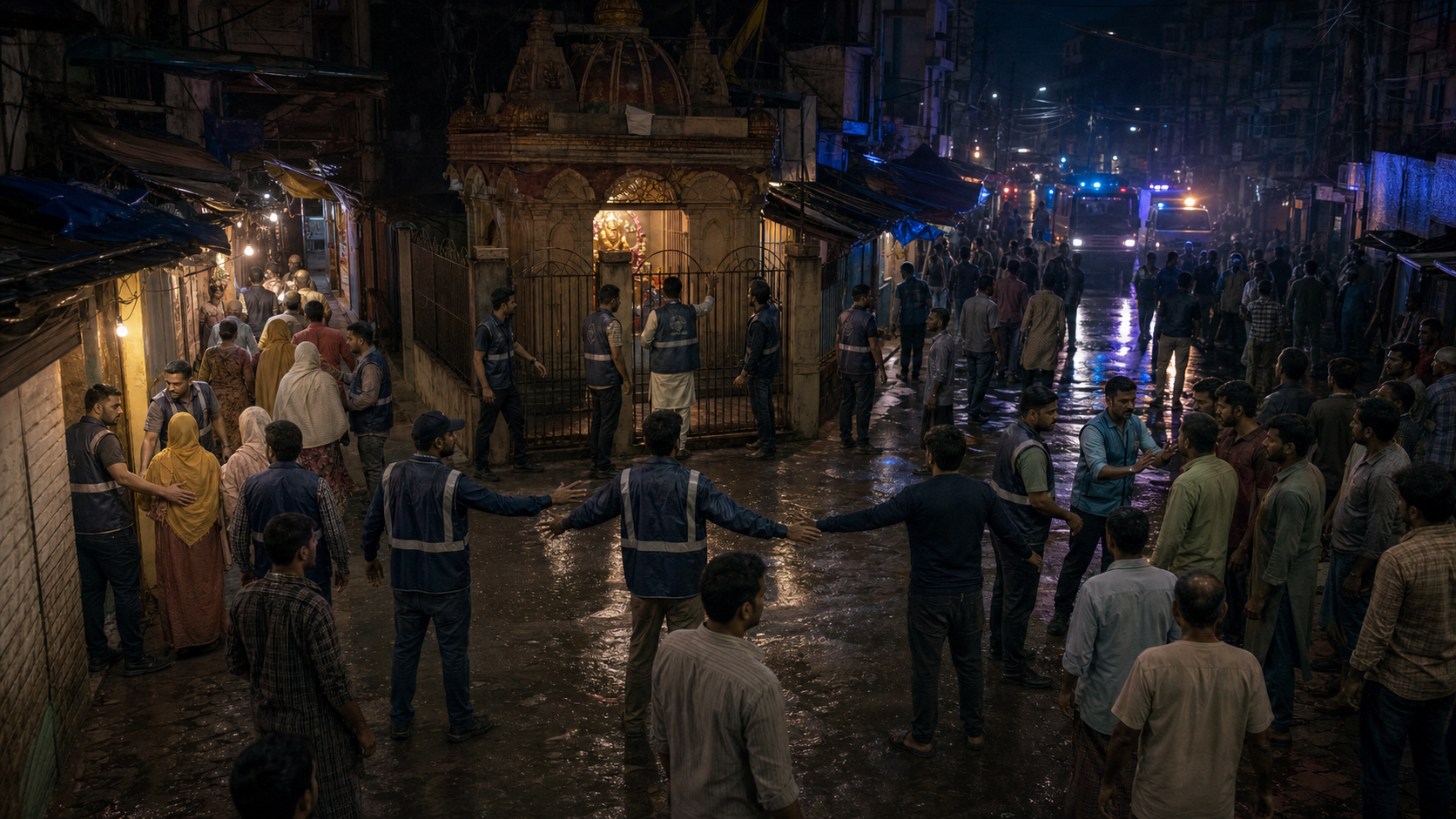
A religious rumor can move from accusation to mobilization before anyone has checked who made the claim, what was actually said, or whether the material was altered. Political disorder, polarized rhetoric, weak enforcement, and fear of offending a crowd can accelerate that movement. An individual Hindu then carries two burdens at once: the immediate danger to his or her life and the wider vulnerability attached to minority identity.
Public desecration adds another layer of harm. It is violence against the victim, but it also broadcasts a warning to every nearby minority family: this can happen openly. If the perpetrators appear to face no prompt consequences, that message becomes more powerful. The attack is no longer experienced as one isolated crime; it becomes a test of whether citizenship and legal protection apply equally.
Authorities therefore have to work on two clocks. The rumor clock demands immediate protection, crowd control, verified public communication, and security around likely targets. The justice clock demands patient evidence collection, witness safety, impartial prosecution, and transparent case progress. Speed without due process can produce scapegoats. Due process without immediate protection can arrive after someone is dead. A functioning state must do both.
Watch for the point at which a local accusation begins to become a communal threat. Warning signs include a named person being exposed to a hostile audience, calls for people to gather, threats against relatives, and attention shifting from an alleged act to the victim’s religion. At that point, officials and community leaders should not wait for a physical assault before treating the situation as a security emergency.
Minority protection needs a before, during, and after plan
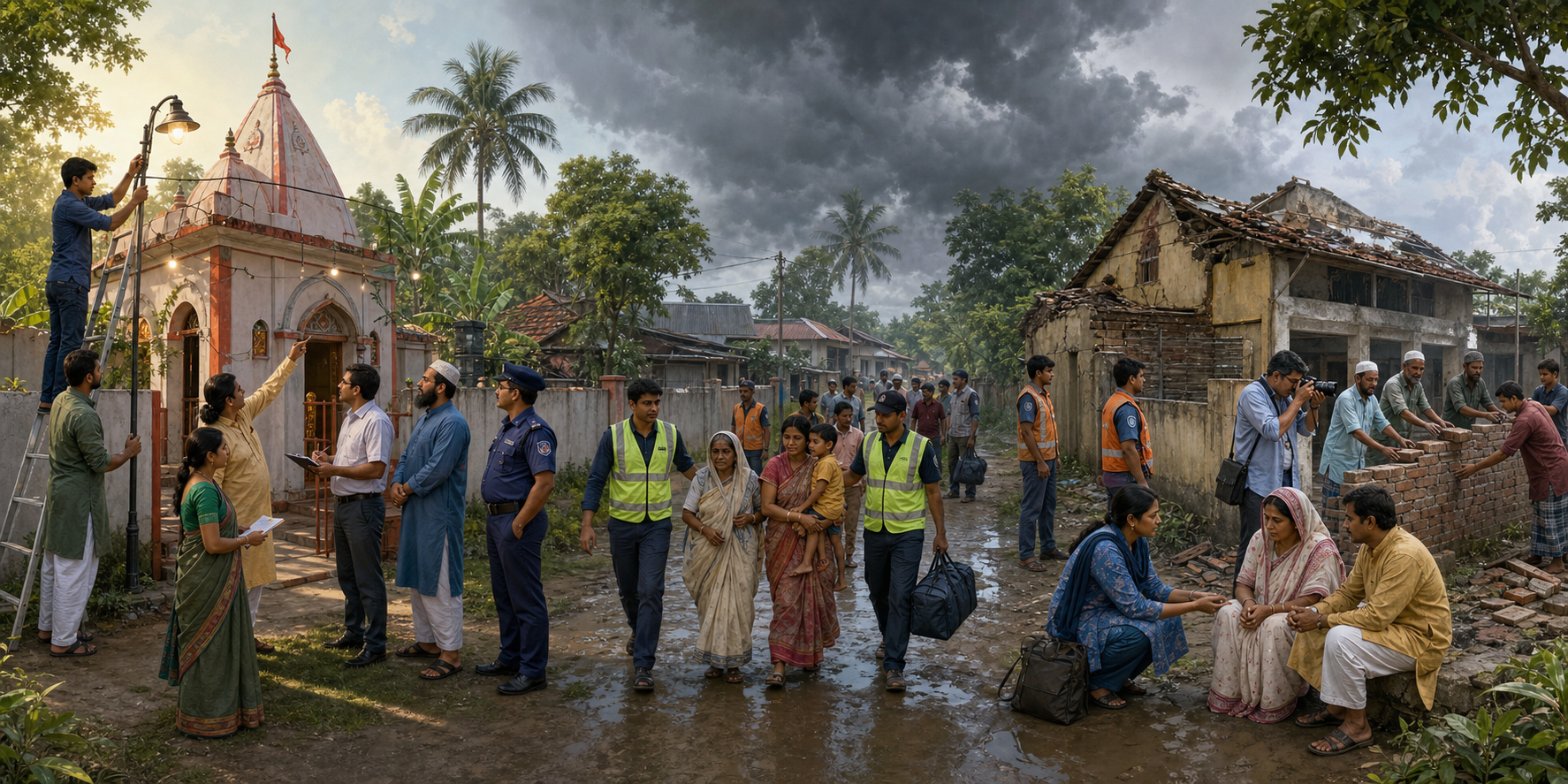
Before violence: build a usable warning network
A community contact list is useful only if people know who will answer, who can verify a rumor, who can reach authorities, and who can check on a threatened family. Temple committees, neighborhood representatives, employers, educators, lawyers, journalists, and trusted interfaith contacts can play different roles. The purpose is not to create a counter-mob. It is to move reliable information quickly enough for protection to arrive before a crowd does.
- Choose a small number of trusted contacts who can confirm whether a person, home, workplace, or place of worship is actually under threat.
- Keep family contact information current and agree on a simple check-in method for periods of unrest.
- Identify who will request police protection and who will document that request.
- Establish a private channel for warnings so that unverified claims are not broadcast publicly.
- Teach community members not to travel toward a volatile gathering to watch, film, argue, or demonstrate strength.
- Ask local religious and civic leaders in advance to oppose vigilantism publicly, regardless of the accused person’s faith.
Early-warning systems fail when every alarming message is forwarded without verification. They also fail when fear of spreading panic prevents a credible threat from reaching the people who can act. Mark information by status: unverified claim, credible threat, confirmed gathering, or active violence. That small discipline helps the recipient decide whether to check, warn, protect, or intervene.
During a threat: protect life before collecting content
If you are close to an active mob, your first obligation is safety. Do not confront the gathering, attempt a dramatic rescue without trained help, or remain exposed to obtain better footage. Move away from the crowd, communicate your location only to trusted people, and contact local emergency authorities and reliable community contacts. If a threatened person can be reached safely, help connect that person to lawful protection rather than directing more civilians toward the scene.
Officials should separate the threatened person from the crowd, create a secure route, prevent access to likely secondary targets, and issue a concise factual update. That statement should confirm what authorities know, identify what remains unverified, reject vigilantism, and provide a channel for lawful complaints. It should not repeat inflammatory language in unnecessary detail.
Evidence matters, but evidence preservation and mass publication are different acts. An original link, upload time, account name, and unedited file may help investigators establish what occurred. Reposting a graphic clip with an angry caption can expose the victim’s family to further trauma, reveal witnesses, distort context, and recruit fresh outrage. Preserve potentially useful material privately and provide it to credible investigators or rights defenders. Do not turn a person’s final moments into visual currency.
After an attack: make impunity difficult
An arrest announcement is not the end of accountability. The family and witnesses may remain exposed; other Hindu homes or temples may be threatened; and public attention may move on before the case does. Protection should continue through the investigation, with a responsible authority providing updates that do not compromise witnesses or evidence.
- Investigate the killing, public desecration, threats, incitement, and any associated attacks as conduct in their own right.
- Distinguish direct attackers, organizers, and people who knowingly mobilized violence from bystanders; accountability must be evidence-based.
- Protect relatives and witnesses from intimidation, exposure, and pressure to withdraw cooperation.
- Provide visible security to threatened places of worship and neighborhoods without treating minority residents as the problem.
- Publish meaningful case updates: investigative progress, procedural status, protective measures, and the authority responsible for follow-through.
- Review how the warning was received, where intervention failed, and what operational change will be made before the next flashpoint.
Long-term prevention then has to address the conditions that make a rumor combustible: inconsistent law enforcement, digital illiteracy, extremist normalization, and the absence of trusted channels for lawful redress. Rapid-response policing, human-rights training for officials, civic education, and local peacebuilding are not substitutes for prosecution. They reduce the chance that prosecution will be needed again.
What you can do without increasing the danger
You do not have to choose between silence and indiscriminate amplification. Whether you live in Bangladesh, Bharat, or the diaspora, your most useful contribution will usually fall into one of four categories: verify, protect, document, or advocate. Decide which one you are actually doing before you press share.
Use a five-question check before publishing
- What is confirmed? Separate the victim’s identity, location, sequence of events, alleged trigger, and official response. One confirmed detail does not authenticate every caption attached to a video.
- What is still an allegation? Preserve words such as reportedly, alleged, and unverified where they are needed. Do not present the supposed religious insult as an established fact.
- Could publication expose someone? Remove names, faces, addresses, routes, shelter locations, and identifying details that could endanger relatives or witnesses.
- Does the audience need the graphic image? Usually, a precise non-graphic description communicates the violation. If the image adds no evidentiary or public-interest value, do not post it.
- What action does the message request? Direct readers toward lawful protection, verified humanitarian help, or a defined accountability demand. Avoid vague fury and any call that could be read as retaliation.
Do not publicly identify alleged attackers merely because a name appears in a viral thread. A false identification can endanger another person, contaminate an investigation, and reproduce the same punishment-before-proof logic being condemned. Pass identifying material privately to competent investigators and let evidence determine responsibility.
Turn concern into demands that can be answered
Messages to public officials, diplomatic representatives, rights organizations, and elected representatives are stronger when they ask questions that require a factual response. Replace a general demand to do something with requests such as these:
- Which authority is leading the investigation into the killing and desecration?
- What protection has been offered to the victim’s family and material witnesses?
- What steps are being taken to identify organizers as well as direct participants?
- Which nearby minority neighborhoods and places of worship have been assessed for retaliatory threats?
- When will the next public case update be issued?
- What change to rumor monitoring, rapid response, or local policing will follow from this failure?
Keep a record of the questions, replies, dates, and promised next steps. The aim is not to create an online surge that disappears in a day. It is to make institutional follow-through visible. If you donate, use a vetted organization with a clear purpose, such as legal aid, emergency shelter, family support, or restoration of a damaged place of worship. Do not publish beneficiary details that could make them easier to target.
A Dharmic response protects Hindus without copying the mob

Ahimsa does not require passivity before persecution. In this setting, it demands disciplined action that protects life, insists on truth, and refuses the intoxicating shortcut of collective vengeance. Hindu, Buddhist, Jain, and Sikh communities can stand firmly against anti-Hindu violence while working with Muslims and other citizens who reject extremism and vigilantism.
That distinction matters because collective blame repeats the mob’s central error: assigning guilt through identity rather than evidence. It also isolates the very local allies who may be able to challenge incendiary rhetoric, interrupt mobilization, shelter a threatened neighbor, or publicly defend equal citizenship. Solidarity is not weakened by moral precision. It becomes harder for extremists to discredit and easier for principled people to join.
Interfaith statements are useful when they name the wrong clearly, reject violence without qualification, support protection for the endangered community, and commit participants to a practical next step. A ceremonial photograph without a warning channel, protection request, educational effort, or case follow-up is not enough. Dialogue should produce capacity, not merely appearance.
Remembering Dipu Chandra Das should mean more than circulating the horror inflicted on him. Choose one useful act: verify a disputed claim, check on an at-risk family, preserve evidence responsibly, support lawful aid, or send a measurable accountability request. If a proposed action protects no one, establishes no fact, and advances no justice, do not amplify it.
References
- DharmaRenaissance Blog — Horrific Lynching of Dipu Chandra Das in Bangladesh: Urgent Call for Justice and Unity
- DharmaRenaissance Blog — Bangladesh Mob Lynching Sparks Alarm: Urgent Call to Safeguard Religious Minorities
