
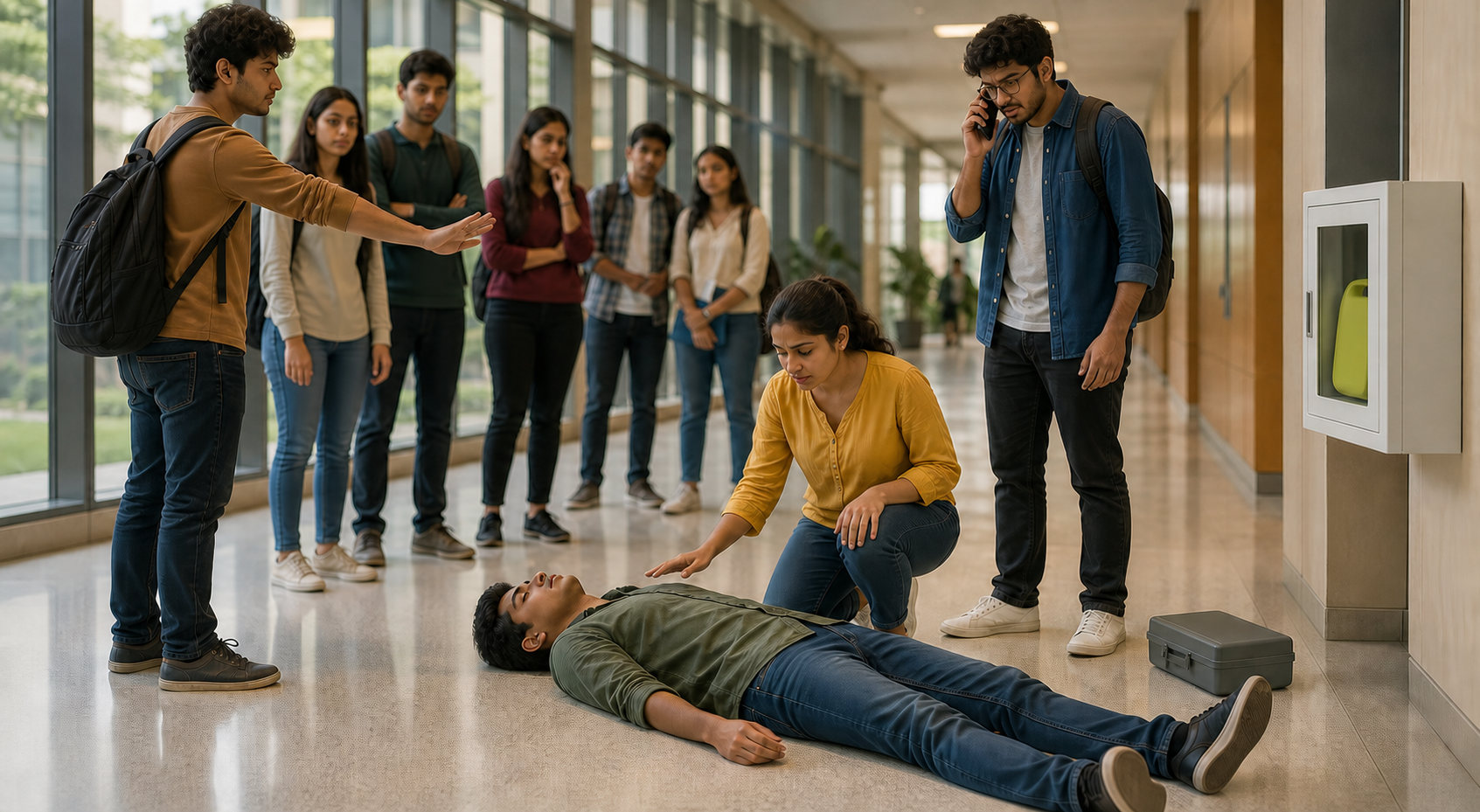
When a classmate collapses in a corridor, suffers a burn in a laboratory, or is injured on the sports ground, you do not need to become the doctor. You need to protect the scene, summon the right help, and keep one frightened person from being abandoned while qualified care is coming.
A useful way to remember your role is Protect, Alert, Support. It gives you a safe sequence when stress makes detailed instructions hard to recall. This is a preparedness framework, not a substitute for accredited first-aid training, professional medical care, or directions from an emergency dispatcher.
Your first response has three clear jobs
The early moments of an emergency invite two opposite mistakes. Some people freeze and wait for someone senior. Others rush in and attempt treatment they have never learned. Neither response serves the injured person. Your first responsibility is to make the next safe action happen.
- Protect the scene. Pause long enough to notice traffic, electricity, fire, fumes, broken glass, unstable equipment, or an agitated crowd. Do not enter an unsafe area and become another casualty. Ask bystanders to step back, keep an access route open, and call trained responders if the hazard cannot be controlled safely.
- Alert the right people. Call the local emergency service when the situation is serious, then follow your campus protocol for contacting security, the medical room, a warden, or another designated responder. Give the exact campus, building, floor, room, gate, or nearby landmark. State what happened, how many people are injured, whether the person responds to you, and whether an active hazard remains. Stay on the line and answer questions instead of guessing at a diagnosis.
- Support without improvising. Stay with the person, speak calmly, protect privacy, and follow the dispatcher’s instructions. Use only first-aid techniques that you have been trained to perform. Do not move someone after a serious fall or suspected fracture unless there is immediate danger or a qualified professional directs you. Do not apply an unfamiliar remedy, offer medication, or turn an emergency into a demonstration of half-remembered advice.
Unresponsiveness, difficulty breathing, severe bleeding, a serious burn, a suspected head or spinal injury, a major fall, or rapid deterioration requires urgent professional attention. Do not delay the call while looking for a first-aid kit or waiting to see whether the person recovers. Someone who appears better after fainting may still need assessment under the campus protocol; improvement is not permission to send the person straight back to class.
When help arrives, give a brief factual handover: what you directly witnessed, any change you noticed, the aid provided, and any relevant information the person gave you. Separate observation from assumption. Saying that the student fell from a staircase is useful; declaring a particular internal injury without medical evidence is not.
Learn the campus before you need to direct an ambulance
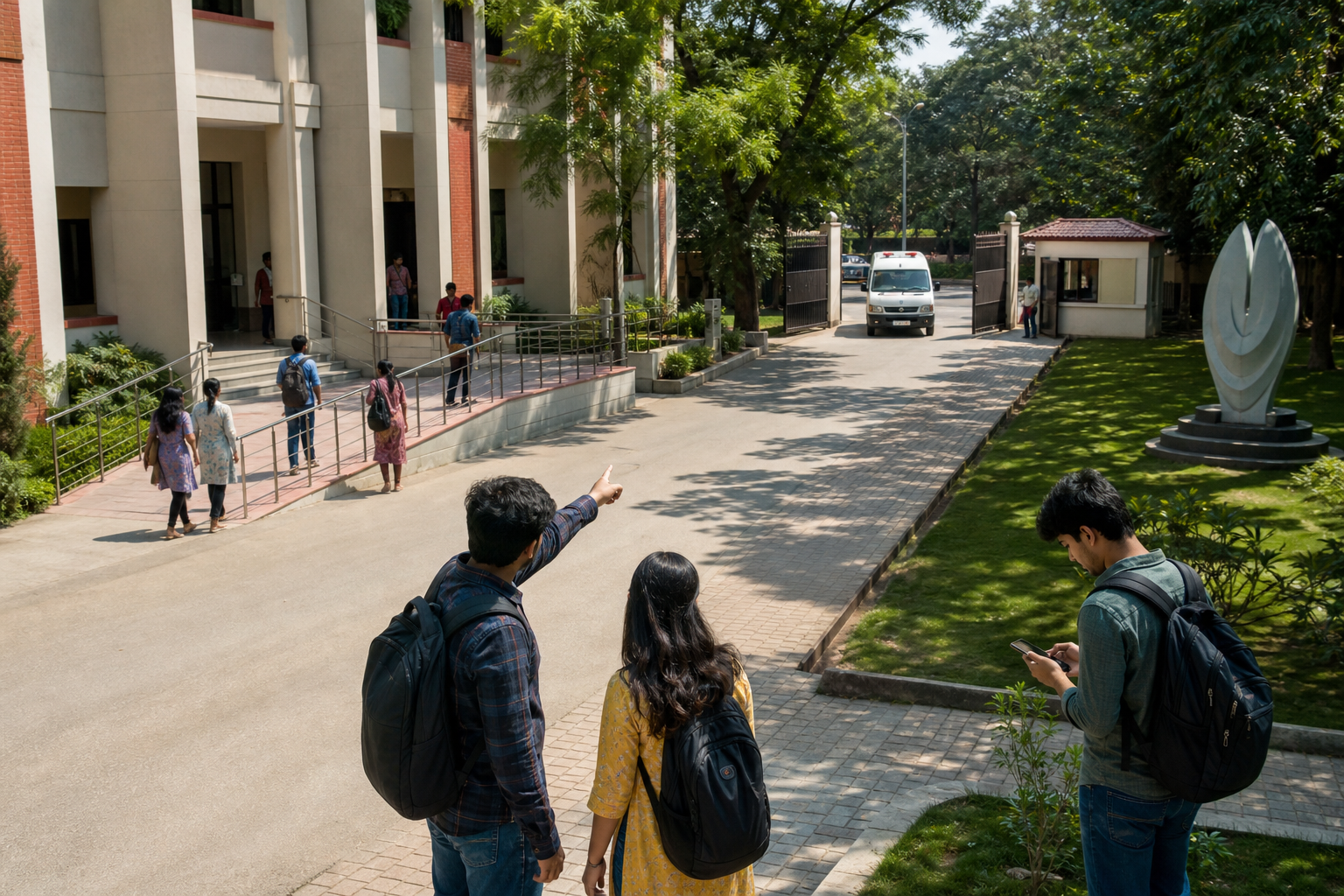
A correct emergency call can still lose valuable time if nobody knows which gate is open or how responders reach the third floor. Campus preparedness begins with geography and communication, not with a cupboard full of supplies.
Before your next full day on campus, put the following information in a note on your phone:
- The college’s official address and the names used for your building, block, hostel, laboratory, or sports area.
- The verified numbers for local emergency services, campus security, the medical room, and the hostel warden where applicable. Confirm them through an official campus notice; do not place a test call to an emergency line.
- The nearest usable entrance and a landmark that an arriving responder can see from the road.
- The locations of accessible first-aid kits and, if the campus has them, automated external defibrillators.
- The person or office that can unlock gates, lifts, laboratories, or other restricted areas after normal hours.
Do not rely on a crowd to organize itself. Point to one person and assign one task. One student makes the call. Another waits at the gate and guides responders. A third keeps the route clear. A trained person stays with the injured student. Specific assignments prevent several people from making conflicting calls while an essential task remains undone.
Privacy is also part of safety. Keep phones and cameras away from the injured person. Do not circulate photographs, names, or speculative messages through class groups. A real emergency does not become public property because it happened in a common area.
Choose training that produces usable skill

An awareness lecture can persuade students that first aid matters. It does not, by itself, prove that anyone can perform a technique safely under pressure. Competence requires explanation, demonstration, supervised practice, correction, and a clear understanding of when to stop and call a professional.
Before you register for or help arrange a course, ask these questions:
- Who is teaching? Look for a qualified trainer working to accredited guidance and applicable local protocols.
- Will students practise? A useful session should include realistic scenarios, not only slides or a verbal demonstration.
- What does the curriculum cover? It should teach scene safety, emergency communication, reassurance, avoidance of further harm, and appropriate responses to situations such as wounds, burns, suspected fractures, fainting, and shock. CPR or defibrillator instruction should be delivered within the trainer’s accredited curriculum.
- How are skills assessed? If certification is promised, ask what assessment is required, who issues the credential, and how long that credential remains valid.
- Does it match your campus? Students should practise giving local building and gate information and activating the institution’s actual response chain.
- What are the limits? Good training says plainly what an unqualified responder must not attempt and when professional medical help takes priority.
Do not treat a short online video as authorization to perform an unfamiliar intervention. Procedures can vary with the person’s age, the type of injury, the available equipment, and the accredited protocol being taught. Learn through a recognized course, follow the method you were taught, and keep within its scope.
Three activities serve different purposes. An awareness lecture builds interest. A practical skills course builds individual capability. A campus drill tests whether phones, gates, rooms, staff roles, supplies, and communication work together. A serious safety program needs all three functions, even if the college introduces them in stages.
Make preparedness a dharmic campus habit
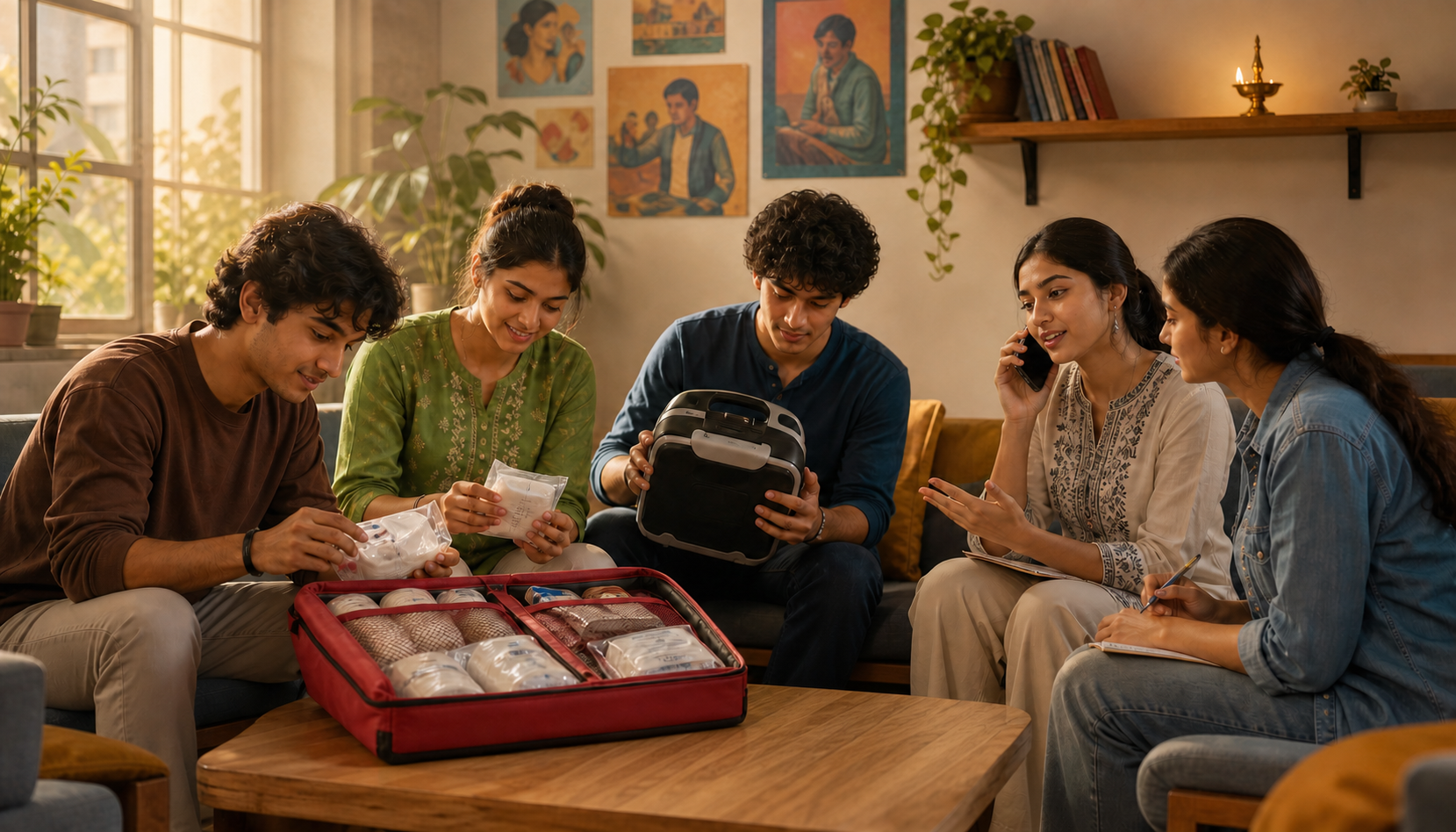
A model colleges can adapt
On 14 December 2025, Hindu Janajagruti Samiti organized a first-aid awareness lecture at the National Kannada Education Society College in Umroli, Palghar district. The collaboration offers a practical starting point: a community organization can help place emergency readiness on the academic agenda, while the institution provides students, space, local procedures, and continuity.
One event should begin the work, not close the file. A lecture does not establish that every attendee is certified, every kit is usable, or every gate will open during an emergency. A college that wants a functioning system can build outward from the initial program:
- Name an institutional owner. Give a staff member or campus office clear responsibility for emergency contacts, training coordination, supplies, and review.
- Publish a one-page response chain. Students should be able to see whom to call, in what order, and what location details to provide. Place the same current information in classrooms, laboratories, hostels, sports facilities, and official digital channels.
- Bring in qualified instruction. Ask the provider to identify the guidance followed, practical components, assessment method, and limits of the course.
- Inspect access, not merely inventory. A kit locked in an unavailable office is not accessible. Check that kits are clearly marked, reachable while the campus is occupied, restocked after use, and reviewed according to institutional policy and the expiry information on their contents.
- Run location-based drills. Test a classroom, laboratory, hostel, and outdoor area. The aim is to discover missing signs, obsolete numbers, locked routes, uncertain responsibilities, and communication gaps before a real incident exposes them.
- Review and correct. After a drill or emergency, record where the response chain stalled and assign the corrective action to a named office. Protect personal medical information while learning from the operational failure.
Compassion needs disciplined action
Karuṇa, ahimsa, and seva give campus first aid a recognizably dharmic foundation. Karuṇa moves us toward a person in distress. Ahimsa requires us to avoid adding harm through panic, crowding, reckless movement, or an untrained intervention. Seva turns concern into dependable service through preparation, practice, and willingness to take an unglamorous supporting role.
This duty is owed to the person who needs help, regardless of religion, caste, language, region, or political opinion. The injured student does not need an identity test. They need a clear route for responders, a calm companion, privacy, and competent care. That impartiality allows a safety program to strengthen trust across a diverse campus without weakening its dharmic character.
Dharmic service also rejects unsafe heroics. Good intention does not make an improvised medical act safe. Sometimes seva means acting directly within your training. Sometimes it means calling quickly, managing the crowd, guiding the ambulance, or admitting that a qualified person must take over.
Key takeaways for the next campus emergency
- Remember the sequence: Protect, Alert, Support.
- Call from a safe place and give the exact campus, building, floor, room, gate, and visible landmark.
- Treat unresponsiveness, breathing difficulty, severe bleeding, serious burns, major falls, and rapid deterioration as urgent situations requiring professional help.
- Use only techniques you have been trained to perform, and follow the emergency dispatcher’s directions.
- Assign one task to one person: caller, gate guide, route keeper, and trained companion.
- Save verified contact numbers and learn the locations of kits, medical rooms, usable entrances, and any campus defibrillators before an emergency.
- Ask your college for accredited practical training and location-based drills, not awareness alone.
- Protect the injured person’s dignity by preventing photographs, crowding, and speculative messages.
Before your next class, do four things: save the campus emergency contacts, learn the official address, locate the nearest first-aid kit, and identify the gate where responders would enter. If you cannot find one of those answers, send that exact gap to your student council, department head, or campus safety office. Preparedness begins when an unnamed concern becomes a named responsibility.
References
