
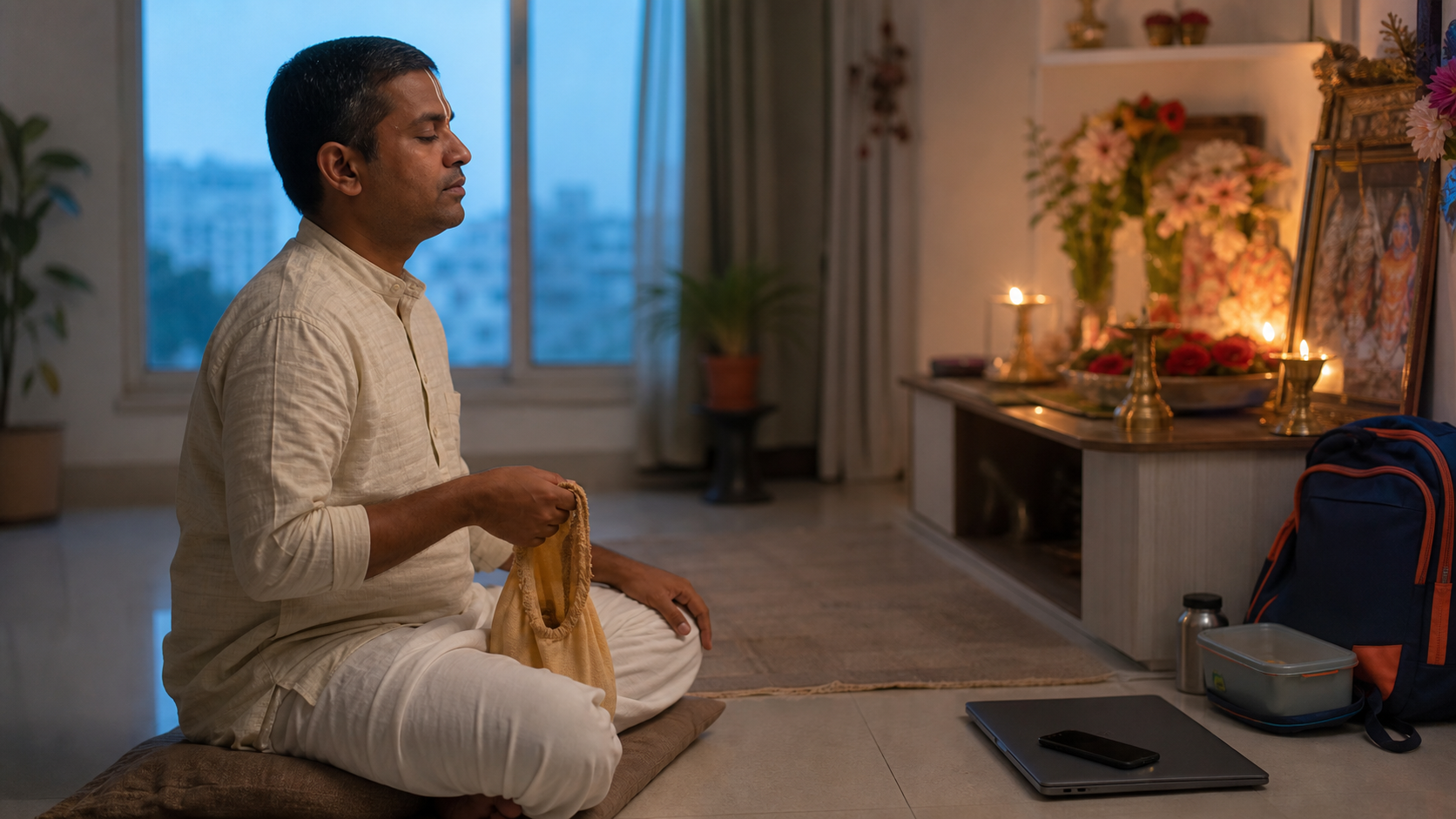
If your beads sit beside you while work, family demands, and the phone decide whether you use them, you probably do not need a grander vow. You need a devotional structure that still works on an ordinary, inconvenient day.
A balanced contemporary Gaudiya practice gives each element a clear job: japa establishes personal remembrance, kirtan makes remembrance communal, study protects understanding, seva tests sincerity, and pilgrimage renews spiritual direction. You do not have to reproduce a temple schedule inside a household. You do have to give Krishna a dependable place in your life without reducing bhakti to another productivity system.
Give your chanting a reason stronger than mood
Ask yourself a blunt question before adjusting your schedule: Why am I chanting Krishna’s names?
You may be chanting because it feels peaceful, because you made a promise, because you fear what will happen if you stop, or simply because it has become a habit. None of those motives makes the practice worthless. They can bring you to the beads. But they are unstable foundations if they never develop into loving remembrance, gratitude, and a conscious desire to serve. A durable japa practice depends on meaning rather than novelty, fear, or pressure.
Do not manufacture a devotional answer that you do not yet feel. Honesty is more useful than pious language. Complete these lines before your next period of japa:
- I am chanting today because…
- When attention wanders or resistance appears, I will return by…
- If this chanting enters my character, the people around me should notice…
The last line matters. It prevents chanting from becoming spiritually decorated self-absorption. You might want its effect to appear as less reactive speech, more patience with a family member, greater reliability in seva, or less need to prove that your practice is superior. Choose a fruit that can be noticed in conduct, not an experience that can only be claimed.
Gaudiya bhakti is relational. Krishna is not merely a device for producing calm, and the holy name is not spiritual background sound. The tradition’s teaching of acintya-bheda-abheda, simultaneous oneness and difference, preserves both intimacy with the Divine and the reality of loving relationship. That makes intention important: you are turning toward Krishna, not merely operating a concentration technique.
A useful way to examine that intention is through enthusiasm, determination, and patience. Enthusiasm means remembering why the practice matters, not remaining emotionally excited. Determination means giving that value a stable form, not forcing yourself through shame. Patience means continuing through distraction, dryness, and doubt without demanding immediate spiritual sensation. When one quality weakens, support it with the other two.
Build a daily japa rule that survives difficult days

A workable japa rule identifies a cue, a minimum commitment, a suitable mode of chanting, and a way to examine its effect. If any of those remains vague, daily negotiation soon replaces daily practice.
- Choose an event, not a hope. Tie japa to something that already happens: waking and washing, sunrise, or the quiet before work begins. “When I find time” is not an anchor. It asks every later demand for permission.
- Remove the first layer of friction. Keep your beads and seat ready, and put the phone beyond casual reach unless it is genuinely required. The space does not need to be elaborate. It needs to make beginning easier than postponing.
- State a brief sankalpa. Recall whom you are approaching and why. Gratitude can renew enthusiasm when emotional energy is low, while a clear intention stops the session from beginning in mental drift.
- Match audibility to the actual condition of your mind. Voiced chanting can gather attention when you are dull or scattered. Quieter or silent practice can support inward recollection when the setting requires discretion. Different levels of audibility serve different circumstances; they need not become competing badges of seriousness. Where your guru or lineage gives a specific instruction, follow that standard.
- Protect a modest floor and separate it from extension. Your minimum should be credible on an ordinary hard day, not only on a festival morning or retreat. Extra chanting is welcome, but it should not turn today’s inspiration into tomorrow’s impossible obligation.
- Close by carrying remembrance into one interaction. Before getting up, identify where your speech, patience, honesty, or service will be tested. This converts the end of japa into the beginning of lived sadhana.
Counting rounds can protect a commitment, but a count cannot by itself tell you what the chanting is doing. A person can complete a numerical target while feeding resentment, rushing every name, or becoming proud of the result. Alongside quantity, notice qualitative signs such as a steadier mind, fewer intrusive thoughts during practice, gentler speech, greater equanimity, and clearer ethical choices. These are more revealing measures of inner alignment than public approval.
If you miss the practice, resume at the next established anchor. Do not answer one lapse with a dramatic make-up plan that creates another cycle of failure. If you repeatedly miss the minimum, treat that as information: the floor may be unrealistic, the cue may be poorly chosen, or the preparation may contain too much friction. Adjust the structure while preserving the direction.
Dryness requires a different response. It is not necessarily a sign that the holy name has failed or that you need constant novelty. Revisit your motive. Sit more attentively. Use a more audible voice if the mind is fading. Attend kirtan, seek guidance from a trusted senior practitioner, or connect the session to a concrete act of seva. Patience does not mean passive endurance; it means changing the support without abandoning the center.
Use kirtan for participation, not devotional consumption
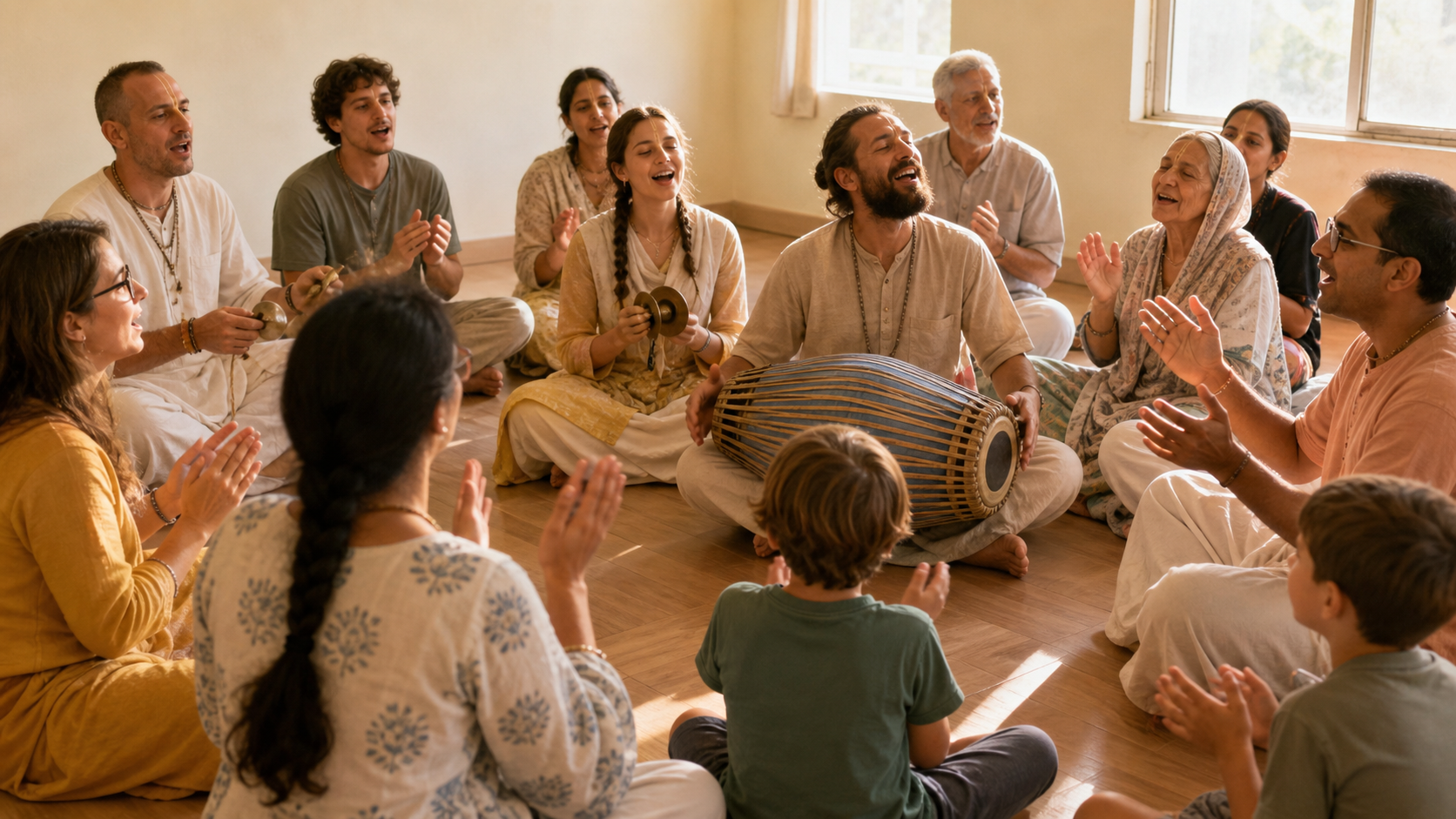
Japa and kirtan are related practices, but they expose different parts of you. Private japa leaves little room to hide behind the energy of a crowd. Congregational kirtan teaches you to listen, respond, coordinate with others, and accept that devotion is not always arranged around your preferences.
The familiar combination of call-and-response chanting, harmonium, mridanga, and recurring melodic movement helps a group remain with the holy names. The music supports remembrance; musical polish is not the final measure of success. If you leave primarily rating the singer, comparing arrangements, or collecting a clip for social display, the performance layer may have displaced the devotional act.
Digital kirtan has real value, especially when local access is limited or diaspora life has separated you from a familiar devotional community. It can reconnect ancestral culture across distance and introduce bhakti to listeners from other backgrounds. Yet a recording easily becomes ambient media. To use it as practice, prepare the mantra or transliteration beforehand, stop unrelated scrolling when playback begins, sing the response rather than merely hearing it, and remain quiet for a short period after it ends. The decisive change is not the device; it is the shift from consumption to participation.
At an in-person gathering, make one choice that reduces spectatorship. Put the phone away. Sit where you can hear and respond. Help arrange the space. Welcome someone who is unsure what to do. Stay for a practical service after the singing. Seva restores balance when public devotional activity begins to feed the desire to be seen.
Contemporary kirtan can also welcome people across traditions without becoming spiritually vague. Buddhist mantra recitation, the Jain Namokar Mantra, and Sikh Naam Simran show a wider dharmic commitment to disciplined remembrance. Recognising that family resemblance does not require claiming that every practice has identical theology. A Gaudiya gathering can be candid about its Krishna-centred purpose and its connection to Sri Chaitanya while treating guests and neighbouring dharmic paths with dignity. Respect becomes weaker, not stronger, when real differences are concealed.
If you help organise kirtan, therefore, ask two questions after considering the music: Can a newcomer participate without pressure, and does the gathering lead established practitioners toward service and humility? A globally accessible devotional culture remains recognisably Gaudiya when hospitality carries the tradition rather than replacing it.
Make pilgrimage change the routine you return to
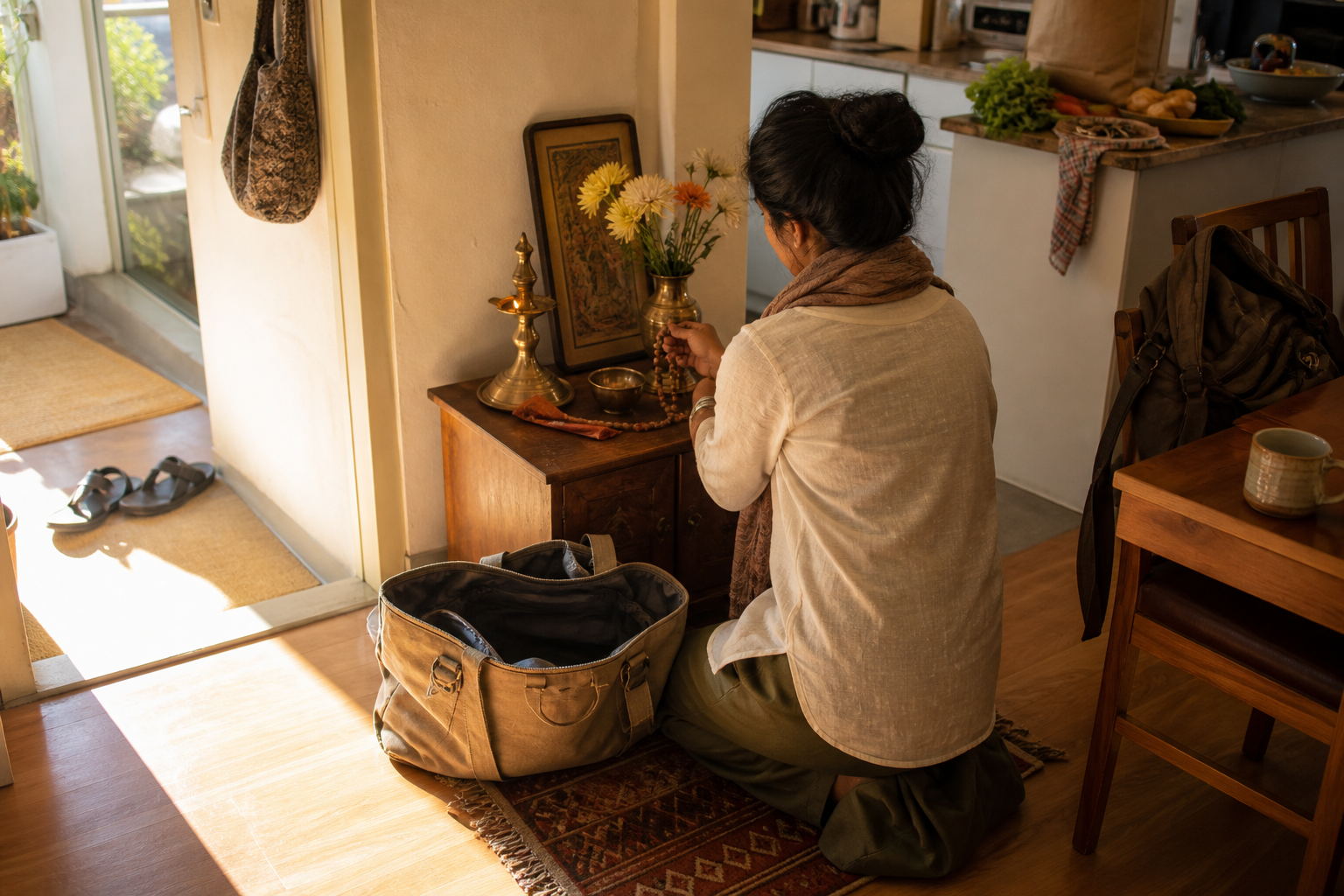
A pilgrimage can concentrate remembrance through sacred geography, shared discipline, and distance from ordinary distractions. It cannot permanently compensate for an undefined home practice. Treat it as an amplifier and a school, not as an isolated spiritual peak.
Navadvipa makes this principle especially clear for Gaudiya Vaishnavas. A parikrama through places associated with Sri Chaitanya and His companions joins sacred memory to walking, sankirtan, simplicity, and community. Yogapitha, traditionally the starting point and honoured as Sri Chaitanya’s birthplace, asks the pilgrim to contemplate more than historical location. It draws attention to the inclusive reach of divine remembrance and to the humility required to carry it.
Before you go
Learn whose lila or service is remembered at the places you will visit. Choose a devotional question to carry with you, such as what prevents steadiness in japa or where seva has become selective. Decide in advance how you will handle photography, messaging, and purchases. Without that decision, the logistics of documenting a sacred place can consume the attention needed to encounter it.
While you are there
Let sankirtan set the inner pace, but also listen when the significance of a site is explained. Resist turning lilasthanas into a collection of completed stops. Offer practical help, respect local residents, and allow inconvenience to reveal where entitlement remains. Sacred geography becomes formative when you receive it through attention and service rather than merely pass through it.
After you return
Transfer one element into ordinary life while the experience is still clear. It might be a fixed japa anchor, regular participation in local kirtan, study connected to the places visited, or a specific community seva. Pilgrimage becomes durable when chanting, scriptural reflection, and service continue after the journey. Trying to preserve every heightened feeling is unrealistic; preserving one changed discipline is possible.
If travel to Mayapur or another tirtha is not possible, do not imitate the label or pretend that every local walk is equivalent. Apply the underlying discipline honestly. Visit a temple with prior study and a clear devotional intention. Walk without entertainment. Chant attentively. Learn the sacred history available to you. Offer service before leaving. Physical distance can deepen a pilgrimage, but purposeful attention is what prevents any visit from becoming tourism.
Key takeaways: diagnose the practice by its fruit
- If japa feels mechanical, examine the motive before increasing the quantity. Restore a conscious offering, gratitude, or connection to seva instead of chasing a new sensation.
- If japa is inconsistent, repair the anchor and the minimum. A vague start time and an idealised target create repeated negotiation.
- If attention collapses, change the support. Adjust audibility, posture, location, or preparation without immediately treating the mantra itself as the problem.
- If kirtan feels performative, reduce spectatorship. Put away the phone, chant the response, and take responsibility for an unglamorous service.
- If pilgrimage inspiration fades, transfer one behaviour rather than preserving a mood. Attach that behaviour to an existing part of life as soon as you return.
- If practice increases harshness or superiority, treat that as a warning. Review your intention, examine your conduct, and seek candid guidance from a trusted practitioner.
The ethical test is demanding but simple. Authentic remembrance should move toward compassion, self-restraint, gentler speech, and clearer conduct. It should not make contempt for other dharmic paths feel righteous. Doctrinal conviction and interfaith respect are not opposites: you can preserve Gaudiya theological specificity while recognising remembrance, nonviolence, service, and inner transformation elsewhere in the dharmic family.
At your next japa period, write an honest motive, confirm the anchor and minimum, and choose the level of audibility that fits the setting. Then make one interaction that day the test of your remembrance. Let the next kirtan strengthen participation and seva, and let the next pilgrimage leave behind a practice that remains when the journey is over. That is how contemporary Gaudiya life becomes sustainable without losing its devotional centre.
References
- Dandavats – Enthusiasm, Determination, and Patience in Japa: Transformative Insights from NJ, 12/19/2025
- Dandavats – Premanjali’s Kirtan: An Australian Bhakti Voice Bridging Global Faiths and Identity
- Dandavats – Kartik Parikrama 2025 in Mayapur: A Transformative Journey Through Navadvipa’s Sacred Sites
