
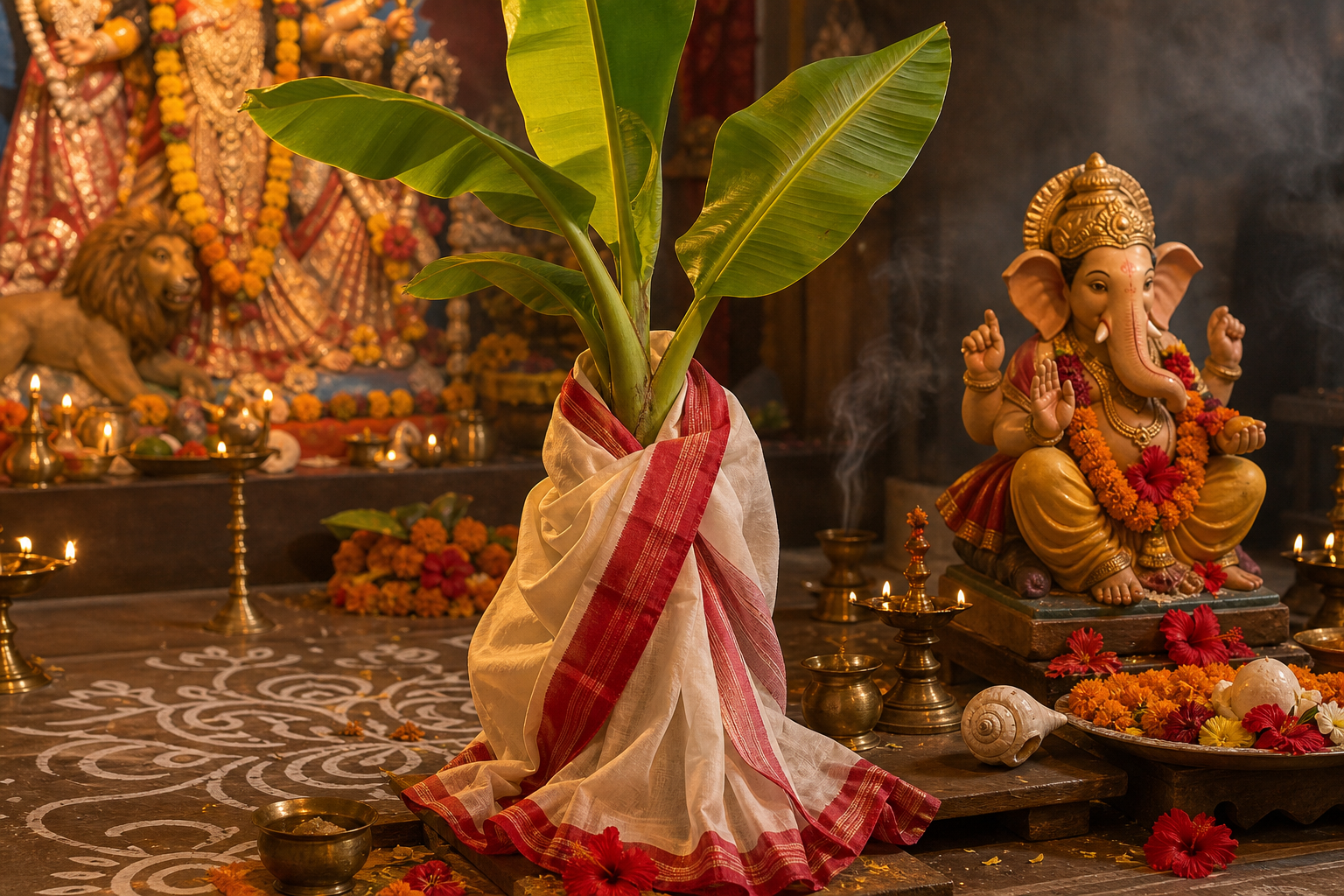
You may have stood before a Bengali Durga Puja, noticed a banana plant wrapped in a red-bordered white sari beside Ganesha, and received two different answers about her identity. One person called her Lakshmi. Another said she belongs to the Nabapatrika. You don’t have to decide that one answer cancels the other.
The most respectful way to understand Kolabou is to distinguish a family’s devotional relationship from the ritual structure of Durga Puja. Learn both meanings, then let the worshipping lineage tell you which one it places in the foreground.
Lakshmi and Nabapatrika answer different questions
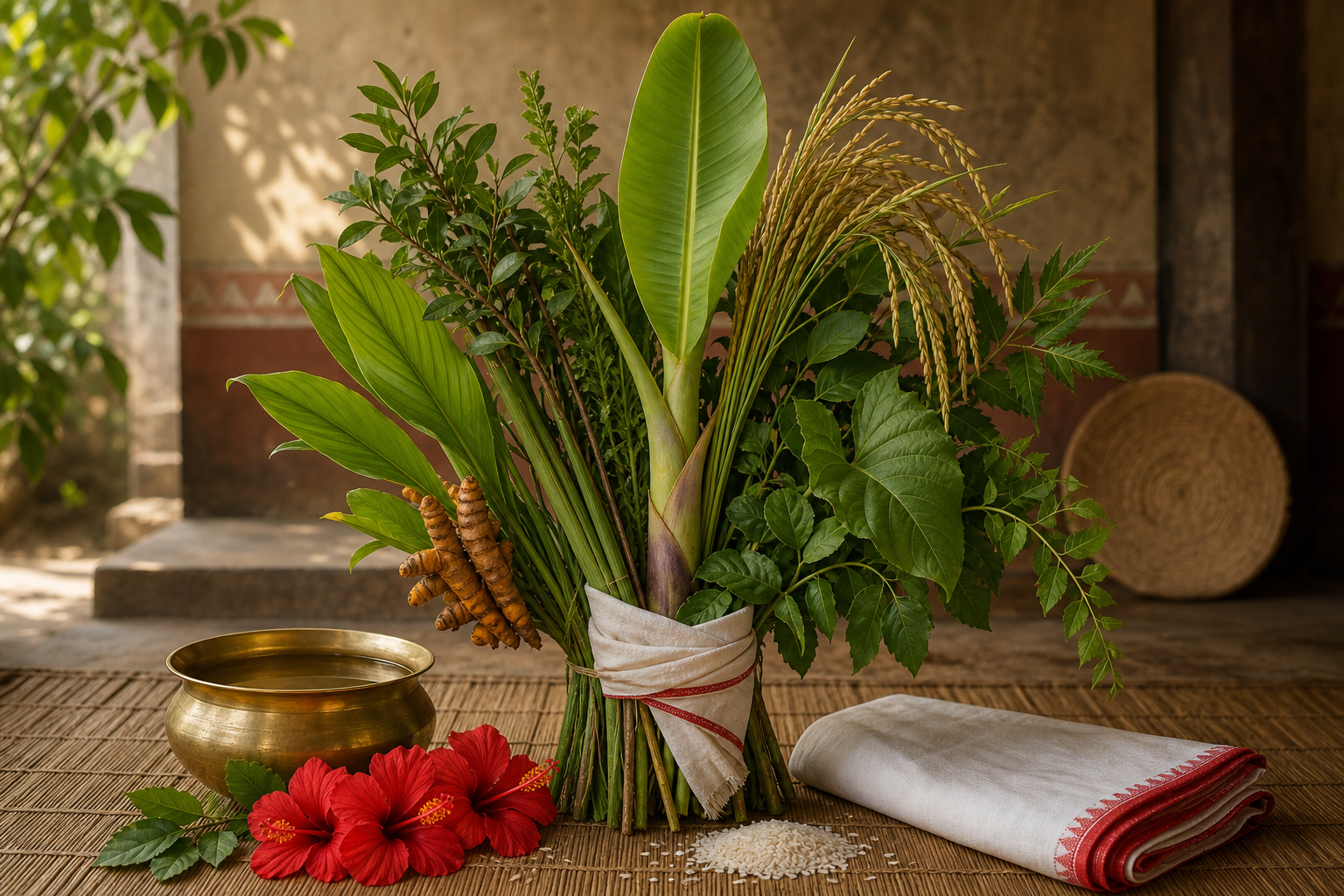
Kolabou, also written Kola Bou, carries two overlapping interpretations in Bengali Hindu life. In many homes she is welcomed as Lakshmi, the divine principle of prosperity, nourishment and well-being. Within a classical explanation of Durga Puja, the banana plant is a vital member of the Nabapatrika, a group of nine sacred plants through which the Goddess is collectively venerated.
These meanings operate at different levels:
- The Lakshmi identification tells you how a household receives and relates to Kolabou: as the auspicious presence of sustenance and ethical abundance.
- The Nabapatrika explanation tells you how the banana plant participates in a larger ritual form: not as an isolated decoration, but as one element within a sacred botanical assembly.
They need not be turned into rival claims. Bengali Hindu practice often preserves theological structure and inherited household devotion at the same time. A family may know the Nabapatrika explanation while continuing to address Kolabou as Lakshmi because that is how parents and grandparents taught the relationship.
If you need to explain the custom in one sentence, say this: many Bengali families revere Kolabou as Lakshmi, while Durga Puja ritual also places the banana plant within the nine-plant Nabapatrika. That wording is precise without dismissing either the wider ritual grammar or the family’s living memory.
The distinction matters most when you encounter a custom different from your own. Ask how that household understands Kolabou before correcting its language. Conversely, describe a lineage-specific interpretation as your family practice rather than declaring that every Bengali family must explain the ritual identically.
What happens on Mahasaptami, and what you should notice
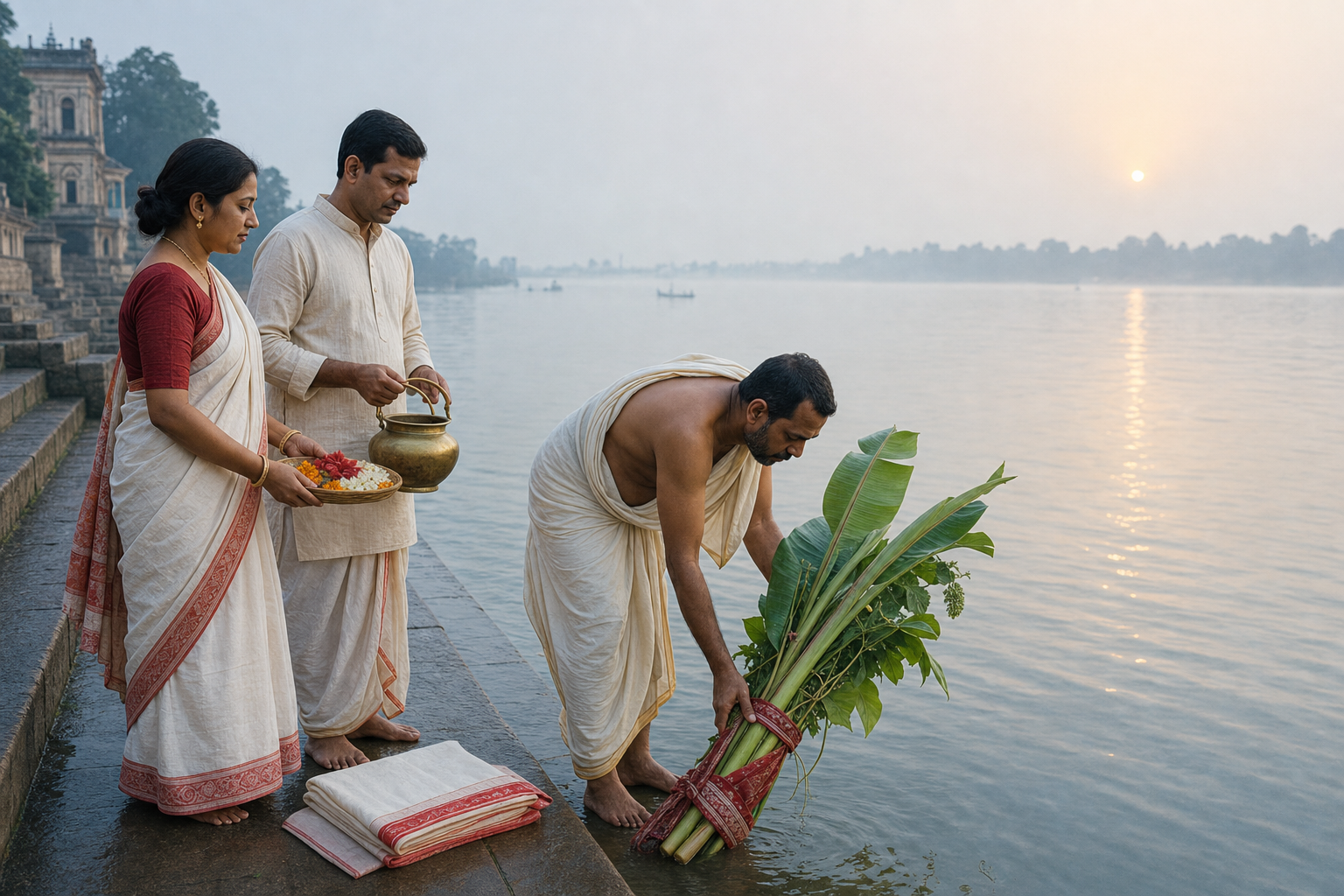
The visible sequence occurs at a significant threshold in Durga Puja. At dawn on Mahasaptami, the banana plant is ceremonially bathed, dressed in a white sari with a red border, placed beside Ganesha and affectionately addressed as Kolabou.
- The plant is bathed. The act marks a transition from an ordinary object of the landscape to an honored ritual presence.
- The plant is clothed. The sari expresses welcome and personhood; it is more than festive ornament placed around greenery.
- The plant is given a place. Positioning Kolabou within the Durga Puja arrangement makes the living plant part of the sacred household or communal space.
- The plant is addressed relationally. The affectionate name turns recognition into relationship. Divinity is not discussed only as an idea; she is received as a presence.
If you hope to witness the observance, ask the organizing family or puja committee when its Mahasaptami dawn rites begin. Arriving only during the busiest public viewing hours may mean missing the bathing and preparation that give the later image its context.
Observe which name the worshippers use, whether they emphasize Lakshmi or the complete Nabapatrika, and who guides the procedure. Ask questions after the rite rather than interrupting it. One clear question is enough: In your family, is Kolabou understood as Lakshmi, as part of the Nabapatrika, or in both ways?
A photograph of the dressed plant is not a complete ritual manual. If you are arranging the worship yourself, follow the practice transmitted by a knowledgeable elder or the priest serving your puja. Do not invent missing mantras, substitute plants or alter the sacred grouping merely because the most visible element appears simple.
Why the banana plant speaks the language of Lakshmi
The identification with Lakshmi becomes easier to understand when you look at what the banana plant does. It bears fruit generously, multiplies readily, supplies broad leaves for ritual service and contributes to household life through its fruit, flower, stem and leaves. Its beauty is inseparable from usefulness.
That combination gives the symbolism its force. Lakshmi here is not reduced to accumulated money or conspicuous luxury. She is recognized through nourishment, continuity, hospitality, household competence and resources used with care. The banana plant joins abundance to responsibility: it gives repeatedly, and its many parts can serve rather than be discarded thoughtlessly.
You can use four qualities to read the symbolism:
- Fruitfulness: prosperity should sustain life, not merely display possession.
- Renewal: abundance remains healthy when it can continue rather than exhaust its source.
- Service: beauty acquires dharmic depth when it also supports worship, food and household well-being.
- Restraint: receiving the earth’s gifts creates an obligation to use them attentively.
This gives you a practical test for your own understanding of Lakshmi. When prosperity enters your home, does it make the household more generous, resourceful and grateful, or only more consumptive? Kolabou directs attention to the first kind of abundance: living, useful and renewed through right relationship.
That is also why replacing the plant’s meaning with a decorative silhouette misses the central lesson. The ritual depends on recognizing sacred presence in a living form that already sustains ordinary life. The household and the temple are connected through the same plant.
Faridpur and Barisal memories make the rite personal
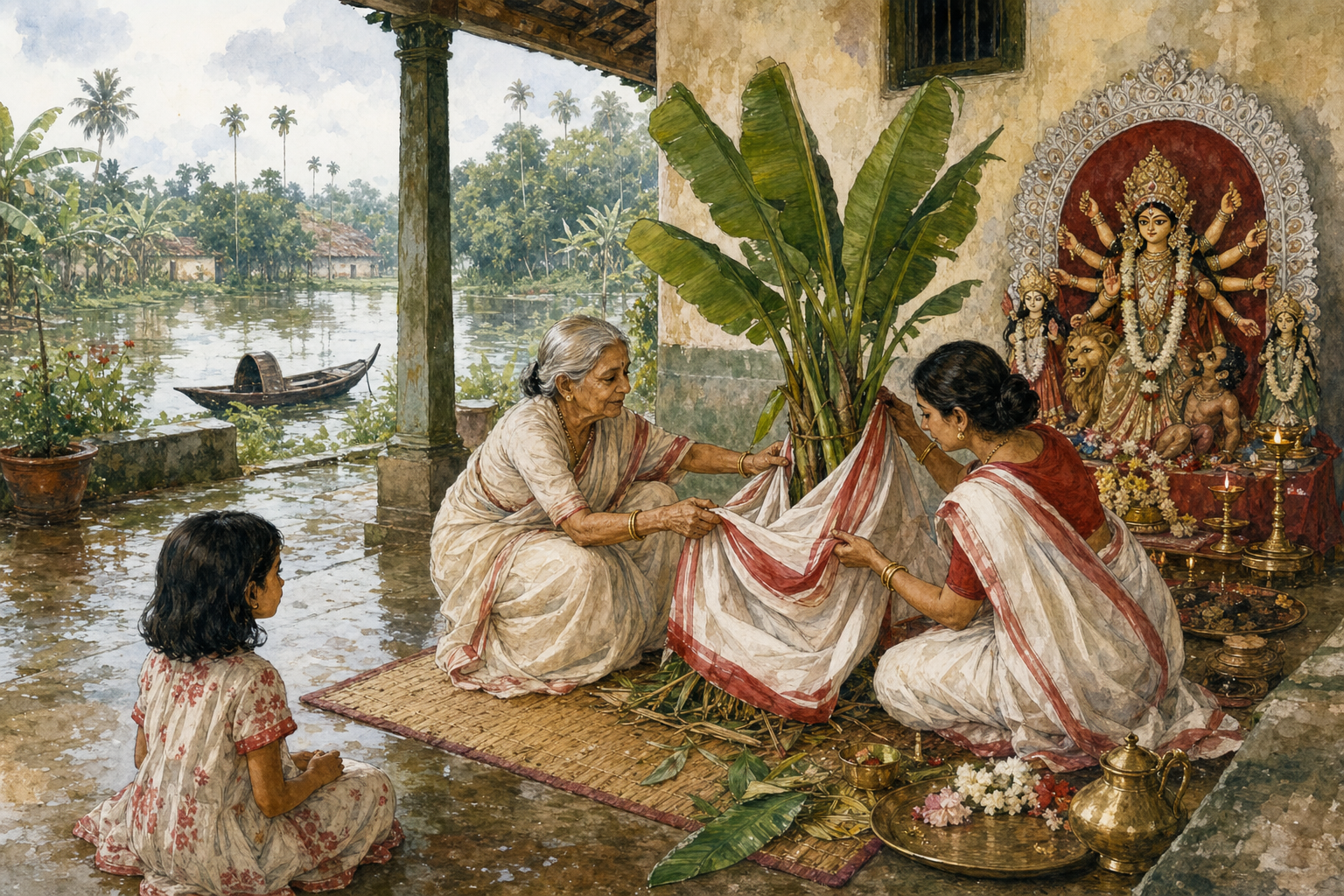
Kolabou worship is especially cherished in families with ancestral connections to Faridpur and Barisal in East Bengal, now in Bangladesh. In that river-shaped cultural world, early ablutions, boats near the ghats, seasonal cultivation and collective preparations for Durga Puja belonged to one continuous rhythm. The ritual therefore carries more than an abstract doctrine; it can hold the memory of a particular landscape and way of organizing family life.
Migration carried that memory into Kolkata, elsewhere in Bangladesh and the wider diaspora. A banana plant dressed at Mahasaptami can consequently become an anchor of kinship for descendants who no longer live near the rivers or homesteads associated with the family custom.
If your family preserves this inheritance, record it while knowledgeable relatives can still supply context. Ask them:
- Which district, village or household did our form of Kolabou worship come from?
- Did the family explicitly call Kolabou Lakshmi, explain her through the Nabapatrika, or teach both meanings?
- Who prepared the plant, and who taught the ritual sequence to the next generation?
- Which visible details did elders consider essential, and which were practical adaptations after migration?
Write the answers in the family’s own words and identify whose recollection you recorded. That small act prevents an inherited explanation from being replaced later by a generic internet caption. It also lets younger relatives say, with accuracy, this is how our family worships, without claiming that one regional memory represents all Bengali Hindus.
When teaching children, start with what they can see: the living plant, the bathing, the sari, the placement and the name. Then give them both interpretive layers. They can understand that Kolabou is Lakshmi in the family’s devotional relationship and that the banana plant also belongs to the Nabapatrika within Durga Puja. Complexity becomes manageable when it is attached to observable actions.
Carry the practice forward without losing its ethic
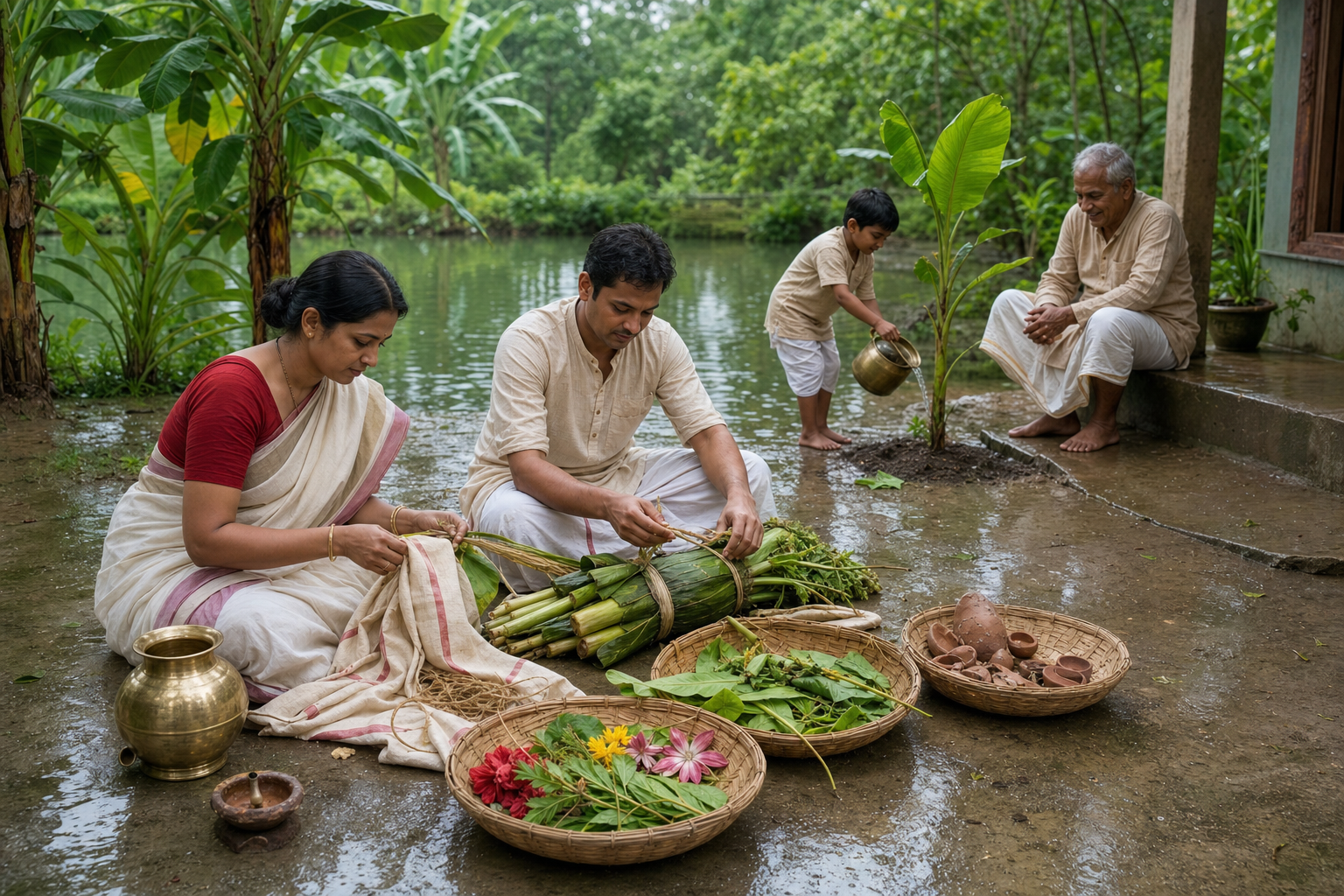
Faithful preservation does not mean maintaining an attractive outer form while forgetting why a living plant stands there. Kolabou worship encodes an ecological discipline: receive from nature with gratitude, use resources fully and treat abundance as a responsibility.
This discipline belongs to a broader Dharmic vocabulary without making every tradition identical. Hindu communities honor sacred plants and groves. Buddhist communities preserve tree shrines and monastic gardens. Jain ahimsa extends moral attention toward living beings. Sikh teaching places air, water and earth within an elemental family of life. Kolabou gives this shared reverence a distinctly Bengali Hindu ritual form.
If you help organize the worship, examine the choices around the rite as carefully as the visible arrangement. Is the plant being handled as sacred life or merely as a prop? Are additional materials serving the worship or producing avoidable waste? Does the plant’s treatment after the observance follow the family’s or temple’s established custom? Ask the officiating priest or senior organizer before making changes; ecological enthusiasm is not a license to rewrite a ritual unilaterally.
Key takeaways
- Kolabou may be welcomed as Lakshmi in household devotion while the banana plant simultaneously serves as a central member of the nine-plant Nabapatrika.
- The Mahasaptami bathing, red-bordered white sari and placement beside Ganesha express welcome and sacred relationship, not mere decoration.
- Faridpur and Barisal family traditions deserve to be identified as lineage memories rather than imposed as the only Bengali interpretation.
- The banana plant makes ethical prosperity visible through fruitfulness, renewal, household usefulness and careful use of nature’s gifts.
Before the next Mahasaptami, ask one knowledgeable elder how your family names and understands Kolabou. Write down the answer, preserve the distinction between Lakshmi and Nabapatrika, and let that inherited meaning guide the ritual details. One careful conversation can carry more tradition forward than a perfectly staged image with no remembered explanation.
References
