
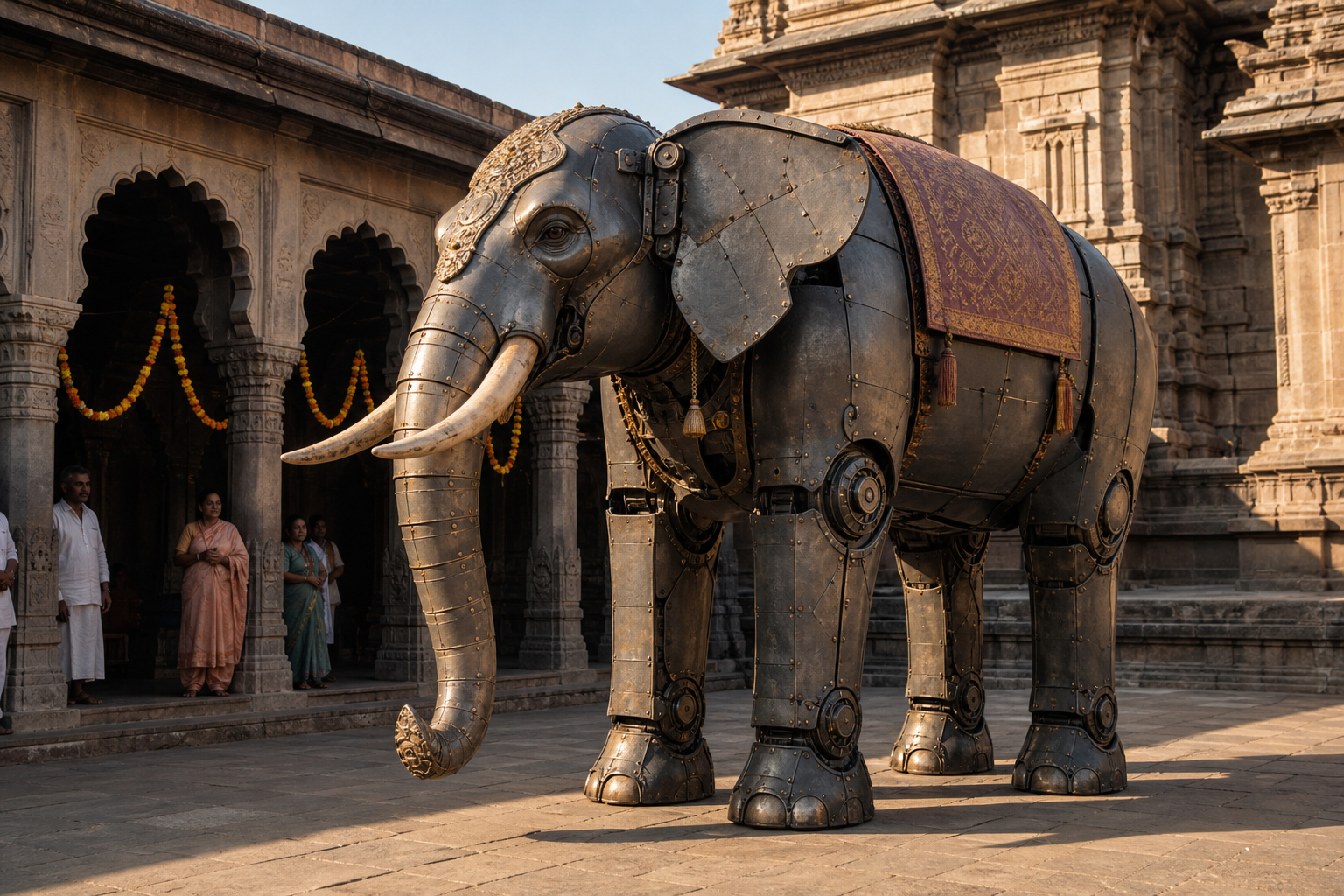
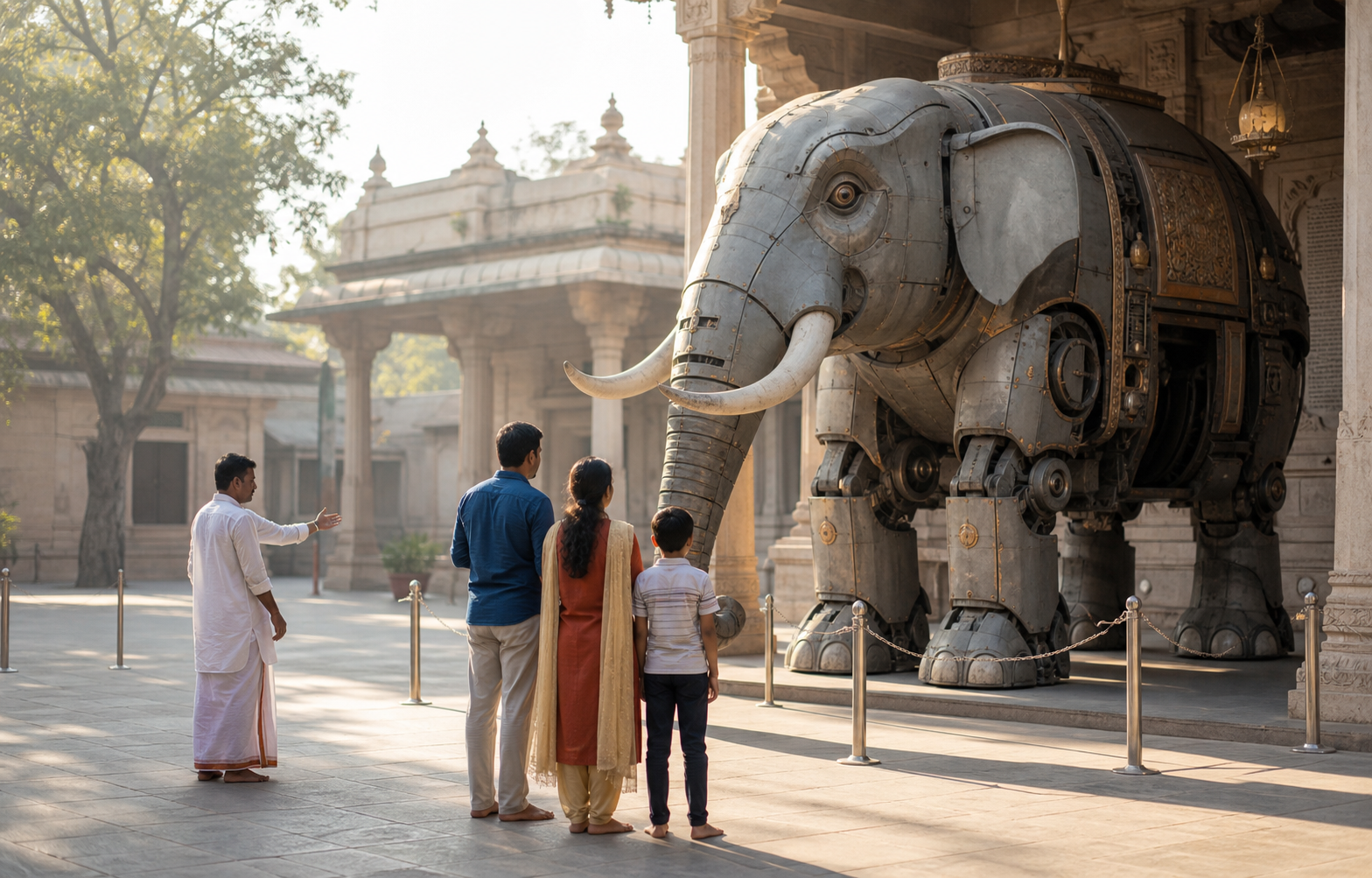
If you saw Airavata mentioned in connection with Pandharpur, your first question is probably simple: what exactly is it, and why would a Krishna temple use it? The grounded answer is equally simple: ISKCON Pandharpur has welcomed a mechanical elephant named Airavata.
The more useful question is what that choice makes possible. A mechanical form can give sacred elephant imagery a visible ceremonial presence without requiring a living elephant to perform that role. That is culturally and ethically significant, but it should not be inflated into unconfirmed claims about the machine’s capabilities, ritual status or the temple’s reasons for adopting it.
Keep the confirmed facts separate from the spectacle
Images of a mechanical elephant invite assumptions. One viewer may call it a robot; another may treat it as a temple elephant; a third may assume that it appears in every procession. Those descriptions are not interchangeable.
Three points can be stated confidently:
- The institution is ISKCON Pandharpur.
- The figure is a mechanical elephant.
- Its name is Airavata.
The word “mechanical” does not, by itself, tell you whether Airavata is autonomous, remotely controlled, driven from within, fixed in place or designed for processions. It also does not establish when visitors can see it. Treat any added claim about its movement, materials, dimensions, programme or public access as unverified until ISKCON Pandharpur confirms it.
This distinction matters if you are planning a visit. Do not build a journey around a photograph or a repost. Confirm the venue, date, viewing arrangements and photography rules directly with the temple. Pandharpur contains a wider sacred geography, and an event at ISKCON Pandharpur should not be casually relabelled as an event at every temple in the town.
Why the name Airavata gives the figure sacred meaning
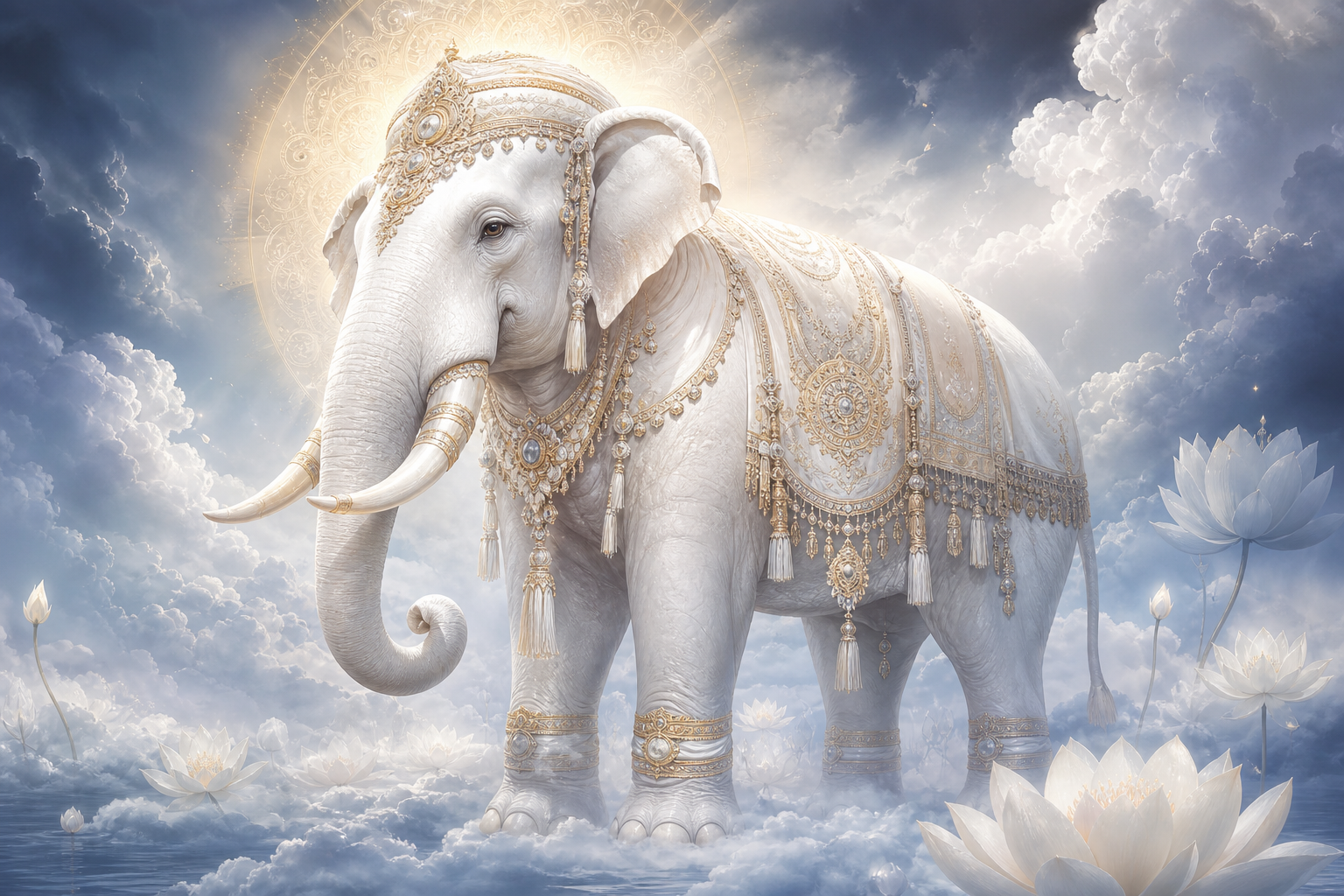
Airavata is known in Hindu sacred tradition as the elephant associated with Indra. The name therefore does more than identify a machine. It places the figure within a religious imagination in which elephants can signify majesty, strength, guardianship and the ordered abundance of the cosmos.
That symbolism is not out of place in a Krishna-centred setting. Hindu sacred worlds are relational rather than sealed into separate compartments: deities, devotees, guardians, vahanas, animals and natural forces appear within a shared field of meaning. A temple can draw upon that field without making every represented figure the central object of worship.
You should therefore avoid calling the mechanical Airavata a deity or a consecrated murti merely because it bears a sacred name. A kinetic representation, a ceremonial figure, a teaching aid and an installed murti are different categories, even when their visual forms overlap. Its actual ritual status depends on how ISKCON Pandharpur presents and uses it.
When you encounter Airavata, pay attention to the temple’s own vocabulary. Is it introduced as part of a procession, a representation used in devotional storytelling, a visual attraction for pilgrims, or something that receives a prescribed ritual offering? Report that description rather than supplying a more dramatic one. Precision is itself a form of respect.
The real promise of a mechanical temple elephant is ahimsa
A mechanical elephant can preserve the scale, movement and visual impact associated with elephant imagery without asking a sentient animal to endure ceremonial labour. A living elephant has needs that do not disappear when a religious programme begins: rest, space, suitable social conditions and freedom from distress still matter amid crowds, noise, travel and hard surfaces.
This is where the mechanical alternative deserves serious attention. It allows a community to retain a beloved visual language while separating that language from the physical use of an animal. Tradition is not weakened when a harmful or avoidable burden is removed from its presentation. In a Dharmic setting, that can be understood as the application of ahimsa to the means of celebration, not only to its message.
Do not, however, claim that animal welfare was ISKCON Pandharpur’s stated motivation unless the temple says so. Two propositions must remain distinct: a mechanical elephant can reduce the need for a live elephant, and an institution may have particular reasons for acquiring one. The first is a practical possibility; the second requires direct confirmation.
A machine also creates its own responsibilities. Moving components, electrical systems, restricted visibility and an excited crowd can produce risks if operation is casual. Responsible use should include trained supervision, a reliable stop procedure, maintained equipment, clear rules about touching or climbing, and enough distance between the mechanism and visitors. Families should follow the operator’s instructions even when Airavata appears slow or harmless.
The deeper ahimsa test is therefore not whether the figure looks lifelike. Ask whether it removes an avoidable burden from a living being, whether it is operated without creating preventable danger, and whether its religious meaning is explained rather than reduced to novelty.
Key takeaways
- Airavata is a mechanical elephant welcomed by ISKCON Pandharpur; more detailed claims require direct confirmation.
- The name invokes the elephant associated with Indra, giving the figure a recognisable place within Hindu sacred symbolism.
- A sacred name does not automatically make a representation a consecrated murti; follow the temple’s description of its ritual role.
- The mechanical form can preserve ceremonial presence without imposing that role on a living elephant.
- Animal-friendly symbolism still requires crowd safety, responsible operation and honest explanation.
- If you plan to visit, verify the programme and access arrangements with ISKCON Pandharpur rather than relying on circulated images.
How to visit, photograph or discuss Airavata responsibly
The way visitors respond will help determine whether mechanical sacred figures are treated as thoughtful alternatives or merely as curiosities. A few disciplined choices make the encounter more meaningful.
- Verify before travelling. Look for a first-party temple notice or contact the temple for the relevant date, time, location and access rules. A photograph proves that Airavata exists; it does not provide a current schedule.
- Learn the stated purpose. Read any signage and listen to the introduction given by temple representatives. That will tell you more than guessing from a short video.
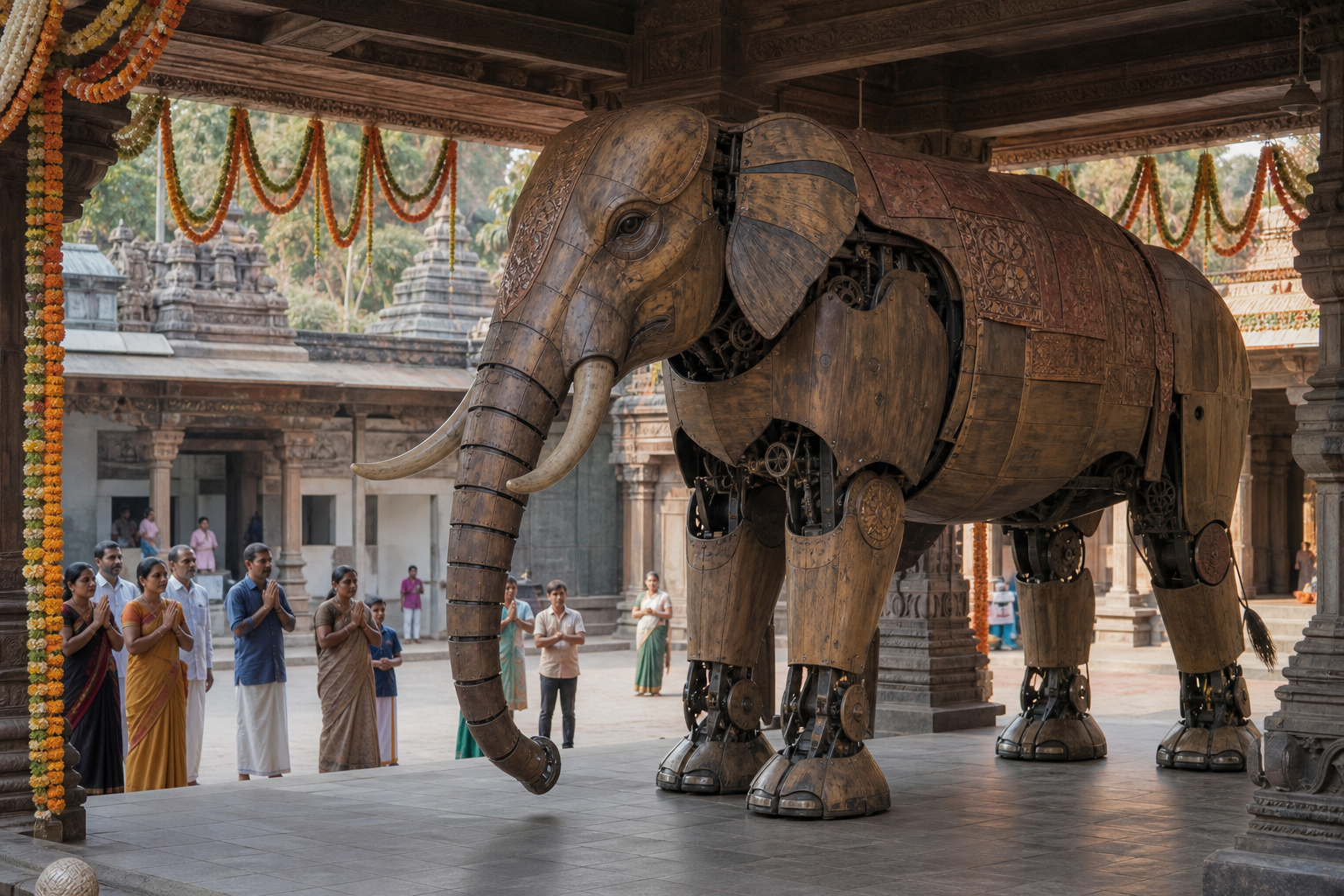
- Give the mechanism space. Do not touch, climb upon or stand in the path of a moving figure unless temple staff explicitly permit it. Keep children with you and follow barriers or volunteer directions.
- Explain the symbolism to children. Tell them that Airavata is a sacredly named representation connected with Indra, while the object before them is mechanical. This preserves wonder without confusing mythology, worship and engineering.
- Describe only what you observed. If you share photographs, identify the location as ISKCON Pandharpur and distinguish the temple’s explanation from your interpretation. Do not assign the figure a ritual function you did not witness or verify.
- Notice the ethical choice, not just the novelty. The most important question is not how closely a machine imitates an elephant. It is whether a community can celebrate elephant symbolism while leaving living elephants outside the demands of spectacle.
If you visit Airavata, begin with curiosity and end with accuracy. Confirm what the temple is doing, follow its safety instructions, and share the encounter in a way that keeps both sacred meaning and ahimsa in view. That response gives this mechanical elephant a value greater than momentary spectacle.
References
