
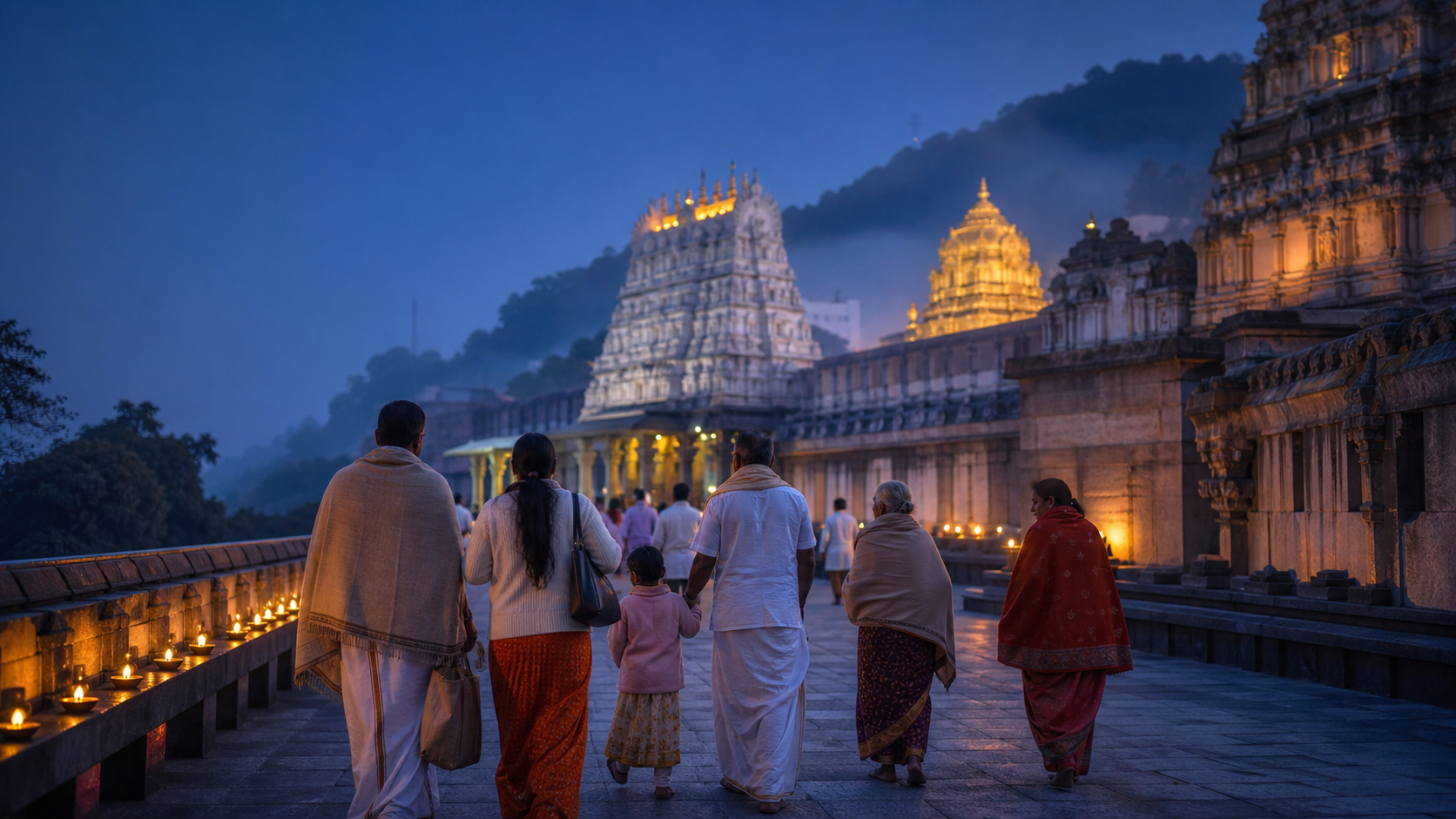
You want your January pilgrimage to be more than a long queue followed by a hurried darshan. Yet Tirumala’s daily worship, festival observances, seva bookings, Tiruchanur visits, accommodation, and family needs can quickly turn devotion into logistics.
The answer is to plan around one clear devotional purpose and one fixed commitment. January at Tirumala combines nitya kainkaryams with calendar-based observances, so you don’t need to chase every festival. You need to know which dates are firm, which require confirmation, and which part of the journey matters most to you.
Choose the devotional centre of your pilgrimage first
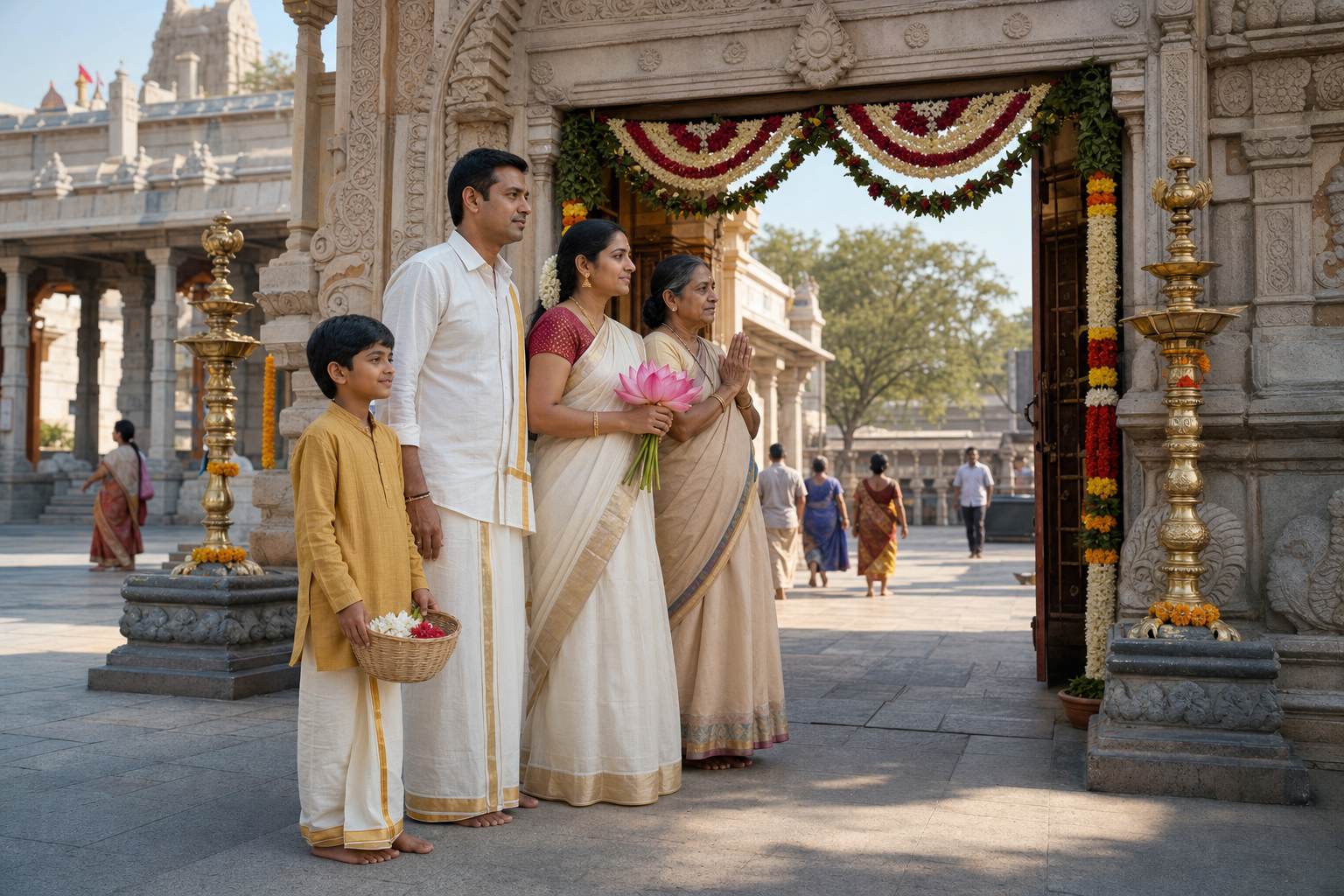
Start with a simple question: what would make this journey complete even if everything else had to be dropped? Your answer might be darshan of Lord Venkateswara at Tirumala, participation in a particular observance, worship at Sri Padmavathi Ammavari Temple in Tiruchanur, or an unhurried visit with your family.
That choice determines the right itinerary. If a major observance is the purpose, accept that heavier crowds are part of the pilgrimage and keep the rest of the day light. If quiet attention is more important than a festival atmosphere, a date away from the principal utsavam is usually the more suitable planning choice. If you are travelling with elders or children, a realistic waiting plan matters more than adding another shrine to the schedule.
Tirumala and the TTD-administered temples around Tiruchanur should not be treated as interchangeable items on a sightseeing list. Give the principal shrine the best part of your energy. Add another temple only when the additional visit can be made without rushing worship, missing an entry commitment, or exhausting a vulnerable family member.
January 2026 offers one particularly clear Tiruchanur-area option: Rohini observances are scheduled at Sri Balarama Krishna Swamy Temple on January 1 and January 28. These dates give Krishna devotees a definite anchor. They do not, however, remove the need to check TTD’s latest notification for daily timings and entry arrangements before setting out.
Separate firm January dates from calendar-dependent observances
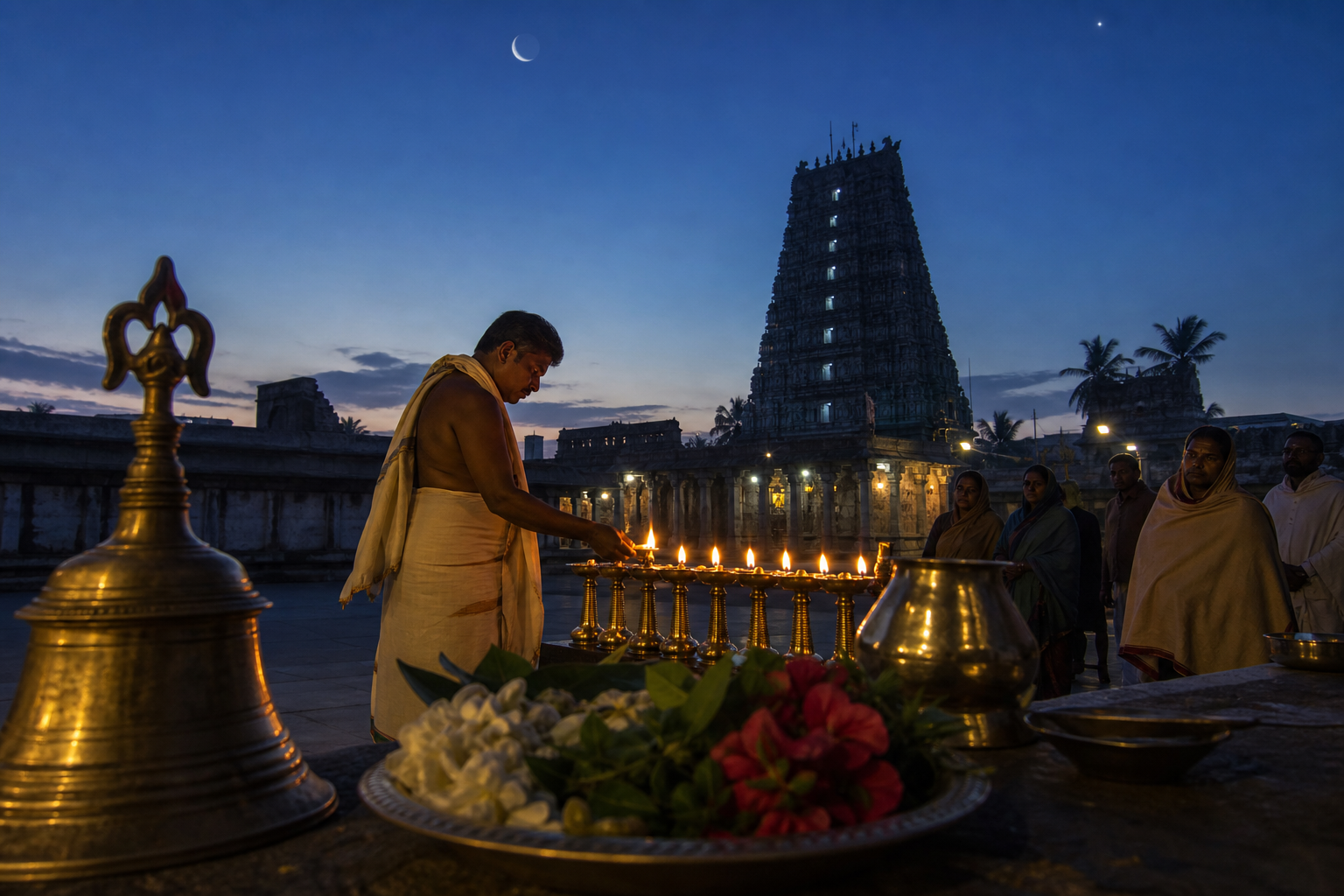
The most common planning error is to see the name of a sacred observance and assume that its date, temple programme, and visitor access are all settled. They are separate questions. A tithi may be spiritually significant, while the exact ritual timing and public arrangement still depend on the official TTD schedule.
| January worship anchor | What is known | What you should do |
|---|---|---|
| Daily worship at Tirumala | Nitya kainkaryams continue alongside special events. | Choose your date around the darshan or seva available to you, then verify the day’s operating arrangements. |
| Makara Sankranti | It is a principal January observance in the Tirumala devotional calendar. | Expect stronger pilgrimage demand and confirm the final date, timing, darshan conditions, and accommodation before travel. |
| Vaikunta Ekadashi | It belongs in a January plan only where the official calendar places the observance in that period. | Do not assume it falls within your January dates; rely on the final TTD calendar. |
| Purnima, Amavasya, and Pradosh | These recurring tithis contribute to the month’s ritual rhythm. | Verify the applicable date and the temple-specific observance rather than planning from the tithi name alone. |
| Rohini at Sri Balarama Krishna Swamy Temple | January 1 and January 28 are the announced 2026 dates. | Use either date as a Tiruchanur-area anchor, while checking the latest daily notification before departure. |
This distinction protects you from two opposite mistakes. The first is booking an entire journey around an assumed date. The second is abandoning January because a famous observance does not fall within your travel window. Tirumala’s daily kainkaryams mean that an ordinary temple day is not spiritually empty; special festivals deepen the calendar but do not create the sanctity of the shrine.
Treat TTD’s current official notification as the operational authority. Check it before committing to travel, again when arranging darshan or an arjitha seva, and once more before departure. Saved screenshots and forwarded messages can remain in circulation after arrangements change. The latest official schedule should decide what you do.
Build the itinerary around the hardest commitment
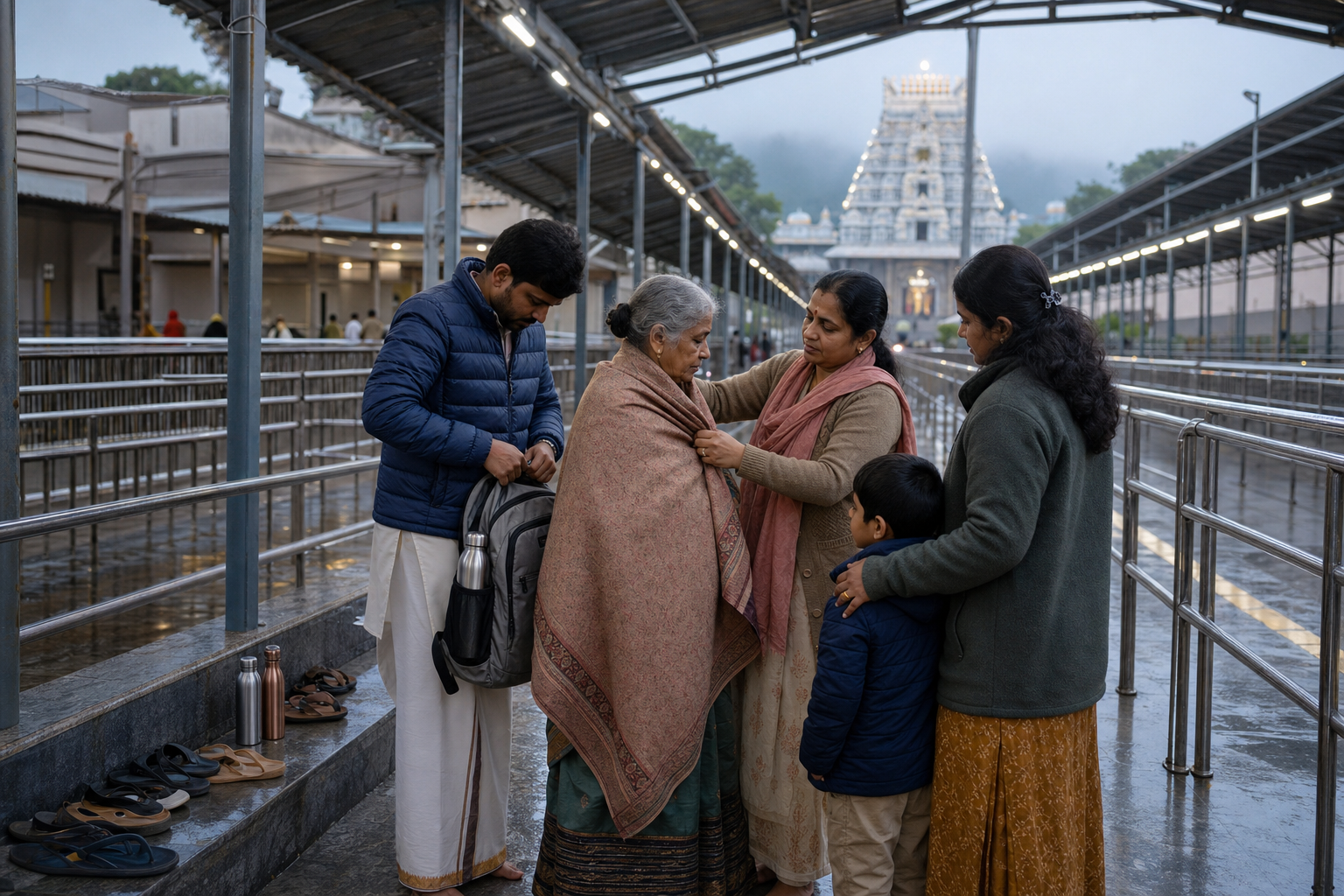
Darshan availability, an arjitha seva, and accommodation are not equal pieces of the plan. The least flexible confirmed commitment should control the rest. If you secure a particular darshan or seva, place meals, local movement, prasadam collection, and any Tiruchanur visit around it.
Book in this order
- Write down the principal purpose of the pilgrimage: Tirumala darshan, a named observance, a booked seva, or worship at a particular TTD temple.
- Check the applicable January date and current visitor arrangements through TTD’s official schedule.
- Secure darshan or an arjitha seva where advance booking is available. Do not make a non-flexible itinerary dependent on access you have not obtained.
- Arrange accommodation in the Tirupati region early, especially when your date is connected with a major utsavam.
- Place secondary temple visits into separate windows. Do not make the success of one darshan depend on the previous queue ending quickly.
- Leave room for waiting, movement through the temple complex, and prasadam collection. Treat that room as part of the pilgrimage, not unused time to be filled.
A buffer is useful only when you protect it. If you fill every open period with another destination, the first slow queue will disrupt the whole day. A simpler schedule also lets you stay attentive during Vedic recitation, alankaram, and darshan rather than mentally calculating the next departure.
Make a separate plan for elders and children
Families should identify shaded waiting areas and hydration points near the temple complex instead of assuming they will be convenient at the moment they are needed. Decide in advance who will remain with a child or elder if part of the group must handle accommodation, prasadam, or another practical task. This is more useful than expecting the entire family to move together through every errand.
Do not let a festival ambition override a family member’s physical limits. A shorter itinerary with composed worship is better than collecting temple visits while someone struggles through avoidable fatigue.
Let temple discipline carry the worship beyond darshan
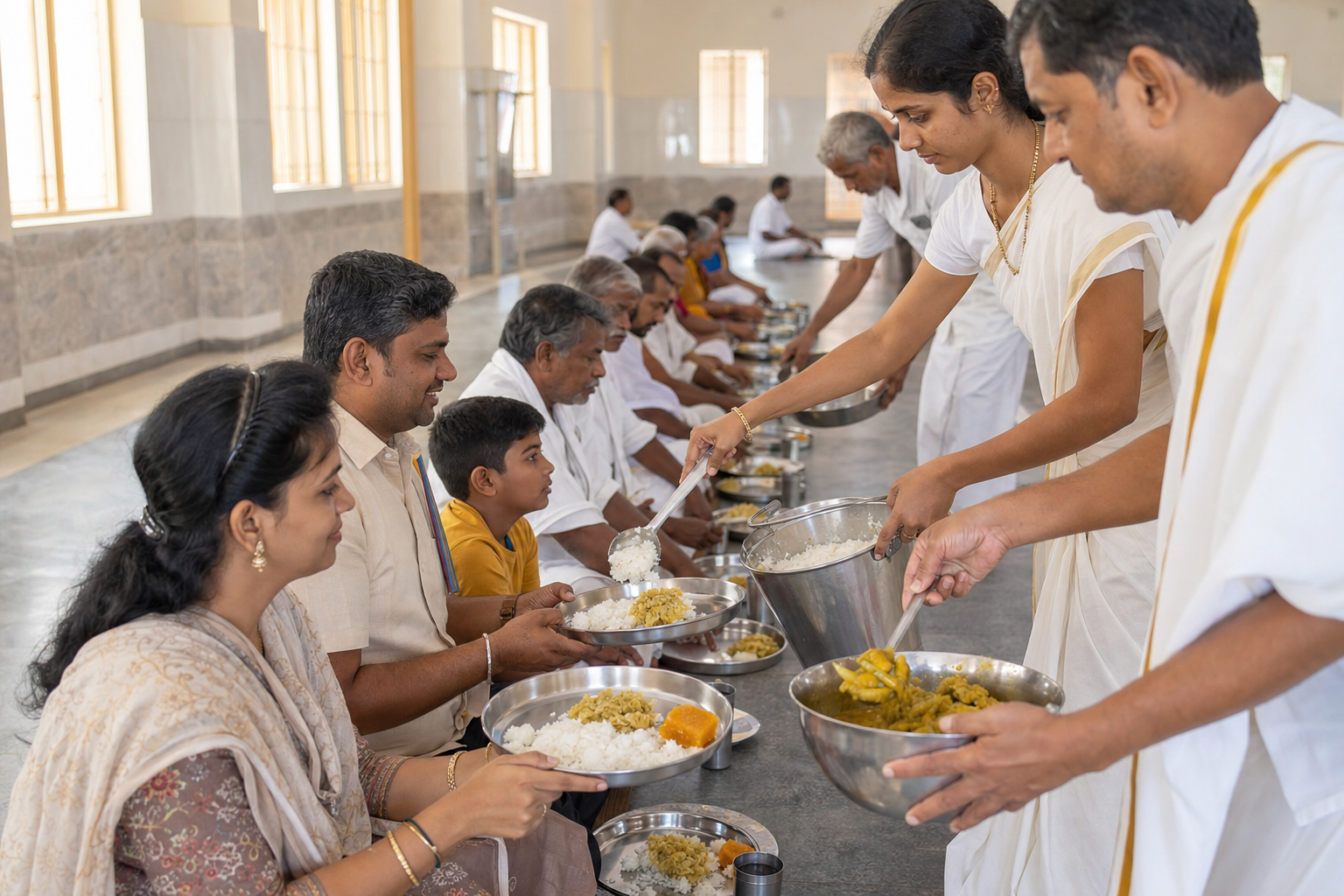
The devotional quality of a TTD pilgrimage is shaped before you reach the sanctum. January’s bells, mantras, lamps, incense, and collective prayer can focus the mind, but only if you stop treating the queue as an obstacle between you and worship.
- Follow the stated dress code. Check it while packing, not at the temple entrance. Compliance is part of arriving prepared for worship.
- Keep queue discipline. Crowding, pushing, or arguing for a small advantage transfers your impatience to every devotee around you.
- Protect the atmosphere of recitation. When chants or temple rites are underway, listen rather than conducting unnecessary conversation.
- Plan prasadam collection deliberately. Include it in the itinerary so that the final part of the visit does not become a hurried negotiation with transport plans.
- Use shared facilities considerately. Eco-conscious conduct and care for the temple precinct are forms of seva, especially when pilgrimage numbers are high.
- Help your own group without obstructing another. Caring for an elder, guiding a child, and responding calmly to delays make compassion visible rather than merely spoken.
This discipline also reveals why a temple journey can speak to the wider dharmic family without erasing religious differences. Murti worship and the specific kainkaryams of Lord Venkateswara and Sri Padmavathi Ammavari belong to Hindu temple tradition. The conduct cultivated around them – humility, seva, restraint, compassion, and regard for collective well-being – resonates with ethical commitments honoured in Hinduism, Buddhism, Jainism, and Sikhism.
You do not need to make that unity an abstract slogan. Practise it in the queue, in the way you care for relatives, and in the restraint with which you use a crowded sacred space. Those choices determine whether the pilgrimage remains devotional when arrangements become inconvenient.
Key takeaways for a January TTD pilgrimage
- Choose one principal purpose before you choose how many temples to visit.
- Use January 1 or January 28 as firm Rohini anchors if Sri Balarama Krishna Swamy Temple is central to your pilgrimage.
- Confirm Makara Sankranti, Vaikunta Ekadashi where applicable, Purnima, Amavasya, and Pradosh through TTD’s final schedule rather than assuming dates or programmes.
- Secure the least flexible darshan or seva commitment first, then arrange accommodation and secondary visits around it.
- Keep real buffer time for queues, temple movement, family needs, and prasadam collection.
- Treat dress, patience, cleanliness, and consideration for other devotees as part of the worship itself.
Write down the one darshan or observance that matters most to you, then consult the current TTD notification before making the rest of the bookings. If a timing changes, that clear purpose will help you simplify the itinerary without losing the reason for the journey.
References
- DharmaRenaissance Blog – TTD January 2026 Festivals: Sacred Schedule, Darshan Tips, and Devotional Highlights at Tirumala
- DharmaRenaissance Blog – Tiruchanur Padmavathi Ammavari Temple: Sacred January 2026 Festival Guide and Devotional Highlights
