
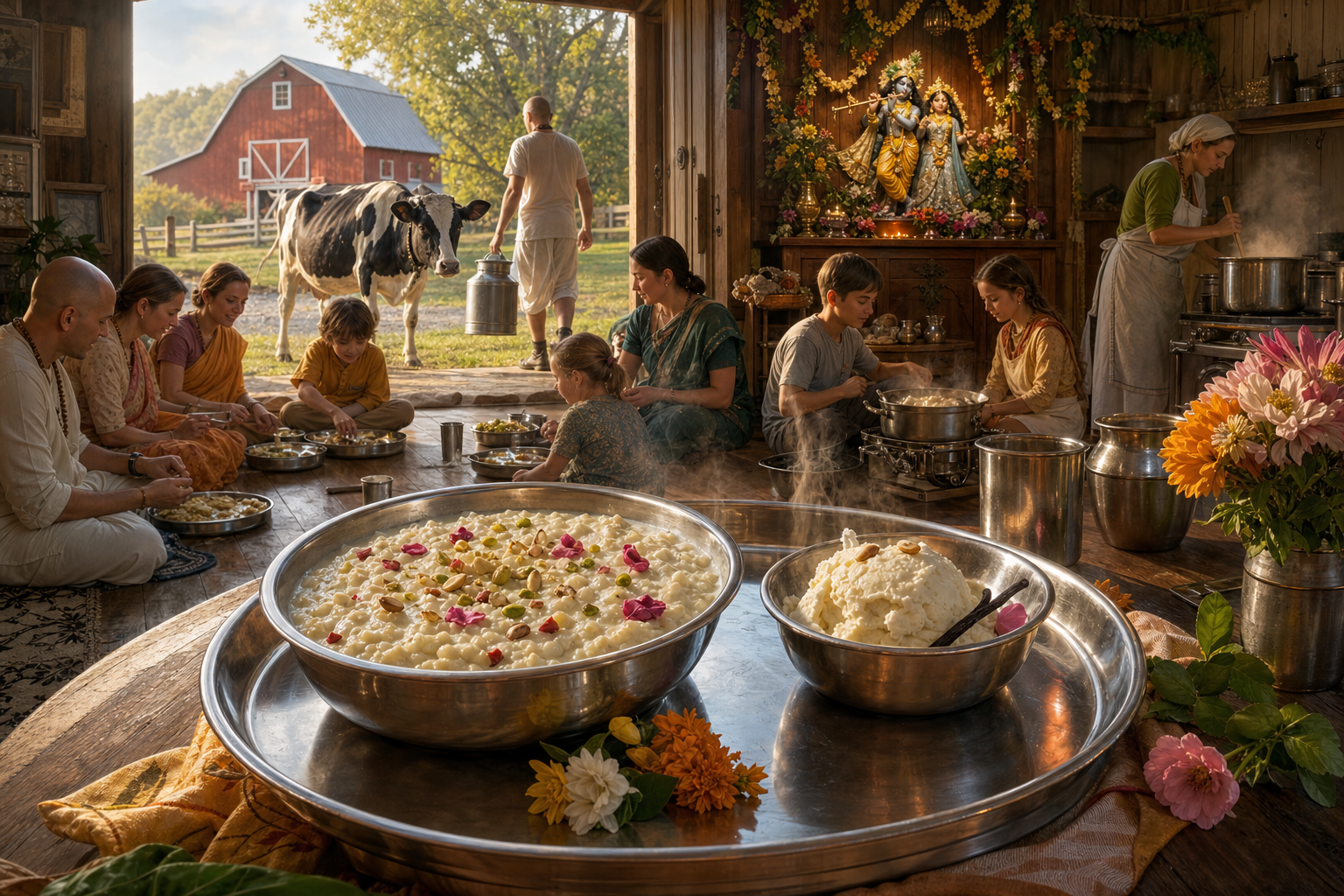
If you have heard devotees speak warmly of New Vrindaban’s sweet rice or ice cream, you may wonder what made two simple dairy preparations so memorable. The answer is not a secret ingredient. Their meaning came from the full path of the food: cows tended in service to Krishna, milk carried from the barn, careful cooking, an offering made with devotion, and prasadam shared among people who had worked together.
That distinction matters whether you are visiting New Vrindaban, preserving a community memory, or trying to continue the tradition at home. Copy only the flavor and you have dessert. Preserve the relationships among the cow, the cook, Krishna, and the community, and you begin to understand why the flavor endured in people’s hearts.
Why the memory settled on sweet rice and ice cream
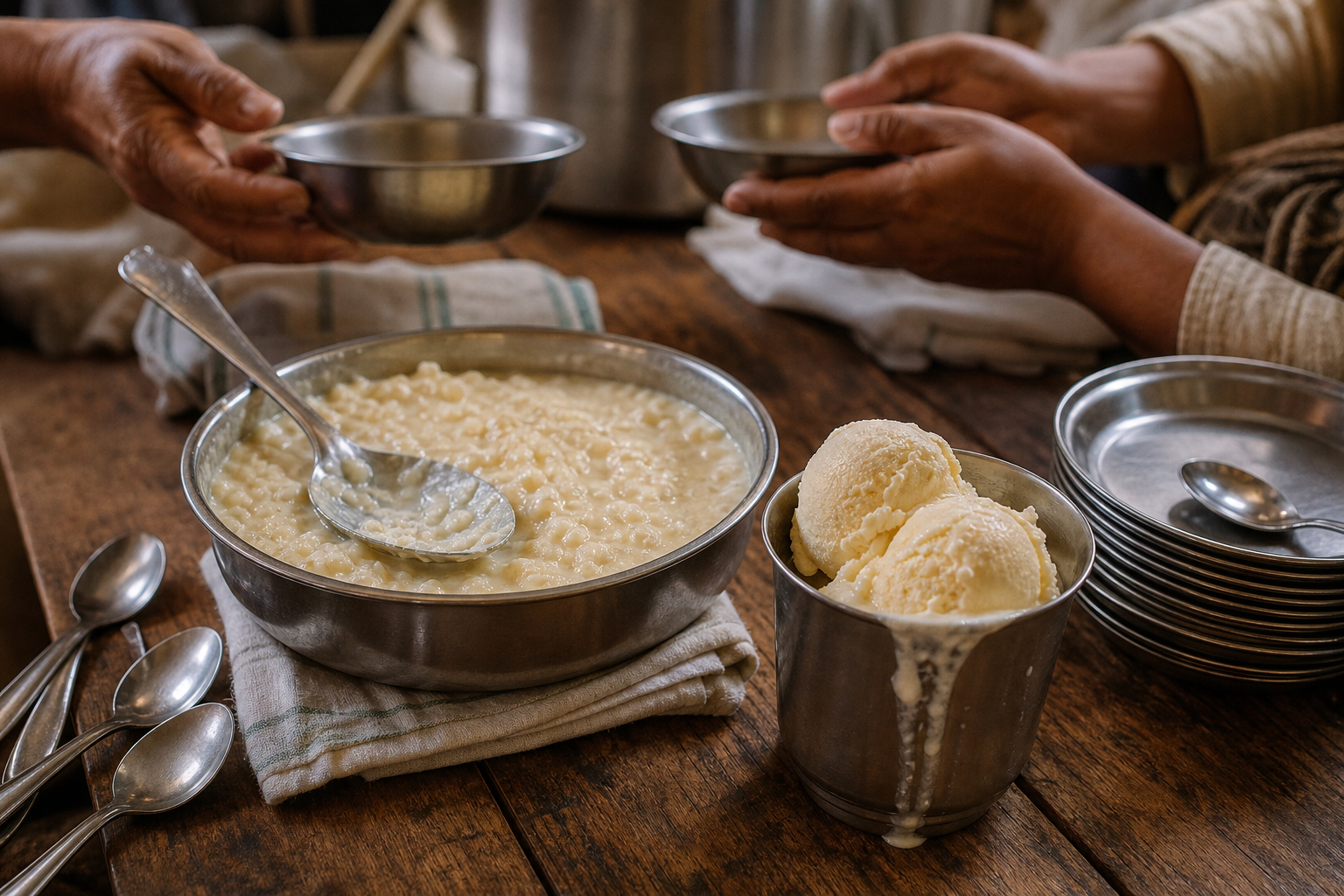
Amburish Dasa’s sweet rice and Pitambar Dasi’s ice cream became cherished features of New Vrindaban’s early prasadam culture. Both depended on fresh milk from the community’s cow barn. Both were handmade and offered to Krishna. Devotees received them after demanding days of seva, when a nourishing and celebratory preparation carried a significance that an ordinary treat could not.
The remembered setting matters. Milk arrived warm in metal pails. Barn work had its own quiet rhythm. Cooking followed the labor of caring for and milking the cows. The sweet rice or ice cream was the visible result, but an entire network of service stood behind each portion.
This gives you a practical way to preserve culinary heritage. When an elder remembers a beloved prasadam, do not begin and end with quantities and cooking times. Record the human and devotional context as carefully as the method:
- Who cared for the cows and brought the milk to the kitchen?
- Who prepared the food, and how did that person learn the service?
- What work, worship, festival, or community occasion surrounded the offering?
- What do people remember besides taste: anticipation, gratitude, companionship, or relief after seva?
A recipe can reproduce consistency and sweetness. Those questions preserve the tradition that made the recipe worth remembering.
Tradition grew through service before expertise
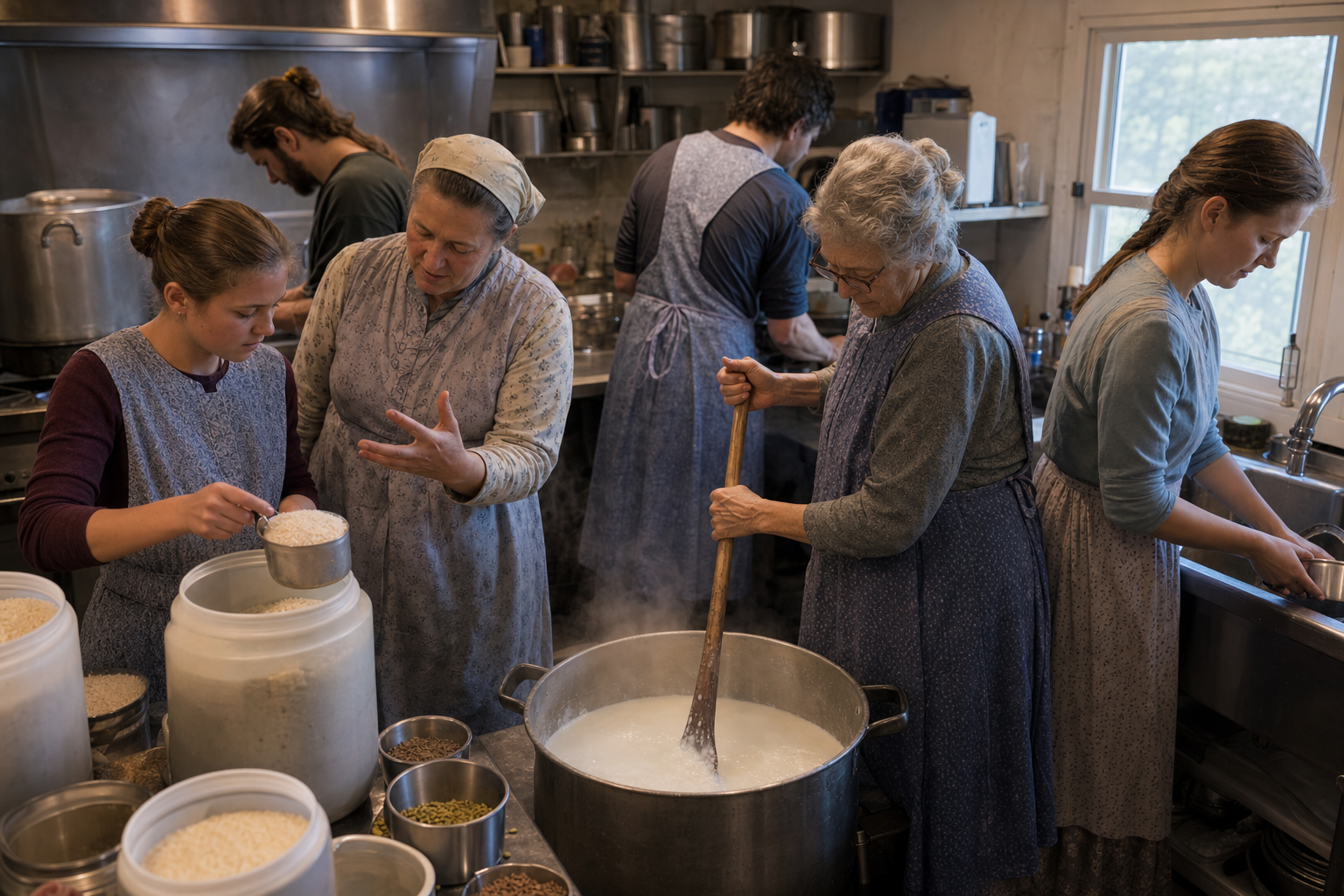
Neither of the two devotees associated with these preparations arrived as an accomplished cook or cowherd. Amburish was a city youth from Denver who encountered New Vrindaban during a post-high-school road trip in 1971. He recognized the community as his spiritual home, moved there, and was initiated by Srila Prabhupada in the same year. The barn and kitchen became places of practical devotional formation.
Pitambar had been living in California’s Santa Cruz mountains when she met devotees chanting at a craft show. Their joy and simplicity drew her toward New Vrindaban. She visited on Radhastami in 1976, intended to stay overnight, and remained. Through sustained, hands-on service, she developed the skill behind the ice cream devotees came to anticipate.
Their paths correct a common misunderstanding about living traditions. A community does not survive by waiting for perfectly trained people to arrive. It survives by allowing sincere newcomers to learn necessary work, repeat it, accept responsibility, and eventually become the people whose service others remember.
If you help organize a temple kitchen, farm, festival, or home satsang, build that learning process deliberately:
- Give a newcomer one real but bounded responsibility rather than an undefined instruction to “help.”
- Place the task within the whole sequence so the person knows whom their work supports and what comes next.
- Explain its devotional purpose as well as its technique. Cleanliness, timing, and care should not feel like unrelated kitchen rules.
- Repeat the same responsibility often enough for attention to become competence.
- Name and thank the people behind the offering, including those whose service occurred outside the kitchen.
This is how humility becomes capability. It also keeps culinary heritage from depending on one celebrated cook whose knowledge disappears when that person is no longer present.
From cow care to the shared plate: five connected links
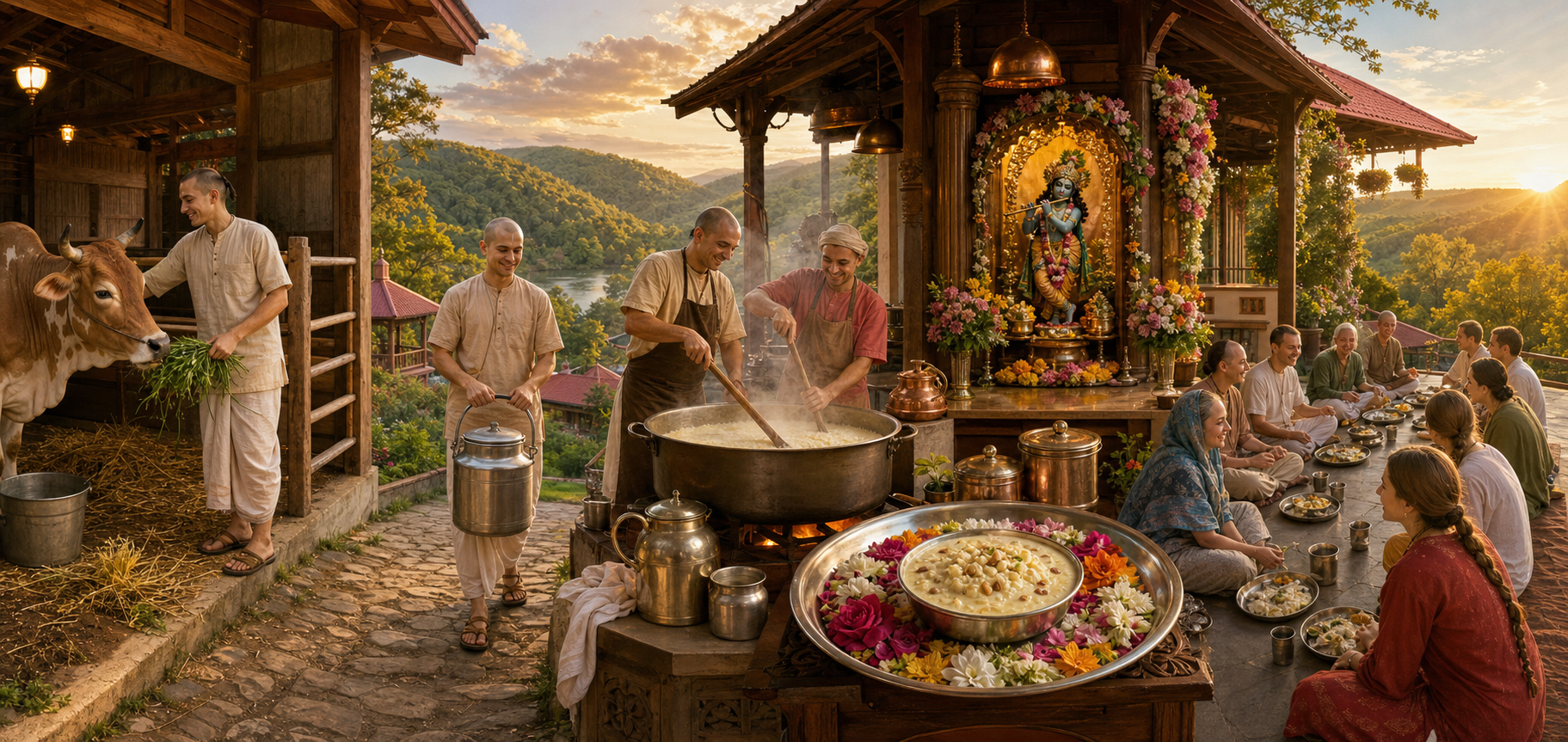
In Gaudiya Vaishnava practice, prasadam is food that has been offered to Krishna and is then received as grace. That makes the offering decisive. Yet the New Vrindaban memory also directs attention to everything that brought the food to that point.
- Relationship: The milk was not treated as an anonymous input. Devotees understood it as coming from Krishna’s cows.
- Responsibility: Feeding, tending, and milking the cows required steady service before anyone could begin making a dessert.
- Transformation: A cook used attention and acquired skill to turn fresh milk into sweet rice or ice cream.
- Offering: The preparation was presented to Krishna with devotion rather than sent directly from the stove to the dining area.
- Sharing: The resulting prasadam nourished a community whose members had labored together.
The sweetness was the most obvious part, but daily responsibility was its infrastructure. If you celebrate the finished dish while overlooking cow care, kitchen discipline, or the offering, nostalgia begins to hide the very labor that created the tradition.
This chain also gives ahimsa a practical place in the discussion. Reverence for the cow cannot be reduced to affectionate language at the moment milk is served. It asks how the animal is regarded, how consumption is connected to responsibility, and whether gratitude changes conduct. You may not be able to reproduce the conditions of an early devotional farm, but you can be honest about where your ingredients come from and refuse to make claims about animal care that you cannot verify.
The pattern has a wider dharmic resonance. Hindu, Buddhist, Jain, and Sikh communities do not assign identical theological meanings to food, yet compassion, gratitude, restraint, service, and communal sharing are recognizable points of kinship. Respect that kinship without flattening the traditions. Do not label every sacred or communal meal “prasadam” indiscriminately; use the vocabulary of the community whose practice you are describing, and let practitioners explain what the food means within their own discipline.
How to receive or continue the tradition responsibly
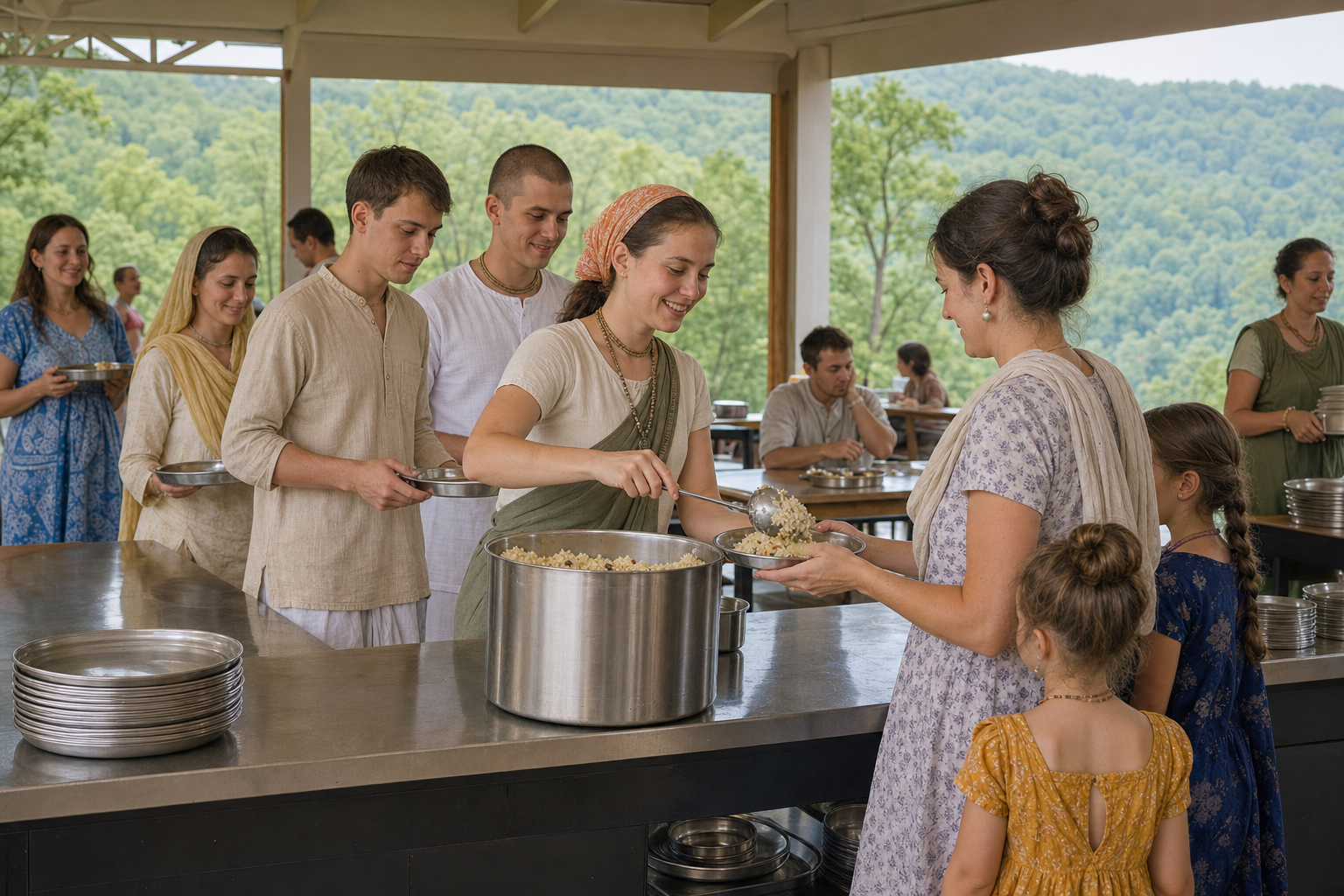
If you visit New Vrindaban
A remembered specialty is not necessarily a standing menu item. Do not plan a visit on the assumption that a particular historic preparation will be served. Confirm current arrangements directly, and approach the community as a place of worship and service rather than as a restaurant preserving a famous dessert.
- Ask your hosts how prasadam should be received and where visitors may appropriately learn about the food service.
- If access is offered, pay attention to the barn, kitchen, offering, and distribution as connected activities.
- Ask who performs the regular work behind the meal, not only who made its most attractive preparation.
- Take a portion you can honor without waste, then return for more if that fits the local practice.
- If you recount the tradition, name Amburish Dasa and Pitambar Dasi and explain the seva behind their preparations. Do not detach their names from the community that formed their skills.
If you continue it at home or in a temple
You do not need to advertise an “authentic New Vrindaban recipe” to carry the lesson forward. No formula can substitute for the devotional chain. Begin with one manageable preparation and organize the service around it.
- State the purpose. Decide that the preparation will be offered and shared, not merely used to recreate a nostalgic flavor.
- Examine the ingredient path. Learn what you reasonably can about the milk and its production. Choose in a way that takes ahimsa seriously, while being candid about what remains unknown.
- Assign the service. Decide who will obtain the ingredients, prepare the kitchen, cook, arrange the offering according to your established practice, serve the prasadam, and clean afterward.
- Keep the dish simple enough to repeat. A tradition becomes durable when another person can learn it and the community can sustain it.
- Follow your lineage’s offering practice. Do not invent a universal ritual from a culinary memory. Ask a trusted temple authority or teacher when you are unsure about the proper procedure.
- Share the credit with the prasadam. Tell participants whose labor made the offering possible, especially when that work happened before cooking or after serving.
- Record the context. Keep the cook’s name, the occasion, the ingredient story, the offering context, and the community’s recollections with the recipe.
Fresh milk coming from a barn is part of the historic memory, not an instruction to consume untreated milk. Use milk that is safe under the conditions where you live. Proximity to a cow barn carries devotional and communal meaning, but it does not replace sound food handling.
The larger discipline is to make every stage answerable to the same intention. If compassion governs ingredient choices, attentiveness governs cooking, devotion governs the offering, and generosity governs distribution, the preparation can teach even when it does not reproduce an earlier taste exactly.
Key takeaways
- New Vrindaban’s sweet rice and ice cream became memorable because cow care, cooking, offering, seva, and communal sharing were joined in one practice.
- Amburish Dasa and Pitambar Dasi learned through sustained service rather than arriving with established expertise.
- Preserving prasadam heritage requires recording people, labor, ingredient paths, devotional context, and memories alongside recipes.
- A visitor should verify present arrangements, follow local etiquette, and notice the whole service chain rather than treating prasadam as a menu attraction.
- A home or temple community can continue the legacy through honest sourcing, repeatable apprenticeship, established offering practice, and careful sharing.
At your next community meal, learn one person’s name, trace one ingredient’s path, and take responsibility for one task connected to the offering. That small act moves a cherished memory out of nostalgia and back into living seva.
References
