
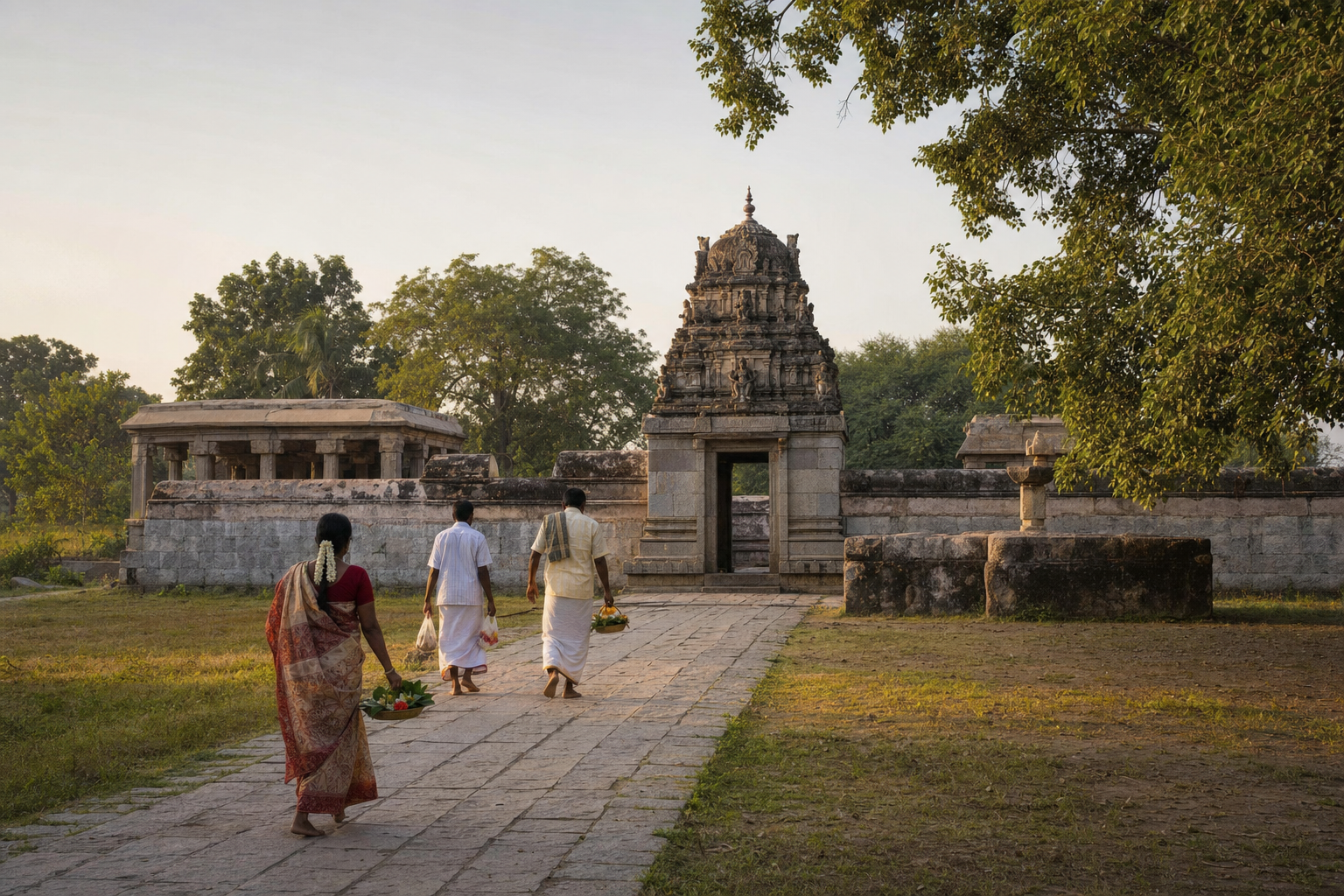
If you are deciding whether to make a separate pilgrimage to Kethaki Sangameshwara Temple, plan for more than a quick roadside darshan. This is a historic Shiva shrine whose value lies in its living worship, local sacred memory, and contemplative atmosphere.
The most useful decision comes before you leave: do you want the intensity of a major observance or enough quiet to sit with your prayer? Choose the occasion accordingly, confirm the current darshan arrangements, and give the temple more time than a checklist visit allows.
Understand the shrine without turning legend into history
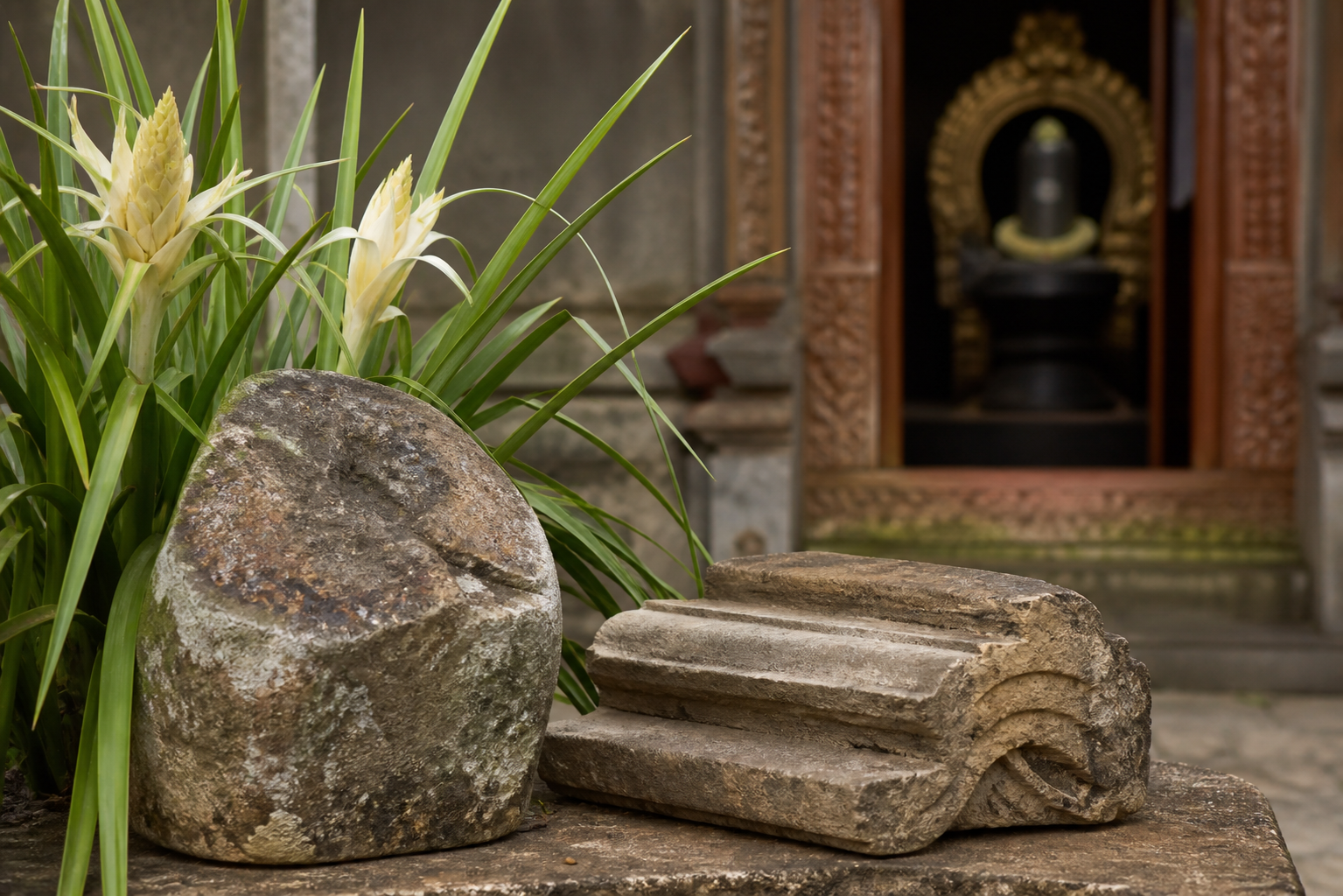
Kethaki Sangameshwara Temple stands in Jharasangam village near Zaheerabad, in the Medak district of Telangana. You may also encounter the names Jharasangam Shiva Temple and Kethaki Sangameshwara Swamy Temple. Keep all three names available when checking directions or speaking with local residents.
The local Sthala Puranam holds that Lord Brahma installed the Shivalingam. The deity’s name is also associated with the kethaki, or pandanus, flower. These traditions explain how devotees understand the sanctity and identity of the shrine; they are not substitutes for an inscription, an archaeological date, or a documented dynastic history.
That distinction matters. You do not have to dismiss sacred tradition in order to be historically careful, and you do not have to convert a sacred account into a date for it to carry devotional meaning. Receive the Brahma tradition as Sthala Puranam. If you are studying the temple’s chronology, look separately for inscriptions, dated records, or other material evidence at the site.
The temple’s physical arrangement reinforces its inward character: a stone-built garbhagriha is accompanied by a modest mandapa. Do not rush through these as architectural labels. Notice the transition from the shared space of the mandapa to the concentrated sacred space of the sanctum. The movement itself prepares you to leave conversation, photography, and sightseeing behind as you approach darshan.
Kethaki Sangameshwara is therefore best approached as a living shrine rather than a monument frozen in the past. Its antiquity matters, but so do the lamps, mantras, offerings, and recurring observances through which the community continues to care for it.
Choose the worship day that matches your purpose
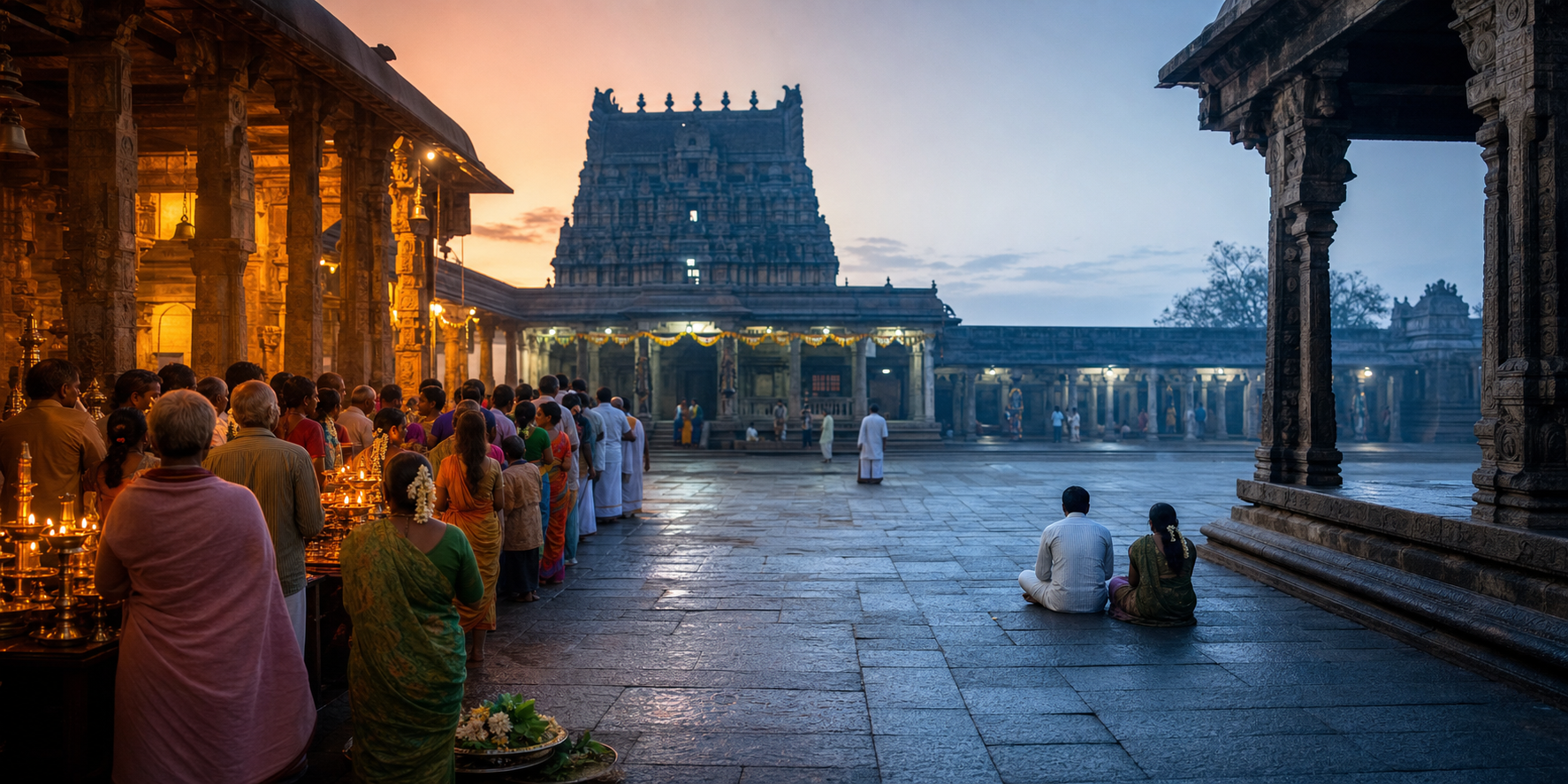
Your choice of date will shape the visit more than a long sightseeing itinerary. The temple participates in the familiar rhythms of Shaiva worship, but each occasion invites a different kind of attention.
- Mahashivaratri: Choose this if collective worship is central to your pilgrimage. The observance brings large congregations for japa and abhisheka, so spiritual intensity should take priority over speed or solitude.
- Karthika Masam: This is the fitting choice if deepam lighting and extended evening prayer are what draw you. Verify the local evening schedule before committing to a travel time.
- Pradosham: Visit on this recurring Shaiva observance if you want your darshan to follow an established cycle of Shiva worship. Ask whether any special archana or abhisheka arrangements apply on your chosen date.
- Monday, or Somavar: Mondays are regarded as especially auspicious for offerings and archana. They provide a straightforward option when a major festival is not practical.
- A nonfestival day: Choose an ordinary date if avoiding a known festival congregation is more important than joining a major observance. Quiet cannot be guaranteed, but you will not be deliberately arriving on an occasion associated with the largest gathering.
Do not treat this worship calendar as a timetable. Festival schedules and seasonal darshan arrangements can vary. Decide first what kind of worship you want, and then verify the actual hours for that date.
If you are travelling with elders or children, make the same choice explicitly. A large Mahashivaratri congregation and an unhurried family visit can both be meaningful, but they are not the same plan. Do not promise a calm, quick darshan when you have intentionally selected the temple’s principal gathering.
Plan the journey around what must be confirmed locally
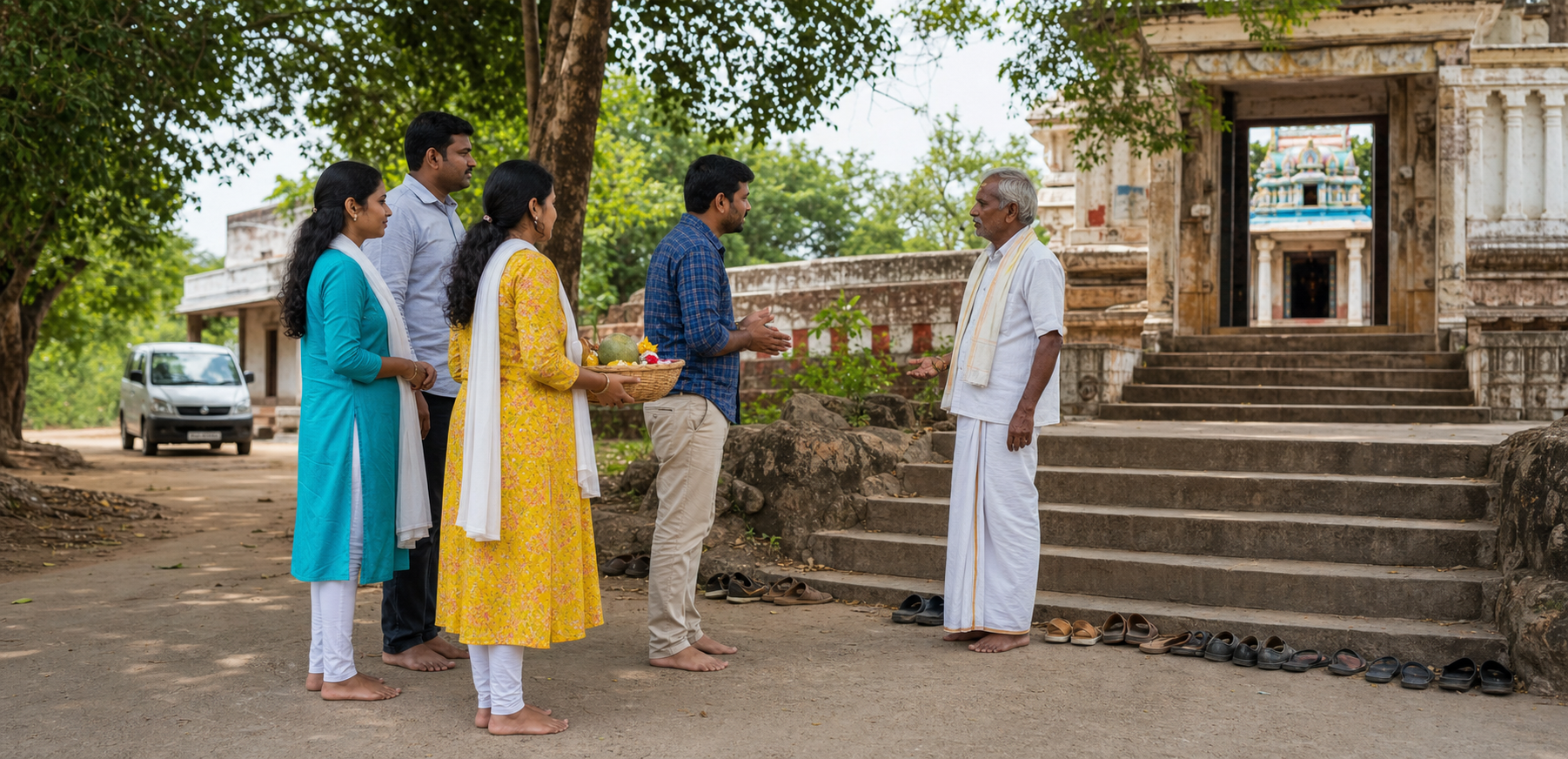
Jharasangam’s proximity to Zaheerabad and the Hyderabad-Pune corridor makes the shrine accessible to pilgrims approaching from Telangana and beyond. Accessibility, however, does not guarantee that online timings, ritual arrangements, or visitor facilities will be identical on every date.
Use this short preparation sequence before you set out:
- Confirm the destination name. Check for Jharasangam, Kethaki Sangameshwara Swamy Temple, and Jharasangam Shiva Temple so that a naming variation does not send you to the wrong place.
- Verify opening and darshan hours. Use a current local temple contact or someone in Jharasangam, especially when visiting during a festival or arriving late in the day.
- Ask about the ritual you intend to perform. If abhisheka, archana, or a particular offering is important to you, confirm whether devotees may participate, when it occurs, and what the temple accepts. Do not carry a bag of ritual materials on the assumption that every shrine follows the same procedure.
- Check essential facilities separately. If parking, toilets, food, step-free access, or a place to rest is necessary for someone in your group, obtain a direct answer before travelling. The temple’s accessibility from a major corridor does not establish what is available inside the precinct.
- Leave an unhurried margin. Build enough flexibility to sit, pray, or accommodate a changed darshan arrangement. A visit centred on stillness is undermined when every minute is tied to the onward journey.
Post-monsoon and winter conditions are generally the more pleasant choice for the journey. That is a seasonal preference, not a guarantee about any particular day. Check the actual weather near the date of travel, especially if children, elders, or anyone sensitive to heat is accompanying you.
A useful final check is simple: can everyone in your group explain why this temple is the destination? If the answer is only that it lies on the route, pause and choose one shared intention – darshan, a family prayer, Shiva japa, or time in silence. That small decision prevents the journey from becoming a hurried stop with no centre.
Let temple etiquette deepen rather than interrupt darshan
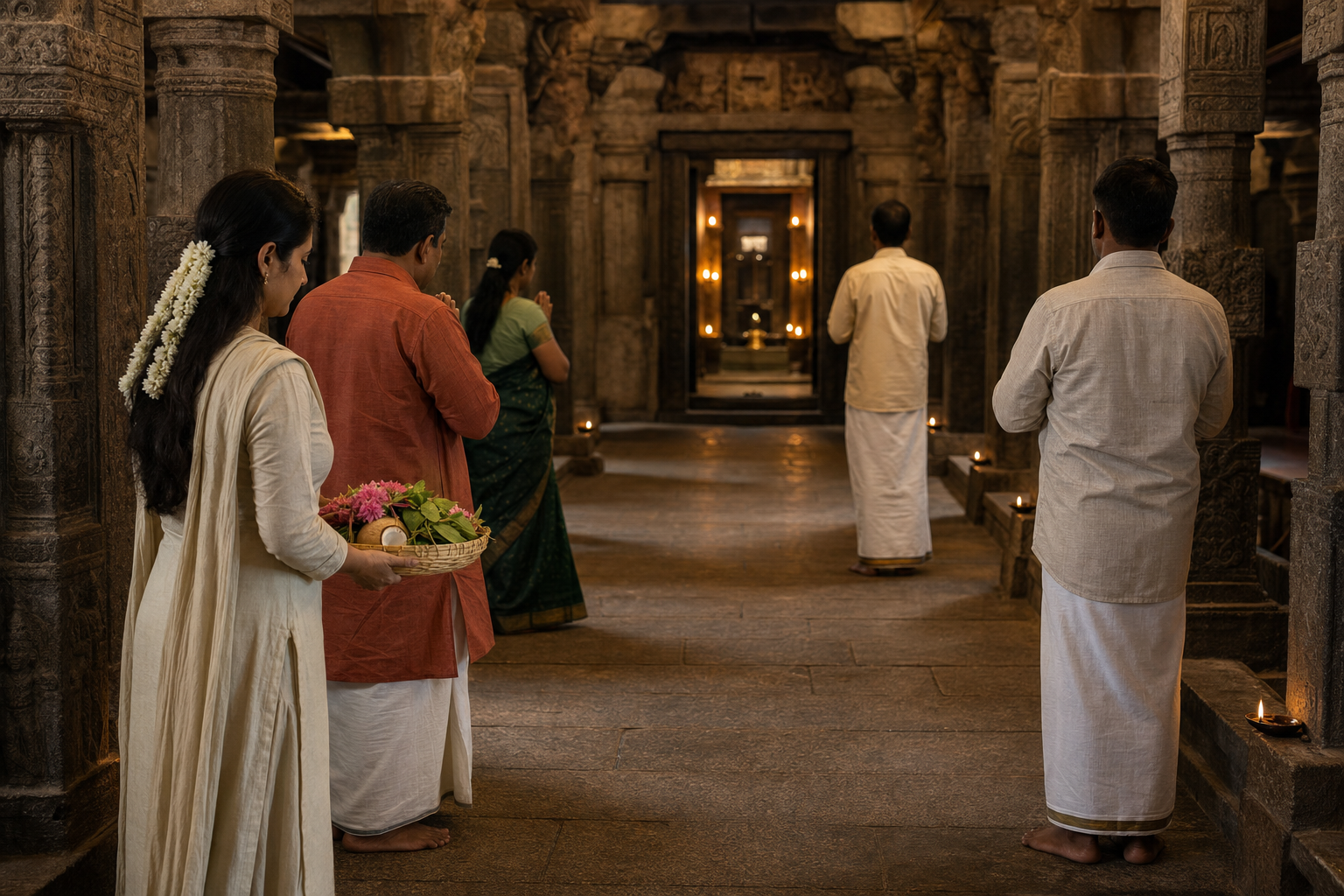
You do not need an elaborate private ritual to make the visit meaningful. A simple sequence can give the mind enough structure to settle without pretending to replace the temple’s own customs.
- Arrive in simple, respectful clothing. Put away distractions before entering the worship area instead of waiting until you stand near the sanctum.
- Pause in the mandapa. Let your breathing and attention settle. This keeps travel conversations and logistical concerns from following you directly into darshan.
- Hold one clear sankalpa. It may be gratitude, a prayer for another person, or a commitment to a dharmic discipline. One sincere intention is easier to carry through worship than a hurried list of requests.
- Approach the Shivalingam according to local direction. If you wish to offer or participate in abhisheka, follow the priest’s instructions. Access to the sanctum and rules for ritual substances can differ from one temple to another.
- Use silence, japa, or a familiar Shiva stotra. A quiet repetition of Om Namah Shivaya is sufficient if you have not prepared a longer recitation. Do not turn unfamiliarity with complex ritual into a reason to remain mentally absent.
- Step aside after darshan. Do not block the line while attempting to prolong your own moment. If the precinct permits, continue your prayer from a place that leaves the approach clear for other devotees.
Maintain silence near the garbhagriha, and ask before taking photographs. Permission matters even when another visitor is using a phone. A photograph may be acceptable in one part of a complex and prohibited near the deity; local instruction, not imitation, is the reliable rule.
Families can use the visit to teach a valuable distinction. Tell children that the Brahma account is the temple’s sacred local tradition, then invite them to notice how that tradition is preserved through worship. This gives them a way to respect Sthala Puranam without confusing devotion, oral memory, and historical dating.
Visitors shaped by other Dharmic traditions can enter with the shared disciplines of ahimsa, satya, dhyana, and seva: non-harm, truthfulness, contemplation, and service. At the same time, Kethaki Sangameshwara remains a specifically Shaiva place of worship. Shared values should deepen respect for that identity, not flatten distinct traditions into interchangeable rituals.
Key takeaways for a respectful Kethaki Sangameshwara visit
- Use Jharasangam, Kethaki Sangameshwara Swamy Temple, and Jharasangam Shiva Temple when confirming the destination.
- Choose Mahashivaratri for large-scale collective worship, Karthika Masam for lamp-lit evening observance, or Pradosham and Monday for the recurring Shaiva calendar.
- Confirm darshan hours, festival arrangements, ritual participation, and essential facilities locally before leaving.
- Receive the belief that Brahma installed the Shivalingam as Sthala Puranam, not as a precise archaeological date.
- Ask before offering materials, joining abhisheka, entering restricted areas, or taking photographs.
- Protect the temple’s contemplative character by allowing time for prayer and maintaining silence near the sanctum.
Your next step is concrete: choose the observance that fits your purpose and make one current local verification of the hours and ritual arrangements. Then arrive with one prayer, few assumptions, and enough time to let darshan be the centre of the journey.
References
