

When an insulting clip reaches your phone in Birgunj, the decisive moment comes before the street fills: will you preserve evidence and slow the claim, or forward anger faster than facts? For a resident, shopkeeper, parent, or community volunteer, that choice can affect worship, trade, transport, and the safety of neighbors who had nothing to do with the provocation.
Your position does not have to be timid. You can condemn an insult to Hindu Dharma, demand lawful accountability, and still refuse retaliation against a Muslim neighbor or mosque. In fact, that disciplined response keeps attention on the alleged offender instead of allowing innocent people to bear the cost.
Separate the known facts from what anger adds
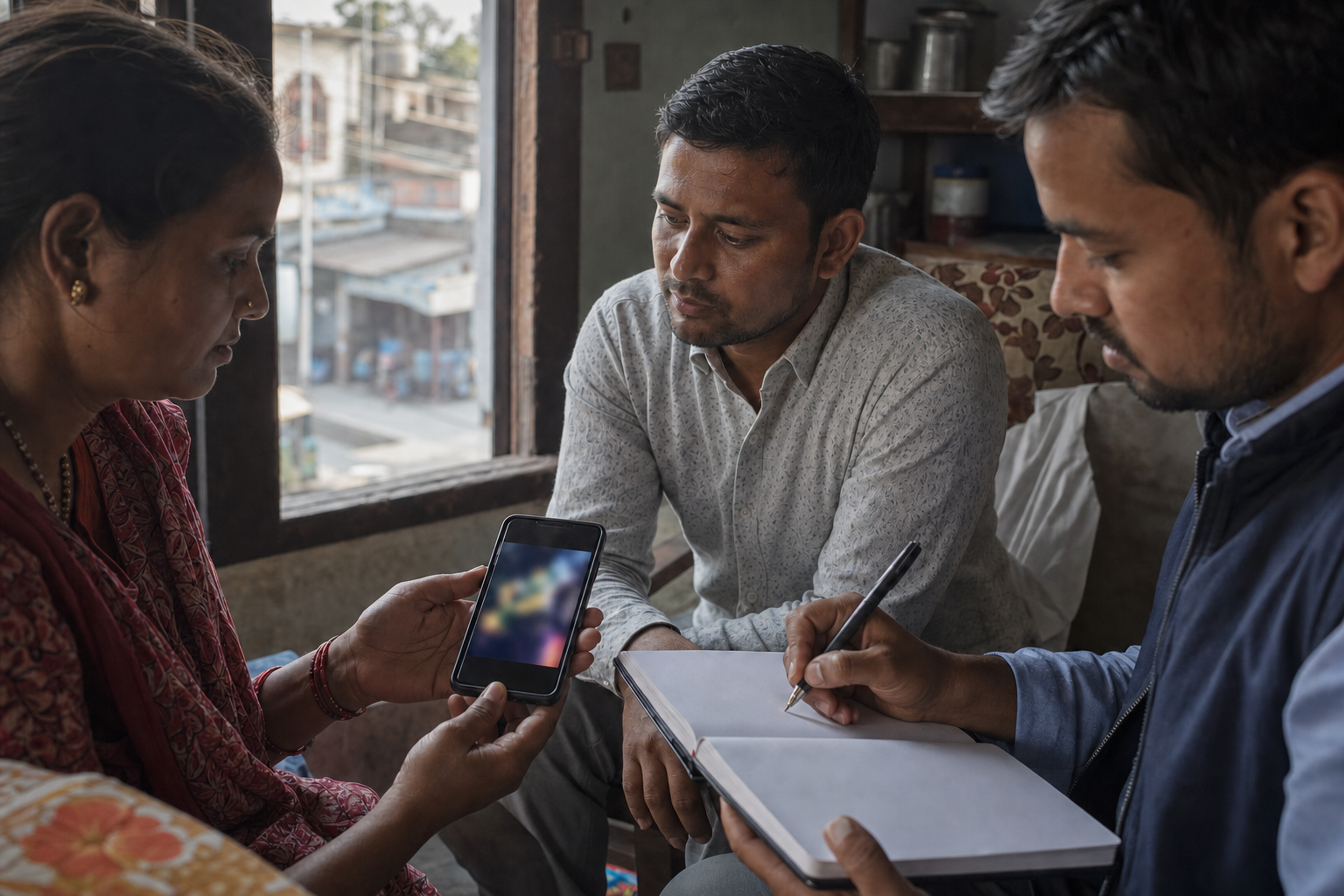
The narrowest reported sequence is this: a derogatory TikTok video targeting Hindu Dharma circulated rapidly, vandalism at a mosque followed, and police increased security in and around Birgunj in Parsa district. The order of these events helps explain the escalation. It does not, by itself, establish common authorship, coordination, or collective responsibility.
This distinction is the first defense against communal punishment. The person who uploaded or circulated an offensive video, the person who damaged a sacred place, and the ordinary resident who merely shares a religious identity are not interchangeable. Each allegation requires its own evidence.
Before you repeat a claim, place it in the right category:
- Direct evidence: the original link, account, complete recording, or an unedited image with whatever identifying context remains available. Preserve it privately. Do not crop away a handle, caption, or surrounding material.
- Officially confirmed information: a statement clearly issued by police or the local administration. Repeat the office responsible, the substance of the statement, and its verification status without adding motive or identity.
- An allegation: something a witness, neighbor, group chat, or community representative says happened but which has not yet been confirmed. Treat it as a lead for authorities, not as public proof.
- An inference: a conclusion about who was behind an act, why it happened, or what an entire community supposedly intends. Never convert inference into fact through repetition.
Keep the evidence, not the audience. Save the original material for a platform report or lawful complaint, then stop circulating it. Reposting a religious insult merely to denounce it still gives the insult a larger reach. If no responsible authority can confirm a surrounding claim, the honest label is unverified, not probably true.
The cost of getting this wrong is concrete. Shuttered markets, anxious families, and disruption across neighborhoods affect people who neither created the offensive content nor participated in vandalism. Accuracy is therefore not a polite extra. It is part of public safety.
Answer anti-Hindu provocation without widening the injury

An insult directed at Hindu Dharma deserves clear condemnation and, where applicable, lawful examination. Vandalism against a mosque also deserves clear condemnation and investigation. Neither position cancels the other. Nor does fairness require pretending that offensive speech and physical damage are identical acts. They involve different conduct, different evidence, and potentially different legal questions.
A dharmic response begins with disciplined distinctions. Ahimsa sets a boundary on the means used to defend what is sacred. Daya keeps innocent families within our moral concern. Maitri preserves the channels through which frightened neighbors can prevent another act of retaliation. These principles do not demand silence or passivity. They prevent justified anger from becoming indiscriminate harm.
Protecting a mosque does not weaken the demand for accountability over anti-Hindu speech. Condemning anti-Hindu hostility does not require excusing an attack on a mosque. A sacred place must never become a substitute target for an offender who is absent, unknown, or still under investigation.
When a viral claim reaches you
- Preserve the original privately. Retain the link, account name, full capture, and surrounding context if they are available. An edited montage or cropped screenshot is weaker evidence because it may conceal where the material came from.
- Interrogate its provenance. Ask who first uploaded it, whether the clip itself establishes a location, whether it has been altered, and whether police or the local administration have confirmed the associated claim. Missing answers are a reason to pause.
- Send it to the proper channel. Use the platform’s reporting process for abusive content. Send possible evidence of an offense or immediate threat to local police or the administration. A trusted community verification contact can help establish whether officials have already addressed the claim.
- Reduce its reach. If a public response is necessary, describe the concern narrowly without embedding or replaying the insult. Link to a verified official notice when one exists. Do not publish a person’s name merely because it appears in a group message.
- Correct the same network. If you shared a claim that later proves false or unsupported, post the correction in every group where you sent it. A quiet deletion leaves the rumor alive in other people’s phones.
A useful verification message is: “This claim is circulating, but I cannot confirm its origin or the people involved. Has your office verified it, and is there a public notice we can share instead?” That wording supplies the claim without endorsing it and asks for something others can check.
When the danger has moved into the street
If a crowd is gathering, property is being attacked, or people are being threatened, move away from the danger and contact police or the local administration. Do not approach a violent group to obtain a better recording, stage a confrontation, or challenge participants. Evidence is not worth physical injury. Follow official security directions and do not route other residents toward the scene.
A community rumor hotline can help, but only if it has a named owner and a strict verification method. Its operators should record the claim, where it came from, whether an authority has confirmed it, and what correction or safety instruction was issued. A hotline that merely collects forwarded messages becomes another rumor channel.
Give each Birgunj institution a clear peacebuilding job

Appeals for harmony matter, but residents also need an operating system for calm. Birgunj already has institutions that reach different parts of daily life: the local administration, police, religious councils, market and transport associations, schools, and youth networks. Their roles should be assigned before another provocative clip begins circulating.
- Local administrators: issue short notices whenever material facts change. Each notice should distinguish what is confirmed from what remains unverified, identify any active security direction, and name the channel for complaints or evidence. A clearly identified spokesperson helps residents recognize authentic updates.
- Police: protect temples, mosques, and other sacred places without exception; keep immediate crowd control separate from the investigation of individual offenses; and record complaints about digital incitement and physical vandalism as distinct matters. Public language should describe alleged conduct, not assign guilt to a religious population.
- Religious councils and community elders: make an explicit joint commitment that religious insults will be challenged through lawful means, retaliation will be rejected, collective blame will not be tolerated, and every place of worship will be protected. That message must be repeated inside congregations, not reserved for a ceremonial photograph.
- Market and transport associations: distribute verified opening, closure, and route information through a clearly named contact. Traders and drivers should not have to make safety decisions from anonymous forwarded messages.
- Schools and youth networks: teach the practical difference between an original file and an edited clip, a witness claim and official confirmation, and criticism and incitement. Youth-led counterspeech can reject sectarian narratives, but young people should never be sent into a dangerous gathering as informal mediators or recorders.
This division of labor protects more than public order. Birgunj’s markets, transport links, schools, and shared civic spaces depend on cooperation across communities. When those systems close, the economic and social penalty spreads far beyond anyone accused of wrongdoing.
Impartial action is essential. Securing a mosque must not be presented as denial of the anti-Hindu provocation. Investigating the video must not be presented as an excuse for vandalism. Officials build credibility when they explain that each alleged offense is being examined on its own evidence.
Build durable peace around accountability, not amnesia

Peacebuilding fails when “unity” becomes a demand that injured people stop asking questions. It also fails when accountability becomes collective punishment. Birgunj needs neither a forced forgetting of anti-Hindu hostility nor a communal answer to an individual offense.
The correct standard is equal due process, not an automatically identical outcome. Ask whether every allegation has been recorded, evidence is being preserved, affected sacred places are protected, suspects are distinguished from their wider communities, and residents can submit information without public exposure. Whether particular speech violates the law is for the competent legal process to determine; a crowd or group chat cannot impose that judgment.
Once immediate security is restored, restorative work should address what the unrest damaged. Support the repair and reopening of affected civic or sacred spaces through an accountable process. Give frightened families a private route to describe their needs rather than requiring a public performance of forgiveness. Coordinate the return of markets and schools with clear safety information. Trauma-informed outreach should avoid forcing people to relive an incident for the sake of a symbolic event.
The Birgunj-Parsa corridor also needs a durable rumor-verification network suited to a border hub, where digital claims can travel beyond one neighborhood quickly. Market leaders, school contacts, religious representatives, police, and administrators should use the same basic format: exact claim, claimed location, current verification status, responsible contact, and any correction. Archived corrections are especially important because an old falsehood can return without the message that disproved it.
Hindu, Buddhist, Jain, and Sikh voices can reinforce this discipline together. Their role is not to blur distinct traditions or deny a specifically anti-Hindu insult. It is to demonstrate that defense of Dharma, fidelity to truth, and protection of innocent life belong together. A pro-Hindu response is strongest when it is precise enough to identify the alleged wrongdoer and principled enough to leave uninvolved Muslims and their sacred places unharmed.
Key takeaways for residents and community leaders
- A viral anti-Hindu video and later vandalism are separate alleged offenses unless evidence establishes a connection.
- Preserve original evidence privately, report it through lawful channels, and stop enlarging the audience for provocative content.
- Condemn anti-Hindu hostility without assigning responsibility to Muslim residents who had no proven involvement.
- Protect every sacred place without exception. Defense of a mosque and accountability for an insult to Hindu Dharma are compatible duties.
- Require police and administrators to distinguish confirmed facts, allegations, suspects, and wider communities in every public update.
- Use schools, markets, religious councils, and youth networks for verified information and counterspeech, not for unsafe street-level intervention.
If the clip is on your phone now, preserve the original privately, stop forwarding it, seek verification, and report it through the appropriate channel. If you lead an institution, name your verification contact, agree on a correction format, and establish protection for sacred places before the next rumor arrives.
Birgunj’s next test is not whether leaders can issue a harmony statement after damage has occurred. It is whether a resident can encounter a hateful message without becoming its courier, and whether an alleged offender can face lawful accountability without an innocent neighbor paying the price.
References
