

You may already have several 2026 festival dates saved, yet still be unsure which evening to worship, when to fast, or whether a date copied from an Indian calendar applies in your city. That uncertainty is normal: a Hindu observance belongs to a tithi, while your phone calendar is organized by midnight-to-midnight civil dates.
The dependable way to plan is to treat the tithi as the rule, the locally calculated date as its application, and the temple schedule as the final logistical layer. Once you separate those three things, you can organize monthly vratas, multi-day festivals, and pilgrimage without relying on a universal date list that may not fit your location.
The date is an output; the tithi is the rule

A tithi can begin on one civil date and end on another. The applicable observance date may then depend on sunrise, a daytime puja period, moonrise, or a night worship window. Longitude, latitude, time zone, and daylight-saving changes can also affect calculations, especially for devotees outside Bharat.
This is why two calendars can appear to disagree even when both are following a recognizable tradition. Amanta and Purnimanta month reckonings may label the month differently, while local timing rules determine which civil date carries the observance. For practical planning, retain the lunar rule and verify how your family, sampradaya, or temple applies it in your location.
| Observance | Lunar rule | What you need to schedule |
|---|---|---|
| Pournami and Thiruvannamalai Girivalam | Full-moon tithi | Confirm the local Pournami window and moonrise, then add travel and temple notices. The Thiruvannamalai observance follows Pournami night. |
| Masik Shivaratri | Krishna Paksha Chaturdashi, immediately before Amavasya | Reserve the relevant evening or late-night period for Shiva puja, japa, and any vigil. Do not select a date merely because it is the fourteenth civil day of a month; follow the local Krishna Chaturdashi timing. |
| Masik Vinayak Chaturthi | Shukla Paksha Chaturthi after Amavasya | Check when Chaturthi is present during the relevant daytime puja window. Keep it distinct from Sankashti Chaturthi, which is the Krishna Paksha Chaturthi after Purnima. |
| Magh Navratri | Magha Shukla Pratipada through Navami | Block the complete nine-night period, not just its opening and closing dates. In 2026, the planning range is 19-27 January. |
| Vasavi Atmarpana Dinotsavam | Magha Shukla Dwitiya | Set aside the applicable day for Devi worship, reflection on ahimsa, and community service. In 2026, it falls on 20 January. |
The distinction between the two Chaturthis deserves special attention. Starting after Amavasya places you in Shukla Paksha and leads to Vinayak Chaturthi. Starting after Purnima places you in Krishna Paksha and leads to Sankashti Chaturthi. A calendar entry that says only “Chaturthi” is incomplete; record the paksha as well.
Build one master calendar with three planning layers
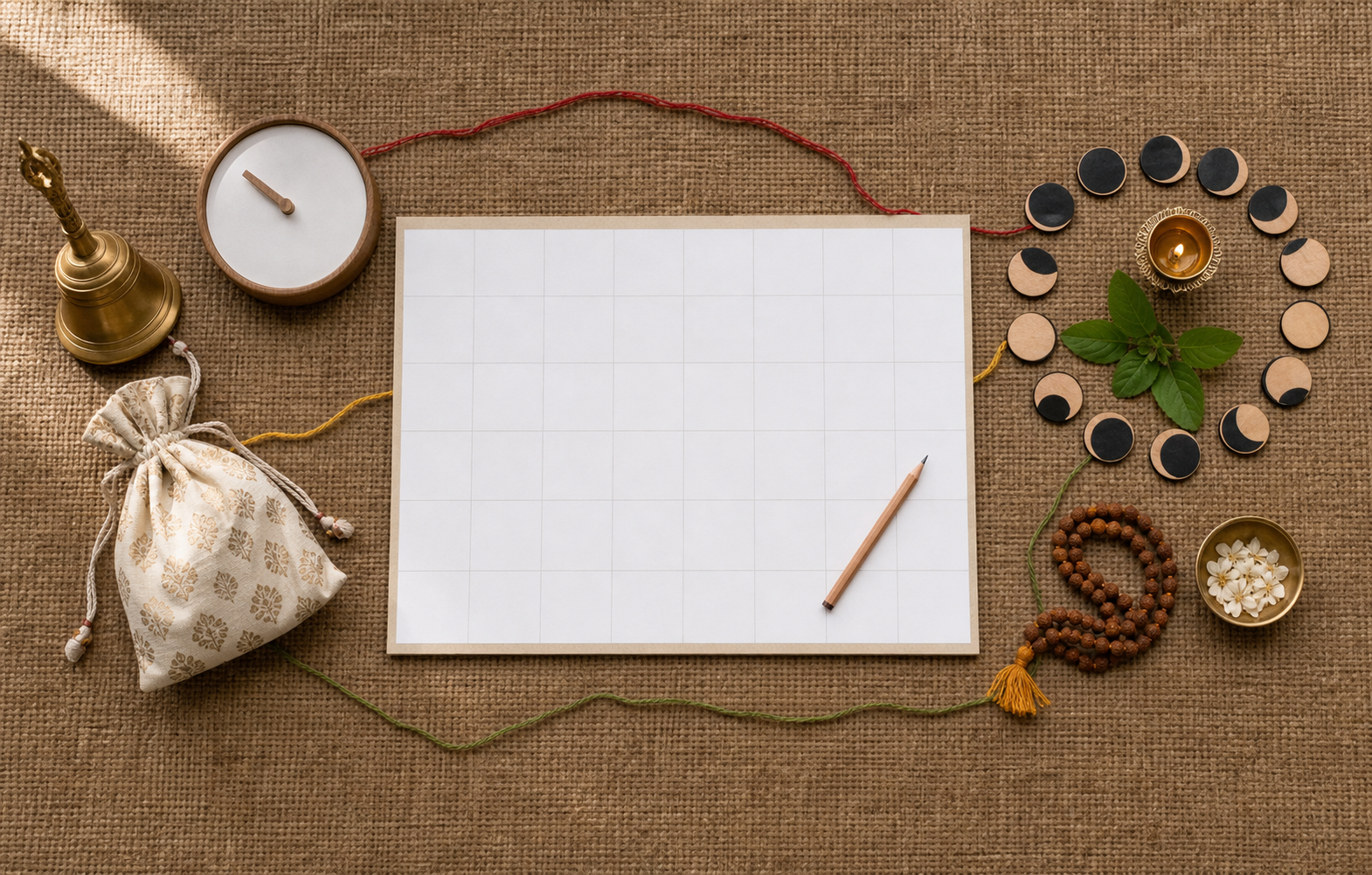
Your annual calendar should answer three different questions: when the tithi occurs, when your tradition observes it, and what you personally need to arrange. Combining all three in a single unqualified date is what creates confusion later.
- Fix the location. Use the city where you will actually observe the vrata or attend the temple. A date calculated for India should not automatically be copied into a North American, European, or other diaspora calendar.
- Fix the calendrical convention. Note whether your household or temple follows an Amanta or Purnimanta month reckoning. If a regional name differs, compare the tithi and paksha before assuming the calendars describe different observances.
- Enter the lunar rule first. Write “Krishna Paksha Chaturdashi” for Masik Shivaratri and “Shukla Paksha Chaturthi” for Vinayak Chaturthi. The rule remains intelligible even if a local calculation later moves the civil-date entry.
- Add the active tithi window. Record its local start and end, along with the relevant sunrise, daytime, moonrise, evening, or night condition. This prevents you from seeing a date without knowing which part of it matters.
- Add the practical commitment. Mark an observance as home puja, vrata, temple visit, community program, multi-day sadhana, or pilgrimage. These require very different preparation.
- Reconfirm before acting on travel or public timings. Use a trusted regional Panchang and the relevant temple notice. The Panchang settles local lunar timing; the temple notice settles opening hours, collective puja, processions, and other arrangements.
A useful event title is “Observance – paksha and tithi – city.” In the notes, keep the tithi start and end, intended puja period, fasting choice, offerings to obtain, temple details, travel time, and the name of the Panchang or local authority you followed. If the event later shifts between adjacent dates, you can update it without losing the reason behind the decision.
Use provisional status for dates that have not yet been checked locally. A monthly reminder can prompt you to verify the next lunar observance instead of trying to settle every puja window from a generic year-at-a-glance list. Travel, leave from work, accommodation, and community bookings should be confirmed only after the applicable local timing and temple program are clear.
Use January as a test of your planning system
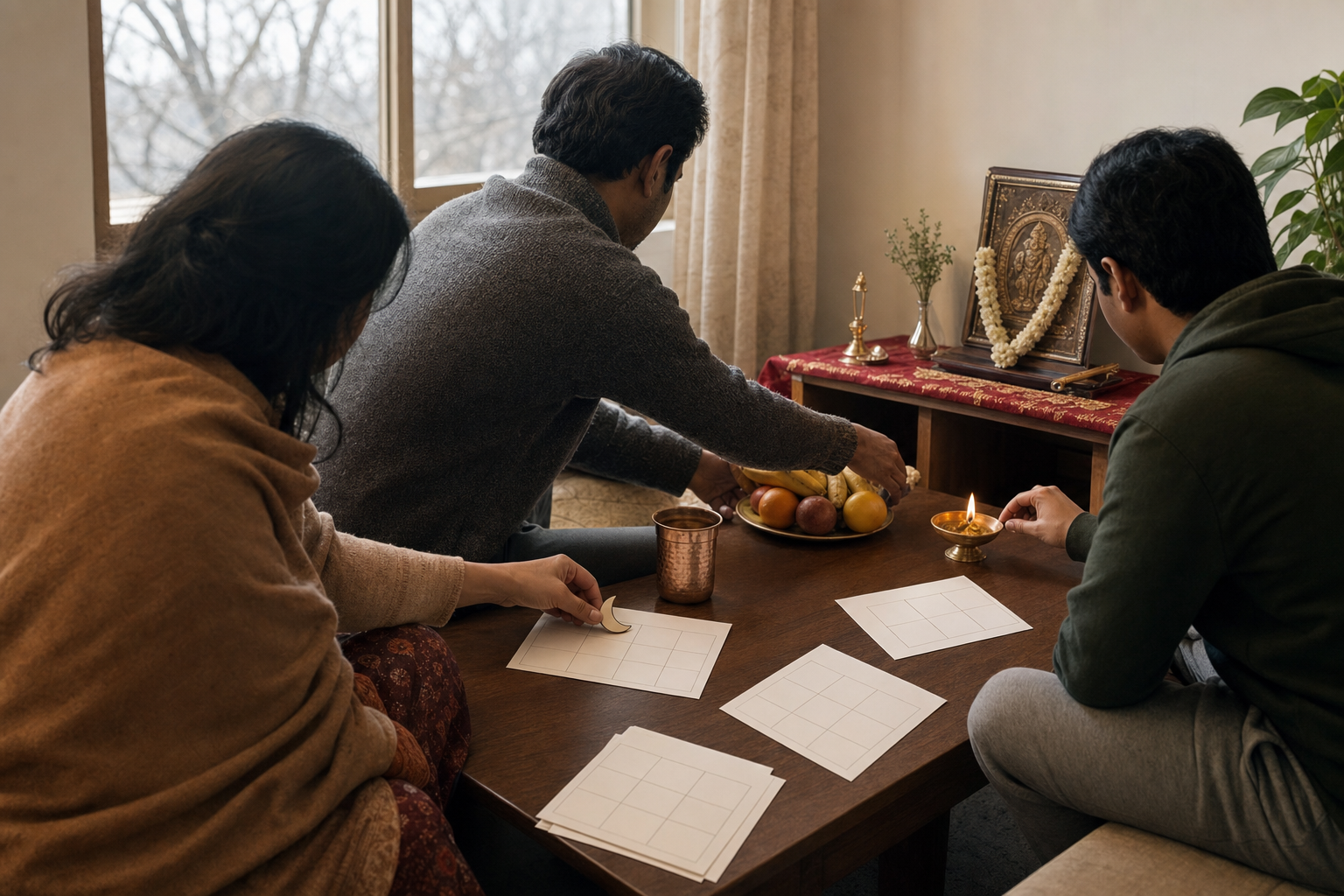
January 2026 contains a useful mix of Pournami pilgrimage, a nine-night Shakti observance, and a one-day commemoration. Entering these correctly will show whether your calendar distinguishes a tithi window from an all-day reminder and whether it handles overlapping devotions sensibly.
2-3 January: hold the full Pournami window
The year’s Thiruvannamalai cycle begins with a full-moon window spanning 2-3 January, with Margazhi Pournami, also identified as Pushya Pournami, on 3 January. If you are planning Girivalam, do not reduce this immediately to an all-day event marked “3 January.” Keep the tithi window, moonrise, local temple communication, transport, and rest needs visible until the pilgrimage plan is settled.
Girivalam is a 14-kilometer circumambulation around Annamalai Hill. The scale of that commitment means the calendar entry should include more than darshan time. Add the journey to Thiruvannamalai, the intended start after moonrise, water, comfortable clothing, and a pace appropriate to the people walking with you.
19-27 January: reserve the whole Navratri arc
Magh Navratri, also called Gupt Navratri, runs from 19 through 27 January 2026. Treat 19 January as the beginning of a daily discipline, not as the festival’s only important reminder. Decide your sankalpa, prepare a simple altar, and choose a daily form of worship you can actually sustain through Navami.
Your daily observance can include a lamp, flowers or fruit, mantra-japa, a short reading such as a portion of Devi Mahatmyam, and evening aarti. The Gupt Navratri emphasis is inward: consistency, restraint, and attention matter more than expanding the ritual until it becomes impossible to maintain.
20 January: honor Vasavi within the existing rhythm
Vasavi Atmarpana Dinotsavam falls on Magha Shukla Dwitiya, 20 January 2026. It therefore occurs inside the Navratri period. You do not need two competing devotional schedules. Preserve the identity of each observance while sharing the practical foundation: the clean altar, lamp, sattvik discipline, and family prayer can remain in place, while the day’s focus turns specifically to Vasavi Kanyaka Parameswari Devi, ahimsa, dignity, and service.
Add kumkum, turmeric, and akshata if these belong to your practice. Choose a concrete expression of dana, annadanam, or community care. If children are participating, ask them to name one way ahimsa can govern thought, speech, or action; this gives the commemoration a daily ethical consequence rather than leaving it as a date on the wall.
Give every observance a sustainable minimum
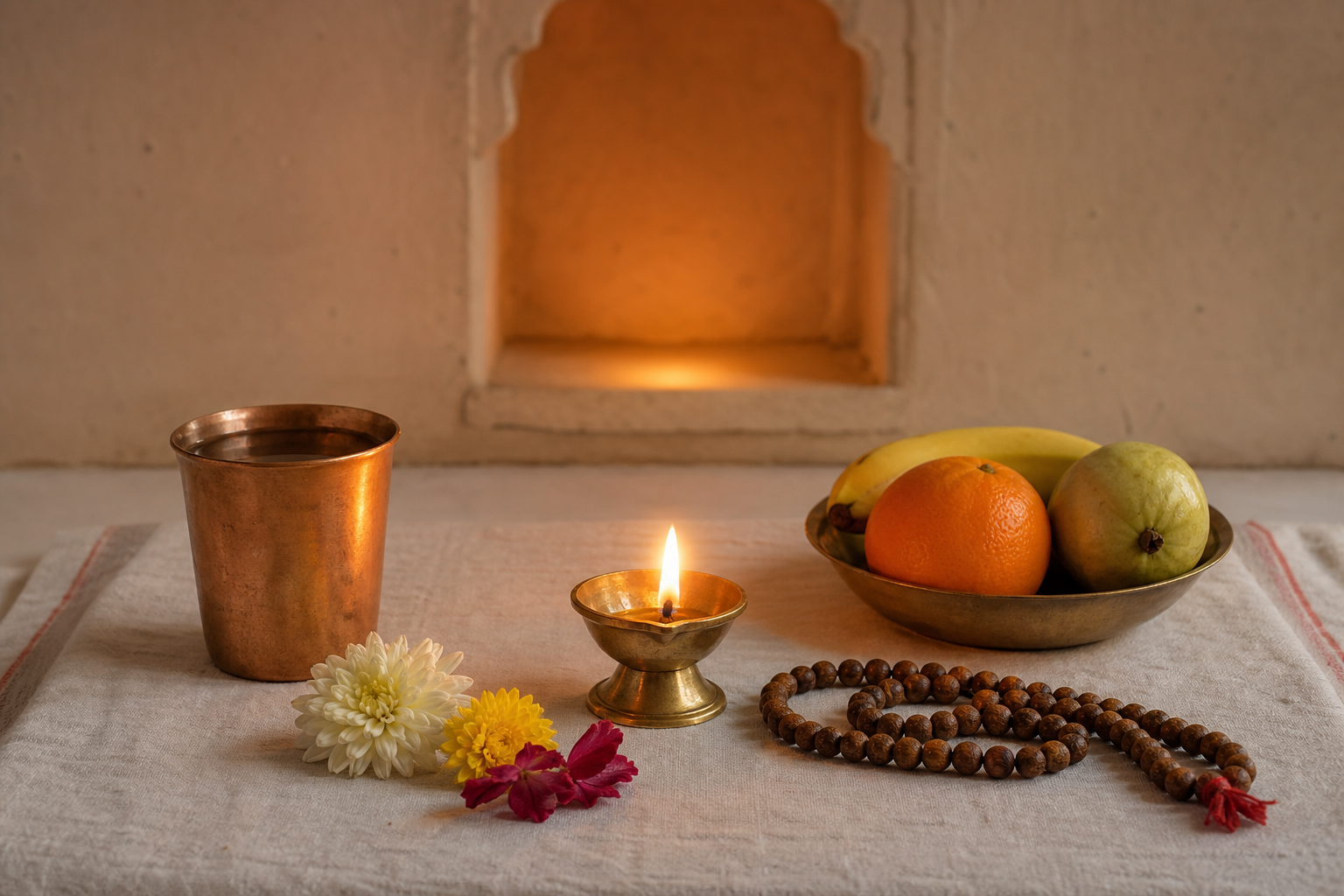
A year-long lunar practice fails when every entry is planned as an exceptional festival. Define a minimum home observance that remains possible in an ordinary working week, then add optional layers for the months when you have more time or when the tithi carries special family significance.
- Preparation: bathe as appropriate, clean the worship space, and assemble offerings before the active puja period.
- Sankalpa: state which vrata or observance you are undertaking and the quality you intend to cultivate.
- Central act: light a lamp, make the relevant offering, and perform mantra-japa, stotra recitation, silent prayer, or aarti.
- Food discipline: decide beforehand whether you will keep a full, light, or partial fast, or follow a sattvik diet according to health and capacity.
- Completion: close deliberately with gratitude, prasad where appropriate, and an act of restraint, kindness, or seva that carries the sankalpa into the day.
For Masik Shivaratri, place the main worship in the evening or late-night period indicated locally. “Om Namah Shivaya” japa, Bilva patra, water, and milk offerings can form the devotional core. A vigil may be added when your circumstances permit, but the monthly observance should cultivate stillness rather than turn exhaustion into its measure.
For Masik Vinayak Chaturthi, perform Ganesh Puja during the locally applicable Chaturthi period. Durva grass, flowers, modak, and Ganesha stotras support the vrata’s focus on siddhi and buddhi. Decide in advance whether your family breaks the fast after puja within the tithi or follows another established regional custom.
Do not let fasting become a contest. If a full fast would strain your health, retain the vrata’s intention through a lighter or partial fast, sattvik food, mindful hydration, and focused worship. Do not override medical guidance for the sake of reproducing another person’s practice. Self-restraint is central; preventable harm is not.
Pilgrimage needs a different minimum. On the Thiruvannamalai Girivalam route, many devotees pause at the eight directional Lingams associated with Indra, Agni, Yama, Niruthi, Varuna, Vayu, Kubera, and Isana. Build those pauses into your expectations. Carry water, walk mindfully, let elders and children take a gentler pace, minimize waste, and keep the route clean. Festival periods and weekends can bring larger gatherings, so an unhurried schedule is more realistic than a tightly timed itinerary.
Key takeaways for your 2026 calendar
- A civil date is not enough. Save the paksha, tithi, local start and end, and the worship condition that decides the observance.
- Use the city where you will worship, not the location for which a convenient online list was calculated.
- Keep Shukla Vinayak Chaturthi distinct from Krishna Sankashti Chaturthi, and keep Krishna Chaturdashi as the defining rule for Masik Shivaratri.
- Mark 2-3 January as the opening Pournami window for Thiruvannamalai planning, 19-27 January for Magh Navratri, and 20 January for Vasavi Atmarpana Dinotsavam.
- Separate home puja, fasting, temple programs, and pilgrimage in your planning; each requires a different level of preparation.
- When observances overlap, share practical preparations without erasing their distinct deity, tithi, intention, or community meaning.
- Reconfirm local Panchang timing and temple arrangements before committing to travel or public-event plans.
Open your calendar with one decision: choose the city and Panchang tradition you will follow. Enter January’s confirmed anchors, create recurring placeholders for Pournami, Krishna Chaturdashi, and Shukla Chaturthi, and leave each monthly civil date provisional until its local tithi window is checked. That small discipline will make the rest of your 2026 observances calmer, clearer, and easier to keep.
References
- DharmaRenaissance Blog – Girivalam 2026: Thiruvannamalai Pournami Dates, Sacred Route, and Devotee Guide
- DharmaRenaissance Blog – Masik Shivaratri 2026 Guide: Monthly Dates, Sacred Krishna Paksha Meaning, and Fasting Tips
- DharmaRenaissance Blog – Masik Vinayak Chaturthi 2026: Siddhivinayak Vrat Guide, Tithi Method, and Puja Insights
- DharmaRenaissance Blog – Vasavi Atmarpana Dinotsavam 2026: Date, Tithi, Meaning, and Peaceful Rituals of Ahimsa
- DharmaRenaissance Blog – Magh Navratri 2026 Dates & Ritual Guide: Experience Gupt Navratri’s Sacred Nine Nights
