

A headline that puts “mosque,” “madrasa,” “demolition,” and “power theft” in one line can push you to choose a side before you have separated the allegations. If you are trying to judge the Sambhal action fairly, begin with two narrower questions: what was the recorded status of the land, and what did inspectors establish about each electricity connection?
That separation lets you support firm enforcement without treating every official allegation as conclusive or every procedural question as obstruction. It also keeps a civic dispute from becoming a verdict on an entire religious community.
Key takeaways
- Local authorities said that two mosques and one madrasa identified as encroachments on government land were demolished, while a parallel late-night operation inspected suspected illegal electricity connections.
- A land-clearance case and a power-theft case require different evidence. Proof of one does not prove the other.
- The sound rule-of-law position is conditional but firm: remove an encroachment when the land record, authority, order, and procedure support removal; act against electricity theft when the inspection evidence identifies the connection and the violation.
- Religious identity is neither a substitute for land title nor evidence of wrongdoing. Apply the same documentary standard to a mosque, madrasa, temple, commercial building, residence, or political office.
- If you are personally affected, preserve notices, bills, meter details, photographs, and correspondence. Use the formal grievance route promptly, and obtain local legal advice before a demolition or appeal deadline passes.
Keep the land and electricity cases separate
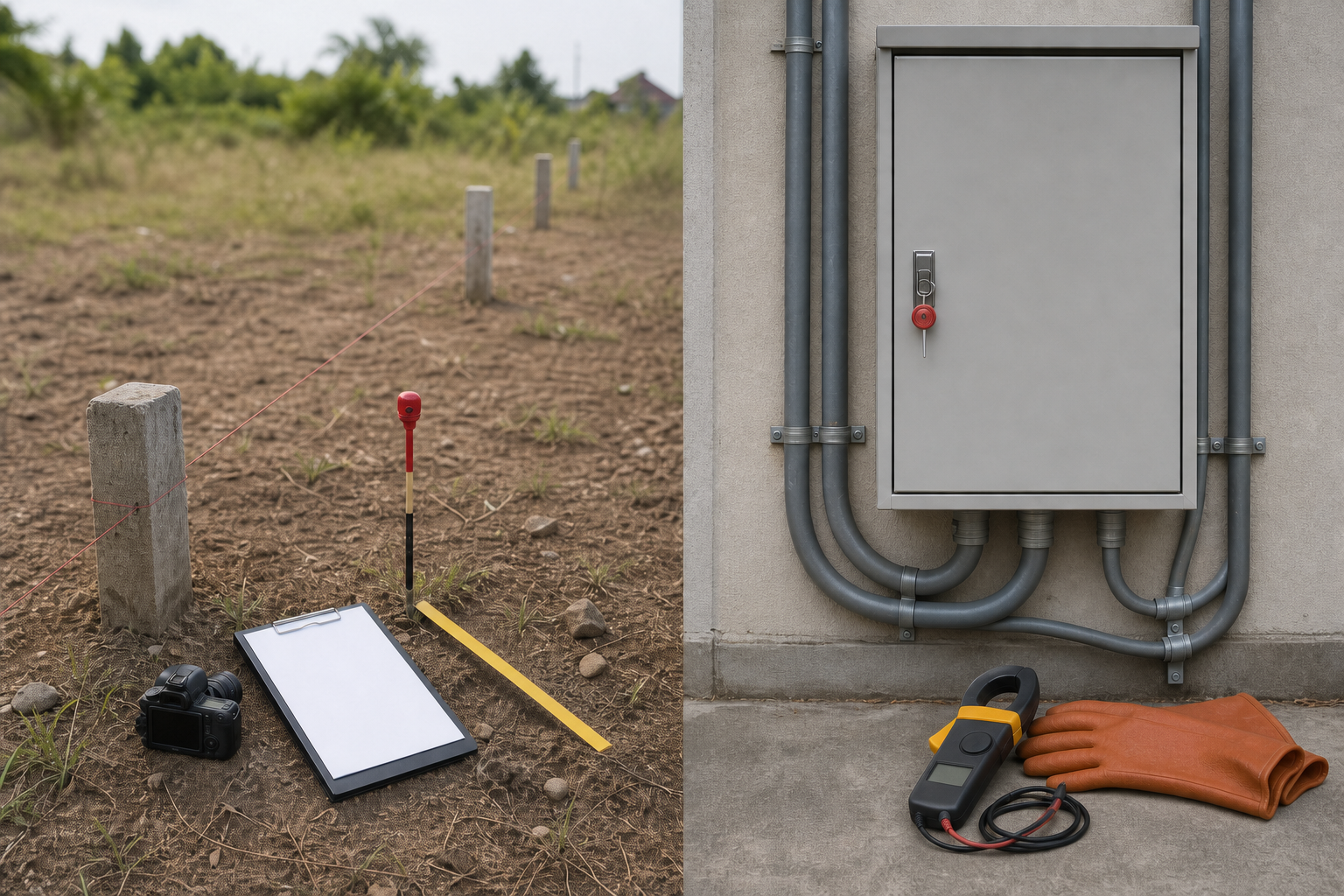
The reported Sambhal operation combined two kinds of enforcement. Officials described the demolished religious buildings as unauthorized constructions on public land. Electricity teams conducted surprise inspections during the same broader drive. The public interests overlap: government land and the power network are common resources. The alleged violations do not.
A dispute over a plot does not establish electricity theft. An illegal connection does not establish encroachment. Even when both allegations concern the same premises, each must stand on its own record. This distinction is the first thing you should preserve when reading a report, discussing the event, or asking an official for clarification.
For a land clearance, identify the plot and the authority
Do not stop at the label “government land.” Ask for enough detail to connect that description to the structure that was removed. A useful public explanation should make the following items identifiable:
- The plot or parcel concerned and the government body recorded as its custodian.
- The permission, lease, allotment, or other authority that officials say was absent, invalid, or exceeded.
- The office that ordered the action and the rule or legal power it invoked.
- The notice given, the recipient, the date, and any response filed before clearance.
- The route and time limit for asking for review, correction, or relief.
This is not a demand that every land dispute be tried on social media. It is a way to prevent a slogan from doing the work of a land record. If a circulated claim omits a plot number or order, that omission does not prove that no record exists. It means you should withhold a categorical judgment until the relevant authority or affected party produces something specific.
For power theft, identify the connection and the alleged act
“Power theft” is also too broad to evaluate without particulars. Ask which premises and connection were inspected, what unauthorized arrangement or interference was alleged, how it was documented, and who had control of the connection. A photograph of a crowded lane or a reference to a neighborhood is not evidence against every household in it.
Some residents reportedly experienced steadier voltage and fewer outages after illegal connections were targeted. That is an encouraging practical outcome for families, students, workers, and legitimate bill-payers. It should still be read proportionately. Reports of improvement are not a quantified audit, and they do not establish guilt at a particular address. The benefit strengthens the case for evidence-based enforcement, not collective suspicion.
Apply the same five-part rule-of-law test

You do not have to choose between administrative firmness and procedural fairness. Procedure is what turns state power into accountable enforcement. Use the same five-part test whether you sympathize with the authority, the institution, or neither.
- Object: What exact plot, structure, meter, cable, or connection is at issue? A precise object prevents allegations from spreading to neighboring properties or an entire community.
- Authority: Which public office acted, and under what recorded order or power? Uniformed presence or official language does not replace an identifiable decision.
- Evidence: What connects the alleged violation to the object? In a land case, look for ownership and permission records. In an electricity case, look for an inspection tied to a particular connection and an identified form of unauthorized use.
- Procedure: What notice, opportunity to respond, inventory, documentation, or safety process applied? Surprise may be operationally useful during a theft inspection, but it makes accurate identification and a clear written record more important.
- Remedy and consistency: Where can an error be challenged, and is the same standard used for comparable properties? A grievance channel must be usable, not merely mentioned, and comparable violations should not receive different treatment because of religious or political identity.
No single item should be treated as a magic word. A notice does not cure a wrong plot number. A land entry does not prove that the correct structure was removed. An inspection does not make every person at the premises responsible. Conversely, a procedural objection does not convert a proven encroachment into lawful occupation or an unauthorized power connection into an entitlement.
This test also improves public debate. Instead of asking whether you are “for” or “against” the Sambhal drive, ask which parts of the record are established, which are asserted, and which remain open to correction. That is a harder conversation to manipulate.
A Dharmic position demands equal standards
A confident pro-Hindu position does not need procedural shortcuts or inherited blame. It can support the removal of a proven encroachment and decisive action against proven electricity theft, regardless of the institution involved. It can also insist that the state identify the property, show its authority, record what it did, and provide a lawful route to contest error.
Sarva-dharma samabhava, equal regard for faiths, does not mean that every structure bearing a religious name is beyond civic scrutiny. It means religious identity should not decide whether scrutiny occurs or whether basic fairness is available. A mosque is not made lawful merely because it is a mosque. A temple would not be made unlawful merely because an official calls it an encroachment. In each case, the record must carry the claim.
This principle protects Hindu interests as much as anyone else’s. If we want lawful temples, maths, ashrams, homes, and community institutions to be secure against arbitrary action, we should defend a standard that distinguishes valid title from assertion. If we want ordinary electricity customers protected from theft, unsafe wiring, overloaded local infrastructure, and unreliable supply, we should demand inspections that distinguish an offending connection from an innocent neighbor.
Equal treatment is not softness toward adharma. It is what makes firm action legitimate. The alternative is selective enforcement, where today’s favored authority becomes tomorrow’s unchecked threat.
What you should do before sharing, reporting, or challenging

If you are following the case from outside Sambhal
Before forwarding a claim, label it either “land” or “electricity.” If it alleges both, make two entries. Then look for the matching record instead of relying on a communal caption.
- Write down the precise factual claim: which structure or connection, and what violation?
- Separate an official allegation from a completed finding or documented outcome.
- Check whether a date, plot, order, meter, inspection, or named office anchors the claim.
- Remove language that assigns guilt to Muslims, Hindus, residents of a whole locality, or religious institutions generally.
- If the necessary record is unavailable, say “not yet established” rather than converting uncertainty into certainty.
This discipline does not require neutrality between lawful use and theft. It requires accuracy about who did what. You can support enforcement while refusing to circulate an accusation wider than the evidence.
If your property or electricity connection is affected
Preserve the record immediately. Keep copies of the notice, envelope or delivery proof, land papers, tax or fee receipts, sanctioned plans, electricity bills, meter and account details, inspection papers, photographs, and every written communication. Make a dated chronology while events are fresh. Ask the responsible office for the grounds, order, inspection record, and grievance route in writing.
If demolition, disconnection, a financial assessment, or a filing deadline is imminent, contact a qualified local lawyer promptly. Procedures and deadlines depend on the governing law and the facts of the property; a general checklist cannot tell you which remedy is available in your case. Delay can make an otherwise arguable claim harder to protect.
Do not obstruct an operation physically, alter a meter, remove seals, touch exposed wiring, or reconnect a disconnected supply yourself. Apart from the legal consequences, improvised electrical work can cause electrocution or fire and can destroy evidence needed to challenge a mistake. Use the electricity provider’s authorized complaint channel and a properly authorized technician.
If you lead a neighborhood or religious institution
Make the dispute easier to verify. Publish a short chronology that identifies the property, action, documents held, documents requested, response received, and next formal step. Do not substitute a crowd, sermon, slogan, or partisan speech for the missing record.
- Use the same public explanation format for every affected institution.
- State separately what officials allege, what the institution accepts, and what it disputes.
- Give residents one named grievance contact instead of sending them between offices.
- After a late-night operation, provide a prompt daytime explanation so rumors do not become the only account available.
- Report suspected power theft through the authorized utility channel; do not confront a suspected user or handle dangerous wiring.
Your next step can be simple. Before you repeat the next claim about Sambhal, ask whether it concerns land or electricity, request the record that fits that allegation, and refuse to attach community guilt. Support action when the evidence is specific. Insist on correction and a usable remedy when it is not.
References
