
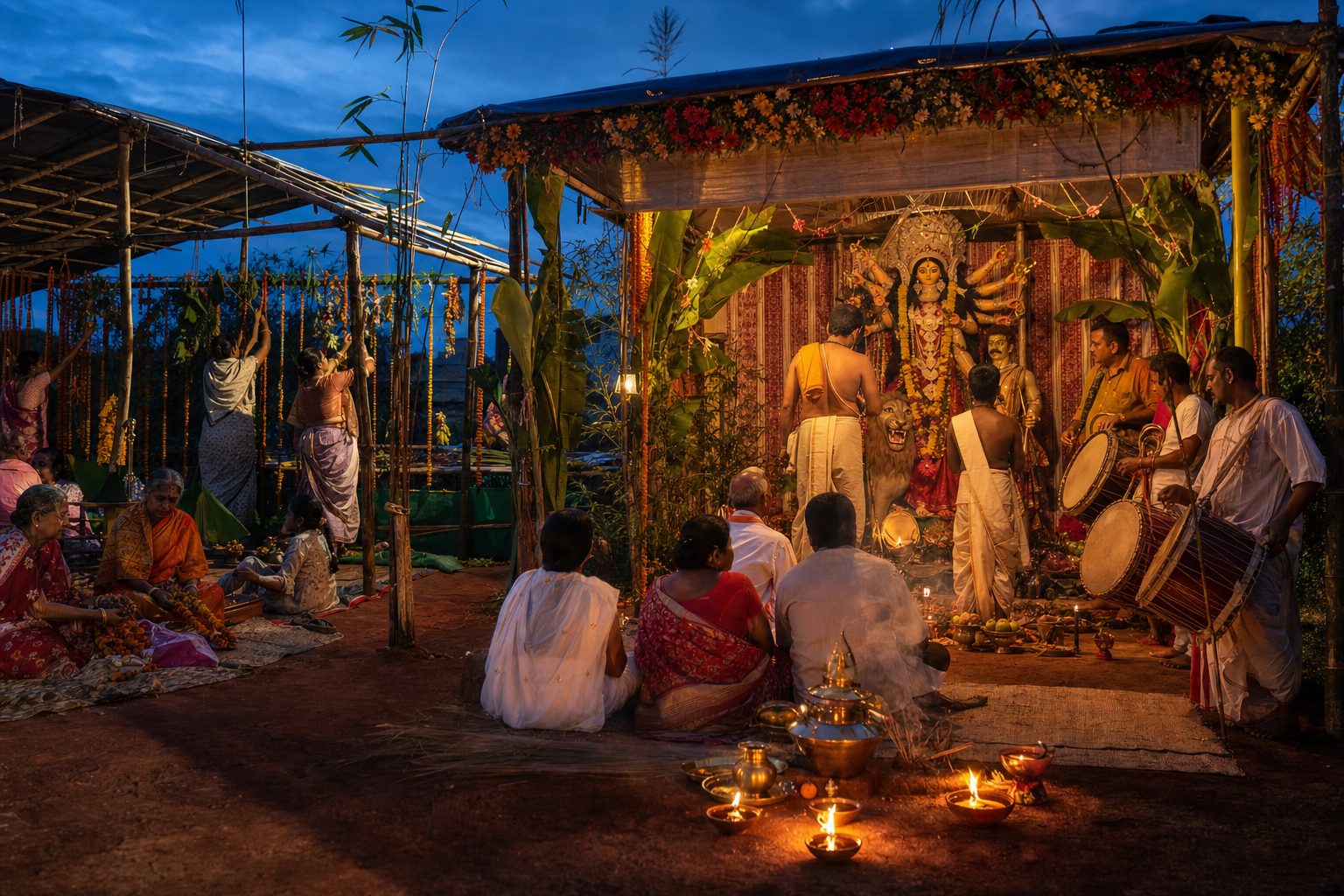
If you know Navratri as a nine-day festival, hearing that parts of Jharkhand observe it across sixteen days can sound like a contradiction. It is better understood as a difference of ritual frame: the familiar Navratri remains central, while some communities place it within a longer movement from invocation to immersion.
That distinction changes how you experience the festival. If you arrive only for the best-known public days, you will witness the climax. If you also follow the earlier worship, recitation, preparation, and service, you will understand why the longer cycle matters.
Nine days and sixteen days describe different ritual frames
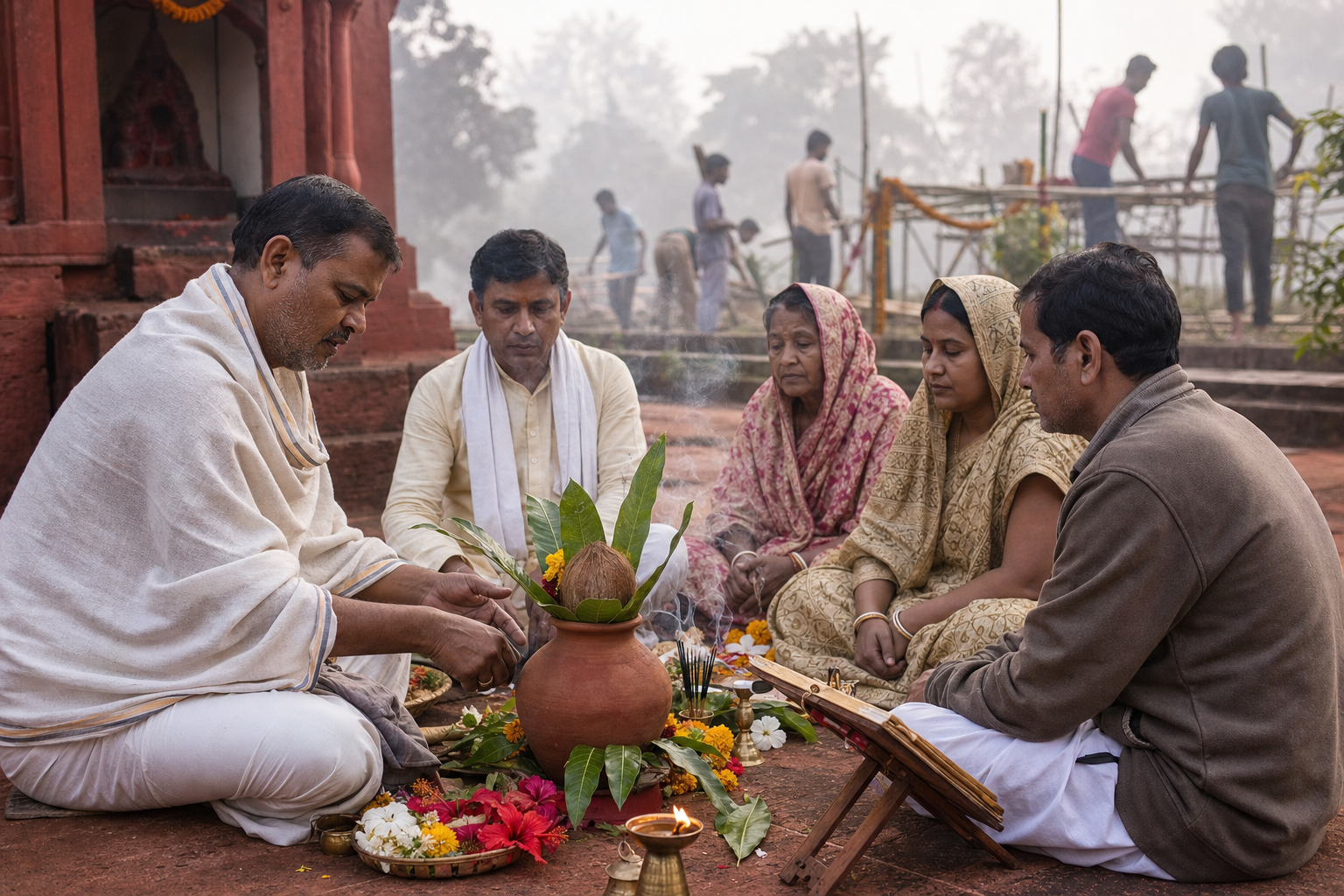
Sharadiya Navratri is widely recognized as a nine-day observance. In Jharkhand, however, many communities give the devotional season a sixteen-day rhythm, sometimes described locally as Shodasha Navratri. “Shodasha” means sixteen, but the name should not be turned into a claim that every family, temple, or town follows one identical timetable.
The most useful mental model is a set of concentric frames. The nine-day Navratri supplies a familiar sacred center. The commonly recognized Shashthi-to-Dashami Durga Puja sequence marks an especially visible public phase. The extended Jharkhand cycle places these days inside a wider period of invocation, disciplined worship, cultural activity, community service, and final immersion.
The longer form also carries the meeting of older royal customs and continuing community devotion. A practice that may once have been associated with a royal setting now lives through households, temples, neighborhood committees, artisans, musicians, volunteers, and worshippers. The continuity lies not in freezing the festival at one historical moment, but in keeping its sacred purpose active within community life.
So do not begin by asking whether Jharkhand’s Navratri is “really” nine days or sixteen. Ask which cycle the particular mandir, family, or puja committee follows. That question respects local authority and gives you the calendar you actually need.
Read the sixteen days as an unfolding devotional arc
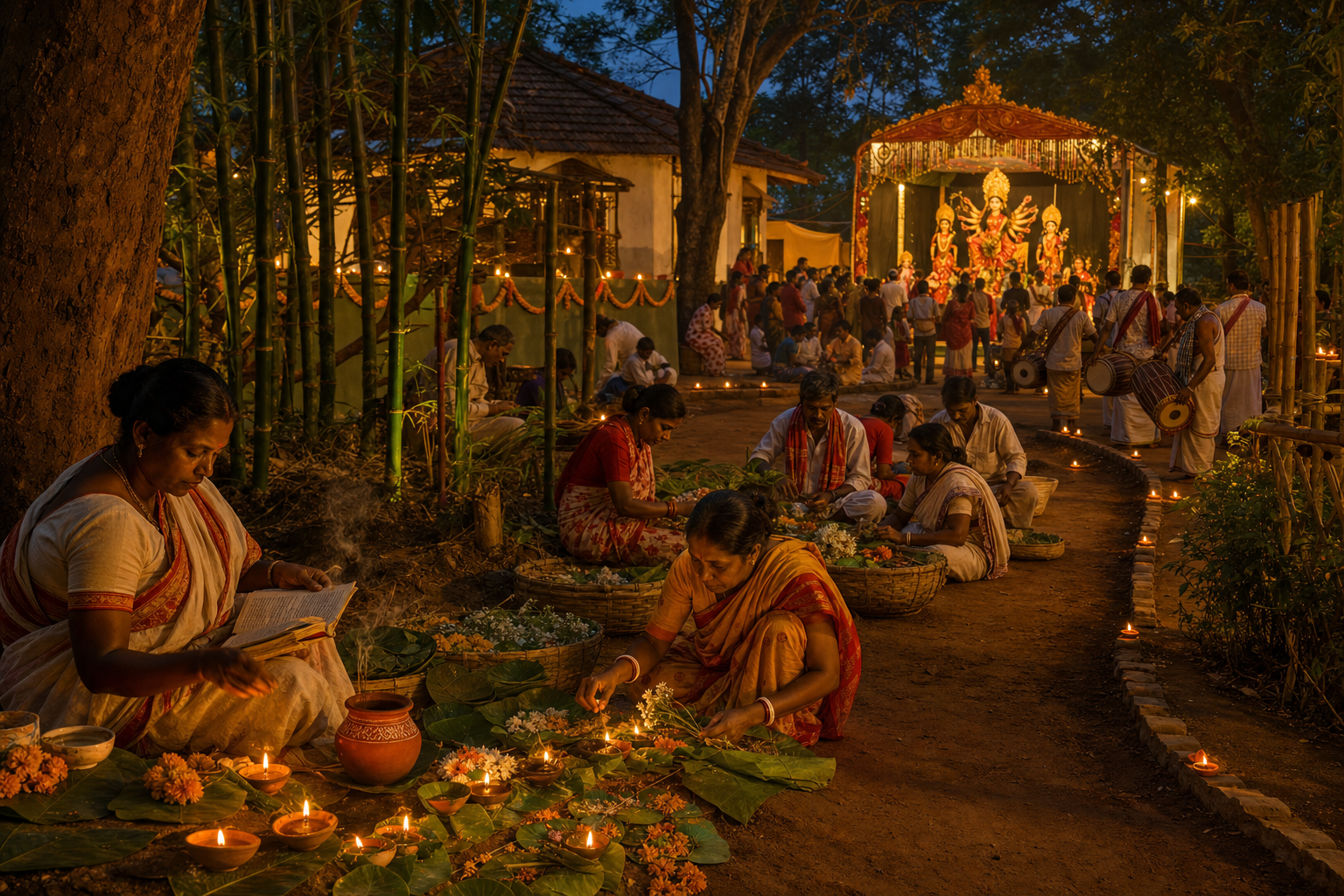
A rigid, universal sixteen-line itinerary would be misleading. Local observances can differ, while the larger movement remains recognizable: sacred continuity is established, Devi Paksha brings a decisive transition, worship intensifies, and Vijayadashami completes the cycle through farewell and immersion.
Daily discipline gives the longer cycle its substance
Kalash Sthapana, an Akhanda Deepa, and recitation of the Devi Mahatmyam, also known as the Durga Saptashati, anchor worship in homes and temples. The kalash establishes a sacred focus. The continuously maintained lamp expresses continuity. Repeated recitation prevents the extended calendar from becoming sixteen days of anticipation followed by only a few days of worship.
Families may also fast, sing bhajans, join collective chanting, and make offerings through Panchopachara or the more elaborate Shodasha Upachara. These terms refer to five-fold and sixteen-fold modes of devotional service. They should not be treated as a competition in ritual complexity. A simpler observance performed steadily and in accordance with household or temple custom is more coherent than an elaborate form copied without understanding.
If you are participating at home, choose the discipline your family tradition can sustain through the cycle. If you are visiting, ask when a recitation, bhajan gathering, or collective worship session takes place. Those quieter occasions reveal the extended observance more clearly than a hurried tour of pandals.
Mahalaya changes the devotional atmosphere
Mahalaya marks the transition into Devi Paksha and evokes the descent of the Divine Mother. In the longer rhythm, it functions as more than a date on the way to the public celebration. It changes the emotional register from preparation toward presence.
Notice that change rather than reducing Mahalaya to a countdown. The value of an extended cycle is precisely that anticipation has time to mature into attention. The festival does not have to manufacture intensity all at once; worship, sound, decoration, and participation can deepen gradually.
Navami and Vijayadashami hold stillness and departure together
As Navami approaches, the accumulated worship can produce a marked stillness before the culmination. Vijayadashami then brings celebration, gathering, procession, and immersion, but also the poignancy of farewell. The immersion does not signify that Devi has ceased to be present. It expresses departure and promised return while sending the worshipper back into ordinary life with a renewed ethical resolve.
If your time is limited, do not choose only between “early” and “final” days. Attend one quieter act of worship and one culminating public event. The contrast between them will show you what the sixteen-day structure accomplishes.
Look beyond the image to the people sustaining the puja
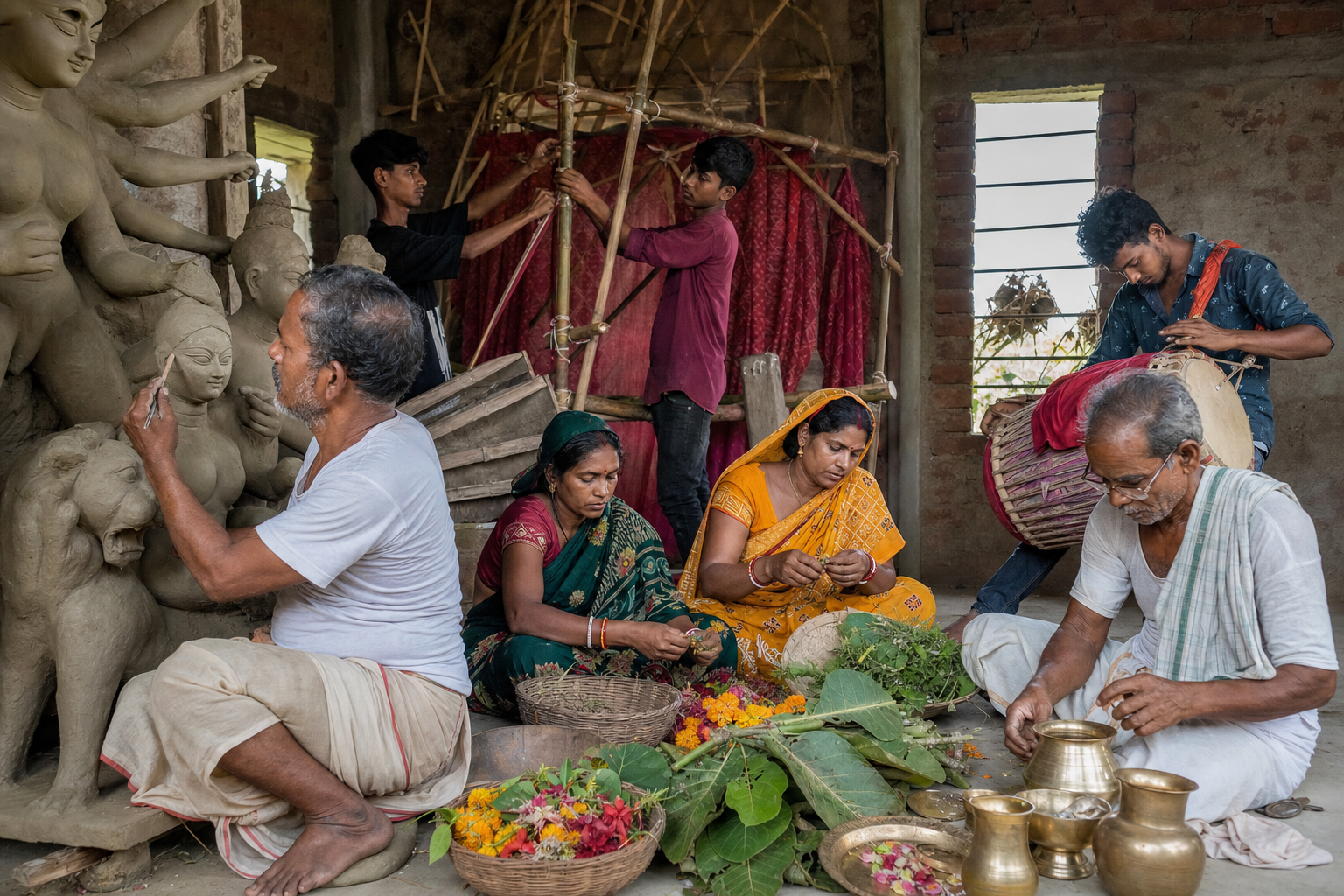
The pandals of Ranchi, Jamshedpur, and Dhanbad make the public face of Durga Puja difficult to miss. Designs may draw on local arts, clay, Sal-tree elements, and Jharkhand’s forested landscape. Drumming and devotional song turn those structures into lived sacred spaces rather than static exhibitions.
When you enter a pandal, look beyond its central visual effect. Clay sculptors, bamboo-framework builders, textile workers, decorators, and percussionists form the human chain behind it. Their skills continue through apprenticeships and community guilds. The festival is therefore not only a display of inherited culture; it is one of the settings in which that inheritance is taught, practiced, and economically sustained.
Changing alankaras, folklore, classical dance, and contemporary theatre add another layer. These programs can teach younger participants how sacred narrative, regional memory, and present-day creativity relate to one another. Kumari Puja, where practiced, directs attention to the divine feminine through the innocence and potential embodied by a young girl. Because it belongs to some communities rather than all of them, observe the local procedure instead of expecting to find it everywhere.
The less visible infrastructure matters just as much. Neighborhood kitchens, prasad distribution, route management, cultural programs, and volunteer logistics bring different ages and social backgrounds into shared work. You can learn a great deal about the character of a puja by watching how patiently it feeds people, organizes movement, includes elders, and gives younger volunteers real responsibility.
In some localities, Sikh, Jain, and Buddhist neighbors also participate in processional routes, cultural events, charity, and other community activity. This dharmic fellowship need not erase differences among traditions. Its strength lies in shared service and mutual regard: distinct paths can cooperate without pretending to be interchangeable.
Participate in a way that preserves the local tradition
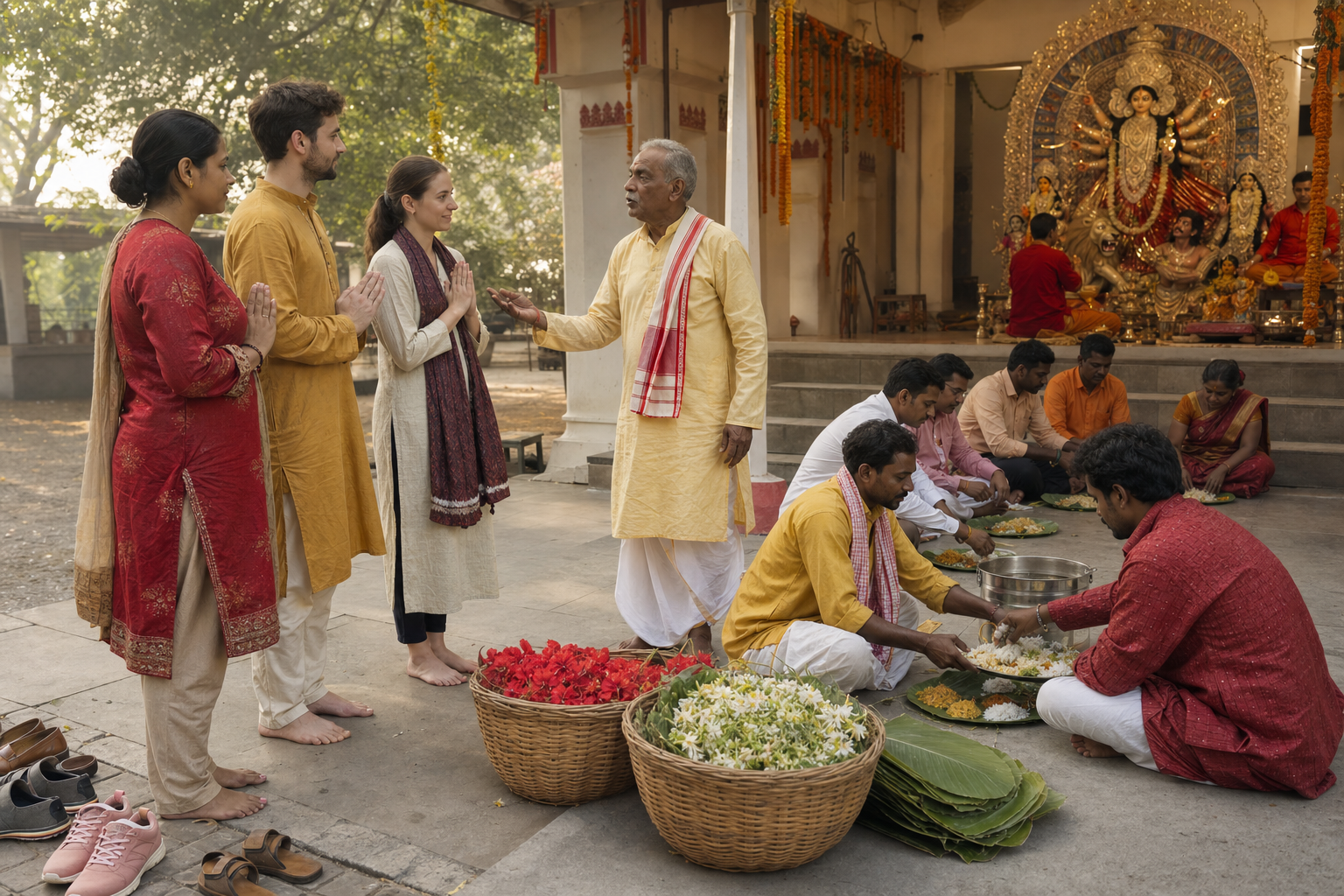
Begin with a local calendar, not a generic Navratri schedule. Ask a mandir or puja committee when its observance begins, which worship is open to visitors, when collective recitations are held, and when the immersion procession leaves. The phrase “sixteen-day Navratri” tells you the scale of the cycle; it does not replace local timings.
Make at least two visits if you can. Choose an earlier recitation, bhajan, or preparation period, then return for Navami or Vijayadashami. A single crowded evening will show you spectacle and devotion, but it cannot show you how continuity was built across the preceding days.
Enter at the scale appropriate to your relationship with the community. A household should follow its inherited or locally guided procedure rather than collecting disconnected rites. A visitor can listen, observe changing alankaras, receive prasad according to local directions, attend cultural programs, or help with an established service activity. Respectful participation does not require taking over a ritual role.
Environmental responsibility also belongs inside the worship, not outside it. Eco-friendly idols and river-sensitive immersion arrangements seek to reconcile devotion with care for land and water. If you join a procession or volunteer team, follow the committee’s environmental protocol and treat the immersion site as sacred after the ceremony as well as during it.
Finally, carry the ethical meaning beyond the festival. Reverence for Shakti is expressed not only through offerings but through resilience, compassion, protection of dharma, and cooperation. Choose one concrete form of seva that your local celebration already needs. Helping a kitchen, assisting an elder, supporting an artisan, or participating in responsible cleanup makes the inward vow visible in public life.
Key takeaways
- Jharkhand’s sixteen-day observance is a wider devotional frame used by many communities, not a denial of the familiar nine-day Navratri and not a uniform rule for the entire state.
- The longer rhythm matters because it gives worship time to develop from invocation and daily discipline through Mahalaya, Navami, Vijayadashami, and immersion.
- Kalash Sthapana, the Akhanda Deepa, Durga Saptashati recitation, fasting, offerings, chanting, and bhajans form the spiritual substance beneath the public celebration.
- Pandals also sustain regional design, clay work, bamboo construction, textiles, percussion, cultural teaching, neighborhood service, and cooperation among dharmic communities.
- For a meaningful visit, confirm the local calendar and attend both a quieter early observance and a culminating event rather than judging the tradition from one crowded night.
Before fixing your plans, contact one nearby mandir or puja committee and ask two questions: “Which day does your observance begin?” and “Which early worship should a visitor attend?” Those answers will lead you into Jharkhand’s living tradition more reliably than any generic festival timetable.
References
