
You may be trying to choose a 2026 date for a vrata, a journey, a course, a business opening, or a family samskara. The tempting shortcut is to find an annual list of auspicious dates and copy one into your calendar. That creates the central timing error: a muhurta is an interval for a particular action in a particular place, not a gold star attached to a civil date.
A dependable method starts with your purpose and location, screens the five limbs of the Panchang, and adds personal Jyotisha only when the importance of the decision justifies it. Here is how to use that method without turning sacred timing into either a rigid command or a vague promise of good luck.
Choose the required level of precision first
Before looking for a date, decide what kind of timing you actually need. A household observance, a routine beginning, and a marriage muhurta are not the same calculation.
- Observance-level timing: For Amavasya worship, a vrata, or another tithi-based practice, begin with the local tithi boundaries and the sunrise convention followed by your family or temple.
- Routine muhurta: For starting a course, beginning a disciplined practice, departing on a journey, or opening a modest initiative, examine Tithi, Vara, Nakshatra, Yoga, and Karana, then remove unsuitable daily periods.
- Personal muhurta: For marriage, Griha Pravesh, business incorporation, or another consequential samskara, add Janma Nakshatra, Chandra Bala, Tara Bala, Lagna, dasha-bhukti, and relevant transits as appropriate.
Put practical constraints on the page before applying any of these filters. Record the venue, the city and time zone, the people who must attend, legal deadlines, travel limitations, and the action that formally begins the undertaking. Jyotisha can help you choose among workable intervals. It should not make you ignore safety, law, contractual obligations, or responsibilities to other people.
Location is part of the calculation, not an optional setting. Tithi and Nakshatra can change during a civil day, while sunrise-based conventions can affect how an observance is assigned. A clock time printed for one region should therefore never be copied into another time zone without recalculation. When a family and its temple follow an established regional Panchang, use that shared convention for coordinated observances.
Screen each candidate through the five Panchang limbs
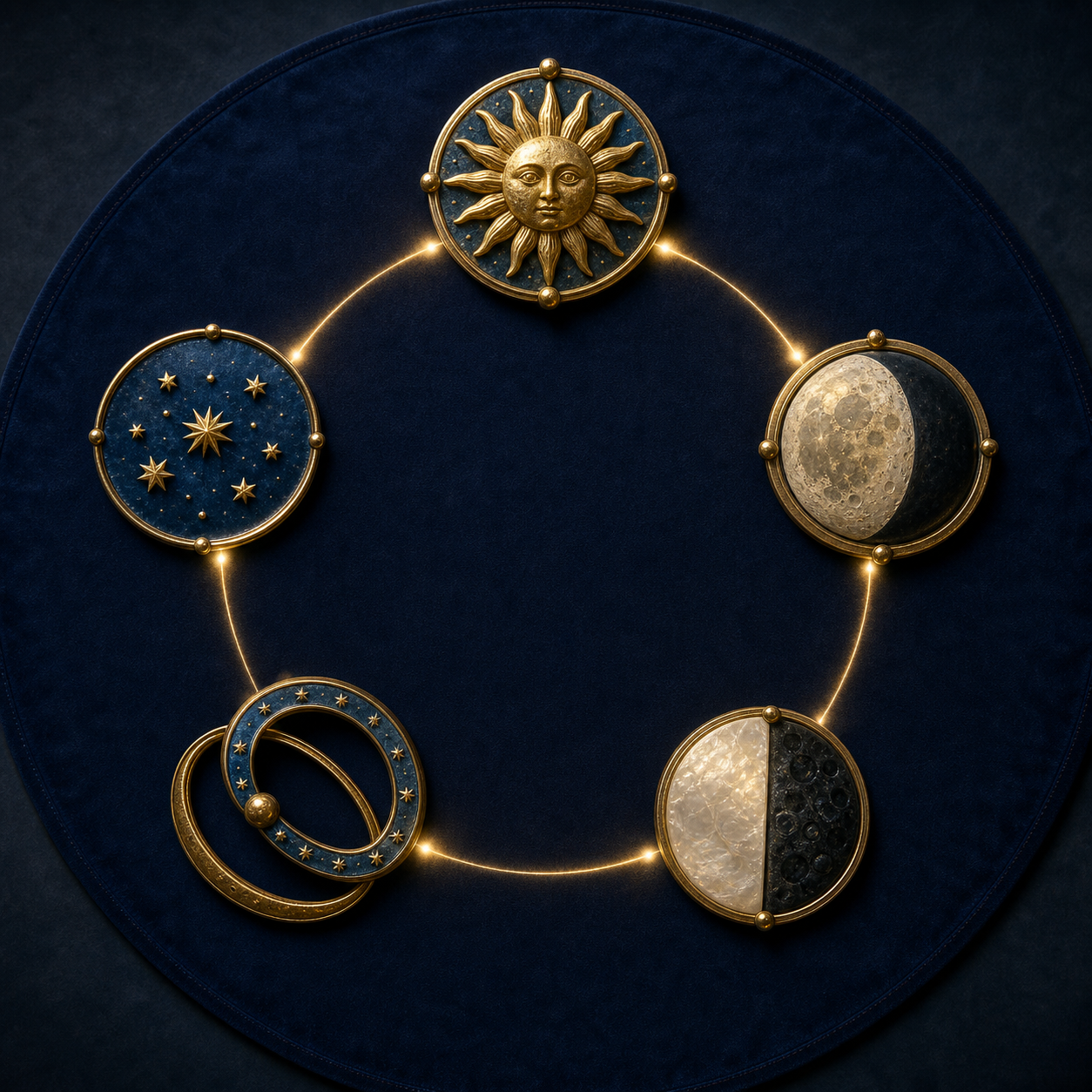
The five-limb Panchang method prevents a favorable Nakshatra or weekday from being mistaken for a complete muhurta. Work through the limbs in a consistent order so that you can explain why an interval was accepted.
- Tithi: Identify the lunar day covering the proposed start. Dwitiya, Tritiya, Panchami, Saptami, Dashami, Ekadashi, and Trayodashi are often used as a general starting shortlist for constructive activity, especially in Shukla Paksha. This is a preliminary filter, not automatic approval. Chaturthi, Navami, and Chaturdashi are classed as Rikta Tithis and are commonly treated with care for sensitive new ventures.
- Nakshatra: Check the lunar mansion at the actual start time, not merely the Nakshatra named for most of the day. Ask whether its character suits the action and whether it is supportive in relation to the person’s Janma Nakshatra.
- Yoga: Look for a constructive Yoga appropriate to the purpose. Shubha or Siddha Yoga may strengthen a candidate, but neither cancels an unsuitable Tithi, Karana, or personal factor.
- Karana: Inspect the half-tithi division operating during the proposed interval. Bhadra, associated with Vishti Karana, is commonly avoided for sensitive family beginnings. Because Karana can change within the day, an all-day calendar label is insufficient.
- Vara: Use the weekday as a purpose-sensitive modifier. For Saturn-ruled Makara or Kumbha, Saturday may support discipline, sustained commitments, reflection, and seva. Thursday may be considered for study or spiritual learning. The weekday remains subordinate to the full Panchang and personal chart.
After finding a positive fit, overlay Rahu Kalam, Yamaganda, and Gulika using the same local Panchang. These are exclusion filters, not a complete selection system. Avoiding Rahu Kalam does not make every remaining minute auspicious; it only removes one commonly avoided interval from an otherwise evaluated candidate.
Also clarify what must fit inside the muhurta. In some undertakings, the formal commencement is the timed act. In others, family or ritual tradition may expect a larger portion of the ceremony to remain inside the selected window. Write down the initiating act, such as lighting the ceremonial lamp, crossing the threshold, signing the founding resolution, or commencing the sankalpa, and have the officiant confirm the convention before invitations or bookings are finalized.
Turn the 2026 almanac into a working calendar
A Panchang becomes useful when it produces a decision record rather than a collection of auspicious-looking dates. Use the same workflow for every planned action in 2026.
- Name the action precisely. Beginning a journey, signing an agreement, entering a new home, and performing the house ritual are different acts even when they occur in the same project.
- Assign the precision level. Decide whether you need an observance time, a routine Panchang window, or a personalized muhurta.
- Fix the place and convention. Record the city, time zone, regional Panchang, and family or temple observance rule.
- Generate workable candidates. Apply venue, attendance, deadline, and travel constraints before astrological filtering. Preserve several workable alternatives where possible.
- Record transitions. Capture the start and end times of Tithi, Nakshatra, Yoga, and Karana. Do not reduce a changing lunar day to a single date label.
- Apply positive and negative filters. First look for a purpose-appropriate combination; then remove Bhadra and the locally calculated Rahu Kalam, Yamaganda, or Gulika intervals where your tradition requires it.
- Add personal factors only to the required depth. Use Janma Nakshatra and Moon strength for meaningful personal choices, and a fuller chart assessment for life-defining rites.
- Write the final interval and an alternative. Note the factor that made each interval acceptable and the condition that would make you switch to the alternative.
The January 18, 2026 lunar transition shows why this discipline matters. In that reckoning, Amavasya prevails throughout January 18 and ends at 1:08 AM on January 19. Shukla Paksha Pratipada then continues until 1:59 AM on January 20. Those times illustrate the method; they are not portable clock times unless your local Panchang agrees.
Suppose you want to begin a new study discipline after Amavasya. You could use January 18 for clearing unfinished work, quiet reflection, seva, or setting the study space in order. The arrival of Pratipada creates a candidate period for the new beginning, but it does not instruct you to begin at 1:08 AM. Find a practical waking interval after the locally verified transition, then screen its Nakshatra, Yoga, Karana, Vara, and daily exclusions. A tithi boundary opens the search; it does not complete it.
Record enough information to audit the choice
For every event, keep the following fields in your calendar or planning sheet:
- Event and exact initiating action
- City, time zone, and regional Panchang or observance convention
- Candidate interval with explicit start and end times
- Tithi, Vara, Nakshatra, Yoga, and Karana during that interval
- Rahu Kalam, Yamaganda, Gulika, Bhadra, or other exclusions applied
- Janma Nakshatra, Chandra Bala, Tara Bala, Lagna, dasha, or transit factors used
- Final interval, workable alternative, and the person who confirmed any ritual convention
This record catches common errors early: copying a time from another region, reading only the tithi at sunrise, confusing a transition time with a muhurta, or treating one favorable factor as decisive. It also lets family members and a priest or Jyotishi discuss the same calculation instead of comparing disconnected date lists.
Add personal Jyotisha without confusing Rashi and birth date
A general Panchang describes the quality of a local interval. A birth chart asks whether that interval fits a particular person. In this context, Rashi normally means Chandra Rashi, the Moon sign derived from the birth chart. It is not reliably determined from the popular Western Sun-sign date ranges.
The boundary between Makara, Kumbha, and Meena demonstrates why both the Nakshatra and its pada matter. Dhanishta spans Makara and Kumbha, while Purvabhadra spans Kumbha and Meena. Knowing only the Nakshatra name can therefore be insufficient at a Rashi boundary.
| Chandra Rashi | Included Nakshatra portions | Practical consequence |
|---|---|---|
| Makara | Uttarashada padas 2-4; Shravana padas 1-4; Dhanishta padas 1-2 | A Dhanishta native must confirm the pada before applying Makara timing. |
| Kumbha | Dhanishta padas 3-4; Shatabhisha padas 1-4; Purvabhadra padas 1-3 | Either boundary Nakshatra requires the pada, not just the star name. |
| Meena | Purvabhadra pada 4; Uttarabhadra padas 1-4; Revathi padas 1-4 | A Purvabhadra native belongs to Meena only in the fourth pada. |
Rashi transit can generate candidates, but it cannot select the final muhurta by itself. For Kumbha, for example, the Moon’s transit through Kumbha creates a broad window lasting about 2.5 days and recurring roughly every 27-28 days. Each occurrence still has its own Tithi, Nakshatra, Yoga, Karana, and daily exclusions. Treat the transit as a search filter, not a verdict.
Janma Nakshatra makes the selection more personal. Tara Bala examines the relationship between the day’s Nakshatra and your birth Nakshatra, while Chandra Bala considers the Moon’s support in relation to your natal Moon. A more refined Meena assessment, for instance, can combine these factors with the relevant movements of Guru and Shani. Lagna, dasha-bhukti, and broader transits may further distinguish an acceptable general day from a suitable personal interval.
If your birth time or birthplace is uncertain, do not pretend that a finely timed personal result is exact. Use a sound location-specific Panchang window for routine choices, disclose the uncertainty to the Jyotishi, and reserve strong personal claims until the underlying birth data can be assessed responsibly.
What a usable personal muhurta should tell you
For a marriage, Griha Pravesh, business incorporation, or similarly consequential undertaking, ask a qualified Jyotishi to provide more than a date. You should receive:
- The location, time zone, Panchang convention, and birth data used
- The exact opening and closing time of the recommended interval
- The formal action that must begin within that interval
- The principal supporting factors and any compromises accepted
- The intervals or conditions specifically excluded
- A workable alternative if a practical constraint defeats the preferred choice
A date without a location or time window is not a complete muhurta. Nor can auspicious timing repair an unsafe journey, an unaffordable purchase, a weak contract, or inadequate financial and legal review. Complete the relevant safety checks, due diligence, professional advice, and consent process first; then use Jyotisha to choose among decisions that already withstand those tests.
Key takeaways for your 2026 planning
- Start with the action, location, and level of precision, not an annual list of lucky dates.
- Record start and end times. A civil date alone cannot show a changing Tithi, Nakshatra, Yoga, or Karana.
- Use all five Panchang limbs, then overlay locally calculated Rahu Kalam, Yamaganda, Gulika, and Bhadra exclusions as your tradition requires.
- Treat Shukla Paksha, a favorable Tithi, or a supportive Nakshatra as a candidate generator, not automatic approval.
- Use Chandra Rashi and Janma Nakshatra from the birth chart rather than a Western Sun-sign date range.
- Add Tara Bala, Chandra Bala, Lagna, dasha, and transits in proportion to the consequence of the undertaking.
- Keep ethics, effort, safety, consent, and practical due diligence primary. Muhurta supports responsible action; it does not replace it.
Before committing your next 2026 event, create its planning row and fill in the action, city, time zone, candidate interval, and five Panchang limbs. If you cannot state when the interval begins and ends, the date is not ready to use. That small pause turns Panchang awareness into disciplined, transparent planning.
References
- DharmaRenaissance Blog – January 18, 2026 Panchang: All-Day Amavasya, Shukla Paksha Onset Timings, Meaning, Mindful Planning
- DharmaRenaissance Blog – Makara Rashi 2026: Powerful Auspicious Days, Shubha Muhurats, and Nakshatra Guidance
- DharmaRenaissance Blog – Kumbha Rashi 2026 Auspicious Days: Panchang Guide for Clarity, Confidence, and Harmony
- DharmaRenaissance Blog – Meena Rashi 2026: Auspicious Days and Nakshatra Insights to Time Success and Peace
