
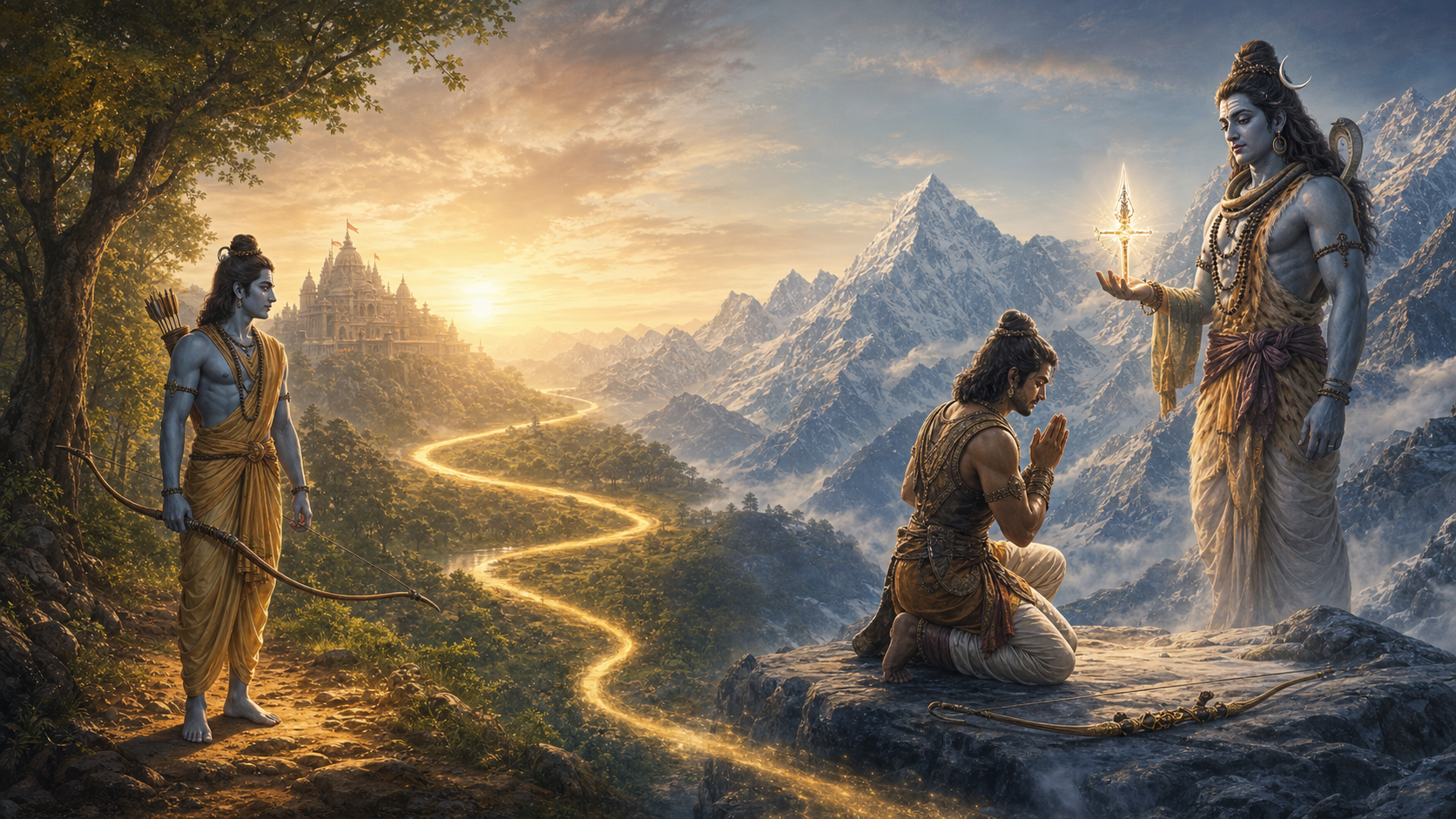
If Rama is an avatar and Arjuna receives a weapon from Shiva, why don’t they simply overwhelm every obstacle? Why endure exile, austerity, uncertainty, and restraint when divine power is available?
The answer changes how you read the Hindu epics. Divine power is not an exemption from dharma. It places the bearer under a more exacting obligation. Rama shows power voluntarily limited by maryada; Arjuna shows power earned through tapasya and governed by strict necessity. In both cases, the decisive question is not, “What can this person do?” It is, “What does dharma permit this person to do?”
Possessing power is not permission to use it
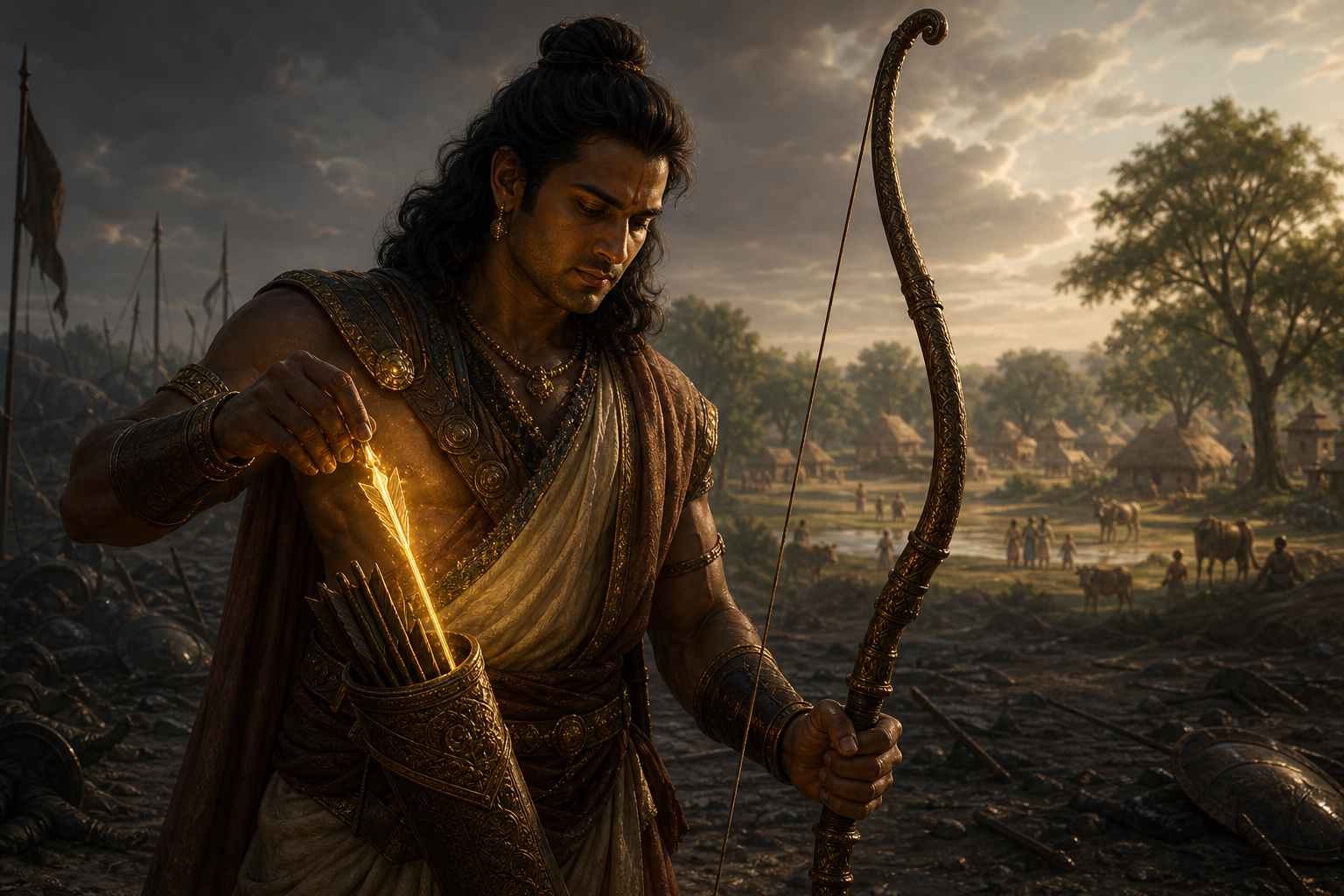
Modern readers often collapse three different ideas into one: capacity, authority, and righteousness. The epics keep them separate. Capacity tells you what is possible. Authority concerns what your role allows. Dharma asks whether the act upholds truth, responsibility, compassion, and a just order. An action can be possible and formally authorized yet still fail the dharmic test.
This distinction helps with traditional descriptions of Rama’s kalas. A kala can be understood as a facet or expression of cosmic completeness. Some sampradayas describe Rama as manifesting ten kalas, while other enumerations give twelve; sixteen signifies plenitude, and Krishna is often honored as a purna-avatara. The variation should warn you against treating the numbers as a universally standardized score of divinity.
The count works better as narrative theology. Rama’s manifestation is calibrated to his purpose as Maryada Purushottama: the exemplary person who demonstrates disciplined conduct within recognizable human conditions. His apparent limitation is therefore part of the teaching, not evidence of spiritual inferiority. If unrestricted divinity erased every constraint, Rama’s choices would offer far less guidance to a person who must keep promises, bear consequences, and act without complete control.
- Capacity asks: What am I able to do?
- Authority asks: What am I entitled or responsible to do?
- Dharma asks: What action preserves the right order without making desire, pride, or convenience the hidden ruler?
Use all three questions whenever you encounter extraordinary power in an epic. If you look only at capacity, you will see spectacle. If you also look for permission, limits, motive, and consequence, you will begin to see dharma.
Rama makes divine restraint humanly usable
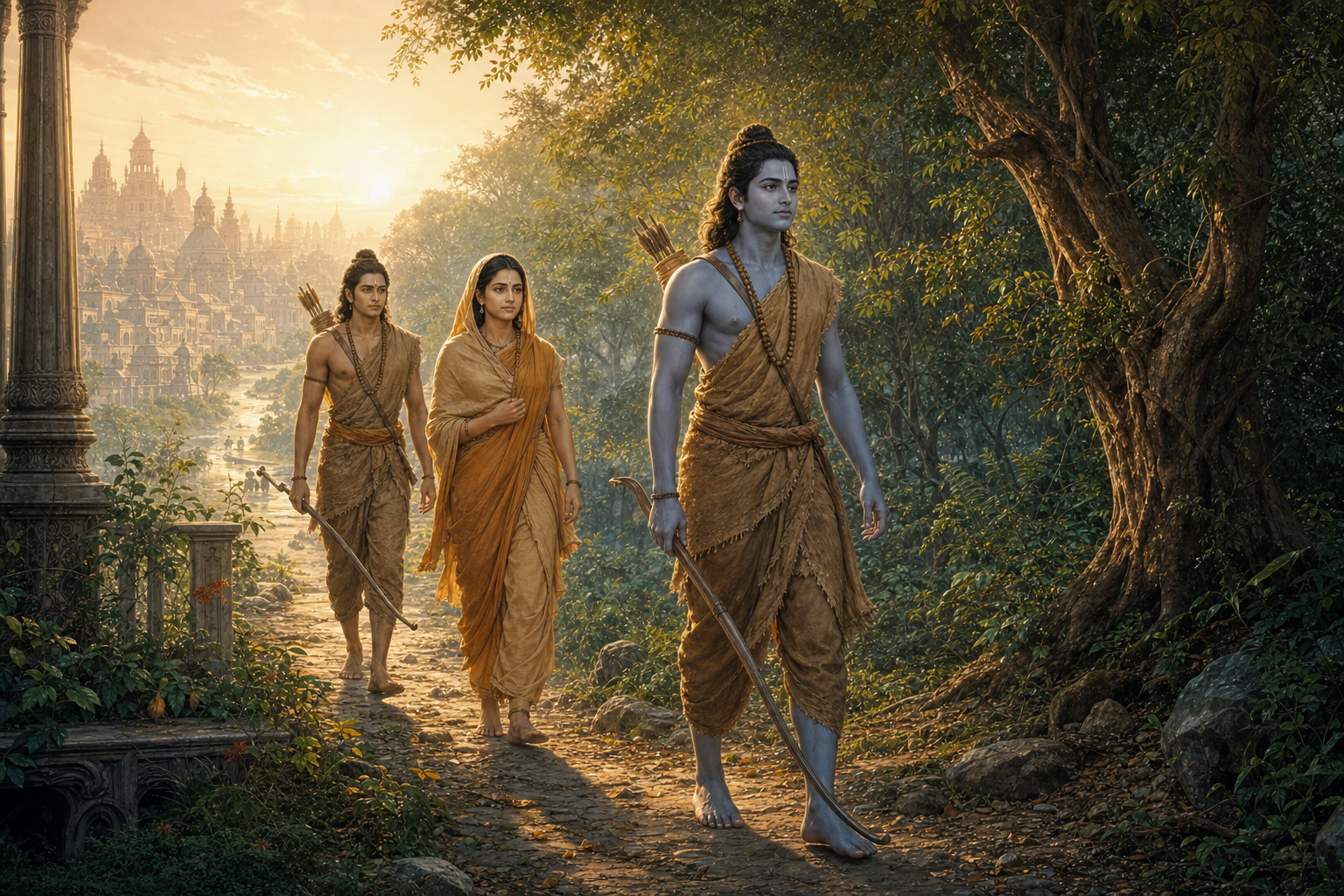
Rama’s divinity does not make vows disposable. His purpose is expressed through maryada: discipline, boundaries, truthfulness, compassion, and fidelity to duty. His acceptance of exile, adherence to commitments, discernment under pressure, and concern for social duty joined with empathy place conduct at the center of avatarhood.
This is the practical force of divine self-limitation. Rama does not ask you to imitate limitless cosmic ability. He directs you toward choices that remain available when life is difficult: keep a rightful commitment, refuse the convenient falsehood, control the impulse to place yourself above the rule, and consider the people who will carry the cost of your decision.
That does not mean every difficult choice has one obvious answer, or that every sampradaya and reader will interpret every episode identically. Dharma requires discernment precisely because duties can pull in different directions. Rama’s example gives you a method for entering that difficulty: begin with obligation and moral boundary, not with the outcome you personally want.
When you face a decision involving authority, use this short maryada practice before acting:
- Name the promise, role, or duty that already binds you.
- Name the shortcut that would make the situation easier for you.
- Name the person or community that would bear the cost of that shortcut.
- Identify the boundary you would still defend if someone else held the power.
- Choose the action you can justify without claiming a special exemption for yourself.
The fourth question is especially revealing. A rule that seems essential when it restrains another person but intolerable when it restrains you is probably being filtered through ahankara, the ego’s demand for exceptional treatment. Rama’s maryada turns that instinct around: the more exemplary the role, the less casually its holder may excuse himself.
Arjuna receives the weapon only after an inner defeat
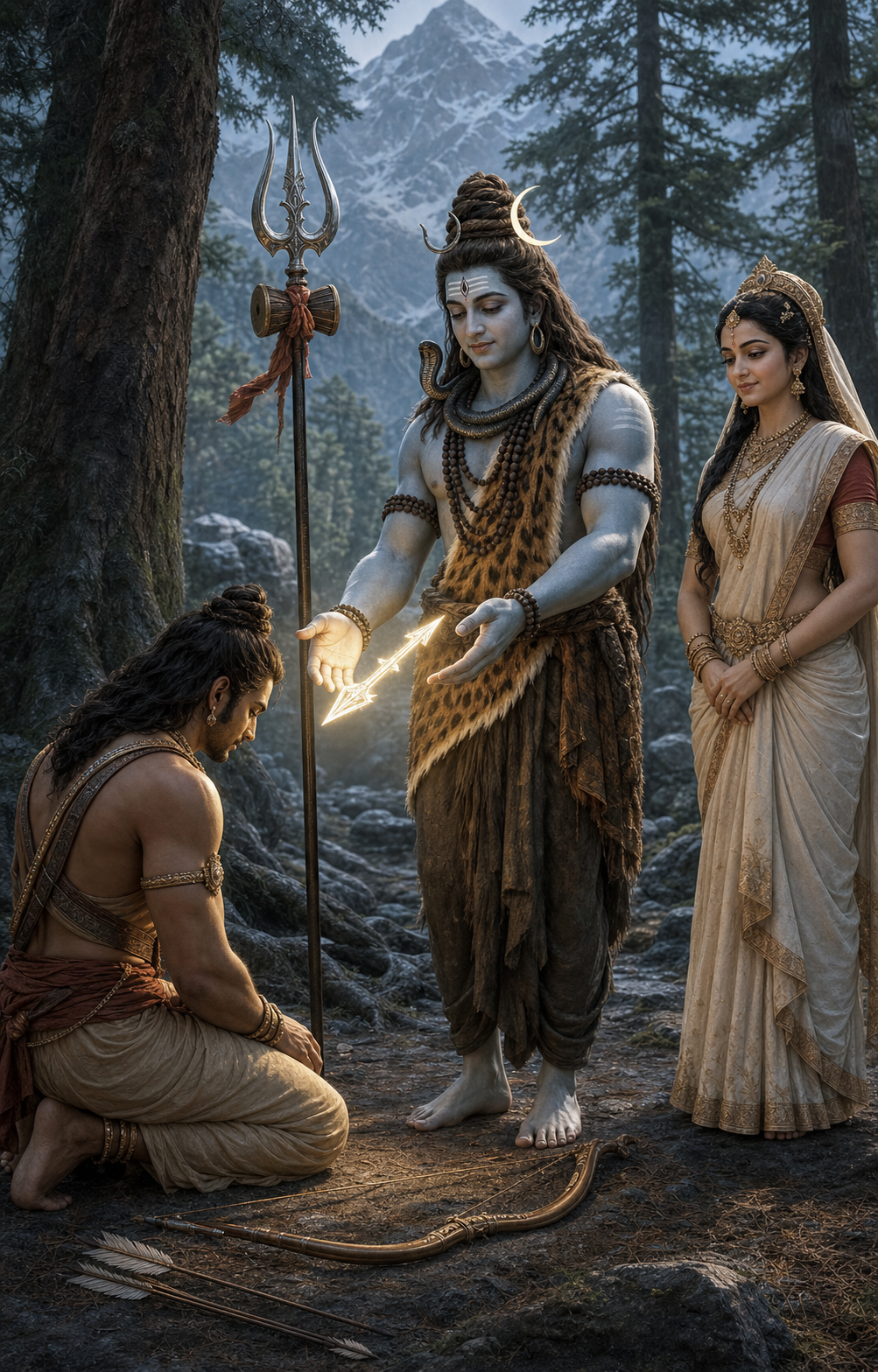
The Mahabharata approaches power from another direction. Arjuna needs celestial weapons in preparation for the Kurukshetra War, so he undertakes rigorous tapasya. A fierce boar charges toward him. Arjuna and a forest-dwelling hunter, or kirata, strike it at the same time. Their dispute over the kill becomes a duel. Arjuna exhausts his prowess against the stranger before recognizing that the hunter is Shiva; Parvati and the attendant devas are then revealed. Only after this test does Shiva bestow the Pashupatastra.
The sequence matters. Arjuna is not handed supreme force merely because his cause is important or his martial skill is exceptional. Preparation comes first. Then comes confrontation with a form he does not recognize. His normal excellence proves insufficient. Pride loses its footing. Recognition follows. The weapon arrives after this inner correction, not before it.
Shiva’s disguise also prevents Arjuna from behaving reverently merely because the divine identity has been announced. The kirata initially appears as a rival. Arjuna must encounter the sacred through friction, uncertainty, and the collapse of his assumption that familiar status or skill gives him mastery over the situation. Divine wisdom does not always arrive wearing the form your ego is prepared to honor.
The Pashupatastra is therefore more than a sign that Arjuna has acquired destructive capacity. It represents power joined to self-mastery. Its use is reserved for the gravest necessity. The blessing includes a limit, because a weapon becomes dharmic through disciplined judgment, not through its divine origin alone.
You can apply the same logic whenever you gain a stronger tool, a larger platform, specialized knowledge, or formal authority. Before using the maximum force available, perform an Arjuna audit:
- Have you developed the discipline needed to control the capability, or only the skill needed to activate it?
- Is the conflict about the duty in front of you, or has wounded pride quietly become the real motive?
- Can you state the limit on this power before pressure makes restraint inconvenient?
- Would a lesser intervention fulfill the same duty without creating avoidable harm?
- Are you prepared to recognize correction when it comes from a person or circumstance you did not expect to respect?
If you cannot articulate the limit in advance, you are not yet ready to rely on restraint in the moment of temptation. The Pashupatastra principle is simple: the strongest option belongs at the end of discernment, not at the beginning of reaction.
Key takeaways: a five-question dharma test for power
Rama and Arjuna embody different forms of divine relationship. One manifests divinity through voluntary limitation; the other receives divine force after tapasya and surrender of pride. Yet both narratives lead to the same practical test. Use these five questions before any consequential display of power:
- Duty: What responsibility existed before my desire to win, punish, impress, or escape?
- Self-mastery: Am I directing this power, or are anger, fear, pride, and attachment directing me through it?
- Necessity: Does the situation genuinely require intervention, or am I confusing capability with obligation?
- Restraint: What is the least forceful action that can still protect truth, fulfill duty, and prevent injustice?
- Service: Will this act support a just and compassionate order, or mainly enlarge my status and control?
Write the answers down when the decision has serious consequences. If the answer to self-mastery is uncertain, pause before escalating. If necessity cannot be shown, choose the smaller action. If the only beneficiary named under service is your reputation, victory, or comfort, revisit the motive. This does not turn dharma into a mechanical formula, but it prevents urgency from disguising impulse as righteousness.
The test also helps distinguish restraint from passivity. Rama’s maryada is not helplessness, and Arjuna’s humility does not erase courage. Dharmic restraint means holding power in readiness without allowing pride to determine its use. Sometimes duty requires decisive action. The question is whether the action remains accountable to a purpose beyond the actor’s own triumph.
This moral architecture has affinities across the Dharmic family. Tapasya and self-mastery can be heard alongside Buddhist sila and karuna, Jain ahimsa and aparigraha, and Sikh seva and sat. These traditions retain their doctrinal differences; they need not be flattened into interchangeable systems. The meaningful convergence is ethical: inner discipline must govern outward action, and strength finds its proper end in responsibility toward other beings.
Three common misreadings hide the teaching
Misreading one: more kalas must mean more spiritual worth
A numerical ranking turns symbolic theology into a competitive scorecard. Different traditions enumerate Rama’s manifested kalas differently, while his narrative purpose remains consistent: to embody dharma through maryada. Ask what a particular enumeration teaches about the avatar’s mission before using it to declare one beloved form inferior to another.
Misreading two: a divine blessing is a blank cheque
Arjuna’s encounter with Shiva shows the opposite. Tapasya, testing, humility, recognition, and restriction surround the gift of the Pashupatastra. Divine provenance does not remove moral accountability. A sacred power used through ego can betray the very discipline that made its reception possible.
Misreading three: restraint is evidence of weakness
Weakness lacks the capacity to act. Restraint possesses capacity but subjects it to judgment. Rama’s self-limitation and Arjuna’s restricted weapon both present restraint as mastery. The uncontrolled person must discharge power to prove that it exists; the disciplined person can hold it, examine the need, and act only to the extent dharma requires.
The next time you read a miraculous episode, mark three moments: where power appears, where the bearer’s ego or resolve is tested, and where a limit is accepted. Then turn the episode into one rule you can follow in an actual decision. If you can identify the wonder but not the restraint, keep reading. The ethical center of divine power lies in what its bearer refuses to do as much as in what the bearer can do.
References
- DharmaRenaissance Blog – Kiratamurti Unveiled: Shiva as Hunter Grants Arjuna the Pashupatastra in Mahabharata
- DharmaRenaissance Blog – Rama’s Kalas and the Purpose of Avatars: Why the Number Matters Less Than Dharma
