
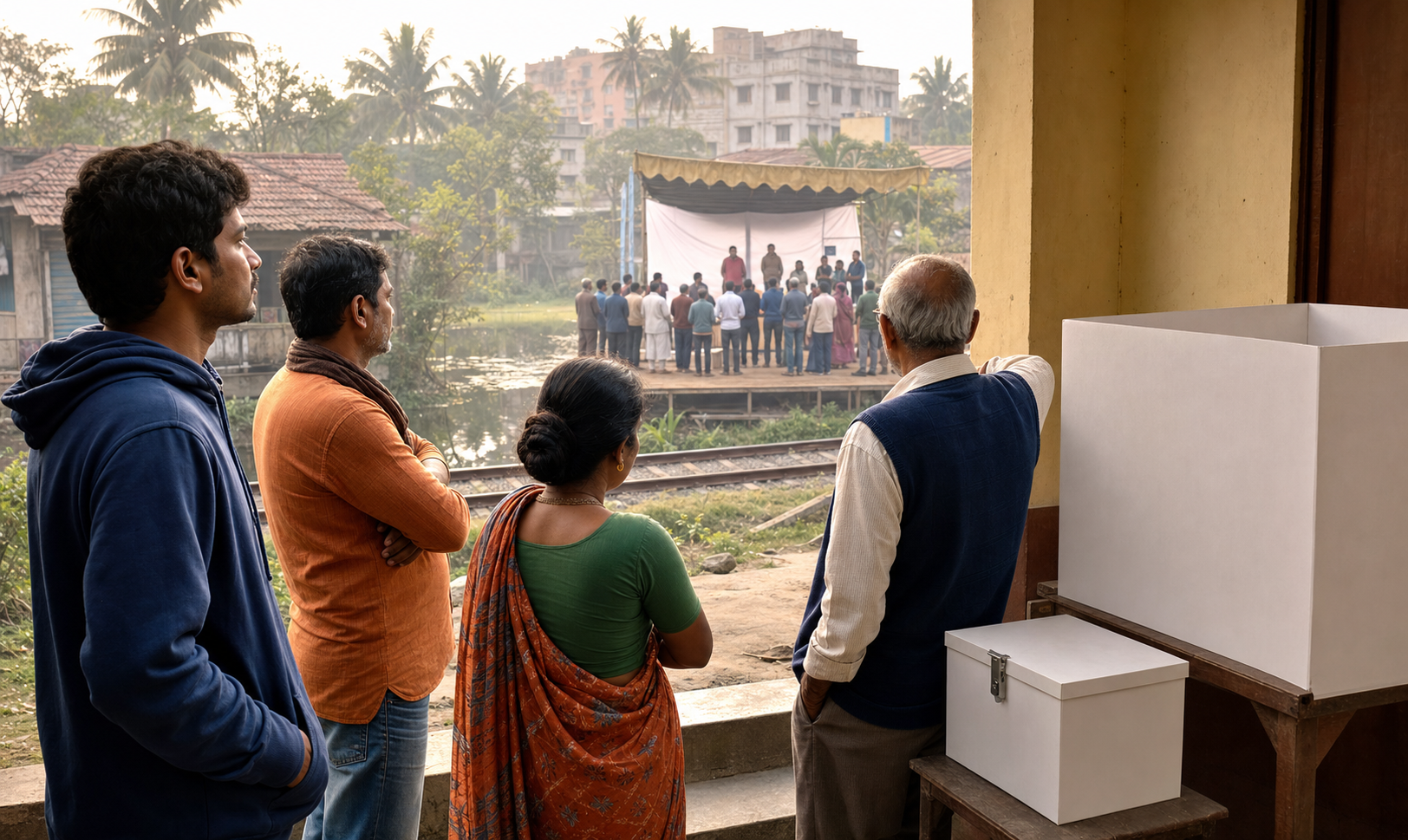
If you are deciding whether Prajashakti Party deserves your vote, your support or even your attention, do not begin with predictions about how many seats it might affect. Begin with a harder question: what evidence would turn a culturally resonant debut into a credible choice in your constituency?
Prajashakti Party (Samadarshi) formally entered West Bengal politics from Kalyani on Swami Vivekananda’s 163rd birth anniversary. That choice of occasion gave the launch a clear moral vocabulary: service, strength, youth, cultural confidence and fellowship. The work for voters is to determine whether those ideals appear in candidates, organisation and policy rather than only on a stage.
The debut changes the questions, not yet the result
A formal launch establishes intent. By itself, it does not establish statewide reach, a durable voter base, strong constituency candidates or bargaining power in a coalition. Those require evidence gathered district by district.
A smaller entrant can still matter before it is capable of forming a government. It can place neglected issues on the campaign agenda, create a channel for dissatisfied voters, bring younger citizens into political work or force established parties to answer questions they would prefer to avoid. It can also remain largely symbolic if the organisation never travels beyond its launch venue. Both outcomes are possible, so certainty in either direction is premature.
Key takeaways
- Treat the launch as a declaration of intent, not proof of electoral strength.
- Judge the party through the candidate and organisation visible in your constituency, not through statewide rhetoric alone.
- Test every cultural claim against practical commitments on employment, education, public health, welfare delivery, safety and infrastructure.
- Watch whether youth and women receive responsibility inside the organisation, not merely prominence in campaign imagery.
- Demand constituency evidence before accepting claims that the party will transform the contest, become a coalition factor or merely divide another party’s vote.
This distinction protects you from two common errors. Enthusiasts can mistake symbolism for capacity; sceptics can mistake lack of proven scale for lack of any political significance. The sensible position is conditional: give the party room to prove itself, then insist that it do so.
A dharmic claim must survive a governance test
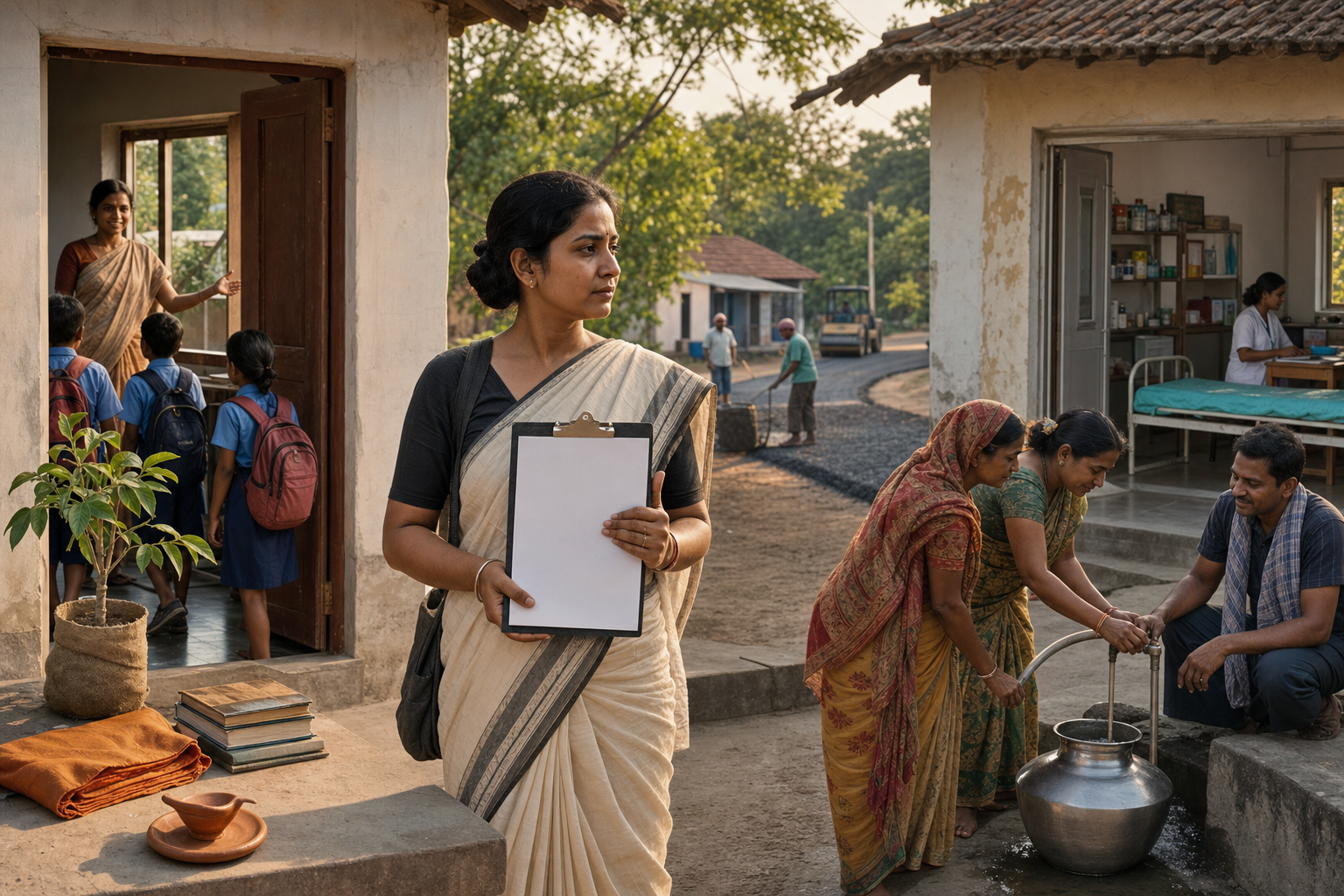
Invoking Swami Vivekananda raises the standard for a political party. It does not lower it. His name cannot serve as a substitute for competent candidates, ethical conduct or public service. If a party seeks legitimacy through his legacy, voters are entitled to ask whether its behaviour displays courage without recklessness, pride without contempt and service without favouritism.
Prajashakti’s stated emphasis on unity among Hinduism, Buddhism, Jainism and Sikhism can offer a constructive dharmic vocabulary for public life. Such unity need not erase the real distinctions among these traditions. It becomes politically valuable when it encourages mutual respect, constitutional citizenship and cooperation around shared civic duties.
For a pro-Dharma voter, this is an important test. Cultural confidence should make governance more responsible. It should not become an excuse to avoid governance questions. A party that speaks of seva must be ready to identify whom it will serve, which public failure it will address, which authority can act and how citizens will know whether anything improved.
Ask a local representative a direct question: Which service failure in this constituency will you prioritise, what action can the responsible authority take, and what result will you report publicly? Listen for an answer with a defined problem, an accountable actor and an observable result. A speech about civilisational renewal that never reaches the school, clinic, street, neighbourhood or livelihood remains incomplete.
Inclusive conduct is part of the same test. A party may defend Hindu interests and dharmic heritage while treating every citizen as constitutionally equal. In fact, a platform built around inter-dharmic harmony should be especially capable of disagreeing without dehumanising opponents. Notice how its candidates respond to criticism, internal differences and communities outside the party’s natural base. Conduct under pressure reveals more than ceremonial language does.
Use a constituency scorecard instead of a political impression

Campaign impressions are difficult to compare. Turn them into a simple written record. For every party in your constituency, mark each test as absent, general or specific. Do not create a special standard for Prajashakti, whether favourable or hostile. Applying the same test to every contestant is what makes the exercise useful.
| Test | Evidence to seek | What should make you pause |
|---|---|---|
| Problem definition | A named constituency problem, the people affected and the public authority involved | Statewide slogans with no local diagnosis |
| Policy precision | A proposed action, an implementation path and a result citizens can observe | Aspirations presented as if they were plans |
| Candidate credibility | Relevant competence, accessible public conduct and a clear way for residents to seek answers | A candidate whose only qualification is symbolic appeal or party proximity |
| Organisational depth | A named local team, sustained district activity and a functioning contact point | Visibility limited to launches, posters or social-media activity |
| Dharmic and constitutional conduct | Respect across dharmic traditions, equal citizenship and civil engagement with disagreement | Language of unity paired with exclusion, humiliation or selective accountability |
Then apply the scorecard to the issues that shape daily life.
- Employment: Ask which local barrier the candidate wants to remove and which institution has the power to remove it. A promise to create opportunity is not yet a plan.
- Education: Ask whether the priority is access, teaching quality, relevant skills or the transition into dignified work. These are connected problems, but they require different actions.
- Public health: Ask what part of local provision is being addressed and what residents should be able to observe if the proposal succeeds.
- Welfare delivery: Ask how eligible residents will obtain benefits fairly, how errors will be corrected and where a person can take a grievance.
- Safety and infrastructure: Ask for the locality, responsible authority and service standard involved. General concern about law and order or development is too broad to evaluate.
- Cultural heritage: Ask which institution, place, tradition or educational need requires protection, what lawful action is proposed and how that action serves the wider community.
A credible answer does not have to be lengthy. It needs a chain you can follow: problem, action, authority and public result. If a proposal requires resources, the candidate should also acknowledge the choice or trade-off involved. Treat persistent refusal to become specific as information, not as a minor communication defect.
Separate the party’s possible election roles
Discussion of a new party often jumps directly from its launch to a verdict about victory or irrelevance. West Bengal’s Assembly contest is built constituency by constituency, so Prajashakti may play different roles in different places. You should look for the evidence associated with each role.
A durable contestant
This role requires credible candidates, sustained local organisation and a recognisable programme that survives beyond ceremonial occasions. District presence matters more than the size of a single event. Look for people who can answer constituency questions consistently and remain accessible after the cameras leave.
An agenda setter
A party can influence an election even when it is not close to governing. If other contestants begin answering its questions about cultural heritage, fair welfare, youth opportunity, public services or ethical leadership, it has already affected the conversation. The test is not whether larger parties repeat its vocabulary, but whether they make clearer commitments because the issue can no longer be ignored.
A coalition factor
Coalition relevance depends on demonstrated support, where that support is concentrated and whether cooperation is politically workable. A party name and a launch do not establish any of these conditions. Until there is constituency-level evidence and a clear posture toward cooperation, coalition talk should be treated as a scenario rather than a fact.
A symbolic entrant
If candidates, local teams and policy commitments do not follow, the debut may remain an expression of aspiration rather than a lasting political intervention. Symbolism is not worthless, especially when it gives neglected concerns a public voice. But a party asking for votes must eventually convert voice into accountable representation.
The same discipline applies to claims that Prajashakti will split a particular vote. Calling a new entrant a spoiler is not analysis. Before accepting that label, ask who its candidate is, whether any alliance or accommodation exists, whether support is visible in that constituency and whether voters are being offered a genuinely distinct programme. Without those facts, both alarm and confidence are speculative.
Track follow-through from organisation to ballot
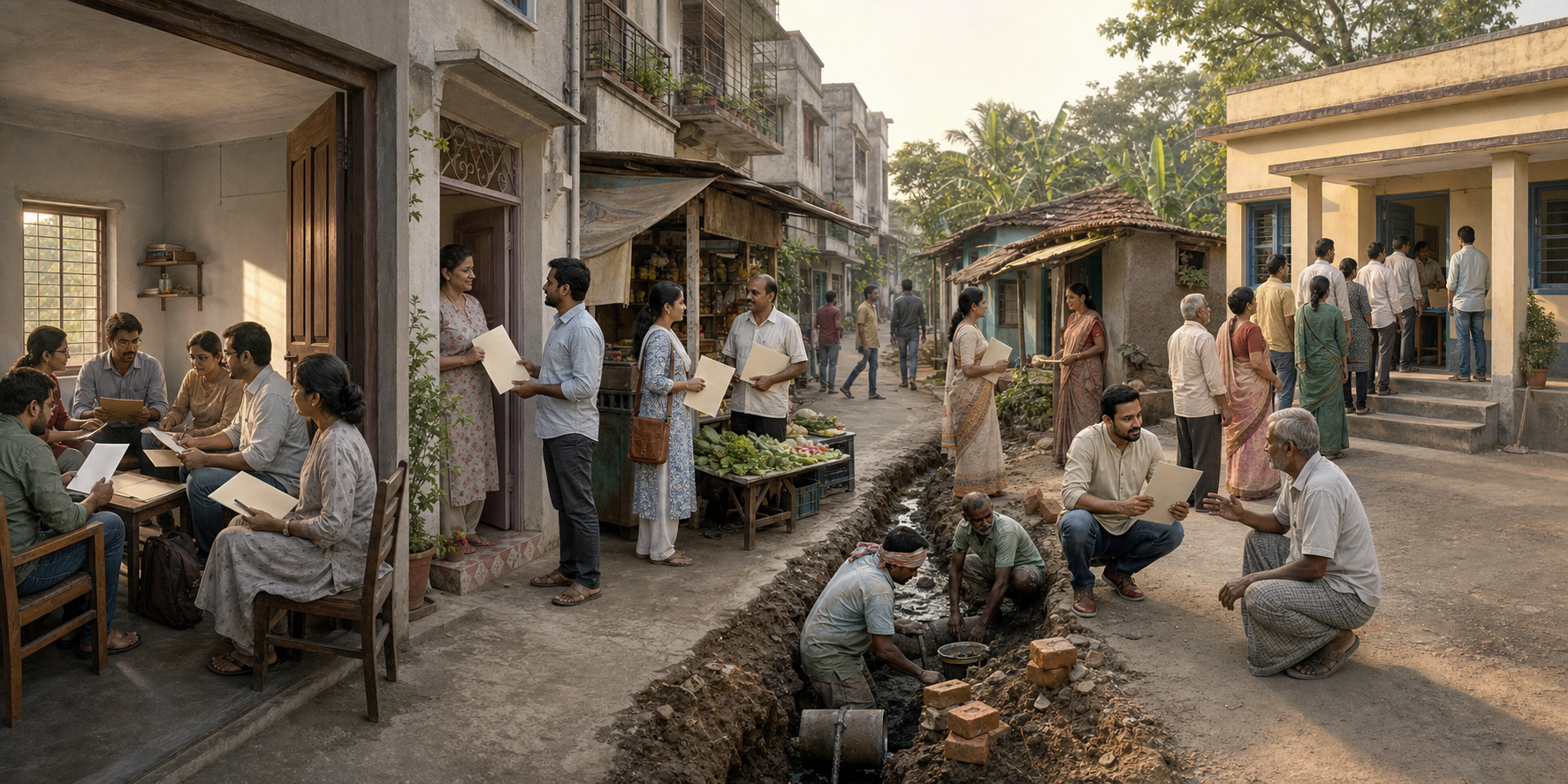
You do not need to make a final judgement at the moment of launch. Keep the scorecard and update it as the contest develops. The sequence matters because each stage should produce a different kind of evidence.
- During organisation-building, look for named district leadership, reliable ways to contact the party and activity connected to actual civic concerns. One-off visibility is not the same as durable presence.
- When candidate selection becomes visible, examine how candidates were chosen, what competence they bring and whether residents can question them directly. Candidate quality is where an ethical platform first becomes tangible.
- When policy commitments appear, run them through the problem-action-authority-result chain. Compare the answers with those of every other party rather than evaluating them in isolation.
- During outreach, notice whether youth and women are entrusted with decisions, local organisation and public argument. Attendance and imagery demonstrate reach; responsibility demonstrates institutional seriousness.
- Before casting your vote, separate your appreciation of the party’s cultural message from your judgement of its local candidate, governing capacity and likely electoral role. These considerations can support the same decision, but they are not interchangeable.
Save written commitments or recorded answers when they are publicly available. That gives you something concrete to revisit after the campaign. Political accountability weakens when voters remember only the mood of a speech and not the promise it contained.
Prajashakti Party has chosen a demanding point of entry: Vivekananda’s Bengal, a dharmic language of service and a constitutional claim to inclusive politics. You can now make that standard real. Ask your constituency candidate for the local problem, the proposed action, the responsible authority and the public result. If the answers become specific and the organisation remains present, treat the party as a serious stakeholder. If they do not, do not let cultural affinity complete the argument on its behalf.
References
