
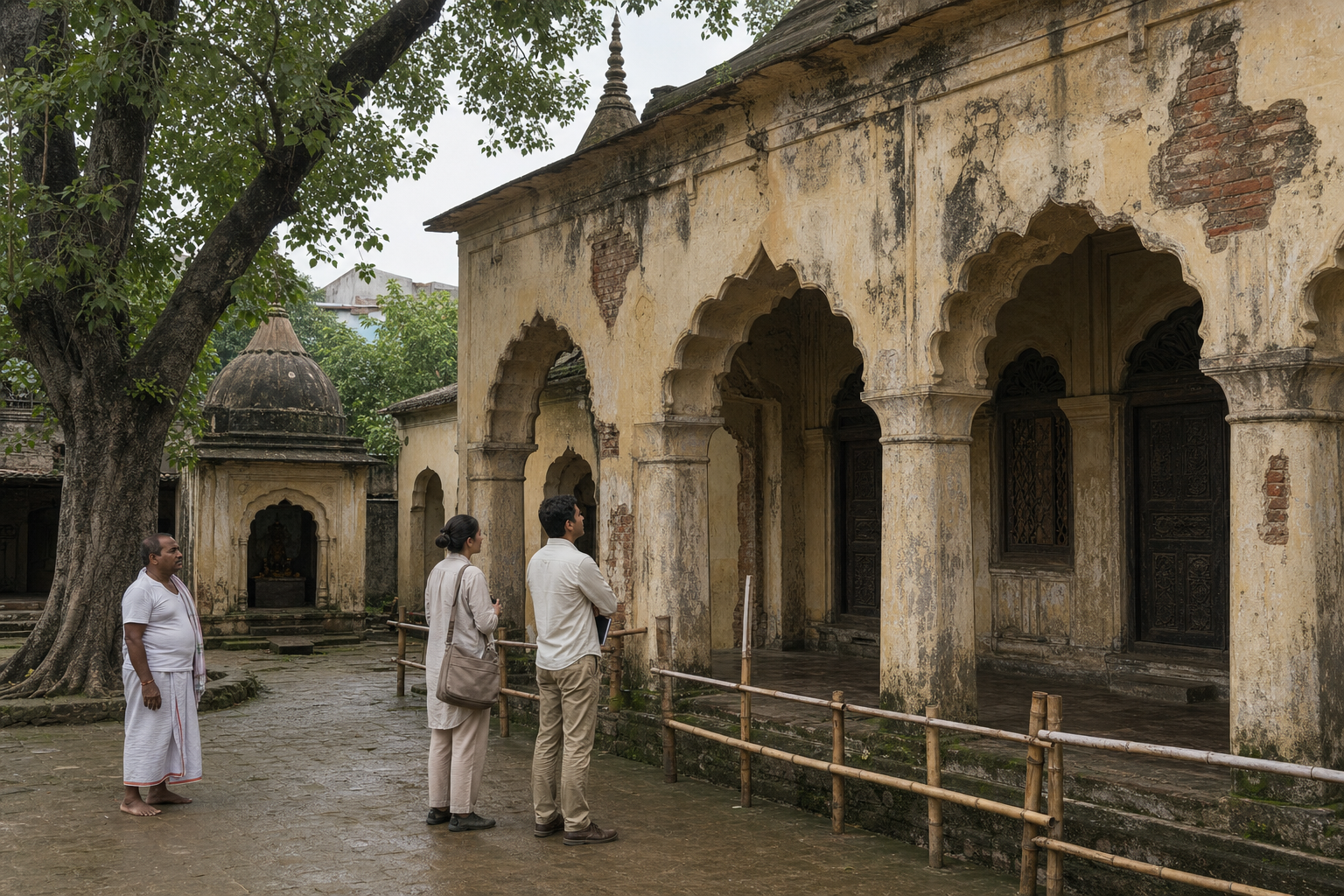
If you came here to learn whether restoration of the ancient Shree Ram Janki Math has actually begun, the careful answer is limited but clear: an expert inspection took place on July 22, 2026, and physical work was scheduled to start on July 29. A scheduled date alone does not establish that work began.
The more important question now is what kind of work will follow. A historic math can emerge stronger without losing the age, material character, sacred relationships and accumulated memory that made it worth saving. You can judge the project by asking for evidence of that discipline, not merely photographs of fresh construction.
What is confirmed, and what still needs verification
Shree Ram Janki Math, located at Raghopur Bakhri in Sitamarhi, is described as 834 years old. IIT Patna Director Prof. T.N. Singh visited it with an expert team on July 22, 2026. The team examined the geographical and structural conditions of the site and discussed technical recommendations for reconstruction and long-term development.
The work, being undertaken under the auspices of the Ramayan Research Council, was scheduled to commence on July 29, 2026. IIT Patna’s technical involvement was presented as an ongoing relationship rather than a single ceremonial visit.
Those facts establish preparation and institutional involvement. They do not yet establish the condition of every historic element, the approved scope of work, the materials to be used, the treatment of later additions, the completion schedule or the extent of any work performed after July 29. Nor do they tell you whether the project will conserve surviving fabric or replace it with a visually new structure.
Before treating a photograph of activity as proof of successful restoration, look for four dated records: a pre-work condition survey, an intervention plan, a list of materials and methods, and progress photographs taken from consistent viewpoints. Together, these let the public distinguish careful repair from uncontrolled rebuilding.
Restoration and reconstruction are different promises
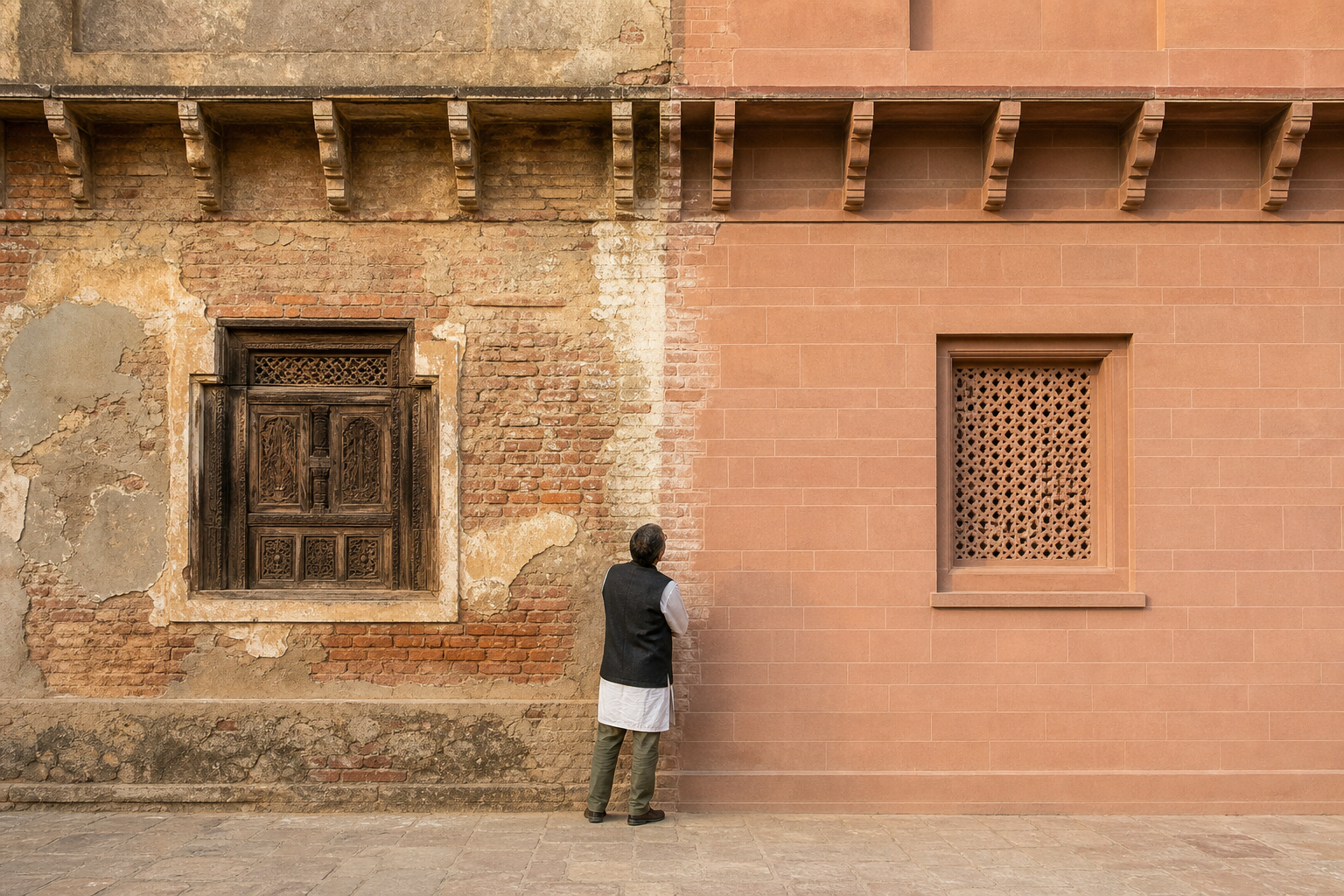
The project has been described using both restoration and reconstruction. In ordinary conversation those words can sound interchangeable. In heritage work, they imply different levels of intervention.
- Conservation protects what has survived and slows further deterioration.
- Repair restores structural or functional performance while retaining as much sound material as possible.
- Restoration returns an element toward a known earlier state, based on evidence rather than preference.
- Reconstruction recreates something substantially missing or too damaged to retain. It requires strong evidence if the result is to remain historically credible.
- New development adds facilities or capacity. It should be identified as new work rather than disguised as ancient fabric.
This distinction matters because a building can look cleaner, brighter and more symmetrical while becoming less authentic. Old plaster, masonry, timber, inscriptions, thresholds and evidence of earlier repairs may carry information that a new surface cannot reproduce. Age is not a defect to be polished away.
A defensible project should apply a hierarchy to each part of the math:
- Retain a sound historic element in place.
- Stabilize it if movement or decay threatens its survival.
- Repair it with a compatible and limited intervention.
- Replace only the failed portion when partial retention is possible.
- Reconstruct a missing element only when reliable physical, photographic or documentary evidence supports the design.
- Mark substantial new construction honestly, without making it compete visually with the historic math.
Ask project representatives to attach one of those verbs to every major element. “The wall will be restored” is vague. “The stable portion will be retained, the crack repaired and the missing corner reconstructed from measured evidence” is a decision that can be examined.
What a sound plan should make visible
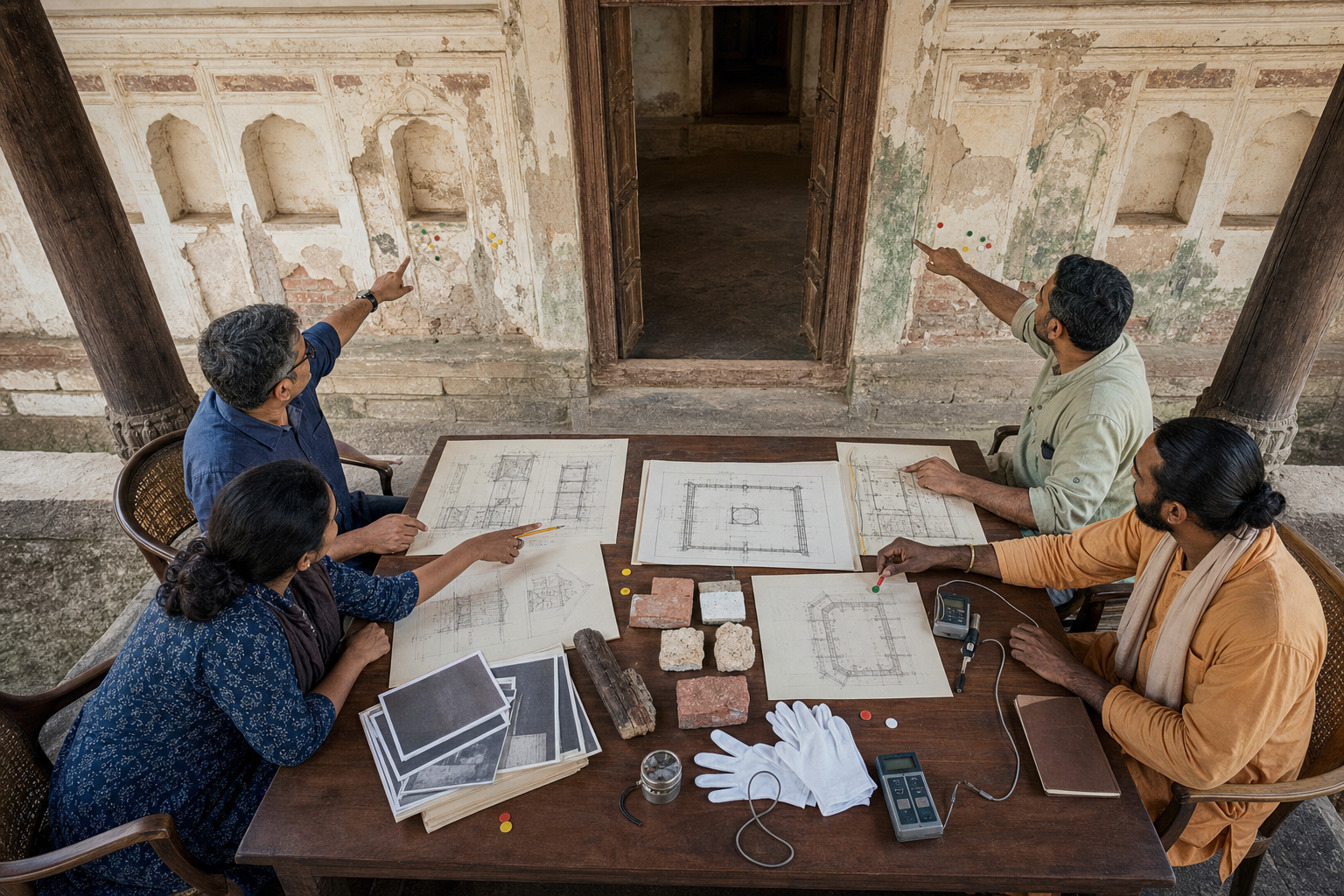
IIT Patna’s examination of site and structural conditions is an appropriate technical starting point. The next test is whether that expertise produces a record capable of guiding workers, settling disagreements and allowing later maintenance teams to understand what was changed.
The technical record
A useful conservation file does not need to expose sensitive engineering details to everyone. It should, however, make the basis of major decisions understandable. Look for:
- A measured survey showing the building before intervention, including visible lean, deformation and later additions.
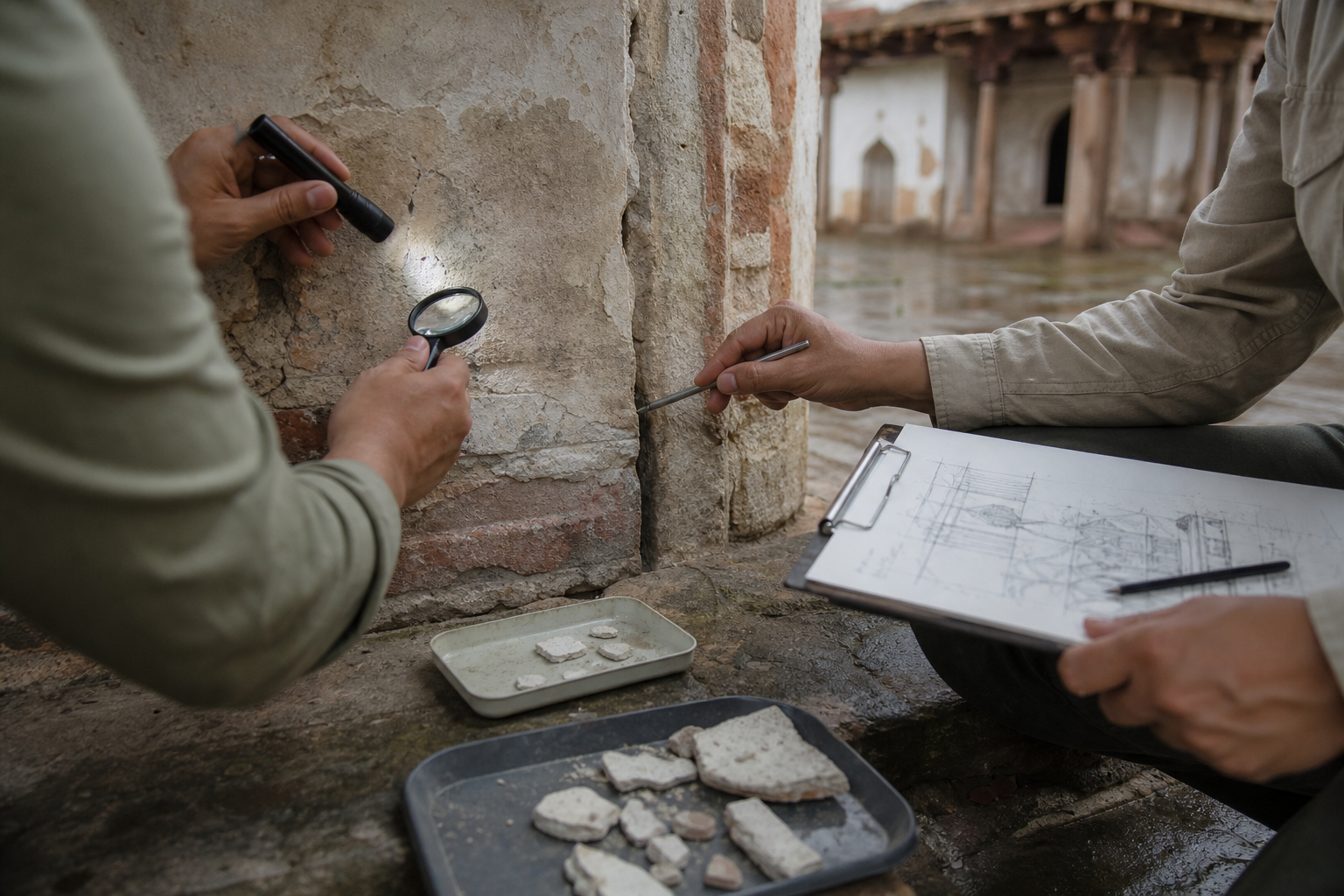
- A condition map locating cracks, dampness, erosion, biological growth, failed joints and previous repairs.
- Dated photographs with labels and fixed viewpoints, not only close-ups selected for publicity.
- A chronology map distinguishing fabric believed to be early, later historic work, modern alterations and areas whose date remains uncertain.
- A materials assessment and small repair trials before any method is applied widely. Modern cement, paint or chemical cleaner should not be assumed compatible with older masonry.
- A site-water plan addressing drainage, groundwater and rainwater before damaged surfaces are covered. Otherwise, a new finish can conceal the mechanism causing deterioration.
- A temporary-support and work sequence explaining how unstable areas will be protected during removal or repair.
- An inventory for every historic component removed temporarily, with a label, photograph, storage location and planned destination.
- A completion record showing what was retained, repaired, replaced, reconstructed or newly added.
- A maintenance plan assigning responsibility for inspections, water management and small repairs after the main contractors leave.
Crack repair is a good example of why sequence matters. Filling a crack improves appearance, but it does not explain whether movement has stopped. The team should first identify the likely cause and determine whether monitoring is needed. The treatment should follow the diagnosis, not obscure it.
The sacred and cultural brief
Engineering can determine whether an element is unsafe and how loads might be carried. It cannot, by itself, decide which relationships make a math culturally whole. That judgment needs informed participation from its custodians, people responsible for ritual practice, conservation specialists, traditional craftspeople where relevant, and residents who can identify how the place has been used and remembered.
The cultural brief should identify sacred boundaries, ritual requirements, established movement routes, significant sightlines, spaces used for teaching or gathering, and historic elements associated with local memory. It should also separate documented knowledge from oral recollection and modern preference. Oral histories are valuable, but names, dates and uncertainties should be recorded rather than silently converted into architectural certainty.
Modern safety, electrical, sanitation and access needs can be accommodated without pretending that new installations are ancient. The useful questions are whether additions are visually restrained, serviceable without damaging historic fabric and removable when technology or needs change. Long-term development should support the math; it should not become a reason to erase the building that gave the site its significance.
Key takeaways: five tests for faithful restoration
- Status test: The inspection and planned start are confirmed, but the announced July 29 date is not proof of completed or continuing work. Look for dated progress records.
- Language test: Ask which parts will be conserved, repaired, replaced, reconstructed or newly built. A single broad word such as “restoration” conceals too many different actions.
- Evidence test: Reconstruction should follow measured, photographic, physical or documentary evidence. If the design rests mainly on what looks attractive, it is new design.
- Material test: Require compatibility assessment and a limited trial before unfamiliar mortar, coating, cleaner or replacement material is used across the site.
- Stewardship test: Success is not the inauguration photograph. It is a safe, worship-worthy and historically legible math with a funded maintenance responsibility after construction ends.
How devotees and residents can help without harming the site
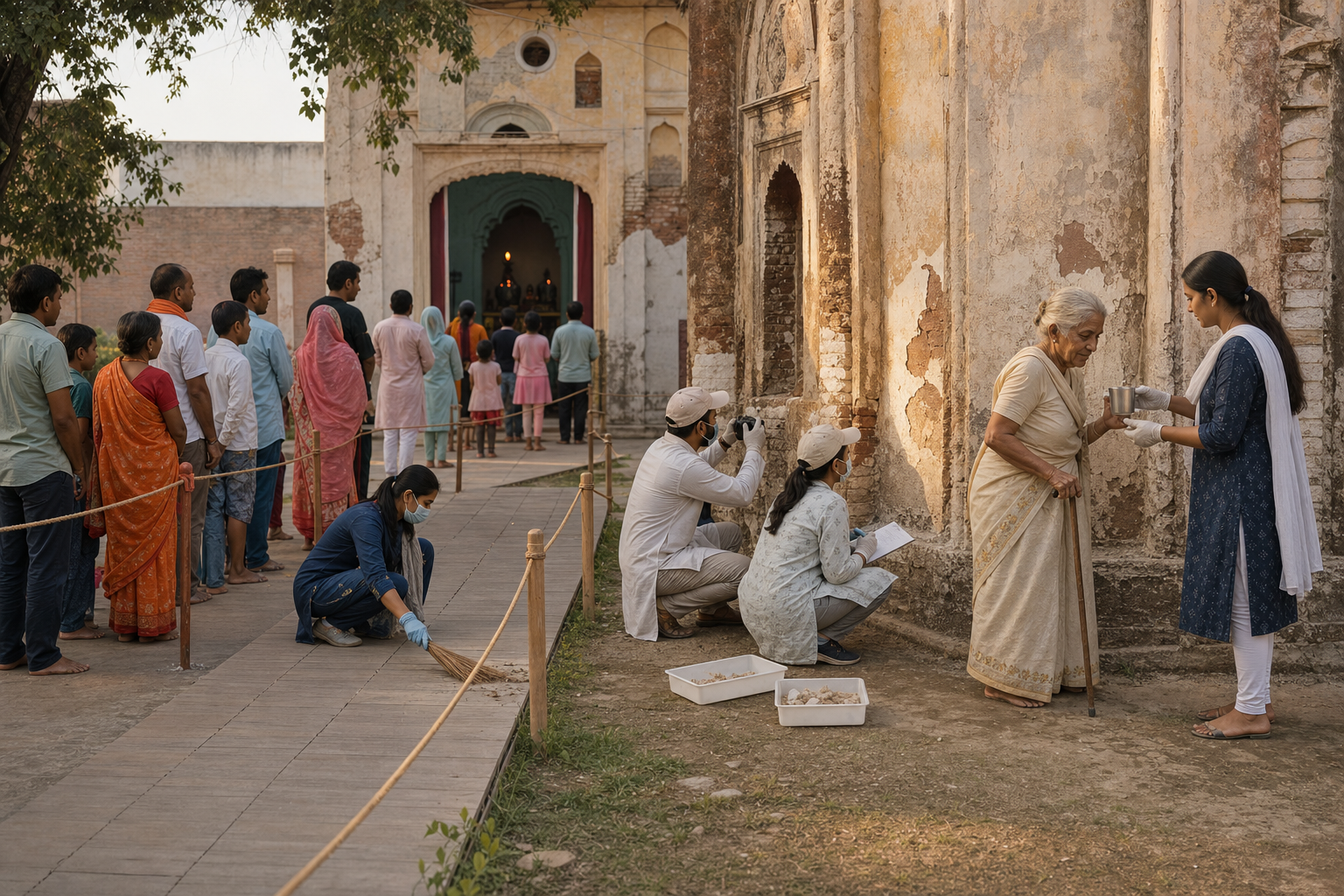
Public interest can strengthen accountability, but uncoordinated help can also damage the very fabric people want to save. If you live nearby, visit the area or belong to a community supporting the math, use that access constructively.
- Ask for a dated public status note. It should state whether physical work began, which areas are active, who supervises the site and what the next verifiable milestone is.
- Contribute records, not conclusions. Offer old photographs, letters or family records at their best available resolution. Include the owner, approximate date, people shown, location and the basis for the date. Let specialists assess what each image proves.
- Photograph responsibly. Use public or authorized viewpoints, note the date and location, and avoid entering unstable or restricted areas. A consistent wide view is often more useful for tracking change than a dramatic close-up.
- Do not clean or repair historic material yourself. Scraping, washing, painting and applying household chemicals can remove evidence or accelerate decay. Report the condition and leave treatment to the supervised team.
- Do not send construction materials without a specification. Cement, tiles, coatings and cleaners can create pressure to use what has been donated even when it is incompatible. Ask for a written materials request first.
- Check before donating money. Confirm the legal name of the recipient, the official payment channel, the stated purpose of the collection and whether an acknowledgment or receipt will be issued. If those details are unclear, pause rather than relying on the announced start date as proof of financial accountability.
- Request a completion dossier. The community should eventually receive a plain-language record of the work, including before-and-after views, major decisions, retained components and the maintenance contact.
The next meaningful milestone is not a promise of grandeur. It is a dated record showing what has happened since July 29 and how the surviving math is being protected. Ask for that record, preserve any genuine historical evidence in your possession, and judge every intervention by whether future generations will still be able to recognize both the sacred institution and the age carried in its fabric.
References
