
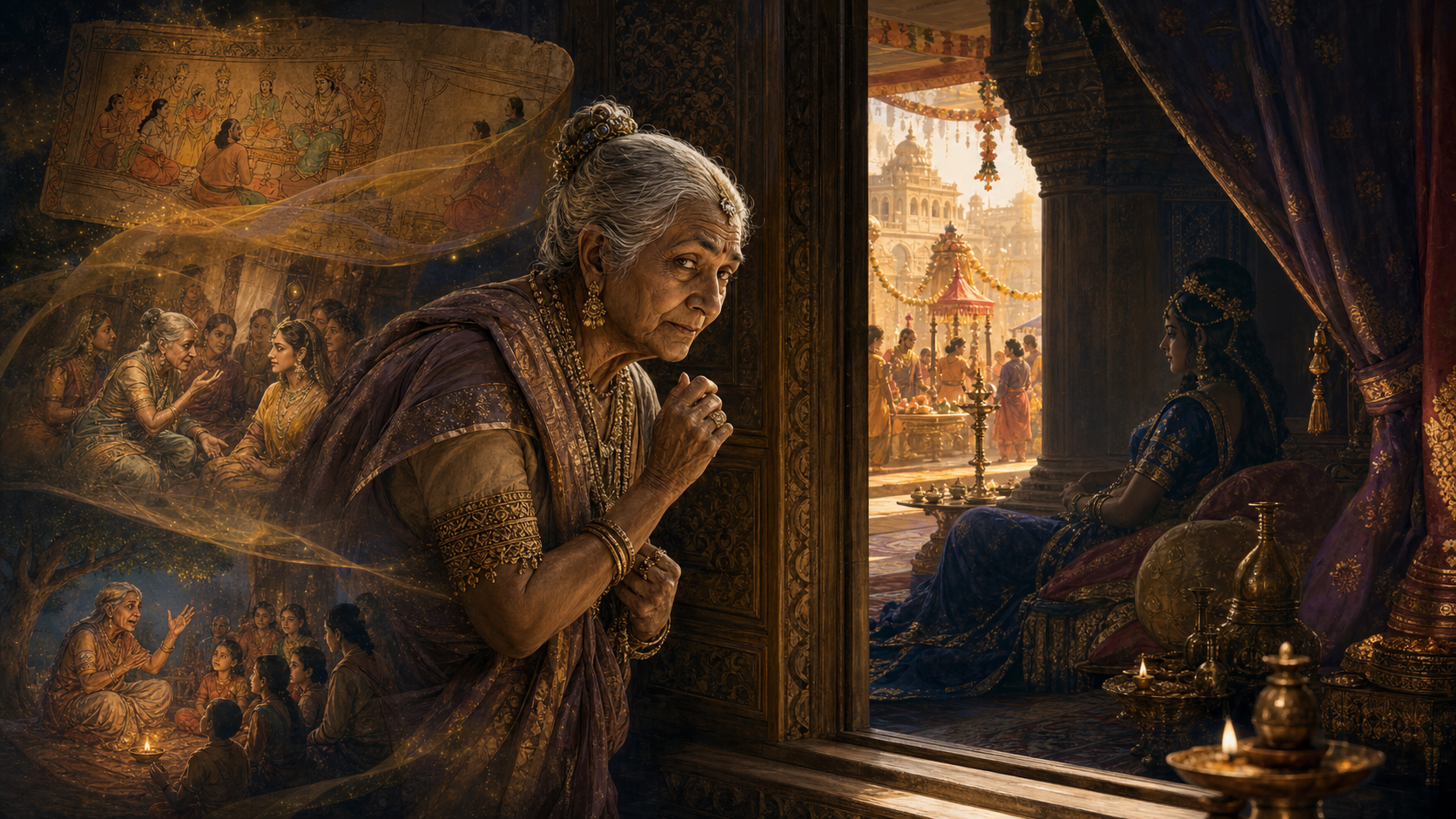
If you have heard that Manthara turned against Rama because a childhood game injured her, you may wonder why that incident disappears when you open another telling of the Ramayana. The contradiction clears up once you ask a prior question: which Ramayana tradition is speaking?
The classical account does not give Manthara an earlier personal grievance against Rama. Later oral and folk traditions sometimes do. Keeping those layers distinct lets you honour living katha traditions without presenting every local explanation as a detail found in every Ramayana.
Key takeaways
- No childhood injury or established personal quarrel with Rama is specified in the Valmiki Ramayana.
- Some folk tellings explain Manthara’s hostility through an accidental injury during Rama’s childhood; the object and incident vary from one telling to another.
- Other versions focus on repeated ridicule and social humiliation rather than one decisive accident.
- Her intervention can also be read as palace strategy: she uses Dasaratha’s promised boons to protect Bharata’s succession and Kaikeyi’s position.
- Understanding a wound does not excuse the choices made from it. Rama’s response supplies the contrasting Dharmic model: restraint without retaliatory hatred.
What Valmiki leaves open—and what he makes clear
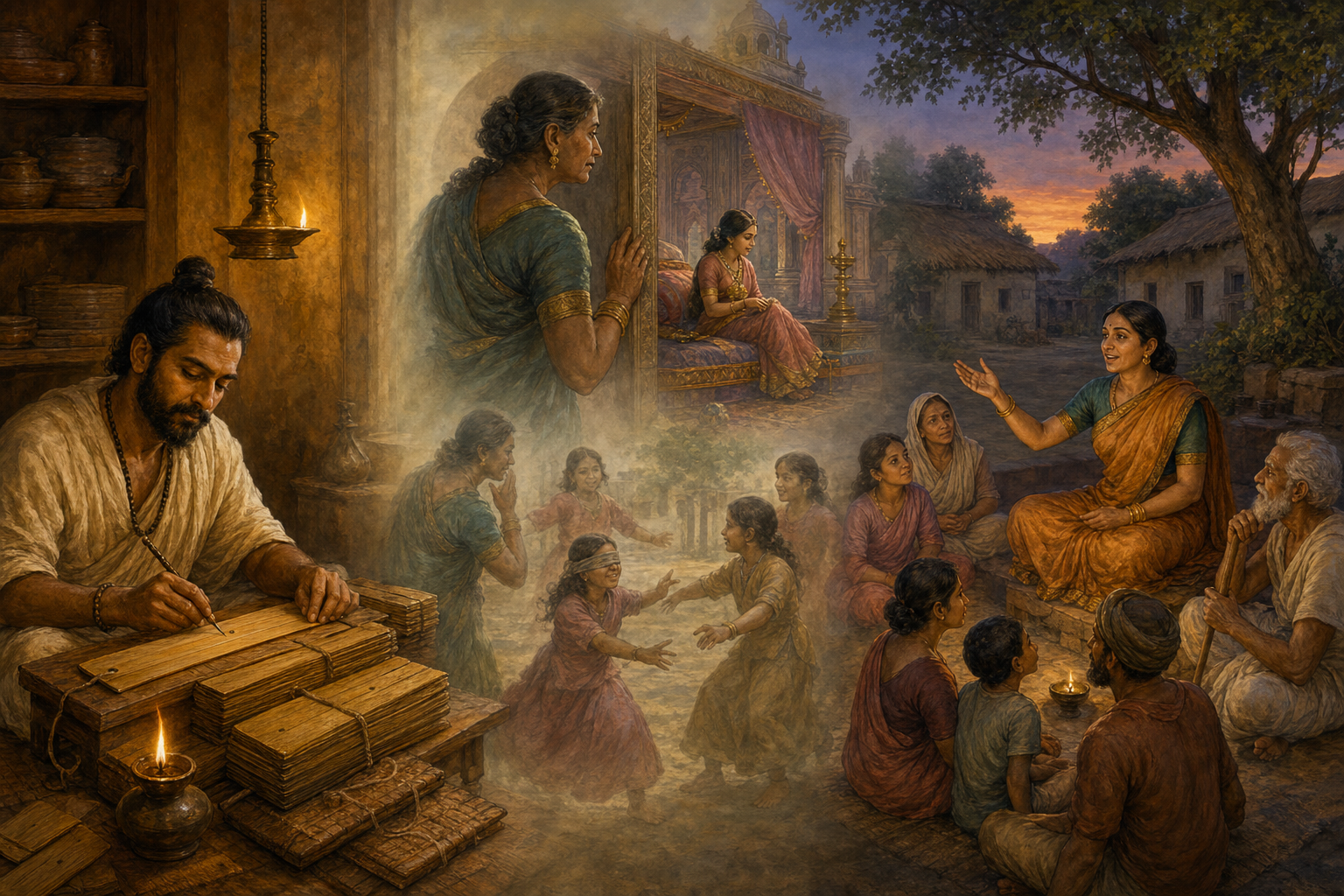
Start with the firm distinction between motive and backstory. The Valmiki Ramayana gives Manthara an immediate political motive, but it does not narrate an old injury inflicted by Rama. That silence matters. You can reasonably discuss fear, loyalty, ambition and succession politics; you cannot responsibly present a childhood accident as though it were part of Valmiki’s account.
What is clear is Manthara’s ability to read the palace. Rama’s elevation would strengthen Kausalya’s branch of the royal household. Bharata was Kaikeyi’s son, and Manthara understood that a change at the top could alter the security, prestige and influence of everyone attached to Kaikeyi. She therefore turns Kaikeyi’s happiness into anxiety about what the succession might mean for her and Bharata.
Her leverage is not vague suspicion. She remembers the two boons Dasaratha owes Kaikeyi and presses her to use them at the decisive moment. The proposed demands are concrete: Bharata should receive the throne, and Rama should go into vanvas. This makes Manthara more than a stock embodiment of malice. She is an attendant with political perception, forceful speech and a clear plan.
That complexity should not be turned into exoneration. Political intelligence tells us how she could redirect the court; it does not make the resulting disruption righteous. The first sound reading rule is therefore simple: state what Manthara sees before judging what she does. You will understand the episode more accurately without weakening its moral seriousness.
Why folk memory gives Manthara a wound
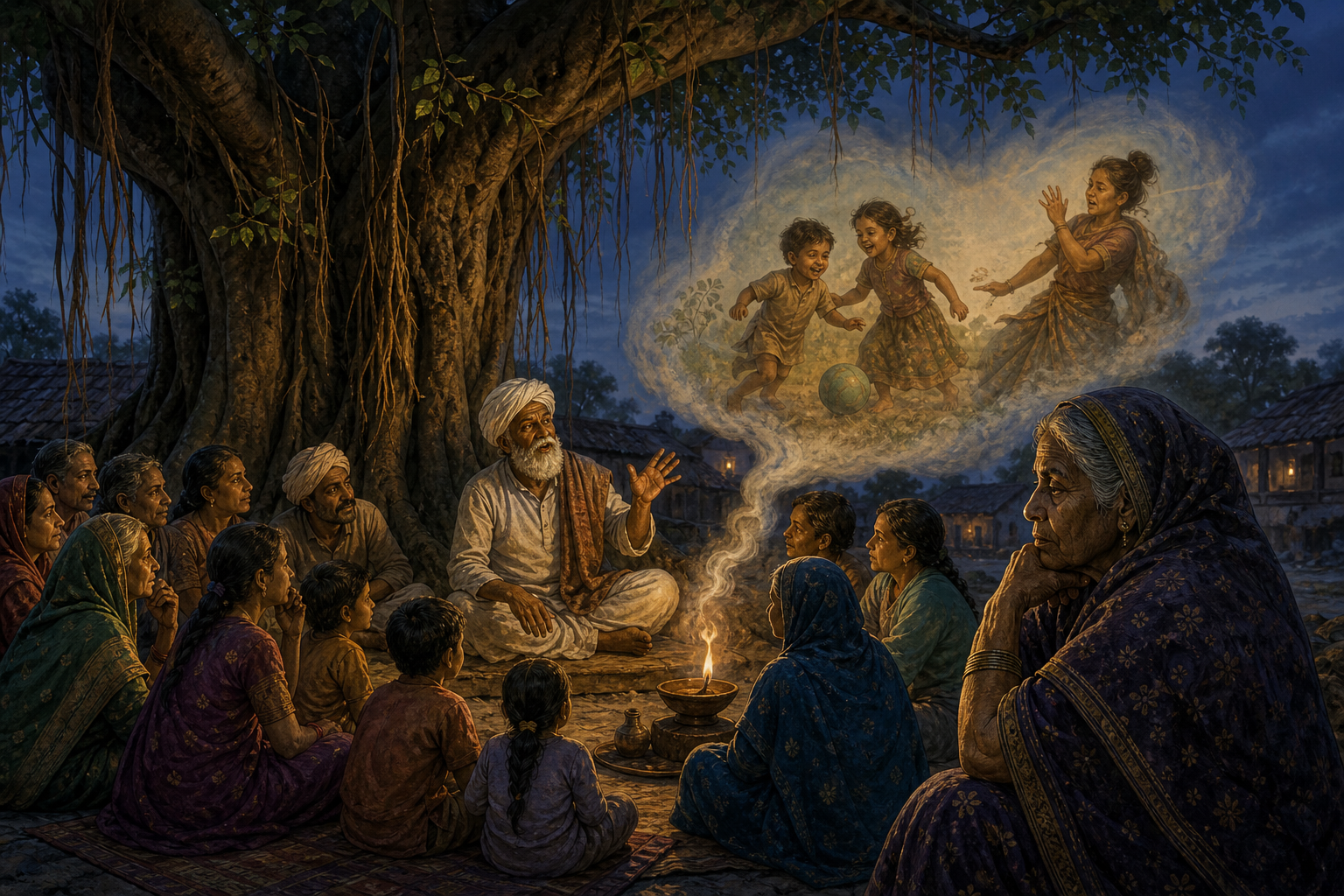
A storyteller facing unexplained hostility naturally asks what happened before the visible crisis. Some regional kathas answer with an innocent game that turns bitter. A flying ball, a misdirected gilli-danda or a careless shove injures Manthara. Depending on the telling, the incident breaks her leg or worsens an existing physical condition. Pain becomes humiliation, and humiliation is remembered as a debt.
These details are alternatives, not pieces of one standardized biography. You should not combine the ball, gilli-danda and shove into a single supposedly authoritative childhood episode. Their shared function matters more than their changing props: each supplies an origin for resentment that the classical narrative leaves unstated.
Other folk versions replace the single accident with accumulated indignity. Manthara’s physical difference attracts ridicule within the palace, leaving her socially exposed and conscious of how little formal protection an attendant possesses. In this frame, the later intervention grows from repeated slights rather than one remembered blow.
This version asks you to notice a difficult human pattern. A wound does not remain a private memory when it is rehearsed, reinforced and attached to a theory about other people’s intentions. It can become dvesha—an aversion that interprets every new event through old pain. Rama’s proposed coronation then appears to Manthara not as a public good but as the moment when those she distrusts will gain irreversible power.
Read that pattern without making physical difference itself a moral symbol. Manthara’s body does not cause her wrongdoing. The ethical problem lies in ridicule, cultivated resentment and the decision to convert private hurt into a public crisis. When teaching the episode, especially to children, that distinction prevents the story from becoming an excuse to mock disability while preserving its warning about unhealed anger.
Read the episode as palace politics, not only personal malice
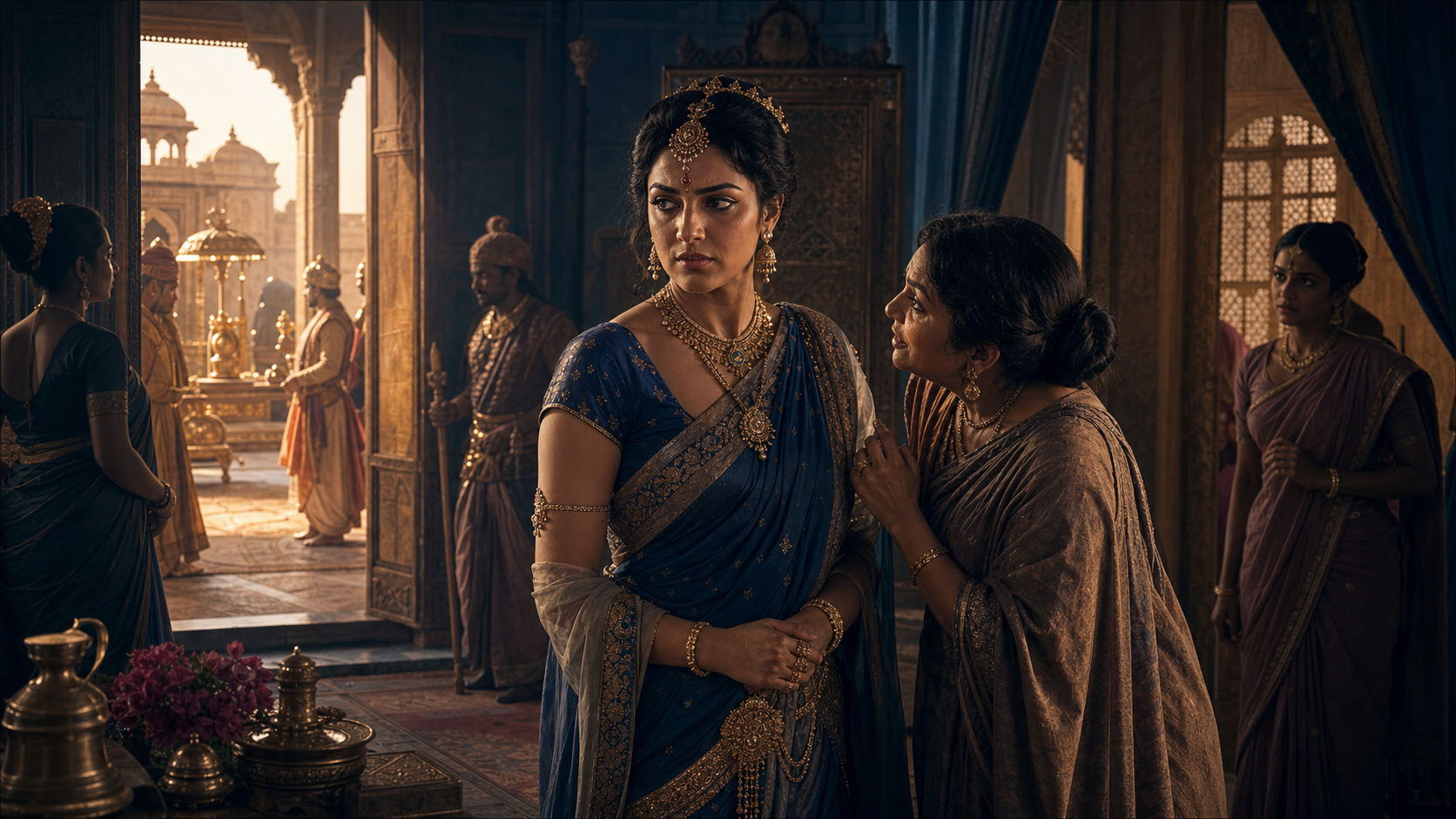
Calling Manthara jealous or wicked may express a moral verdict, but it does not explain why her argument succeeds. Kaikeyi acts because Manthara connects maternal concern to a real instrument of royal power: Dasaratha’s unfulfilled promises. Her counsel gives Kaikeyi both a feared outcome and an immediate means of preventing it.
The demand for Bharata’s coronation and the demand for Rama’s removal belong to the same succession strategy. Installing Bharata would not necessarily secure Kaikeyi’s position while the widely honoured Rama remained the obvious alternative centre of loyalty. Vanvas removes that competing centre. You do not have to approve of the plan to recognise its internal political logic.
| Reading | What it helps you notice | What it can obscure |
|---|---|---|
| Personal grievance | A childhood injury or remembered slight can give later hostility an emotional origin. | A local folk motif can be mistaken for a detail present in every Ramayana. |
| Accumulated humiliation | Repeated ridicule can turn vulnerability into enduring resentment. | Explaining Manthara’s pain can slide into excusing her choices. |
| Protective loyalty | Manthara may believe she is defending Kaikeyi and Bharata from loss of status. | Loyalty to one household can conceal the harm imposed on another. |
| Succession strategy | The boons, Bharata’s elevation and Rama’s vanvas form a coherent political plan. | A purely strategic reading can overlook anger, fear and wounded pride. |
The strongest interpretation need not force you to choose only one row. Manthara may be protective and resentful, perceptive and ethically compromised. Human motives often arrive as mixtures. A grievance can provide emotional heat while political calculation gives it direction.
Responsibility must also be assigned with care. Manthara persuades, but Kaikeyi chooses to demand the boons. Dasaratha’s earlier promise gives those demands their force. The succession structure gives Manthara’s warning credibility. Saying that Manthara caused the exile is narratively convenient; tracing the chain of agency is more useful when you are asking how a royal household became vulnerable to one adviser’s intervention.
Read with Dharmic discipline, then name your tradition
Several Dharmic vocabularies illuminate the movement from inner disturbance to harmful action. Hindu thought warns about krodha and dvesha, anger and aversion that cloud judgement. Buddhist analysis identifies dosa as a root of unwholesome action. Jaina teaching examines kashaya—passions such as anger, pride, deceit and greed—as forces of bondage. Sikh wisdom exposes haumai, the ego-centred orientation that divides the self from truth and right relationship.
These are not interchangeable doctrines, and Manthara should not be turned into a convenient mascot for all of them. They do, however, direct your attention to a shared practical question: what happens when fear, injury or attachment is allowed to govern counsel? The moral failure begins before the public demand. It begins when an inner affliction becomes the lens through which every person and possibility is judged.
Compassion and accountability have different jobs here. Compassion asks what fear or humiliation may have shaped Manthara’s vision. Accountability asks what she chose to do with that vision and whom her counsel harmed. Removing either question produces a caricature. Condemnation without understanding teaches little about how resentment grows; understanding without judgement makes every destructive act disappear into its backstory.
Rama supplies the counter-movement. He accepts vanvas without answering intrigue with intrigue or resentment with revenge. His restraint protects filial duty and limits further fracture within the royal household and kingdom. This does not make Manthara’s intervention good. It shows how one person’s disciplined response can prevent another person’s aversion from dictating the moral character of everyone involved.
Use the following method whenever you encounter a claim about Manthara:
- Name the tradition. Ask whether the claim comes from the Valmiki Ramayana, another literary retelling, a regional oral katha or a performance tradition.
- Separate event from explanation. Manthara’s persuasion and Kaikeyi’s demands belong to the central narrative; the childhood injury is one later explanation for her motive.
- Keep variant details variant. If the story involves a ball, gilli-danda, shove or repeated mockery, present that detail as belonging to a particular kind of telling rather than to a universal Ramayana biography.
- Test the ethical lesson. Ask what the version teaches about resentment, loyalty, social vulnerability, counsel, succession and the response to injustice.
The Ramayana lives through Sanskrit, Tamil, Awadhi and many regional oral traditions. Their plurality need not become a contest in which one community’s remembered katha is dismissed or every difference is blurred into a single composite story. Precision offers a better form of respect.
The next time you repeat the childhood-grudge explanation, add one sentence: “This is a folk account of Manthara’s motive; the Valmiki Ramayana does not specify that earlier grievance.” That small clarification preserves the katha, protects textual accuracy and turns an argument over which version is “real” into a deeper conversation about power, wounded memory and dharma.
References
