
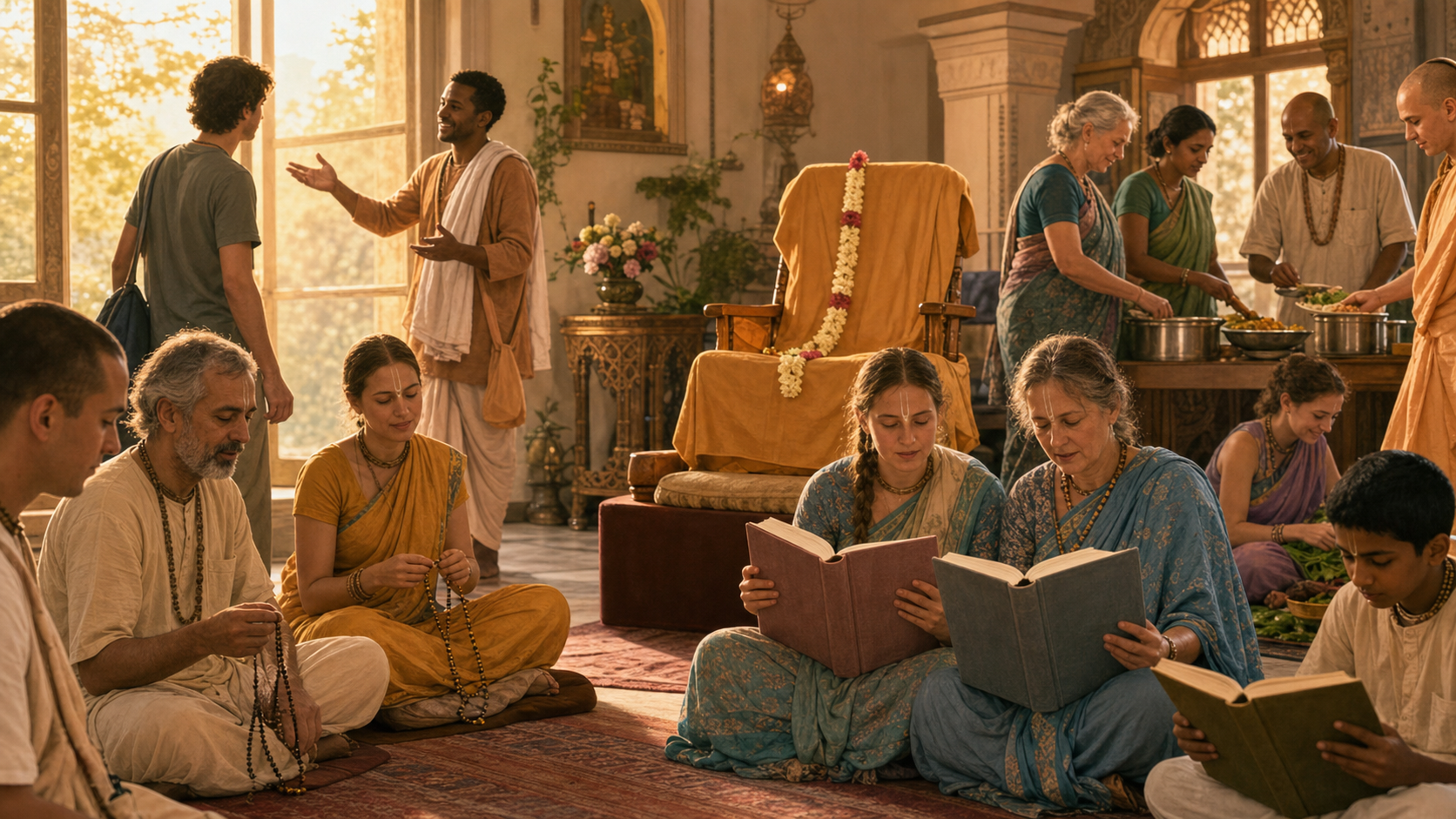
You may approach ISKCON’s sixtieth anniversary with gratitude, questions, or both. The easy part is honoring Srila Prabhupada on the commemorative day. The harder question arrives afterward: what would make his legacy visible in your ordinary week?
A living legacy is more than affectionate memory, institutional longevity, or a successful event. It changes how you hear, study, chant, serve, welcome people, exercise authority, and respond when a community falls short of its own teachings. Whether you are a long-time devotee, an occasional temple visitor, or someone trying to understand ISKCON from the outside, you can use this anniversary as a practical test rather than a ceremonial pause.
An anniversary should be a checkpoint, not a finish line

The sixtieth-anniversary Sunday Feast places the milestone inside a familiar rhythm of congregational devotion. That is a fitting frame. A spiritual movement remains alive when its ideals can be encountered in recurring practices, not only in anniversary speeches.
Longevity deserves gratitude, but age alone doesn’t prove fidelity. Institutions can preserve a founder’s name while gradually losing the discipline, priorities, or spirit that gave the name meaning. They can also change their outward methods while faithfully preserving the essential teaching. The right question is therefore not whether everything looks as it did at the beginning. It is whether present practice still carries the purpose.
Look at the community you know and ask what would remain if the anniversary banners disappeared. Useful signs include:
- Scriptural classes identify the passage being discussed and distinguish its teaching from the speaker’s personal opinion.
- Kirtan invites sincere participation rather than treating sacred sound as a performance to be consumed.
- Prasada service gives newcomers a dignified welcome and a clear point of human contact.
- Members can explain not only who Srila Prabhupada was, but what practice they received through him and how it governs their lives.
- Service responsibilities are clear enough that willing people know whom to approach and what happens next.
- Leaders can receive correction without branding every difficult question as disloyalty.
If the answers are vague, the anniversary has revealed useful work. Choose the weakest area and turn it into a specific commitment. A milestone serves the future best when it exposes the distance between what a community reveres and what it regularly does.
Test a living legacy at the level of teaching, practice, character, and transmission
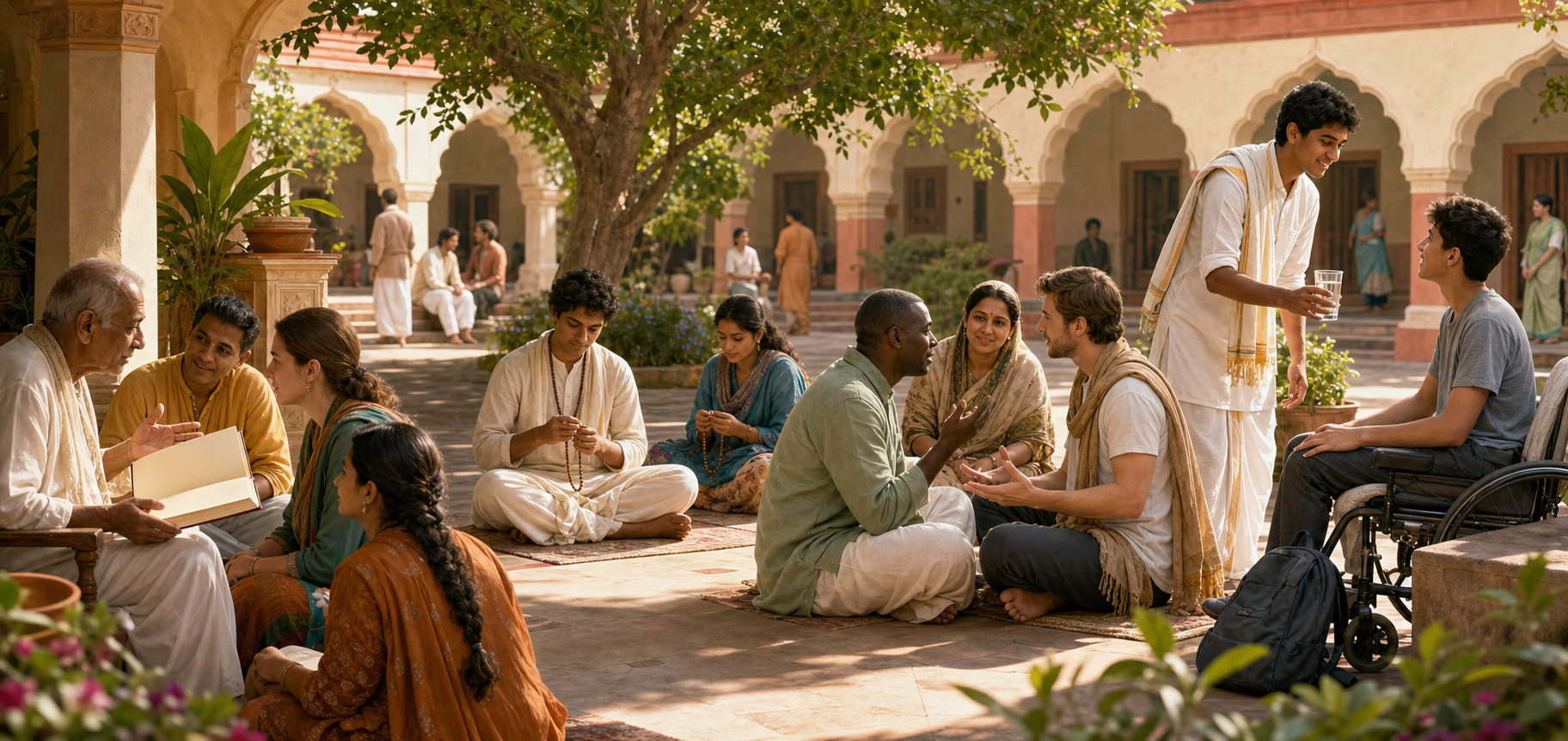
Srila Prabhupada’s legacy cannot be reduced to brand loyalty. Nor does fidelity require mechanically reproducing every historical circumstance. A founder-acharya establishes a direction, a body of teaching, disciplines of spiritual life, and a responsibility to transmit them. Each generation must receive those things accurately and embody them under the conditions it actually faces.
You can test that work through four connected layers:
- Teaching: Can you locate the principle in recognized scripture and Srila Prabhupada’s formal teachings, or do you know only a circulating slogan? When you repeat a claim, be able to identify whether it is a quotation, a paraphrase, a recollection, or your own conclusion.
- Practice: Has hearing produced stable sadhana, meaning disciplined spiritual practice? Inspiration that never reaches your schedule remains admiration. Select a manageable practice and protect its regularity before adding something more ambitious.
- Character: Is practice producing greater truthfulness, restraint, humility, reliability, and willingness to serve? Devotional vocabulary cannot compensate for conduct that repeatedly harms trust.
- Transmission: Can a sincere newcomer discover a next step? A movement doesn’t transmit its inheritance merely by attracting attention. It must help a person move from curiosity to hearing, from hearing to practice, and from practice to responsible service.
These layers correct one another. Teaching without practice becomes debate. Practice without careful teaching can become sentiment or habit. Character without transmission remains private virtue. Transmission without character eventually damages the message being transmitted.
Run this audit during an ordinary, representative week. For every major activity you attend, note the teaching it communicates, the practice it invites, the quality it should cultivate, and the next step offered to participants. Empty spaces in that sequence identify where good intentions are failing to become a living culture.
Hear disciples’ memories without confusing memory, scripture, and instruction
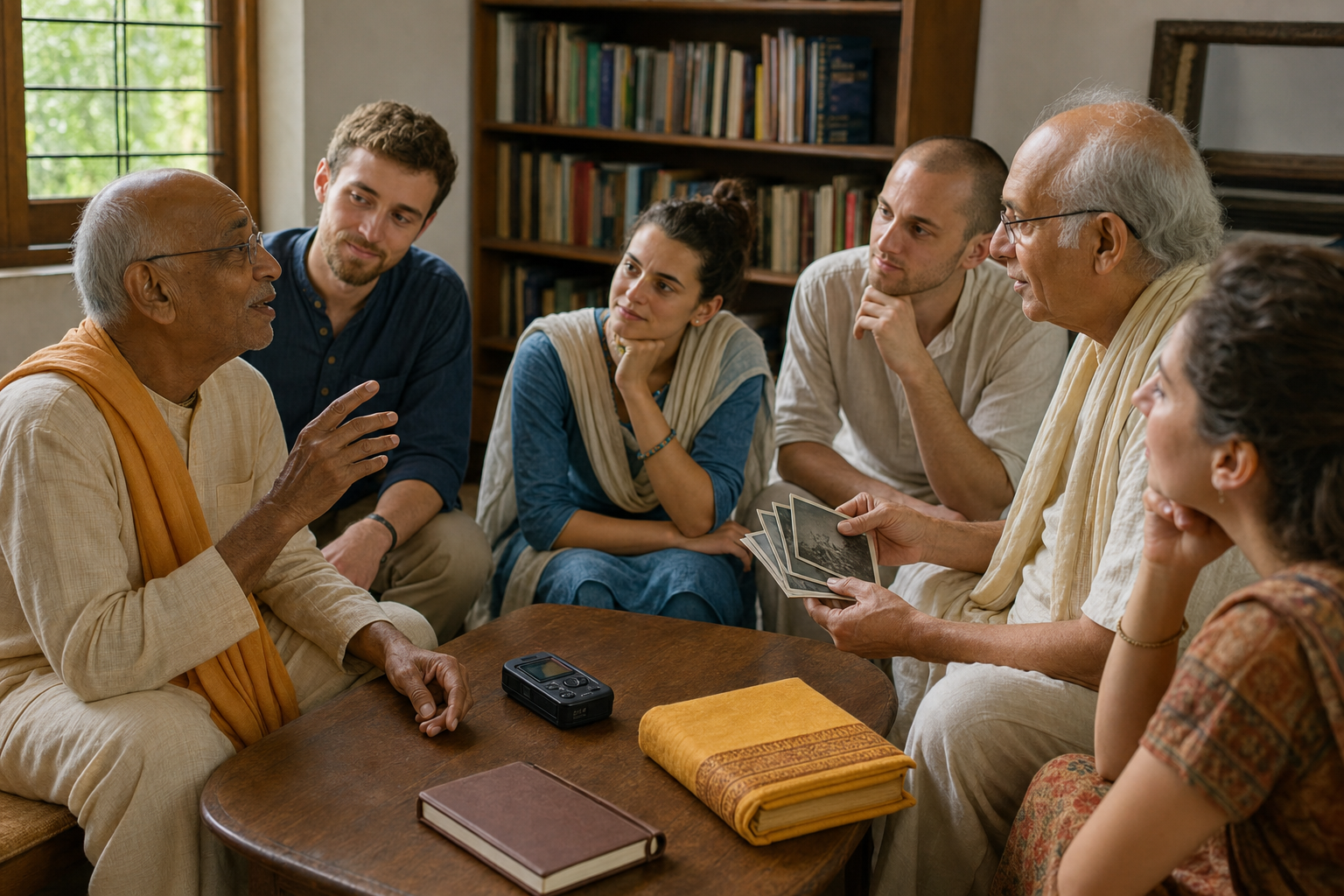
Direct disciples carry an irreplaceable form of human testimony. Their memories can convey Srila Prabhupada’s manner, priorities, courage, humor, correction, and personal care in ways that an abstract chronology cannot. The continuing practice of hearing CC Adi 5.52 alongside Prabhupada disciples speaking also points toward an important discipline: remembrance and scripture belong in conversation.
They should not, however, be treated as interchangeable forms of evidence. A scriptural passage, Srila Prabhupada’s formal instruction, a disciple’s personal recollection, and a local temple custom may all matter, but they answer different questions. Confusion begins when a moving memory is silently promoted into a universal rule, or when a rule intended for spiritual discipline is reduced to an interesting historical memory.
When you hear a remembrance, listen with affection and use a few careful questions:
- What exactly is being remembered: words, conduct, atmosphere, or the listener’s later interpretation?
- Is enough context given to understand whom the instruction addressed and what problem it answered?
- What enduring principle becomes visible through the incident?
- Does the proposed application cohere with scripture and Srila Prabhupada’s more formal teachings?
- Is the speaker offering a personal lesson, a local judgment, or a universal requirement?
This isn’t a method for interrogating an elderly disciple or draining warmth from sacred remembrance. It is a way to honor testimony without making it carry a burden it was never meant to carry. Careful listening protects both the person remembering and the people who will act on the memory.
If two accounts seem difficult to reconcile, resist the demand for an instant verdict. Record the precise point of difference. Check what can be checked against formal teaching. Seek corroboration where it is available. Leave uncertainty visible where it remains. Devotional history doesn’t become stronger when gaps are concealed; it becomes more trustworthy when memory, interpretation, and established instruction are clearly distinguished.
Turn sacred biography into a practice, not a nostalgia habit
Hearing Srila Prabhupada Lilamrita in ISKCON Vrindavan keeps biography within a devotional culture of remembrance. Yet biography becomes transformative only when you learn how to carry an episode out of the listening space and into a decision.
Use a simple reflection page whenever you hear or read an account from Srila Prabhupada’s life. Give it these fields:
- The situation: What pressure, obstacle, duty, or human need was present?
- The principle: What did Srila Prabhupada appear unwilling to compromise?
- The action: What did he actually do, not merely say?
- The boundary: Which part depended on his particular authority, circumstance, or responsibility and should not be imitated mechanically?
- Your practice: What present duty does the principle clarify for you?
The boundary question is essential. Admiration often tempts people to copy an external action while missing the spiritual intelligence behind it. If an episode displays persistence under difficulty, for example, your lesson is not to manufacture the same historical conditions. It is to identify the duty you are presently avoiding and serve it with steadiness.
Sacred biography must not become an institutional shield. Respect for Srila Prabhupada doesn’t require pretending that every later decision made in his name is beyond examination. Present conduct should be measured against the teachings and standards the community claims to inherit. Accountability is not the enemy of fidelity; it is one of the ways fidelity becomes credible.
The opposite error is equally serious. Criticism can become an identity that demands nothing from the critic. If you identify a failure, connect the criticism to a principle, a remedy, and whatever constructive responsibility you can honestly carry. That turns dissatisfaction into service rather than permanent distance.
Build an anniversary observance that continues after the feast

If you are attending an anniversary gathering, arrive with a question rather than waiting to be impressed. Ask what aspect of Srila Prabhupada’s teaching your life currently resists: disciplined hearing, steadiness in chanting, humble service, hospitality, cooperation, truthfulness, or responsibility. Listen for an instruction that bears directly on that resistance.
Before the next gathering, carry out a visible response. It could be protecting a neglected period of sadhana, reading the passage discussed in class, accepting an unglamorous service, welcoming someone who usually stands alone, repairing a strained working relationship, or asking for clarification before repeating a doubtful claim. The action should be small enough to complete and important enough to alter your conduct.
If you help organize a temple or community observance, design for follow-through:
- Anchor the theme in a clearly identified passage and explain the practical question it answers.
- Include remembrance, but label personal memories as memories and connect their lessons to established teaching.
- Let congregants participate through hearing, chanting, questions, service, and hospitality rather than remaining an audience for a stage program.
- Offer a concrete next step before people leave: a named class, a reading selection, a service contact, or a person available to answer newcomers’ questions.
- Assign responsibility for follow-up. An invitation without an identifiable person behind it usually dissolves after the event.
- Review what happened afterward. Notice which next steps people actually took, where they became confused, and which barriers the community can remove.
Don’t judge the observance only by attendance, decoration, or emotional intensity. Ask whether a visitor understood why Srila Prabhupada matters, whether a practitioner received a sharper discipline, whether a willing volunteer found meaningful service, and whether the community discovered something it must improve. Those outcomes are closer to transmission than spectacle is.
Keep Krishna at the center of the commemoration. Reverence for the spiritual teacher fulfills its purpose when it directs the disciple toward hearing, chanting, service, and devotion to the Supreme. If the founder’s personality becomes detached from the spiritual purpose he served, the celebration has begun to preserve an image while neglecting its meaning.
Key takeaways
- Treat ISKCON’s sixtieth anniversary as an audit of ordinary devotional life, not as proof that the work of transmission is complete.
- Test the legacy through teaching, regular practice, transformed character, and a clear path for the next person.
- Receive disciples’ memories with gratitude while distinguishing recollection, interpretation, formal instruction, and scripture.
- Turn every biographical episode into a present duty, but do not imitate historical circumstances mechanically.
- Pair loyalty with accountability and criticism with constructive responsibility.
- Make every anniversary program end with an identifiable next practice, service, or relationship.
Choose the next ISKCON gathering you attend and carry one instruction beyond the temple door. Let it change a protected part of your schedule, the quality of your service, or the way you treat another person. Sixty years becomes a living legacy precisely there: when remembrance becomes disciplined action and is then made possible for someone else.
References
- Dandavats – Sunday Feast – ISKCON 60th Anniversary | HH Candramauli Swami
- Dandavats – CC Adi 5.52 & Prabhupada disciples speak | HG Visnu-gada dasa
- Dandavats – HG Daivi Shakti Mataji || Srila Prabhupada Lilamrita || 02.08.2026
