
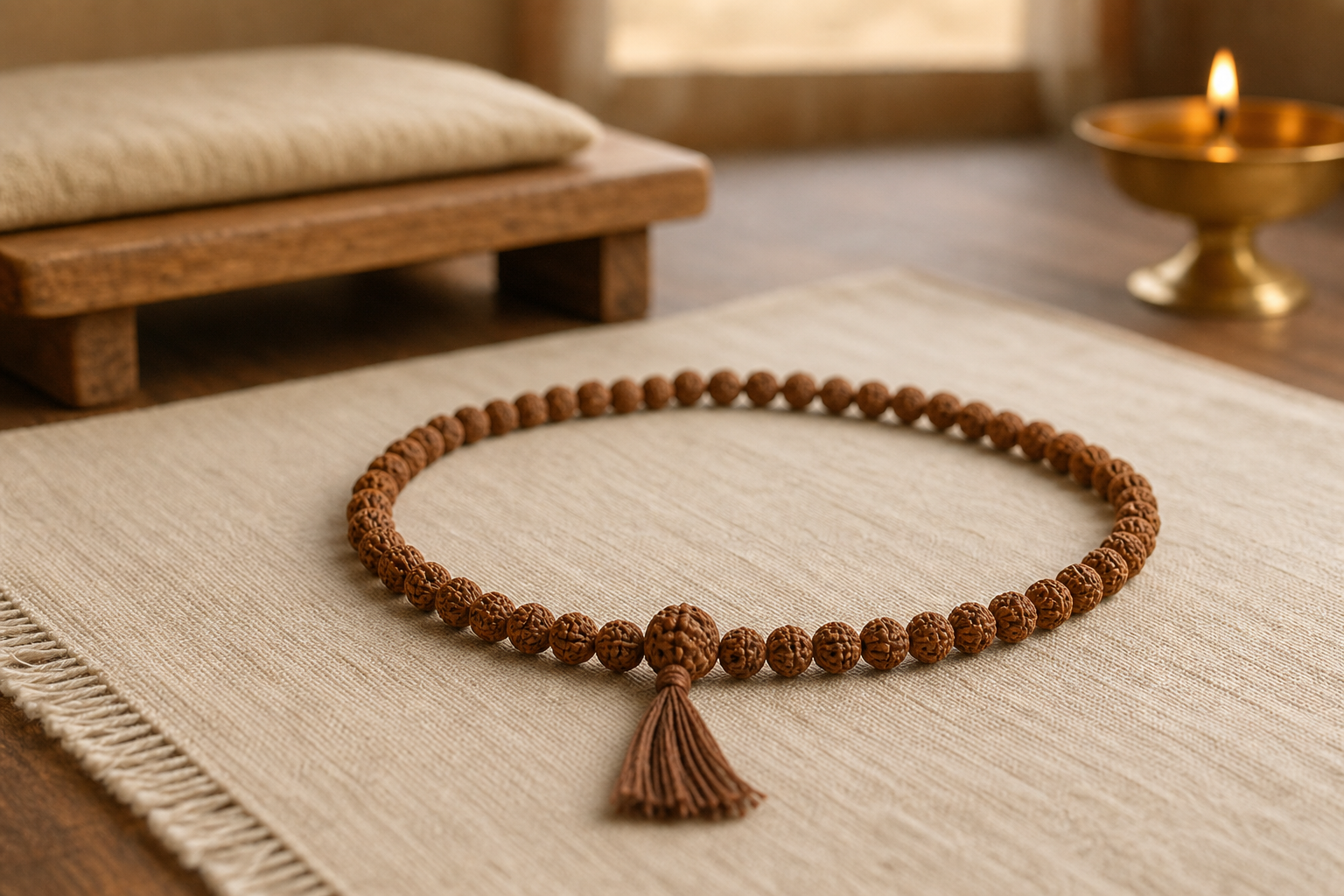
You may be choosing between a plain panchmukhi mala and a rare or elaborate Rudraksha, or wondering whether one wrong movement will spoil your japa. Neither question should become bigger than the practice. For daily use, a dependable starting point is uncomplicated: comfortable panchmukhi beads, a conventional 108-bead round with one meru, and one mantra you can repeat attentively.
The mala’s practical purpose is to take counting out of your head and give wandering attention a physical place to return. Once the movement of your hand becomes quiet and consistent, you can listen to the mantra instead of continually wondering where you are in the count.
Choose the mala that creates the least distraction
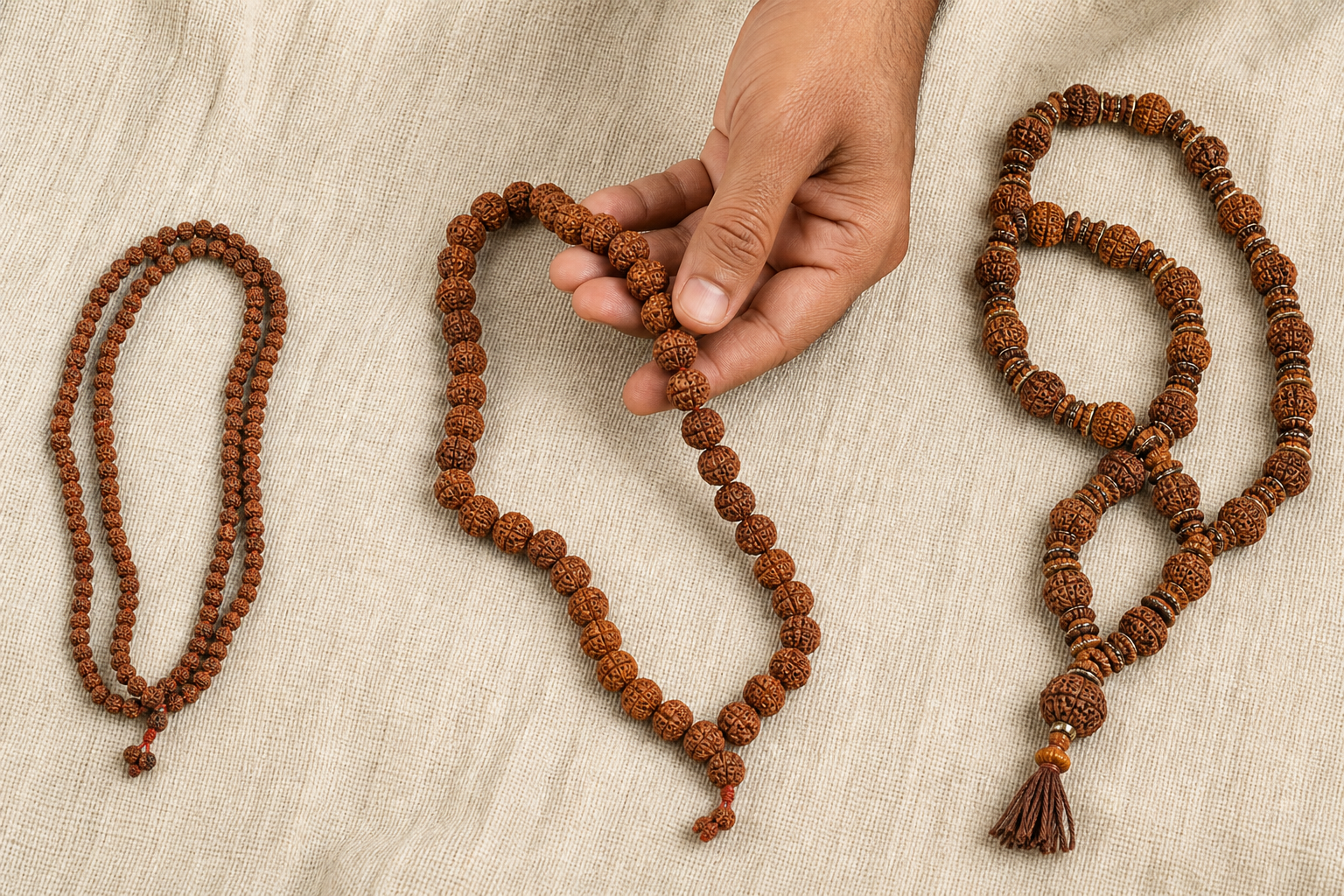
If this is your first Rudraksha mala, begin with panchmukhi rather than treating a rare mukhi as a prerequisite. Panchmukhi Rudraksha is widely accepted for regular practice and commonly recommended to beginners. Its value here is not that it promises a dramatic experience. It gives you an accessible, traditional bead with which to establish the discipline of japa.
Look for a 108+1 configuration. The 108 beads form one full round of repetition, while the additional meru, or guru bead, marks the boundary of that round. You do not count the meru as an ordinary bead or cross over it. A knotted construction can make individual beads easier to handle, and cotton, silk, or durable wire are all commonly used for stringing.
Bead size matters more than prestige. Hold the mala as you would during practice and roll several beads between your thumb and middle finger. If you must pinch tightly, keep adjusting your grip, or strain to distinguish one bead from the next, choose another size. A mala that feels awkward for a minute is unlikely to become less distracting during a full round.
Rudraksha from Nepal and Indonesia, including Java, can differ in size and surface texture, but both are respected for practice. Do not turn geographical origin into an automatic spiritual ranking. Comfort, natural structure, sound stringing, and trustworthy provenance are better buying criteria.
A natural Rudraksha usually has discernible mukhi lines and a central channel. Treat those as preliminary signs, not as a complete certificate of authenticity. Visual inspection cannot answer every question about a bead, especially when a seller makes an exceptional claim. Buy from someone who can identify what is being sold, explain its origin plainly, and distinguish natural features from devotional interpretation. If credibility depends entirely on rarity, step back and choose a straightforward panchmukhi mala instead.
Complete one round without crossing the meru
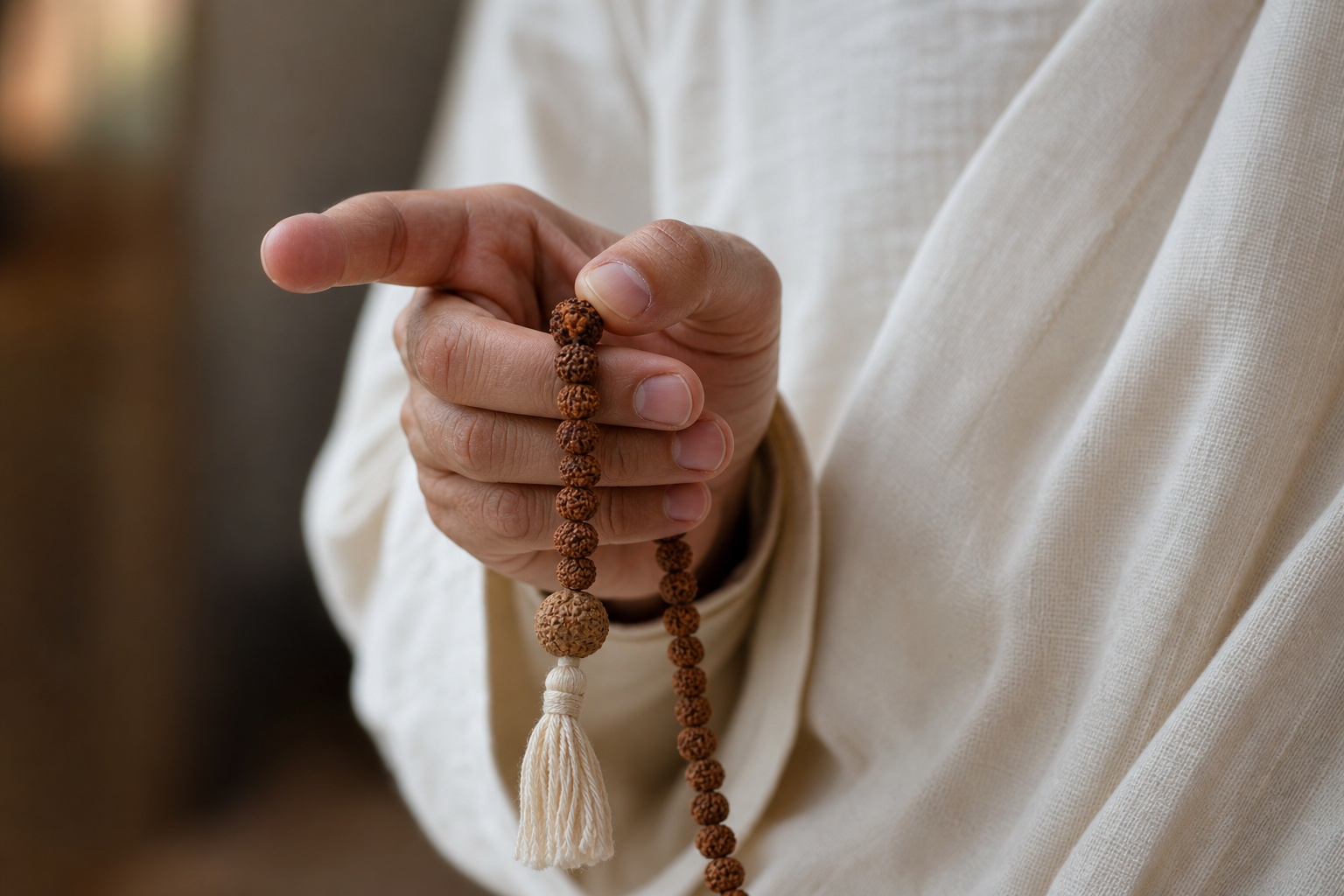
Mala etiquette varies among lineages, so instructions received from your guru or established tradition take precedence. In the absence of a specific instruction, the following method gives you a clear and widely used way to begin.
- Choose one mantra appropriate to your path. Om Namah Shivaya is a natural Shaiva choice, but the counting framework can also accompany the Gayatri mantra, repetition of the Buddha’s name, the Jain Navakar Mantra, or Sikh simran.
- Sit in a position in which your breath can remain unforced. Pick up the mala at the first ordinary bead beside the meru.
- Hold that bead between the thumb and middle finger. Many Hindu traditions keep the index finger away from the beads during counting.
- Recite the complete mantra once. Move to the next bead only after the repetition is complete.
- Continue in the same direction, bead by bead. Let breathing remain natural rather than compressing the mantra to fit an artificial breathing pattern.
- When you return to the meru after 108 repetitions, stop. If you are beginning another round, turn the mala in your hand and proceed in the opposite direction without passing over the meru.
- When your chosen number of rounds is complete, place the mala in its clean storage space rather than leaving it mixed with everyday clutter.
The most common practical error is allowing the fingers to outrun the mantra. The bead should confirm one completed repetition, not merely mark a hand movement. If the syllables become blurred or abbreviated, reduce your pace. Finishing quickly is not the same as completing attentive japa.
When attention wanders, do not turn the lapse into a second mental argument. Notice the bead you are holding, return to the mantra, and continue deliberately. The tactile sequence is useful precisely because it gives attention a simple route back to the present repetition.
If 108 repetitions feel demanding at first, resist compensating with hurried recitation. Begin with the intention to complete one unforced round and learn the hand movement correctly. A steady round that you can repeat is more useful than several rushed rounds performed only occasionally.
Read mukhi meanings as devotional maps, not guarantees
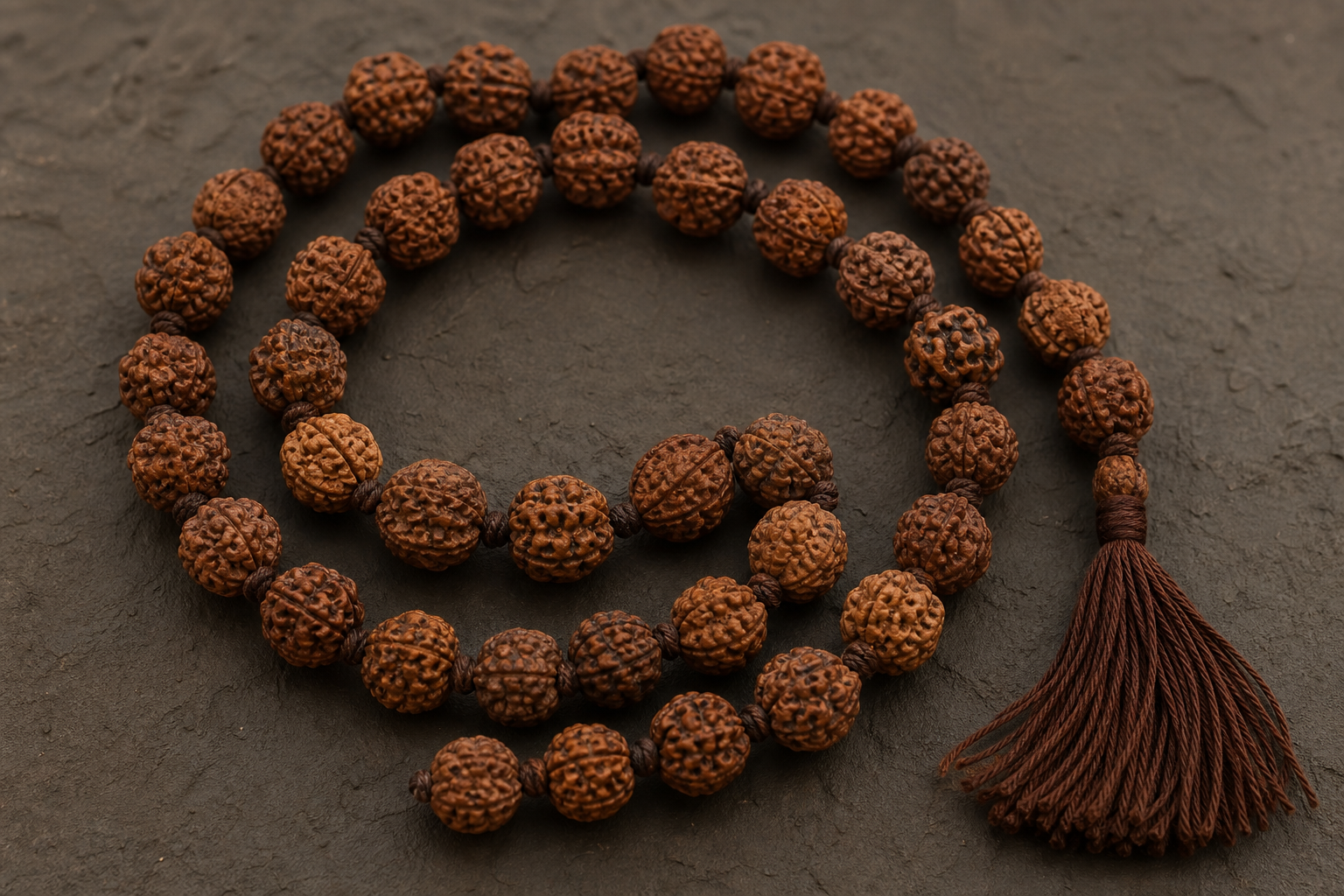
A mukhi is a natural facet or line pattern by which Rudraksha beads are classified. Traditional meanings can deepen devotion, but they should not be converted into guaranteed outcomes or a ladder on which a higher number automatically means a better bead.
| Mukhi or form | Traditional devotional association | Practical decision |
|---|---|---|
| 1-mukhi | Non-dual awareness; exceptionally rare and highly venerated | Do not treat it as necessary for beginning or sustaining japa |
| 2- and 3-mukhi | Harmony and energetic balance | Choose them for a meaningful traditional association, not a promised result |
| 4- and 5-mukhi | Learning, stability, and steadiness in practice | Panchmukhi is the clearest general-purpose choice for daily japa |
| 6- to 9-mukhi | Courage, discipline, and protection motifs | Use a lineage or temple interpretation when selecting for a specific devotion |
| 10- to 14-mukhi and above | Specialized associations preserved in particular traditions | Seek informed guidance rather than inferring meaning from the number alone |
| Gauri Shankar | A naturally conjoined form with its own devotional symbolism | Regard it as a special sacred form, not an upgrade required for counting |
| Ganesh | A bead with a trunk-like protrusion associated with Ganesha | Select it for that devotional connection rather than for ordinary japa mechanics |
These mukhi associations belong to traditional and symbolic discourse. They can shape sankalpa, remembrance, and personal devotion, but they do not establish medical effects or guaranteed changes in worldly circumstances.
If you have no inherited instruction and simply want to begin japa, choose panchmukhi. If a guru, temple tradition, or established lineage has given a particular mukhi significance within your sadhana, follow that context rather than mixing several unrelated systems. The right question is not which bead sounds most powerful. It is which bead supports the practice you are actually prepared to maintain.
Protect the practice as well as the beads
Judge benefit by what changes during japa
A Rudraksha mala can support rhythm, tactile focus, and devotional remembrance. Many practitioners experience calm as the beads move through the hand, but calm is not a performance target and will not appear identically in every sitting. Some days the clearest benefit may simply be that you noticed distraction sooner and returned to the mantra.
At the end of a round, use three modest tests. Did you complete the mantra before moving each bead? Did contact with the beads help you recognize when attention had wandered? Can you repeat the same practice without turning it into a burden? Those questions measure the mala’s usefulness more honestly than chasing an unusual sensation.
Traditional language may associate Rudraksha with protection, balance, clarity, or restraint. Hold those meanings devotionally. A mala is a spiritual aid, not a medical device, and it should never replace appropriate medical or psychological care. A feeling of calm during japa is meaningful as an experience of practice; it is not evidence that a health condition has been treated.
Keep physical care simple
- Clean the beads gently with water when needed, then allow them to dry thoroughly.
- Apply a light natural oil occasionally rather than coating the beads heavily.
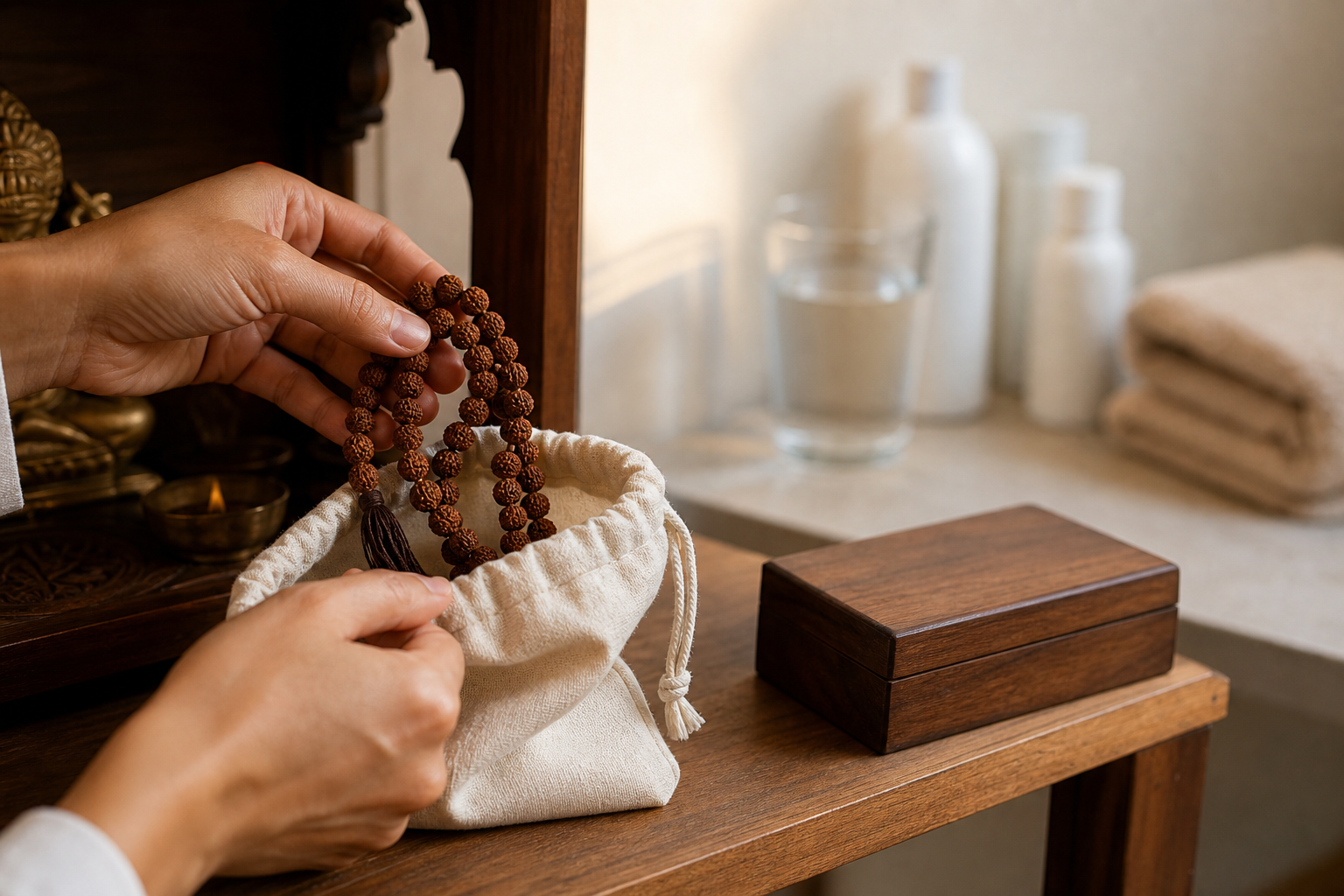
- Store the mala in a clean cloth near a shrine or in another quiet, respected place.
- Check the thread, knots, or wire for wear. Arrange restringing before a weakened strand breaks and scatters the beads.
- Return to the chosen mantra periodically. Recitation, including Om Namah Shivaya in a Shaiva practice, renews the mala’s association with sadhana more meaningfully than elaborate handling rules detached from japa.
The storage place is not merely about tidiness. When the mala consistently returns to the same clean space, seeing or touching it becomes a cue to practice. That association is especially valuable on days when motivation is weaker than habit.
Key takeaways
- Start with a comfortable panchmukhi mala unless your lineage has given you a specific instruction.
- Use a conventional 108+1 mala for a full round, treating the meru as the boundary rather than another counting bead.
- Move one bead only after one complete mantra repetition, generally using the thumb and middle finger and keeping the index finger away.
- At the meru, turn the mala and reverse direction. Do not cross over the meru to begin the next round.
- Treat mukhi meanings as devotional associations, not guaranteed spiritual, medical, or worldly outcomes.
- Keep the beads clean and dry, store them respectfully, and measure progress by steadier attention rather than rarity or complexity.
Set aside the search for the most exceptional bead. Choose your mantra, place the first bead beside the meru between thumb and middle finger, and complete one unhurried round. Return to the same method tomorrow. Repetition, not complexity, is what turns a strand of Rudraksha into a living japa practice.
References
