
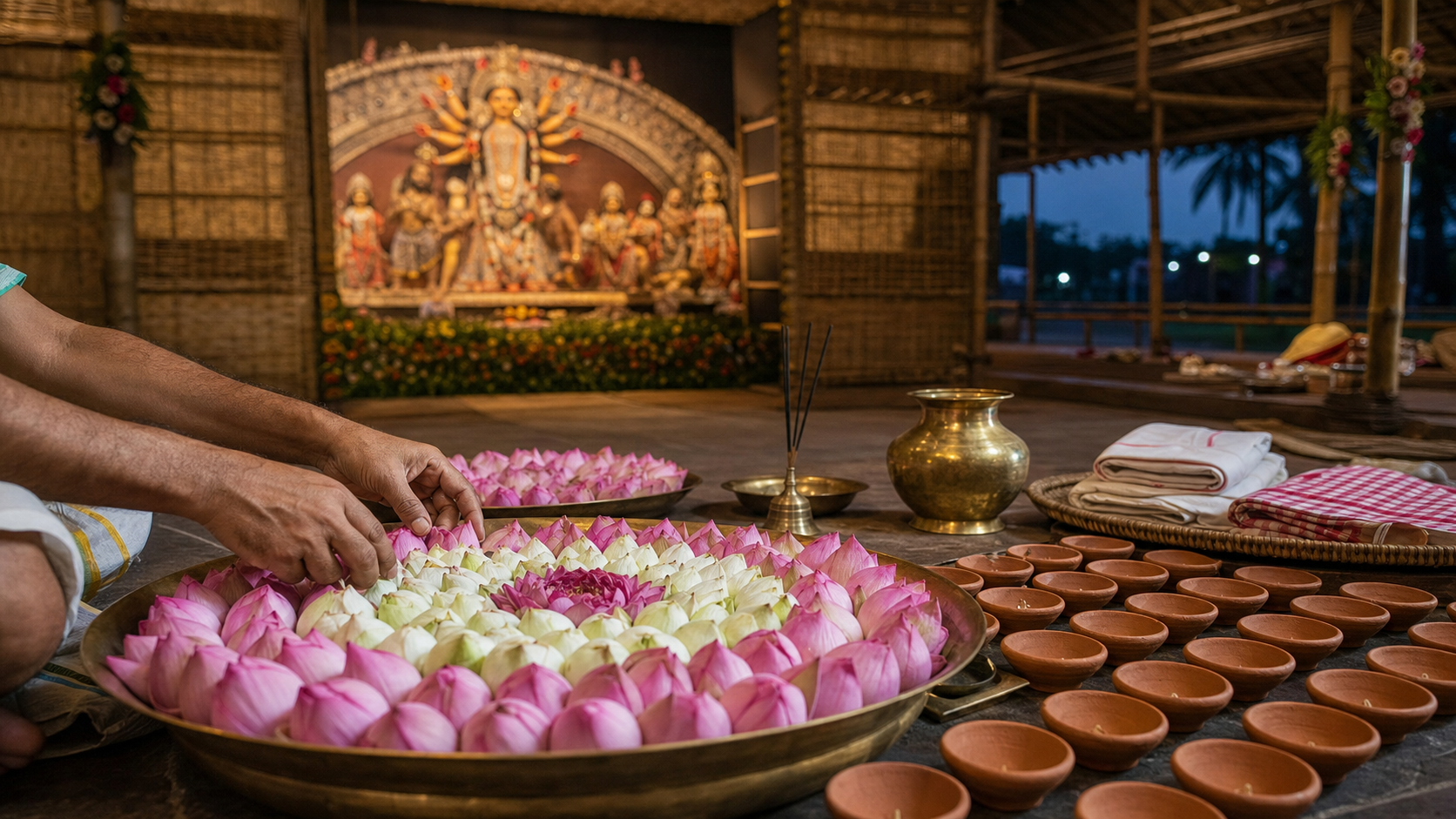
If you have been asked to bring lotuses for Sandhi Puja, the practical question comes first: does the number really have to be 108? In a formal Bengali observance, the count is deliberate. The flowers belong to a precisely timed act of worship, not merely to the decoration of the mandap.
Knowing why the offering is made changes how you prepare for it. The 108 lotuses hold together memory, discipline, gratitude and the demand for courageous devotion. Whether you are organizing the flowers, joining a family puja or attending as a guest, you can participate more attentively when you understand those layers.
The lotus offering belongs to a forty-eight-minute junction
Sandhi Puja occupies the sacred forty-eight-minute junction between Ashtami and Navami. Sandhi means a meeting point or transition. The worship therefore concentrates attention at the moment when one tithi gives way to another.
This matters in practice. You are not simply making an Ashtami flower offering at any convenient hour. The community conducting the puja will determine when the Sandhi interval is observed, and the lotuses, lamps and recitations must be ready before that interval begins. Devi Mahatmyam recitation, also known as Chandi Path, and the chanting of Durga’s names often accompany the offering.
If you are helping with preparations, settle four points before the ceremony:
- Confirm the Sandhi Puja time with the priest or family responsible for the worship.
- Ask whether you are supplying the entire set of 108 lotuses or contributing to a collective set.
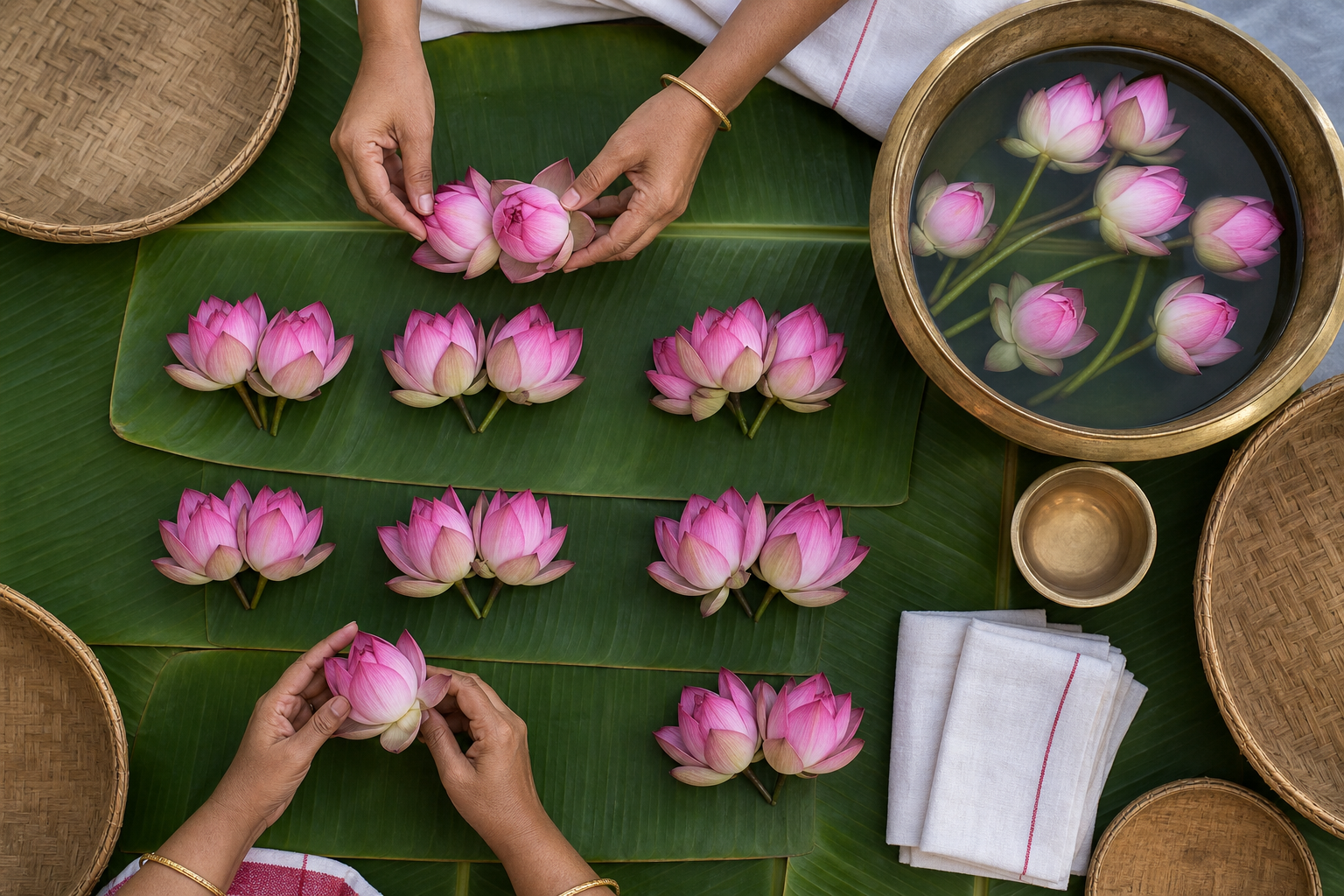
- Count the flowers before the sacred window begins, then have another person verify the total.
- Clarify who will arrange and present the lotuses so that counting, chanting and offering do not become confused once the puja is underway.
The short duration creates the discipline. When the preparation is completed in advance, you can enter the worship with attention instead of turning a sacred transition into a last-minute logistical exercise.
Two Bengali legends explain why 108 lotuses are offered
The practice is illuminated by two well-known Bengali devotional narratives. They are complementary ways of approaching Durga’s victory, not rival explanations that require you to reject one in favor of the other.
The 108 wounds: gratitude for the cost of protection
In one telling, 108 wounds appeared on the Goddess’s body during her fierce battle against the asuras. Each lotus offered to her remembers and symbolically soothes one wound. The devotee does more than celebrate victory: the offering acknowledges the struggle through which dharma was defended.
This interpretation gives you a useful inner posture. Instead of approaching Durga only as an invincible power who grants favors, approach her with gratitude. Protection has a cost. Dharma is sustained through endurance, courage and sacrifice. Each flower can therefore represent remembrance of that sacrifice and a commitment not to remain passive before adharma.
Rama’s missing lotus: devotion that does not retreat
The second legend belongs to Sri Rama’s Akal Bodhan, his worship of Durga outside the customary season before confronting Ravana. Rama assembled 108 blue lotuses for the puja. Shiva concealed one flower to test his resolve, leaving the offering incomplete.
Rama’s eyes were likened to lotuses, so he prepared to offer one of his own eyes as the missing 108th flower. Durga, moved by the depth of his bhakti, appeared and blessed him. The decisive element is not injury for its own sake. It is Rama’s refusal to treat worship as a transaction that can be abandoned when the arrangement becomes difficult.
Read the two narratives together and the ritual acquires a complete devotional movement. The account of the wounds asks you to remember what the Goddess bears in the defense of dharma. The account of Rama asks what you are willing to offer in return: attention, steadiness, ego and the courage to complete your duty.
These are Bengali devotional explanations of a Bengali ritual emphasis. Honor that setting rather than presenting either narrative as the sole explanation for every form of Durga worship across Bharat.
What the number and the flower accomplish together
The number 108 carries an established sense of spiritual completeness and disciplined repetition. It appears in malas and contemplative practices across Hinduism, Buddhism and Jainism, as well as in some Sikh spiritual contexts. Its presence in more than one dharmic path does not erase the differences among those traditions. It shows how a shared sacred vocabulary can take distinct forms.
During Sandhi Puja, the exact count keeps devotion embodied. Bhakti is not left as a vague feeling. Someone must gather the flowers, preserve the count, arrange them and present them within the sacred interval. The number asks for concentration before the first mantra is recited.
The lotus adds another layer. It represents purity, resilience and serenity. Those qualities matter because Durga’s peace is not weakness and her fierceness is not disorder. The flower and the warrior Goddess together present a distinctly dharmic ideal: remain inwardly clear while acting firmly against adharma.
You do not need speculative arithmetic to make the number meaningful, and you do not need to reduce the lotus to an attractive prop. Let the count discipline the mind and let the flower shape the quality of the offering. Precision without bhakti becomes mechanical; sentiment without discipline remains incomplete.
How to prepare without confusing tradition and improvisation
The correct practical approach depends on your role. A temple or community puja, an inherited household observance and a private devotional offering are not automatically interchangeable. Respecting the distinction prevents both unnecessary anxiety and careless claims.
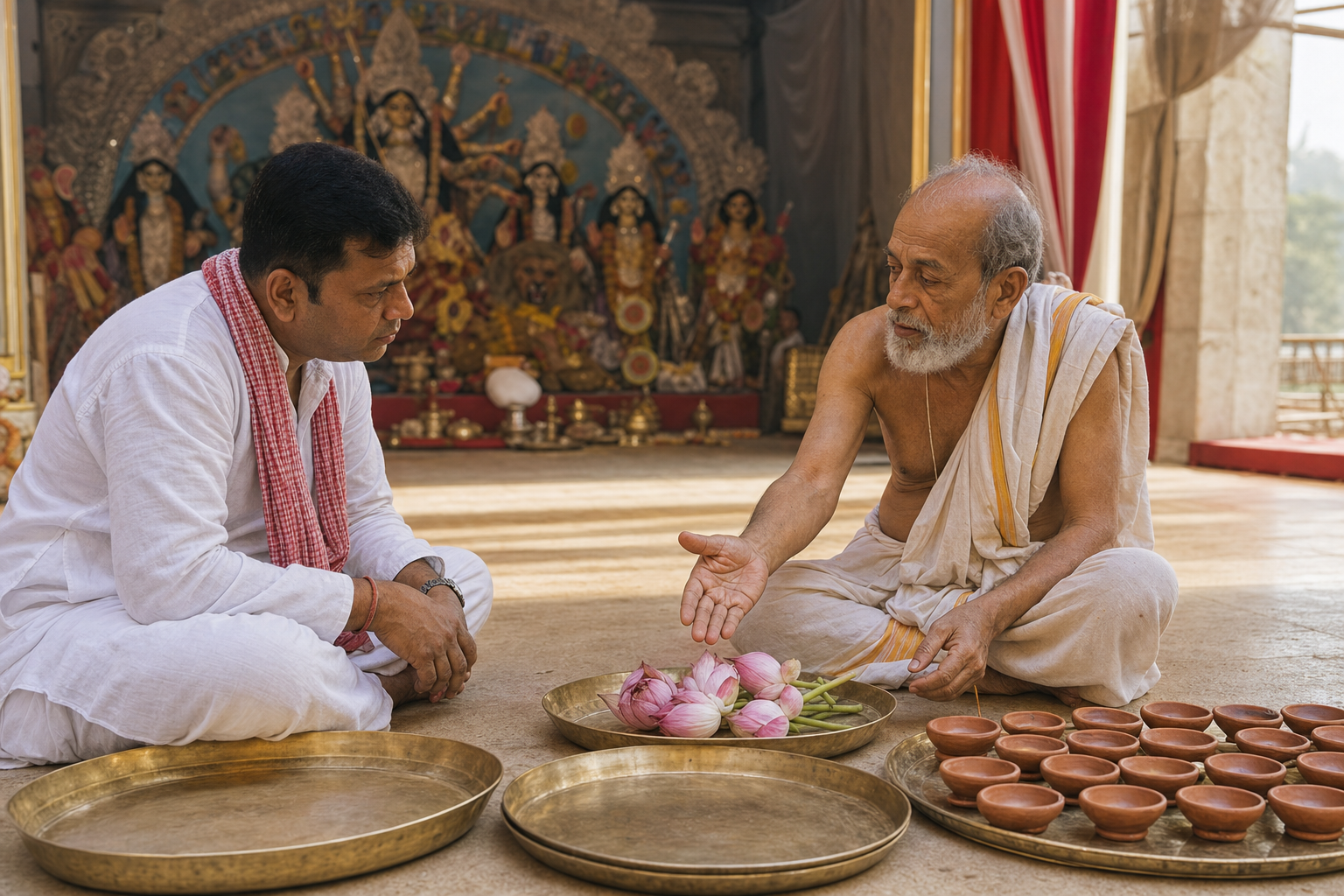
- Begin with the tradition actually being followed. Ask the officiating priest or responsible elder what the local observance requires. Do not assume that a practice seen in another mandap applies unchanged to your family or temple.
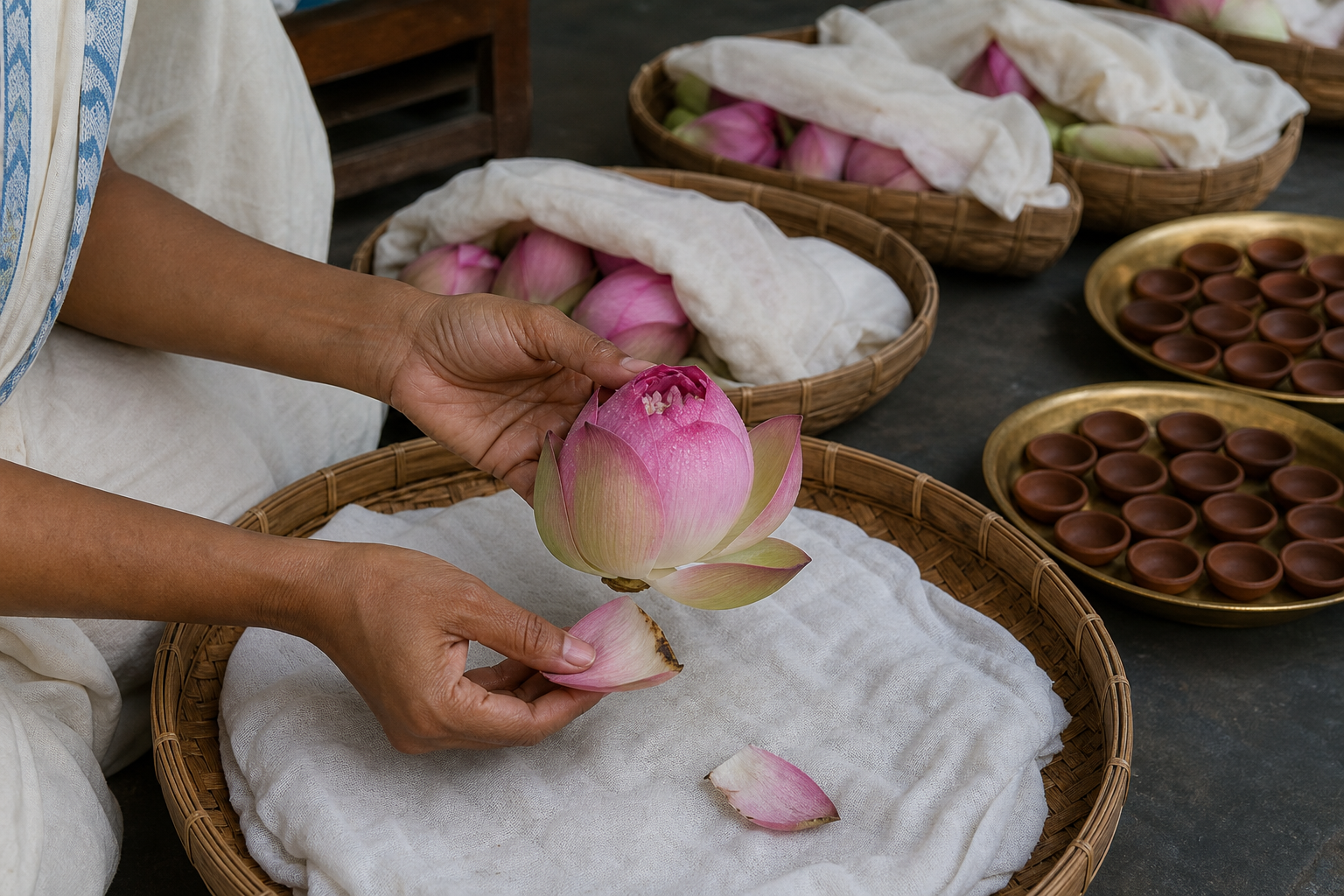
- Treat 108 as an exact ritual count when the formal offering calls for it. Count early enough to correct a shortage. If several people contribute flowers, designate one person to confirm the combined total.
- Do not silently substitute another flower. When lotuses are unavailable, ask the officiant what adaptation, if any, is acceptable. A sincere private offering can still be devotional, but it should not be represented as the complete traditional 108-lotus observance when its defining elements have changed.
- Prepare the whole act, not only the flowers. The lotus offering is commonly joined with lamps, Chandi Path and the recitation of Durga’s names. Making the flower count perfect while neglecting the rest of the worship mistakes one visible element for the entire puja.
- Enter with one clear sankalpa. Decide before the ceremony whether your emphasis is gratitude for Durga’s protection, courage in a difficult duty, remembrance of sacrifice or surrender of ego. A clear intention prevents the rapid ritual sequence from passing without inward participation.
- Follow the cadence of the officiant. If you are attending rather than conducting the worship, do not invent gestures or interrupt the sequence to perform your own count. Offer your attention, chant when invited and allow the community’s established order to carry the ceremony.
If you cannot obtain 108 lotuses, the honest response is consultation, not concealment. Ritual adaptation may be appropriate in a home or diaspora setting, but the people responsible for the tradition should guide it. Sincerity is not strengthened by pretending that an altered observance is unchanged.
Carry the offering beyond the mandap
Sandhi Puja is a junction in more than the calendrical sense. It places you between what has been endured and what must now be done. The two legends and the lotus give you three questions to carry out of the ceremony:
- What protection have you received but failed to acknowledge? Let the account of Durga’s wounds turn admiration into gratitude.
- Which dharmic duty are you tempted to abandon because one necessary element is missing? Let Rama’s resolve direct you toward resourcefulness and steadiness rather than withdrawal.
- Where must you combine firmness with inner clarity? Let the lotus remind you that courageous action need not produce hatred, vanity or disorder within you.
Choose one concrete response while the worship is still fresh. Repair a neglected responsibility, support someone carrying a difficult burden, complete a duty you have postponed or withdraw cooperation from something you know to be adharmic. The offering then becomes sadhana rather than spectacle.
Key takeaways
- Sandhi Puja is observed during a sacred forty-eight-minute transition between Ashtami and Navami, so timing and advance preparation matter.
- In the traditional Bengali observance, 108 lotuses form a deliberate count rather than a decorative abundance of flowers.
- One legend associates the flowers with 108 wounds borne by Durga in battle; another connects them with Rama’s unwavering devotion during Akal Bodhan.
- The number expresses completeness and discipline, while the lotus represents purity, resilience and serene strength.
- If the exact flowers or count are unavailable, consult the priest or elder guiding the observance instead of improvising silently.
- The most faithful completion of the offering is a concrete act of gratitude, courage or dharmic responsibility after the puja.
If you are preparing for Sandhi Puja, confirm the local time and ritual requirements first, count the lotuses before the sacred window, and choose the duty you will carry forward when the lamps have gone out.
References
