
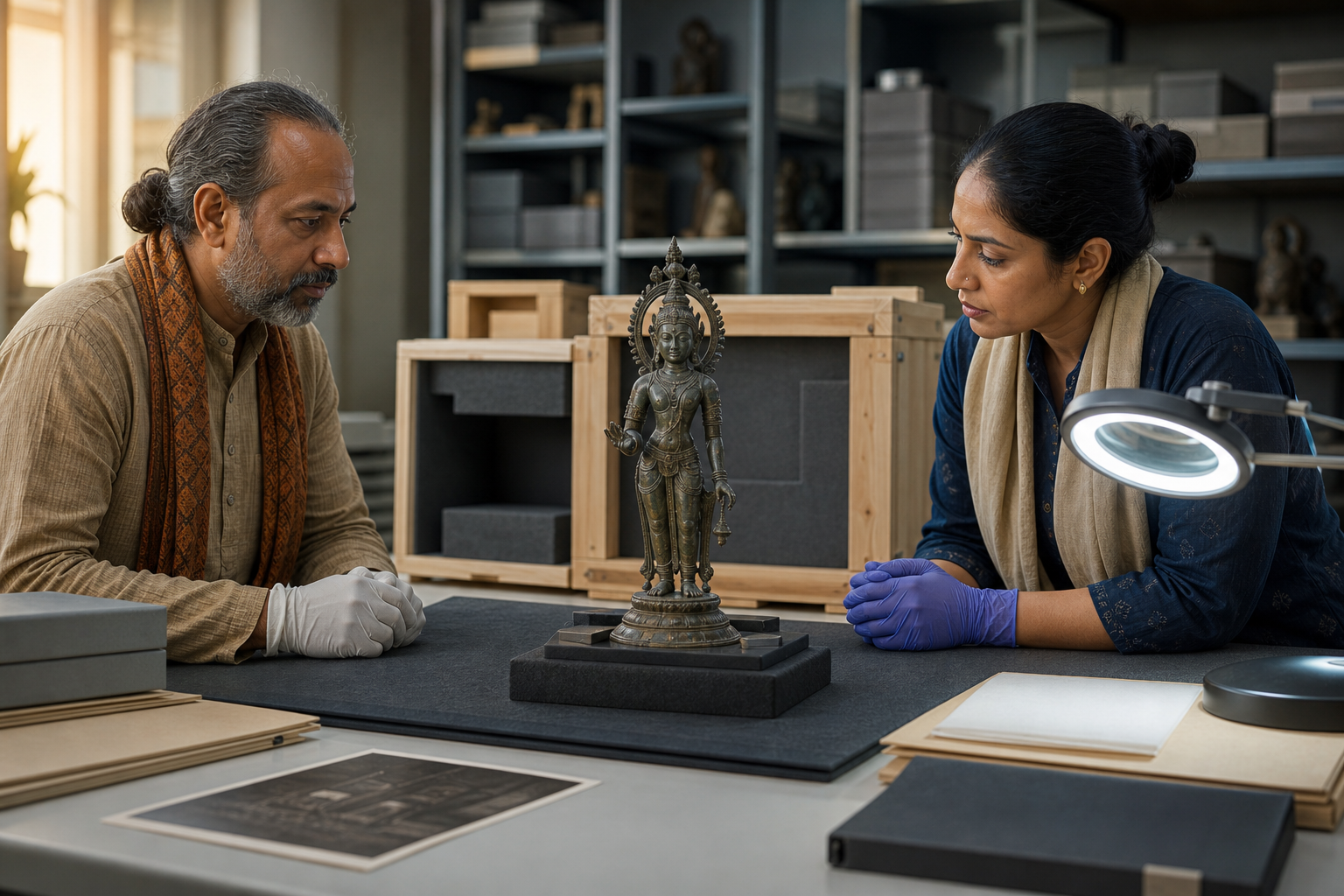
If you have found a temple bronze in a foreign museum catalogue, family papers deteriorating in a suitcase, or an auction listing with a suspiciously thin ownership history, the first impulse may be to demand an immediate return. Pause only long enough to secure the evidence. India’s displaced heritage is most likely to come home, or receive proper protection where it stands, when devotion, documentation, and a credible custody plan move together.
Your goal is not simply to move an object across a border. It is to restore an honest history and a rightful relationship while keeping the object, archive, or sacred image safe for the community whose memory it carries.
First identify what kind of displacement occurred
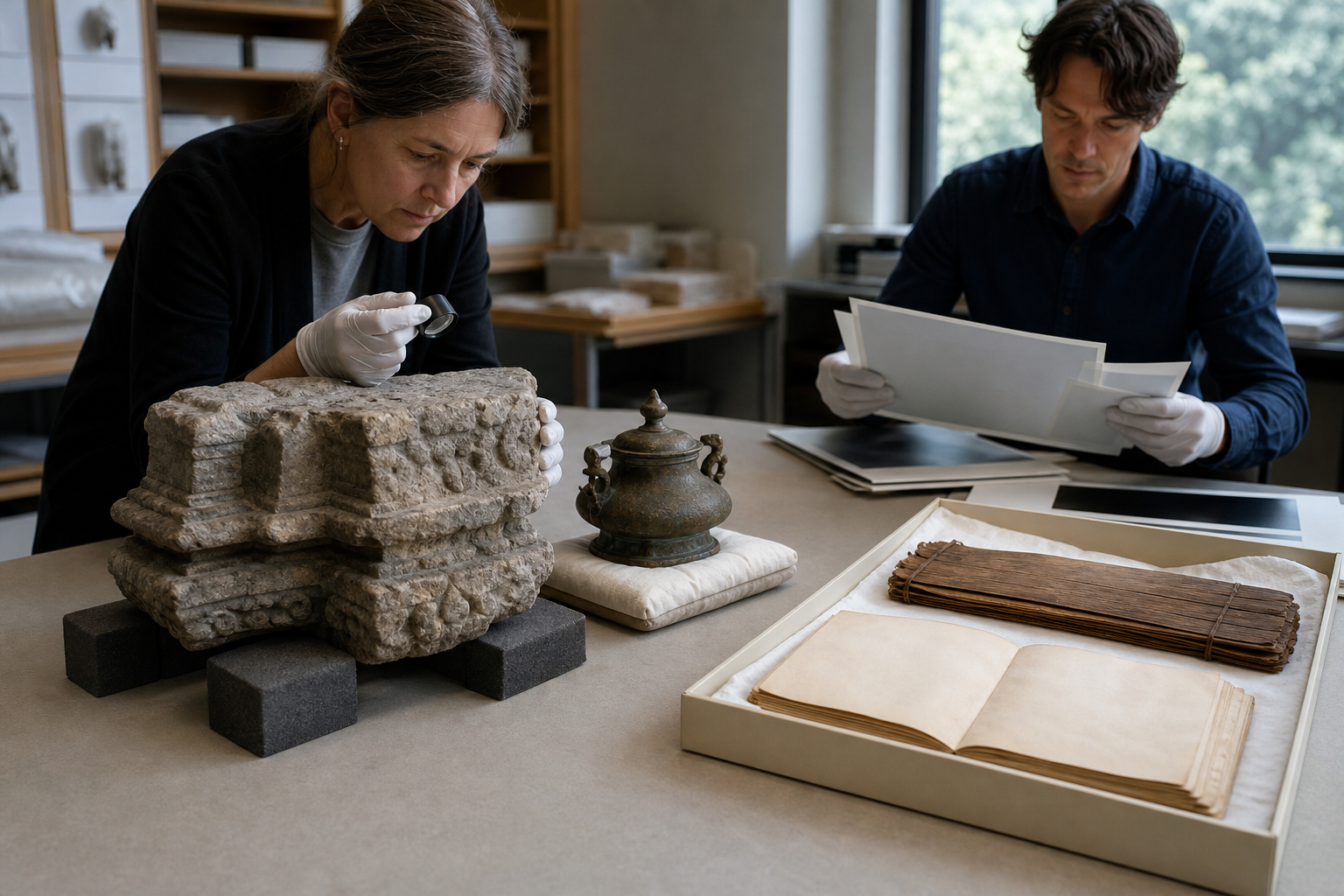
Displaced does not automatically mean stolen. An object may have been unlawfully removed from a temple, dispersed after annexation or exile, inherited without its records, legally exported under an earlier arrangement, or placed abroad through a loan approved by its recognised custodian. These histories may look similar in a display case, but they do not support the same claim or remedy.
Sacred objects require another distinction. A murti may be catalogued as bronze sculpture, but its identity is not exhausted by its material, period, or aesthetic quality. If it belonged to temple worship or a religious procession, its ritual relationship with devotees is part of its history. Recovering the metal while ignoring that relationship produces an incomplete form of restitution.
Displacement also affects records, portraits, letters, and heirlooms. Princess Bamba Duleep Singh preserved material associated with the Sikh Empire across exile, political rupture, and her later life in Lahore. That form of guardianship matters because a dynasty’s memory can disappear through the gradual separation of papers and objects even when no single dramatic theft takes place.
Before choosing a campaign, ask five questions:
- What is the object? Record its material identity, religious or historical function, known name, catalogue number, inscriptions, and distinctive marks.
- Where did it belong? Identify the particular temple, court, family, archive, or community if the evidence permits. India or Tamil Nadu is not precise enough when a specific shrine or custodian can be established.
- How did it leave? Separate verified events from family memory, catalogue language, and inference. A missing period in the record is a provenance gap, not proof by itself of theft.
- Who holds it now? The physical custodian, recorded owner, lender, museum, and seller may be different parties. Do not collapse them into one.
- What outcome is appropriate? The answer may be physical repatriation, restitution of ownership, a long-term loan, shared stewardship, digital reunification of an archive, corrected interpretation, or a combination of these.
Use restitution when the central issue is remedying wrongful loss, and repatriation when the central issue is return to a country or originating community. The terms often overlap, but the distinction keeps you focused on the actual harm. A corrected label cannot replace the return of a stolen murti. Physical relocation, however, may not reunite a dispersed archive whose related papers remain in several countries.
Build an object-level case before making a public accusation
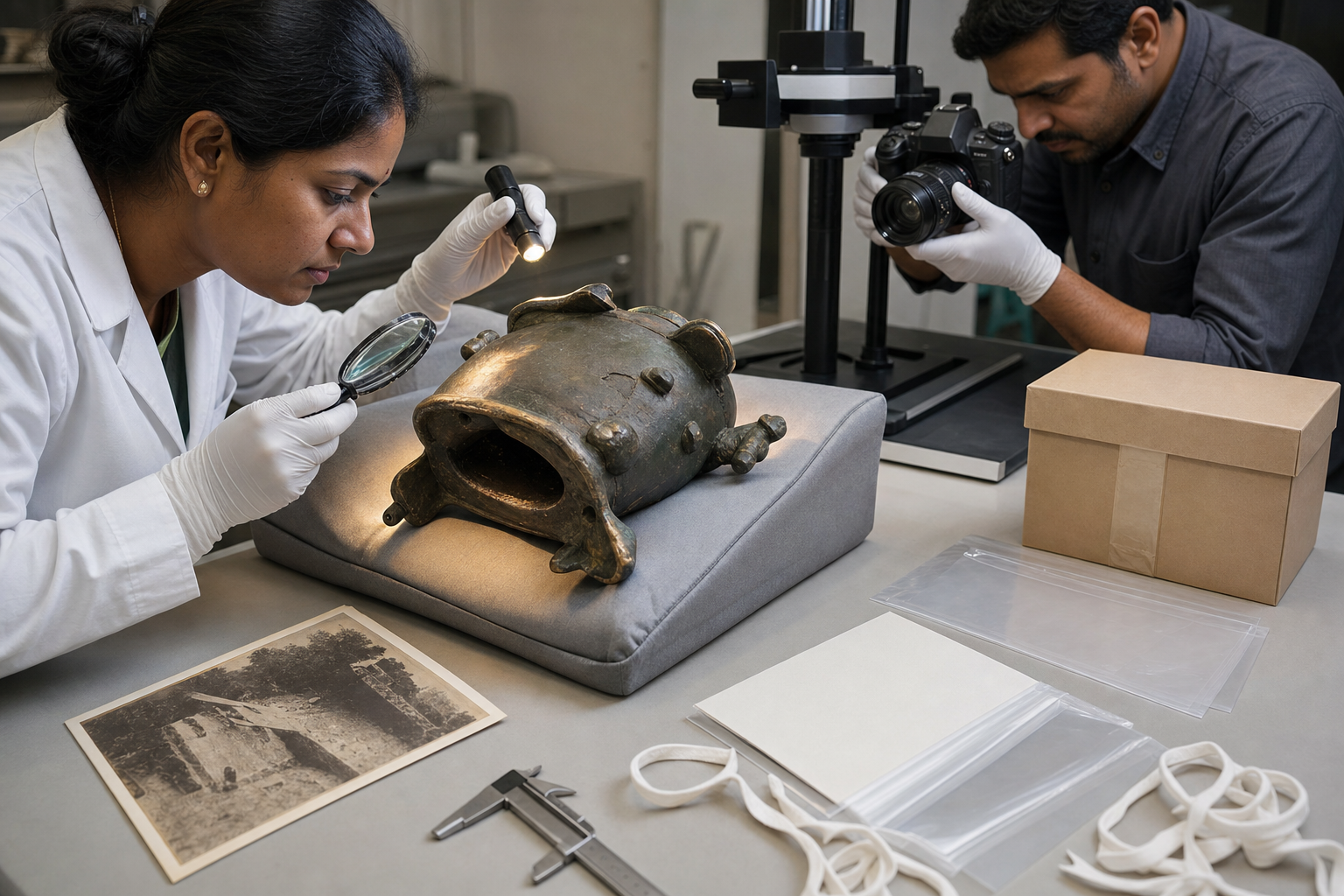
The successful recovery of three sacred bronzes from Tamil Nadu shows what a usable claim looks like. Detailed provenance work connected a 10th-century Chola-period Shiva Nataraja, a 12th-century Somaskanda, and a 16th-century image of Saint Sundarar with Paravai to unlawful removals from temple sites in the 1950s. Their artistic periods and subjects helped identify them, but those descriptions alone did not establish the wrong. The decisive work concerned where the individual bronzes had been and how they entered later custody.
Build one evidence file for each object. Do not start with a broad folder called stolen Indian art and mix unrelated claims inside it. A clean file allows a temple authority, museum, investigator, lawyer, or government official to understand the case without reconstructing your reasoning.
- Create a stable identity record. Save the name, material, dimensions if safely available, documented period, inscriptions, photographs, accession or lot number, and exact catalogue wording. Photograph the front, back, base, damage, repairs, labels, and marks when you have lawful access.
- Describe the original context. Record the particular temple, collection, procession, shrine, household, or archive with which the object was associated. Explain how it functioned there rather than describing only what it looks like.
- Make a dated custody timeline. Enter every known location, owner, dealer, donor, lender, sale, exhibition, and publication. Label each entry verified, probable, reported, or unknown. Never turn a gap into a confident event merely to make the timeline read smoothly.
- Attach the evidence behind every entry. Preserve catalogue pages, photographs, correspondence, inventory records, sale information, inscriptions, and carefully attributed testimony. Keep original digital files unchanged and make separate working copies for annotations.
- Record contradictions. If a museum description, family account, and sale record disagree, retain all three. A contradiction is a question to investigate, not an inconvenience to erase.
- State the requested remedy. Name the proposed recipient, the basis of its relationship to the object, and whether you seek return, recognition of ownership, consultation, corrected interpretation, or another arrangement.
- Maintain a contact log. Record what was sent, to whom, on what date, and what response followed. This protects continuity when staff, volunteers, lawyers, or officials change.
A museum record showing when an object was donated proves only that part of the chain. It does not necessarily explain how the object left its temple or earlier custodian. Conversely, an incomplete catalogue entry does not establish unlawful removal. Your file must preserve that difference between an unanswered question and a demonstrated fact.
Do not publicly identify a person as a thief, trafficker, or knowing possessor merely because the provenance is incomplete. A premature allegation can harm innocent parties, expose you to legal risk, and make a legitimate recovery effort harder. Preserve the listing and correspondence, then approach the originating custodian, an appropriate heritage or law-enforcement channel, or a lawyer qualified in the relevant jurisdiction. Never attempt to seize or secretly remove the object yourself.
Plan the life of the object after its return
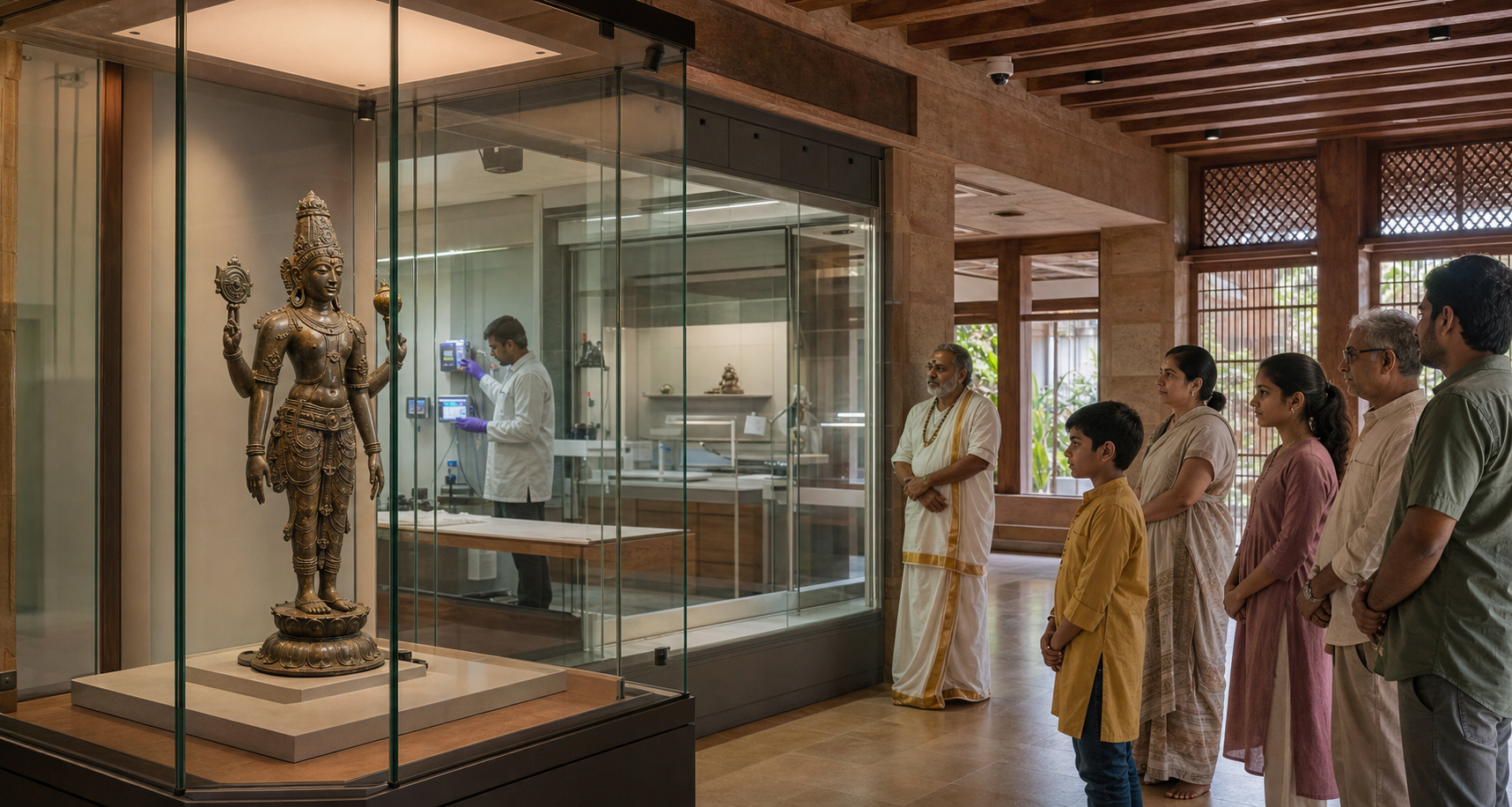
A return announcement is a milestone, not the end of stewardship. Before an object moves, the parties need to know who can receive it, where it will be kept, how it will be conserved, who can study or worship with it, and how its history will be explained. Without those decisions, a recovered object can move from one poorly documented custody arrangement into another.
The Tamil bronze cases also show that recognition and location can be handled separately. A long-term loan from the Government of India was arranged so that the Shiva Nataraja could remain at the Smithsonian’s National Museum of Asian Art while its sacred origin, unlawful removal, and recovery were made part of its public history. That arrangement does not prescribe the answer for every murti. It demonstrates that acknowledged custodianship, physical location, public access, and interpretation are distinct decisions.
A responsible return plan should settle the following matters in writing:
- Receiving authority: Identify the temple body, trust, archive, museum, family representative, government institution, or other recognised custodian authorised to accept the object.
- Destination: Name the actual building and collection rather than promising a vague return to India. If the permanent destination is not ready, specify lawful interim custody.
- Condition and conservation: Document the object’s condition before transport, the conservation responsibilities of each party, and the procedure if urgent treatment becomes necessary.
- Security and access: Decide who may handle, study, photograph, display, or borrow the object. Sacred access and public access should be discussed rather than assumed to be identical.
- Religious status: Let the relevant religious custodians determine whether a murti should be reinstalled, ritually received, displayed, or cared for in another way. Campaigners and curators should not invent a ritual decision for them.
- Truthful interpretation: Preserve the object’s original function, the known circumstances of removal, the gaps that remain, and the recovery history. Do not replace an old silence with a triumphal but incomplete label.
- Future changes: Record what happens if a loan ends, a museum closes, a collection moves, conservation requires temporary relocation, or new ownership evidence appears.
For a sacred image, the originating community should not be treated as a ceremonial guest invited after the legal and curatorial decisions have already been made. For a dynastic or family archive, scholars should not be the only constituency considered; descendants, related communities, privacy interests, and the preservation of the collection’s original order may all matter. Consultation must begin while the remedy is being designed.
Interpretation is part of restitution because displacement often strips an object of its verbs. A museum visitor sees what a bronze depicts, but may never learn that devotees carried it in procession, offered worship, or understood it as a sacred presence. Restore what the object did, who related to it, and why its absence mattered. That account makes aesthetic appreciation more accurate, not less.
Protect private and diaspora collections before they scatter
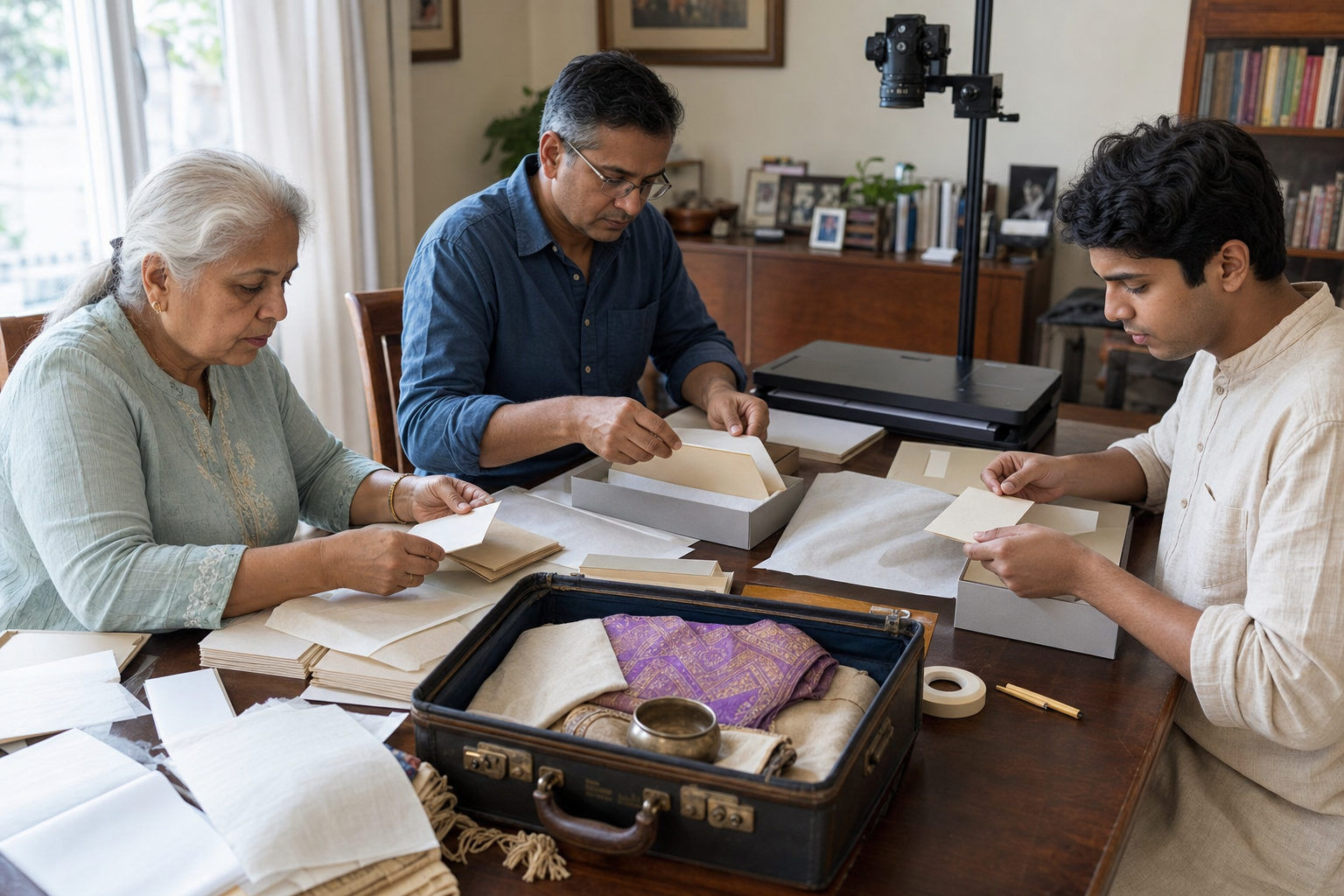
You do not need to control a famous museum case to preserve displaced heritage. The vulnerable material may already be in your home, gurdwara office, temple store, community centre, or family trust. Portraits, letters, notebooks, seals, photographs, and ceremonial objects often lose meaning when heirs divide them without an inventory.
The collection associated with Princess Bamba brought portraits, papers, and heirlooms into a continuing historical record linked with Lahore. Its lesson is practical: inheritance becomes cultural stewardship when the custodian preserves relationships among objects, people, and events instead of treating every item as an isolated possession.
If you are responsible for family or community material, begin with these safeguards:
- Do not clean, polish, laminate, repair, rebind, or write on an original. An improvised treatment can remove inscriptions, finishes, seals, fibres, or other evidence. Ask a qualified conservator before intervening.
- Assign a unique identifier to each item. Put the identifier on its folder, enclosure, or digital record rather than directly on the object unless a conservator has approved the method.
- Photograph before rearranging. Capture the object and its container, envelope, labels, neighbouring documents, and any existing order. Context can be lost as soon as a box is tidied.
- Record the family account faithfully. Write down who supplied each name, date, translation, and ownership history. Mark uncertainty instead of silently correcting a memory.
- Keep related papers together. The order of correspondence or a group of photographs may reveal relationships that disappear when attractive items are selected and the rest discarded.
- Create preservation and access copies. Keep master digital files unchanged, store copies in separate secure locations, and use derivatives for routine sharing or annotation.
- Describe languages and scripts without guessing. Retain the original text in photographs or scans, record proposed readings separately, and label an uncertain translation as uncertain.
- Write a succession plan. Identify who will assume custody and where the inventory is stored. Before gifting, selling, or transferring material, obtain appropriate legal and tax advice because ownership and financial consequences differ by jurisdiction.
If you spot a suspect object in a catalogue or sale
Do not buy an object as a rescue strategy. A purchase may reward the market, disturb the evidence trail, create legal exposure, and leave you holding something you cannot lawfully return. Preserve the public information instead.
- Save the exact page address, catalogue description, images, lot or accession number, seller or institution name, and the date on which you saw it.
- Write down only what you observed. Put your inferences and unanswered questions in separate fields.
- Look for the earliest stated owner or location and identify the unexplained interval between that point and the object’s original setting.
- Contact the temple, archive, family, or community that may have the strongest direct relationship before starting a public petition in its name.
- Send the organised file through an appropriate official or professional channel and retain a copy of everything submitted.
- Keep sensitive locations, contact details, and security information out of public posts unless the lawful custodian has authorised disclosure.
If you are writing to a museum, ask precise questions: What is the complete published provenance, including its gaps? What evidence supports the recorded transfer or export? Was the originating religious or local community consulted? What process will the institution follow if new evidence appears? These questions invite an answer that can be checked. A general demand to return everything usually does not.
Key takeaways
- Use displaced as the starting description; claim theft only when object-level evidence supports it.
- Document the original religious, family, or political context, not merely the object’s appearance and market history.
- Keep verified facts, testimony, inference, and unknown periods visibly separate.
- Define the remedy before campaigning: physical return, recognised ownership, a loan, shared custody, digital reunification, corrected interpretation, or some combination.
- Plan conservation, security, religious consultation, access, and truthful labelling before the object moves.
- Never seize, secretly remove, casually repair, or purchase a suspect object as an improvised rescue.
Start with one object or one coherent group of papers. If it is in your family’s care, inventory it and secure its history. If it appears in a public collection or sale, preserve the catalogue record and notify the people with the strongest custodial claim. If it is sacred, centre the temple and devotees rather than speaking over them.
This work is seva expressed through disciplined custody. A careful file may attract less attention than an angry slogan, but it gives a recovery claim the integrity needed to survive institutional and legal scrutiny. The next generation should inherit more than a returned object: it should inherit the evidence, relationships, and living meaning that make the object part of Bharat’s heritage.
References
- SikhNet – Princess Bamba Duleep Singh: The Enigmatic Heiress Who Guarded the Sikh Empire’s Legacy
- Hindu Human Rights – U.S. to Repatriate Three Stolen Hindu Deities: A Powerful Win for Tamil Nadu’s Heritage
