
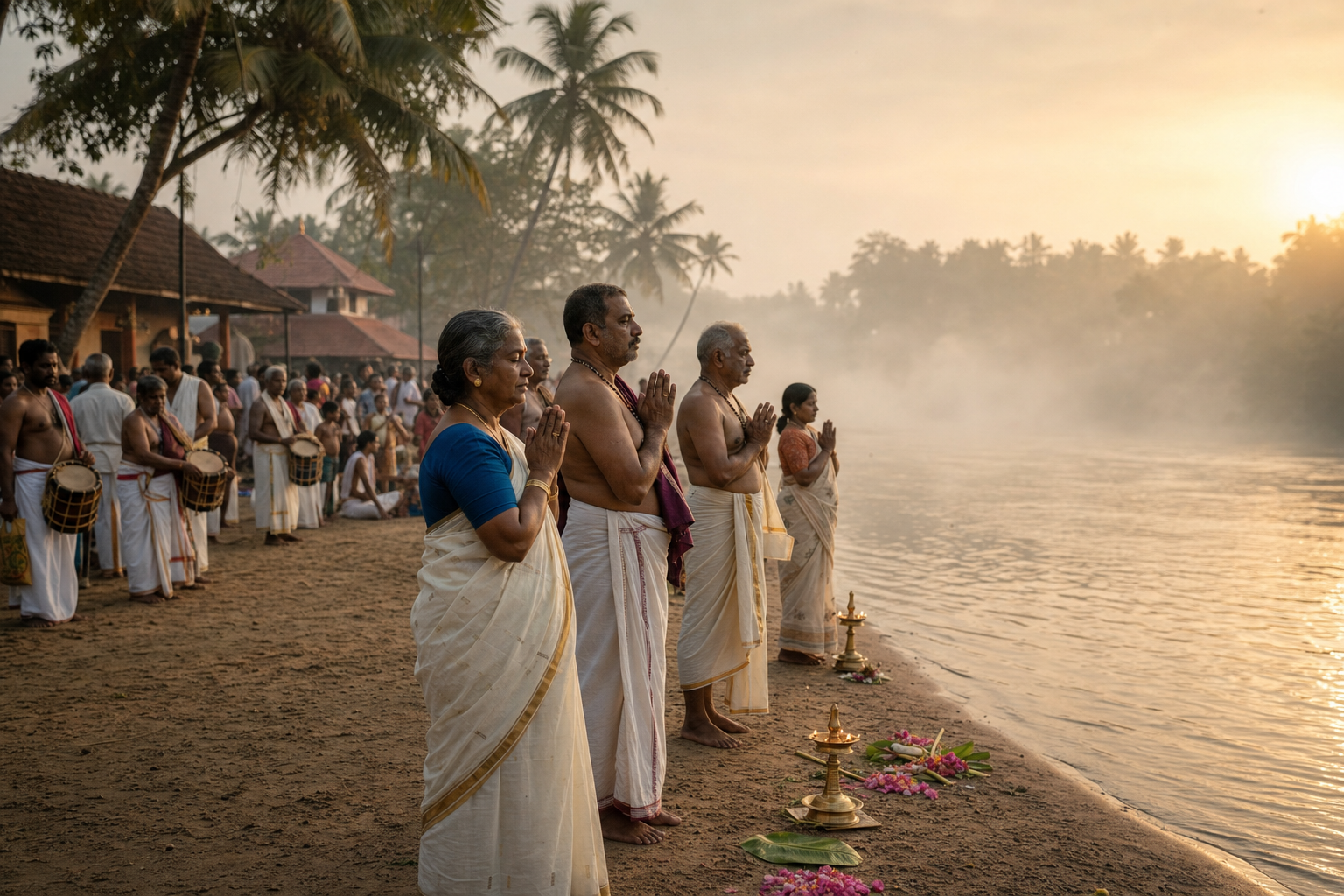
You may be wondering whether the revived Mamankam is a pilgrimage, a heritage festival, or Kerala’s answer to the Kumbh Mela. Its credibility depends on keeping those possibilities in the right order: sacred gathering first, living heritage second, and public scale third.
If you plan to attend, volunteer, organize, or simply explain Mamankam to your family, look beyond the size of the gathering. Ask whether it brings people back to Tirunavaya and the Nila through worship, service, cultural memory, and care for the river. Those are the signs of a genuine revival.
Start with Tirunavaya and the Nila, not the Kumbh label
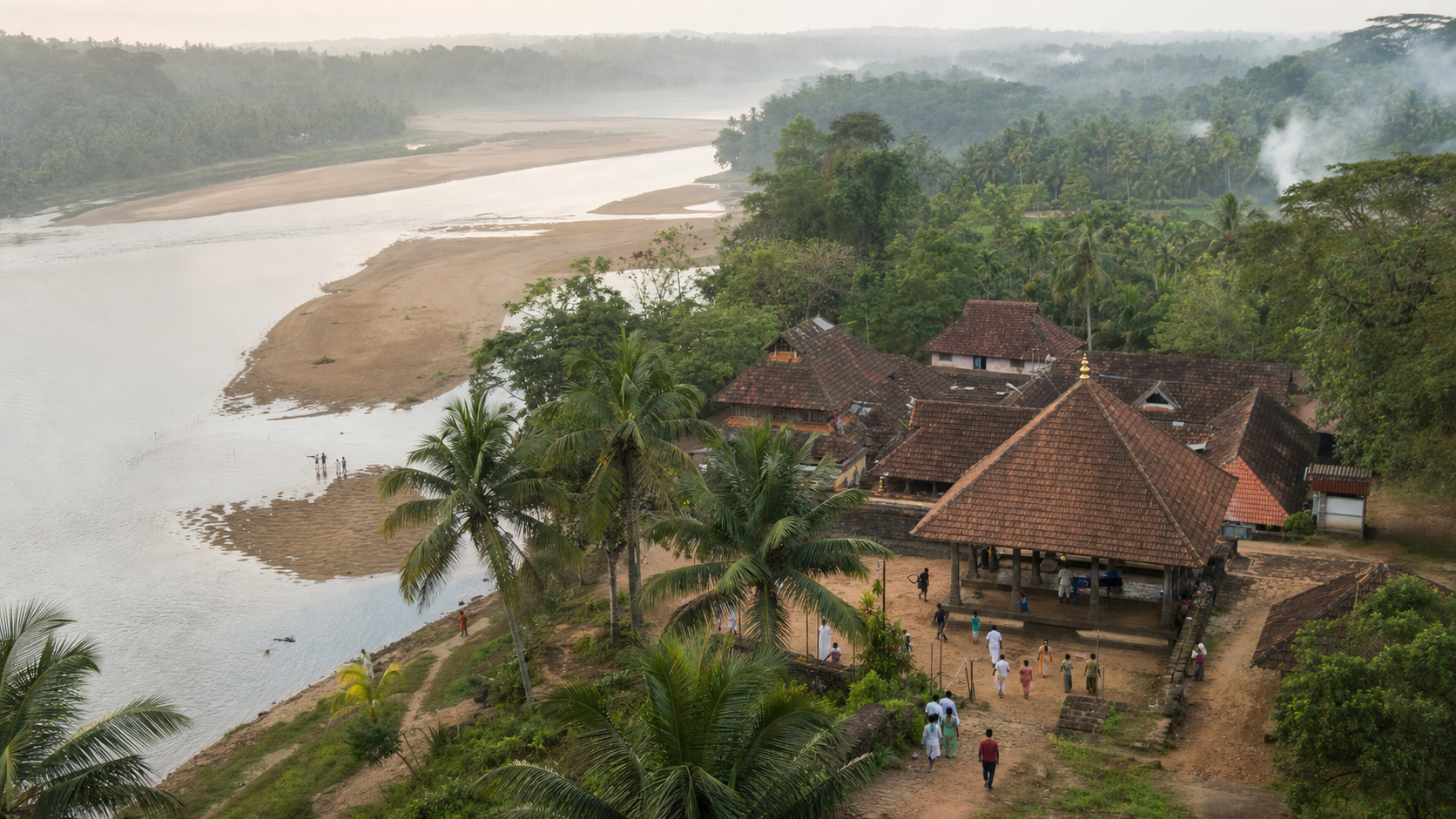
The historical Mamankam is associated with Tirunavaya on the Bharathapuzha, affectionately called the Nila. It periodically brought ritual observance, artistic life, trade, and collective memory into one gathering. That combination matters. Mamankam was connected not only to an event but also to a place, a river, and a community’s way of remembering itself.
Calling the revival a Kerala-inflected Kumbh can help people understand its river-centered spiritual ambition. The comparison points to periodic return, purification, community renewal, and the reaffirmation of dharma. It should not turn Mamankam into a copy of a festival from another region. Tirunavaya’s sacred geography, Kerala’s devotional aesthetics, and the Nila’s place in local memory must remain visible.
This gives you a simple test for public messaging. If a programme speaks at length about becoming a major attraction but barely explains Tirunavaya, Bharathapuzha, or the rites performed there, the emphasis is misplaced. A sound revival teaches the place before promoting the scale.
The same distinction applies to Mamankam’s difficult historical associations. History should be studied honestly, but the renewed observance need not make conflict its devotional centre. Its constructive purpose lies in recovering the spiritual, cultural, and communal functions of the gathering without romanticizing violence. Remembrance can inform identity without dictating the mood of worship.
Keep the Hindu ritual centre clear while welcoming dharmic paths
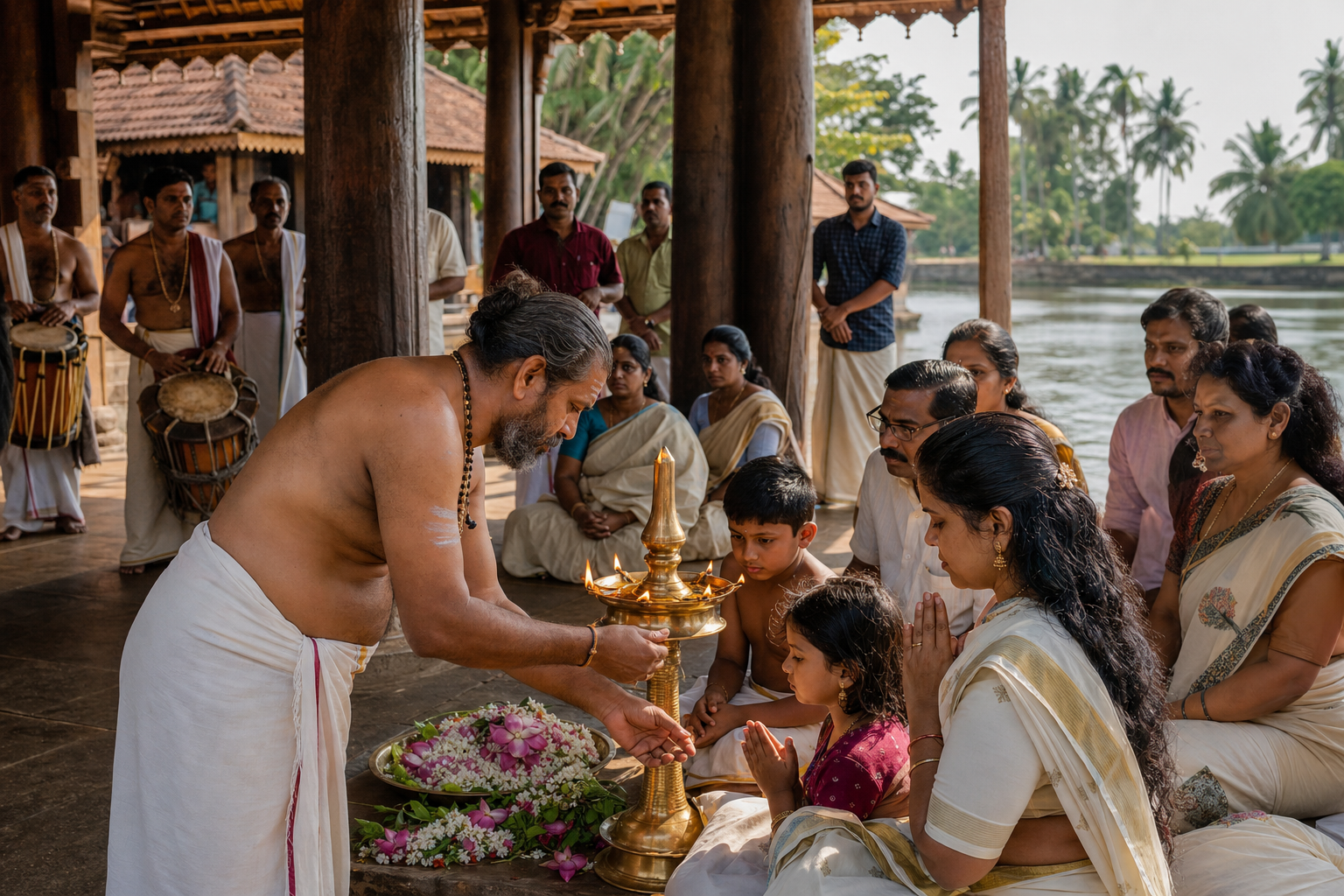
Mamankam’s revived ritual grammar is recognizably Hindu. Snan, deepam, devotional music, congregational prayer, and darshan are not interchangeable cultural performances. They orient the gathering toward purification, reverence, and an encounter with the sacred.
That clarity does not require exclusion. Ahimsa, seva, dana, satya, and dharma also provide meaningful points of encounter among Hindu, Buddhist, Jain, and Sikh participants. Unity here should mean hospitality among distinct paths, not the removal of every distinction that makes those paths intelligible.
- Ahimsa: Keep conduct peaceful, queues disciplined, and historical remembrance free from the glorification of conflict.
- Seva: Treat water distribution, community kitchens, medical assistance, riverbank cleaning, and help for elders as religious duties rather than backstage logistics.
- Dana: Direct generosity toward worship, community meals, heritage work, and the artisans whose livelihoods help keep Kerala’s cultural forms alive.
- Satya: Distinguish documented history, inherited community memory, and modern interpretation. Cultural confidence does not need careless claims.
- Dharma: Connect every right of participation with a duty to the river, the sacred precinct, fellow pilgrims, and the host community.
This approach avoids two common mistakes. One is to make Mamankam so generic that its Hindu sacred centre disappears. The other is to treat dharmic solidarity as if every tradition must hold identical doctrines. A confident civilization can welcome several paths precisely because it does not have to pretend that they are the same.
Participate as a pilgrim, even if you arrive as a visitor
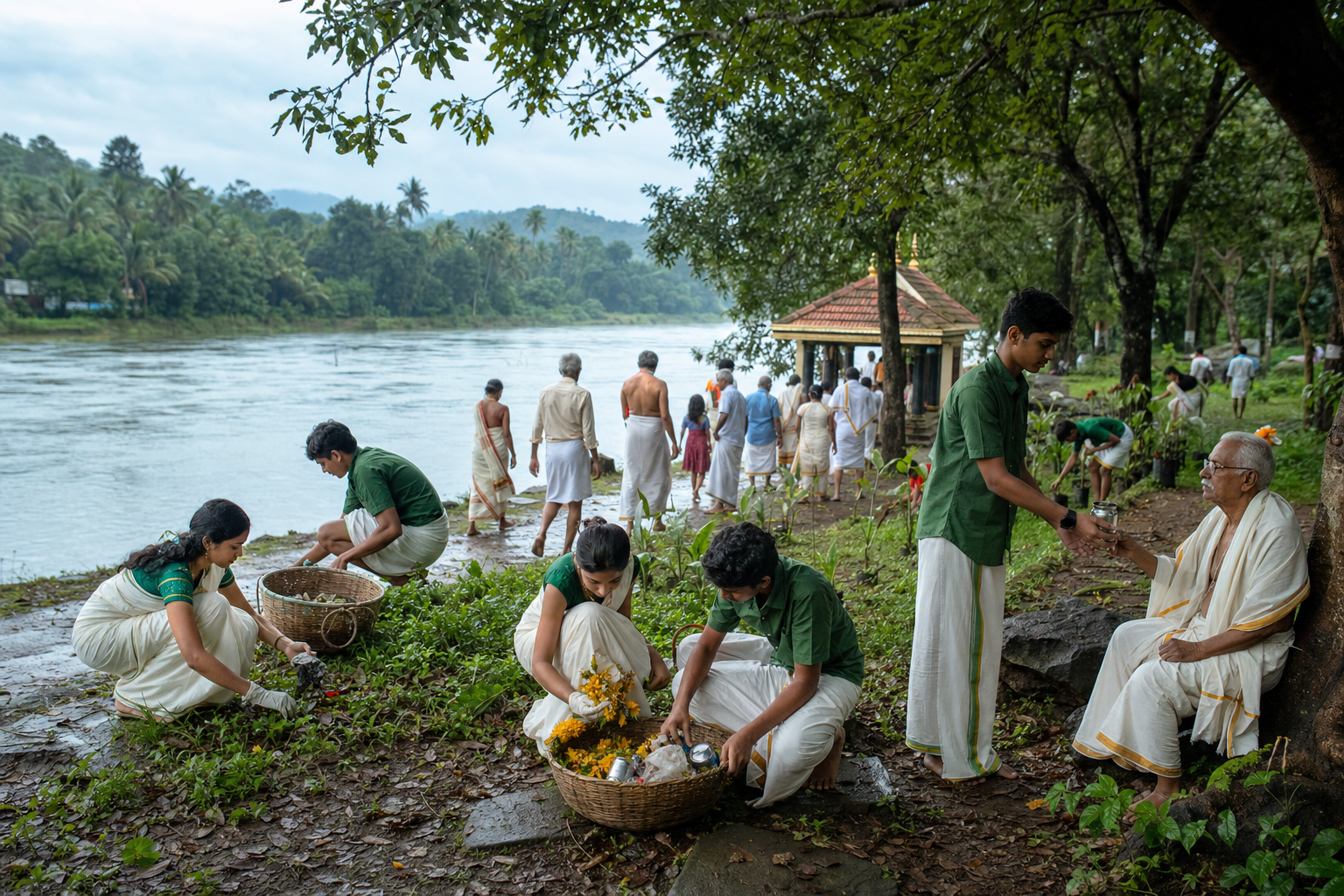
A revived tradition becomes durable when attendance changes behaviour. You do not need an official role to participate seriously, but you should enter the gathering with more than a spectator’s checklist.
- Learn the sacred geography before you go. Know the names Tirunavaya, Bharathapuzha, and Nila. Understanding where you are prevents the river from becoming a decorative background for photographs or slogans.
- Give the rites your full attention. Join or respectfully observe snan, lamp offerings, prayer, and devotional music as appropriate. If you undertake a ritual bath, use access points managed on site and follow local safety directions; sacred intention does not remove the ordinary risks of entering a river.
- Choose one concrete act of seva. Help with a community kitchen, water point, queue, elder assistance, or cleaning effort. A short, well-performed duty contributes more than vague enthusiasm.
- Support living culture locally. Give artisans, musicians, and community-led heritage activities your time and, where appropriate, your custom. Cultural revival cannot survive if local people provide the setting while all its economic value flows elsewhere.
- Carry knowledge across generations. Invite children and young adults into service and study, not only attendance. Listen to elders’ memories of the river and its gatherings, while keeping a clear distinction between memory and verified historical detail.
These choices change the emotional character of a large gathering. Orderly service makes devotion easier. Attention to ritual prevents entertainment from taking over. Intergenerational participation turns heritage from something displayed into something transmitted.
Measure the revival by duty, not merely by crowd size
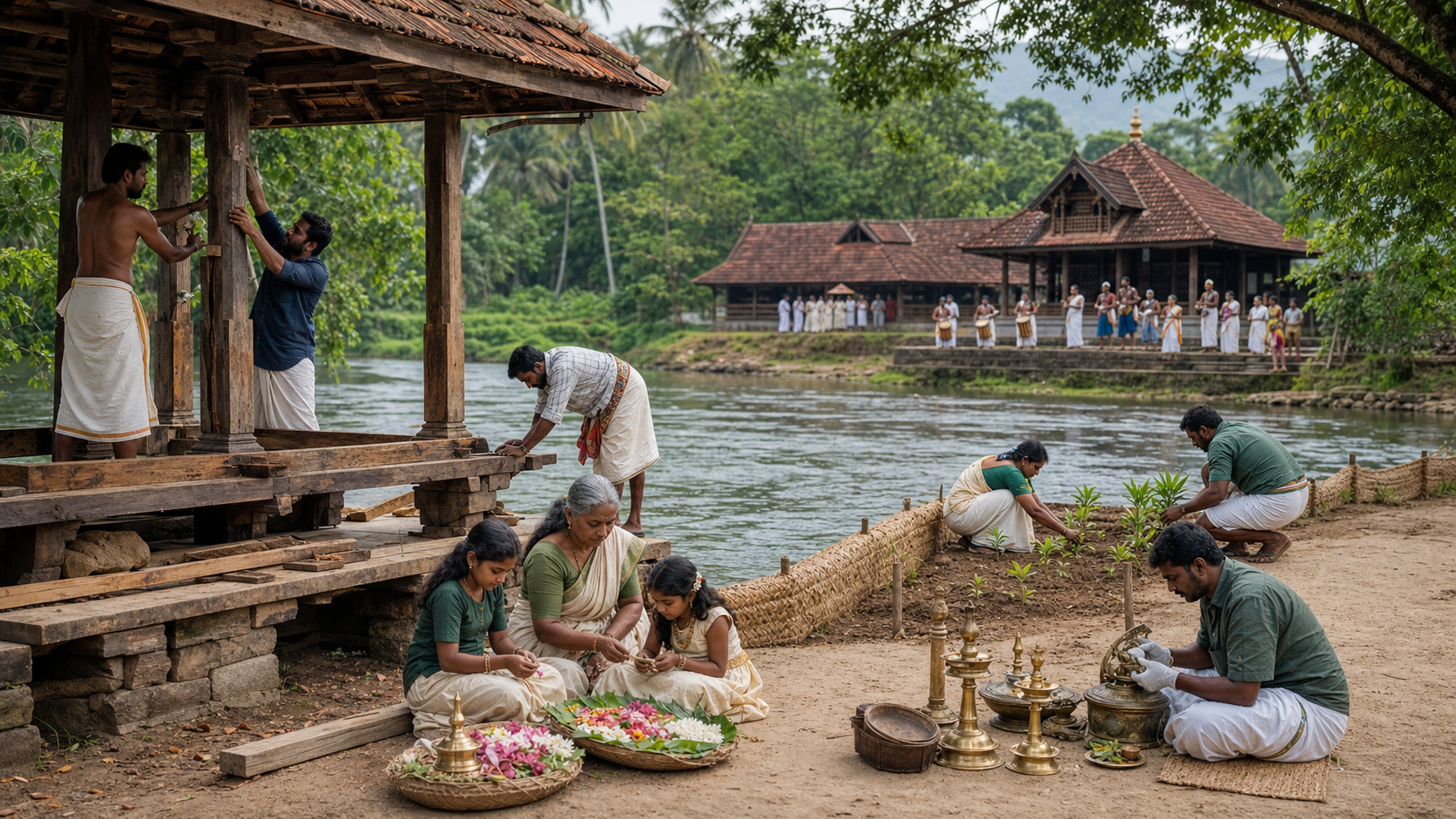
Large attendance may demonstrate interest, but it cannot by itself demonstrate success. Before expanding Mamankam, organizers and supporters should be able to answer practical questions about what happens to people and place during the gathering.
- Does the schedule give ritual bathing, lamp offerings, prayer, and devotional music a coherent place, or are they crowded out by spectacle?
- Are clean water, medical aid, orderly queues, and assistance for elders visible and easy to reach?
- Is waste segregated, is plastic use minimized, and is the riverbank kept clean throughout the observance?
- Are community kitchens treated as a central expression of seva rather than an incidental amenity?
- Do local artisans and cultural practitioners gain a meaningful place in the gathering?
- Are young volunteers entrusted with real responsibilities while elders are given space to transmit memory?
These are not secular additions to a religious event. They are the institutional form of dharma. Waste segregation, plastic minimization, riverbank care, clean water, medical assistance, and support for elders allow reverence to become visible as public conduct.
Prosperity should be judged with the same discipline. More commerce is not automatically cultural renewal. The stronger outcome is one in which local livelihoods improve, artisans remain connected to the sacred context, families can participate with dignity, and the host community is not left with environmental damage after visitors depart.
This is also where Mamankam can contribute to Bharat’s cultural presence in the wider world. Civilizational confidence becomes credible when outsiders can see spiritual continuity and civic competence in the same place. A clean riverbank, a well-run community kitchen, a protected ritual space, and a disciplined volunteer corps communicate more than promotional language can.
Key takeaways
- Judge Mamankam’s revival by how firmly it remains anchored in Tirunavaya, the Bharathapuzha, and Kerala’s own devotional culture.
- Keep Hindu rites clear and central while welcoming Buddhist, Jain, and Sikh participation through shared dharmic ethics.
- Treat snan, deepam, prayer, music, darshan, and seva as parts of one sacred discipline rather than separate attractions.
- Expect organizers to provide clean water, medical aid, elder support, orderly queues, waste segregation, plastic reduction, and riverbank care.
- When you attend, pair one act of worship with one act of service and one form of support for living local heritage.
Your next step can be deliberately small. Attend a prayer or lamp offering, take a kitchen or cleaning duty, and learn the Nila’s story from those preserving it. Mamankam will become living heritage through people who return from Tirunavaya carrying responsibilities, not merely memories.
References
