
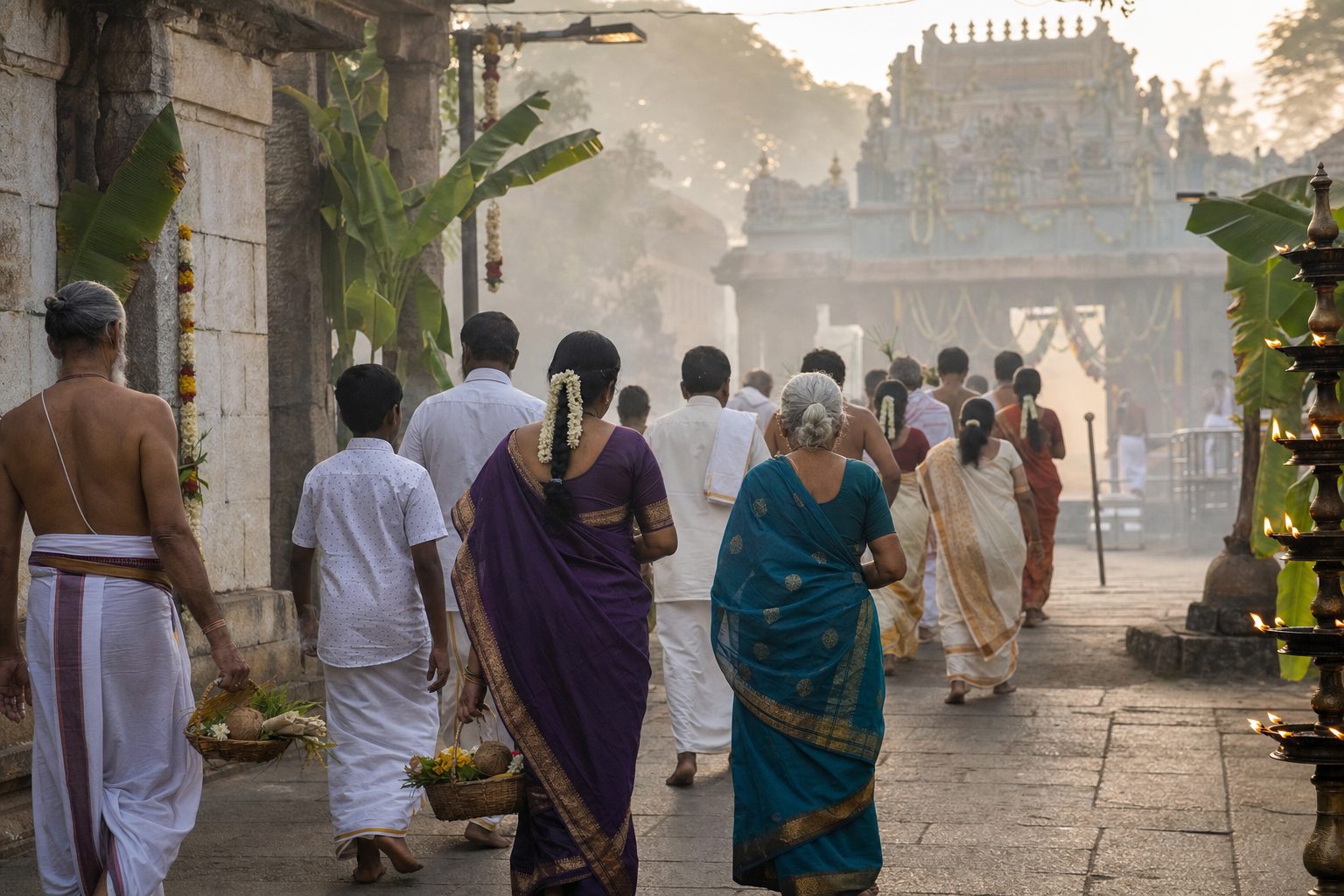
You may know the deity, the festival date, and the route to the temple, yet still wonder how to enter the occasion without remaining a spectator. That is the practical challenge of a living Vaishnava pilgrimage: the destination matters, but the quality of your attention, conduct, and follow-through determines what the journey becomes.
The answer is not to perform every visible custom. It is to understand the devotional rhythm you are joining, choose a form of participation suited to your capacity, and let seva begin before darshan. The temple-centered Brahmotsavam at Thondamanadu and the walking bhakti of Pandharpur’s Wari show two distinct ways of doing this.
First decide which form of pilgrimage you are entering
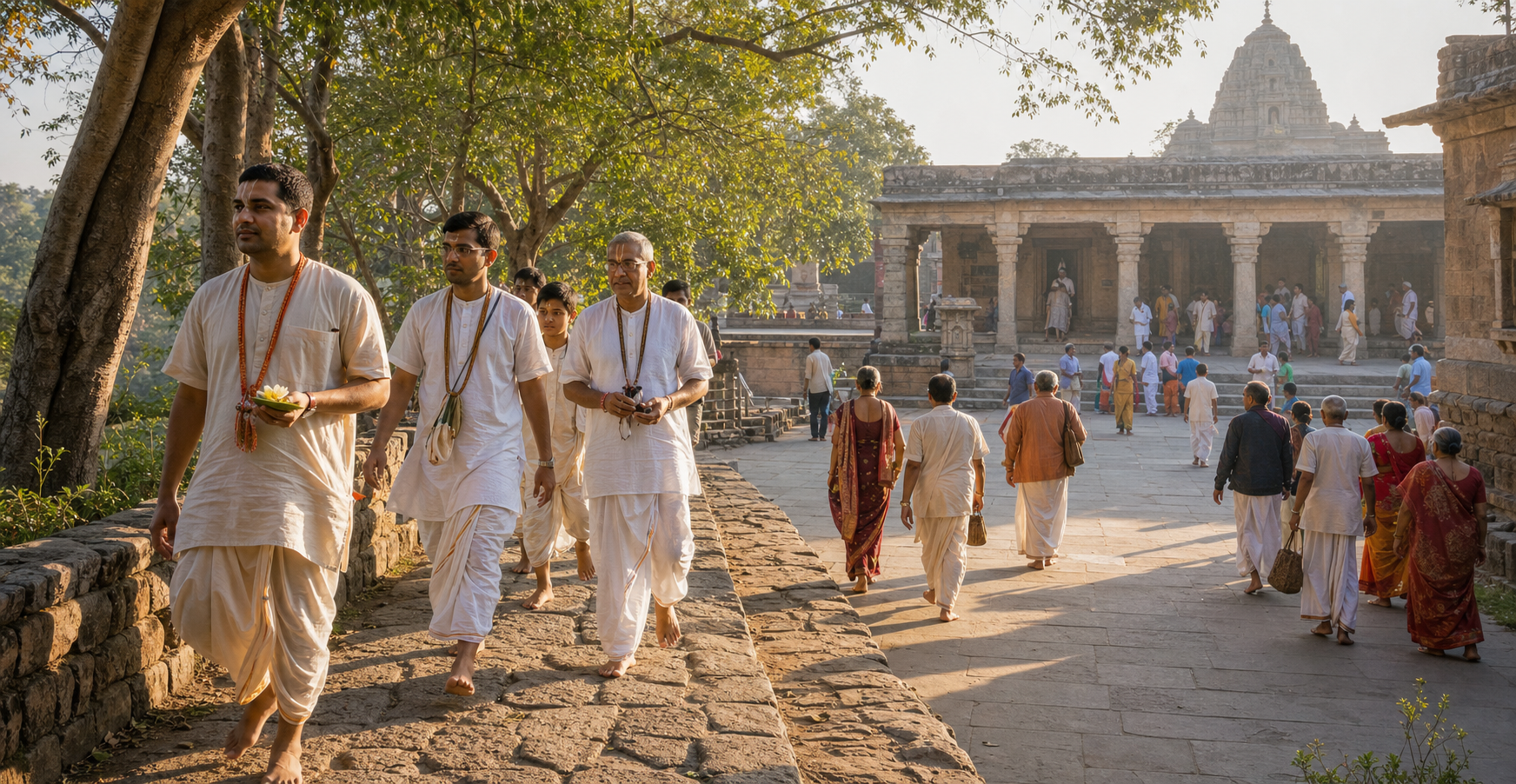
Vaishnava pilgrimage is not one standardized activity. A temple festival organizes devotion around a consecrated sequence of rites, alankarams, sevas, and processions. A foot pilgrimage organizes it through movement, shared singing, discipline, and arrival. Both culminate in darshan, but they ask different things of you.
A temple festival asks you to follow sacred time
At Thondamanadu, Sri Prasanna Venkateswara Swamy is worshipped with Sridevi and Bhudevi through a Brahmotsavam cycle. Its pattern moves from preparation and formal opening into daily alankarams, sevas, Vedic chant, music, and processional worship. You do not need to attend every observance to participate meaningfully, but you should know where your visit sits within that sequence.
This form suits you if you want to remain near one sacred center, attend selected morning or evening observances, and let the changing presentation of the deity structure your days. It can also be the more workable choice for families, elders, or anyone for whom an extended walk is unsuitable.
A Wari asks you to submit to shared movement
Pandharpur’s tradition is inseparable from the Wari, the devotional foot pilgrimages that culminate on Ashadhi Ekadashi and Kartiki Ekadashi. Millions participate in these annual journeys, while palakhi processions from Dehu and Alandi carry the memory of the sant tradition through abhanga, kirtan, recitation, and collective discipline.
A visit to Pandharpur during an Ekadashi culmination is therefore different from visiting during a quieter month. The festival period reveals devotion at collective scale. A quieter visit leaves more room for sustained temple worship and reflection beside the Chandrabhaga. Decide which experience answers your actual need. Do not choose the densest occasion merely because it appears more important.
If you are drawn to the Wari but cannot responsibly undertake prolonged walking or dense crowds, destination darshan remains a valid choice. Devotion is not measured by exhaustion. The better decision is the one that lets you remain attentive, considerate, and physically safe.
Learn the ritual sequence, not only the headline date
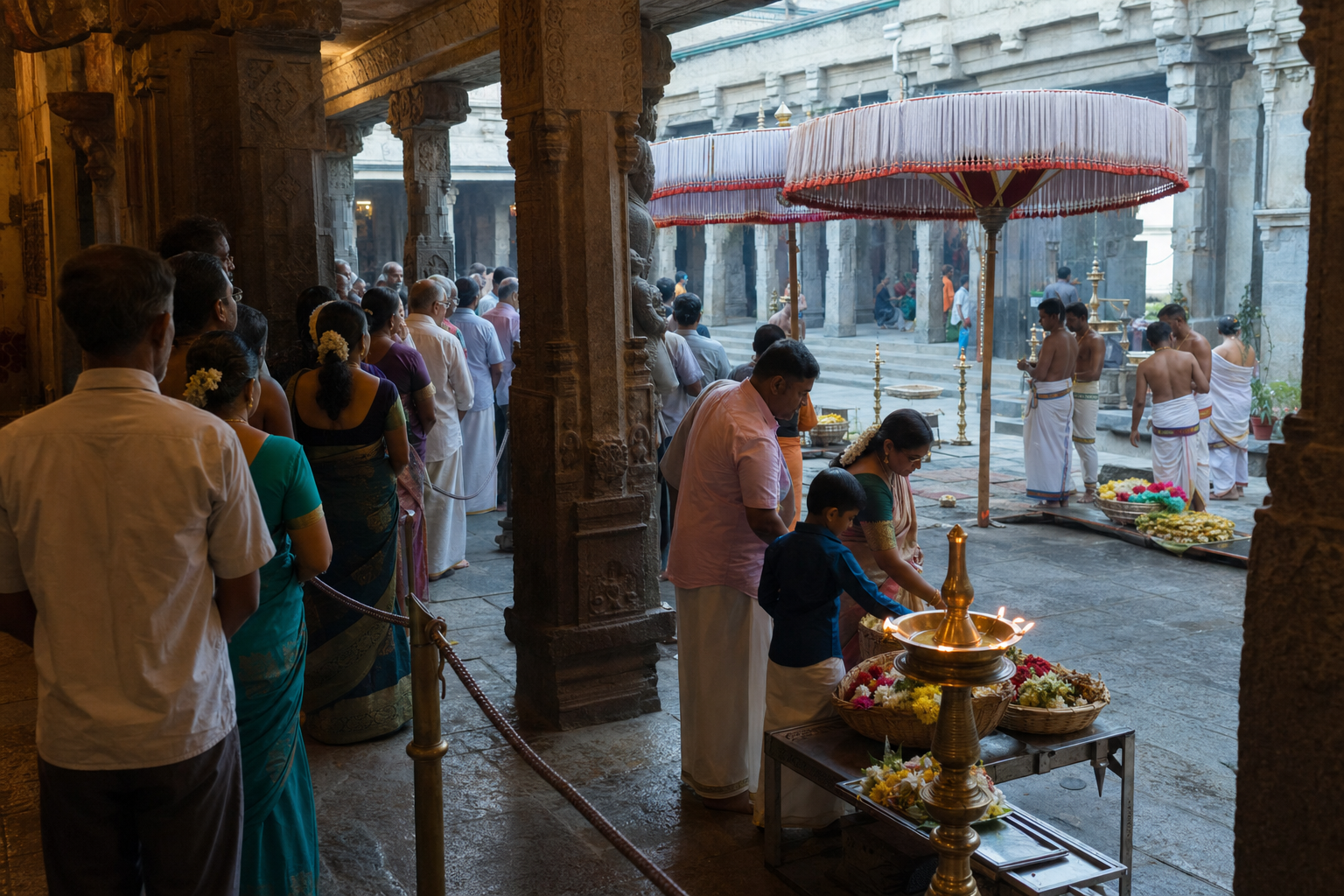
A festival date tells you when to travel. A ritual sequence tells you what you are entering. Without that sequence, Ankurarpanam, Dhwajarohanam, a procession, and harati can blur into a succession of attractive scenes. Once you understand their place, waiting itself becomes part of participation.
The 2026 Thondamanadu cycle offers a clear example. Ankurarpanam took place at 6:00 p.m. on February 15, Dhwajarohanam followed between 9:15 and 9:45 a.m. on February 16, and the Brahmotsavam continued through February 24. These are past dates, not a timetable to reuse for another year. Their value is in showing how the observance is built.
Ankurarpanam is a seed-sowing consecration. It gives the festival an auspicious beginning and establishes a mood of purity and preparation. Dhwajarohanam formally announces the festival through the raising of the sacred flag, marking the deity’s presence and protection across the observance. The daily worship that follows is not decorative repetition. Changing alankarams, sevas, and processional moments disclose different relationships between the deity, temple, and community.
Pandharpur’s rhythm is carried less by a single opening rite and more by the movement toward Ekadashi, the palakhi tradition, and congregational song. The abhangas associated with Sant Dnyaneshwar, Sant Namdev, Sant Eknath, and Sant Tukaram do more than provide a musical background. They carry teachings about devotion, humility, moral clarity, and social fellowship into a form that pilgrims can remember and share while moving together.
The deity’s iconography also gives you a way to read the pilgrimage. Vithoba, worshipped with Rukmini as Rakhumai, is understood as a form of Krishna or Vishnu. In the traditional account of Pundalik, the Lord waits upon a brick offered by a devotee occupied in service. The murti stands on that brick with hands upon the hips. The image joins steadfast divine availability to the primacy of humble service. It quietly corrects the idea that reaching the shrine is more important than how you treated people on the way.
Before traveling, obtain the current schedule from the temple administration or a trusted local organizer. At Thondamanadu, detailed vahana-seva and daily timings are released locally. Do not build a journey around a remembered date, an old image, or an unverified social-media message. Confirm the year, time, entrance arrangements, dress expectations, and any restrictions on what you may carry.
Prepare for darshan before leaving home
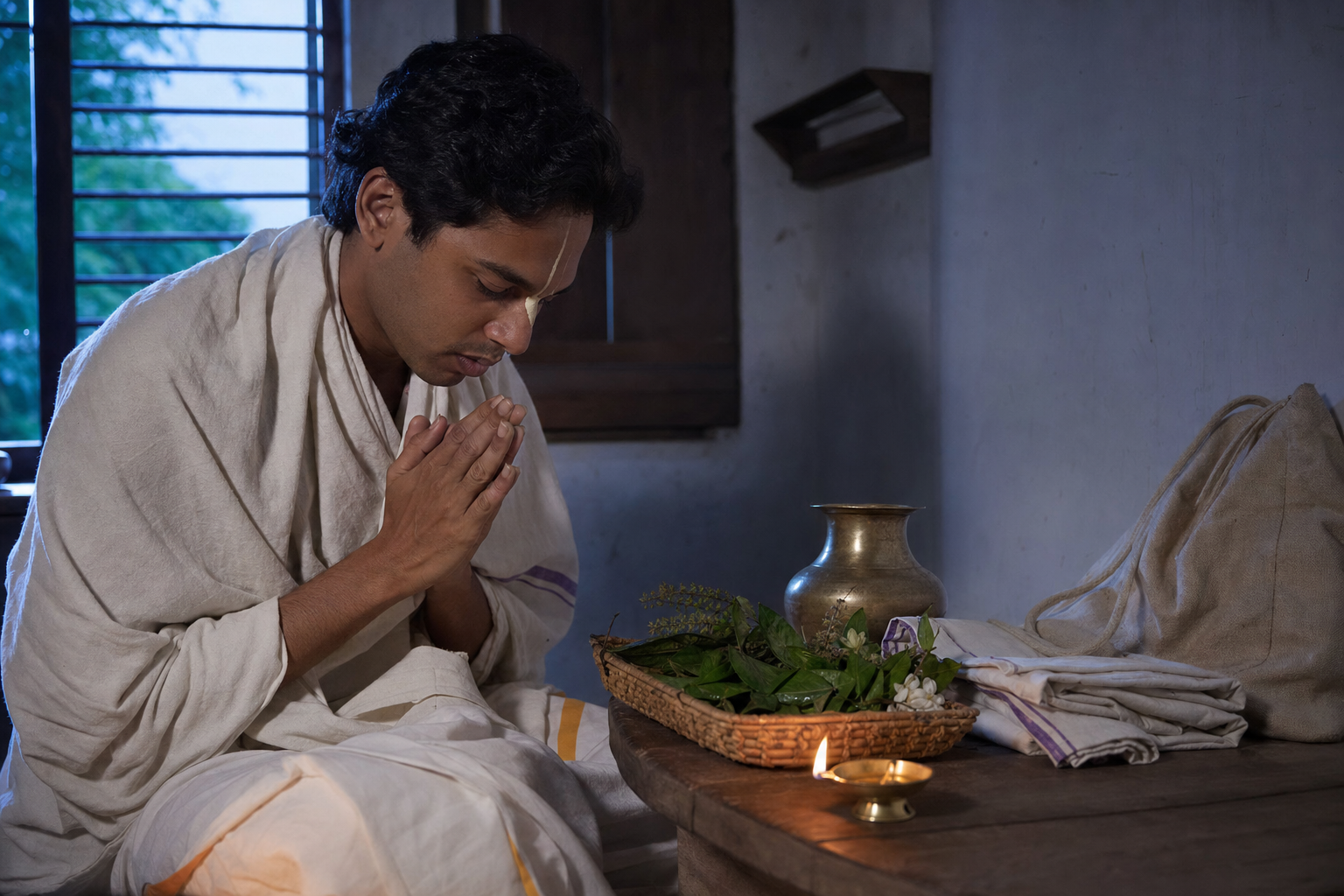
Good preparation removes avoidable friction. It also prevents the practical demands of travel from consuming all the attention you intended to offer. Use this sequence rather than beginning with transport and accommodation alone.
- Name your purpose. Write one sentence explaining why you are going: to offer gratitude, seek steadiness, accompany family, learn a tradition, undertake seva, or renew a neglected practice. A clear purpose helps you decide which events deserve your limited time.
- Choose one devotional anchor. This might be the opening rite of a Brahmotsavam, one morning and one evening darshan, participation in kirtan, or arrival at Pandharpur for an Ekadashi observance. Treat everything else as welcome but secondary.
- Learn the names you will hear. At Thondamanadu, recognize Sri Prasanna Venkateswara Swamy, Sridevi, and Bhudevi. At Pandharpur, recognize Vithoba, Vitthal, Rukmini, and Rakhumai. Learn the meanings of darshan, seva, pradakshina, palakhi, abhanga, kirtan, alankaram, deepam, and harati. You will follow events more intelligently even if you do not know the local language.
- Plan for the body you are bringing. A large pilgrimage crowd and a long devotional walk are physical conditions, not tests of belief. Carry required medication, use suitable footwear, and bring water only where local rules permit it. If exertion, heat, or dense crowds present a medical concern for you, discuss the plan with your clinician and choose a less demanding form of participation when advised.
- Make a family crowd plan. Agree on a meeting point before entering a busy area. Keep children and vulnerable adults with a named companion rather than assuming the whole group will remain together. Know who carries medicines, identification, and essential contact information.
- Set a rule for your phone. Use it for coordination and permitted photographs, then put it away during darshan, recitation, and harati. Recording every moment can leave you with a complete gallery and very little recollection of prayer.
If you have only one day at a Brahmotsavam, do not attempt to collect every event. Select one principal observance from the current local schedule, arrive well before it begins, and leave enough space for an unhurried darshan. If you have several days, attend at least one morning and one evening period; their devotional textures are often different even when both center on the same deity.
At Pandharpur, decide explicitly whether you are preparing for a foot pilgrimage or a temple visit during the pilgrimage season. The first requires conditioning, group discipline, and sustained simplicity. The second still requires crowd preparation but does not need to imitate the physical form of the Wari. Do not allow social pressure to blur that distinction.
Make your conduct part of the offering
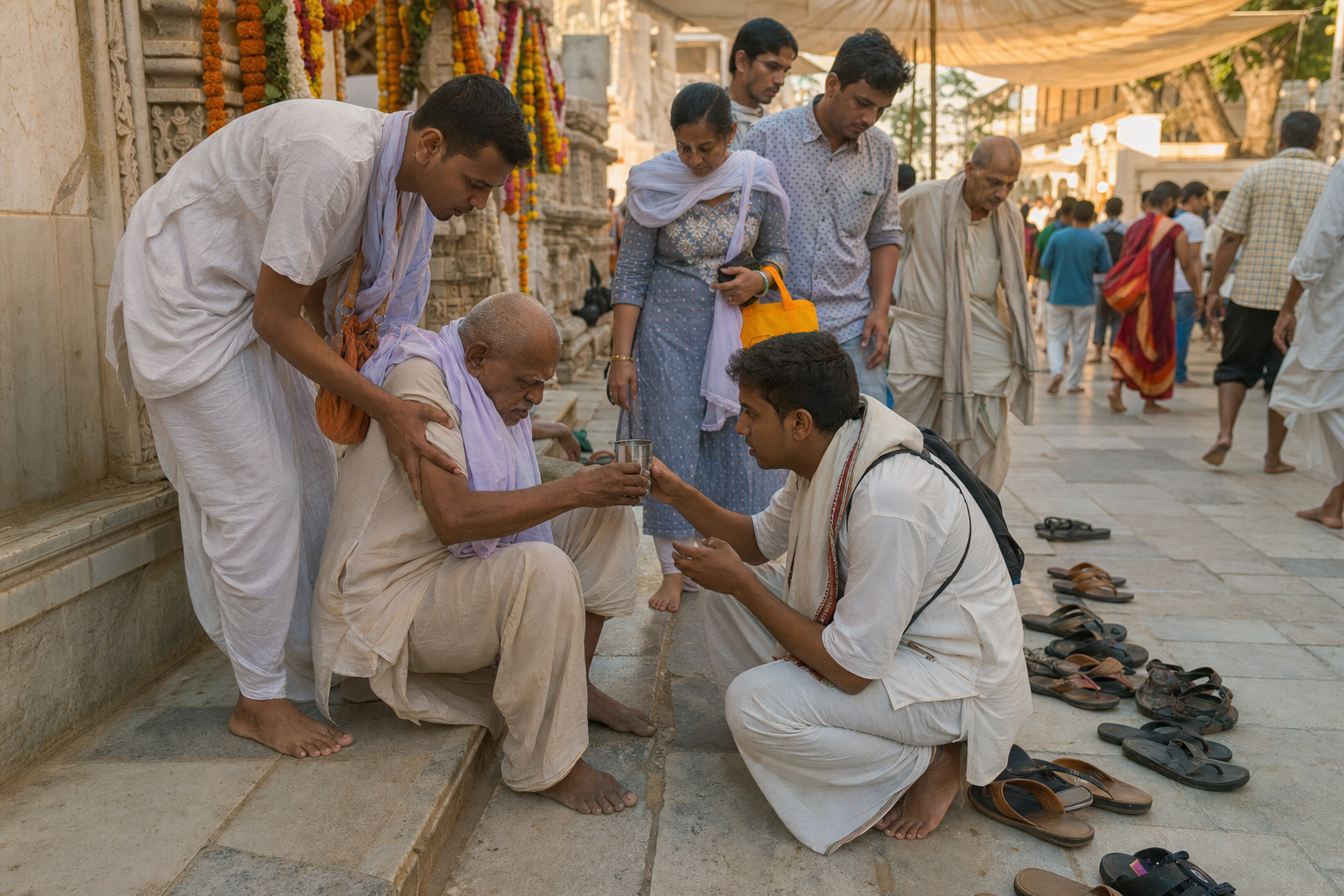
The most revealing moments of a pilgrimage often occur outside the sanctum: when a queue slows, when someone needs space, when a procession interrupts your route, or when a ritual is unfamiliar. Bhakti that disappears under inconvenience has not yet become discipline.
- Follow the local ritual grammar. Observe the temple’s dress code, queue system, pradakshina direction, and instructions from temple workers. Customs learned elsewhere do not automatically override the practice of the shrine you are visiting.
- Protect the path of the deity and the pilgrims. During a procession, stand where directed and avoid stepping into the route for a photograph. The movement of the deity through the community is itself an extension of darshan, not a performance staged around the best camera angle.
- Receive unfamiliar worship quietly. You do not have to copy every gesture. Watch how established devotees participate, follow clear instructions, and refrain from correcting others unless you hold a recognized responsibility there.
- Let singing gather the group. In kirtan or abhanga singing, listen for the shared refrain before joining. Volume is not the measure of devotion; attentiveness to the congregation matters.
- Treat bathing as optional, not competitive. The Chandrabhaga ghats connect bodily purification and reflection with Pandharpur’s sacred geography. If you participate, follow local access and safety directions. If conditions or health make bathing unsuitable, prayer at the river remains more sensible than taking an avoidable risk.
- Practice low-visibility seva. Keep the queue orderly, make room for elders, dispose of waste correctly, refill a reusable bottle where permitted, and accept an unglamorous task when organizers need help. Use designated channels for monetary offerings.
This discipline also protects the dignity of a living tradition. A temple festival is not a cultural display detached from worship, and the Wari is not a mass walk with devotional decoration. Beauty, music, procession, sacred geography, and community all serve a relationship with the Divine. Cultural appreciation becomes appropriate when it remains answerable to that center.
The shared dharmic virtues visible here – bhakti, ahimsa, seva, satya, self-discipline, and respect for seekers – can deepen mutual regard among Hindu, Buddhist, Jain, and Sikh communities. That kinship should not flatten their distinct teachings or make their rituals interchangeable. You honor unity more honestly when you also respect difference.
Carry the pilgrimage home through one modest observance. Sing or read an abhanga regularly. Set aside the next Ekadashi for focused prayer and seva in a manner consistent with your sampradaya and health. Volunteer at a local temple. Repair one relationship strained by impatience. The best choice is not the most dramatic one; it is the practice you will continue after the festival atmosphere has receded.
Key takeaways
- Choose between a temple-centered festival, a walking pilgrimage, and quieter destination darshan according to your devotional purpose and physical capacity.
- Learn the ritual sequence before traveling. Opening rites, daily sevas, processions, kirtan, and final darshan do not play the same role.
- Verify the current year’s schedule and local rules directly; old festival dates are useful context, not a reusable timetable.
- Prepare one devotional anchor, a crowd plan, essential medicines, appropriate clothing, and a clear phone rule.
- Make queue discipline, respect for local custom, care for other pilgrims, and unobtrusive seva part of your worship.
- Continue one realistic practice after returning so that the yatra changes ordinary conduct rather than ending with the journey.
Before making your booking, write down the one observance you intend to receive and the one discipline you intend to bring home. Then confirm the local schedule and prepare around those two commitments. If a habit of service survives the return journey, the pilgrimage is still moving.
References
- DharmaRenaissance Blog – Thondamanadu Brahmotsavam 2026: Feb 16-24 Sacred Sri Venkateswara Utsavam
- DharmaRenaissance Blog – Pandharpur Vithoba Mahatmya: Timeless Significance, Bhakti Pilgrimage, and Living Heritage
