
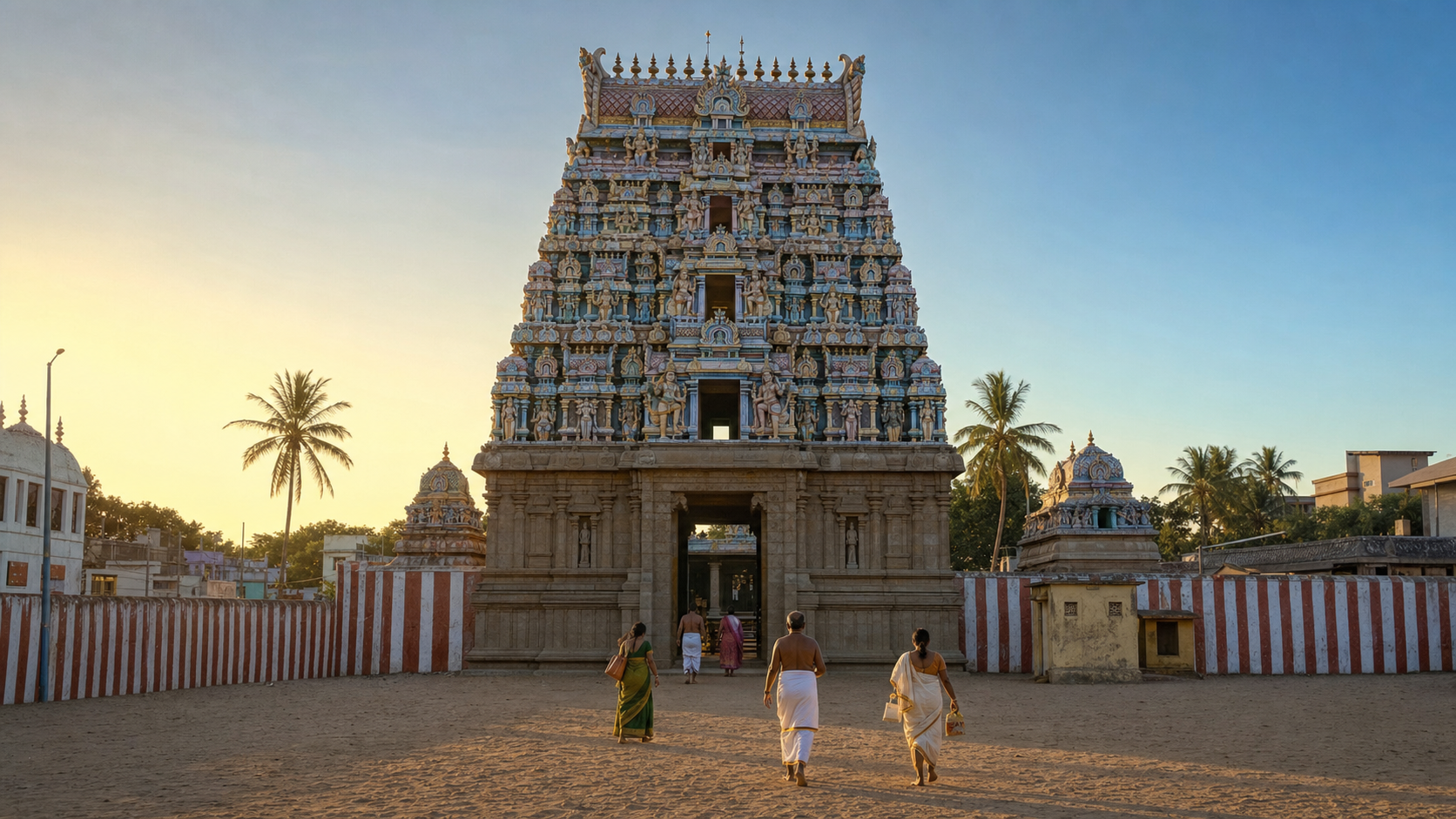
If you are planning Mahabalipuram only around its celebrated stone monuments, reserve a separate place for Sthalasayana Perumal Temple. Here, heritage is not something you merely inspect from outside. You encounter it through darshan, recitation, circumambulation, and the discipline of entering a sacred place on its own terms.
That distinction determines what you notice. You will gain more from the visit if you understand why Divyadesam status matters, read the architecture as a setting for worship, and plan around a contemplative pace rather than tourist momentum.
What you need to know before you go
- Sthalasayana Perumal Temple is a functioning Vaishnava shrine dedicated to Lord Vishnu, not an inactive archaeological monument.
- Its identity as a Divyadesam connects the temple to the Azhwar saints and the Nalayira Divya Prabandham.
- The building is best understood through three connected elements: sacred literature, Dravidian architecture, and continuing worship.
- Early mornings and evenings generally offer the most suitable atmosphere for quiet darshan, but you should confirm current opening and ritual schedules locally.
- Respectful dress, restrained photography, unobtrusive movement, and low-waste offerings protect both the sanctity of the shrine and Mahabalipuram’s coastal heritage.
Why a living Divyadesam changes the way you visit
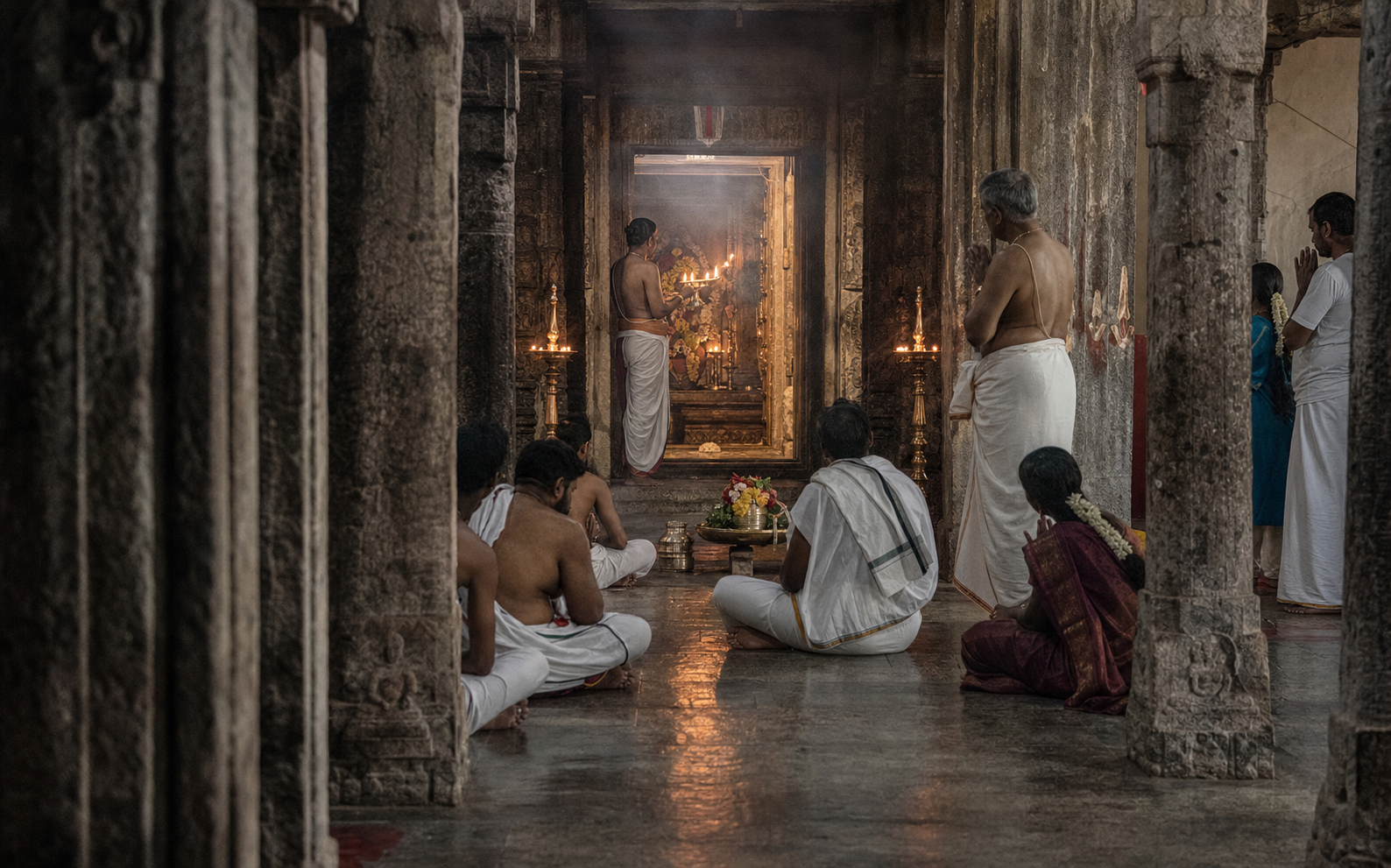
Sthalasayana Perumal Temple belongs to the sacred geography of South Indian Vaishnavism. Its recognition as a Divyadesam places it within the devotional world of the Azhwars and the Nalayira Divya Prabandham. That standing is not an architectural award. It means the place has been received, remembered, and approached through a specific tradition of Vishnu bhakti.
This gives the temple several forms of heritage at once. There is the physical inheritance of proportion, stone, sculpture, and sacred enclosure. There is the literary inheritance preserved through the Divya Prabandham. There is also a living inheritance: worshippers continue to seek darshan, recitations continue to shape the atmosphere, and the temple remains part of community memory.
Approach the shrine as a pilgrim would, even if your main interest is history or architecture. That does not require you to claim a religious conviction you do not hold. It simply means allowing worship to remain the governing purpose of the place. A ritual is not an interruption to your heritage visit, and another devotee standing before the deity is not blocking an exhibit.
This specificity also matters when we speak about a broader Dharmic inheritance. Devotion, compassion, and service resonate across Hindu, Buddhist, Jain, and Sikh traditions, but shared values do not make the traditions interchangeable. Sthalasayana Perumal Temple is distinctly a Vaishnava Hindu shrine. Respectful civilizational unity begins by understanding that identity clearly, not by dissolving it into a generic spirituality.
Read the temple through three connected layers
Let the devotional tradition orient you
The Nalayira Divya Prabandham gives the Divyadesams a devotional map that an architectural checklist cannot supply. The Azhwar tradition directs attention toward a relationship among deity, sacred place, devotee, and remembrance. The temple is therefore more than the setting in which devotion happens; place itself becomes part of the language of bhakti.
If you can obtain a reliable edition or translation of the relevant Divya Prabandham hymns, read a short passage before your visit. Do not treat it as a plaque that must provide dates and building facts. Read it to understand the devotional disposition with which the shrine has been approached. Then enter with one theme in mind, such as surrender, service, compassion, or the intimacy between the devotee and Vishnu.
If recitation is taking place during your visit, resist the urge to talk over it or hurry past it. Listening is part of encountering the temple’s heritage. Even when you do not understand every word, cadence, repetition, and the attention of the gathered devotees reveal how sacred literature continues to inhabit physical space.
See architecture as a discipline of attention
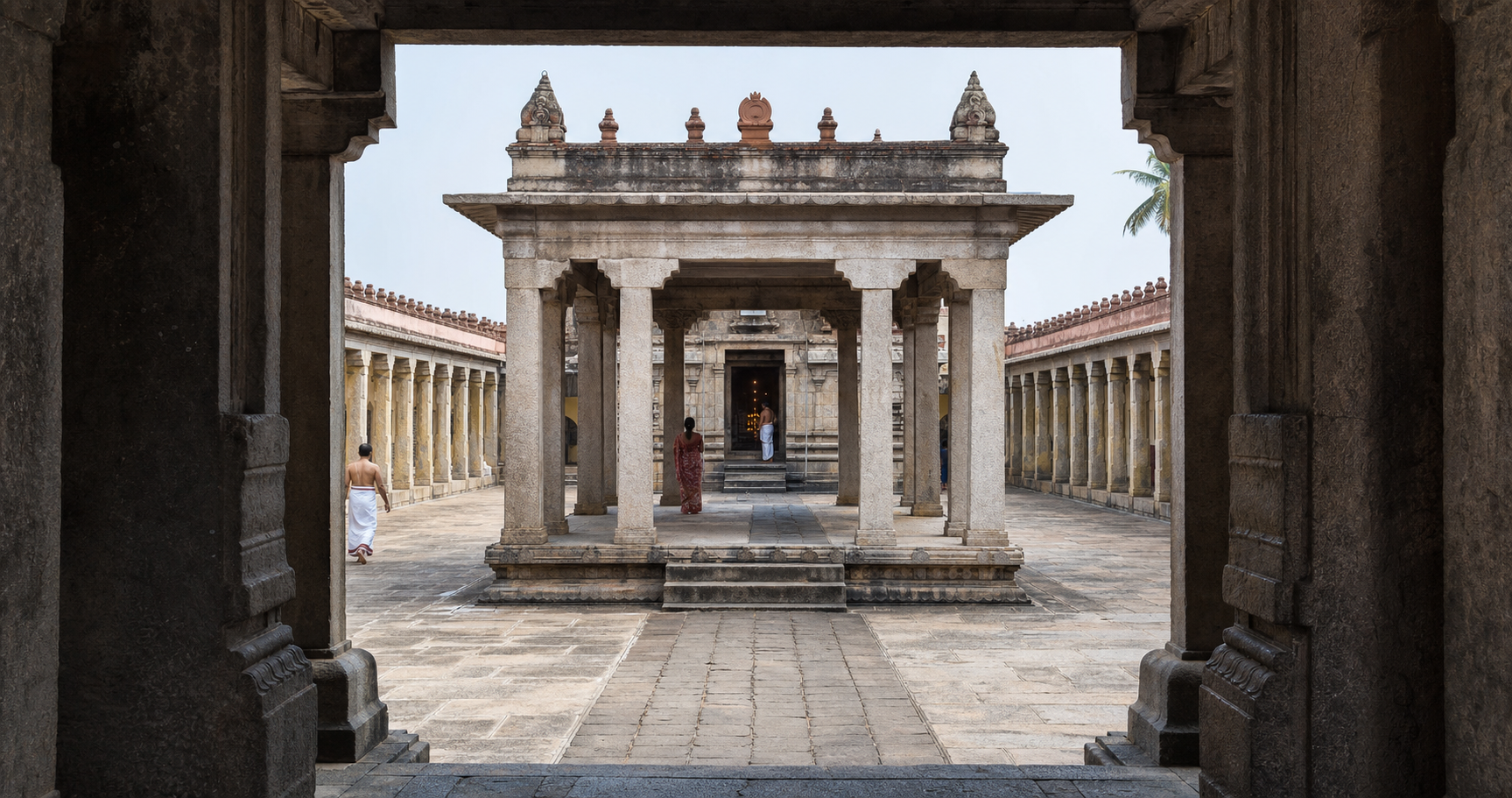
The temple’s Dravidian character appears in its composed proportions, sculpted elements, and the way the sanctum supports concentrated darshan. To read those qualities properly, move from the whole to the particular. Begin by noticing the relationship among the larger architectural masses. On approach, observe how your attention is drawn away from the surrounding town and toward the sacred center. Near the sanctum, notice how enclosure, sightline, and stillness change your experience.
Do not judge the building only by its scale or by the number of carvings you can photograph. Sacred architecture has a functional test: does it guide the body and mind from ordinary movement toward attention? A visually restrained area may be doing more liturgical work than a surface crowded with ornament. The sanctum is not merely the innermost room in an old building; it is the point toward which the visit is ordered.
Give the deity your attention before beginning close architectural observation. After darshan, look again. Details that seemed decorative on arrival may now appear to participate in a sequence of approach, pause, and contemplation.
Notice continuity rather than age alone
Mahabalipuram is widely associated with stone craftsmanship, classical forms, and UNESCO-recognised monuments. Sthalasayana Perumal Temple contributes something different to that landscape: a liturgical continuity in which architecture still serves the religious purpose for which a temple exists.
Watch how worshippers enter, wait, receive darshan, and move through the precinct without turning them into objects of observation. Notice the rhythm rather than individual people. If circumambulation is taking place and local practice permits you to join, follow calmly without overtaking, obstructing a doorway, or stopping the flow for a photograph.
This is where intangible heritage becomes visible. Stone preserves form, while practiced reverence preserves meaning. Separating the two leaves you with only half the temple.
Plan a visit that protects worship and heritage
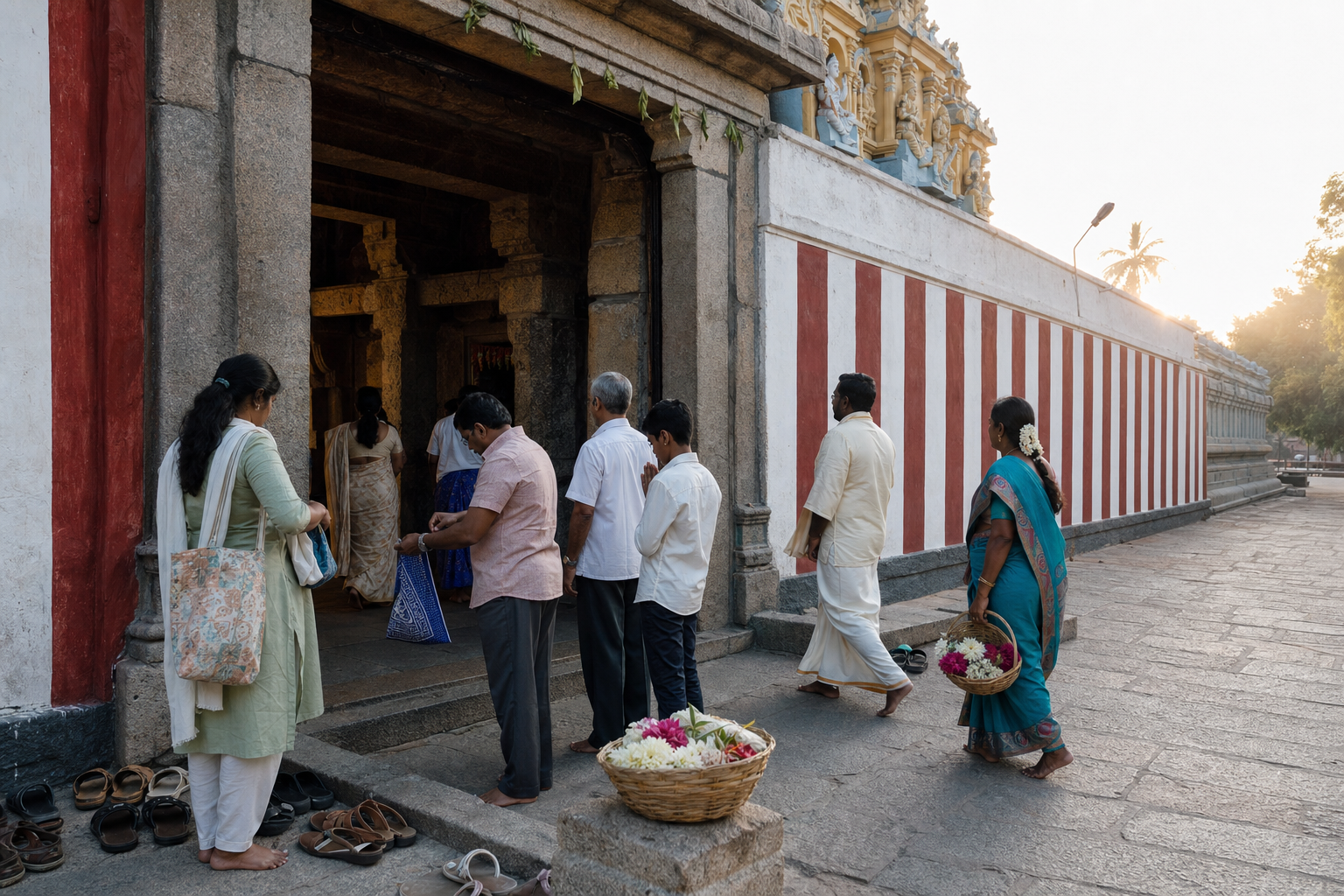
Ritual schedules and opening times can change, so verify them locally before setting out. Do not assume that the timetable of a nearby tourist monument applies to a functioning temple. Early morning or evening is generally the better choice when you want a quieter, more contemplative darshan.
- Choose your primary intention. Decide whether you are coming principally for darshan, engagement with the Divya Prabandham, or architectural study. You may do all three, but choosing an order prevents the camera or checklist from taking control of the visit.
- Dress for a sanctified space. Wear respectful clothing and be ready to follow local footwear requirements. If you are bringing children or a group, explain the expected conduct before reaching the entrance: quiet voices, hands off sculpted surfaces, and no blocking passages.
- Enter without making the phone your first gesture. Silence it and give the first moments to orientation. Do not assume photography is permitted in every part of the temple. Follow posted rules or ask temple personnel before taking pictures, especially near worship and the sanctum.
- Place darshan before documentation. Join the existing flow rather than creating your own route through it. Do not step in front of worshippers, interrupt recitation, or treat ritual activity as background material for a photograph.
- Observe the architecture after the first darshan. Retrace what you can without disrupting movement. Look for proportion, sculpted detail, the progression toward the sanctum, and the difference between spaces of circulation and spaces of concentrated attention.
- Keep offerings and travel waste light. Choose an eco-conscious approach, avoid unnecessary disposable packaging, and leave no litter in or around the precinct. Never touch, lean against, or place belongings on sculpted elements.
If you are combining the temple with Mahabalipuram’s monumental landscape, do not squeeze it into the leftover interval between sightseeing stops. Give it a separate place in your itinerary. The shift from archaeological observation to active worship requires a change of pace, and that change is part of what the temple teaches you to notice.
Carry the temple’s meaning beyond the visit
Before leaving Mahabalipuram, record one observation from each layer: a devotional idea from the Divya Prabandham tradition, an architectural relationship that directed your attention, and a living practice that showed continuity. This produces a more faithful memory than a folder of unidentified images.
Use the same care when sharing the visit. Identify Sthalasayana Perumal Temple as a living Divyadesam dedicated to Lord Vishnu, not merely as an old structure in a famous heritage town. Avoid turning worshippers into scenery, and do not publish restricted interior photographs simply because you managed to take them.
Your next step is simple: confirm the temple’s current schedule, choose an early or evening visit, and arrive with enough openness to let darshan come before documentation. The heritage of Sthalasayana Perumal is clearest when sacred text, architecture, and worship are allowed to remain one experience.
References
