
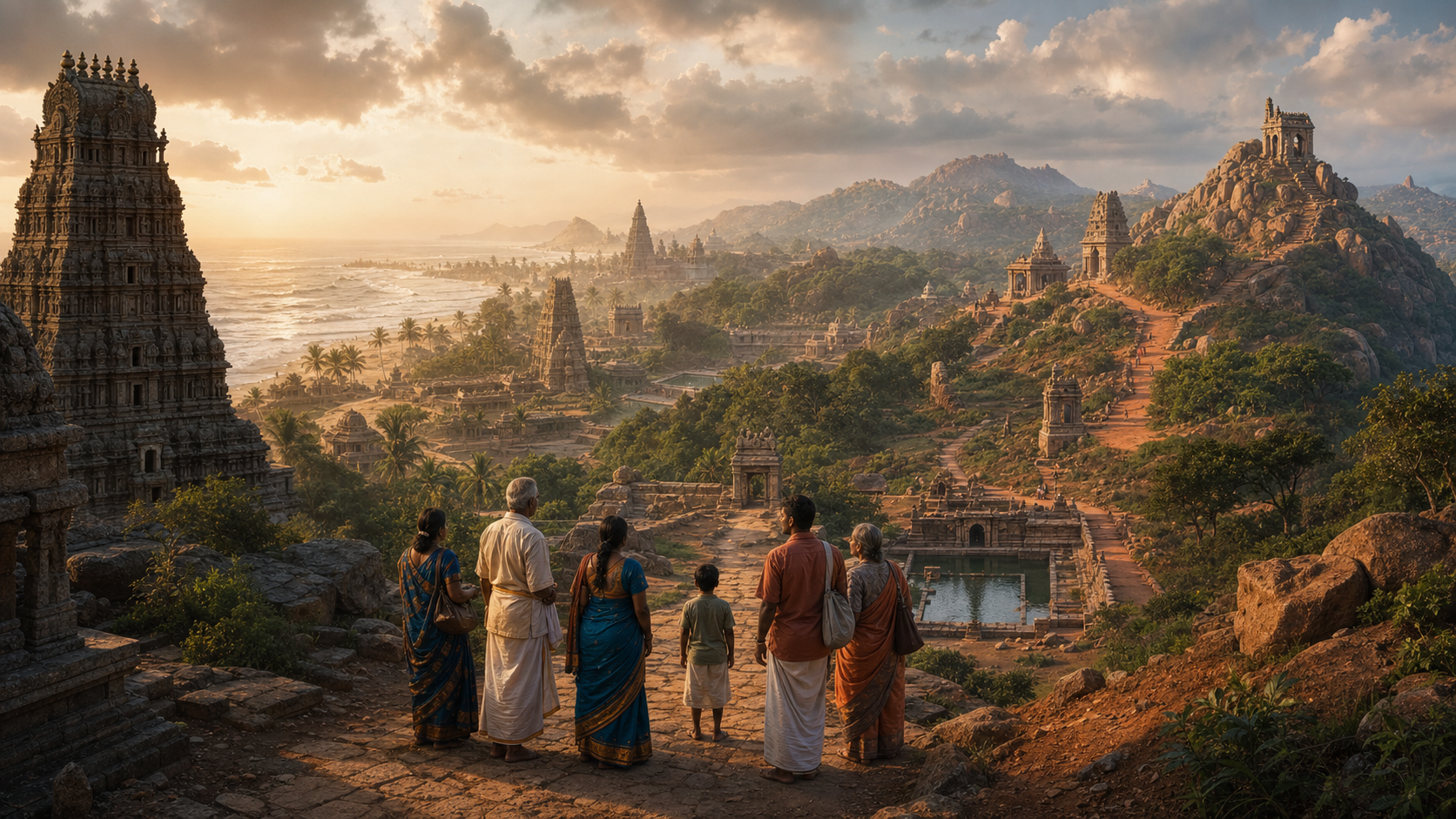
You can put every famous temple and monument on a map and still end up with a pilgrimage that feels strangely disconnected. Roads tell you how to reach a place. They do not tell you why one shrine is a destination, another is a gateway, or why the surrounding coast, hills, poetry, and processional paths matter.
A more coherent route begins with sacred geography. Choose the devotional anchor, identify the threshold shrines and companion sites around it, and then fit sightseeing into that structure. Mahabalipuram and Tripuranthakam offer two clear models you can use when planning temple travel anywhere in South India.
Read the temple’s role before plotting the route
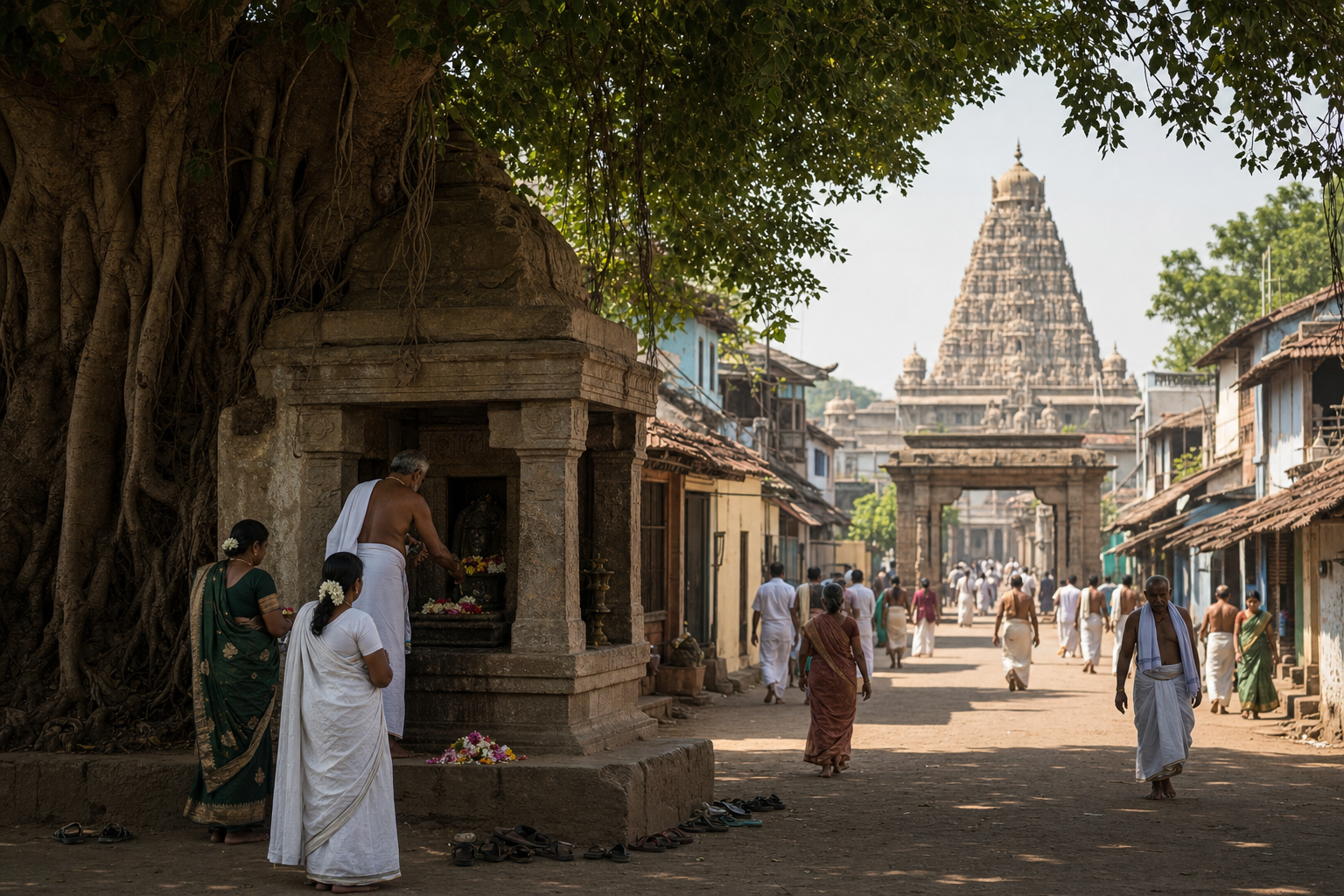
Not every important temple performs the same geographic role. Some shrines are canonical destinations. Some prepare a pilgrim to approach a greater kshetra. Others bind a sacred town together through literature, legend, landscape, or a distinctive form of the deity. If you treat all of them as equivalent stops, the route becomes a checklist.
Before arranging transport or nearby attractions, answer four questions about each temple:
- Is this shrine a destination in its own right, a gateway to another kshetra, or a companion stop within a larger sacred landscape?
- What form of the deity defines the place, and what does that form ask you to notice?
- Does the temple’s identity depend on a paired shrine, sacred hymn, local legend, or festival cycle?
- How does the physical setting – coast, hill country, town centre, cave, or processional route – shape the approach?
At Mahabalipuram, Sri Sthalasayana Perumal Temple is not merely another historic structure beside a celebrated monument complex. It is one of the 108 Divya Desams, praised in the Tamil hymns of the Azhwar saints, and it remains a place of active Vaishnava worship. That makes it the devotional anchor of a Mahabalipuram pilgrimage, even when the Shore Temple, Pancha Rathas, and cave shrines occupy more space on a tourist itinerary.
Tripuranthakam has a different function. Its Tripuranthakeswara and Tripura Sundari shrines form a Shaiva-Shakta kshetra in Andhra Pradesh’s Prakasam district, but the place is also revered as the eastern gateway to Srisailam. A gateway shrine derives part of its meaning from the journey beyond it. You should therefore plan Tripuranthakam as a deliberate threshold, not as an incidental roadside halt.
Write a one-sentence purpose beside every stop on your itinerary. For example: “Mahabalipuram – Divya Desam anchor within a coastal Pallava heritage landscape.” Or: “Tripuranthakam – Shaiva-Shakta threshold on the approach to Srisailam.” If you cannot explain a stop’s role in one sentence, decide whether it belongs on this pilgrimage or on a later journey.
Let theology determine the sequence within each stop
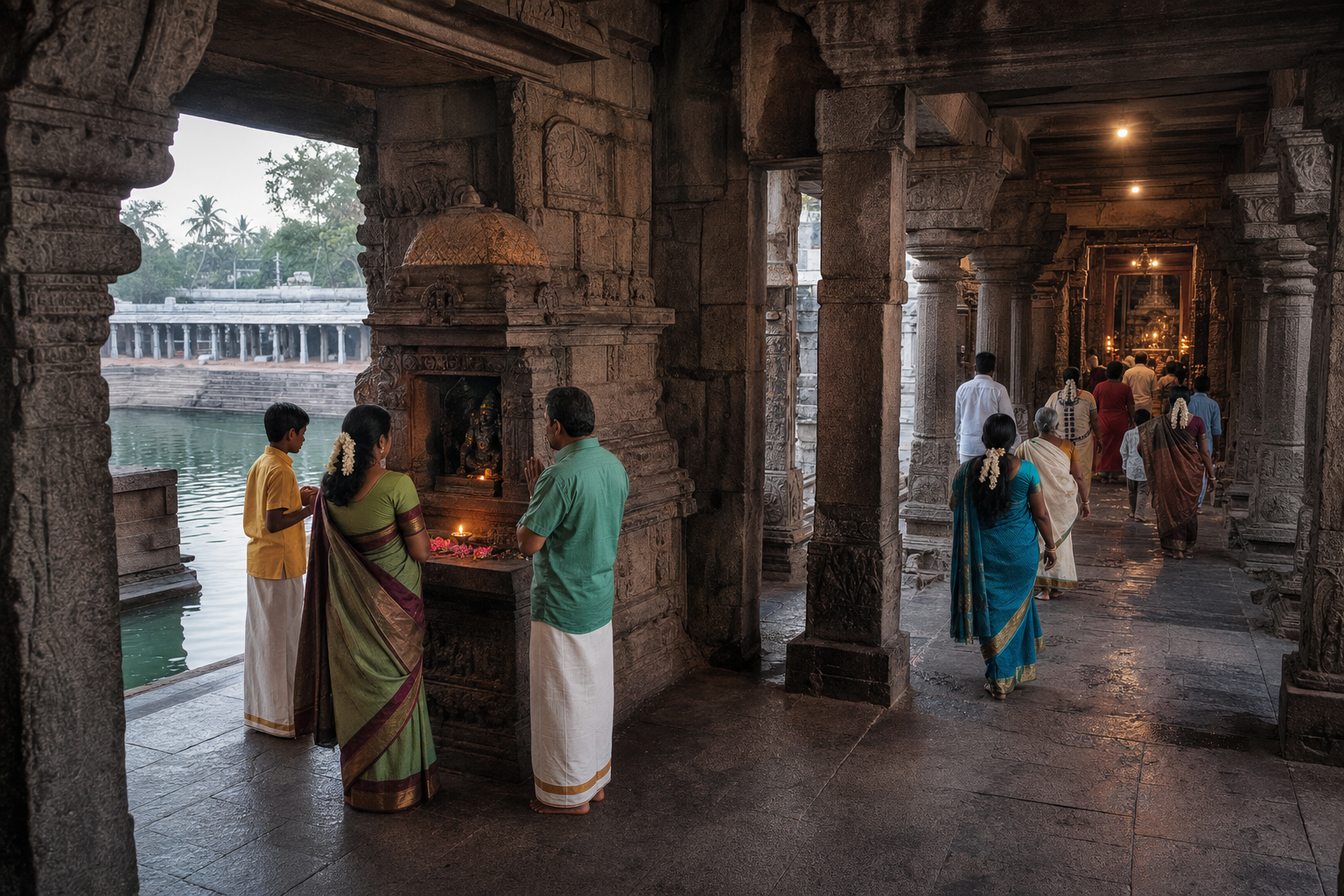
Sacred geography is not only the line between towns. It also governs how you read a temple once you arrive. The principal form, associated deity, sacred narrative, and local pattern of worship tell you what deserves attention before you turn to dates, sculpture, or photographs.
At Mahabalipuram, begin with the reclining Lord
Sthalasayana Perumal appears in a reclining, or sayana, posture distinctive to the site. The form communicates rest, refuge, and grace. He is worshipped with Nilamangai Thayar, so the temple’s devotional meaning includes both divine protection and compassion. Its connection to the Divya Prabandham places the shrine inside a living tradition of Tamil Vaishnava poetry, recitation, and ritual rather than leaving it as an architectural remnant.
Give darshan its own place in the day. Enter quietly, attend to the reclining form, and acknowledge the shrine of Thayar according to local practice. If recitation or daily worship is underway, let that rhythm take priority over your urge to inspect every pillar. Visit the surrounding monuments afterward. This sequence prevents the functioning temple from becoming a footnote to the archaeological landscape around it.
At Tripuranthakam, do not separate Shiva from Shakti
Tripuranthakam is organised around Tripuranthakeswara Swamy and Tripura Sundari Devi. Its Puranic identity recalls Shiva as Tripurantaka, the destroyer of the three demon cities, while the presence of Tripura Sundari expresses the inseparability of Shiva and Shakti. The pairing is not decorative. It is the theological centre of the kshetra.
Allow time for both sanctums, following the order indicated by temple custom. Do not treat the Devi shrine as an optional addition after the “main” darshan. The complete visit holds together the destruction of adharma, inner strength, compassion, and balance. Only after recognising that relationship will the designation “gateway to Srisailam” carry its full spiritual weight.
Build the day around worship rhythms, not stop counts
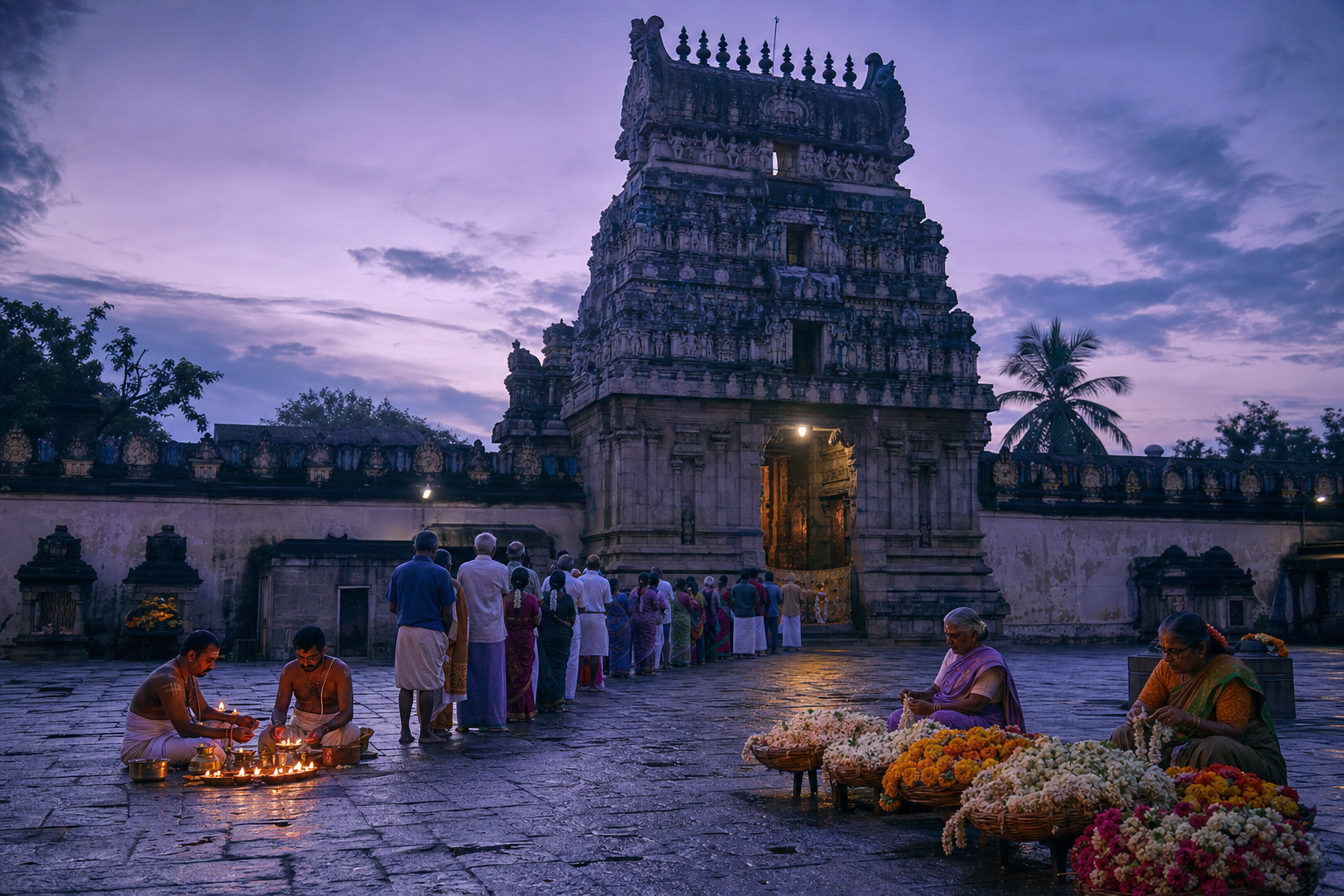
A crowded itinerary usually fails at the temple entrance. Darshan, local customs, active worship, and the time needed to move between shrines do not obey a sightseeing checklist. Plan fewer non-negotiable stops and give each sacred anchor a protected window.
Use this sequence when building the day:
- Confirm current opening times, festival conditions, access rules, and photography norms locally. Preferred visiting periods are not guaranteed operating hours.
- Place the principal darshan in the quietest suitable window. Early morning or late afternoon is commonly preferred at Mahabalipuram, while early morning and evening suit the contemplative rhythm at Tripuranthakam.
- Keep associated shrines in the same protected block. At Tripuranthakam, this means allowing for both Tripuranthakeswara and Tripura Sundari rather than timing only one sanctum.
- Add nearby monuments or onward travel after the devotional anchor is secure. In Mahabalipuram, the Shore Temple, Pancha Rathas, and cave shrines fit naturally around the living temple.
- Leave unassigned time. A ritual in progress, a queue, a closed inner area, or the simple wish to sit quietly should not force you to abandon the rest of the route.
Festival timing changes the character of a visit. At Tripuranthakam, Shiva worship is especially associated with Maha Shivaratri and Karthika masam, while Navaratri centres attention on Tripura Sundari Devi. Choose consciously: a festival pilgrimage offers collective vrata, lamps, and recitation, whereas a quieter visit gives you more space to study the relationship between the twin sanctums. Check the local calendar before committing to either experience.
Conduct is part of the plan, not an afterthought. Wear modest clothing, keep your voice low in inner halls, and ask before taking photographs. These habits reduce friction, but more importantly, they remind you that you are entering a worshipping community rather than an exhibit arranged for visitors.
Use architecture and landscape as a second map
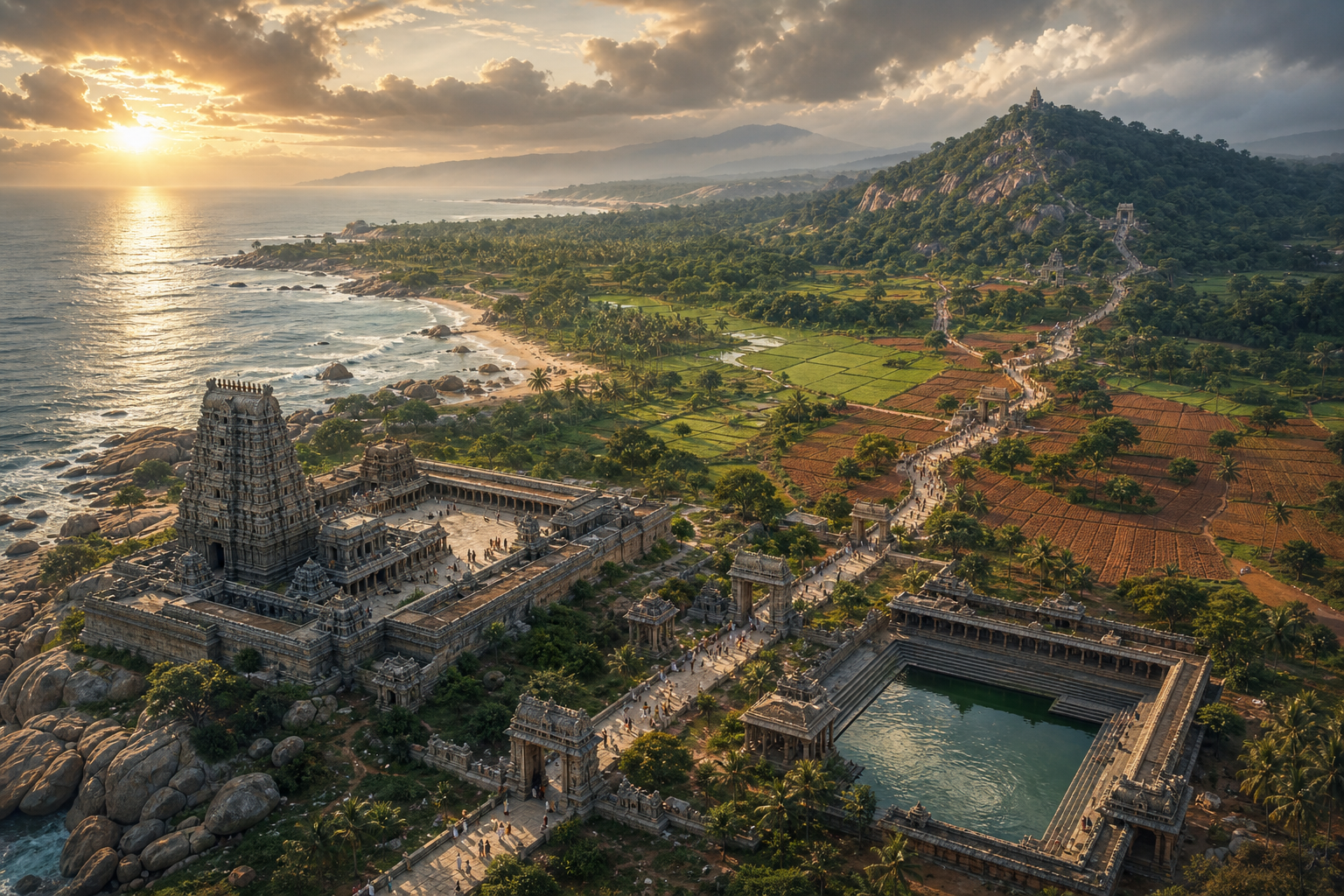
Once the devotional role is clear, the built and natural setting becomes easier to read. You are no longer collecting disconnected architectural features. You are noticing how a civilisation gave physical form to worship, memory, and movement.
At Mahabalipuram, the temple’s Pallava-period artistry and later Vijayanagara renovation reveal historical layering within a continuing sacred life. Granite details, pillared spaces, the intimate sanctum, filtered light, and the coastal setting belong to one experience. The nearby heritage monuments illuminate the region’s stoneworking tradition, but the daily worship of Sthalasayana Perumal shows what stonecraft was ultimately built to serve.
At Tripuranthakam, the hill country near the Nallamala landscape reinforces the idea of approach and transition. Mandapas, sanctum, and processional pathways organise movement toward Tripuranthakeswara, while the paired Devi shrine completes the Shaiva-Shakta geography. The temple’s thresholds are therefore both physical and interpretive: each one brings you closer to the kshetra’s central relationship between Shiva and Shakti.
You do not need specialist training to read these places well. Carry five prompts and pause before answering them:
- What changes when you cross the outer threshold?
- Which form or posture of the deity defines this kshetra?
- Which companion shrine prevents an incomplete reading?
- Where do the halls and pathways direct collective movement?
- How does the surrounding coast or hill country prepare you for the sanctum?
This way of looking also helps you resist a common mistake: confusing visual grandeur with spiritual priority. A modest, active sanctum can be the centre of a sacred landscape even when larger monuments dominate the skyline and travel brochures.
Key takeaways
- Classify each stop as a devotional destination, sacred gateway, or companion site before arranging the route.
- Make the living temple your anchor and place nearby monuments around darshan, not the other way around.
- Read paired shrines together: Sthalasayana Perumal with Nilamangai Thayar, and Tripuranthakeswara with Tripura Sundari Devi.
- Use preferred morning or evening periods as planning guidance, then verify actual temple hours and local conditions.
- Let posture, poetry, legend, architecture, and landscape explain why the temple stands where it does.
- Protect unhurried time for worship; the number of sites visited is a poor measure of a pilgrimage’s coherence.
Begin your next route with one anchor rather than ten pins. Write down what makes it sacred, identify the thresholds and companion shrines around it, confirm the local worship schedule, and leave enough space to encounter the kshetra on its own terms. The resulting journey may cover fewer sites, but you will understand why those sites belong together.
References
- Hindu Pad – Discover Sthalasayana Perumal Temple: A Divya Desam Jewel on Mahabalipuram’s Sacred Coast
- Hindu Pad – Tripuranthakeswara Temple at Tripuranthakam: Sacred Gateway to Srisailam and Shakti
