
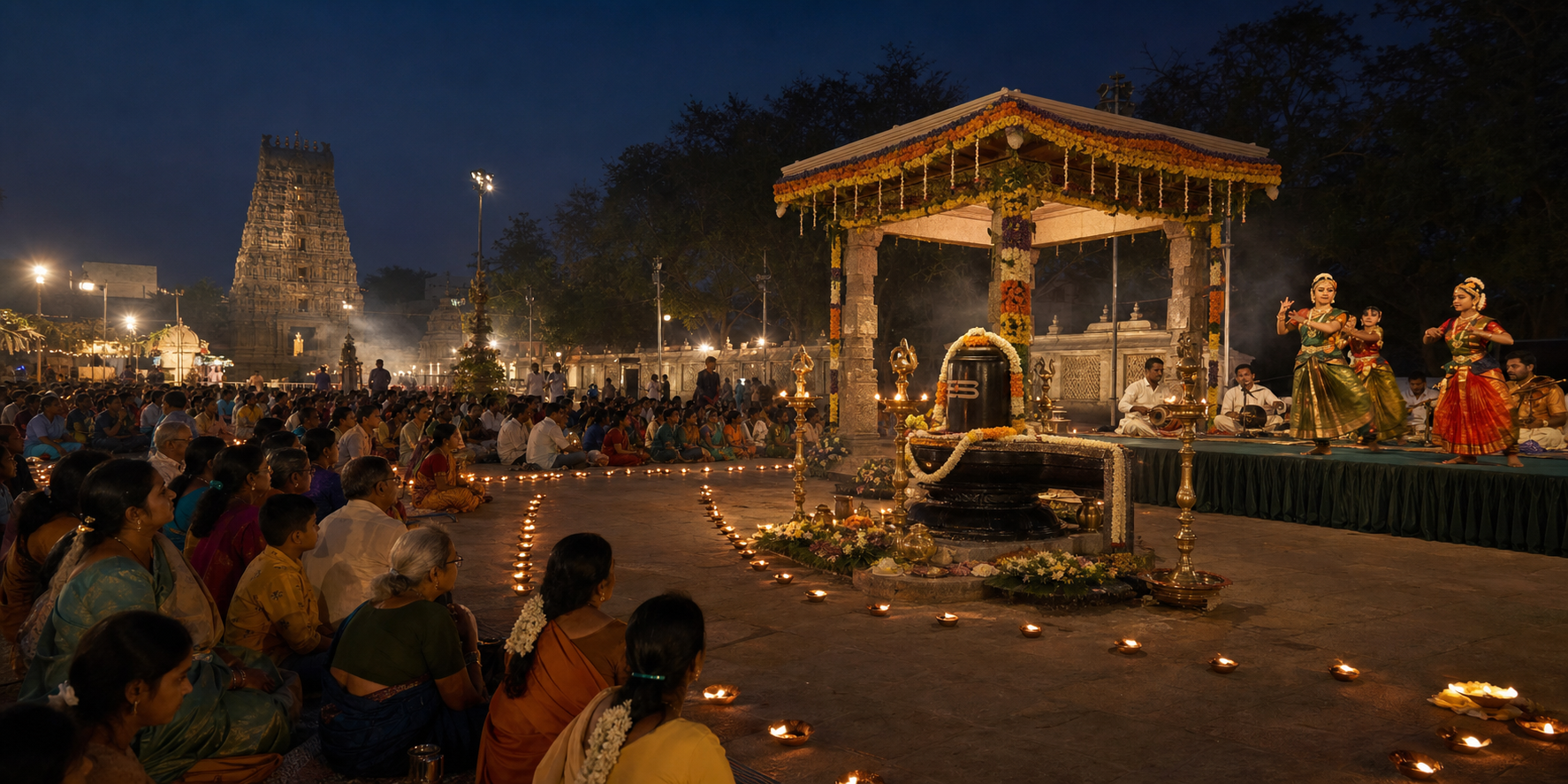
If you are trying to confirm what TTD arranged for Mahashivaratri in Tirupati in 2026, begin with the year: the programme was scheduled for 15 February 2026, a date that has now passed. This page is therefore a record of the announced observance, not a current invitation or a schedule for a later Mahashivaratri.
The essential plan was a citywide devotional and cultural programme from 6 pm until midnight at four Tirupati venues. Knowing that basic structure helps you distinguish the confirmed arrangements from assumptions about all-night timings, individual venue programmes, or future TTD events.
The confirmed programme at a glance
| Programme detail | TTD’s scheduled arrangement |
|---|---|
| Observance | Mahashivaratri Adhyatmika Vaibhavam |
| Date | 15 February 2026 |
| Published hours | 6 pm to midnight |
| City | Tirupati |
| Venues | Mahathi Kalakshetram, Kapila Theertham, Annamacharya Kalamandiram, and Ramachandra Pushkarini |
| Programme character | Shiva Stotra recitations, collective chanting, classical arts, and other cultural and devotional presentations |
One wording distinction matters. The celebration was described as an all-night spiritual fest, but its stated public programme window ended at midnight. For practical or historical purposes, use 6 pm to midnight as the confirmed six-hour schedule. Do not infer that organised programming continued after midnight unless a final, venue-specific TTD notice confirms it.
There is another easy source of confusion: TTD is the organising institution, but all four named venues were in Tirupati. The institution’s full name should not lead you to relocate this particular programme to an unspecified venue on the Tirumala hill.
Four Tirupati venues did not mean four compulsory stops
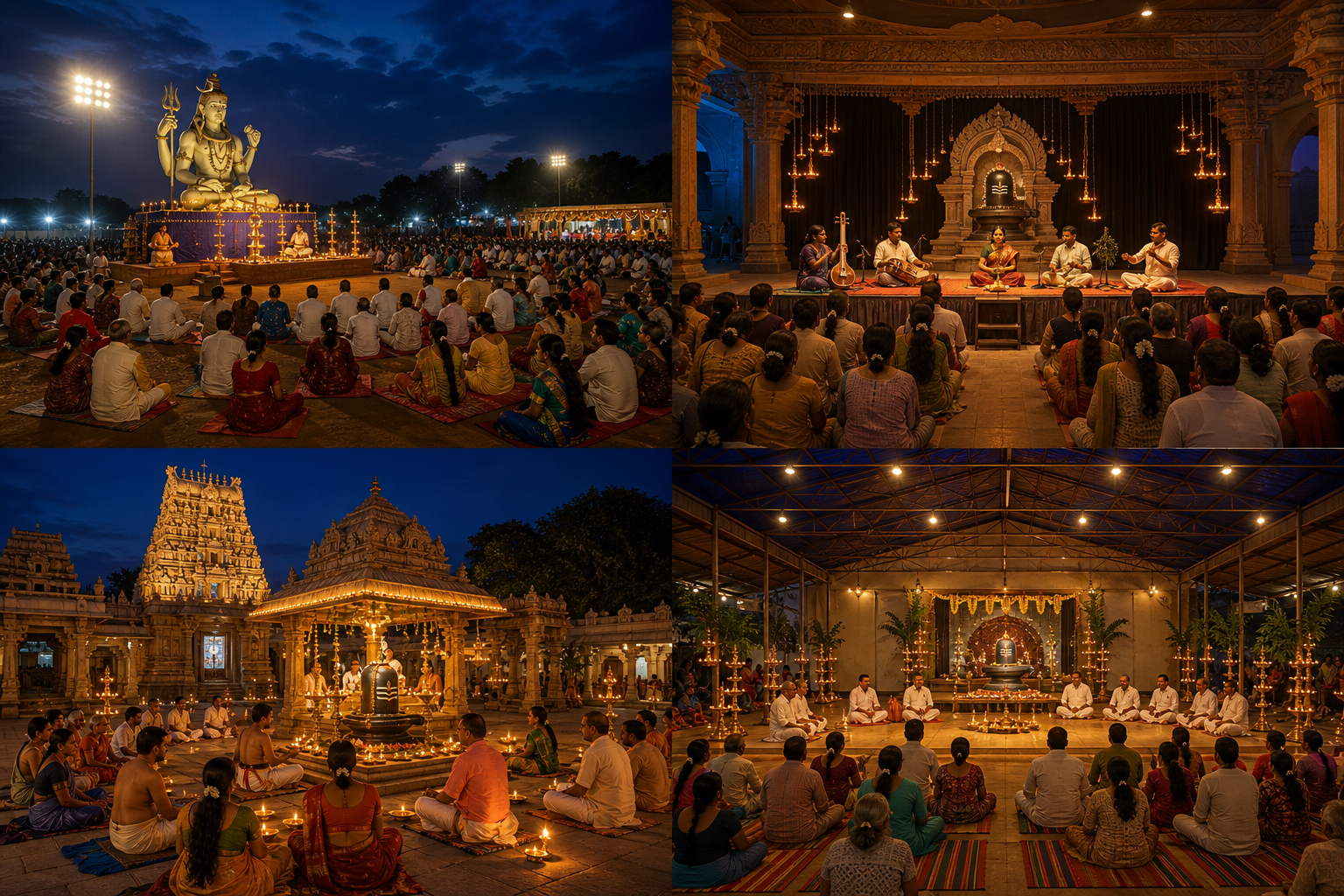
The observance extended across Mahathi Kalakshetram, Kapila Theertham, Annamacharya Kalamandiram, and Ramachandra Pushkarini. Together, these locations gave the evening a citywide form and connected Tirupati’s sacred life with its cultural institutions.
- Mahathi Kalakshetram
- Kapila Theertham
- Annamacharya Kalamandiram
- Ramachandra Pushkarini
The four-venue footprint is confirmed. A separate running order for each venue is not. You should therefore avoid assuming that every location hosted identical items, that a particular recitation occurred at a particular site, or that devotees were expected to travel through all four places during the evening.
That distinction changes how you would approach a similar TTD programme. Moving repeatedly can turn a devotional night into a race between locations. Wait for the venue-wise schedule, choose the programme that best supports your intention, and make one site your anchor. Add another venue only when the timing is clear and the move will not break your participation.
The spiritual design joined recitation, reflection, and art
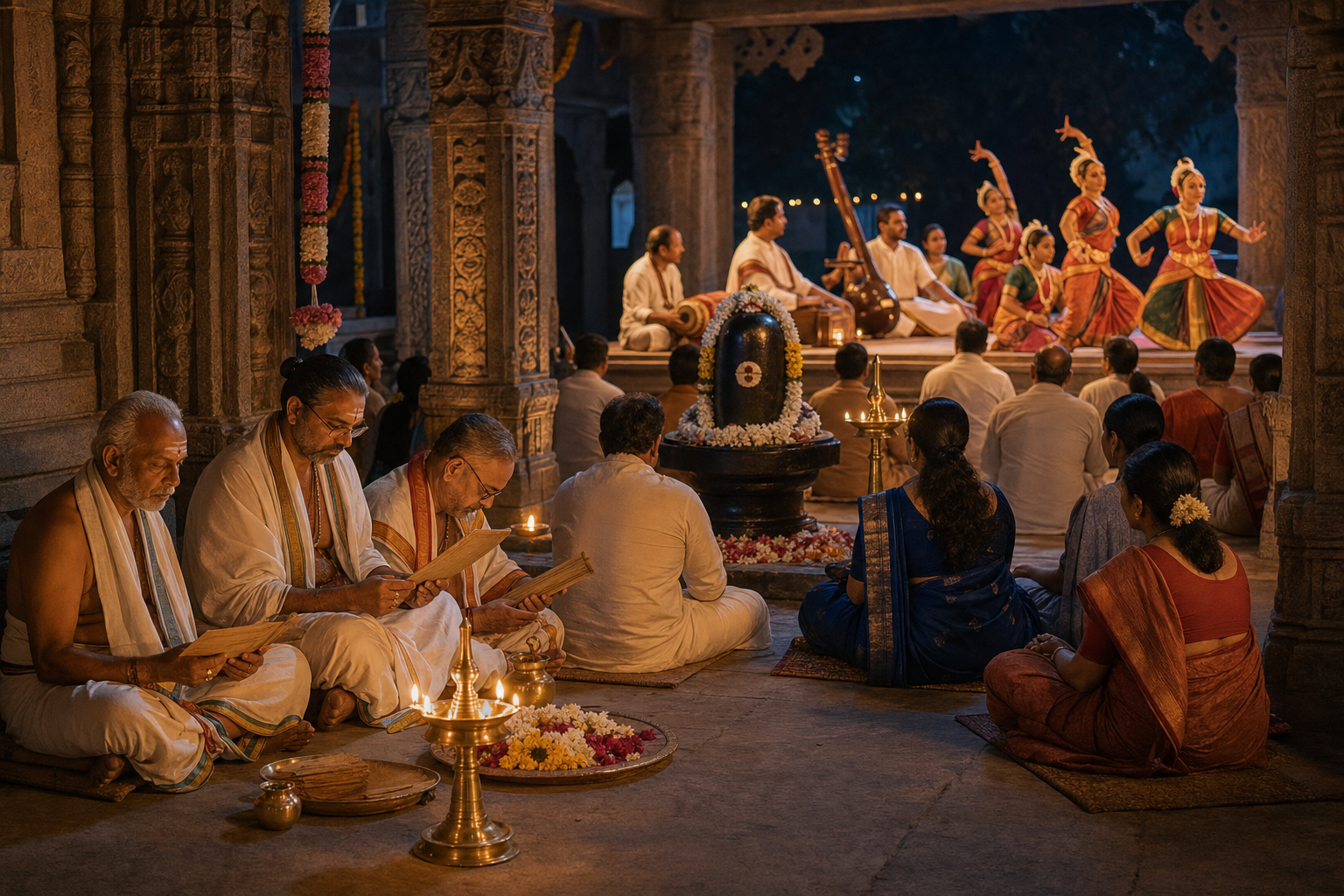
TTD did not frame the evening as cultural entertainment detached from worship. Shiva Stotra recitations, collective chanting, devotional presentations, and classical arts were placed within the discipline of Mahashivaratri. The intended atmosphere was contemplative and suitable for families, young people, and elders.
You can engage with that format more deeply by deciding beforehand what you are there to practise. During a Stotra recitation, follow the words or names with sustained attention instead of treating them as background sound. During collective chanting, join the shared rhythm without turning participation into performance. Receive the classical arts as an offering shaped by devotion. Protect the quieter intervals for reflection rather than filling every pause with movement or conversation.
This approach also preserves the specifically Shaiva centre of the occasion. Discipline, compassion, service, and inward reflection have resonance across Hindu, Buddhist, Jain, and Sikh traditions, but recognising shared dharmic values does not require erasing their differences. Mahashivaratri remains an observance centred on Lord Shiva; its wider civilisational meaning grows from that rootedness.
How to use the 2026 details without planning from stale information

If you are documenting the 2026 celebration or preparing for a future TTD Mahashivaratri programme, keep the following distinctions clear:
- Check the year before making any arrangement. The date on this programme was 15 February 2026. It should not be reused as the date, venue list, or timing for 2027 or another year.
- Separate the announced schedule from the final running order. Record the four confirmed venues, but obtain the final TTD communication before assigning individual performances or recitations to any one of them.
- Treat 6 pm to midnight as the operational window. The all-night description expresses the Mahashivaratri spirit, but it does not by itself establish organised events after midnight.
- Build in time before the opening. Festive footfall was expected, so a plan that begins exactly at 6 pm leaves no margin for reaching the chosen venue, understanding local instructions, or settling into the programme.
- Choose participation over venue collection. One sustained period of chanting, listening, or reflection is more consistent with the programme’s purpose than rushing through four locations merely to say you visited them.
- Follow official TTD communications for changes. Final timings and venue-specific instructions can differ from an initial citywide outline. Confirm them before travel or before publishing a historical claim about what occurred.
Key takeaways
- TTD scheduled Mahashivaratri Adhyatmika Vaibhavam in Tirupati for 15 February 2026.
- The published programme window was 6 pm to midnight, despite the broader all-night description.
- The four named venues were Mahathi Kalakshetram, Kapila Theertham, Annamacharya Kalamandiram, and Ramachandra Pushkarini.
- The devotional format included Shiva Stotra recitations, collective chanting, classical arts, reflection, and cultural presentations.
- No later year should be planned from the 2026 date, hours, or venue list without a new TTD notice.
If you are preserving the 2026 record, keep the date, hours, and four venue names exactly as announced while marking unverified venue-wise details as unconfirmed. If you are planning your next Mahashivaratri visit, wait for that year’s TTD programme, select one anchor venue, and shape the evening around attentive participation.
References
